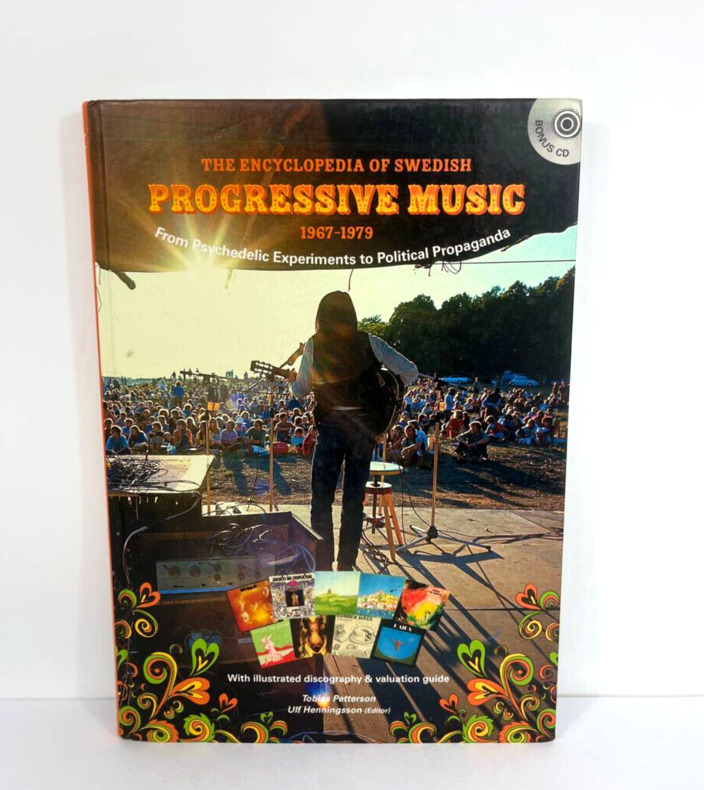
Tobias Petterson, Ulf Henningsson (ed.)Livre Rare Book
2 216 résultats
2007réf. 0131Stockholm, Premium Publishing, 2007. First and only edition. A tall in-4 hardcover volume, 303 x 218 mm, 235 pp. (2 ff). Pictorial covers, no DJ as published, bonus CD is included. Black and white pictures as endsheets. Table of contents at the beginning. Profusely illustrated. "This lavishly illustrated discography is the definitive statement on the legendary progressive music movement in Sweden during its most flourishing and innovative period – from 1967 and all the way through the 1970's. It has even become one of the most important areas among record collectors from all over the world. Meticulously researched, the book guides you through every single artist and group that ever had a progressive record released! On major labels as well as on the small independent labels. They are presented in detail along with all the individual musicians that made it all happen. It covers the fuzz guitar groups, the experimental bands, the power trios, the radical political groups and the psychedelic acts. Early pioneers like International Harvester, Made In Sweden, Hansson & Karlsson and Mecki Mark Men paved the way for renowned acts like November, Träd, Gräs & Stenar, Blå Tåget, Nationalteatern, Hoola Bandoola Band and Kebnekajse as well as the mavericks of Knutna Nävar and Rävjunk. They are all included! As well as the highly collectable acts as Radiomöbel, Taste of Blues, Gandalf and Epizootic. This superbly produced full colour book presents approximately 400 artists and their records in detail with a collector´s valuation guide for the original vinyl records and with all sleeves lovingly depicted!" (Back cover of the book)
réf. 561947London, Swan Sonnenschein & Co, 1893. Fort in-8, pleine percaline bleue d’éditeur, dos titré en doré, XVIII-440 pp., texte anglais, cartes et fig. gravées in et h.-t. Edition originale.
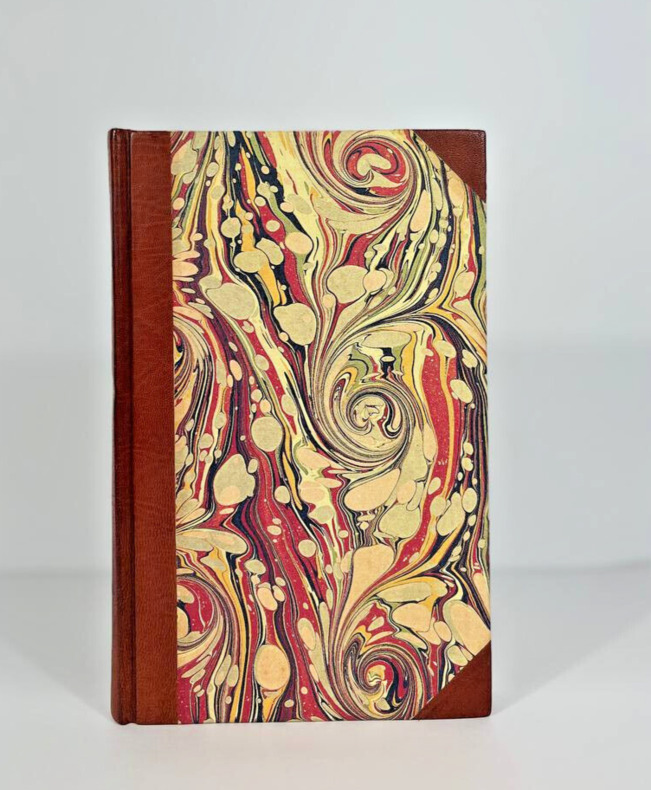
1801réf. 0065London, T. Gillet, 1801. Second edition. In English. Octavo, 215 x 136 mm, 328 pp., bound in half-calf buckram with red-ochre corners and colored boards, author's name and title in gilt with tailpiece motifs. Header edges. Folding map of the Rio de la Plata. Stamp of the library of the "Sociedade Brasileira de Cultura Inglesa" with book number and the mention "1959" in blue ballpoint pen on the back of the first page of the preface. Preface, table of contents, numerous illustrations throughout the book, and an index of subscribers. The binding is in excellent condition, the slightly yellowish-gray paper is intact and entirely legible. This book recounts the ill-fated second voyage of the Duff, a missionary ship en route to the South Sea Islands in 1798. It was only the second attempt at a missionary voyage to the Pacific. A year earlier, the Duff had successfully undertaken its first voyage, settling members of the London Missionary Society and their families on the islands of Tahiti, Tonga, and the Marquesas. However, this second attempt ended in disastrous failure. Captured first by a French privateer who mistook the Duff for a ship carrying Governor King to Australia, and then again by a Portuguese fleet, the group was forced to return to Lisbon, and William Gregory returned to England in 1800. William Gregory describes the details of his treatment in captivity, life in Spanish America (Uruguay, Argentina, Paraguay), as well as indigenous life in the "enemy port" of Montevideo and the surrounding rich estuary of the Rio de la Plata, its "products, inhabitants, clothing, customs, commerce [and] religion." *************************************** Londres, T. Gillet, 1801. Seconde édition. En anglais. In-8 de 215 x 136 mm, 328 pp., relié demi-veau en percaline à coins ocre-rouge avec plats colorés, nom d'auteur et titre en doré avec motifs de type cul-de-lampe. Tranchefile. Carte dépliante du Rio de la Plata. Tampon de la bibliothèque de la "Sociedade Brasileira de Cultura Inglesa" avec numéro de livre et mention "1959" au stylo bille bleu en revers de la première page de la préface. Préface, table des matières, nombreuses illustrations tout au long du livre et index des souscripteurs. La reliure est en excellent état, le papier un peu jaune-gris intègre et entièrement lisible. Ce livre raconte le deuxième voyage malheureux du Duff, navire missionnaire en route vers les îles des mers du Sud en 1798. Ce n'était que la deuxième tentative de voyage missionnaire dans le Pacifique. Un an plus tôt, le Duff avait entrepris avec succès son premier voyage et abouti sur l'installation des membres de la London Missionary Society et de leurs familles sur les îles de Tahiti, de Tonga et les Marquises. En revanche, cette seconde tentative se soldera par un échec désastreux. Capturé d'abord par un corsaire français qui prit le Duff pour un navire emmenant le gouverneur King en Australie, puis une seconde fois par une flotte portugaise, le groupe fut contraint de retourner à Lisbonne et William Gregory regagnera l'Angleterre en 1800. William Gregory décrit les détails de son traitement en captivité, la vie en Amérique espagnole (Uruguay, Argentine, Paraguay) ainsi que la vie indigène dans le « port ennemi » de Montevideo et le riche estuaire environnant du Rio de la Plata, ses « produits, habitants, vêtements, coutumes, commerce [et] religion ».
1899réf. QZI-36(English description below) Kegan Paul, Trench, Trubner & Co., Londres, 1899. Première édition anglaise. Fort in-8 de 15,5 x 22,5 cm, (xxi) 624 pp. et plusieurs dizaines de pp. de portraits hors texte. Nombreuses cartes et photographies en noir et blanc. Reliure contemporaine en papier épais plein tissu bleu, dos lisse avec nom d'auteur et titre du livre en doré, charnières à la Bradel. Livre de référence de l'anthropologie anglo-saxonne de l'époque, "The Races of Europe" a popularisé la notion d'indice céphalique et de trois sous-groupes ethniques européens (nordique, alpin et méditerranéen), tout en rassemblant une somme considérable de données sur la taille, les taux de fertilité et bien d'autres éléments. Professeur d'université au MIT puis à Harvard, William Z. Ripley (1867-1941) fut ingénieur de formation et professeur d'économie. Son intérêt pour l'anthropologie et les types humains le conduisit à systématiser sa vision d'une humanité européenne constituée de trois grands groupes. Éclectique dans ses centres d'intérêt et ses sources, doté d'un sens puissant de la synthèse, il s'éloigna de l'anthropologie après la publication de "Races of Europe" pour se concentrer sur les problèmes liés aux chemins de fer sous l'administration Roosevelt et aurait prévu la crise de 1929 : "Une prospérité illusoire et trompeuse peut certes être indûment prolongée par des moyens artificiels, mais, en fin de compte, la vérité finit inévitablement par l'emporter." (New York Times, 17 août 1941, notice nécrologique de Ripley). *************** Kegan Paul, Trench, Trubner & Co., London, 1899. First English edition. Large octavo (15.5 x 22.5 cm), (xxi) 624 pp. plus several dozen pages of plates featuring portraits. Numerous black-and-white maps and photographs. Contemporary binding in heavy blue cloth; smooth spine with author's name and book title in gilt; Bradel-style hinges. A seminal work in Anglo-American anthropology of the era, *The Races of Europe* popularized the concept of the cephalic index and the classification of Europeans into three ethnic subgroups (Nordic, Alpine, and Mediterranean), while compiling a vast amount of data on stature, fertility rates, and many other factors. A university professor at MIT and later Harvard, William Z. Ripley (1867–1941) was trained as an engineer and worked as a professor of economics. His interest in anthropology and human types led him to systematize his view of the European population as consisting of three major groups. Eclectic in his interests and sources, and gifted with a powerful capacity for synthesis, he moved away from anthropology after the publication of *The Races of Europe* to focus on railroad issues during the Roosevelt administration; he is said to have predicted the 1929 crash: "An illusory and deceptive prosperity may indeed be unduly prolonged by artificial means, but, in the end, the truth inevitably prevails." (*New York Times*, August 17, 1941, Ripley's obituary).
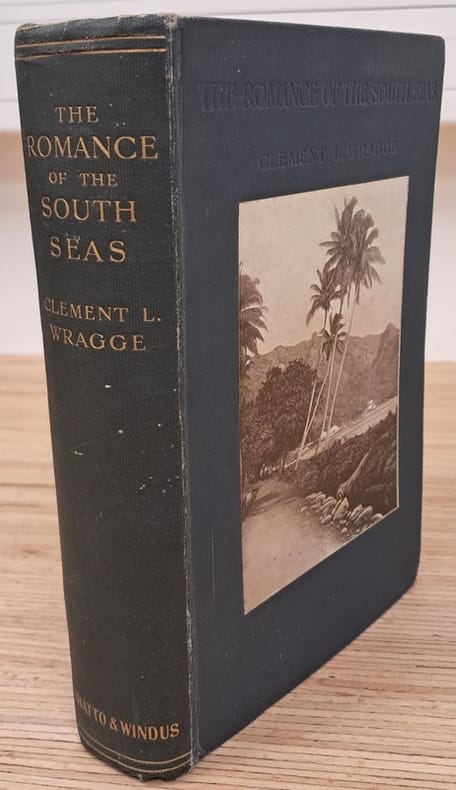
réf. 561706London, Chatto & Windus, 1906. Petit in-8, rel. d’éditeur percaline bleue, titre doré au dos et à froid au plat sup., ornée d’une photogr. en noir contrecollée, XV-312 pp., texte anglais, + 32 pp. (cat. d’éditeur), 83 ill. photogr. en n/b, dont le frontispice sous serpente. Édition originale.
réf. 607525Yangon, par l'auteur, 1994. In-8 carré broché, couv. rempliée ill. en coul.; 200 pp., très nb. fig., cartes, tableaux, ill. photogr. en n/b. et en coul., texte en anglais sur 2 colonnes, glossaire, table et index.
1983214 pages including index. "In sum, what is offered here is not a theory but a series of explorations, not an analysis of a literary, psychiatric, political or religious problem but clarifications of dramatic fictions within real and imagined situations." - from Preface. Bookplate upon half-title page. Contents unmarked. Moderate wear. Solid copy. Book
2001in 4° oblungo, cartone edit. con titoli argento, comprese sei schede pieghevoli in calce al volume, minime tracce d'uso in cop. - riccamente illustrato a colori
réf. 1332290922.Gpaperback. Good. Access codes and supplements are not guaranteed with used items. May be an ex-library book. paperback
réf. 1332328229.Gpaperback. Good. Access codes and supplements are not guaranteed with used items. May be an ex-library book. paperback
New York, Barse & Hopkins Publishers, Press Edward Stern & Co., 1909. 4to. mayor; 158 pp. y 8 láminas en color fuera de texto obra de E. Roscoe Shrader y Herbert Moore . Encuadernación original en tela verde estampada.
réf. 560995Cincinnati, Wilstach, Baldwin & Co, 1885. In-8, percaline brune de l'époque, dos titré, tr. rouges, orné, décor estampé aux plats, 393 pp., texte anglais. Carte de visite du superintendent Sydney D. Maxwell jointe.
réf. 562197London, Sampson Low, Marston, Searle & Rivington, 1882. Grand in-12, reliure éditeur percaline brune, titre doré au dos, titre en noir et illustration dorée au plat sup., XVI-412-4 pp., nombr. gravures dont 1 en frontispice et 15 hors texte.
2002réf. RO20254834Explorator Voyages Expeditions. 2002. In-4. Broché. Bon état, Couv. convenable, Dos satisfaisant, Intérieur frais. Environ 60 pages illustrées en couleur + envoi de l'auteur, Raymond Renaud, sur la 4e page, voir 2 photo. . . . Classification Dewey : 910.9-Explorations
2009bross. edit. ill. con bandelle - prima edizione - numerose illustrazioni a colori a doppia pagina nel testo
réf. 534670P., Ecole Francaise d Extrême-Orient, 1990. In-4 br., 119 pp., index, 175 ill. photographiques en noir en planches in fine, 4 plans dépliants sur ff. volants.
réf. 587502Paris, Flammarion, Edition du Figaro, 1897. In-8, rel. de l'époque demi-basane vert bouteille, dos à 5 nerfs, titre doré ; 420 pp., portrait-front., nombr. gravures dans le texte ou à pleine-page, d'après les photogr. de l'auteur.
réf. 517374Kassel, Barenreiter, 1960. In-4 cartonnage éditeur sous jaquette, 90 pp., [10] ff., nbr. planches dépliantes.
1825carta geografica incisa, divisa in 16 scomparti montati su tela (cm. 96 x 70), la Scala è ad 1/128,000 del Terreno, scale di conversione in Pertiche di Ferrara, Pertiche di Bologna, Piedi agrimensorj di Ravenna, Palmi romani, Metri - la Dedicatoria è incisa su lastra monumentale con stemma cardinalizio della famiglia Arezzo immersa in paesaggio e veduta di Ferrara - minime bruniture
1963in gotica tedesca (fraktur) in 4°, mezza tela con titoli al dorso
1996réf. 604298Alain Sebe 1996 2 vol. in-4 carré, rel. éd. pleine-toile marine et jaquette illustr., étui cartonné illustr., nombr. photographies en couleurs de l'auteur.
1997réf. RO30310168Le cherche midi. 1997. In-8. Broché. Etat d'usage, Couv. convenable, Dos plié, Intérieur frais. 182 pages augmentées de quelques planches en noir blanc. . . . Classification Dewey : 910.9-Explorations
1799réf. 689081799 London, Crosby and Letterman, 1799, in 8° relié plein veau brun, dos lisse orné, XVI-218 pages ; reliure frottée, un mors fendu, coiffe de tête usée, deux coins émoussés, petit travail de vers marginal.
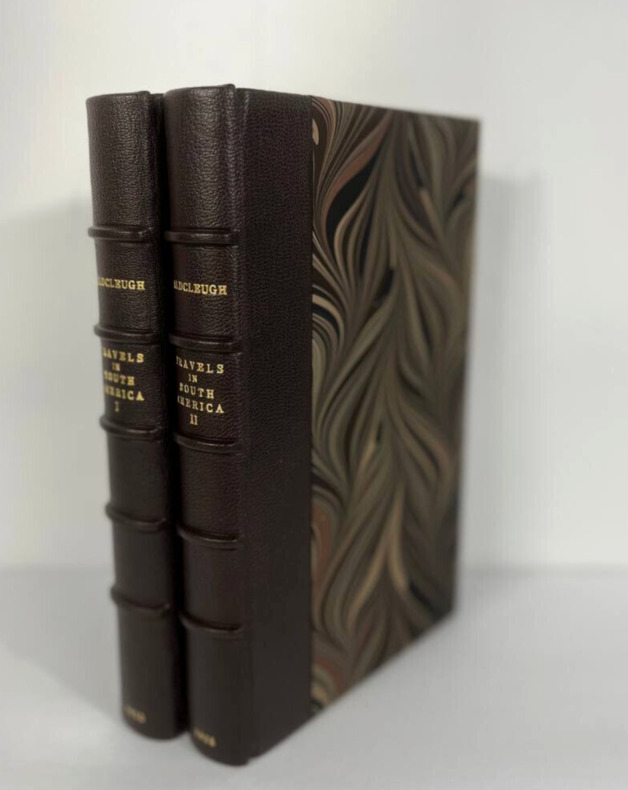
1821réf. 0032London, John Murray on Albemarle Street, 1825. First edition. Two volumes, 230 x 148 mm, (xii) 373 + (viii) 380 pp. Recently rebound in half morocco leather with 5 raised bands, author's name, title, volume number and year stamped in gold, marbled papers on covers and as endpapers. Headbands. Volume I features a picture of two masked women as "The Usual Walking Costume of Lima", a short preface, 12 chapters, 5 colored plates and an unfolding map of South America. Volume II features four color plates, including a frontispiece as well, chapters 13-19, no less than 26 appendixes and a very long folding map. "Caldcleugh came to Brazil as private secretary to the British Ambassador, Edward Thornton. From October, 1819, until 1821 he lived in Rio, and from there travelled to Argentina and Chile. His return journey again took him through Brazil, and this time he visited Minas Geraes which he describes on pp. 178-288 of the second volume. Caldcleugh's work has great documentary value. An excellent and impartial observer, he describes Rio de Janeiro with great accuracy, and studies the social, agricultural, financial, and political situations in Brazil. The part referring to the mines in Minas Geraes is of great interest. The first volume contains two very beautiful views of Rio de Janeiro." (Borba de Moraes, I:144) "An example of the very important travel literature of the period" (Griffin 3455). Abbey Travel 699, Sabin 9877. This work also includes appendices on matters such as meteorology, the slave trade, and shipping.