2 225 résultats
réf. 534670P., Ecole Francaise d Extrême-Orient, 1990. In-4 br., 119 pp., index, 175 ill. photographiques en noir en planches in fine, 4 plans dépliants sur ff. volants.
2009bross. edit. ill. con bandelle - prima edizione - numerose illustrazioni a colori a doppia pagina nel testo
2002réf. RO20254834Explorator Voyages Expeditions. 2002. In-4. Broché. Bon état, Couv. convenable, Dos satisfaisant, Intérieur frais. Environ 60 pages illustrées en couleur + envoi de l'auteur, Raymond Renaud, sur la 4e page, voir 2 photo. . . . Classification Dewey : 910.9-Explorations
réf. 562197London, Sampson Low, Marston, Searle & Rivington, 1882. Grand in-12, reliure éditeur percaline brune, titre doré au dos, titre en noir et illustration dorée au plat sup., XVI-412-4 pp., nombr. gravures dont 1 en frontispice et 15 hors texte.
réf. 560995Cincinnati, Wilstach, Baldwin & Co, 1885. In-8, percaline brune de l'époque, dos titré, tr. rouges, orné, décor estampé aux plats, 393 pp., texte anglais. Carte de visite du superintendent Sydney D. Maxwell jointe.
1935réf. 34114hakluyt Society 1935 Pleine percaline éditeur bleu Nattier, fer bateau doré sur les plats XIV-210 + X- 211- 516 pp pagination continue, with maps and pictures , fine copy.
1992réf. R160114916PAPERBACK EDITION. 1992. In-Folio. Broché. Etat d'usage, Couv. défraîchie, Dos frotté, Intérieur acceptable. 132 pages. Ouvrage en anglais. Nombreuses cartographies en couleurs hors texte et nombreuses illustrations en couleurs dans le texte. Bord des pages, coiffes et coins légèrement frottés.. . . . Classification Dewey : 910.9-Explorations
réf. 561947London, Swan Sonnenschein & Co, 1893. Fort in-8, pleine percaline bleue d’éditeur, dos titré en doré, XVIII-440 pp., texte anglais, cartes et fig. gravées in et h.-t. Edition originale.
réf. 561739London, South American Publications, Moorgate, 1928. In-8, rel. souple d’éditeur, pleine toile rouge, dos titré, premier plat titré et orné en doré, LXXII-476 pp., plan dépliant et qqs. cartes in-t., nbr. annonces commerciales. Texte anglais.
réf. 561026Stroud (Gloucestershire), Tempus, 2006. Grand in-8 broché, couv. ill., 352 pp., texte anglais, ill. en noir dans le texte. Bibliogr., index.
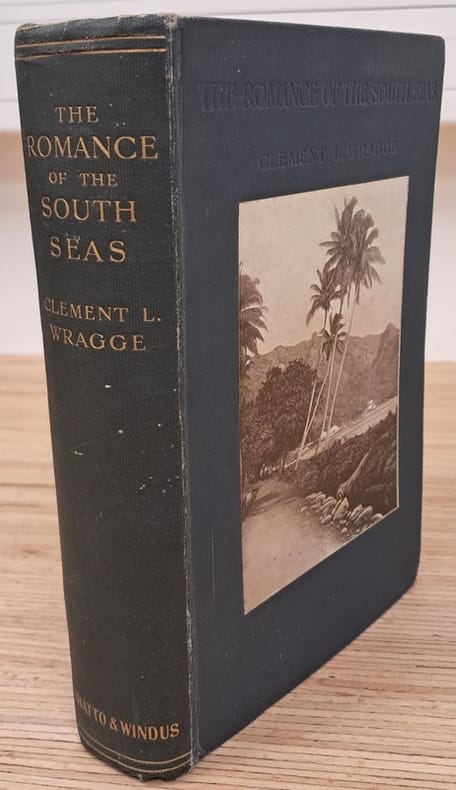
réf. 561706London, Chatto & Windus, 1906. Petit in-8, rel. d’éditeur percaline bleue, titre doré au dos et à froid au plat sup., ornée d’une photogr. en noir contrecollée, XV-312 pp., texte anglais, + 32 pp. (cat. d’éditeur), 83 ill. photogr. en n/b, dont le frontispice sous serpente. Édition originale.
1930réf. 100110Couverture rigide. Reliure toile 566 pages. Dos insolé, Couverture légèrement défraîchie.
1899réf. QZI-36(English description below) Kegan Paul, Trench, Trubner & Co., Londres, 1899. Première édition anglaise. Fort in-8 de 15,5 x 22,5 cm, (xxi) 624 pp. et plusieurs dizaines de pp. de portraits hors texte. Nombreuses cartes et photographies en noir et blanc. Reliure contemporaine en papier épais plein tissu bleu, dos lisse avec nom d'auteur et titre du livre en doré, charnières à la Bradel. Livre de référence de l'anthropologie anglo-saxonne de l'époque, "The Races of Europe" a popularisé la notion d'indice céphalique et de trois sous-groupes ethniques européens (nordique, alpin et méditerranéen), tout en rassemblant une somme considérable de données sur la taille, les taux de fertilité et bien d'autres éléments. Professeur d'université au MIT puis à Harvard, William Z. Ripley (1867-1941) fut ingénieur de formation et professeur d'économie. Son intérêt pour l'anthropologie et les types humains le conduisit à systématiser sa vision d'une humanité européenne constituée de trois grands groupes. Éclectique dans ses centres d'intérêt et ses sources, doté d'un sens puissant de la synthèse, il s'éloigna de l'anthropologie après la publication de "Races of Europe" pour se concentrer sur les problèmes liés aux chemins de fer sous l'administration Roosevelt et aurait prévu la crise de 1929 : "Une prospérité illusoire et trompeuse peut certes être indûment prolongée par des moyens artificiels, mais, en fin de compte, la vérité finit inévitablement par l'emporter." (New York Times, 17 août 1941, notice nécrologique de Ripley). *************** Kegan Paul, Trench, Trubner & Co., London, 1899. First English edition. Large octavo (15.5 x 22.5 cm), (xxi) 624 pp. plus several dozen pages of plates featuring portraits. Numerous black-and-white maps and photographs. Contemporary binding in heavy blue cloth; smooth spine with author's name and book title in gilt; Bradel-style hinges. A seminal work in Anglo-American anthropology of the era, *The Races of Europe* popularized the concept of the cephalic index and the classification of Europeans into three ethnic subgroups (Nordic, Alpine, and Mediterranean), while compiling a vast amount of data on stature, fertility rates, and many other factors. A university professor at MIT and later Harvard, William Z. Ripley (1867–1941) was trained as an engineer and worked as a professor of economics. His interest in anthropology and human types led him to systematize his view of the European population as consisting of three major groups. Eclectic in his interests and sources, and gifted with a powerful capacity for synthesis, he moved away from anthropology after the publication of *The Races of Europe* to focus on railroad issues during the Roosevelt administration; he is said to have predicted the 1929 crash: "An illusory and deceptive prosperity may indeed be unduly prolonged by artificial means, but, in the end, the truth inevitably prevails." (*New York Times*, August 17, 1941, Ripley's obituary).
1908réf. 829161908 London, Kegan Paul, Trench, Trubner, 1908, fort volume grand in 8°, XIX-358 pages, reliure de l'éditeur (très manipulée, quelques pages détachées) ; nombreuses illustrations in et hors-texte ; carte en couleurs dépliantte in-fine (détachée).
réf. 566475Honolulu, Hawaii, American council, 1933. In-8 br., 58 pp., qqs tableaux in-texte. Texte en anglais. Ex-libris tamponné en en page de couv. et en fin d'ouvrage, John Wesley Coulter.
réf. 562140Melbourne, Oxford University Press, 1992. In-8, rel. d’éditeur toile verte sous jaquette ill. en couleurs, XV-397 pp., texte anglais, ill. en noir in et h.-t. Notes, bibliogr. Index.
New York, Barse & Hopkins Publishers, Press Edward Stern & Co., 1909. 4to. mayor; 158 pp. y 8 láminas en color fuera de texto obra de E. Roscoe Shrader y Herbert Moore . Encuadernación original en tela verde estampada.
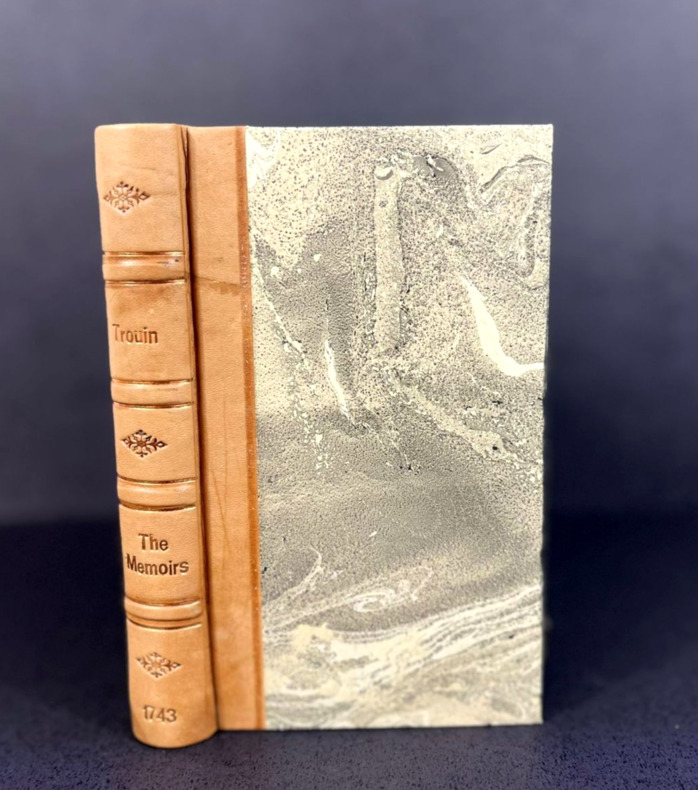
1743réf. 512London, Jacob Robinson (printed for). The second edition. In-12, 10,5 x 17 cm, (ix) 250 pp. plus one p. of errata. Hardcover, rebound recently in half leatherette (rather percaline) of a creamy tone, name, title and year embossed in bright copper on the spine, four nerves and three fleurons in bright copper too. Marble off-white/grey papers on the covers. Title page, Dedication "To the Sea-Faring Part of Great Britain and Ireland" by the anonymous translator (per ESTC N68849, the translator is George Shelvocke). Errata page before the text. Headband and an ornated initial letter at the beginning of the text, a tailpiece at the end. Two pages of catalogue of the books printed for J. Bateley after the text. Du Guay-Trouin was undoubtedly one of the most famous naval officers of his time, active from the end of the 17th to the beginning of the 18th century. In writing the manuscript of his memoirs, which he wished to be published only after his death, he wanted to establish the truth about the naval battles that occurred during his expeditions.
réf. 561954Institute of Pacific studies,1994 In-8 br. couv. ill., qq ill. et fig. en n et bl. in-texte, index, bibliographie. Envoi manuscrit. Texte en anglais.
réf. 1332328229.Gpaperback. Good. Access codes and supplements are not guaranteed with used items. May be an ex-library book. paperback
2002réf. 606400BRILL 2002 In-8, reliure moderne demi maroquin rouge / red leather binding, XXXV-607 pp, numerous b&w plates, bibliogr., index. Very rare study.
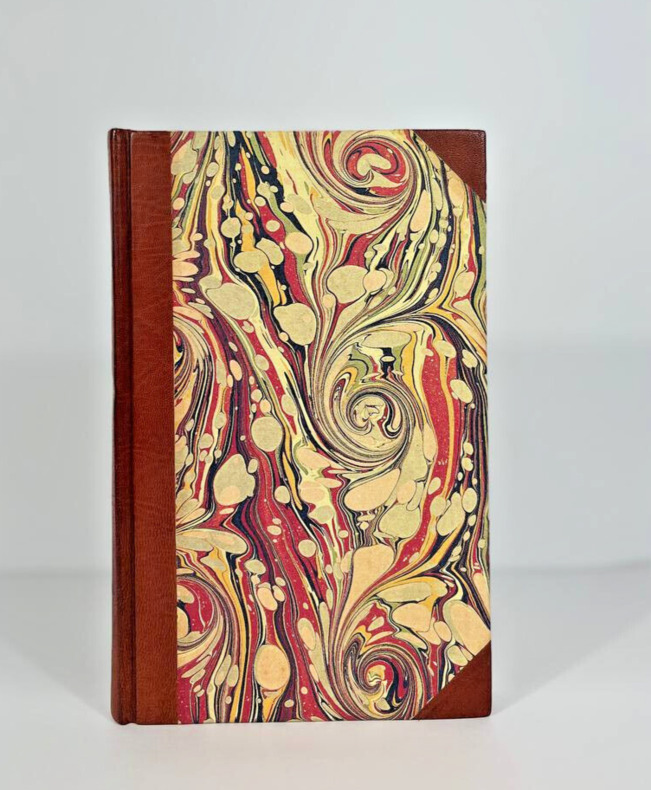
1801réf. 0065London, T. Gillet, 1801. Second edition. In English. Octavo, 215 x 136 mm, 328 pp., bound in half-calf buckram with red-ochre corners and colored boards, author's name and title in gilt with tailpiece motifs. Header edges. Folding map of the Rio de la Plata. Stamp of the library of the "Sociedade Brasileira de Cultura Inglesa" with book number and the mention "1959" in blue ballpoint pen on the back of the first page of the preface. Preface, table of contents, numerous illustrations throughout the book, and an index of subscribers. The binding is in excellent condition, the slightly yellowish-gray paper is intact and entirely legible. This book recounts the ill-fated second voyage of the Duff, a missionary ship en route to the South Sea Islands in 1798. It was only the second attempt at a missionary voyage to the Pacific. A year earlier, the Duff had successfully undertaken its first voyage, settling members of the London Missionary Society and their families on the islands of Tahiti, Tonga, and the Marquesas. However, this second attempt ended in disastrous failure. Captured first by a French privateer who mistook the Duff for a ship carrying Governor King to Australia, and then again by a Portuguese fleet, the group was forced to return to Lisbon, and William Gregory returned to England in 1800. William Gregory describes the details of his treatment in captivity, life in Spanish America (Uruguay, Argentina, Paraguay), as well as indigenous life in the "enemy port" of Montevideo and the surrounding rich estuary of the Rio de la Plata, its "products, inhabitants, clothing, customs, commerce [and] religion." *************************************** Londres, T. Gillet, 1801. Seconde édition. En anglais. In-8 de 215 x 136 mm, 328 pp., relié demi-veau en percaline à coins ocre-rouge avec plats colorés, nom d'auteur et titre en doré avec motifs de type cul-de-lampe. Tranchefile. Carte dépliante du Rio de la Plata. Tampon de la bibliothèque de la "Sociedade Brasileira de Cultura Inglesa" avec numéro de livre et mention "1959" au stylo bille bleu en revers de la première page de la préface. Préface, table des matières, nombreuses illustrations tout au long du livre et index des souscripteurs. La reliure est en excellent état, le papier un peu jaune-gris intègre et entièrement lisible. Ce livre raconte le deuxième voyage malheureux du Duff, navire missionnaire en route vers les îles des mers du Sud en 1798. Ce n'était que la deuxième tentative de voyage missionnaire dans le Pacifique. Un an plus tôt, le Duff avait entrepris avec succès son premier voyage et abouti sur l'installation des membres de la London Missionary Society et de leurs familles sur les îles de Tahiti, de Tonga et les Marquises. En revanche, cette seconde tentative se soldera par un échec désastreux. Capturé d'abord par un corsaire français qui prit le Duff pour un navire emmenant le gouverneur King en Australie, puis une seconde fois par une flotte portugaise, le groupe fut contraint de retourner à Lisbonne et William Gregory regagnera l'Angleterre en 1800. William Gregory décrit les détails de son traitement en captivité, la vie en Amérique espagnole (Uruguay, Argentine, Paraguay) ainsi que la vie indigène dans le « port ennemi » de Montevideo et le riche estuaire environnant du Rio de la Plata, ses « produits, habitants, vêtements, coutumes, commerce [et] religion ».
réf. 1332290922.Gpaperback. Good. Access codes and supplements are not guaranteed with used items. May be an ex-library book. paperback
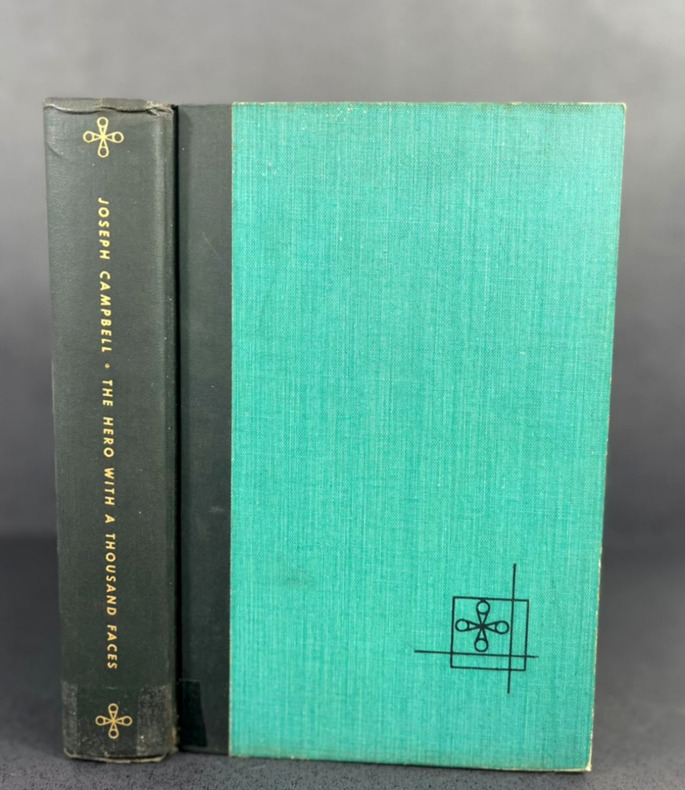
1949réf. QZI-25New York, Pantheon Books / Bollingen Foundation, 1949. First edition, first printing of this legendary book on heroes, their journey and the patterns which they show across cultures. Octavo, 16.5 x 23.5 cm, (xxiii) 416 pp. Hardcover, bound in original black cloth over green boards, bright gilt title to spine, Bradel-style hinges. No dust jacket. A small trace of a removed label at the bottom of the spine but no library markings inside. Illustrated in black and white throughout, list of illustrations (21) and list of plates (xxiv) at the beginning of the book. Most pages are bright and clean, some pages show light yellowing and marginal foxing without hindering the reading experience.