2 178 résultats
réf. DADAX9027711232New unknown
réf. SONG1938077105Used: Good unknown
réf. SONG1588293327Used: Good unknown
réf. DADAX0387340564New unknown
réf. SONG1849738068Used: Good unknown
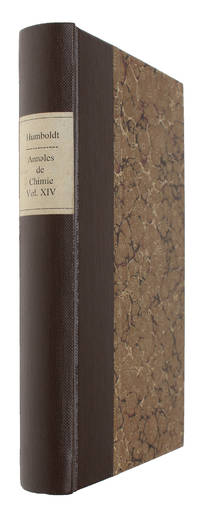
1820réf. 46026Paris Crochard 1820. No wrappers. In "Annales". In "Annales de Chimie et de Physique Par MM. Gay-Lussac et Arago" Tome XIV Cahier 4 Titlepage to vol. 14 pp. 337-442. Entire issue offered. Ørsted's paper: pp. 417-25. A few scattered brownspots. First French translation and the first translation of Oersted's epoch-making announcement in his Latin pamphlet "Extperimenta circa effectum conflictus electrici in acun magneticam. Hafniæ 1820" privately printed in a very small number and only distributed to colleques in Europe. This discovery and confirmation of the connection between 2 forces electricity and magnetism must be considered one of the happiest events in the history of science both with regard to scientific and practical results. - "From the moment that Ørsted's discovery became known it created an enormous sensation. The results communicated were so astounding that they were received with a certain distrust but they were stated with such accuracy that it could hardly be permitted to entertain any doubts. In the course of a short time the treatise was translated into all the chief languages." Kirstine Meyer. - Dibner:61 - PMM: 282 - Horblitt: 3 b. - Sparrow: 152. unknown
1820réf. 35260Paris Crochard 1820. Recent hcloth. Some repairs to inner margin of titlepage to "Annales". In "Annales de Chimie et de Physique Par MM. Gay-Lussac et Arago" Tome XIV pp. 417-25. The whole volume present: 448 pp. and 3 folded engraved plates. First French translation and the first translation of Oersted's epoch-making announcement in his Latin pamphlet "Extperimenta circa effectum conflictus electrici in acun magneticam. Hafniæ 1820" privately printed in a very small number and only distributed to colleques in Europe. This discovery and confirmation of the connection between 2 forces electricity and magnetism must be considered one of the happiest events in the history of science both with regard to scientific and practical results. - "From the moment that Ørsted's discovery became known it created an enormous sensation. The results communicated were so astounding that they were received with a certain distrust but they were stated with such accuracy that it could hardly be permitted to entertain any doubts. In the course of a short time the treatise was translated into all the chief languages." Kirstine Meyer. - Dibner:61 - PMM: 282 - Horblitt: 3 b. - Sparrow: 152. hardcover
réf. 0428510825.Ghardcover. Good. Access codes and supplements are not guaranteed with used items. May be an ex-library book. hardcover
2006réf. Q-1572932023Discovery House 2006-10-01. Paperback. New. In shrink wrap. Looks like an interesting title! Discovery House paperback
1880pp. iv, 714 + Plus portrait frontis. Numerous full page wood engravings. Foxed. Some signatures loose. Penciled ownership of Percy Schock. 8vo. Original full green cloth binding, embossed in gold and black. Binding somewhat worn and spotted. SCARCE. **PRICE JUST REDUCED! AFRICA/5
1979réf. 26025Avignon Aubanel 1979 GRAND In-8 185 pp, réédition de celle de 1973, préface de Sylvain Floirat
réf. DADAX1849736456New unknown
réf. SONG1849736456Used: Good unknown
réf. DADAX099067780XNew unknown
réf. 18269BOSTON, Little, Brown and company - 1907 - In-12 - Reliure éditeur légèrement frottée, illustrée au 1er plat - Frontispice, carte, index - Texte en anglais - 491 pages - Très propre
réf. 68961)Voyage et aventures de trois jeunes français en Californie suivi de Le fossoyeur de Kerbiane, suivi de Voyage de François Levaillant aux pays des grands et des petits Namaquois-l’Afrique Australe à notre époque. 2) Histoire de Russie depuis les temps les plus reculés continuée jusqu’à nos jours par M de M. 3) les petits-fils d’Emaï ou la Nouvelle Zélande à notre époque.Trois titres en un volume in 4 pleine toile rouge d’éditeur à décor passe-partout,titre au dos fers à froid, J Lefort Lille Paris 1878 1879 1885.1) Faux-titre titre illustré 196 pages, 1 illustration pleine page Lefort 1885, 2) faux-titre, frontispice, titre 192 pages 3)faux-titre, frontispice, titre, 192 pages Lefort 1878. Coiffe supérieure et coin supérieur droit dur premier plat réparés
réf. SONG0521858828Used: Good unknown
BOSTON, Little, Brown and company - 1907 - In-12 - Reliure éditeur légèrement frottée, illustrée au 1er plat - Frontispice, carte, index - Texte en anglais - 491 pages - Très propre
1963364 p., illus. Hardcover Very good condition good
1861réf. 53357Paris Mallet-Bachelier 1861. 4to. No wrappers. In: "Comptes Rendus Hebdomadaires des Séances de L'Academie des Sciences" Tome 52 No 8. Pp. 321- 368. Entire issues offered. Pasteur's paper: pp. 344-347. Minor marginal brownspots. First printing of a milestone paper in microbiology being the paper in which Pasteur disclosed his discovery of organisms that lived without oxygen. Two years later he named them anaerobic or zymics contrasting to aerobic which only lived in the presence of free oxygen."In 1861 he turned his attention to the butyric fermentation and made another importent discovery viz. that this fermentation proceeds in the absence of oxygen. In the fermented material he found cylindrical rods which he showed were the cause of the fermentation. Following the nomenclature and ideas of the time he regarded them as animal in character and named them Vibrio." Bullock "The History of Bacteriology" p. 61. unknown
1877réf. 48136Paris Gauthier-Villars 1877. 4to. No wrappers. In: "Comptes Rendus Hebdomadaires des Séances de L'Academie des Sciences" Tome 85 No 3. Pp. 101- 168. Entire issue offered. Pasteur & Joubert's paper: pp. 101- 115. First appearance of one of the founding papers in the realm of antibiotics being the discovery of "Vibrion septique" Cl. septicum the first pathogenic anaerobe to be found. "Pasteur and Joubert were probably the first to realize the practical implications of antibiosis. They noted the antagonism between Bacillus anthracis and other bacteria cultures in the paper offered"Garrison & Morton: No. 1932.1 and 2490. unknown
1848réf. 49456Paris Bachelier 1848. 4to. No wrappers. In: "Comptes Rendus Hebdomadaires des Séances de L'Academie des Sciences" Tome 26 No 21. Pp. 529- 548. Entire issue offered. Pasteur's paper: pp. 535-538. Clean and fine. First appearance of the announcement of Pasteur's momentous and revolutionary discovery of "molecular assymetry" and founding the science of Polarimetry.The discovery was first announced by Pasteur in may 1848 by the printing of the preliminary report of only 4 short pages in order to establish priority the paper offered. A more full exposition was published the same year in "Annales de Chimie et de Physique" 3me Series - Tome XXIV."In 1848.Pasteur studied the crystals of tartrates one of the substances that exhibited the now-clockwise now-counterclockwise effect under the microscope and found that the xcrystasls were mirror images of the others. The two crystals resemmbled each other as a right-hand glove resembles a left-hand glove.This was a revolutionary discovery and it took some courage to announce it. A few years before the well-known chemist Mitscherlich had studies the same tartrate crystals and declared them all to be identical. Pasteur was only a twenty-sic-year-old unknown. neverthelless he announced his findings and went before Biot to repeat the separation ofthe crystals before the eyes of the aged authority in the field. Biot was convinced and Pasteur received the Rumford medal of the Royal Society for his work.Pasteur had thus founded the science of polarimetry in which the measurements of the manner in which the plane of polarized light was twisted could be used to help to determine the structure of organic substance to follow various chemical reactions and so on."Asimov. Leicester & Klickstein "A Source Book of Chemistry" p. 374-379. unknown
1848réf. 47149Paris Bachelier 1848. 4to. No wrappers. In: "Comptes Rendus Hebdomadaires des Séances de L'Academie des Sciences" Tome 26 No 21. Pp. 529- 548. Entire issue offered. Pasteur's paper: pp. 535-538. First appearance of the announcement of Pasteur's momentous and revolutionary discovery of "molecular assymetry" and founding the science of Polarimetry.The discovery was first announced by Pasteur in may 1848 by the printing of the preliminary report of only 4 short pages in order to establish priority the paper offered. A more full exposition was published the same year in "Annales de Chimie et de Physique" 3me Series - Tome XXIV."In 1848.Pasteur studied the crystals of tartrates one of the substances that exhibited the now-clockwise now-counterclockwise effect under the microscope and found that the xcrystasls were mirror images of the others. The two crystals resemmbled each other as a right-hand glove resembles a left-hand glove.This was a revolutionary discovery and it took some courage to announce it. A few years before the well-known chemist Mitscherlich had studies the same tartrate crystals and declared them all to be identical. Pasteur was only a twenty-sic-year-old unknown. neverthelless he announced his findings and went before Biot to repeat the separation ofthe crystals before the eyes of the aged authority in the field. Biot was convinced and Pasteur received the Rumford medal of the Royal Society for his work.Pasteur had thus founded the science of polarimetry in which the measurements of the manner in which the plane of polarized light was twisted could be used to help to determine the structure of organic substance to follow various chemical reactions and so on."Asimov. Leicester & Klickstein "A Source Book of Chemistry" p. 374-379. unknown
1848réf. 49336Paris Victor Masson 1848 a. 1851. 8vo. 2 contemp. hcalf raised bands gilt spine. Light wear along edges. Small stamps on verso of titlepages and on verso of 1 plate. In "Annales de Chimie et de Physique" 3me Series - Tome XXIV and XXXI. 6512 pp. and 2 plates 512 pp. a. 4 plates.2 entire volumes offered. Pasteur's papers: pp. 442-459 a. pp. 459-460 1 double-page folded engraved plate pp. 67-102 a. 1 plate. Some scattered brownspots to first part of the first volume not affecting P's papers. First full exposition of Pasteur's momentous and revolutionary discovery of "molecular assymetry" and founding the science of Polarimetry.The discovery was first announced by Pasteur in may 1848 by the printing of the preliminary report of only 4 short pages in order to establish priority. The announcement - 4 pages - was published in Comptes rendus hebdomadaires de l’Académie des Sciences Paris Seance of May 15 1848 26 21 535-538 Published on May 1848."In 1848.Pasteur studied the crystals of tartrates one of the substances that exhibited the now-clockwise now-counterclockwise effect under the microscope and found that the crystals were mirror images of the others. The two crystals resembled each other as a right-hand glove resembles a left-hand glove.This was a revolutionary discovery and it took some courage to announce it. A few years before the well-known chemist Mitscherlich had studies the same tartrate crystals and declared them all to be identical. Pasteur was only a twenty-sic-year-old unknown. neverthelless he announced his findings and went before Biot to repeat the separation ofthe crystals before the eyes of the aged authority in the field. Biot was convinced and Pasteur received the Rumford medal of the Royal Society for his work.Pasteur had thus founded the science of polarimetry in which the measurements of the manner in which the plane of polarized light was twisted could be used to help to determine the structure of organic substance to follow various chemical reactions and so on."Asimov. Leicester & Klickstein "A Source Book of Chemistry" p. 374-379. hardcover
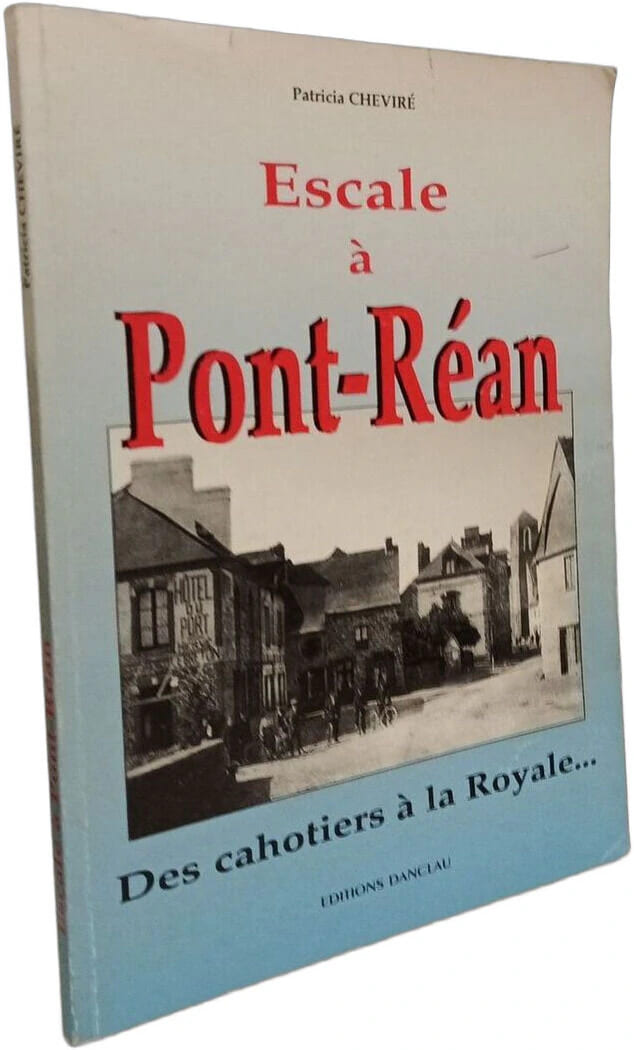
1995réf. 100155911Editions Danclau 1995 in4. 1995. Broché.