WHELER G.Livre Rare Book

1737 risultati
1723rif. P2-5A-4WHELER G. Voyage de Dalmatie, de Grèce et du levant. La Haye, Rutgert Albers, 1723. 2 volumes in-12 (170x100mm), reliés plein veau époque, dos à 5 nerfs ornés de caissons dorés, pièce de titre en maroquin rouge, tranches rouges, titre imprimé en rouge et noir, de la bibliothèque de J.C. Dezauche. XII + 358 pp. + 332pp. Illustré de 82 gravures hors-texte. Bel exemplaire. In-12, 358 & 332 pp. Illustrated with 82 engraved plates of which 8 are double page. 2 frontispieces, 5 plates of inscription and 12 pages of numismatics. Title printed in red and black, contemporary calf, red label, nice copy. From the library of J.V. Dezauche the geographer.
1966149 pages. "A summer of adventure and discovery begins for Barbara Loren, nearly fifteen, when the steamer Camosun docks at Lalooma, British Columbia. Barbara soon forgets her homesickness for Toronto, as she is swept into a new world of sun and sea, of towering forests and great mountains, and, best of all, of fascinating, friendly people." - from dust jacket. Map endpapers. Black and white photographic frontis. Dust jacket rough but now protected by archival-grade brodart cover. Book shows only light wear and is unmarked. Binding sound. Book
1973rif. 116867Stock 1973 In-8 broché 23,5 cm sur 15. 267 pages. Pelicullage desquamé. Bon état d’occasion.
rif. 31901Bruxelles, Koninklijke musea voor schone kunsten van Belgie, 1994 Softcover,357pp., 21x27.5cm., rijkelijke eillustr. in kleur en z/w., goede staat.
1796rif. AMO-3003By William Robertson, principal of the University of Edinburgh, historiographer to his Majesty for Scotland, and member of the Royal Academy of History at Madrid. In three volumes. The Seventh Edition. London, Printed for A. Strahan and T. Cadell, and E. Balfour, Edinburgh : and sold by T. Cadell Jun. W. Davies, Successors to Mr. Cadell, 1796 3 volumes in-8 (22,5 x 14 cm) de XLIV-343, (1)-475 et (1)-422-(34) pages. 4 grandes cartes dépliantes et 1 planche dépliante de glyphes de l'ancien Mexique. Reliure de l'époque (vers 1800) veau raciné, dos lisses richement ornés, pièces de titre de maroquin rouge, tomaison ovale de maroquin noir, tranches citron, roulette dorée sur les coupes. Reliure de très belle facture, probablement anglaise. Infimes frottements, un coin légèrement usé, sinon très fraîches reliures, intérieur également très frais imprimé sur beau papier, sans rousseurs notables. A noter une petite brûlure sur le bord des plats du deuxième tome (coulure acide), tranche et marge des derniers feuillets tachées sans gravité. Texte en anglais. Nouvelle édition anglaise. Robertson (1721-1793) contributed to the history of Spain and Spanish America in his History of America (1777), "the first sustained attempt to describe the discovery, conquest and settlement of Spanish America since Herrera's Décadas". Cette histoire de l’Amérique depuis l'arrivée de Christophe Colomb jusqu'à la fin de la conquête espagnole est basée sur l'étude de documents historiques solides. On y trouve le récit des conquêtes par Christopher Columbus, Hernando Cortez, Vasco Nunez de Balboa, Vasco de Gama, Ferdinand Magellan, Amerigo Vespucci. Les nombreuses notes historiques en fin de chaque volume sont très intéressantes. Les cartes géographiques sont très belles et parfaitement conservées. Provenance : Ex libris gravé monogramme non identifié. Très bel exemplaire conservé dans ses premières reliures en veau raciné.
1929Roy. 8vo., First Edition thus, on Japanese vellum, with a folding map as frontispiece, title-vignette in blue and black, and 12 maps; original blue buckram, ivory buckram back lettered in gilt, uncut, brown silk marker, covers lightly dust-soiled else a very good, bright, clean copy. EDITION LIMITED TO 1050 NUMBERED COPIES (THIS COPY OUT-OF-SERIES). Sold from an institution with its stamp on front free endpaper, half-title and title. The seventh publication of the Argonaut Press, printed by Walter Lewis at the University Press, Cambridge. The title-vignette is by William Monk.
19664to., First Edition, with a coloured portrait frontispiece, and very numerous coloured and monochrome illustrations by the author; black cloth, gilt back, a very good, clean in the dustwrapper. First published in 1966. Very scarce, especially in this condition. Spence 1030
1991240 p., illus. Hardcover Very good condition good
2000Miniature book measuring 2 3/4"w x 3 1/4"h. 124 pages with tiny deck of cards in box attached with ribbon.
1993Circa 1990s. Extensively footnoted. Appendices. Many black and white archival illustrations. Fold-out photo inside back cover. "The history of Canada's longest serving Naval Reserve Division from the days of 'yachting gentlemen' to the present day." - from back cover. Prior owner's details atop first page else clean and unmarked with light wear. Nice copy. Book
1928rif. 15154Paris, Le Symbolisme (Collection du Symbolisme), 1928 ; in-8, broché ; (4), II, 51 pp., (1) f. de table, (1) f. blanc, frontispice sur feuillet libre, illustration in-texte, couveture grise.
rif. 6229in 12 broché,faux-titre,titre,265 pages,en partie non coupé.E.Plon & Cie 1883 rousseurs éparses,sinon Très bon état
1837rif. 48086Paris Crochard et Comp. 1837. Orig. printed wrappers. No backstrip. In: "Annales de Chimie et de Physique Par MM. Gay-Lussac et Arago." tome 64 Cahier 2 Fevrier 1837. Pp. 113-224. Entire issue offered with printed wrappers. Wöhler a. Liebig's papers: pp. 185-209 a. pp. 209-217. First appearance of this classic paper in organic chemistry in which Wöhler and Liebig showed how Amygdalin could be decomposed by a vegetable emulsion the first example of a glycoside. The papers were issued at the same time in "Annalen der Physik und Chemie"."The conclusions which you have drawn from the investigation of bitter-almond oil" wrote Berzelius to Liebig and Wöhler "are certainly the most importent which have so far been reached in the domain of vegetable chemistry and give promise of shedding an unexpected light over this part of the science.The facts which you have set forth inspire such reflections that they may be regarded as the dawn of a new day in vegetable chemistry."Berzelius-Wöhler Briefwechsel."During the years that Liebig was preoccupied with the ether theory and with organic acids he also carried out two importent investigations with Wöhler. In october 1836 Wöhler wrote that he had discovered a way to transform amygdalin to oil of bitter almonds and hydrocyanid acis by distilling it with manganese and sulfuric acid and he invited Liebig to join in pursuing the topic. Two days later he made a more remarkable discovery. It had occurred to him that perhaps thetransformation of amygdalin could be effected by the albumin in the almonds in a manner similar to the action of yeast in sugar.Wöhler suspected that the decomposition was an example of what Berzelius had recently defined as catalysis. Liebig and Wöhler then divided up the detailed examination of the properties and composition of amygdalin. They precipitated from the emulsion of almonds a substance which when dissolved retain its action. They named the active substance "emulsion". Its effectiveness in very small quantities confirmed that it acted like yeast."DSB VIII p. 342. unknown
1837rif. 43739Leipzig Johann Ambrosius Barth 1837. Without wrappers as issued in "Annalen der Physik und Chemie. Hrsg.von Poggendorff" Bd. 41 Zweites Stück. Entire issue No 6 offered. Titlepage to vol. 41. Pp. 225-448 a. 2 folded engraved plates. Wöhler & Liebig's papers: pp. 345-366 pp. 366-374 a. pp. 393-397. Clean and fine. First appearance of this classic paper in organic chemistry in which Wöhler and Liebig showed how Amygdalin could be decomposed by a vegetable emulsion the first example of a glycoside."The conclusions which you have drawn from the investigation of bitter-almond oil" wrote Berzelius to Liebig and Wöhler "are certainly the most importent which have so far been reached in the domain of vegetable chemistry and give promise of shedding an unexpected light over this part of the science.The facts which you have set forth inspire such reflections that they may be regarded as the dawn of a new day in vegetable chemistry."Berzelius-Wöhler Briefwechsel."During the years that Liebig was preoccupied with the ether theory and with organic acids he also carried out two importent investigations with Wöhler. In october 1836 Wöhler wrote that he had discovered a way to transform amygdalin to oil of bitter almonds and hydrocyanid acis by distilling it with manganese and sulfuric acid and he invited Liebig to join in pursuing the topic. Two days later he made a more remarkable discovery. It had occurred to him that perhaps thetransformation of amygdalin could be effected by the albumin in the almonds in a manner similar to the action of yeast in sugar.Wöhler suspected that the decomposition was an example of what Berzelius had recently defined as catalysis. Liebig and Wöhler then divided up the detailed examination of the properties and composition of amygdalin. They precipitated from the emulsion of almonds a substance which when dissolved retain its action. They named the active substance "emulsion". Its effectiveness in very small quantities confirmed that it acted like yeast."DSB VIII p. 342. unknown
1804rif. 42469London Bulwer and Co. 1804. 4to. Without wrappers as extracted from "Philosophical Transactions of the Royal Society of London." Year 1804-Part II. Pp. 419-430. Clean and fine. First appearance of the paper in which Wollaston announced his discovery of the metallic element Rhodium."Dr. Wollaston dissolved a portion of crude platinum in qgua regia and neutralized the excess acid with caustic soda. He then added salammoniac to precipitate the platinum as ammonium chloroplatinate and mercurous cyanide to precipitate the palladium as palladium cyanide. After filteringoff the precipitate he decomposed the excess mercurous cyanide inthe filtarate by adding hydrochloric acid and evaporating to dryness. When he washed the residue with alcohol everything dissolved except a beautiful dark red powder which proved to be a double chloride of sodium and a new metal which because of the rose color of its salts Dr. Wollaston named 'Rhodium'. He found that the sodium rhodium chloride could be easely reduced by heating it in a current of hydrogen and that after the sodium chloride had been washed out the rhodium remained as a metallic powder. he also succeeded in obtaining a rhodium button."Weeks: Discovery of the Elements. p. 104-05. unknown
1967rif. 21421967 Paris Université de Paris Palais de la découverte 1962 Un volume in°12 broché 44 pages LR30
1967rif. 21341967 Paris Université de Paris Palais de la découverte 1966 Un volume in°12 broché 22 pages LR30
1980321 pages including bibliography and index. The history of the pre-Klonkike era, as recorded in the journals, letters, reports, and books of the first Europeans to penetrate the American northwest. Dabs of liquid paper upon title page. Sticker scar on front cover. Average wear. Book
rif. ria9781394207084_inpHardback. New. New Book; Fast Shipping from UK; Not signed; Not First Edition; N/A hardcover
1855rif. 45031Paris Victor Masson 1855. 8vo. Without wrappers. In 'Annales de Chimie et de Physique' Series 3 tome 30 December-issue. With halftitle to vol. 30. Pp. 385-508 a. 1 plate. Entire issue offered. Wurtz's paper: pp. 443-506. First appearance of the entire memoir in which Wurtz describes his outstanding discovery of Liebig’s prediction that there might be organic compounds analogous to ammonia and derivable from it by the replacement of hydrogen - the amines. The discovery was announced in 1849 and a small extract was printed in "Comptes rendu" 4 pp. The offered paper is the memoir in full.Wurtz is most noted for his investigation of glycols and for his discovery of the amines. The latter discovery in 1849 the paper offered was very significant at the time for ot suggested the possibility of a new type the ammonia type which helped to explain the behaviour of nitrogenous compounds. Leicester & Klickstein "A Source Book." pp. 362-63. - Parkinson "Breakthroughs" 1849 C.Charles Adolphe Wurtz was born at Strasbourg 1817. For many years he was Professor of Chemistry at the Ecole de Médicine and at Sorbonne in Paris. He was known not only for his researches in organic chemistry but also for his many literary works. He was editor of a Dictionnaire de Chemie Pure et Appliquée and after 1868 one of the editors of the Annalen der Chemie et de Physique. He died in Paris in 1884. unknown
1849rif. 47031Paris Bachelier 1849. 4to. No wrappers. In: "Comptes Rendus Hebdomadaires des Séances de L'Academie des Sciences" Tome 28 No 7. Pp. 189-240 entire issue offered. Wurtz's paper: pp. 223-226. First appearance of the announcement of Wurtz's outstanding discovery of Liebig’s prediction that there might be organic compounds analogous to ammonia and derivable from it by the replacement of hydrogen - the amines. The entire memoir was not published in full until 1855 in 'Annales de Chimie et de Physique'.Wurtz is most noted for his investigation of glycols and for his discovery of the amines. The latter discovery in 1849 the paper offered was very significant at the time for ot suggested the possibility of a new type the ammonia type which helped to explain the behaviour of nitrogenous compounds. Leicester & Klickstein "A Source Book." pp. 362-63. - Parkinson "Breakthroughs" 1849 C. unknown
1992219 pages including bibliography and black and white illustrations. "Rich in information about our past, from European discovery to settlement, the creation of the townsite, incorporation, and the development of the modern town, while preserving its village character." - Jack Collins, Mayor, Qualicum Beach. Clean and unmarked. Very light wear. Excellent copy. Book
rif. 3839traduit de l’allemand par Elise Voïart précédé d’une introduction par Charles NODIER.Grand in 8 demi-chagrin rouge à nerfs,titre,filets et caissons dorés,plats percaline chagrinée avec 3 filets à froid en encadrement.Faux-titre,frontispice,titre avec vignette,XIII,562 pages,tranches dorées;200 vignettes dans et hors texte d’après les dessins de M.Charles LEMERCIER Garnier frères libraires éditeurs sans date,rousseurs éparses habituelles,bonne édition
2007rif. 930632007 Association Culturelle des Sanctuaires de Saint-Irénée et Saint-Just - 2007 - In-4 broché, couverture illustrée en couleurs - 191 p. - Illustrations en couleurs et N&B et hors texte
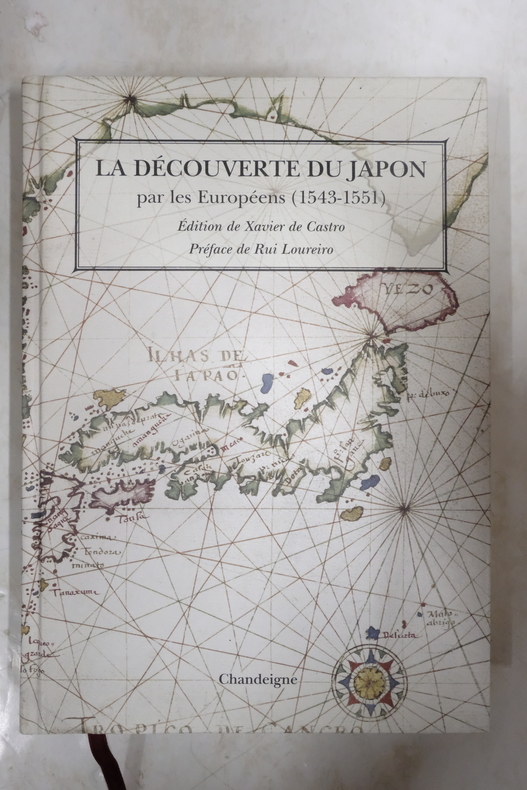
2013rif. VOY4434MRelié, 418 pages, paru le 17 mai 2013 chez Chandeigne, livre en très bon état général. Nous avons d'autres exemplaires des éditions Chandeigne, retrouvez les dans notre catalogue grâce au mot-clé "Chandeigne".