2,151 results
1874ref. 49327Leipzig Johann Ambrosius Barth 1874. 8vo. Contemp. hcalf. 5 raised bands gilt spine and gilt lettering to spine. A few scratches to spine. Small stamp on verso of first -and general- titlepage. In: "Annalen der Physik und Chemie. Hrsg. von J.C. Poggendorff" Sechste Reihe Bd. 3 = Poggendorff Bd. 153. X636 pp. 4 plates. Entire volume offered. Braun's paper: pp. 556-563. First printing of Brown's importent paper in which he described his discovery of a semiconductor diode noting that electrical currents flows freely in only one direction at the contact between a metal point and a galena crystal."In 1874 Braun published the results of his research on mineral metal sulfides. He found that these crystals conducted electric currents in only one direction. This information was important in electrical research and in measuring another property of substances the electrical conductivity but Braun’s discovery did not have immediate practical application. In the early twentieth century the principle that Braun had discovered was employed in crystal radio receivers."DSB.The Nobel Prize in Physics 1909 was awarded jointly to Guglielmo Marconi and Karl Ferdinand Braun "in recognition of their contributions to the development of wireless telegraphy". hardcover
1859ref. 43325Leipzig Johann Ambrosius Barth 1859. Without wrappers as issued in "Annalen der Physik und Chemie. Hrsg.von Poggendorff" Bd. 107 Viertes Stück.= Heft No. 8 of 1859. The entire issue offered Heft 4 of vol. 107 with titlepage to vol. 107. Pp. 497-660. - Plücker's papers: pp. 497-539 a. 638-643. Clean and fine. First printing of this milestone paper describing Plückers first observations on Cathode Rays which he called "the beautiful and mysterious green glow" and produced by discharges in tubes exhausted by means of the Geissler pump. These importent observations lead directly to Röntgens discovery of the Röntgen Rays."Cathode rays were first observed by Julius Plücker in 1859 the paper offered. They are rays which are found in the neighbourhood of the point of exit of an electrical current passing through a Geissler tube. These rays stimulated intense interest and experiment. William Crookes greatly improved these discharge tubes and intensified the degree of rarification of gases within them. The tubes in this form is known as Crookes tube. Crookes declared his conciction that the cathode rays represented matter in a fourth hitherto unobserved form.It was reserved for J.J. Thomson in 1908 to discover the true nature of the cathode rays."PMM no 386. unknown
1898ref. 43857Berlin J.A. Barth 1898. No wrappers. In "Annalen der Physik" Neue Folge Band 65 No 5. Pp. 1-240. Entire issue offered No.5. Titlepage to vol. 65. Stamp on titlepage. Schmidt's paper: pp. 141-151 textillustr. A tear to inner lower corners of pp. 24-32. not affecting Schmidt's paper. Clean and fine. First printing of Schmidt's full exposition in which he describes his discovery of the radioactivity of Thorium. Schmidt and Marie Curie independently demonstrated the radioactive quality but Schmidt's demonstration took place a few months before Curie's. The discovery was announced but not described in full in a short message published in "Verhandl. d. Phys. Gesellsch. zu Berlin 1898."Schmidt made his discovery while examining "many elements and compounds" in an effeort to determine whether any of the rays that were emitted bore a resemblance to those that Henri becquerel had found emerging from uranium and uranium compounds. He located only one such element thorium and immediately conducted absorption ionization reflection refradction and poklarization studies to determine the characteristics of its rays. Having combined a misinterpretation of Becquerel's with one of his own Schmidt concluded that thorium rays most resembled Röntgen rays - a conclusion that soon required revisoln in view of the researches of Marie Curie and Ernest Rutherford."DSB XII p. 191. unknown
1837ref. 43739Leipzig Johann Ambrosius Barth 1837. Without wrappers as issued in "Annalen der Physik und Chemie. Hrsg.von Poggendorff" Bd. 41 Zweites Stück. Entire issue No 6 offered. Titlepage to vol. 41. Pp. 225-448 a. 2 folded engraved plates. Wöhler & Liebig's papers: pp. 345-366 pp. 366-374 a. pp. 393-397. Clean and fine. First appearance of this classic paper in organic chemistry in which Wöhler and Liebig showed how Amygdalin could be decomposed by a vegetable emulsion the first example of a glycoside."The conclusions which you have drawn from the investigation of bitter-almond oil" wrote Berzelius to Liebig and Wöhler "are certainly the most importent which have so far been reached in the domain of vegetable chemistry and give promise of shedding an unexpected light over this part of the science.The facts which you have set forth inspire such reflections that they may be regarded as the dawn of a new day in vegetable chemistry."Berzelius-Wöhler Briefwechsel."During the years that Liebig was preoccupied with the ether theory and with organic acids he also carried out two importent investigations with Wöhler. In october 1836 Wöhler wrote that he had discovered a way to transform amygdalin to oil of bitter almonds and hydrocyanid acis by distilling it with manganese and sulfuric acid and he invited Liebig to join in pursuing the topic. Two days later he made a more remarkable discovery. It had occurred to him that perhaps thetransformation of amygdalin could be effected by the albumin in the almonds in a manner similar to the action of yeast in sugar.Wöhler suspected that the decomposition was an example of what Berzelius had recently defined as catalysis. Liebig and Wöhler then divided up the detailed examination of the properties and composition of amygdalin. They precipitated from the emulsion of almonds a substance which when dissolved retain its action. They named the active substance "emulsion". Its effectiveness in very small quantities confirmed that it acted like yeast."DSB VIII p. 342. unknown
1836ref. 43417(Leipzig, Johann Ambrosius Barth, 1836). Without wrappers. In ""Annalen der Physik und Chemie. Hrsg. von J.C. Poggendorff"", Band 38, No. 6 (= Zweyte Stück). Titlepage to Vol. 38. Pp. 241-450 a. 3 engraved plates.(Entire issue offered, Heft No. 6, Bd. 38). Schwann's paper: pp. 358-364. Clean and fine.
1826ref. 46031Leipzig, Johann Ambrosius Barth, 1826. Contemp. hcalf. Gilt spine. A few scratches to spine. In ""Annalen der Physik und Chemie. Hrsg.von Poggendorff"", Bd. 8. (10),526 pp. and 3 folded engraved plates. Small stamps onverso of titlepage. (Entire volume offered). Unverdorben's paper: pp. 253-265, 397-410, 477-487. Clean and fine.
1819ref. 43320Leipzig, Johann Ambrosius Barth, 1819. Without wrappers as issued in ""Annalen der Physik. Hrsg. von Ludwig Wilhelm Gilbert"", Bd. 60 Heft 2 (= Jahrgang 1818, zehntes Stück). Pp. 113-218 a. 1 engraved plate (map). The entire issue offered (Heft 2). Stromeyer's paper pp. 193-210. Clean and fine.
1836ref. 43417Leipzig Johann Ambrosius Barth 1836. Without wrappers. In "Annalen der Physik und Chemie. Hrsg. von J.C. Poggendorff" Band 38 No. 6 = Zweyte Stück. Titlepage to Vol. 38. Pp. 241-450 a. 3 engraved plates.Entire issue offered Heft No. 6 Bd. 38. Schwann's paper: pp. 358-364. Clean and fine. First appearance of an importent paper in the history of biology in which Schwann describes his discovery and isolation of pepsin the substance in the stomach that aids digestion of eggwhite. It is the FIRST KNOWN ANIMAL ENZYME. The paper appeared at the same time in "Archiv für Anatomie Physiologie und Wissenschaftliches Medicin"Theodor Schwann 1810-1882 was a great German physiologist pathologist and experimenter. One of the founders of the cell doctrine and of the idea of the living nature of yeast. Born at Neuss near Düsseldorff. A catholic educated in the Jesuit Gymnasium in Cologne. Intended for the church but took to medicine. He was a pupil of Johannes Müller and a collegueand lifelong friend of J. Henle the anatomist. In Berlin Schwann was Johannes Müller's assistent for five years and it was then that he discovered pepsin in 1836 the paper offered.Parkinson "Breakthroughs" 1836 B.The issue contains other importent papers by Seebeck Matteucci Marchand G. Magnus "Ueber die Wirkung des Ankers auf Elektromagnete und Stahlmagnete" Schönbein J. Müller "Ueber die Structur und die chemischen Eigenschaften der thierischen Bestandtheile der Knorpel und Knochen" Nachtrag. Forchhammer "Der kopaische See und seine unterirdischen Abzugskanäle." with a map. unknown
1819ref. 43320Leipzig Johann Ambrosius Barth 1819. Without wrappers as issued in "Annalen der Physik. Hrsg. von Ludwig Wilhelm Gilbert" Bd. 60 Heft 2 = Jahrgang 1818 zehntes Stück. Pp. 113-218 a. 1 engraved plate map. The entire issue offered Heft 2. Stromeyer's paper pp. 193-210. Clean and fine. First appearance of Strohmeyer's account of his discovery of Cadmium. The history of its discovery was very complicated as some other laid claim to its discovery.Stromeyer was inspector general of apothecaries in Hannover. "In 1817 fulfilling the duties of his office he came across an apothecary's shop in which a bottle labeled zinc oxide contained zinc carbonate. Following this up Stromeyer found himself interested in zinc carbonate which turned yellow on strong heating as though it contained iron as an impurity yet it contained no iron. He traced the yellow to an oxide not of zinc but of a hitherto unknown metal rather like it chemically. He named it cadmium for a zinc ore in which it is usually found accompanying the zinc."Asimov.Weeks "Discovery of the Elements" pp. 135-39. unknown
1826ref. 46031Leipzig Johann Ambrosius Barth 1826. Contemp. hcalf. Gilt spine. A few scratches to spine. In "Annalen der Physik und Chemie. Hrsg.von Poggendorff" Bd. 8. 10526 pp. and 3 folded engraved plates. Small stamps onverso of titlepage. Entire volume offered. Unverdorben's paper: pp. 253-265 397-410 477-487. Clean and fine. First appearance of the paper in which Unverdorben describes the method by which he discovered Aniline which became so importent in the manufacture of dyes plastics and pharmaceuticals. "Aniline from the Portugese anil applied to indigo and derived from the Arabic an-nil the blue substance was first obtained by Unverdorben by heating indigo and was given the name 'crystalline'. In 1841 Carl Julius von Fritzsche 1807-71 an assistant to Mitscherlich and later a member of the Academy of Sciences in St. petersburg obtained the same compound from anthranilic acid which was produced by the action of caustioc alkalis on indigo and called it 'aniline'. in 1843 Hofmann showed that the three substances crystalline aniline and benzidam were identical with the base isolated from coal tar."Findlay "A Hundred years of Chemistry" p. 134.Parkinson "Breakthroughs" 1826 C.The volume contains other importent papers Antoine Jerome Balard "Ueber eine besondere Substanz im Meereswasser" in which he describes his discovery of the element BROMINE first German edition pp. 114-124 a. pp. 319-336. Parkinson "Breakthroughs" 1826 C. And Eilhard Mitscherlich "Ueber eine neue Klasse von Krystallformen" pp. 427-442. unknown
2003ref. 6462003 - broché - Editions l'Harmattan - Collection Questions contemporaines - 2003 - In-8 (21,5 x 13,5 cm) broché - 480 pages - ISBN : 9782747543545 - Ouvrage collectif sous la direction de Jean-François CHIANTARETTO et Régine ROBIN
ref. 5307in 12 broché titre,190 pages,1 page de catalogue Germer Baillière & Cie Bibliothèque utile XLI rousseurs éparse, plus fortes en début et fin de volume
ref. 45393aafParis, Victor Attinger, ca 1940, in-8vo, Frontispice-carte + 140 p., brochure originale illustrée.
2009ref. Q-1572933666RBC Ministries 2009-01-01. Paperback. New. New. In shrink wrap. Looks like an interesting title! RBC Ministries paperback
1983Features: Wild Indians of the 20th Century; Ever been attacked by an angry range mare? Don Bell has; The High Price of Strawberries - His Crimes began with Theft and Ended with Murder - Patrick Coughlin in Utah; True West Party - a gala gathering in the west; Sacred White Buffalo - Used in Secret Indian Ceremonies; Sarah Winnemucca and the War in the West (Northern Paiutes); Buffalo Calf Road - Indian Heroine - She Fought to Save Cheyenne Way of Life - a heart-rending story of an Indian woman who fought Custer at the Battle of Little Big Horn; Terror in Central Texas - 15 to 40 Indians overtook the Riggs family, killed John Riggs and his wife and scalped them and carried off their two little girls; Forgotten Frontier Food - Part I; William Cary - Artist/Adventurer; That Crazy Young Man and His Flying Machine - Lyman Gilmore flew nine months before the Wrights - one of the most bizarre episodes to emerge from California's northern mines! Clean, bright and unmarked with light wear. Nice copy. Book
ref. 8387in 12 broché couverture illustrée en couleurs.faux-titre, titre,XXX,327 pages,plan dépliant,nombreuses illustrations dans le texte et hors-texte,J.L PATON imprimeur éditeur 10Août 1929.Très bon état
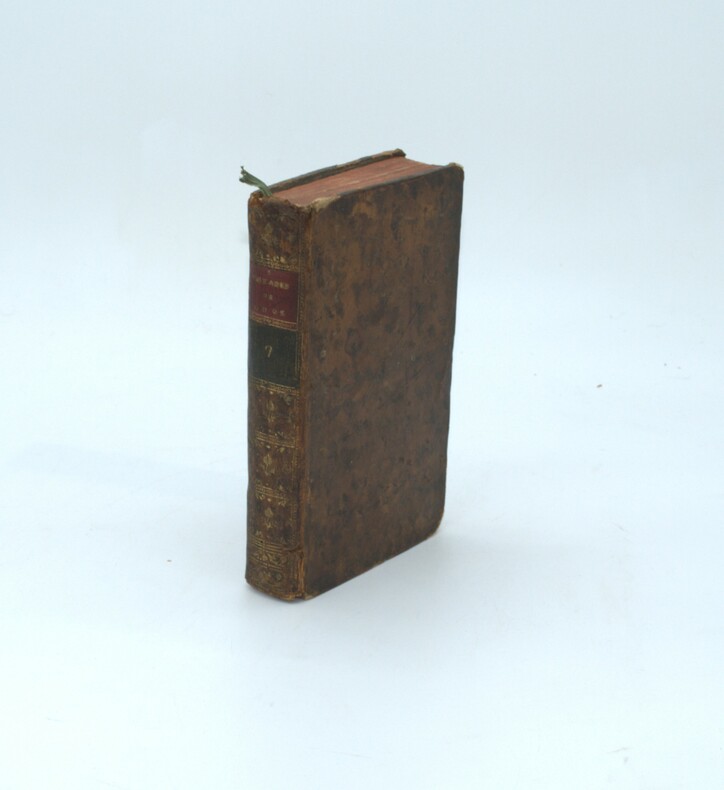
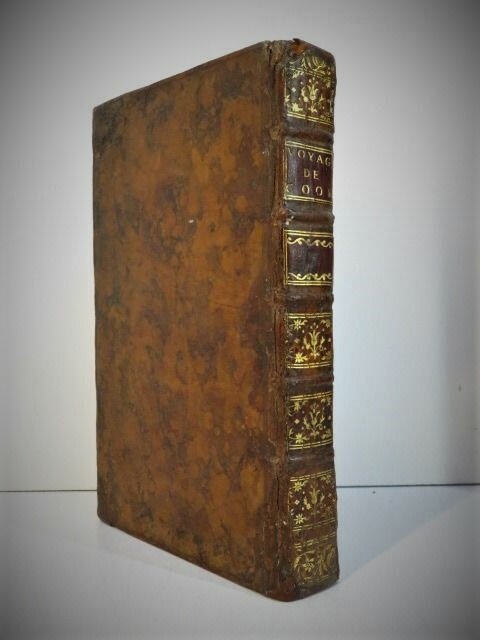
1782ref. PHO-1331Paris ,Chez Pissot père et fils, Chez Laporte, (1782) 1 volume in-octavo (20 x 12,7 cm) de X-508 pp. ,Reliure plein veau marbré d'époque, dos lisse orné avec pièce de titre et tomaison, tranches rouges ,la carte et le frontispice sont manquants , défauts à la reliure .
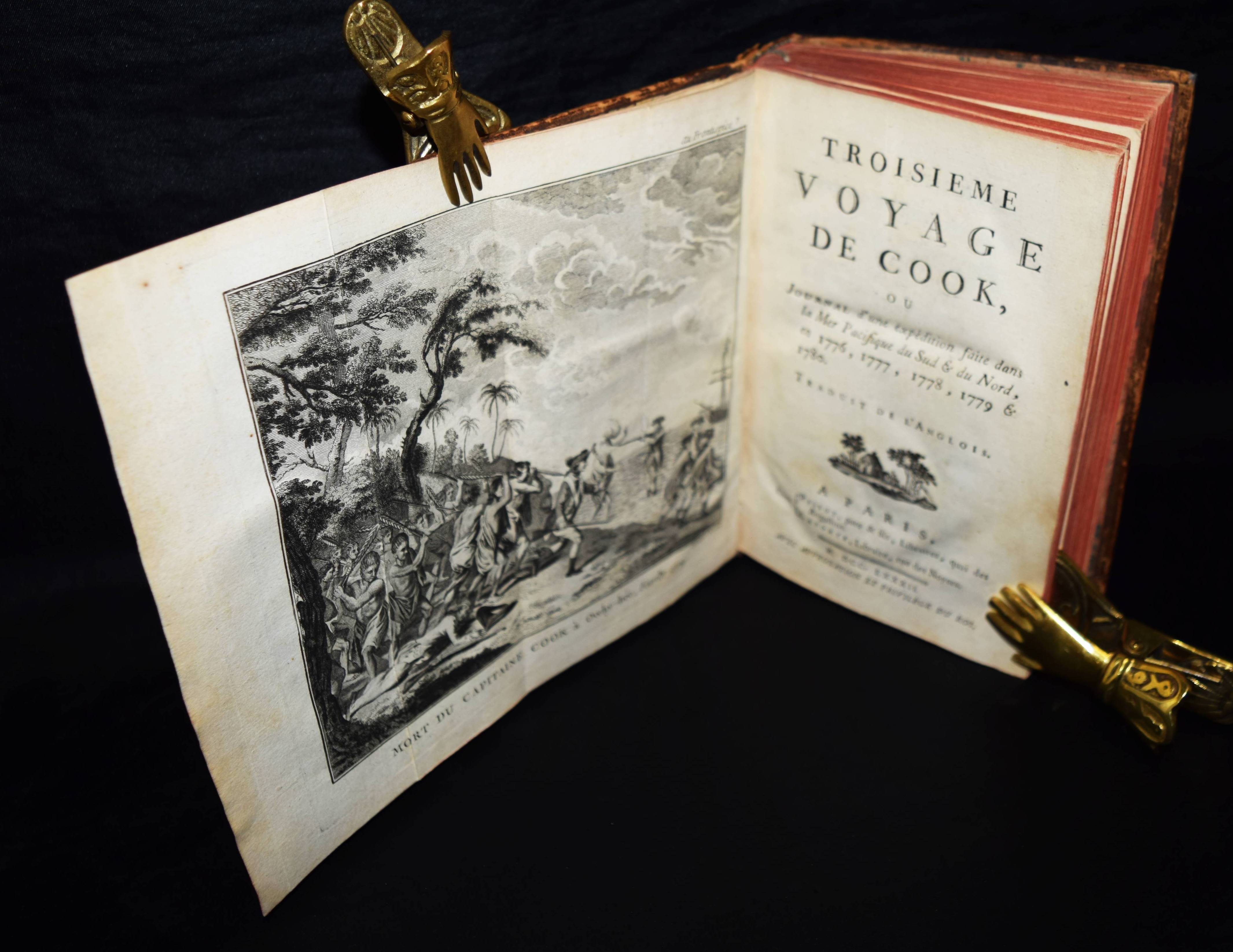
1782ref. PHO-1839Paris, Chez Pissot père et fils, Chez Laporte, (1782) 1 volume in-octavo (20 x 12,7 cm) de X-508 pp., Reliure plein veau marbré d'époque, dos lisse orné avec pièce de titre, tranches rouges, illustré de la gravure de la mort de Cook, la carte est manquante, défauts à la reliure, mouillure en fin d’ouvrage.
1782ref. PHO-717Paris ,Chez Pissot père et fils, Chez Laporte, (1782) 1 volume in-octavo (20 x 13 cm) de X-508 pp. Reliure plein veau marbré d'époque, dos à nerfs orné avec pièce de titre,la carte et le frontispice sont manquants.
1782ref. 106474BBParis, Pissot, pere & fils et Laporte, 1782. 8°. X, 508 S. mit gestoch. gefalt. Frontispiz u. 1 gefalt. gestoch. Karte. Kalbslederband der Zeit mit goldgepr. Rückenschild und floraler Rückenvergoldung. [4 Warenabbildungen]
ref. 11390France, bords du Rhin, Belgique In 12 cartonnage romantique, polychrome, gaufré de l’éditeur. Chromolithographie contrecollée, dans un encadrement doré, sur le premier plat. Frontispice gravé (cathédrale de Cologne) titre, 216 pages, une gravure hors-texte château d’Heidelberg. Rouen Mégard & Cie imprimeurs libraires 1857. Petites rousseurs éparses, une tache brun clair en marge supérieure de la page 214. Petits frottements sur les coupes.
ref. 4716Etude des moeurs, paysages et croquis, profils et portraits. Deuxième édition revue et augmentée.. In 4 pleine toile rouge de l’éditeur à décor passe-partout.Faux-titre,frontispice,titre,366 pages, illustrations hors-texte de NOTOR,tranches dorées.Alcide Picard et Kaan éditeurs sans date.Rousseurs éparses habituelles,charnières habilement renforcées,pages de garde remontées.Bon état d’ensemble.
ref. 8355études de mœurs-paysages et croquis-profils et portraits. Edition revue et augmentée.In 4 reliure éditeur cartonnée rouge premier plat illustré avec titre,dorés.Faux-titre, frontispice titre illustré,344 pages,illustrations pleine page tranches dorées,carte de la Martinique,dépliante. Paris Alcide Picard éditeur sans date. Très bon état
ref. 235Un volume grand in 8 broché,faux-titre,portrait de l'auteur,titre,VIII,419 pages,nombreuses illustrations dans le texte d'après la photographie.A.Maloine Imprimerie Nationale 1906.Très bon état.
ref. SLIVCN-9782758550792IGN