1936réf. 58169Philadelphia: John C. Winston Co. 1936. 4to. 103 1 pp. Woodcut-engraved colour frontisp. numerous woodcut engraved plates many in colour several double-page. Blue publisher’s linen cover art by Eskridge illustrated endpapers slight bumping to couple corners w/ d.j. wraparound Art Deco cover art by Eskridge minor rubbing edgewear still NF/VG copy ownership markings for young Paul Burns b. 1933 dated Dec. 3 1941 4 days before the attack on Pearl Harbor. First edition stated of this lavishly illustrated account of the legendary King Umi son of King Liloa and ancestor to King Kamehameha and the building of Ahua A’Umi Heaiau the meeting place commemorating the unification of Hawaii. Eskridge 1891-1975 had been encouraged to sail to the Gambier islands and explore life there by Queen Maraii of Tahiti and he would eventually spend eight months living writing and painting of life in the islands at the time. He was a noted painter and muralist who later executed murals for the WPA in Honolulu and Chicago. Very scarce in original dustjacket. John C. Winston Co., unknown
1981réf. 10190Honolulu University Press of Hawaii 1981. 1981. First edition. Small 4to. Illustrated. Bibliography appendix index. Dust jacket unclipped. Very good-fine. 192 pages. No signatures or bookplates. "Lively picture of the Hawaiian shipping trades - from 19th century wood schooners to the huge containerships of today" DJ. 1st Edition. Hardcover. Very Good/Dust Jacket Included. Honolulu, University Press of Hawaii [1981]. hardcover books
1975réf. 10191Lawai Kauai HI Woolsey Press 1975. 1975. First edition. 8vo. Illustrated with 19 color plates; over 50 b/w photos by J. Patricia M. Swenson and others. Glossary. Dust jacket price clipped. Very good-fine. 126 pages. No other signatures or bookplates. Signed and inscribed by Maili Yardley on the front free endpaper in black: "For Mrs. Brophy with fond Aloha - Maili Yardley.". Signed by Authors. 1st Edition. Hardcover. Very Good/Dust Jacket Included. [Lawai, Kauai, HI] Woolsey Press [1975]. hardcover books
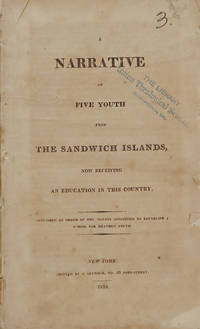
1816réf. 68845New York: Printed by J. Seymour 1816. Inspiration for the First Mission to Hawaii A rare account of the lives of the five Hawaiian youths who would come to form a core of initial students enrolled at the new Foreign Mission School established at Cornwall Connecticut in 1816. The school formed under the auspices of the American Board of Commissioners for Foreign Missions ABCFM would serve to educate foreign students in preparation for missionary work in their native lands and elsewhere. Published in 1816 A Narrative of Five Youth from the Sandwich Islands was the first of many publications intended to raise funds and stir up popular support for the new school as well as for the first Christian mission sent to the Hawaiian Islands three years later. As such it served as part of the early efforts to bring Hawaii within the cultural and commercial orbit of the United States. By the second decade of the 19th century Hawaii had become an integral part of America's burgeoning China trade serving not only as a crucial resupply hub and convenient stopover for Yankee ships sailing between North America and China and around Cape Horn but also as a lucrative source of sandalwood which American merchants traded in exchange for Chinese silk tea and porcelain. Where American merchants saw commercial possibilities however Protestant missionaries saw opportunities for Christian conversion. In April 1809 two Hawaiian youths Henry Obookiah and Thomas Hopoo arrived in New York aboard the China trade ship Triumph in the hope of receiving an education in the United States. Shortly after their arrival the two took up residence in the New Haven home of the ship's captain Caleb Brintnall. There Obookiah quickly came to the attention of several Yale students who offered to tutor him. Soon he was invited to join the household of Yale president Timothy Dwight. As John Demos explains in his history of the Foreign Mission School where Obookiah became the star student and "the most famous Hawaiian emigrant of his time" "Dwight's home was the starting point" of an eight-year odyssey "that would take Obookiah into three states eight different towns and at least a dozen separate families scattered across the New England countryside" and which culminated in his conversion to Christianity and admission to church membership in 1814. Obookiah and Hopoo were eventually joined by three other Hawaiian youths William Tennooe John Honoree and George Prince Tamoree the son of a Hawaiian king. The stories of these five youths shared "a number of common elements. All had spent time as sailors on American trade ships. Three had served at sea in the War of 1812. Most had experienced periods of extreme hardship after reaching New England.All had sooner or later found sponsors teachers and spiritual guides. All had been moved through a kind of missionary pipeline centered in New Haven but reaching out well across the Connecticut countryside" Demos. Together the five Hawaiian youths would "become the founding nucleus of an institution unlike any previously seen on American soil" Demos. The Narrative was part of a publicity campaign designed to raise funds for the new school and for an eventual mission to Hawaii. As Demos explains the Narrative originated as "a 'manuscript account'" of the "lives and prospects" of the five Hawaiian youths "written some months before by parties unknown and circulated by hand in the interim; the agents of the school were eager to arrange its publication "for the information and excitement of the Christian public.'.it was printed in New York in the last weeks of the year 1816." Such publications "capitalized on the interest in the Sandwich Islands and the islands of the Pacific that had begun gradually with the first sales of the journals and logs from the voyages of Captain Cook the much-performed pantomime of his death and the ubiquitous commercial news that related the daily comings and goings of ships from New England to the Pacific" Arista. A New Jersey issue of the Narrative appeared in the same year; it is not known which preceded the other. The text gives biographies of each of the five youths discusses their activities and experiences in America and prints various letters written by them. According to the authors the Narrative offered "a simple and authentic statement of facts respecting the youth now under the care of the agents; with specimens of their ability and improvement." The final pages discuss the establishment of the Foreign Mission School at Cornwall and include the text of the school's constitution. As the constitution states the object of the school would be "the education of heathen youth in such a manner as that.they may be qualified to become missionaries schoolmasters interpreters physicians or surgeons among heathen nations and to communicate such information in agriculture and the arts as shall tend to promote Christianity and civilization." The Narrative Demos explains "was perfectly timed to catch a rising wave of public interest in 'heathens' abroad.Not coincidentally donations to the ABCFM would soar—from just over $12000 to nearly $30000—in the year of the Mission School's founding." Tragically in 1818 two years after the publication of the Narrative Obookiah died of typhus. His Memoirs edited by Edwin Dwight were published shortly thereafter and the success of that book inspired a wave of interest in the islands which culminated in the sailing of the first missionary bark Thaddeus for Hawaii on October 23 1819. Over the course of nearly a decade from 1817 to 1826 some 100 students from around the world passed through the doors of the Foreign Mission School at Cornwall. They included Hawaiians and other Pacific Islanders; Native Americans including Cherokees Choctaws Creeks and others; students from East Asia including China India and the Malay Peninsula; and others from Europe Mexico and throughout the United States. A rare and significant piece of Hawaiiana and part of some of the earliest efforts to bring Hawaii under the cultural influence of the United States. Dbd. Stitched gathering. A few leaves loose but holding. Text lightly foxed and toned. Small section along upper edge of final leaf torn away not affecting text. Library stamp of Union Theological Seminary Richmond Virginia in blue ink to titlepage. Good. FORBES 456. SABIN 51790. AMERICAN IMPRINTS 36725 38355. John Demos The Heathen School: A Story of Hope and Betrayal in the Age of the Early Republic New York: Alfred A. Knopf 2014 pp.22 29 31-32 38-39. Noelani Arista The Kingdom and the Republic: Sovereign Hawai'i and the Early United States Philadelphia: Univ. of Pennsylvania Press 2019 pp.61-62. unknown
1816réf. 68845New York: Printed by J. Seymour 1816. Inspiration for the First Mission to Hawaii A rare account of the lives of the five Hawaiian youths who would come to form a core of initial students enrolled at the new Foreign Mission School established at Cornwall Connecticut in 1816. The school formed under the auspices of the American Board of Commissioners for Foreign Missions ABCFM would serve to educate foreign students in preparation for missionary work in their native lands and elsewhere. Published in 1816 A Narrative of Five Youth from the Sandwich Islands was the first of many publications intended to raise funds and stir up popular support for the new school as well as for the first Christian mission sent to the Hawaiian Islands three years later. As such it served as part of the early efforts to bring Hawaii within the cultural and commercial orbit of the United States. By the second decade of the 19th century Hawaii had become an integral part of America's burgeoning China trade serving not only as a crucial resupply hub and convenient stopover for Yankee ships sailing between North America and China and around Cape Horn but also as a lucrative source of sandalwood which American merchants traded in exchange for Chinese silk tea and porcelain. Where American merchants saw commercial possibilities however Protestant missionaries saw opportunities for Christian conversion. In April 1809 two Hawaiian youths Henry Obookiah and Thomas Hopoo arrived in New York aboard the China trade ship Triumph in the hope of receiving an education in the United States. Shortly after their arrival the two took up residence in the New Haven home of the ship's captain Caleb Brintnall. There Obookiah quickly came to the attention of several Yale students who offered to tutor him. Soon he was invited to join the household of Yale president Timothy Dwight. As John Demos explains in his history of the Foreign Mission School where Obookiah became the star student and "the most famous Hawaiian emigrant of his time" "Dwight's home was the starting point" of an eight-year odyssey "that would take Obookiah into three states eight different towns and at least a dozen separate families scattered across the New England countryside" and which culminated in his conversion to Christianity and admission to church membership in 1814. Obookiah and Hopoo were eventually joined by three other Hawaiian youths William Tennooe John Honoree and George Prince Tamoree the son of a Hawaiian king. The stories of these five youths shared "a number of common elements. All had spent time as sailors on American trade ships. Three had served at sea in the War of 1812. Most had experienced periods of extreme hardship after reaching New England.All had sooner or later found sponsors teachers and spiritual guides. All had been moved through a kind of missionary pipeline centered in New Haven but reaching out well across the Connecticut countryside" Demos. Together the five Hawaiian youths would "become the founding nucleus of an institution unlike any previously seen on American soil" Demos. The Narrative was part of a publicity campaign designed to raise funds for the new school and for an eventual mission to Hawaii. As Demos explains the Narrative originated as "a 'manuscript account'" of the "lives and prospects" of the five Hawaiian youths "written some months before by parties unknown and circulated by hand in the interim; the agents of the school were eager to arrange its publication "for the information and excitement of the Christian public.'.it was printed in New York in the last weeks of the year 1816." Such publications "capitalized on the interest in the Sandwich Islands and the islands of the Pacific that had begun gradually with the first sales of the journals and logs from the voyages of Captain Cook the much-performed pantomime of his death and the ubiquitous commercial news that related the daily comings and goings of ships from New England to the Pacific" Arista. A New Jersey issue of the Narrative appeared in the same year; it is not known which preceded the other. The text gives biographies of each of the five youths discusses their activities and experiences in America and prints various letters written by them. According to the authors the Narrative offered "a simple and authentic statement of facts respecting the youth now under the care of the agents; with specimens of their ability and improvement." The final pages discuss the establishment of the Foreign Mission School at Cornwall and include the text of the school's constitution. As the constitution states the object of the school would be "the education of heathen youth in such a manner as that.they may be qualified to become missionaries schoolmasters interpreters physicians or surgeons among heathen nations and to communicate such information in agriculture and the arts as shall tend to promote Christianity and civilization." The Narrative Demos explains "was perfectly timed to catch a rising wave of public interest in 'heathens' abroad.Not coincidentally donations to the ABCFM would soar—from just over $12000 to nearly $30000—in the year of the Mission School's founding." Tragically in 1818 two years after the publication of the Narrative Obookiah died of typhus. His Memoirs edited by Edwin Dwight were published shortly thereafter and the success of that book inspired a wave of interest in the islands which culminated in the sailing of the first missionary bark Thaddeus for Hawaii on October 23 1819. Over the course of nearly a decade from 1817 to 1826 some 100 students from around the world passed through the doors of the Foreign Mission School at Cornwall. They included Hawaiians and other Pacific Islanders; Native Americans including Cherokees Choctaws Creeks and others; students from East Asia including China India and the Malay Peninsula; and others from Europe Mexico and throughout the United States. A rare and significant piece of Hawaiiana and part of some of the earliest efforts to bring Hawaii under the cultural influence of the United States. Dbd. Stitched gathering. A few leaves loose but holding. Text lightly foxed and toned. Small section along upper edge of final leaf torn away not affecting text. Library stamp of Union Theological Seminary Richmond Virginia in blue ink to titlepage. Good. FORBES 456. SABIN 51790. AMERICAN IMPRINTS 36725 38355. John Demos The Heathen School: A Story of Hope and Betrayal in the Age of the Early Republic New York: Alfred A. Knopf 2014 pp.22 29 31-32 38-39. Noelani Arista The Kingdom and the Republic: Sovereign Hawai'i and the Early United States Philadelphia: Univ. of Pennsylvania Press 2019 pp.61-62. unknown books
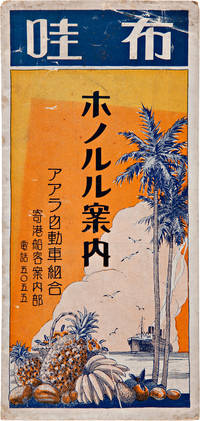
1930réf. 57146N.p. ca. 1930. Rare Guide for Japanese Tourists in Hawaii Pre-WWII A brightly printed and well-preserved piece of Hawaii ephemera for visitors from Japan. This brochure put together by the Aala Automobile Union sometime around 1930 was given to visitors arriving by ship. It features a street map of Honolulu and brief descriptions of attractions accompanied by a photographic illustration in each panel printed entirely in Japanese. Among the attractions are the Moanalua Gardens Diamond Head Nuuanu Pali the Bishop Museum of Natural History and a bronze statue of Kamehameha I. The reverse of the city map includes a small map of the island of Oahu accompanied by some details about the geography and population and advertises tours of other attractions operated by Aala. A very rare and interesting look at Japanese tourism in Hawaii prior to World War II. OCLC records copies at the International Resource Center for Japanese Studies Nichibunken in Kyoto and at the Huntington Library. Lightly soiled minor foxing and wear near folds. Very good plus. OCLC 1020932646 1285604465. unknown
1930réf. 57146N.p. ca. 1930. Rare Guide for Japanese Tourists in Hawaii Pre-WWII A brightly printed and well-preserved piece of Hawaii ephemera for visitors from Japan. This brochure put together by the Aala Automobile Union sometime around 1930 was given to visitors arriving by ship. It features a street map of Honolulu and brief descriptions of attractions accompanied by a photographic illustration in each panel printed entirely in Japanese. Among the attractions are the Moanalua Gardens Diamond Head Nuuanu Pali the Bishop Museum of Natural History and a bronze statue of Kamehameha I. The reverse of the city map includes a small map of the island of Oahu accompanied by some details about the geography and population and advertises tours of other attractions operated by Aala. A very rare and interesting look at Japanese tourism in Hawaii prior to World War II. OCLC records copies at the International Resource Center for Japanese Studies Nichibunken in Kyoto and at the Huntington Library. Lightly soiled minor foxing and wear near folds. Very good plus. OCLC 1020932646 1285604465. unknown books
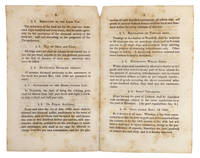
1843réf. 68824Lahainaluna: Seminary Press 1843. Early Hawaiian Laws Including Those Relating to Whaling and Divorce An exceedingly rare early Hawaiian imprint. The work is a supplement to the English translation of Ke Kumu Kanawai a Me Na Kanawai o Ko Hawaii Pae Aina Forbes 1337. It contains ten laws and resolutions approved by Hawaiian King Kamehameha III and the premier Kekauluohi "at the council house at Luaehu Lahaina Maui Sandwich Islands." The laws and resolutions themselves deal with land leases taxes on land and pets the timing of the evening guns divorce whaling public auctions tonnage dues ship clearances the removal of duties on gold and silver exports and the payment of jurors. The laws had to be submitted for approval to the British commission that exercised temporary control over Hawaii between February and July 1843 and it is noted in the penultimate paragraph "All the foregoing laws.will take effect after being communicated to the British Commission and proclaimed at each of the principal islands." The resolution on "Respecting Divorced Persons" is especially interesting. This resolution allowed among other things all "divorced persons" not just men to remarry if their divorce was granted before the 1840 Constitution was adopted. The 1840 Hawaiian Constitution had placed certain restrictions on remarriage for both divorced men and women. For instance in cases of adultery the guilty party whether a man or a woman was forbidden to remarry while the former partner was alive. An absence of four years whether through criminal confinement or overseas service or some other reason was often grounds for divorce and remarriage for the party who remained in Hawaii. If a husband tried to kill his wife or vice versa the offending party was not allowed to remarry. The present resolution provided for all those who divorced before the 1840 Constitution to remarry no matter the reason for the divorce. The resolution regarding whaling ships is also notable. It allows whalers to barter or sell up to $200 worth of goods duty free "for the purpose of procuring refreshments." If a whaling ship barters or sells more than the $200 threshold "they shall pay the customary duties." This is likely a reaction to laws or regulations set down in other Pacific ports during the golden age of the whaling industry when Hawaii was an important port of call for ships of all nations. "The edition is unknown. This is not recorded in reports of either the 1843 or 1844 General Meetings. Because of its small size it was doubtless part of the category 'small jobs ship lists government protests &c.' in the 1844 minutes" - Forbes. Forbes lists no references for the work and the location of only eight copies all in Hawaii. OCLC locates copies to only three institutions: Yale University University of Hawaii at Manoa and Bishop Museum Library. An uncommon and elusive early Hawaiian legal work that touches upon women's issues and the whaling industry at the height of its prominence in the world economy. 12mo. Original printed self-wrappers. Small chip at head of spine just separating at lower fold minor foxing. Very good. FORBES 1393. OCLC 862079031. unknown
1843réf. 68824Lahainaluna: Seminary Press 1843. Early Hawaiian Laws Including Those Relating to Whaling and Divorce An exceedingly rare early Hawaiian imprint. The work is a supplement to the English translation of Ke Kumu Kanawai a Me Na Kanawai o Ko Hawaii Pae Aina Forbes 1337. It contains ten laws and resolutions approved by Hawaiian King Kamehameha III and the premier Kekauluohi "at the council house at Luaehu Lahaina Maui Sandwich Islands." The laws and resolutions themselves deal with land leases taxes on land and pets the timing of the evening guns divorce whaling public auctions tonnage dues ship clearances the removal of duties on gold and silver exports and the payment of jurors. The laws had to be submitted for approval to the British commission that exercised temporary control over Hawaii between February and July 1843 and it is noted in the penultimate paragraph "All the foregoing laws.will take effect after being communicated to the British Commission and proclaimed at each of the principal islands." The resolution on "Respecting Divorced Persons" is especially interesting. This resolution allowed among other things all "divorced persons" not just men to remarry if their divorce was granted before the 1840 Constitution was adopted. The 1840 Hawaiian Constitution had placed certain restrictions on remarriage for both divorced men and women. For instance in cases of adultery the guilty party whether a man or a woman was forbidden to remarry while the former partner was alive. An absence of four years whether through criminal confinement or overseas service or some other reason was often grounds for divorce and remarriage for the party who remained in Hawaii. If a husband tried to kill his wife or vice versa the offending party was not allowed to remarry. The present resolution provided for all those who divorced before the 1840 Constitution to remarry no matter the reason for the divorce. The resolution regarding whaling ships is also notable. It allows whalers to barter or sell up to $200 worth of goods duty free "for the purpose of procuring refreshments." If a whaling ship barters or sells more than the $200 threshold "they shall pay the customary duties." This is likely a reaction to laws or regulations set down in other Pacific ports during the golden age of the whaling industry when Hawaii was an important port of call for ships of all nations. "The edition is unknown. This is not recorded in reports of either the 1843 or 1844 General Meetings. Because of its small size it was doubtless part of the category 'small jobs ship lists government protests &c.' in the 1844 minutes" - Forbes. Forbes lists no references for the work and the location of only eight copies all in Hawaii. OCLC locates copies to only three institutions: Yale University University of Hawaii at Manoa and Bishop Museum Library. An uncommon and elusive early Hawaiian legal work that touches upon women's issues and the whaling industry at the height of its prominence in the world economy. 12mo. Original printed self-wrappers. Small chip at head of spine just separating at lower fold minor foxing. Very good. FORBES 1393. OCLC 862079031. unknown books
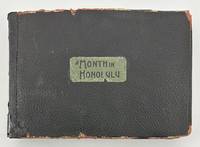
1914réf. 3378Various locations in Southern California and Hawaii 1914. About very good. Sixty-one leaves illustrated with 214 mounted silver gelatin photographs most with manuscript annotations in white ink; plus numerous mounted postcards menus and assorted ephemera. Oblong quarto. Contemporary black textured limp cloth over boards. Edges a bit chipped and tattered inelegant black tape repairs to spine. First leaf detached contents otherwise clean. A wonderful annotated vernacular photograph album documenting a well-to-do family's vacation to Hawaii via brief stops along the West Coast in 1914. The album opens with a group image of the travelers in San Francisco numbering around twenty-two men women and children captioned "Southern California - Honolulu." This is followed by several pages picturing their initial journey from Seattle down to San Pedro Los Angeles and San Diego before they departed for Honolulu on the S.S. Matsonia on June 17. A passenger list is included and many of the images are captioned with the names of the subjects providing a nice opportunity for identifying the travelers by cross-referencing the passenger list. The group spends their vacation time at the Sea Side Hotel on Waikiki Beach in bathing houses and on the beach visiting local businesses plantations and other hotels surfing fishing and more. Through the course of the album much of the landscape of Waikiki is featured providing a snapshot of the hotel and details of its surroundings along with shots of a "Native Village" sugar cane fields and a plantation pineapple fields street views of Honolulu a picnic for "Kids of all nations" at Waikiki the Port of Honolulu and more. The album also features a few early images of surfing at Waikiki Beach. In mid-July true to the title of the album the group heads back across the Pacific Ocean aboard the R.M.S. Niagara after just one month. Most notable among the photographs are about thirty risqué images of local Hawaiian women interspersed throughout. The pictures of the "Native Girls" often feature them topless or scantily clad identifying them with additional captions such as "Hawaiian Beauty" "Maidens bathing" "Girls" "Hula Hula Dancers" and "The Ex. Queen of Hawaii." One group shot shows ten Hawaiian women eating fish captioned "'Lunau' sic Lu'au or Native feast." Another side-view image of a naked Hawaiian woman is annotated "The Natives are a sturdy race of people." There are also numerous images featuring other indigenous Hawaiian people in a variety of settings including a couple of images showing a "Hawaiian boy climbing a cocoa nut palm" two pictures of "Native fisher boys" a "Native hut" "Hawaiian kiddies" a "Native canoeist" a "Group of Natives" a "Native Priest - looks as if he had been fasting for some time" and images showing "Natives selling 'Leis' for departing visitors" and "Native 'Leis' vendors on Honolulu." The images of the Hawaiian women as well as the men combined with the captions provide an opportunity for further studying the ways in which affluent American mainlanders have traditionally viewed indigenous Hawaiians and other native peoples encountered throughout the world. In addition to the passenger list mentioned above the ephemeral items include shipboard menus a program for an onboard concert newspaper clippings cigar labels and postcards. The latter includes a series of forty-one vibrantly-colored postcards illustrated with Hawaiian fish. An interesting travel album detailing a trip to Hawaii at the outset of the First World War with many notable observations on indigenous peoples in Honolulu especially the young women of the island. unknown
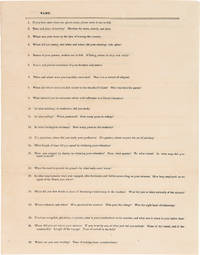
1830réf. 63884N.p.: American Board of Commissioners for Foreign Missions ca. 1830s. Original Questionnaire for Hawaiian Missionaries A questionnaire produced by the American Board of Commissioners for Foreign Missions ABCFM directed towards new missionaries to Hawaii. The Board was founded in 1810 by graduates from Williams College and sent its first missionaries to British India in 1812. Beginning in the 1820s the ABCFM sent twelve companies of missionaries to Hawaii many of whom became instrumental figures in the public life of the Islands in the 19th century. The questionnaire consists of two conjugate leaves: the first contains twenty-two questions and is directed at the missionary. The second leaf is headed "For Females" and contains fifteen questions. In addition to personal questions such as nativity and educational background missionaries are asked to provide information about when and where they were converted licensed and ordained when they "first decided in favor of becoming a missionary to the heathen" what their role was in the mission "if not an evangelist physician or printer" and details of their vessel and journey. The questionnaire for females asks mostly similar questions but omits those related to preaching and ministry in favor of questions about children and family. This form is addressed to "J.S. Emerson & Mrs. Emerson." John S. and Ursula Sophia Newell Emerson arrived in Hawaii in 1832 as members of the fifth company of missionaries sent by the American Board of Commissioners for Foreign Missions. John S. Emerson 1800-67 was born in Chester New Hampshire and graduated from Dartmouth College and Andover Theological Seminary. In 1831 he married Ursula Sophia Newell 1806-88 of Nelson New Hampshire the couple soon thereafter embarking for Hawaii. Except for an interval at the Mission Seminary at Lahainaluna Maui in the 1840s and a return visit to the United States in 1860-61 the couple spent the rest of their lives in Waialua Oahu. There they founded a Protestant Church and established schools - John instructing the boys and Ursula instructing the girls in not only academics but in singing sewing and other domestic work. A remarkable survival from the early days of Christian missionary activity in Hawaii. Old folds lower fold just beginning to split. Very good plus. unknown
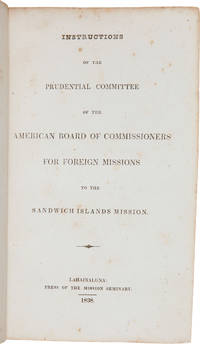
1838réf. 66226Lahainaluna: Press of the Mission Seminary 1838. Instructions for Missionaries Printed in Hawaii A collection of the original instructions issued to each of eight groups of Christian missionaries sent to Hawaii between 1819 and 1836 by the American Board of Commissioners for Foreign Missions ABCFM. It is a relatively early Lahainaluna imprint printed in an edition of 380 copies. "This work contains the Act of Incorporation of the ABCFM State of Massachusetts signed by Caleb Strong Governor and Alden Bradford Secretary of the Commonwealth 20 June 1812 together with the laws and regulations of the same body. Following this are the parting instructions given to each of the first eight companies of missionaries to the Hawaiian Islands…by Samuel Worcester Jeremiah Evarts David Greene B.B. Wisner and Rufus Anderson. A complete list of each company including the Hawaiians is found on pages 119-122.Rev. Clark's account of printing for the year ending February 28 1839 includes this work and shows a production cost of $30. The printed minutes of the 1839 General Meeting record 380 copies printed" - Forbes. The ABCFM was an interdenominational body composed primarily of New England Congregationalists and Presbyterians whose "attention.was called to the Hawaiian Islands by reports of traders and by the presence in New England of several native youth from these islands.The Protestant Christian community of New England became interested in these young Sandwich Islanders and in the possibility that they might become Christian messengers to their own people.The sending of missionaries to Hawaii followed as the next logical step" Kuykendall. This first group of missionaries sent by the ABCFM to Hawaii included two ordained ministers Hiram Bingham and Asa Thurston a physician two schoolmasters and catechists a printer a farmer; their wives and three Hawaiian youths who had been attending the Foreign Mission School in Cornwall Connecticut. In their set of instructions to this first group of missionaries the ABCFM said that it was God's ".gracious pleasure and his high command that his gospel should be preached to them the people of Hawaii; that they may be turned from darkness unto light – be baptized in the name of the Father and of the Son and of the Holy Ghost and taught to observe all things whatsoever he has commanded for their salvation and for his everlasting honor and praise." An important and uncommon text tracing the early history of the American Christian missionary movement and the ABCFM in Hawaii between 1819 and 1836 complete with the names of the missionaries sent by the ABCFM and the goals they were expected to achieve during their respective stays in Hawaii. Contemporary cloth-backed paper boards. Spine neatly repaired boards lightly soiled and rubbed. Light foxing some slight worming in gutter margin with minute loss to text. Very good. FORBES HAWAII 1086. Ralph S. Kuykendall The Hawaiian Kingdom Vol. 1 1778-1854: Foundation and Transformation Honolulu: Univ. of Hawaii Press pp.102-4. hardcover
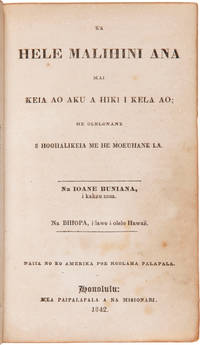
1842réf. 63627Honolulu: Mea paipalapala a na Misionari 1842. First Edition of PILGRIM'S PROGRESS in Hawaiian in a Hawaiian Binding A significant association copy of the rare first edition in Hawaiian of Bunyan's Pilgrim's Progress and the first printing in Hawaiian of an English literary classic. This copy bears a presentation inscription on the front free endpaper to C. Blake from the Rev. Elias Bond dated at Kohala Sandwich Islands September 29 1843. Reverend Bond translated at least seven books for the Mission Press between 1859 and 1868. The Hawaiian title translates as The Traveler from This World to That Which Is to Come. In 1840 the American Tract Society in Honolulu hoped to publish an abridged edition of Bunyan if a translator could be found and in 1841 Artemas Bishop took on the task promising the Society that "it will prove one of the most popular works in the Hawaiian Language." Unfortunately for Artemas and the Society the book flopped and the 10000 copies that were printed were remaindered in unbound sheets most of which were disposed of to Chinese vegetable peddlers for wrapping produce. For copies that survived this the rate of attrition as with all early Hawaiian works of this type remained very high and the book is quite scarce today. The work failed to impact the Hawaiians as the English allusions lost all meaning when translated. The names of the extensive cast of characters became incomprehensible: Mr. Lechery became Kekowale literally lust only and Mrs. Filth became Pelapela decayed flesh. Some of the surviving unbound sheets of this book were bound into limp suede in 1910. This copy on the other hand is in a contemporary Hawaiian sheep binding of the mid-19th century complete with its distinctive triangular and diamond-shaped tooling which is most unusual and notably rare. See David Forbes' BUNIANA San Francisco 1984 for an extensive discussion of the book. An important association copy in a handsome contemporary binding. 12mo. Contemporary Hawaiian sheep boards and backstrip tooled with triangular and diamond-shaped pattern rebacked with original backstrip neatly laid down. Light rubbing and staining to boards. Contemporary presentation inscription on front flyleaf see below. Minimal scattered foxing but very clean and fresh internally. Very good. FORBES 1351. JUDD 237. DAB IX p.381. hardcover
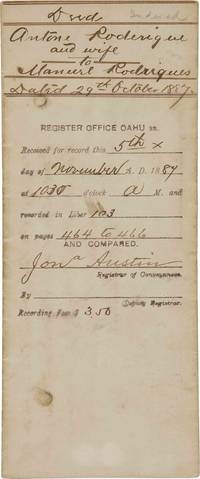
1887réf. 67658Oahu Hawaii: October 29 1887. Hawaiian Manuscript from the Reign of King KalÄkaua An unusual manuscript deed recording the sale of land on Hawaii's Mokauea Island with the land boundaries expressed in 'Ōlelo Hawai'i the Hawaiian language and the land coordinates included in the boundary description. The land in question was sold by Antone Rodrigues to Manuel Rodrigues during the KalÄkaua Dynasty for three thousand dollars. Written in 'Ōlelo Hawai'i the deed the land being sold and its history of ownership: the land was "described in Royal Patent 1853 based on Land Commission Award 7168 to Kailio for J. Kaaukai and conveyed to me Antone Rodrigues by J. Kaaukai and Mahiaihis his wife by deed dated the 23rd day of August A.D. 1865 of record in the Hawaiian Registry of Deeds in said Honolulu in Liber 20 folios 97 and 98." Ana Kalama Rodrigues Antone's wife then releases her dower rights to the property to Manuel Rodrigues and his heirs. The document is signed with Antone's mark and Ana's full signature each followed by a seal. The document is also endorsed by the attorney who wrote the document. An additional section written and signed by the Hawaiian Registrar of Conveyances follows verifying that Ana Rodrigues was not coerced by her husband to sign away her dower rights: "the said Ana Kalama on a private examination by me separate and apart from her husband further acknowledges to me that she executed the same without any fear compulsion or restraint of her said husband." Antone Rodrigues aka Antonio Rodrigues-Gaspar was born in approximately 1830 and immigrated to Hawaii from Pico Island in the Portuguese Azores sometime before 1865 when he purchased the land in question. Antone had likely arrived as a sailor or officer on a whaling ship as had most Portuguese migrants to Hawaii prior to 1878 and married Ana Kalama in 1868. A rare administrative document created during the KalÄkaua Dynasty incorporating an 'Ōlelo Hawai'i description in addition to English. Officially marked documentation with Hawaiian language content is quite scarce outside of the islands. Narrow folio. Old folds. Light even tanning one-inch separation at right edge of lower fold line. Very good. unknown
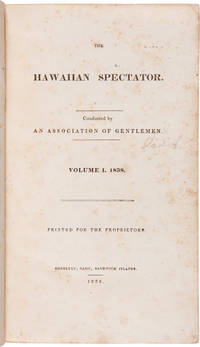
réf. 57563Honolulu: Printed for the proprietor Peter A. Brinsmade 1838-1839. Complete Run of an Early Hawaiian Periodical A complete run of "the first literary and scientific periodical published in the Hawaiian Islands" Forbes. THE HAWAIIAN SPECTATOR was a short-lived periodical based in Honolulu originally printed in parts. Two volumes of four parts each were printed; a third volume was planned for 1840 and had begun soliciting articles but never came to fruition. The SPECTATOR's proprietor was Peter A. Brinsmade a Connecticut native and the "& Company" part of Ladd & Company. Ladd & Co. was an early Hawaiian business partnership notable for establishing the first commercial sugarcane plantation on the islands. Brinsmade also traveled throughout Europe on their behalf looking for investors in an international land speculation scheme. THE HAWAIIAN SPECTATOR contains a wide array of articles related to Hawaii and the South Pacific in general. The contents by a diverse group of authors including Hiram Bingham and translated works by native Hawaiians discuss Hawaii's history geology environment medicine education literature language and more. Some pieces in the first volume include "Sketch of Christmas Island" by Capt. George Benson accompanied by an engraved map of the island made at the Lahainaluna Press a similar article on Ocean Island with a map prepared in the same fashion and "Introduction of the Gospel to Northwest America" by Hiram Bingham with a long discussion of the Whitman and Spaulding mission and featuring printed music with lyrics in English and Hawaiian. The second volume contains a similar miscellany of articles concerning Hawaii and its peoples as well as J.J. Jarves' "Overland Journey in Central America" and a description of the voyage of the French frigate L'Artemise to Hawaii and the imperialist saber-rattling by which it was accompanied. The greater part of the second volume is devoted to the serial publication of A BRIEF MEMOIR OF THE LIFE OF MR. DAVID DOUGLAS WITH EXTRACTS FROM HIS LETTERS. This is a complete reprint in effect the second edition of a work originally published by Sir William Hooker in THE COMPANION TO THE BOTANICAL MAGAZINE in 1836. Douglas of Douglas Fir fame was a distinguished botanist who made two trips to the Pacific Northwest under the sponsorship of the Horticultural Society first in 1824-27 and again in 1829-34. In 1834 he sailed to Hawaii to continue his research but shortly after his arrival he "tripped" into a pit dug to catch wild cattle and was gored to death by a bull. His collections and work laid the foundation for botanical research in the region and are justly celebrated and discussed at length in McKelvey. Wagner-Camp and McKelvey both misidentify this printing the former calling it an edition of Douglas' JOURNAL rather than the MEMOIR and the latter suggesting that it is only a partial printing rather than the complete reprint it is. A valuable piece of relatively early Hawaiian printing and an important step in the public intellectual development of the islands also including a rare edition of Douglas' journals. THE HAWAIIAN SPECTATOR is rare even in fragments - volume one in particular was printed in only 600 copies. Two volumes. 8112104217-440pp. including printed music plus two folding maps and large folding table; viii494pp. plus one plate. Modern three-quarter calf and marbled boards spines gilt. Light shelf wear. Scattered foxing more prevalent in first volume. Very good. FORBES 1099. FORBES ENGRAVED AT LAHAINALUNA pp.34-35 42 145-47. HOWES H624 note. WAGNER-CAMP 60 note but should be their 60:3. McKelvey BOTANICAL EXPLORATION OF THE TRANSMISSISSIPPI WEST pp.299-334. Coats THE PLANT HUNTERS pp.304-14. hardcover
1830réf. 63884N.p.: American Board of Commissioners for Foreign Missions ca. 1830s. Original Questionnaire for Hawaiian Missionaries A questionnaire produced by the American Board of Commissioners for Foreign Missions ABCFM directed towards new missionaries to Hawaii. The Board was founded in 1810 by graduates from Williams College and sent its first missionaries to British India in 1812. Beginning in the 1820s the ABCFM sent twelve companies of missionaries to Hawaii many of whom became instrumental figures in the public life of the Islands in the 19th century. The questionnaire consists of two conjugate leaves: the first contains twenty-two questions and is directed at the missionary. The second leaf is headed "For Females" and contains fifteen questions. In addition to personal questions such as nativity and educational background missionaries are asked to provide information about when and where they were converted licensed and ordained when they "first decided in favor of becoming a missionary to the heathen" what their role was in the mission "if not an evangelist physician or printer" and details of their vessel and journey. The questionnaire for females asks mostly similar questions but omits those related to preaching and ministry in favor of questions about children and family. This form is addressed to "J.S. Emerson & Mrs. Emerson." John S. and Ursula Sophia Newell Emerson arrived in Hawaii in 1832 as members of the fifth company of missionaries sent by the American Board of Commissioners for Foreign Missions. John S. Emerson 1800-67 was born in Chester New Hampshire and graduated from Dartmouth College and Andover Theological Seminary. In 1831 he married Ursula Sophia Newell 1806-88 of Nelson New Hampshire the couple soon thereafter embarking for Hawaii. Except for an interval at the Mission Seminary at Lahainaluna Maui in the 1840s and a return visit to the United States in 1860-61 the couple spent the rest of their lives in Waialua Oahu. There they founded a Protestant Church and established schools - John instructing the boys and Ursula instructing the girls in not only academics but in singing sewing and other domestic work. A remarkable survival from the early days of Christian missionary activity in Hawaii. Old folds lower fold just beginning to split. Very good plus. unknown books
1838réf. 66226Lahainaluna: Press of the Mission Seminary 1838. Instructions for Missionaries Printed in Hawaii A collection of the original instructions issued to each of eight groups of Christian missionaries sent to Hawaii between 1819 and 1836 by the American Board of Commissioners for Foreign Missions ABCFM. It is a relatively early Lahainaluna imprint printed in an edition of 380 copies. "This work contains the Act of Incorporation of the ABCFM State of Massachusetts signed by Caleb Strong Governor and Alden Bradford Secretary of the Commonwealth 20 June 1812 together with the laws and regulations of the same body. Following this are the parting instructions given to each of the first eight companies of missionaries to the Hawaiian Islands…by Samuel Worcester Jeremiah Evarts David Greene B.B. Wisner and Rufus Anderson. A complete list of each company including the Hawaiians is found on pages 119-122.Rev. Clark's account of printing for the year ending February 28 1839 includes this work and shows a production cost of $30. The printed minutes of the 1839 General Meeting record 380 copies printed" - Forbes. The ABCFM was an interdenominational body composed primarily of New England Congregationalists and Presbyterians whose "attention.was called to the Hawaiian Islands by reports of traders and by the presence in New England of several native youth from these islands.The Protestant Christian community of New England became interested in these young Sandwich Islanders and in the possibility that they might become Christian messengers to their own people.The sending of missionaries to Hawaii followed as the next logical step" Kuykendall. This first group of missionaries sent by the ABCFM to Hawaii included two ordained ministers Hiram Bingham and Asa Thurston a physician two schoolmasters and catechists a printer a farmer; their wives and three Hawaiian youths who had been attending the Foreign Mission School in Cornwall Connecticut. In their set of instructions to this first group of missionaries the ABCFM said that it was God's ".gracious pleasure and his high command that his gospel should be preached to them the people of Hawaii; that they may be turned from darkness unto light – be baptized in the name of the Father and of the Son and of the Holy Ghost and taught to observe all things whatsoever he has commanded for their salvation and for his everlasting honor and praise." An important and uncommon text tracing the early history of the American Christian missionary movement and the ABCFM in Hawaii between 1819 and 1836 complete with the names of the missionaries sent by the ABCFM and the goals they were expected to achieve during their respective stays in Hawaii. Contemporary cloth-backed paper boards. Spine neatly repaired boards lightly soiled and rubbed. Light foxing some slight worming in gutter margin with minute loss to text. Very good. FORBES HAWAII 1086. Ralph S. Kuykendall The Hawaiian Kingdom Vol. 1 1778-1854: Foundation and Transformation Honolulu: Univ. of Hawaii Press pp.102-4. hardcover books
réf. 57563Honolulu: Printed for the proprietor Peter A. Brinsmade 1838-1839. Complete Run of an Early Hawaiian Periodical A complete run of "the first literary and scientific periodical published in the Hawaiian Islands" Forbes. THE HAWAIIAN SPECTATOR was a short-lived periodical based in Honolulu originally printed in parts. Two volumes of four parts each were printed; a third volume was planned for 1840 and had begun soliciting articles but never came to fruition. The SPECTATOR's proprietor was Peter A. Brinsmade a Connecticut native and the "& Company" part of Ladd & Company. Ladd & Co. was an early Hawaiian business partnership notable for establishing the first commercial sugarcane plantation on the islands. Brinsmade also traveled throughout Europe on their behalf looking for investors in an international land speculation scheme. THE HAWAIIAN SPECTATOR contains a wide array of articles related to Hawaii and the South Pacific in general. The contents by a diverse group of authors including Hiram Bingham and translated works by native Hawaiians discuss Hawaii's history geology environment medicine education literature language and more. Some pieces in the first volume include "Sketch of Christmas Island" by Capt. George Benson accompanied by an engraved map of the island made at the Lahainaluna Press a similar article on Ocean Island with a map prepared in the same fashion and "Introduction of the Gospel to Northwest America" by Hiram Bingham with a long discussion of the Whitman and Spaulding mission and featuring printed music with lyrics in English and Hawaiian. The second volume contains a similar miscellany of articles concerning Hawaii and its peoples as well as J.J. Jarves' "Overland Journey in Central America" and a description of the voyage of the French frigate L'Artemise to Hawaii and the imperialist saber-rattling by which it was accompanied. The greater part of the second volume is devoted to the serial publication of A BRIEF MEMOIR OF THE LIFE OF MR. DAVID DOUGLAS WITH EXTRACTS FROM HIS LETTERS. This is a complete reprint in effect the second edition of a work originally published by Sir William Hooker in THE COMPANION TO THE BOTANICAL MAGAZINE in 1836. Douglas of Douglas Fir fame was a distinguished botanist who made two trips to the Pacific Northwest under the sponsorship of the Horticultural Society first in 1824-27 and again in 1829-34. In 1834 he sailed to Hawaii to continue his research but shortly after his arrival he "tripped" into a pit dug to catch wild cattle and was gored to death by a bull. His collections and work laid the foundation for botanical research in the region and are justly celebrated and discussed at length in McKelvey. Wagner-Camp and McKelvey both misidentify this printing the former calling it an edition of Douglas' JOURNAL rather than the MEMOIR and the latter suggesting that it is only a partial printing rather than the complete reprint it is. A valuable piece of relatively early Hawaiian printing and an important step in the public intellectual development of the islands also including a rare edition of Douglas' journals. THE HAWAIIAN SPECTATOR is rare even in fragments - volume one in particular was printed in only 600 copies. Two volumes. 8112104217-440pp. including printed music plus two folding maps and large folding table; viii494pp. plus one plate. Modern three-quarter calf and marbled boards spines gilt. Light shelf wear. Scattered foxing more prevalent in first volume. Very good. FORBES 1099. FORBES ENGRAVED AT LAHAINALUNA pp.34-35 42 145-47. HOWES H624 note. WAGNER-CAMP 60 note but should be their 60:3. McKelvey BOTANICAL EXPLORATION OF THE TRANSMISSISSIPPI WEST pp.299-334. Coats THE PLANT HUNTERS pp.304-14. hardcover books
1887réf. 67658Oahu Hawaii: October 29 1887. Hawaiian Manuscript from the Reign of King KalÄkaua An unusual manuscript deed recording the sale of land on Hawaii's Mokauea Island with the land boundaries expressed in 'Ōlelo Hawai'i the Hawaiian language and the land coordinates included in the boundary description. The land in question was sold by Antone Rodrigues to Manuel Rodrigues during the KalÄkaua Dynasty for three thousand dollars. Written in 'Ōlelo Hawai'i the deed the land being sold and its history of ownership: the land was "described in Royal Patent 1853 based on Land Commission Award 7168 to Kailio for J. Kaaukai and conveyed to me Antone Rodrigues by J. Kaaukai and Mahiaihis his wife by deed dated the 23rd day of August A.D. 1865 of record in the Hawaiian Registry of Deeds in said Honolulu in Liber 20 folios 97 and 98." Ana Kalama Rodrigues Antone's wife then releases her dower rights to the property to Manuel Rodrigues and his heirs. The document is signed with Antone's mark and Ana's full signature each followed by a seal. The document is also endorsed by the attorney who wrote the document. An additional section written and signed by the Hawaiian Registrar of Conveyances follows verifying that Ana Rodrigues was not coerced by her husband to sign away her dower rights: "the said Ana Kalama on a private examination by me separate and apart from her husband further acknowledges to me that she executed the same without any fear compulsion or restraint of her said husband." Antone Rodrigues aka Antonio Rodrigues-Gaspar was born in approximately 1830 and immigrated to Hawaii from Pico Island in the Portuguese Azores sometime before 1865 when he purchased the land in question. Antone had likely arrived as a sailor or officer on a whaling ship as had most Portuguese migrants to Hawaii prior to 1878 and married Ana Kalama in 1868. A rare administrative document created during the KalÄkaua Dynasty incorporating an 'Ōlelo Hawai'i description in addition to English. Officially marked documentation with Hawaiian language content is quite scarce outside of the islands. Narrow folio. Old folds. Light even tanning one-inch separation at right edge of lower fold line. Very good. unknown books
1914réf. 3378Various locations in Southern California and Hawaii 1914. About very good. Sixty-one leaves illustrated with 214 mounted silver gelatin photographs most with manuscript annotations in white ink; plus numerous mounted postcards menus and assorted ephemera. Oblong quarto. Contemporary black textured limp cloth over boards. Edges a bit chipped and tattered inelegant black tape repairs to spine. First leaf detached contents otherwise clean. A wonderful annotated vernacular photograph album documenting a well-to-do family's vacation to Hawaii via brief stops along the West Coast in 1914. The album opens with a group image of the travelers in San Francisco numbering around twenty-two men women and children captioned "Southern California - Honolulu." This is followed by several pages picturing their initial journey from Seattle down to San Pedro Los Angeles and San Diego before they departed for Honolulu on the S.S. Matsonia on June 17. A passenger list is included and many of the images are captioned with the names of the subjects providing a nice opportunity for identifying the travelers by cross-referencing the passenger list. The group spends their vacation time at the Sea Side Hotel on Waikiki Beach in bathing houses and on the beach visiting local businesses plantations and other hotels surfing fishing and more. Through the course of the album much of the landscape of Waikiki is featured providing a snapshot of the hotel and details of its surroundings along with shots of a "Native Village" sugar cane fields and a plantation pineapple fields street views of Honolulu a picnic for "Kids of all nations" at Waikiki the Port of Honolulu and more. The album also features a few early images of surfing at Waikiki Beach. In mid-July true to the title of the album the group heads back across the Pacific Ocean aboard the R.M.S. Niagara after just one month. Most notable among the photographs are about thirty risqué images of local Hawaiian women interspersed throughout. The pictures of the "Native Girls" often feature them topless or scantily clad identifying them with additional captions such as "Hawaiian Beauty" "Maidens bathing" "Girls" "Hula Hula Dancers" and "The Ex. Queen of Hawaii." One group shot shows ten Hawaiian women eating fish captioned "'Lunau' sic Lu'au or Native feast." Another side-view image of a naked Hawaiian woman is annotated "The Natives are a sturdy race of people." There are also numerous images featuring other indigenous Hawaiian people in a variety of settings including a couple of images showing a "Hawaiian boy climbing a cocoa nut palm" two pictures of "Native fisher boys" a "Native hut" "Hawaiian kiddies" a "Native canoeist" a "Group of Natives" a "Native Priest - looks as if he had been fasting for some time" and images showing "Natives selling 'Leis' for departing visitors" and "Native 'Leis' vendors on Honolulu." The images of the Hawaiian women as well as the men combined with the captions provide an opportunity for further studying the ways in which affluent American mainlanders have traditionally viewed indigenous Hawaiians and other native peoples encountered throughout the world. In addition to the passenger list mentioned above the ephemeral items include shipboard menus a program for an onboard concert newspaper clippings cigar labels and postcards. The latter includes a series of forty-one vibrantly-colored postcards illustrated with Hawaiian fish. An interesting travel album detailing a trip to Hawaii at the outset of the First World War with many notable observations on indigenous peoples in Honolulu especially the young women of the island. unknown books
1842réf. 63627Honolulu: Mea paipalapala a na Misionari 1842. First Edition of PILGRIM'S PROGRESS in Hawaiian in a Hawaiian Binding A significant association copy of the rare first edition in Hawaiian of Bunyan's Pilgrim's Progress and the first printing in Hawaiian of an English literary classic. This copy bears a presentation inscription on the front free endpaper to C. Blake from the Rev. Elias Bond dated at Kohala Sandwich Islands September 29 1843. Reverend Bond translated at least seven books for the Mission Press between 1859 and 1868. The Hawaiian title translates as The Traveler from This World to That Which Is to Come. In 1840 the American Tract Society in Honolulu hoped to publish an abridged edition of Bunyan if a translator could be found and in 1841 Artemas Bishop took on the task promising the Society that "it will prove one of the most popular works in the Hawaiian Language." Unfortunately for Artemas and the Society the book flopped and the 10000 copies that were printed were remaindered in unbound sheets most of which were disposed of to Chinese vegetable peddlers for wrapping produce. For copies that survived this the rate of attrition as with all early Hawaiian works of this type remained very high and the book is quite scarce today. The work failed to impact the Hawaiians as the English allusions lost all meaning when translated. The names of the extensive cast of characters became incomprehensible: Mr. Lechery became Kekowale literally lust only and Mrs. Filth became Pelapela decayed flesh. Some of the surviving unbound sheets of this book were bound into limp suede in 1910. This copy on the other hand is in a contemporary Hawaiian sheep binding of the mid-19th century complete with its distinctive triangular and diamond-shaped tooling which is most unusual and notably rare. See David Forbes' BUNIANA San Francisco 1984 for an extensive discussion of the book. An important association copy in a handsome contemporary binding. 12mo. Contemporary Hawaiian sheep boards and backstrip tooled with triangular and diamond-shaped pattern rebacked with original backstrip neatly laid down. Light rubbing and staining to boards. Contemporary presentation inscription on front flyleaf see below. Minimal scattered foxing but very clean and fresh internally. Very good. FORBES 1351. JUDD 237. DAB IX p.381. hardcover books
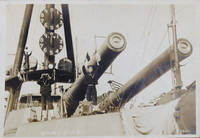
réf. FRE99Oblong Quarto album ca. 18x26 cm 7 x 10 ¼ in. 24 card stock leaves. With 98 original gelatin silver photographs including two loose from ca. 115x148 cm 4 ½ x 5 ¾ in to ca. 64x4 cm 2 ½ x 1 ½ in. With ca. eight real photo postcards ca. 81x12 cm 3 ¼ x 4 ¾ in. Ca. half of the photos with period Japanese captions on the mounts or in negatives. About fifteen carry the mark “Osumi” apparently that of a photographer who supplied views to the fleet. Period full-cloth album fastened with a string. Binding slightly worn about twelve photos missing about ten leaves with fold marks but otherwise a very good album with strong photos. Interesting collection of original gelatin silver photographs taken and collected by a sailor of the Imperial Japanese Navy including a rare series of snapshots from Hawaii in the interwar period. The squadron of the armored cruisers Asama Izumo and Yakumo under Vice-Admiral Hyakutake SaburÅ left Yokosuka on 10 November 1924 with the cadets of the Naval Academy. It stayed at Hilo on the island of Hawaii from 26 November to 15 December then sailed to Mexico Panama San Francisco and Vancouver. On the way back it called at Honolulu before continuing to the Japanese-mandated islands of the South Seas. At the time Japanese immigrants made up the largest ethnic group in Hawaii. The squadron’s visit only months after the US Immigration Act of 1924 had barred further Japanese immigration was a major event for the community. The album contains ninety-eight photographs including about twenty from the Navy’s ocean training cruise to Hawaii. Two important photos show a large crowd of Japanese residents of Honolulu mingling with sailors in white uniforms on the quay and the Honolulu pier lined with rows of touring cars and crowds awaiting the sailors. Several photographs document the sailors’ interactions with the Japanese community of Hilo including a picnic beneath the trees attended by young women in modern bathing suits; a Japanese family posing in an open car decorated with flowers; and a young man in a white shirt holding a trophy cup apparently won in a sporting contest. About three photographs illustrate the excursion to Kilauea volcano for which Japanese residents of Hilo reportedly arranged more than a hundred cars to transport the crews. The images show Kilauea beneath a volcanic smoke glowing lava at night and a lone horseman in a volcanic crater. Two photographs record an ascent of Mauna Kea on horseback showing sailors resting beside their horses on the slopes and a sailor wearing a cowboy hat near the summit. Other views capture Rainbow Falls the Hilo waterfront lined with coconut palms visitors exploring the coastal lava rocks pandanus trees reflected in a pool steep sea cliffs and a town street lined with parked cars. The series concludes with a photograph of an outrigger canoe at Jaluit in the Marshall Islands which was then under Japanese mandate. Over thirty images document the compiler’s naval service in Japanese home waters from Shibushi Bay in Kyushu to Amanohashidate on the Sea of Japan. The photos depict swimming drills landing-party exercises with machine guns rifle marches along a seaside tramline and parades with fixed bayonets. Especially interesting are photographs of new naval technology including a submarine a shipborne observation balloon a running torpedo a motorcycle-mounted machine gun armored cars and an aerial bombing test on a decommissioned warship. A series from Shibushi shows the fleet anchored in the bay crowds gathered around seaplanes on the beach and sailors coming ashore by launch watched by local women in kimono. In 1945 the same bay was designated as a potential landing site for the planned American invasion of Kyushu. The rest of the album shows famous sights the compiler visited ashore among them Tokyo’s Nijūbashi bridge and Marunouchi Miyajima Kamakura Matsushima Beppu and the SuigÅ “water country” around Itako. It also includes personal snapshots sailors viewing Amanohashidate upside down between their legs and a crowded station platform postcards of the foreign warships Nelson Saratoga and Bretagne portraits of naval officers and a handwritten copy of the five precepts of the Imperial Rescript to Soldiers and Sailors. Overall a rare sailor’s-eye record of the Imperial Japanese Navy’s visit to Hawaii in 1924–1925. hardcover
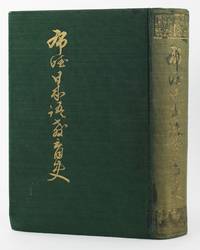
1937réf. 4006Honolulu & Tokyo 1937. About very good. 27021pp. plus plates. Original green silk over boards gilt t.e.g. Spine faded corners bumped and rubbed. Contents clean. A very rare history of Japanese-language schools in Hawaii between 1911 and 1937. The work is written entirely in Japanese and illustrated with several plates depicting school children teachers and other officials. "Once the Issei had decided to settle in Hawaii they wanted their children to become good Americans of Japanese ancestry with a command of both the English and Japanese languages and cultures. In the mid-1910s they came to feel the impact of the Americanization movement and feared that Hawaii's Japanese language schools would be attacked. Thus in 1914 to cope with this pressure the Hawaii Kyoiku Kai Japanese Educational Association of Hawaii was organized by the school principals and teachers to unify over 130 schools. In 1917 the Kyoiku Kai published their own textbooks with content suitable to Hawaii born Nisei and decided to teach only the Japanese language and moral lessons eliminating Japanese patriotic lessons and adding new lessons to encourage Japanese to become loyal Americans who would nonetheless also cherish their Japanese heritage" -- Davidann. We could not locate any copies in OCLC. Davidann Jon: Hawaii at the Crossroads of the U.S. and Japan Before the Pacific War 2008. unknown
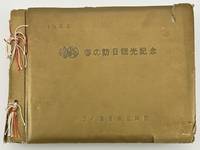
1962réf. 5299Numerous locations in Japan 1962. Very good. 26 leaves illustrated with 103 black-and-white photographs mostly about 4.5 x 6.25 inches each with typed caption printed in both Japanese and English. Oblong folio. Contemporary presentation photograph album bound in gold cloth stamp-dated 1962 and with blind-embossed titles in Japanese two tassel ties. Spine chipped and partially perished some edge wear and rubbing both bottom corners bumped and partially split. Contents clean and well organized. A tidy annotated presentation album commemorating a trip through Japan by a large group of Shinshu Buddhists from Hawaii in 1962. The photographs are almost all composed with the tour group posed mostly in front of various temples and shrines but also at hotels palaces gardens theaters and other landmarks. The locations begin in Tokyo and proceed to numerous Japanese cities including Nikko Yokohama Hakone Kyoto Koyasan Izumo Hiroshima Yuda Nagasaki Beppu and so forth. The titles on the front cover translate roughly to "Spring Tourism Memorial Hawaii Shinshu Buddhist Tour Group." A rare glimpse into Japanese American religious tourism to the homeland following World War II. unknown
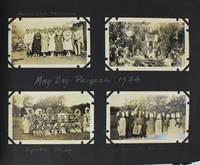
1939réf. 4848Various locations in Hawaii 1939. Good. Two albums both oblong. Forty-seven leaves with 300 photographs plus twenty-one loose images; twenty leaves with 130 photos and eight loose images. First album original black cloth string tied. Moderate wear to extremities leaves very chipped several loose. Second album unbound gray card leaves. Light chipping and wear. Images captioned throughout most of both albums; several photos missing from mounts. Two wonderfully detailed vernacular albums documenting the life of a young Japanese-American woman in Hawaii during her high school years. The first album opens with a full-length portrait of the compiler Satsue Ueda dated June 1934. An image from the second album identifies her as "12th grade" in 1937. She goes on to document her friends family members teacher school and related activities and trips around the islands. Images include a group in front of Maui High a visit to Rainbow Gulch Haleakala Kula Manu the Kipapa School Waikiki Oahu Country Club scenes in Honolulu including the Immigration Station and more. There are several images of the school May Day Program from 1934 as well as photos of President Roosevelt's visit to Honolulu. There are also several images of Japanese-American baseball players. Throughout she has identified friends with their first names occasionally with commentary. Several images in the second album show Japanese-American men in military uniform. Others show the "New Kula Sanatorium building." A large group portrait depicts her Dramatic Class for 1937 with each member identified in the margins. There are also some images of a trip to Japan. A wonderful and dense record of one young woman's social circle and high school career. unknown