Peterson, Roger Tory (Text and Illustrations)Antiquariat.de

1 050 résultats
1970réf. 131135Hougton Miflin Company, Boston, um 1970. XXV, 309 S. ; 19 x 12 cm ; Leinen.
1977réf. MASTER383206IHonolulu: Hawaii Hochi Ltd. VG In Blue Cloth With Gilt Lettering At Spine. In Original Cardboard Slipcase G-. Text In Japanese Captions In Japanese & English. Spine Lettering Slightly Fading. All Text Clean Binding Tight. Slipcase Sunned Tattering At Edges. Pages: 581. 1977. 2nd Edition. Hardcover. Hawaii Hochi Ltd hardcover
1971réf. 033347Honolulu HI: United Japanese Society of Hawaii 1971. Book. As New. Hardcover. First Edition. 431 pp. Stated first printing December 1971. Deep maroon boards with gold lettering on front and spine. Covered in what looks to be original plastic cover as issued. Decorative endpages show enhanced photo of Waiikiki. Pages of black and white photographs. Possibly unread condition. A pristine copy for the Hawaiian history buff or Japanese-American collector. Size: Octavo. United Japanese Society of Hawaii Hardcover
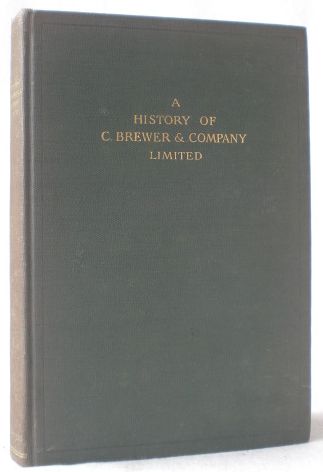
1926réf. 44553Honolulu: C. Brewer & Company/ Boston, Designed and Printed by Walton Advertising & Printing Company. 1926. XIV, 193 S. Gr.8°. Mit Frontispiz, 35 Tafeln und 1 Textabbildung. EA. - First edition. OLeinen.
1926Copertina illustrata a colori in fascicolo originale completo de "La Domenica del Corriere" del 16/05/1926
1787Incisione inserita nell'opera "A New, Royal, Authentic and Complete System of Universal Geography, Ancient and Modern: Including All the Late Important Discoveries Made by the English, and Other Celebrated Navigators .. History and Description of the Whole World... Likewise the Essence of the Voyages of the Most Enterprising Navigators..." edita a Londra da J. Cooke nel gennaio del 1787
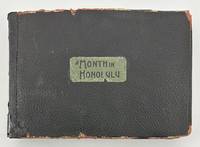
1914réf. 3378Various locations in Southern California and Hawaii 1914. About very good. Sixty-one leaves illustrated with 214 mounted silver gelatin photographs most with manuscript annotations in white ink; plus numerous mounted postcards menus and assorted ephemera. Oblong quarto. Contemporary black textured limp cloth over boards. Edges a bit chipped and tattered inelegant black tape repairs to spine. First leaf detached contents otherwise clean. A wonderful annotated vernacular photograph album documenting a well-to-do family's vacation to Hawaii via brief stops along the West Coast in 1914. The album opens with a group image of the travelers in San Francisco numbering around twenty-two men women and children captioned "Southern California - Honolulu." This is followed by several pages picturing their initial journey from Seattle down to San Pedro Los Angeles and San Diego before they departed for Honolulu on the S.S. Matsonia on June 17. A passenger list is included and many of the images are captioned with the names of the subjects providing a nice opportunity for identifying the travelers by cross-referencing the passenger list. The group spends their vacation time at the Sea Side Hotel on Waikiki Beach in bathing houses and on the beach visiting local businesses plantations and other hotels surfing fishing and more. Through the course of the album much of the landscape of Waikiki is featured providing a snapshot of the hotel and details of its surroundings along with shots of a "Native Village" sugar cane fields and a plantation pineapple fields street views of Honolulu a picnic for "Kids of all nations" at Waikiki the Port of Honolulu and more. The album also features a few early images of surfing at Waikiki Beach. In mid-July true to the title of the album the group heads back across the Pacific Ocean aboard the R.M.S. Niagara after just one month. Most notable among the photographs are about thirty risqué images of local Hawaiian women interspersed throughout. The pictures of the "Native Girls" often feature them topless or scantily clad identifying them with additional captions such as "Hawaiian Beauty" "Maidens bathing" "Girls" "Hula Hula Dancers" and "The Ex. Queen of Hawaii." One group shot shows ten Hawaiian women eating fish captioned "'Lunau' sic Lu'au or Native feast." Another side-view image of a naked Hawaiian woman is annotated "The Natives are a sturdy race of people." There are also numerous images featuring other indigenous Hawaiian people in a variety of settings including a couple of images showing a "Hawaiian boy climbing a cocoa nut palm" two pictures of "Native fisher boys" a "Native hut" "Hawaiian kiddies" a "Native canoeist" a "Group of Natives" a "Native Priest - looks as if he had been fasting for some time" and images showing "Natives selling 'Leis' for departing visitors" and "Native 'Leis' vendors on Honolulu." The images of the Hawaiian women as well as the men combined with the captions provide an opportunity for further studying the ways in which affluent American mainlanders have traditionally viewed indigenous Hawaiians and other native peoples encountered throughout the world. In addition to the passenger list mentioned above the ephemeral items include shipboard menus a program for an onboard concert newspaper clippings cigar labels and postcards. The latter includes a series of forty-one vibrantly-colored postcards illustrated with Hawaiian fish. An interesting travel album detailing a trip to Hawaii at the outset of the First World War with many notable observations on indigenous peoples in Honolulu especially the young women of the island. unknown
1914réf. 3378Various locations in Southern California and Hawaii 1914. About very good. Sixty-one leaves illustrated with 214 mounted silver gelatin photographs most with manuscript annotations in white ink; plus numerous mounted postcards menus and assorted ephemera. Oblong quarto. Contemporary black textured limp cloth over boards. Edges a bit chipped and tattered inelegant black tape repairs to spine. First leaf detached contents otherwise clean. A wonderful annotated vernacular photograph album documenting a well-to-do family's vacation to Hawaii via brief stops along the West Coast in 1914. The album opens with a group image of the travelers in San Francisco numbering around twenty-two men women and children captioned "Southern California - Honolulu." This is followed by several pages picturing their initial journey from Seattle down to San Pedro Los Angeles and San Diego before they departed for Honolulu on the S.S. Matsonia on June 17. A passenger list is included and many of the images are captioned with the names of the subjects providing a nice opportunity for identifying the travelers by cross-referencing the passenger list. The group spends their vacation time at the Sea Side Hotel on Waikiki Beach in bathing houses and on the beach visiting local businesses plantations and other hotels surfing fishing and more. Through the course of the album much of the landscape of Waikiki is featured providing a snapshot of the hotel and details of its surroundings along with shots of a "Native Village" sugar cane fields and a plantation pineapple fields street views of Honolulu a picnic for "Kids of all nations" at Waikiki the Port of Honolulu and more. The album also features a few early images of surfing at Waikiki Beach. In mid-July true to the title of the album the group heads back across the Pacific Ocean aboard the R.M.S. Niagara after just one month. Most notable among the photographs are about thirty risqué images of local Hawaiian women interspersed throughout. The pictures of the "Native Girls" often feature them topless or scantily clad identifying them with additional captions such as "Hawaiian Beauty" "Maidens bathing" "Girls" "Hula Hula Dancers" and "The Ex. Queen of Hawaii." One group shot shows ten Hawaiian women eating fish captioned "'Lunau' sic Lu'au or Native feast." Another side-view image of a naked Hawaiian woman is annotated "The Natives are a sturdy race of people." There are also numerous images featuring other indigenous Hawaiian people in a variety of settings including a couple of images showing a "Hawaiian boy climbing a cocoa nut palm" two pictures of "Native fisher boys" a "Native hut" "Hawaiian kiddies" a "Native canoeist" a "Group of Natives" a "Native Priest - looks as if he had been fasting for some time" and images showing "Natives selling 'Leis' for departing visitors" and "Native 'Leis' vendors on Honolulu." The images of the Hawaiian women as well as the men combined with the captions provide an opportunity for further studying the ways in which affluent American mainlanders have traditionally viewed indigenous Hawaiians and other native peoples encountered throughout the world. In addition to the passenger list mentioned above the ephemeral items include shipboard menus a program for an onboard concert newspaper clippings cigar labels and postcards. The latter includes a series of forty-one vibrantly-colored postcards illustrated with Hawaiian fish. An interesting travel album detailing a trip to Hawaii at the outset of the First World War with many notable observations on indigenous peoples in Honolulu especially the young women of the island. unknown books
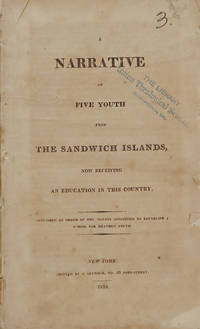
1816réf. 68845New York: Printed by J. Seymour 1816. Inspiration for the First Mission to Hawaii A rare account of the lives of the five Hawaiian youths who would come to form a core of initial students enrolled at the new Foreign Mission School established at Cornwall Connecticut in 1816. The school formed under the auspices of the American Board of Commissioners for Foreign Missions ABCFM would serve to educate foreign students in preparation for missionary work in their native lands and elsewhere. Published in 1816 A Narrative of Five Youth from the Sandwich Islands was the first of many publications intended to raise funds and stir up popular support for the new school as well as for the first Christian mission sent to the Hawaiian Islands three years later. As such it served as part of the early efforts to bring Hawaii within the cultural and commercial orbit of the United States. By the second decade of the 19th century Hawaii had become an integral part of America's burgeoning China trade serving not only as a crucial resupply hub and convenient stopover for Yankee ships sailing between North America and China and around Cape Horn but also as a lucrative source of sandalwood which American merchants traded in exchange for Chinese silk tea and porcelain. Where American merchants saw commercial possibilities however Protestant missionaries saw opportunities for Christian conversion. In April 1809 two Hawaiian youths Henry Obookiah and Thomas Hopoo arrived in New York aboard the China trade ship Triumph in the hope of receiving an education in the United States. Shortly after their arrival the two took up residence in the New Haven home of the ship's captain Caleb Brintnall. There Obookiah quickly came to the attention of several Yale students who offered to tutor him. Soon he was invited to join the household of Yale president Timothy Dwight. As John Demos explains in his history of the Foreign Mission School where Obookiah became the star student and "the most famous Hawaiian emigrant of his time" "Dwight's home was the starting point" of an eight-year odyssey "that would take Obookiah into three states eight different towns and at least a dozen separate families scattered across the New England countryside" and which culminated in his conversion to Christianity and admission to church membership in 1814. Obookiah and Hopoo were eventually joined by three other Hawaiian youths William Tennooe John Honoree and George Prince Tamoree the son of a Hawaiian king. The stories of these five youths shared "a number of common elements. All had spent time as sailors on American trade ships. Three had served at sea in the War of 1812. Most had experienced periods of extreme hardship after reaching New England.All had sooner or later found sponsors teachers and spiritual guides. All had been moved through a kind of missionary pipeline centered in New Haven but reaching out well across the Connecticut countryside" Demos. Together the five Hawaiian youths would "become the founding nucleus of an institution unlike any previously seen on American soil" Demos. The Narrative was part of a publicity campaign designed to raise funds for the new school and for an eventual mission to Hawaii. As Demos explains the Narrative originated as "a 'manuscript account'" of the "lives and prospects" of the five Hawaiian youths "written some months before by parties unknown and circulated by hand in the interim; the agents of the school were eager to arrange its publication "for the information and excitement of the Christian public.'.it was printed in New York in the last weeks of the year 1816." Such publications "capitalized on the interest in the Sandwich Islands and the islands of the Pacific that had begun gradually with the first sales of the journals and logs from the voyages of Captain Cook the much-performed pantomime of his death and the ubiquitous commercial news that related the daily comings and goings of ships from New England to the Pacific" Arista. A New Jersey issue of the Narrative appeared in the same year; it is not known which preceded the other. The text gives biographies of each of the five youths discusses their activities and experiences in America and prints various letters written by them. According to the authors the Narrative offered "a simple and authentic statement of facts respecting the youth now under the care of the agents; with specimens of their ability and improvement." The final pages discuss the establishment of the Foreign Mission School at Cornwall and include the text of the school's constitution. As the constitution states the object of the school would be "the education of heathen youth in such a manner as that.they may be qualified to become missionaries schoolmasters interpreters physicians or surgeons among heathen nations and to communicate such information in agriculture and the arts as shall tend to promote Christianity and civilization." The Narrative Demos explains "was perfectly timed to catch a rising wave of public interest in 'heathens' abroad.Not coincidentally donations to the ABCFM would soar—from just over $12000 to nearly $30000—in the year of the Mission School's founding." Tragically in 1818 two years after the publication of the Narrative Obookiah died of typhus. His Memoirs edited by Edwin Dwight were published shortly thereafter and the success of that book inspired a wave of interest in the islands which culminated in the sailing of the first missionary bark Thaddeus for Hawaii on October 23 1819. Over the course of nearly a decade from 1817 to 1826 some 100 students from around the world passed through the doors of the Foreign Mission School at Cornwall. They included Hawaiians and other Pacific Islanders; Native Americans including Cherokees Choctaws Creeks and others; students from East Asia including China India and the Malay Peninsula; and others from Europe Mexico and throughout the United States. A rare and significant piece of Hawaiiana and part of some of the earliest efforts to bring Hawaii under the cultural influence of the United States. Dbd. Stitched gathering. A few leaves loose but holding. Text lightly foxed and toned. Small section along upper edge of final leaf torn away not affecting text. Library stamp of Union Theological Seminary Richmond Virginia in blue ink to titlepage. Good. FORBES 456. SABIN 51790. AMERICAN IMPRINTS 36725 38355. John Demos The Heathen School: A Story of Hope and Betrayal in the Age of the Early Republic New York: Alfred A. Knopf 2014 pp.22 29 31-32 38-39. Noelani Arista The Kingdom and the Republic: Sovereign Hawai'i and the Early United States Philadelphia: Univ. of Pennsylvania Press 2019 pp.61-62. unknown
1816réf. 68845New York: Printed by J. Seymour 1816. Inspiration for the First Mission to Hawaii A rare account of the lives of the five Hawaiian youths who would come to form a core of initial students enrolled at the new Foreign Mission School established at Cornwall Connecticut in 1816. The school formed under the auspices of the American Board of Commissioners for Foreign Missions ABCFM would serve to educate foreign students in preparation for missionary work in their native lands and elsewhere. Published in 1816 A Narrative of Five Youth from the Sandwich Islands was the first of many publications intended to raise funds and stir up popular support for the new school as well as for the first Christian mission sent to the Hawaiian Islands three years later. As such it served as part of the early efforts to bring Hawaii within the cultural and commercial orbit of the United States. By the second decade of the 19th century Hawaii had become an integral part of America's burgeoning China trade serving not only as a crucial resupply hub and convenient stopover for Yankee ships sailing between North America and China and around Cape Horn but also as a lucrative source of sandalwood which American merchants traded in exchange for Chinese silk tea and porcelain. Where American merchants saw commercial possibilities however Protestant missionaries saw opportunities for Christian conversion. In April 1809 two Hawaiian youths Henry Obookiah and Thomas Hopoo arrived in New York aboard the China trade ship Triumph in the hope of receiving an education in the United States. Shortly after their arrival the two took up residence in the New Haven home of the ship's captain Caleb Brintnall. There Obookiah quickly came to the attention of several Yale students who offered to tutor him. Soon he was invited to join the household of Yale president Timothy Dwight. As John Demos explains in his history of the Foreign Mission School where Obookiah became the star student and "the most famous Hawaiian emigrant of his time" "Dwight's home was the starting point" of an eight-year odyssey "that would take Obookiah into three states eight different towns and at least a dozen separate families scattered across the New England countryside" and which culminated in his conversion to Christianity and admission to church membership in 1814. Obookiah and Hopoo were eventually joined by three other Hawaiian youths William Tennooe John Honoree and George Prince Tamoree the son of a Hawaiian king. The stories of these five youths shared "a number of common elements. All had spent time as sailors on American trade ships. Three had served at sea in the War of 1812. Most had experienced periods of extreme hardship after reaching New England.All had sooner or later found sponsors teachers and spiritual guides. All had been moved through a kind of missionary pipeline centered in New Haven but reaching out well across the Connecticut countryside" Demos. Together the five Hawaiian youths would "become the founding nucleus of an institution unlike any previously seen on American soil" Demos. The Narrative was part of a publicity campaign designed to raise funds for the new school and for an eventual mission to Hawaii. As Demos explains the Narrative originated as "a 'manuscript account'" of the "lives and prospects" of the five Hawaiian youths "written some months before by parties unknown and circulated by hand in the interim; the agents of the school were eager to arrange its publication "for the information and excitement of the Christian public.'.it was printed in New York in the last weeks of the year 1816." Such publications "capitalized on the interest in the Sandwich Islands and the islands of the Pacific that had begun gradually with the first sales of the journals and logs from the voyages of Captain Cook the much-performed pantomime of his death and the ubiquitous commercial news that related the daily comings and goings of ships from New England to the Pacific" Arista. A New Jersey issue of the Narrative appeared in the same year; it is not known which preceded the other. The text gives biographies of each of the five youths discusses their activities and experiences in America and prints various letters written by them. According to the authors the Narrative offered "a simple and authentic statement of facts respecting the youth now under the care of the agents; with specimens of their ability and improvement." The final pages discuss the establishment of the Foreign Mission School at Cornwall and include the text of the school's constitution. As the constitution states the object of the school would be "the education of heathen youth in such a manner as that.they may be qualified to become missionaries schoolmasters interpreters physicians or surgeons among heathen nations and to communicate such information in agriculture and the arts as shall tend to promote Christianity and civilization." The Narrative Demos explains "was perfectly timed to catch a rising wave of public interest in 'heathens' abroad.Not coincidentally donations to the ABCFM would soar—from just over $12000 to nearly $30000—in the year of the Mission School's founding." Tragically in 1818 two years after the publication of the Narrative Obookiah died of typhus. His Memoirs edited by Edwin Dwight were published shortly thereafter and the success of that book inspired a wave of interest in the islands which culminated in the sailing of the first missionary bark Thaddeus for Hawaii on October 23 1819. Over the course of nearly a decade from 1817 to 1826 some 100 students from around the world passed through the doors of the Foreign Mission School at Cornwall. They included Hawaiians and other Pacific Islanders; Native Americans including Cherokees Choctaws Creeks and others; students from East Asia including China India and the Malay Peninsula; and others from Europe Mexico and throughout the United States. A rare and significant piece of Hawaiiana and part of some of the earliest efforts to bring Hawaii under the cultural influence of the United States. Dbd. Stitched gathering. A few leaves loose but holding. Text lightly foxed and toned. Small section along upper edge of final leaf torn away not affecting text. Library stamp of Union Theological Seminary Richmond Virginia in blue ink to titlepage. Good. FORBES 456. SABIN 51790. AMERICAN IMPRINTS 36725 38355. John Demos The Heathen School: A Story of Hope and Betrayal in the Age of the Early Republic New York: Alfred A. Knopf 2014 pp.22 29 31-32 38-39. Noelani Arista The Kingdom and the Republic: Sovereign Hawai'i and the Early United States Philadelphia: Univ. of Pennsylvania Press 2019 pp.61-62. unknown books
1950US, anni '50, 4to brossura, cop. ill. pp.
1787Incisione inserita nell'opera "A New, Royal, Authentic and Complete System of Universal Geography, Ancient and Modern: Including All the Late Important Discoveries Made by the English, and Other Celebrated Navigators .. History and Description of the Whole World... Likewise the Essence of the Voyages of the Most Enterprising Navigators..." edita a Londra da J. Cooke nel gennaio del 1787
réf. 1168933773.Ghardcover. Good. Access codes and supplements are not guaranteed with used items. May be an ex-library book. hardcover
1992Book is in excellent condition. Binding is solid and square, covers have sharp corners, exterior shows no blemishes, text/interior is clean and free of marking of any kind. 309 pages with 14 essays on the natural history of Hawaii.
1820réf. P1-22ATLASP1-4E-0AVEC L'ATLAS: LA HARPE (J.F). Abrégé de l'histoire générale des voyages, contenant ce qu'il y a de plus remarquable, de plus utile et de mieux avéré dans les pays où les voyageurs ont pénétré; les mœurs des habitants, la religion, les usages, arts et sciences, commerce et manufactures; par J.F. LAHARPE. Nouvelle édition, revue et corrigée avec le grand soin, et accompagnée d'un bel Atlas In-folio. Paris, Etienne Ledoux, 1820. 24 volumes in-8° (205x135) reliés demi-maroquin olive, dos ornés, tranches marbrées, belle série. 500pp. par volume, le dernier (XXIV) étant la table des matières. TARDIEU A., Atlas pour servir à l'intelligence de l'histoire générale des voyages de LA HARPE. In-folio (455x295mm), couverture éditeur, coins écornés. Paris, Ledentu, 1825. 15 cartes géographique (595x460mm), contours couleurs dressés par AMBROISE TARDIEU. Mappemonde, Afrique, Asie (2), Indes, Océanie, Chine, Japon, Sibérie, Golfe du Mexique, Mexique, Amérique Méridionale, Pérou, Brésil, Amérique Septentrionale, Europe.
réf. ria9781394304707_inpPaperback / softback. New. New Book; Fast Shipping from UK; Not signed; Not First Edition; N/A paperback
réf. 0656197994.Ghardcover. Good. Access codes and supplements are not guaranteed with used items. May be an ex-library book. hardcover
1955208 pages including index and black and white illustrations. "From much accumulated data we have woven a non-fiction historical book which it is hoped will fill a practical need in the literature of the Pacific Coast and the Hawaiian Islands, and may interest readers in Canada, the United States, Hawaii and Great Britain... Extracts of Vancouver's original 1798 charts were photographed and are included, while in some instances these are compared with modern maps." - from foreward. Decorated front board. Average wear. Binding intact. Solid copy. Book
1861réf. 332879Honolulu: Paiia e ka poe hoolaha 1861. Illustrated with 7 woodcut illustrations. 36pp. 12mo. Stitched. Toned. Provenance: Hawaiian Mission Children's Society Library inked stamp on last page. Illustrated with 7 woodcut illustrations. 36pp. 12mo. Includes a chronological timeline of notable events in Hawaiian history on pages 29-33. Forbes 2417 Paiia e ka poe hoolaha unknown
1861réf. 332879Honolulu: Paiia e ka poe hoolaha 1861. Illustrated with 7 woodcut illustrations. 36pp. 12mo. Stitched. Toned. Provenance: Hawaiian Mission Children's Society Library inked stamp on last page. Illustrated with 7 woodcut illustrations. 36pp. 12mo. Includes a chronological timeline of notable events in Hawaiian history on pages 29-33. Forbes 2417 Paiia e ka poe hoolaha unknown books
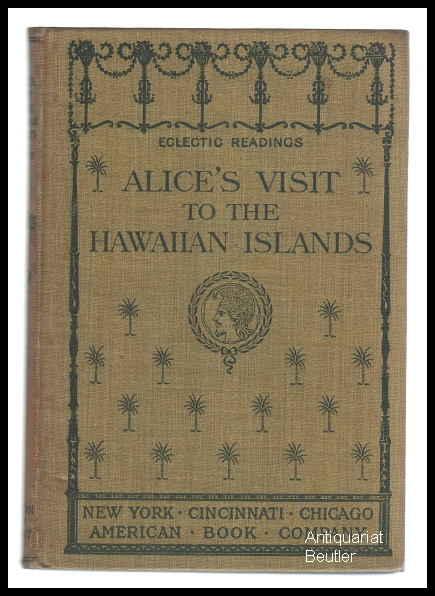
1900réf. 29349ANew York, Cincinnati, Chicago, American Book Company, (1900). 8°. 208 pp. With illustrations and coloured plan. Original-cloth / Original-Leinen. (Binding slightly darkened, name on preliminary page / Einband etwas nachgedunkelt, kleiner Name auf Vorsatz). * Eclectic School Readings. [2 Warenabbildungen]
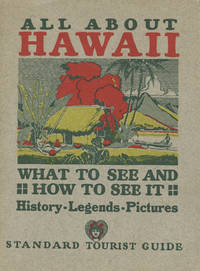
1928réf. 60862Honolulu H.T.: Honolulu Star-Bulletin 1928. 12mo. 5 x 6.75 in. 228 pp. Photo frontisp. with photo plates text illustrations maps 6 large folding including city map of Honolulu. Colour-illustrated flexible gray boards vivid cover art of Hawaiian hut outrigger and scenery front & back cover in yellow red & green dark green & red lettering front & back covers slight shelfwear very minor toning to fore-edges of maps couple w/ very slight closed tears at creases still NF copy. First edition stated of this well-illustrated and informative handbook issued by the Honolulu Star-Bulletin during the Roaring 20’s. Keyed to the maps and the illustrations the text not only details the history of Hawaii but includes visitor information for such places as Waikiki Beach The Pali Manoa Bishop Museum Pearl Harbor Oahu Kilauea National Park Maui Kauai and the Pineapple kingdom on the Island of Lanai as well as leprosy colony on Molokai. Honolulu Star-Bulletin, hardcover
1928réf. 49883Honolulu: Honolulu Star-Bulletin 1928. 1928. First edition. 6 3/4" x " in color pictorial boards showing Hawaiian hut outrigger and scenery. Covers printed in red yellow green and dark green. 228pp. Contents. Photo frontispiece. Photo plates. Text illustrations. Maps 6 large folding including city map of Honolulu. A well-illustrated and informative handbook. Details the history of Hawaii followed by information on Waikiki Beach Honolulu The Pali Manoa Bishop Museum Pearl Harbor Punchbowl Crater Oahu Waipio Valley Maui Kauai the pineapple kingdom on the Island of Lanai the leprosy colony on Molokai etc. Light wear to extremities. Near fine. Honolulu Star-Bulletin, 1928. hardcover
réf. ORD-4973What to see and how to see it in the Island Territory. History. Legends. Pictures. Historical and Contemporary Facts and Statistics. Standard Tourist Guide. First edition. Honolulu. November, 1928. In-12 (127 x 172mm) broché, couverture en carton fort illustrée en couleurs sur les 2 plats, 228 pages, nombreuses photos dans et hors texte et 6 cartes ou plans dépliants. Texte en anglais. Bel exemplaire de cette 1°édition.
1991réf. 63009ABDortmund, Harenberg-Ed., c 1991. 18 cm. 128 S. : überwiegend Ill. kart., Deckelillustr. Rü. aufgehellt, sonst guter Zust. Die bibliophilen Taschenbücher ; Nr. 623