238 risultati
1927rif. 2003San Antonio: Imprenta Universal 1927. About very good. 124pp. Printed in blue ink. Original cream printed wrappers. Moderate wear spine chipped at ends corners worn. Lightly soiled. Light soiling and foxing to text mostly to outer leaves. Biographical work documenting those who died in defense of the Catholic Church during the Cristero War which followed the Mexican Revolution and constitution of 1917. During the Cristero War the secular government sought to crack down on the influence of the Catholic Church banning local religious festivities. This work comprises more than fifty entries providing date and circumstances of death of those killed in 1926 and 1927 illustrated with a portrait or other image of the victim or victims. Only a handful of copies in OCLC. Imprenta Universal unknown books
1754rif. 2306160124xbvkSpain, 1754. Calligraphic titlepage in a handpainted watarcolour frame; 5 sheets dedication ''A LA REYNA DEL CIELO MARIA SSA. EN SU SOLEDAD DOLOROSA SA MADRE DEL AMOR HERMOSO, y delicias de la celestial Syon, aunque max grande de penas y amanguras de la gracia, que en el dura, pero o lorioso campe de la soledad ...''; 1 blank sheet; 2 sheets ''TABLA DE LAS SANTAS ANACORETAS CONTENIDAS EN ESTE SEGUNDO TOMO DEL DESIERTO DELICIOSO''; 2 sheets 'PROTESTA . . .' etc.; 334* sheets Description of the Saints. - Vellum binding of the periodover 4 raised bands with manuscript title at spine and possibly younger frangments of ribbon clasps; 4to.(ca. 24 x 19 x 6 cm; ca. 1,47 kg.).
1958rif. 2105090268xbvkTongerlo, St. Norbertusdrukkerij - uitgave van de 'Commissie voor Geschiedkundige en Folkloristische Opzoekingen der Provincie Antwerpen', 1948-1958. 423 / 489 / 488 / 440 pages on untrimmed paper. - Publisher's titled grey cardboard bindings; Folio (ca. 31 x 24 x 15 cm; ca. 7 kg.).
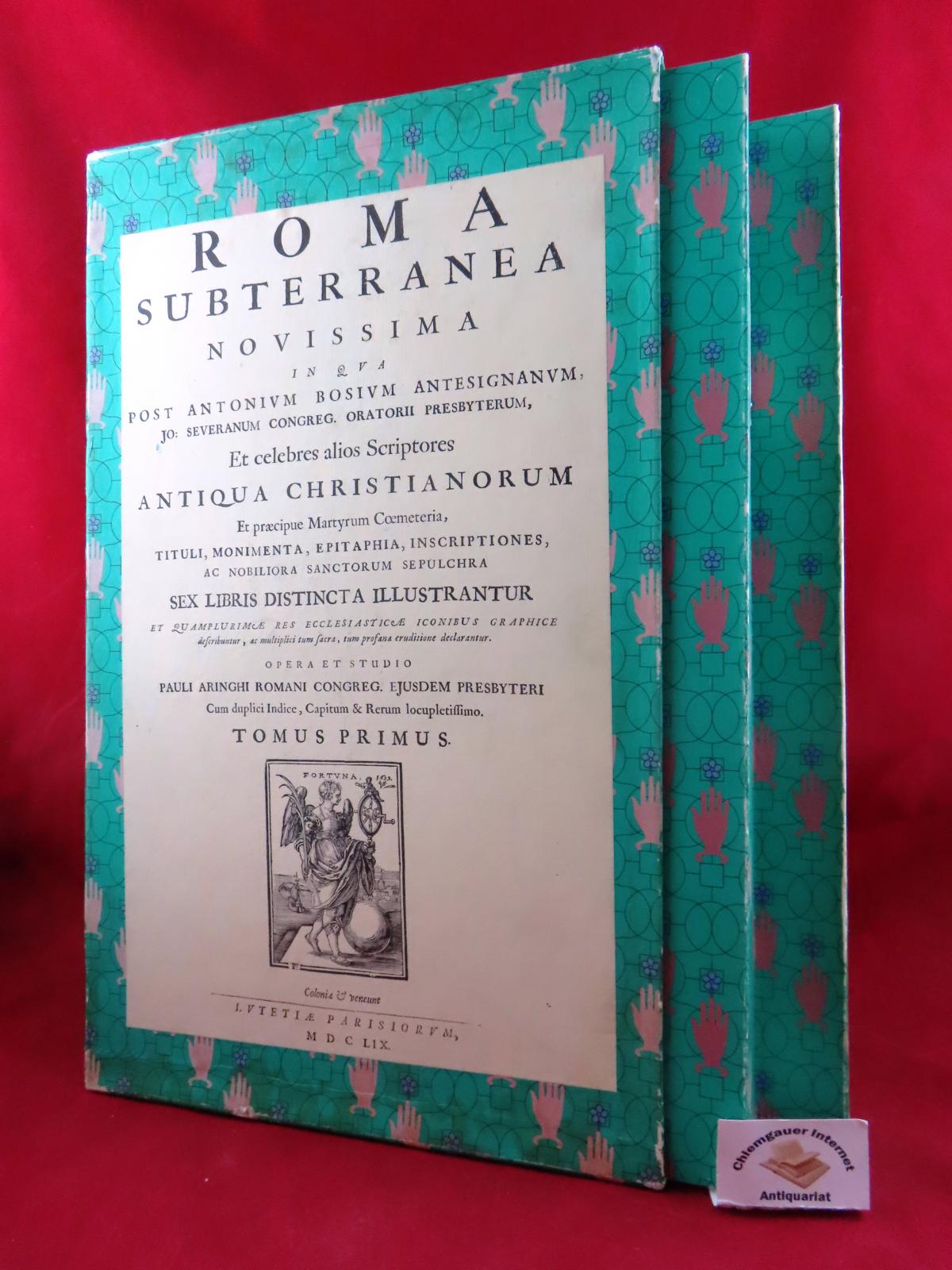
1972rif. 296732Collegium Graphicum, Portland, Oregon, 1972. 352,396 Seiten. Originalbroschur. im Originalschuber. Folio 25x48 cm
2004rif. 21576CBFrankfurt a.M., Campus-Verlag, 2004. 8°, 128 S., original Kartonage (Paperback), kleine Widmung unten rechts auf Vorsatzseite, sonst schönes, sauberes Exemplar.
2014rif. 54889New York, NY : Berghahn Books (Space & Place, Vol 11), 2014. Gender, Religion and the Making of Place in Post-War Croatia XVII, 374 S. (24 cm) illustrierter Pappband / gebundene Ausgabe
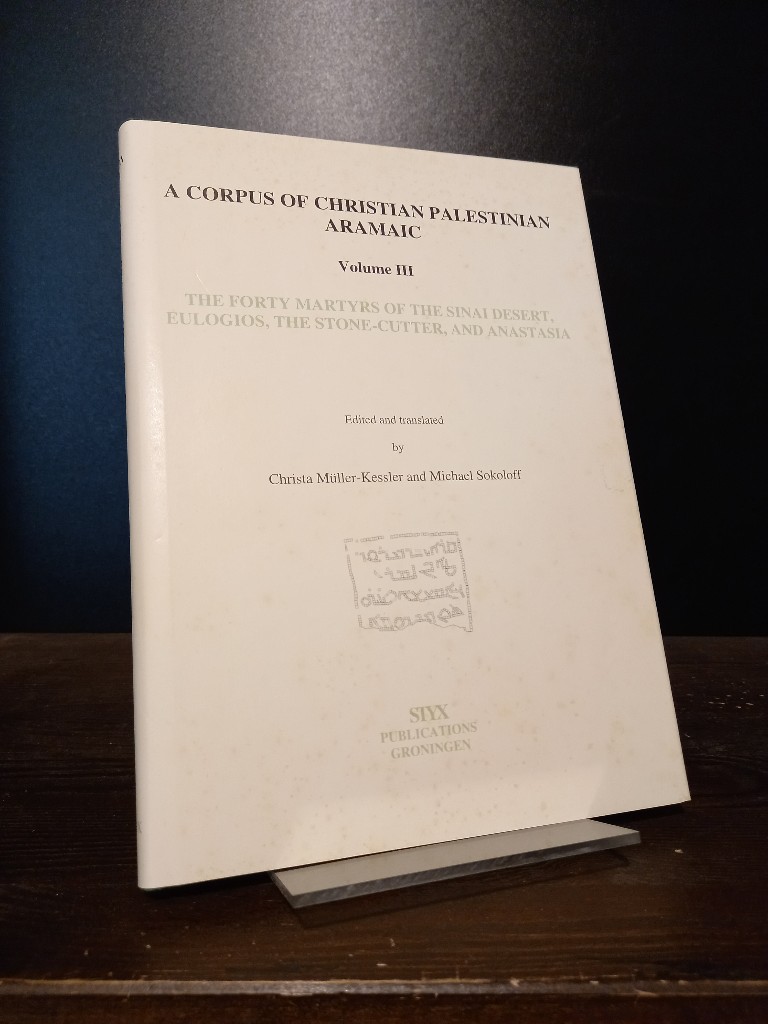
1996rif. 2139255Groningen: Styx Publications 1996. (6), 138 Seiten. Gr. 8° (22,5-25 cm) Orig.-Pappband mit silbern geprägtem Titel auf Deckel und Rücken sowie Orig.-Schutzumschlag. [Hardcover / fest gebunden].
1979rif. 159407Oxford: University Press 1979. LXXIII, 379 Seiten/Pages. 8° (21 x 14,5 cm). Orig.-Leinenband mit goldgeprägtem Rückentitel und Orig.-Schutzumschlag. [Hardcover / fest gebunden].
rif. 160995o. O.: o. V. (2016). 86 Seiten. Gr. 8° (22,5-25 cm). Orig.-Broschur. [Softcover / Paperback].
1856rif. 45724Regensburg: Friedrich Pustet. 1856. VI S., 2 Bll., 328 S. 8°. Halblederband der Zeit auf 4 imit. Bünden.
2016rif. 1-1434709868David C Cook 2016. Paperback. New. box pck pa edition. 297 pages. 9.25x6.25x0.75 inches. David C Cook paperback
1837rif. 104703London: Ordered by the House of Commons to be Printed 1837. The tolpuddle martyrs pardoned First edition of the official government paper pardoning the Tolpuddle Martyrs otherwise the Dorchester Labourers or Six Men of Dorset and allowing their return to England. Their sentences of transportation to Australia for forming a trade union had caused a public outcry in 1834. In England agitation against the sentences began almost as soon as they were pronounced and the outcry over the injustice of the case won the support of high-profile radical figures including Daniel O'Connell Fergus O'Connor and William Cobbett. Less than a month after the trial the men were already being referred to as "martyrs". Under pressure the home secretary Lord John Russell granted the men conditional pardons in June 1835 followed by full pardons in March 1836 although that news was not passed on to the men who remained in assigned labour long after they should have been freed. Single folio sheet 338 x 215 mm. Housed in a cloth portfolio. Dutch library stamp to outer margin and shelf mark at head. Horizontal crease where folded a little marginal chipping; a very good copy. See Printing and the Mind of Man 305. hardcover
1612rif. ST20615Liège: Christian Ouwerx 1612. FIRST AND APPARENTLY ONLY EDITION. 160 x 98 mm. 6 1/4 x 4". 62 leaves four leaves of H2 and H3 mis-bound between C2 and C3. Contemporary vellum tooled in blind covers with plain rule frame small oblique fleurons at corners of inner frame central panel with larger fleuron centerpiece slightly raised bands early ink shelf location at head of spine holes for two fore-edge ties now lacking. Engraved title page with illustration in the style of a Tree of Jesse with St. Augustine as its source the martyrs on the branches offering their crowns to the Virgin and Child sitting in glory at the top and 27 PLATES DEPICTING MARTYRS many with their means of execution all by Collaert. Title page and 1r with 17th century ink ownership inscription of the Congregation of Notre Dame à Treves; title page with ink signature of "Krintinger" at foot; G8v with ink signature of Jean Chapeaville Vicaire de Liege whose printed approval for the publication of this work appears on H2r. Each life of a martyr with vellum tab at head of page near the gutter. De Theux "Bibliographie Liegeoise" 1867 p. 24; USTC 1506992. Vellum a little grubby and with a couple of small ink stains corners slightly bumped tiny chips gone at spine ends a couple of quires a bit proud but the binding solid and retaining much of its original antique appeal. Occasional minor soiling internally isolated spots of foxing or trivial paper flaws but the text and plates otherwise very appealing the impressions of the engravings being especially rich. Written by a Walloon theologian and illustrated by an Antwerp master printer this is a very rare treatise on martyrs of the Augustinian order that was once in the library of an order of teaching nuns. These 27 hagiographies of Augustinian hermits who died for the faith were written by theologian Georges Maigret 1573-1633 prior of the Augustinian monastery in Liège. He begins with St. Evode martyred in Africa in 408 and continues up to 1610 when Blessed Illephonse and Raphael de la Madre de Dios were killed while on missions in the Philippines and Sunda Islands respectively. Other near-contemporary martyrs died closer to home like Brother Gerard Ridder who was murdered by the Huguenots in the Low Countries in 1587. A full-length portrait by Adriaen Collaert illustrates the entry for each martyr with detailed background scenery giving a sense of where these Augustinians were serving at the time of their demise. Some martyrs are shown in the midst of their execution: Boniface hangs on an X-shaped cross Philippe Aymil stands pierced through with arrows Augustin du Rosaire kneels calmly before the swordsman who will behead him. The death of others is represented allegorically as in the case of Jean Sahagoune who was poisoned: he is depicted standing atop a recumbent lion while a richly dressed woman offers him a chalice containing a snake. Collaert ca. 1560-1618 came from a family of prominent Flemish engravers in Antwerp. After training with his father Hans he became a master of the artists' Guild of St. Luke in 1580. Our volume was once owned by the Congregation of Notre Dame in Trier an order of Augustinian Canonesses dedicated to educating the daughters of the poor. The order was founded in northeastern France in 1597 and soon spread to surrounding areas. Of special interest the printing of our volume was authorized by the signature of Jean Chapeauville vicar general of Liege and Inquisitor of the Faith. As a reformer historian and theologian Chapeauville 1551-1617 was a person of considerable prominence in the church of his time. To qualify for personal manuscript authorization like this the work must have had quite a small print run and copies would have additionally been destroyed through devout use. In any case the book is almost never seen for sale today. Christian Ouwerx unknown
rif. 44110088like new. unknown
rif. 2508MA312Universidade dos Açores. Ponta Delgada. 1983. De 23x16 cm. Com 227 ii págs. Brochado. Ilustrado no texto com tabelas e em extratexto sobre papel couché com fotografias a preto e branco. SACO MA641-32 unknown
2007rif. 1-0882640097Voice of the Martyrs 2007. Hardcover. New. 38 pages. 10.60x10.60x0.50 inches. Voice of the Martyrs hardcover
rif. 0882641255.Gpaperback. Good. Access codes and supplements are not guaranteed with used items. May be an ex-library book. paperback
1878rif. 61753Geneva: Imprimerie Jules-Guillaume Fick 1878. Folio. 213 3 pp. Woodcut engraved printer’s device on title text woodcut engraving decorated initials. Publisher’s softcovers w/ original printed d.j. folded over on verso printer’s device for Fick on back cover still NF/VG uncut and unopened copy. First edition 1 of 200 copies printed of this work on the Five Protestant Martyrs of Lyon -- five southern French theology students held for a year and burned at the stake May 16 1553 for attempting to proselytize the Protestant faith. Taken from Crespin’s 1619 “Histoire des martyrs” with an appendix of documents from the library of Saint Gall this work outlines the lives and fate of Martial Alba Pierre Escrivain Bernard Seguin Charles Favre and Pierre Naviheres. Their skillful defense using their deep Biblical knowledge against the inquisitors and Roman Catholic theologians became legendary. Imprimerie Jules-Guillaume Fick, paperback
rif. 44110088-nnew. unknown
rif. 0882703307.Gimitation_leather. Good. Access codes and supplements are not guaranteed with used items. May be an ex-library book. hardcover
rif. GOR005554366Paperback. Good. paperback
1583rif. 5484Macerata: Appresso Sebastiano Martellini con licenza de' superiori 1583. FIRST ITALIAN EDITION the second edition overall and the FIRST ILLUSTRATED EDITION. Hardcover. Fine. Bound in 19th c. ivory vellum hinges repaired at head and foot light soiling spine label fragmentary the boards ruled in gold the spine gold-tooled with repeating floral tools. Illustrated with six engraved plates of Catholic priests being abused apprehended tortured and executed described in detail below. With a woodcut title vignette of the Crucifixion a woodcut of the Pietà on leaf D7 verso printer's ornaments and woodcut initials. The text is type-ruled throughout. The text is in very good condition aside from damp-staining in gathering B and the six plates; the title page is soiled and has a small area of restoration at the upper corner as well as a clean tear mended and a little staining in the gutter. There is a light oil stain on leaf H6 and a marginal paper flaw on leaf N5. A translation with additional material of Allen's "A briefe historie of the glorious martyrdom of XII. reuerend priests executed vvithin these tvveluemonethes for confession and defence of the Catholike faith." Rheims: J. Foigny 1582. The English edition exists in only 2 copies British Library and Westminster Cathedral Library. This edition the first edition to include the six engraved illustrations is also rare. OCLC locates copies of the Macerata edition at 7 institutions in North America. see notes below for holdings. The central figure of Allen's martyrology is the Jesuit Edmund Campion 1540-1581 who at Allen's request and along with Robert Parsons led the first Mission to England. Campion and his companions were arrested on 17 July 1581. The present work recounts the arrest trial and eventual execution of Campion as well as the priests Ralph Sherwin Alexander Briant Thomas Ford John Shert Robert Johnson William Filby Luke Kirby Lawrence Richardson John Payne and Everard Hanse; as well as the Jesuit Thomas Cottam. Included in these accounts are the transcripts of Campion's final letter to the Jesuit General Claudio Aquaviva Ralph Sherwin's letter from the Tower and Alexander Briant's letter written while imprisoned to the Jesuit fathers in England requesting admission to the Society which was granted. Allen who continued to receive material up to the time of publication appended the martyrdoms of Cuthbert Maine John Nelson and Thomas Sherwood all of whom died in 1577 and 1578 to his account of the martyrs of 1581 and 1582. The translator of the present edition added an additional account not found in the English edition of the martyrdom of 4 English priests in 1583. The Engravings: The six engravings in this work first appeared in the first edition of Robert Parson's "De Persecutione Anglicana Libellus" published by the Jesuit College at Rome in 1582. Each of the six images is accompanied by a four-line explanation in hexameter verse. "The first plate depicts priests being apprehended in private houses and marched off to prison; the second in amplification shows various priests some still in their vestments being led away either on horseback or on foot but always securely bound two gentlewomen who had sheltered them being led to the same destination. In the third a priest is being scourged while tied to the back of a cart and below in the foreground an examination is in progress as preparations are made for torture. The fourth picture illustrates a racking with three other victims lined up to await their turn. In the fifth the priests are being dragged to execution on hurdles while the instruments of death are prepared; and the final plate represents the different stages of martyrdom from the hanging to the drawing quartering and burning of entrails."Anthony G. Petti in Recusant History April 1966 pp. 288-91 Edmund Campion: "Campion was arrested with his companions on 17 July 1581. Amid scenes of violent excitement Campion was derisively paraded through the streets of his native city bound hand and foot riding backwards with a paper stuck in his hat to denote the 'seditious Jesuit'. First thrown into Little Ease at the Tower he was carried privately to the house of his old patron the Earl of Leicester; there he encountered the queen herself and received earnest proffers of liberty and preferments would he but forsake his papistry. Hopton having tried in vain the same blandishments on Campion's return to the Tower the priest was then examined under torture and was reported to have betrayed those who had harboured him. Several arrests were made on the strength of the lie. He had asked for a public disputation. But when it came off in the Norman chapel of the Tower before the Dean of St. Paul's and other divines Campion had been denied opportunity to prepare his debate and had been severely racked. Thus weakened he stood through the four long conferences without chair table or notes and stood undefeated. Philip Howard Earl of Arundel who was looking on in the flush of worldly pride became thereby inspired to return to God's service. "The privy council at its wits' end over so purely spiritual a 'traitor' hatched a plot to impeach Campion's loyalty and called in the hirelings Eliot and Munday as accusers. A ridiculous trial ensued in Westminster Hall 20 Nov. 1581. Campion pleading not guilty was quite unable to hold up his often-wrenched right arm seeing which a fellow prisoner first kissing it raised it for him. He made a magnificent defence. But the sentence was death by hanging drawing and quartering: a sentence received by the martyrs with a joyful shout of 'Haec dies' and 'Te Deum'."Catholic Encyclopedia Cardinal William Allen: "On the accession of Elizabeth and the re-establishment of Protestantism William Allen was one of those who remained most staunch on the Catholic side and it is chiefly due to his labours that the Catholic religion was not entirely stamped out in England. Having resigned all his preferments he left the country in 1561 and sought a refuge in the university town of Louvain. The following year however we find him back in England devoting himself though not yet in priest's orders to evangelizing his native county. His success was such that it attracted notice and he had to flee for safety. For a while he made himself a missionary centre near Oxford where he had many acquaintances and later for a time he sought protection with the family of the Duke of Norfolk. In 1565 he was again forced to leave England this time as it turned out for good. He was ordained priest at Mechlin shortly afterwards. "Convinced that Protestant domination of England could only be temporary and that the whole future depended on there being a supply of trained clergy and controversialists ready to come into the country whenever Catholicity should be restored Allen founded the College at Douay since identified with his name. Douay was a new university founded by Pope Paul IV under the patronage of King Philip of Spain in whose dominions it then was for the special object of combating the errors of the Reformation; and what is still more to the purpose it was already under Oxford influences. The first chancellor Richard Smith was an Oxford man as were several of the most influential members of the university at the time when Allen began. It was his ambition to perpetuate Oxford influences and traditions and to make his new college practically a continuation of Catholic Oxford. "The means of support included besides Allen's private income and other voluntary donations a yearly pension of 200 ducats from the King of Spain and later on one of 100 gold crowns a month from the Pope. The number of students grew rapidly. Often more were received than the income warranted a course rendered necessary by the urgent state of Catholic affairs which Allen met in the spirit of faith; and in the long run means were never wanting. The names of Thomas Stapleton Richard Bristowe Gregory Martin Morgan Philips and others are still well known to English Catholics and are themselves a sufficient record of the ability of Allen's early companions and of the work done at the college. Allen had the power of instilling his spirit into his followers. They lived together without written rule but in perfect mutual harmony working for the common cause. From the Douay press came forth a constant stream of controversial and other Catholic literature which could not be printed in England on account of the Penal Laws. In this Allen himself took a prominent part. His writings are distinguished by extent of learning and theological acumen. One of the chief works undertaken in the early years of the college was the preparation of the well-known Douay Bible. The New Testament was published in 1582 when the college was at Rheims." "In 1575 Allen made a journey to Rome his second where he helped Pope Gregory XIII to found another college to send missionaries to England. For this purpose possession was obtained of the ancient English hospice in the city which was converted into a seminary. Returning to Douay Allen found a storm gathering against the English and in 1578 they were expelled from the town. The collegians took refuge at the University of Rheims where they were well received and continued their work as before Allen being soon afterwards elected canon of the Cathedral Chapter. In 1579 he paid his third visit to Rome being summoned thither in order that he might use his unique personal influence to adjust the dispute between the English and Welsh students at the new college there. It was during this visit that he was appointed a member of the Pontifical Commission for the revision of the Vulgate. Up to this point the career of Allen had won the universal admiration and gratitude of English Catholics for what he himself termed his 'scholastical attempts' to convert England. Such was not however the case with his political labors to secure the same end which may be said to have begun about this time and were far less successful. The famous Bull 'Regnans in excelsis' was issued by Pius V in 1570 deposing Queen Elizabeth and releasing her subjects from their allegiance but it did not take practical shape till seventeen years later when preparations were made for the invasion of England by the King of Spain. Allen was then once more in Rome whither he had been summoned by the Pope after a dangerous illness two years before. He never left the Eternal City again but he kept in constant communication with his countrymen in England. It had been due to his influence that the Society of Jesus to which he was greatly attached undertook to join in the work of the English mission; and now Allen and Father Parsons became joint leaders of the 'Spanish Party' among the English Catholics. "At the request of King Philip Allen was created cardinal in 1587 and held himself in readiness to go to England immediately should the invasion prove successful. In estimating the number of those who would be adherents to the scheme however Allen and Parsons were both at fault. The large majority of English Catholics generously forgetting the past sided with their own nation against the Spanish and the defeat of the Armada 1588 was a subject of rejoicing to them no less than to their Protestant fellow countrymen. Allen survived the defeat of the Armada six years. To the end of his life he remained fully convinced that the time was not far distant when England would be Catholic again. . He continued to reside at the English College Rome until his death 16 October 1594. He was buried in the chapel of the Holy Trinity adjoining the college." Catholic Encyclopedia. Appresso Sebastiano Martellini, con licenza de' superiori hardcover
2022rif. Gyan-9789374566688Facsimile Publisher 2022. Hardcover. New. 22.59 x 14.34 x 5.42 cm. English Facsimile Publisher hardcover
2022rif. Gyan-9789374566688Facsimile Publisher 2022. Hardcover. New. 22.59 x 14.34 x 5.42 cm. English Facsimile Publisher hardcover
1855rif. 239292New-York : W.H. Arthur & co. 1855. First Edition. Softcover. Good copy in original stiff card wrappers with some wear and tear as with age. Remain preserved overall; bright and clean. Series; Selected Americana from Sabin's Dictionary of books relating to America. Physical description; iv 5-64 p. : front. fold. map ; 22 cm. Subjects; United States — History — Revolution — Prisoners and prisons. Genre; Illustrated. New-York : W.H. Arthur & co. paperback