206 Ergebnisse
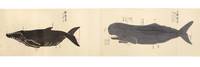
Best.-Nr. 6620Scroll 273 x 13760 mm. At end in trans.: “All the images are of the whaling at Taiji…April 1857 Tennojiya Shinsuke owned.” A remarkable long and vividly rendered whaling scroll from Wakayama Prefecture depicting the whaling activities in unusual detail of the famous town of Taiji and its bay “Taiji ura” the site of the annual dolphin slaughter featured in the 2009 Oscar-winning documentary The Cove. Taiji has long been known as a whaling town and its history is essentially the history of whaling in Japan. In the 17th century whalers of the town developed a series of more sophisticated whaling techniques including the group hunting system 1606 a handheld harpoon and the whaling net technique 1675. The scroll begins with a quite detailed history of whaling in Japan written in a very legible hand describing the above-mentioned new methods of whaling with dates of introduction. There is information on when certain species of whales pass by during the year signaling systems other technical aspects of whaling etc. The first images depict six species of whales found off the coast of Taiji: Semi kujira North Pacific right whale Zato kujira humpback whale Nagasu kujira fin whale Katsuo kujira Bryde’s whale Koku kujira gray whale and Makko kujira sperm whale. Each of the dramatically and richly painted whales have notes regarding their most notable identifying features. The next scene takes place at Taiji: it shows the captured Semi kujira whales being winched onto shore and the highly specialized butchering of the carcasses. The slaughter area is fenced off and there are observation decks for government officials to review the work. We see a cross-section of the whale and the various products rendered from it in various stages of dismemberment: skin flesh bone intestines fins penis all displayed in large piles. Spectators stand to the side watching the work. A shrine is depicted in the background. This scene has been heightened with metallic pigments. All the harpoons in this scroll are depicted with metallic pigments. Following this is a scene of the different kinds of boats entering the greater bay towing a whale. The scenes of the houses on shore reveal what a prosperous community it once was. The subsequent scene depicts the specialized boats going out to sea passing two elevated signal posts “Kajitorizaki” & “Shomyozaki” which receive news of whales in the distance and sends signals by a flag system. Smoke is rising a signal to the boats. One of the boats is a “tool” boat containing special harpoons to kill the whale after it had been entangled in a net. Other boats are “net” boats each of which requires 81 sailors; they are seen spreading out the net. There are other boats — seko bune — which guide the whale into the net. Another vessel is fast-moving messenger boat giving directions to the others. In the following two scenes the sky and ocean are very beautifully depicted with delicate gradations of colors. The whale a humpback is shown caught in the net writhing and fighting for its freedom desperately spouting water. The enormous motion of the whale has caused the water to turn white with foam which is very expressively painted on the scroll with almost a 3-D Jackson Pollock splashed effect. A young whaler is seen climbing on the whale to stab it in the nose. The whalers all have special tasks to fulfill and the scroll provides the names of each special function. The next scene shows whalers catching a North Pacific right whale just off the Mikisaki peninsula. Following this we are on shore again at the enormous supply storage compound. The first scene shows government observers at the security gate of the compound with men shown mending and storing the whaling nets. The workers wear different head gear and colors of clothes denoting their jobs and ranks. One room has bundles of poles for harpoons. The next building shows men making boat paddles blacksmiths making harpoon heads barrel makers men assembling the harpoons and men making ropes. The subsequent scene depicts men painting three “leader” whaling boats in vivid colors and patterns. The designs on the boats have been highlighted with metallic pigments. The finished boats are stored in sheds which are shown behind. This is followed by a scene of the sheds where boats are constructed. We see a group of shipbuilders constructing a seko bune using saws planes and various other woodworking tools. The next scene depicts the tools of the whalers: various harpoons of different weights and lengths with different metal heads and large knives on long poles. Each harpoon’s specific purpose is mentioned. The ropes attached to the harpoons are contained in a series of bundles to avoid tangling. In fine and fresh condition. This is the finest whaling scroll we have yet encountered with a number of scenes of specific and well-known sites. Preserved in the original but rather decrepit wooden box with metal clasps. Accompanying the scroll is an original metal harpoon tip with the name “Eishichi” engraved. unknown
Best.-Nr. 6620Scroll 273 x 13760 mm. At end in trans.: "All the images are of the whaling at Taiji.April 1857 Tennojiya Shinsuke owned." A remarkable long and vividly rendered whaling scroll from Wakayama Prefecture depicting the whaling activities in unusual detail of the famous town of Taiji and its bay "Taiji ura" the site of the annual dolphin slaughter featured in the 2009 Oscar-winning documentary The Cove. Taiji has long been known as a whaling town and its history is essentially the history of whaling in Japan. In the 17th century whalers of the town developed a series of more sophisticated whaling techniques including the group hunting system 1606 a handheld harpoon and the whaling net technique 1675. The scroll begins with a quite detailed history of whaling in Japan written in a very legible hand describing the above-mentioned new methods of whaling with dates of introduction. There is information on when certain species of whales pass by during the year signaling systems other technical aspects of whaling etc. The first images depict six species of whales found off the coast of Taiji: Semi kujira North Pacific right whale Zato kujira humpback whale Nagasu kujira fin whale Katsuo kujira Bryde's whale Koku kujira gray whale and Makko kujira sperm whale. Each of the dramatically and richly painted whales have notes regarding their most notable identifying features. The next scene takes place at Taiji: it shows the captured Semi kujira whales being winched onto shore and the highly specialized butchering of the carcasses. The slaughter area is fenced off and there are observation decks for government officials to review the work. We see a cross-section of the whale and the various products rendered from it in various stages of dismemberment: skin flesh bone intestines fins penis all displayed in large piles. Spectators stand to the side watching the work. A shrine is depicted in the background. This scene has been heightened with metallic pigments. All the harpoons in this scroll are depicted with metallic pigments. Following this is a scene of the different kinds of boats entering the greater bay towing a whale. The scenes of the houses on shore reveal what a prosperous community it once was. The subsequent scene depicts the specialized boats going out to sea passing two elevated signal posts "Kajitorizaki" & "Shomyozaki" which receive news of whales in the distance and sends signals by a flag system. Smoke is rising a signal to the boats. One of the boats is a "tool" boat containing special harpoons to kill the whale after it had been entangled in a net. Other boats are "net" boats each of which requires 81 sailors; they are seen spreading out the net. There are other boats - seko bune - which guide the whale into the net. Another vessel is fast-moving messenger boat giving directions to the others. In the following two scenes the sky and ocean are very beautifully depicted with delicate gradations of colors. The whale a humpback is shown caught in the net writhing and fighting for its freedom desperately spouting water. The enormous motion of the whale has caused the water to turn white with foam which is very expressively painted on the scroll with almost a 3-D Jackson Pollock splashed effect. A young whaler is seen climbing on the whale to stab it in the nose. The whalers all have special tasks to fulfill and the scroll provides the names of each special function. The next scene shows whalers catching a North Pacific right whale just off the Mikisaki peninsula. Following this we are on shore again at the enormous supply storage compound. The first scene shows government observers at the security gate of the compound with men shown mending and storing the whaling nets. The workers wear different head gear and colors of clothes denoting their jobs and ranks. One room has bundles of poles for harpoons. The next building shows men making boat paddles blacksmiths making harpoon heads barrel makers men assembling the harpoons and men making ropes. The subsequent scene depicts men painting three "leader" whaling boats in vivid colors and patterns. The designs on the boats have been highlighted with metallic pigments. The finished boats are stored in sheds which are shown behind. This is followed by a scene of the sheds where boats are constructed. We see a group of shipbuilders constructing a seko bune using saws planes and various other woodworking tools. The next scene depicts the tools of the whalers: various harpoons of different weights and lengths with different metal heads and large knives on long poles. Each harpoon's specific purpose is mentioned. The ropes attached to the harpoons are contained in a series of bundles to avoid tangling. In fine and fresh condition. This is the finest whaling scroll we have yet encountered with a number of scenes of specific and well-known sites. Preserved in the original but rather decrepit wooden box with metal clasps. Accompanying the scroll is an original metal harpoon tip with the name "Eishichi" engraved. hardcover books
1964Best.-Nr. c230726k021xbvk(Tokyo, 1964). *) 25 double-sheets (folded folios, = 50 painted interior- + 50 blank exterior pages) on thin untrimmed Japan-paper: doublepage multi-colour brushwork, doublep. with col.-brushw. (monogrammed) and signed manuscript dedication page in japanese Calligraphy; 22 doublesh. with 2 pages of brushwork each, another doublepage multi-colour brushwork; each doublesheet loosely inserted in slightly stronger as untrimmed folded Japan-paper sheets. - Loose in folded plain-white cardboard; 4to.(ca. 32 x 24 x 2 cm).
1964Best.-Nr. c230726k022xbvk(Tokyo, probably before 1964; some of them were reprinted in the Olympic-Committee's official Book for the 1964 Olympic Games in Tokyo). 59 sheets of thin untrimmed Japan-paper ('Washi', ca. 32 x 23 cm), each with black-ink brushwork (some vertical, some horizontal) in Toki's famous pictographic manner, most of them monogrammed by the artist; loosely tipped-on slightly larger thin white cardboards (ca. 38 x 26 cm), often as folded double-sheets (unfolded ca. 38 x 52 cm).
Best.-Nr. 11073Yamagata Prefecture: 1819-68. Ushu province today's Yamagata Prefecture has a long tradition of making sake. The region has abundant fresh water and the climate is well-suited for growing sake rice. This archive of 22 manuscript reports was produced for local tax collectors by two sake manufacturers in Higashine village Murayama Ushu province: GenshirÅ æºå››éƒŽ 20 reports and Hachizaemon 八左衛門 two reports. Neither is in business today. Sake was a heavily regulated industry in Edo Japan and a major source of tax revenue. The shogunate also controlled production levels in order to conserve rice in times of shortage and to regulate prices. The government also required manufacturers to brew only in winter time to improve quality. These official reports contain statements of amounts of sake-making rice used and production levels of sake by number of barrels. One report was prepared in 1819 one in the 1820s five in the 1830s four in the 1840s two in the 1850s and nine in the 1860s. Most of the reports consist of four folding leaves of text. In fine condition. The archive's original wrapper is present. unknown
Best.-Nr. 73918vo 235 x 168 mm. orig. blue semi-stiff wrappers modern stitching. Japan: 1853-54. Silver was mined at the Ikuno Ginzan Ikuno Silver Mine from the 9th century until 1973 and was an important source of income for the central government. Lead copper zinc and gold were extracted along with silver. There were a number entrances to the mine and more than 20000 local residents were in some way involved in the mining industry. In the 19th century the mines were running deficits as they were not producing enough silver. This is a fascinating official record maintained by Chudayu or Chiwaki Shiraishi 1817-87 of the loans made by the bakufu to the Ikuno and nearby Ase silver mines to improve their efficiency and production levels. Shiraishi was at this time working for the bakufu employed as deputy officer of the two silver mines overseeing their operations and finances. Later during the Meiji Restoration Shiraishi became well known as a scholar of Wagaku Japanese studies and as a journalist. This manuscript written in a very beautiful hand contains detailed accounts of the series of loans made by individual members of the bakufu to each mine with names of lenders size of loans interest rates purpose of the loans apparently most of the money went to pay the salaries of the miners etc. The signature of Shiraishi appears on the first and final leaves. In fine condition; some well-repaired worming touching text. Preserved in a chitsu. Stamp with release stamp of the Nagoya Eirin Kyoku the Forest Management Division of the Nagoya City government. unknown books
Best.-Nr. 50219331 pp. volume representing the first part of a two-part govermental report on the 1907 Tokyo Industrial Exposition covering the overall operations and organization of the exposition including maps and plans for the arrangement of the pavilions within Ueno Park and interior plans describing the use of the pavilions and displays within. Profusely illustrated throughout with black and white reproductions from photographs of the exposition architectural and engineering plans site plans floor plans and pavilion elevations some in color including approximately 30 folding plates. Some light toning and foxing scattered throughout. 4to. Original embossed wrpps. with title printed to cover some sunning and foxing minor scuffing. Tokyo Tōkyōfu/Meiji 42 n.d. 1909. This volume includes many photographs and architectural plans of the pavilions which made up the Industrial Exposition as well as the configuration of the exhibition. Through the exhibition the organizers had a goal to visually communicate a narrative about modern industrial Japan in a period of colonial expansion just after the Russo-Japanese War. The exhibition was also hoped to help Japan to increase consumption in a time of post-war economic depression. This was the 6th industrial exhibition to take place at Ueno Park and was the grandest. Many of the main exhibition buildings were western in style which differed greatly from Japanese pavilions in previous international expositions where a greater focus was placed on traditional Japanese artistic styles and crafts. The features of the exposition itself included Japan's second Ferris Wheel foreign products and processes and a Crystal Pavilion which became the target of Korean protests and was eventually removed. An estimated 35000 light bulbs or 4% of all of the light bulbs availble in Japan at the time were used at the fair. "The main buildings Gothic in the park proper were built around a huge foundain on six levels surmounted by Bacchus and bathed in lights of red blue and purple. A water chute led down to the lower level on Shinobazu Pond where special exhibitions told of foreign lands and a growing empire." Seidensticker 2011 Scarce; as of September 2019 WorldCat does not locate a single holding of this volume in North America. unknown books
Best.-Nr. 28676NALLIERS de 1656 à 1672 un CAHIER DE ROLE COMMUNAL ORIGINAL DE LA COMMUNE DE NALLIERS , manuscrit à l'encre brune de 20 pages, sur papier vergé ligné bleuté et filigrané : "grappe de raisin", format : 41 x 25 cm, ROLE COMMUNAL DE LA COMMUNE DE NALLIERS POUR L'ANNEE 1836, A PARTIR D 31 JUILLET JUSQU'AU 1ER FEVRIER 1838, document paraphé par le maire et son conseil A LA FIN DE CHAQUE RÉUNION, + 2 LIASSES de 4 pages, manuscrites à l'encre brune sur papier vergé crème, ligné et filigrané "VANDERLEY" - A LA "GRAPPE DE RAISIN", signatures manuscrites à l'encre brune in-fine pour le conseil de Préfecture : BRISSON, BARANTE (Préfet), ROYAUD, SAVARY DE L'EPINERAIE et BERNARD (sous Préfet) + signatures manuscrites in-fine du Préfet BARANTE et du sous préfet BERNARD pour les décisions du Préfet + 13 documents : ........1- Conseil de Nalliers examinant le Jugement du 26 Brumaire par les Tribunaux de Fontenay dans l'Affaire DU PARTAGE DES MARAIS ENTRE LES COMMUNES DE NALLIERS, MOUZEIL ET SAINT MARTIN SOUS MOUZEIL, 1 cahier de 8 pages, format : 35 x 23 cm, manuscrite à l'encre brune sur papier vergé bleuté signé Pervinquière, Fontenay le Peuple, le 2 Frimaire an 9, -+ ........2- Consultation de la Previnquière, déliberation à fontenay - 14 Brumaire an 9, 1 cahier de 8 pages, format : 20 x 31,6 cm, manuscrit à l'encre brune sur papier vergé crème, signé : Prévinquière, ......3- Extrait des Minutes du greffe du tribunal du district de Fontenay : Affaire DU PARTAGE DES MARAIS ENTRE LES COMMUNES DE NALLIERS, MOUZEIL ET SAINT MARTIN SOUS MOUZEIL, au Langon, le 12 Fructidor an 6, 1 cahier de 10 pages sur papier vergé crème, format : 32 x 19,5 cm, signé Labre pour le Président et Bernard Secrétaire, ........4- Aux citoyens Administrateurs du Département de la Vendée (Affaire DU PARTAGE DES MARAIS ENTRE LES COMMUNES DE NALLIERS, MOUZEIL ET SAINT MARTIN SOUS MOUZEIL) , un cahier de 4 pages, sur papier vergé crème, manuscrit à l'encre brune, format : 32 x 19,5 cm, signé Gauvrain et adjoints minicipaux de Nalliers, .......5- Observations par Mr Cardin Avocat pour les Habitants de Nalliers dans l'affaire qui était pendante entre eux et Jugée àn Fontenay et Jugée par Artbitres par Sentence du 24 Thermidor, An 2, 1 cahier de 8 pages, format : 32 x 20 cm, manuscrites à l'encre brune sur papier vergé crème, filigrané : "Grappe de Raisin" "Van der Ley", ............6- Lettre estrait du Registre des Délibérations de la Préfecture du Département de la Vendée, Séance du 9 Vendémiaire An 9, autorisant la Commune de Nalliers à se défendre par tous les moyens de droit dans l'azffaire des Marais, contre Mouzeil et Mouzeil Saint Martin, 1 document , lettre brochée de 4 pages, manuscrites à l'encre brune, sur papier vergé bleuté, format : 20 x 16,5 cm, avec tampon noir de la "Préfecture du Département de la Vendée - République Française", signé le Secrétaire Général : CAVOLEAU, ............7- Extrait des Minutes du greffe du Tribunal de Fontenay, le 24 Thermidor An 2, à propos du paccage immemorial des communes de Mouzeil et Nalliers pour leurs Bètes dans les Marais, 1 cahier de 6 pages, manuscrites à l'encre brune sur papier vergé crème filigrané, format : 24 x 19 cm, Tampon Noir : "Minute-4 Sols" en haut de page, signature de Jean Martin, Huissier à Fontenay, .......8- Decision du tribunal d'Appel de Poitiers (affaire des MARAIS ENTRE LES COMMUNES DE NALLIERS, MOUZEIL ET SAINT MARTIN SOUS MOUZEIL), 1 cahier de 80 pages, format : 24,7 x 18 cm, manuscrit à l'encre brune sur papier vergé bleuté filigrané "Republique Francaise", tampon noir "Republique Française - Vendée - 50 cent.", signée in-fine DELAUNAY, exemplaire copie de MACHEREAU DE L'ETAUDIERE Père, ..............9- Le Même mais Exemplaire Copie de CHARRIER GOUGUETRIE, ................10- Extrait des Registres des Audiences du Tribunal Civil de l'Arrondissement de Fontenay-le-Peuple, Jugement Rendu le 12 Frimaire An 12, signé Duclos, un cahier de 26 pages, sur papier bleuté filigrané vergé, manuscrit à l'encre brune, Tampon noir "Republique-Française - 75 Cent", tampon à froid du "Domaine de l'enregistrement _ Republique Française " en tête de page à gauche, .................11- 2 Frimaire An 9, Consultation Previnguère, 1 cahier de 8 pages, format 32 x 20 cm, manuscrit à l'encre brune sur papier vergé crème , ...............12- 14 Brumaire an 9, Consultations de la Prévinguère sur la demande des Habitants de Mouzeil, un cahier de 8 pages, format : 20 x 32 cm, manuscrit à l'encrez brune sur papier vergé crème, ..................13- Déliberations des Habitants de Nalliers dans l'affaire des Marais du 13 Vendémiaire An 9, 1 cahier broché de 16 pages manuscrites à l'encre brune sur papier veregé crème, filigrané : "République Française", signé : GAUVRAIN Notyaire, format : 29,2 x 22 cm,
1911Best.-Nr. 570861 vol. in-4 reliure de l'époque demi-percaline beige, Imprimerie Hardy & Bernard, Paris, 1911, 253 pp. avec une grande carte dépliante de la "Lombardie et de la Province de Novare (Piémont) avec les principales installations et canalisations électriques primaires (au 1/300.000)
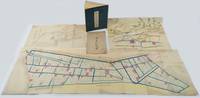
1880Best.-Nr. 220946Japan. Circa1880. Coloured bird's eye view map 38.3 x 52cm with original envelope somewhat worn folded colour map with neat washi repairs to the verso 39.2 x 127.7cm black and white diagram 28.2 x 52.8cm colour illustrated book 27.7 x 20cm 28 double-folded leaves four hole string binding title label on front cover with minor chips. Covers discoloured and worn but holding firmly internally bright and clean. This collection of three historical maps one diagram and an original envelope offers a detailed view of land use and planning in the Tsu’u region of Okayama Prefecture during the early Meiji period. The area had a long history of human habitation with fertile soil and abundant water sources. From the beginning of the Edo period in the 17th century land in the area was progressively reclaimed leading to an expansion of agricultural land. The collection comprises the following five items: Detailed Map of Hayashima Shinden Village in Tsu’u County Bitchū 備中國都宇郡早嶋新田村明細地圖 Land Division Map untitled in Japanese Diagram of Natsukawa Village Primary School in Tsu’u County Okayama 備中國都宇郡撫川村小學校見取繪圖 Pictorial Map of Additionally Registered Lands 地積追番雛形繪圖 Original envelope with title Item 1 shows the divisions of rice-growing land in Hayashima Shinden Village with area measurements and registration numbers. Water channels are coloured in blue. Item 2 is a large map showing land divisions in an adjacent area of Hayashima although it does not have a title. Item 3 is a diagram of a primary school established in Natsukawa at the beginning of the Meiji period probably in the 1870s. An existing Buddhist temple and its compound were used for the school. The diagram identifies a fenced school yard pupils’ entrances to the classrooms at the rear and a flagpole standing beside the school gate. Item 4 is a beautifully drawn bird’s-eye view map showing a settlement with a temple and shrine along a river surrounded by mountains forests and rice paddies. Item 5 is the original envelope titled Hayataka Village Map and most likely belongs with Item 4. . unknown
1981Best.-Nr. 1709110667xbvkJapan, Showa 55 (1981). 207 pages with 100 wholepage photographic plates of Shimizus clay-sculptures. - Publisher's white hardcover binding with transparent dustjacket in a triptych-like grey titled clothfolder, in the publisher's titled cardboard-box; oblong-4to.(ca. 30 x 32 x 4 cm; ca. 1,9 kg.).
Best.-Nr. BN103269INSEE Picardie. Hardcover. Picardie diagnostic et perspectives : Dynamiques humaines économiques territoriales Picardie diagnostic et perspectives : Dynamiques humaines économiques territoriales INSEE Picardie hardcover
1892Best.-Nr. 170411No details of publisher. Circa1892. 2 volumes. Volume I: Two leaves with black and white line illustrations showing a uniform 583pp prior owner's seal on first leaf. Volume 2: Folding table at rear variously paginated over 600 pages prior owner's seal on cover. Some light occasional soiling and corners trifle creased. Wrappers with string ties. These two thick volumes were published in the 1890s probably by Mie prefectural government for managing their prison system. The volumes give details of all the rules and legislation relating to prisoners and prison guards. They offer rare historical information on the Japanese prison system in the late 19th century at the time when Japan was in the process of westernisation. The prison system and related legislation was set up in Meiji Japan and followed two European systems French and German. Until 1900 prisons were run by both local and central governments when their management was transferred to the central government. These 2 volumes were published by Mie Prefectural government prior to the transfer to central government and reflect the local system as it was before transition. The Japanese prison system to this day is well known for its strict and detailed rules and regulations. The first of these volumes covers the treatment daily schedules and inspections of prisoners as well as the handling prisoners with infectious diseases. The volume also lists numerous regulations relating to prison guards' work. The second volume is a collection of relevant rules and legislation on prison and prisoner handling. An important detailed resource for anyone interested in the prison system in the late 19th century. We have been unable to find this handbook in any institutional holdings. . No details of publisher. unknown
1870Best.-Nr. 9858Genève, Braun & Cie, [1870]. In-folio, 13 planches sous chemise cartonnée illustrée d'éditeur avec dos de toile rouge muet, lacets. Rousseurs, quelques petits accrocs en bord de certaines planches.
1870Best.-Nr. 17396Genève, Braun & Cie, [1870]. In-folio de 13 planches reliées en percaline marron façon croco.
Best.-Nr. vb3168Brest, imprimerie de J.-B. Lefournier Sélection Abraxas-libris Relié "RARE. In-8 (13,5 x 20,5 cm), reliure demi-peau, dos lisse orné de dorures, 408 pages, 407 ""Mémoriaux"" d'Adrien Cocagne, sous-préfet en poste à Brest de 1833 à 1848, adressés aux maires ou autres fonctionnaires, un document historique rare, avec une table manuscrite in fine ; dos insolé, coupes frottées, papier reliure usé sur le bord des plats, quelques traces à l'intérieur par ailleurs assez bien conservé, assez bon état général. Livraison a domicile (La Poste) ou en Mondial Relay sur simple demande."
1775Best.-Nr. 24871Paris 1775 Une Eau-Forte Originale, sur papier vélin blanc en noir (seul les armes du MARECHAL DE DURAS ont été aquarellées en couleur à l'époque), Format de la cuvette : (35 cm x 23,8 cm), la gravure a été coupée au ras de la cuvette, imprimé sous la gravure dans toute sa largeur mais encore dans la cuvette : Titre : VUE PERSPECTIVE DE LA CHAMBRE DES COMPTES DE BRETAGNE DÉDIÉE ET PRESENTÉE A NANTES EN MIL SEPT CENT SOIXANTE NEUF A MONSEIGNEUR LE MARÉCHAL DE DURAS PAR SON TRÉS HUMBLE ET TRÉS OBÉISSANT SERVITEUR ANTOINE HENON, ARCHITECTE ET DESSINATEUR DE LA VILLE ET COMMUNAUTÉ DE NANTES, Gravée et Présentée par N. Ransonnette, Graveur ordinaire de MONSIEUR, le 15 de Décembre 1775 + imprimé en dessous : L'Estampe se vend à Nantes chez M. Tanqueret à l'entrée de la Grande Rue et à Paris chez Ransonnette, Rue des Rats, Place Maubert, au coin de la rue des trois porte, Armoiries du maréchal de DURAS au centre sous la gravure, aquarellées en couleurs, présence de quelques rousseurs,
1968Best.-Nr. 2212270374xbvkTokyo, Tokuma Shoten, Showa 43/5/10 (1968). 245 pages, 1 p. colophone. - Ornamental titlepage in slightly misspelled German 'Ästhetik des Knabenlibe', Text and colophone in Japanese. - Publisher's illustrated hardcover-binding with matching original dustjacket which again is protected by a halftransparent orig.? vellum-paper jacket; and again in a red plastic booksleeve by 'Hankyu Book Center'(Osaka, Inagaki's city of birth); 8vo.(ca. 22 x 17 cm).
1849Best.-Nr. 8522Paris, Michel Lévy Frères, 1849 ; 2 tomes reliés en un volume in-8, demi-chagrin vert-lierre, dos à nerfs soulignés de filets à froid, fleurons décoratifs et titre dorés (reliure de l'époque) ; (4), 300 ; (4), 282 pp., (1) f. blanc.
1890Best.-Nr. 109624Librairie J.-B. Baillière et Fils 1890 Édition originale. Ouvrage dédicacé par l’auteur au Docteur Blanche. Préface de J.-C Barbier. In-12 demi chagrin cerise. XI-424 pages-5 pages de catalogue éditeur. Dos lisse orné de chardons dorés, de double filets soulignants des faux-nerfs, titre doré. Bon état d’occasion.
Best.-Nr. 88606Paris, Librairie de "Construction moderne", Aulanier & Cie Editeurs, 1896, 1 volume grand in-folio de 370x560 mm environ, 1 faux-titre, 1 titre, (1) f. (table des planches) 1 portrait de Antonin-Georges Louvier, 52 planches, sous portfolio toilé, fermé par 3 paires de liens, titres dorés sur le premier plat et le dos. Des rousseurs, manquent 4/6 liens, sinon bon état.
Best.-Nr. 15718Lottin de S.-Germain, imprimeur du roi et de la préfecture de police de Paris (1821) - In-4 broché de 102 pages - Exemplaire en très bon état
Best.-Nr. 020357Raoul Rigault (1846-1871), journaliste, militant blanquiste, communard, franc-maçon, chef de la préfecture de police pendant la Commune de Paris, fusillé lors de la semaine sanglante. P.A., sd [entre 20 mars et 26 avril 1871], 1p in-12. 4 lignes sur un carton découpé (carton préimprimé servant déjà de laisser-passer). « Délivrer de suite un passe-porteur à la citoyenne porteur du présent ». Cachet « Préfecture de Police - Cabinet du Préfet ». Très rare autographe de ce communard mort à 24 ans. [488]
1820Best.-Nr. 24855Nantes 1820 Une gravure Originale sur cuivre en noir, format de la gravure seule : 13,2 cm de haut par 19 cm de large, gravure sur papier épais blanc, imprimé en bas au centre sous la gravure mais dans la cuvette : Musseau Délinéavit et Sculpsit 1820 + en dessous et sur toute la largeur de la gravure : "VUE DU COURS, DE LA CATHÉDRALE ET DE LA PRÉFECTURE, DE NANTES",
Best.-Nr. ria9780444513496_inpHardcover. New. New Book; Fast Shipping from UK; Not signed; Not First Edition; Contains proceedings from the Fourth Tokyo Conference on Advanced Catalytic Science and Technology Tokyo July 14-19 2002. This work contains a selection of works which present the research in catalysis. It provides reports on the ad hardcover