10.050 resultados
1997ref. 23936KELTER MARTIN 1997. 1. softcover. UNHEIMLICHE GESCHICHTEN KELTER, MARTIN paperback
1870gr. vol. in folio, pp. 607, (4), leg. cart. edit. Contiene le seguenti: Cronaca di Antonio di Niccolò, Annali di Fermo di Giovan Paolo Montani, Annali di anoimo autore dal 1445 al 1557. Inoltre ricchissimo apparato di documenti, appendici, annotazioni e trascrizioni. Importante e insuperato studi di storia locale. [394]
2000ref. mon0004081664Scitech Publishing 12/31/2003 12:00:01. cd_rom. New. 2.8000 12.7000 9.5000. Scitech Publishing unknown
1898ref. 14831Illustrations par Marius Roy.14 planches, la reproduction d'une gravure de Bonnart et une gravure sur la couverture. Vignette dans le texte.Édition limitée à 60 exemplaires. Il a été tiré, de cet ouvrage, 10 exemplaires sur papier de Chine et cinquante exemplaires sur papier du Japon tous numérotés et parafés par l'éditeur. Celui-ci (N°8) sur Japon.Édition nouvelle revue et augmentée. Paris, Ernest Flammarion, non daté, vers 1898 - 312 pages.Superbe reliure demi-maroquin chocolat à coins. Dos à 4 gros nerfs, filets dorés. Tête dorée sur témoins. Non rogné. Couverture illustrée et dos conservés. Très bon état pour ce bel exemplaire. Format in-8°(20x15).
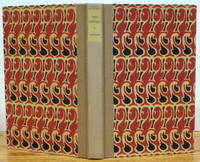
1928ref. 35573New York: Covici Friede 1928. FIRST LIMITED EDITION of 275 copies. This is No. 161/275. Signed by Joseph Moncure March on the limitation page. Original tan linen cloth backstrip over bright red black and yellow art-deco style patterned paper boards. Yellow printed paper spine label and yellow endpapers. With the illustrations of Alexander King. Fine very bright and fresh copy. No name bookplate or other markings. Housed in a worn publisher's slipcase. By the author of The Wild Party. Scarce in the limited printing. . Signed. First Edition. Hard Cover. Fine. Illus. by Alexander King. 4to - over 9¾" - 12" tall. Covici Friede Hardcover
1894in-8, pp. LXXXIX, 296, bella leg. m. perg. coeva con angoli e tit. al d. Ediz. orig. Sono perfettamente descritti 286 specie di uccelli sui 450 elencati dal Giglioli nella sua “Avifauna italica”. Ceresoli p. 268. Raro. [398]
1840ref. 20303Paris, Ernest Bourdin et Cie éditeur, 1840. In-8 de 4-VII-[1]-VIII-621-[3] pages, demi-veau beige à petits coins, dos à nerfs orné de filets et fleurons dorés, roulette à froid.
ref. 13979541Paris: Laurent D'Houry, 1710 in-12, 12 pages n.c. (titre, épitre, avis) - 127 pages - 4 pages n.c. (titre, avis au libraire) - 176 pages - 4 pages n.c. (approbation et privilège du Roy). Reliure veau brun d'ép., dos à 5 nerfs, caissons ornés, reliure usagée, coiffe sup. manquante, coins émoussés, un mors fendu sur 6 cm, bon état intérieur.
1743In - 4°. Pagine XVI, 401, (3) Rilegatura coeva in piena pergamena con titolo manoscritto al dorso. Bel frontespizio in rosso e nero. Mancanza all'angolo superiore della prima carta bianca. Ottimo stato di conservazione complessivo. Rara e documentata edizione originale di questa settecentesca storia della città di Civitanova nelle Marche. L’opera è divisa in tre parti (Istoria di S.Marone il cui corpo si venera nella sua Chiesa presso Civitanova; Memorie Sagre della medesima; Istoria civile di essa, tessuta con molte, e varie vicende della Provincia) e conserva la splendida tavola ripiegata raffigurante il martirio di San Marone patrono della città.
1789in-8, pp.IX, 120, rileg. mod. p. perg. antica con tit. calligrafico riportato al piatto ant. e al d. Antip. inc. in rame ad inchiostro rosso con lo stemma cardinalizio della famiglia Albani. A pag.42 bella tav. in rame raff. la piazza di Fermo, il Girfalco con l'antica rocca, il palazzo dei Priori e la cattedrale. Leg. arrossature marginali su alcune pp. Platneriana p.132. Lozzi 1582: "Assai raro". Bell'esempl. in barbe su carta forte. [301]
Amsterdam, 1590 circa. Dall' “Atlas” del Mercatore (che si compone di tre parti, tutte edite a Duisburg tra il 1585 ed il 1595 con il testo latino al verso) incisione in rame, vecchia ma non coeva coloritura, cm 36 x 48,5 (alla lastra). Testo francese al verso, indice della edizione di Amsterdam. Esemplare a pieni margini e in bella coloritura, buono lo stato di conservazione.
1724incisione rame f. 52x42 In: Mortier P. - Nouveau Théàtre d'Italie... a La Haye
1724Inc. rame, f. 52x41,3 In: Mortier P. - Nouveau Théàtre d'Italie... a La Haye
1724Inc. rame, f. 53x44. In: Mortier P. - Nouveau Théàtre d'Italie... a La Haye
1724Inc. rame f. 54x43,5. In: Mortier P. - Nouveau Théàtre d'Italie... a La Haye
1572Tre carte geografiche in un foglio, raffiguranti il territorio senese, la Corsica e le Marche. Foglio tratto dal Theatrum Orbis Terrarum e che è considerato il primo vero “atlante” moderno. L’opera fu pubblicata in 7 lingue e 36 edizioni, per il quale – nel 1570 - Ortelius ottenne il privilegio, ovvero una sorta di diritto d'autore che impediva ad altri cartografi di pubblicare i propri lavori. Il Theatrum rappresentava il lavoro più avanzato del lavoro della descrizione cartografica. L’Ortelius vi raccolse il sapere geografico e cartografico del suo tempo, proponendo in 147 spettacolari tavole incise l’immagine più fedele del mondo allora conosciuto e, in alcune straordinarie “carte storiche”, regioni e itinerari tratti dalla letteratura, dalla mitologia, dalla tradizione. Ortelius fu anche il primo a citare le fonti, menzionando i nomi dei cartografi nel “catalogus auctorum”. Dal 1598 al 1612 le edizioni postume del Theatrum furono realizzate dal suo collaboratore Johannes Baptiste Vrients. Incisione in rame, bella coloritura a mano, leggere ossidazioni, in ottimo stato di conservazione. Three maps in one sheet, showing Siena, Corsica and Marche. Maps taken from the Theatrum Orbis Terrarum, which is considered the first true modern "Atlas". The work was published in 7 languages and 36 editions, for which - in 1570 - Ortelius obtained the privilege, a kind of copyright that prevented other cartographers from publishing his works. The Theatrum represented the most advanced work of cartographic description. Ortelius collected in it the geographical and cartographic knowledge of his time, proposing in 147 spectacular engraved plates the most faithful image of the world then known and, in some extraordinary "historical maps", regions and routes taken from literature, mythology, tradition. Ortelius was also the first to cite sources, mentioning the names of cartographers in the "catalogus auctorum". From 1598 to 1612 the posthumous editions of the Theatrum were made by his collaborator Johannes Baptiste Vrients. Copperplate with later hand colour, some foxing, generally in good conditions. M. Van den Broecke "Ortelius Atlas Maps" (2011), n. 137.
1704Opera per la prima volta pubblicata nel Theatrum Civitatum et admirandorum Italiae, stampato da Johannes Blaeu ad Amsterdam nel 1663. Esemplare tratto dal Nouveau Theatre de l'Italie pubblicato ad Amsterdam nel 1704/5 da Pierre Mortier e ristampato da R. Alberts nel 1724. Johannes Blaeu, durante la sua lunga attività editoriale pubblica tre volumi sulle città italiane. Nel 1663 i primi tre, suddivisi in Stato della Chiesa, Roma e Regno di Napoli e Sicilia. Alla sua morte i suoi eredi danno alla luce altri due volumi datati 1682 incentrati sulle città del Piemonte e della Savoia, poi ristampati da altri editori nel 1693 e 1697. Il francese Pierre Mortier pubblica una ristampa nel 1704/5, intitolata Nouveau Theatre de l’Italie. L’opera è in quattro volumi e comprende le lastre del Blaeu, ritoccate e modificate in piccola parte, integrate dall’aggiunta di numerose nuove mappe di proprio disegno, raffiguranti le città della parte settentrionale della penisola, racchiuse nel primo volume dell’opera. L’atlante del Mortier venne pubblicato con testo latino, francese ed olandese. La particolarità che differenzia le due edizioni di Blaeu e Mortier è rappresentata dal fatto che il testo non è al verso della singola mappa (che quindi è bianca nel retro), ma si trova all’inizio di ogni singolo volume. Il grande successo dell’opera diede origine ad un’ulteriore ristampa, praticamente identica, curata da R. Alberts ed edita nel 1724/5. Le opere tratte dalla prima edizione del Blaeu, 1663, sono caratterizzate dalla presenza del testo al verso, qui assente. Incisione in rame, in buono stato di conservazione. Bibliografia Koeman pp. 332/338, Cremonini pp. 83-90. Work first included in Theatrum Civitatum et Admirandorum Italiae ad aevi veteris & praesentis temporis faciem expressum à Ioanne Blaeu G. F., printed by Johannes Blaeu, Amsterdam, 1663. Example taken from Nouveau Theatre de l'Italie - Amsterdam nel 1704/5 - by Pierre Mortier or from the da R. Alberts issue (1724). Without descriptive text on the back. The Theatrum Civitatum et Admirandorum Italiae is the first monumental town book entirely covering Italy, preceded by the "pocket-size" Italia Hodierna by Jodocus Hondius jr. (1627) and realized in likely competition with Johannes Janssonius who, in 1657, published the Theatrum praecipuarum urbium, containing a volume dedicated to Italy. Johannes Blaeu, during his long editorial activity published three volumes on Italian cities. In 1663 the first three, divided into the State of the Church, Rome and the Kingdom of Naples and Sicily. At his death his heirs gave birth to two more volumes dated 1682 focused on the cities of Piedmont and Savoy, then reprinted by other publishers in 1693 and 1697. Pierre Mortier publishes a reprint in 1704/5, entitled Nouveau Theatre de l'Italie. The work is in four volumes and includes the plates of Blaeu, retouched and modified in small part, supplemented by the addition of several new maps of his own design, depicting the cities of the northern part of the peninsula, enclosed in the first volume of the work. Mortier's atlas was published with Latin, French and Dutch texts. The great success of the work gave rise to a further reprint, virtually identical, edited by R. Alberts and published in 1724/5. Literature Koeman, Atlas Neerlandici, pp. 332/338; Cremonini pp. 49-52, 39.
1903Very Good Turkish, Ottoman (1500-1928) Original manuscript autograph document signed by Mehmed Said Pasha sent to Trabzon Vilayat, Ordu Kaza, Hasbamane Nahiya local manager, faziletlu 'Mehmed Ali Sevki Beyefendi'. 33,5x20 cm. Folded. 1 p. In Ottoman script. Mehmed Said Pasha was an Ottoman monarchist, senator, statesman and editor of the Turkish newspaper Jerid-i-Havadis. He supported the CUP, the political party which came to power after the Ottoman coup d'état of 1913. His origin comes from 'Sebazâde family' from Ankara. He became first secretary to Sultan Abdul Hamid II shortly after the Sultan's accession, and is said to have contributed to the realizations of his majesty's design of concentrating power in his own hands; later he became successively minister of the interior and then governor of Bursa, reaching the high post of grand vizier in 1879. He was grand vizier seven more times under Abdul Hamid II, and once under his successor, Mehmed V. He was known for his opposition to the extension of foreign influence in Turkey. n 1896, he took refuge at the British embassy in Constantinople, and, though then assured of his personal liberty and safety, remained practically a prisoner in his own house. He came into temporary prominence again during the revolution of 1908. On 22 July he succeeded Mehmed Ferid Pasha as grand vizier, but on the 6 August was replaced by the more liberal Kâmil Pasha, at the insistence of the Young Turks. Also during 1908, Mehmed Said Pasha bought the famed Istanbul arcade in the Beyoglu (Pera) district, today known as Çiçek Pasaji ("Flower Passage"). The modern name became common in the 1940s; during Mehmed Said Pasha's ownership in the 1900s and 1910s, the arcade was known as Sait Pasa Pasaji ("Said Pasha Passage"). During the Italian crisis in 1911-12, he was again called to the premiership. He was again removed from power by the Savior Officers (who backed the Freedom and Accord Party (Liberal Union) against the Committee of Union and Progress) and replaced by a new cabinet supported by the Officers and the Freedom and Accord Party. The CUP would return to power, however, the next year after the Ottoman coup d'état of 1913. (Source: Wikipedia). Seven lines on special paper with watermark 'Joynson Superfine'. Letter of request to provide teaching for some students in the region.
1938ref. 20861New York: The Frank A. Munsey Company 1938. Issues four and six are very good with four having some paper loss to upper spine edge and six some edge wear the other issues are nearly fine to fine still an attractive set. 20861. Octavo six issues cover illustration for the March 19 issue by Rudolph Belarski pictorial wrappers. Pulp magazine. Complete six part serial "The Red Star of Tarzan." The editor had this serial re-written and expanded by Ben Nelson and Burroughs Mitchell. The novel published in book form as TARZAN AND THE FORBIDDEN CITY used Burroughs manuscript and not the serial version. Belarksi based his Tarzan cover painting on Johnny Weissmuller. Reference: Zeuscher Edgar Rice Burroughs: The Bibliography pp. 341-342. The Frank A. Munsey, Company unknown
1944ref. 14708JNew York: Simon & Schuster 1944. Two copies of this book one belonging to Fredric March and the other to his wife Florence Eldridge. The poem was written during World War II and was presented in adapted dramatic form several times over the NBC radio network. The copy belonging to Fredric March is a second printing and is signed by him in pencil on the flyleaf - Fredric March November 1944. With some pencil notes by him referring to the text. At a later date the author has inscribed the book to his friend - For Fred March - Concerning whose reading of this poem words fail me - Russell Davenport. On the death of President Franklin Roosevelt in April 1945 the NBC Radio Network had March give a dramatic reading of the poem as part of its tribute to the fallen wartime President. The first printing copy belonging to Florence Eldridge is heavily annotated by her in pencil for an earlier radio reading in which she acted. Her copy is a first printing and inscribed by the author - For Florence Affectionately Russell Nov 30 / 44 And don’t for Dec 11!. There is an Autograph Letter Signed by Russell Davenport to Eldridge taped to the front pastedown tape browned dated December 12 1944 written after her radio reading - Dear Florence- This is just a little note wholly inadequate to express my appreciation for all your effort and care in the reading of My Country. You gave a superb performance. If there is ever anything that an unlikely scrivener can do in return you know where to come. Let me see you soon. Affectionately Russ. Both books are enclosed together in a custom clamshell box. Russell Davenport 1899-1954 was a very interesting man and close friend of the Marchs. As Wikipedia notes he “.served with the U.S. Army in World War I and received the Croix de Guerre. He enrolled at Yale University and graduated in 1923 where he was classmate of Henry Luce and Briton Hadden who founded Time magazine. While at Yale he became a member of the secret society Skull and Bones. In 1929 he married the writer Marcia Davenport; they divorced in 1944. He joined the editorial staff of Fortune magazine in 1930 and became managing editor in 1937. At age forty-one he turned to politics and became a personal and political advisor to Wendell Willkie. Willkie was the Republican nominee for the 1940 presidential election and lost the election to Franklin D. Roosevelt. After Willkie's death in 1944 Davenport became a defacto leader of the internationalist Republicans. Following World War II he was on the staff of Life and Time until 1952.” Simon & Schuster unknown
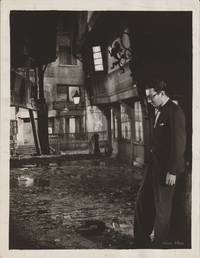
1931ref. 162334N.p.: N.p. 1931. Vintage reference photograph from the 1931 film showing director Rouben Mamoulian on the set. Provenance stamp and annotations in manuscript pencil on the verso. Based on Robert Louis Stevenson's classic 1886 novella and considered by many to be the definitive adaptation. A pre-Code film the adaptation is often remembered for its strong sexual content heavily edited after the film's 1936 re-release. Nominated for three Academy Awards winning one for Best Actor for Fredric March. 8 x 10 inches. About Near Fine with only light edgewear at the top and bottom edges to note. N.p. unknown
1931ref. 162334N.p.: N.p. 1931. Vintage reference photograph from the 1931 film showing director Rouben Mamoulian on the set. Provenance stamp and annotations in manuscript pencil on the verso. Based on Robert Louis Stevenson's classic 1886 novella and considered by many to be the definitive adaptation. A pre-Code film the adaptation is often remembered for its strong sexual content heavily edited after the film's 1936 re-release. Nominated for three Academy Awards winning one for Best Actor for Fredric March. 8 x 10 inches. About Near Fine with only light edgewear at the top and bottom edges to note. N.p. unknown books
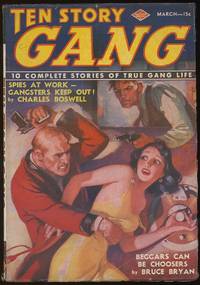
1939ref. 32648Holyoke MA: Winford Publications Inc. 1939. Mild tanning to text paper covers have slight edge wear and two creases a nearly fine to fine copy. Uncommon. 32648. Octavo single issue pictorial wrappers. Pulp magazine. Stories by Frank Belknap Long Paul Selonke Bruce Bryan Albert Sundell with two using the pseudonyms "Undercover" Dix and Charles Cotten Herbert E. Smith and others. Reference: Cook Mystery Detective and Espionage Magazines pp. 560-561. Winford Publications, Inc. unknown
1828in-4 picc., pp. VI, 218, (8), bella leg. cart. dec. coeva con tass. ms. al d. In antip. bella veduta prospettica rip. e inc. in rame da L. Bonomi. Con 6 tavv. in rame al fine raff. oggetti di scavo e monumenti della città. Esempl. stampato su carta distinta in ottimo stato di conservazione. [063]
195073 pages plus eleven fold-out plans. Index. Gilt lettering upon navy blue front board and backstrip. Average wear. Usual library markings. Binding intact. A sound copy. Book