4 859 résultats
1915réf. 2091202132802490Not Available 1915. Soft Cover. Fine. Number of books: 1 book Not Available paperback
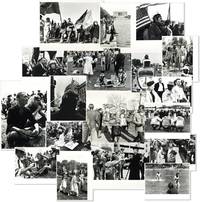
1970réf. 81746Silver Spring MD: James B. Johnson 1970. Archive consisting of 70 original double-weight silver gelatin photographs. Forty-seven 47 measuring 8" x 10" and twenty-three 23 measuring 14" x 11". Many though not all bear the photographer's rubber-stamp on verso James B. Johnson 2200 Dennis Ave. Silver Spring MD. a few bearing brief holograph captions or codes in red and black ink. Light wear to extremities subtle curling to the edges and a few photos with tiny creases to the corners; overall Very Good. A substantial group of images documenting the April 4 1970 "March For Victory" in Washington DC. This march and the victory marches that followed were organized by the Rev. Carl McIntire 1906-2002 and his wife Fairy who were fundamentalist ministers radio evangelists and founders of the International Council of Christian Churches ICCC and American Council of Christian Churches ACCC. The April 4th march drew close to 50000 protestors - the era's largest pro-war demonstration - and was stridently against the "Vietnamization" of the war which McIntire viewed as a sign of retreat and running away from America's duty to fight communism. The march was to take place from Capitol Hill down Pennsylvania Avenue and conclude at the base of the Washington Monument. "Rather than the usual college-age protesters known for demonstrating against the war the Victory March's attendees were largely middle aged and elderly featuring contingents of World War I World War II and Korean War veterans as well as Cuban exiles and members of the National Socialist White People's Party.The demonstrators carried signs and banners saying "Nixon is a No-Win Swine" "In God We Trust" and "Marxism is Jewish" as well as Confederate and American flags and many wore "Wallace for President" hats.While the war was the main point of contention the masses demonstrated for and against a plethora of other issues including support for prayer in school to stop bussing programs designed to desegregate schools and just generally against "secular universities and hippies and yippies everywhere" Mednick Avi. Blog post: "The Silent Majority Storm The National Mall." Boundary Stones: WETA's Local History Website 03/02/2017. Georgia governor Lester Maddox was present and spoke at the rally at the Washington Monument; by the time he spoke the counter-protesters who had been showing up all day outnumbered the Victory Marchers. The images in this archive capture both sides of the march. Carl and Fairy McIntire appear holding a Bible and an American flag with their followers and their children shown marching carrying flags and signs seated on the Washington Mall and stomping on North Vietnamese flags. Numerous images of the counter-protesters are present carrying signs American and North Vietnamese flags passing out flowers dancing a few covered in decorative paint and seated with instruments with a number of photos showing hippies disrobing or fully naked bathing in the reflecting pool in front of the Lincoln Memorial. We have been able to ascertain little about the photographer aside from his name and that he was a member of the Silver Spring Camera Club. A striking group of images documenting the intersection of the "Silent Majority" and the anti-war movement. 81746. James B. Johnson unknown
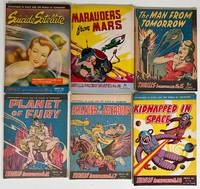
1950réf. 32953Sydney: Associated General Publications later Transport Publishing Co. Pty. Ltd. 1950-52. Some toning to text paper issue 12 is very good the rest nearly fine or better. A very attractive set. Scarce. 32953. Octavo later small octavo 23 issues pictorial wrappers side stapled. Pulp 1-12 and later digest 13-23 sized magazine. All published. This was Australia's first SF pulp magazine it was in the vein of U.S. pulp magazine 1920-30s. Many of the stories were produced under pseudonyms artwork contributors included Stanley Pitt and Ray Cavanagh. It did not last in large part due to higher quality material appearing from overseas imports. This magazine also published a number of stories by Australias first female SF author N. K. Hemming Norma. Reference: Blackford et al. Strange Constellations: A History of Australian Science Fiction pp. 64-65. Tymn and Ashley eds Science Fiction Fantasy and Weird Fiction Magazines pp. 672-74. Tuck 1982 p. 601. Associated General Publications, later Transport Publishing Co. Pty. Ltd. unknown
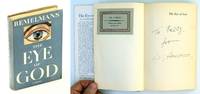
réf. 564j1357New York: The Viking Press. Good in Good dust jacket. 1949. First Edition. Hardcover. 0670303097 . Superlative provenance for this copy which is signed and inscribed by Bemelmans to "Freddy" short for Fredric March upon half-title. On opposite page is the bookplate of Florence and Fredric March. "Fredric March 1897-1975 was an American actor regarded as one of Hollywood's most celebrated stars of the 1930s and 1940s. He won two Academy Awards a Golden Globe Award and two Tony Awards as well as nominations for three BAFTA Awards and three Emmy Awards. March and his wife starred as the General and Miss Graves in the 1950 Broadway production of Bemelmans' play Now I Lay Me Down To Sleep. Ludwig Bemelmans 1898-1962 was a renowned Austrian-American writer and illustrator of children's books and adult novels." - Wikipedia. 312 p. Color Bemelmans illustration upon endpapers. Somewhat above-average wear to original khaki cloth. Slight spine lean. Cup ring on front board. Moderate wear to complete dust jacket now in glossy new archival protection. An very special example. Pomerance A10a. ; Endpapers; 8vo; Signed by Author . The Viking Press hardcover
1944réf. 28504New York: Scribner's 1944. SIGNATURE GUARANTEED AUTHENTIC Personally SIGNED BY RAYMOND CHANDLER & DATED on Blank Endpapers Hollywood MARCH 30 1944 IN FRONT OF BOOK Written BY BEN HECHT A Guide for the Bedeviled Chandler also added "From // Dr. Sam Hirshfeld" on Endpapers BOOK Written BY BEN HECHT HARDBACK NODustjacket NOJACKET BK GOOD CONDITION 1944 SIGNED BY RAYMOND CHANDLER & DATED Hollywood MARCH 30 1944 IN FRONT OF BOOK BY BEN HECHT A Guide for the Bedeviled GREEN CLOTH LIGHT RUB WEAR Hirshfeld was a Hollywood physician active in the 1940's and a good friend of Hecht's & CHANDLER - he is mentioned in "Harpo Speaks" as attending a Marx dinner with Hecht and Hecht gave his funeral oratory. The cloth boards are worn and the dust jacket is missing. Interior sound. BOOK Written BY BEN HECHT . Signed by Author. Hard Cover. Good/No Jacket. New York: Scribner's hardcover
1504réf. 5444Venice: Giovanni Battista Sessa June 1504. THIRD OR FOURTH EDITION of the two editions of 1504 priority has not been determined. THE FIRST TO BE EDITED BY LUCA GAURICO. Hardcover. Fine. Bound in modern vellum. Title with large woodcut showing the author in his study surrounded by books lecturing his students one of whom takes notes. Sessa's cat-and-mouse printer's device appears on the same leaf.The text is illustrated with 77 woodcut diagrams. A very fine copy crisp and bright. There is a very light stain on the title page a bit of soiling in the gutter of leaf A3 and a discreet paper repair to the fore-edge of the final leaf. "The 'Perspectiva communis' was the most widely used of all optical texts from the early fourteenth until the close of the sixteenth century and it remains today the best index of what was known to the scientific community in general on the subject" DSB. It was first printed in Milan around 1482 then in 1503 it was included in a collection by Thomas Bradwardine "Praeclarissimum mathematicarum opus"Valencia. This 1504 edition the first edited by Luca Gaurico can be considered the third although another edition of the pre-Gaurico version was also published in 1504 at Leipzig. A mathematician from Naples and teacher of Scaliger Gaurico who also edited the works of Archimedes and Ptolemy completely revised the text. "The work on which Pecham's fame has chiefly rested is the Perspectiva communis probably written between 1277 and 1279 during Pecham's professorship at the papal curia. In the first book Pecham discussed the propagation of light and color the anatomy and physiology of the eye the act of visual perception physical requirements for vision the psychology of vision and the errors of direct vision. In book II he discussed vision by reflected rays and presented a careful and sophisticated analysis of image formation by reflection. Book III was devoted to the phenomena of refraction the rainbow and the Milky Way. "The central feature of Pecham's optical system and the dominant theme of book I of the 'Perspectiva communis' is the theory of direct vision. Here as elsewhere Pecham endeavored to reconcile all the available authorities-Aristotle Euclid Augustine al-Kindi Ibn al-Haytham Ibn Rushd Grosseteste and Bacon. Following Ibn al-Haytham Pecham argued that the emission of visual rays from the observer's eye is neither necessary nor sufficient as an explanation of sight; the primary agent of sight is therefore the ray coming to the eye from a point on the visible object. But in an attempt to follow Aristotle al-Kindi and Grosseteste as well Pecham argued that visual rays do nevertheless exist and perform the important but not always necessary function of moderating the luminous rays from the visible object and making them "commensurate with the visual power." Thus Pecham like Bacon resolved the age-old debate between the emission and intromission theories of vision in favor of a twofold radiation although to be sure priority was given to rays issuing from the visible object. "The rays issuing from points on the visible object fall perpendicularly onto the cornea and penetrate without refraction to the sensitive ocular organ the glacial humor or crystalline lens; nonperpendicular rays are weakened by refraction and therefore can be largely ignored. Since only one perpendicular ray issues from each point of the visible object and the collection of such perpendicular rays maintains a fixed order between the object and the eye a one-to-one correspondence is established between points on the object and points on the glacial humor and unconfused perception of the visual field is thus achieved. Vision is not "completed" however in the glacial humor. There is a further propagation of the rays or species through the vitreous humor and optic nerve to the common nerve where species from the two eyes combine and eventually to the anterior part of the brain and the "place of interior judgment." "Pecham's optical system included significantly more than a theory of direct vision. He briefly discussed the doctrine of species; treated at length the propagation of rays; and developed a theory to explain how solar radiation when passing through noncircular apertures gives rise to circular images. He expressed the full law of reflection and applied it to image formation by plane spherical cylindrical and conical mirrors; in this analysis he revealed an implicit understanding of the nature of the focal point of a concave mirror. Although he did not possess a mathematical law of refraction he successfully applied the general qualitative principles of refraction to the images that result from refraction at plane and circular interfaces between transparent media of various densities. In his discussion of the rainbow Pecham again attempted to reconcile different theories. He argued that all three kinds of rays rectilinear reflected and refracted concur in the generation of the rainbow. "Pecham's 'Perspectiva communis' is still extant in more than sixty manuscripts and went through twelve printed editions including a translation into Italian between 1482 and 1665. It was used and cited by many medieval and Renaissance natural philosophers including Dominicus de Clavasio Henry of Langenstein Blasius of Parma Lorenzo Ghiberti Leonardo da Vinci Albert Brudzewski Francesco Maurolico Giambattista della Porta Girolamo Fabrici Johannes Kepler Willebroad Snellius and G. B. Riccioli. It was lectured upon in the late Middle Ages at the universities of Vienna Prague Paris Leipzig Cracow Würzburg Alcala and Salamanca."DSB. Giovanni Battista Sessa, June hardcover
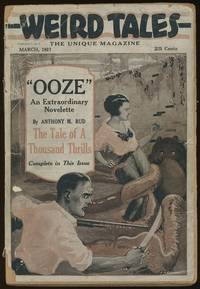
1923réf. 32048Chicago: Rural Publishing Corporation 1923. Text paper tanned but supple light edge wear creasing closed tear to right front edge paper loss at spine ends not affecting title lettering or date cover appears to have been separated and re-glued small loss at upper and lower left corners a good copy. 32048. Octavo single issue pictorial wrappers. Pulp Magazine. The first issue of this important 20th century magazine. Includes stories by Anthony M. Rud Otis Adelbert Kline R.T.M. Scott Joel Townsley Rogers Howard Ward and many others. Reference: Tymm and Ashley Science Fiction Fantasy and Weird Fiction Magazines pp. 727-736. Rural Publishing Corporation unknown
1591réf. 1521En Anveres Antwerp: En l’Oficina Plantiniana Cerca la Biuda Iuan Moreto widow of Plantin and Jan Moretus 1591. First Plantin edition. In contemporary limp vellum. Title on spine lettered in ink. Edges tinted in red. Roman type. 20 verse lines and headline. Large floriated and historiated woodcut initials ornamental tailpieces printer's device at the end. A few stains on the binding rear panel rubbed at lower left corner. Title page artistically restored at the lower margin with no effect on the text. Last leaf O4 cut the residual part mounted on pastedown. Inside clean illustrations are sharp the margins wide. An attractive copy in fine condition. Illustrated with an engraved title vignette of a knight on horseback with background and 20 full-page etchings attributed to Pieter van der Borcht. Illustrated with an engraved title vignette of a knight on horseback with background and 20 full-page etchings attributed to Pieter van der Borcht. First Plantin edition. In contemporary limp vellum. Title on spine lettered in ink. Edges tinted in red. Roman type. 20 verse lines and headline. Large floriated and historiated woodcut initials ornamental tailpieces printer's device at the end. 8º: –8 A–N8 O4 O4 blank its residual part mounted to pastedown; 32 208 8 p. Scarce illustrated Spanish edition the first by Plantin of La Marche’s allegorical work Le chevalier délibéré. A beautiful 16th-century edition of this popular allegory with the suite of twenty-one splendid etchings attributed to Pieter van der Borcht. Translated into Spanish by Hernando de Acuna c.1520–1580 the much-esteemed poet and translator of the Spanish Golden Age. Le chevalier délibéré is the most important poetic work of Olivier de La Marche 1422–1502 the Burgundian courtier poet and chronicler “a didactic poem describing a knight's search for salvation through the vehicle of a quest. At first he is impulsive leaving his house par une soudaine achoison on the spur of the moment. He is started along the way by Thought who brings him to a realization of his soul's unprepared state and who acquaints him with the encounters he must face with the henchmen of Atropos Goddess of Death: Accident and Debility. The knight as Author is befriended by the hermit Understanding and eventually arrives at the house of Study where Fresh Memory begins his real instruction.” Caroll 1999. USTC 440151; Imhof M-5; Brunei 111:782; Hollstein Dutch 111:106 473–493; Palau VII 130356. Bibliography: Caroll C. W. ed.: Olivier de La Marche. Le Chevalier delibere The Resolute Knight. Medieval & Renaissance Texts & Studies. Volume 199. Tempe: Arizona Center for Medieval and Renaissance Studies 1999. p. 4. Imhof D.: Jan Moretus and the Continuation of the Plantin Press. A Bibliography of the Works published and printed by Jan Moretus I in Antwerp 1589–1610. Vol. I. A–M. Leiden: Brill 2014. pp. 437–438. . En l’Oficina Plantiniana, Cerca la Biuda, Iuan Moreto [widow of Plantin and Jan Moretus] unknown
1933réf. 34571New York: Street & Smith Publications Inc. 1933-1949. Tanning to pages of all some minor losses throughout front and back covers present bindings are bright with the exception of volumes 10-13 which are quite faded. All issues trimmed for binding. Overall the magazines are very good to nearly fine. The complete list report upon request. Note for shipping extra funds required. 34571. Octavo thirty-two volumes pictorial wrappers uniformly bound in green cloth. A complete file of 181 issues in bound volumes. Doc Savage was a precursor to the modern super hero. Clark "Doc" Savage Jr. was trained from birth with a rigorous regimen resulting in extraordinary strength and intelligence. He never killed unless necessary he had scientific gadgets a headquarters and a secret base a fortress of solitude. The stories combined mystery adventure and some science fiction. He also had a team of five experts in various fields to assist in his adventures. His stories were extremely popular during the pulp era and then found a new audience in the 1960s-70s when the series was reprinted in paperback. The novels were written using the house pseudonym of Kenneth Robeson the main author was Lester Dent who wrote nearly 80% of the novels. Other author contributors as Robeson included William Bogart Alan Hathway Harold Davis Laurence Donovan and W. Ryerson Johnson. There were many excellent contributors to the short stories which rounded out the magazine with authors such as Steve Fisher E. Hoffman Price Q. Patrick John D. MacDonald Bruno Fischer Frank Herbert William Lindsay Gresham to name a few. Street and Smith publishing executive Henry Ralston and editor John Nanovic established the initial idea for Clark "Doc" Savage Jr. - .a brawny 'superman' a master of many fields-surgeon mineralogist engineer inventor linguist. His skin was a glowing bronze.his hair was a matching hue and so too his eyes resembling gold flake. He would be known as the Man of Bronze."- Server Encyclopedia of Pulp Fiction Writers p.81. "Doc Savage was intended to be an adventure character but under Lester Dent's imaginative manipulations he became something more - the first superhero and an inspiration for countless pulp comic-book and television characters." - Cook Mystery Detective and Espionage Magazines pp. 521-527. "The enormously wealthy Doc Savage – headquartered in a fantasticated New York with his five sidekicks who specialize in various crafts and sciences at the borderline of sf – devotes his life to combating criminal conspiracies almost all masterminded by the kind of charismatic villain later given definitive form by Ian Fleming in the James Bond books. Doc Savage himself clearly influenced the creation of Superman." - SFE online. A note on artists Walter Baumhofer contributed the initial look to the character with his striking cover painting through late 1936. Other artists include Robert George Harris Emery Clarke Modest Stein and George Rozen. An ideal collection for an institution. Reference: Tymm and Ashley Science Fiction Fantasy and Weird Fiction Magazines pp. 183-185. Street & Smith Publications, Inc. unknown