10.022 Ergebnisse
1818In-folio (cm. 29), brossura editoriale azzurra a stampa (lievi segni d'usura, conservata l'etichetta associativa alla controguardia); pp. IX [1b] 293 [1] in barbe, fresche e in ottimo stato, a fogli ancora chiusi, con 7 tavole illustrative in rame ripiegate f.t.; leggerissima brunitura. Edizione originale del primo tomo, il «solo pubblicato» [Lozzi 86n]. Tratta della fondazione d'Ancona e dei suoi abitanti, del dominio dei Picenti, dello stato del Piceno nei secoli d'invasione barbarica, del dominio pontificio, la Marca (con studio di iscrizioni e monete). Esemplare molto buono e genuino.
179224 cm, bella rilegatura postuma in mezza pergamena con angoli, titolo e fregi in oro su tassello al dorso, piatti marmorizzati, tagli colorati; p. viii, 319, (1); iv, 92, (2). Rara prima edizione pubblicata anonima ma ad opera di Luigi Ranghiasci, (cfr. Melzi G., Anonime e pseudonime, vol. I, p. 134)
Firenze, Stamp. di Domenico Marzi, e Comp. (dal vol. 6°:) Francesco Moücke (dal vol. 8° anche: si vende da V. Landi e G. Pagani Librai), 1776-1782, voll. 15 (su 18), in-8, bella cartonatura coeva a decoro di nastri gialli ondulati su fondo a scacchiera in rosso-bianco (ultimi 4 voll. in cartonatura gialla), cartello con titolo manoscritto al dorso, pp. (6), 368-VIII, III, XXXIV, 254, (2)-VI, 329, (1)-(2), 305, (1)-VIII, 260-VII, (1), 312- VI, 315, (1)-VIII, 302, (2)-VIII, 311, (1)-(2), 302-VIII, 327, (1)- (2), 338-(2), 304-(2), 284-(2), 231. Fregi ai frontespizi, testate, finali ed iniziali xilografiche. I voll. V-XII sono tutti con dedica a stampa (A. Altoviti, G. Riccardi, F.L. Capponi, ecc.) Minimi difetti alle coperte, ma ottime condizioni per questa bella edizione impressa su carta grave.
1655in-4° (200x150 mm), leg. moderna in mezza pergamena, con carta marmorizzata ai piatti e guardie in carta bianca; pp. 24; frontespizio a caratteri neri, con vignetta floreale incisa, bellissimo capolettera all'inizio del testo, testata e finale del testo finemente incisi; prima edizione; opera rarissima e molto interessante per la storia locale di Loreto e per il culto della Madonna di Loreto. Rif.: IT\ICCU\RMLE\058561 (una sola copia in Italia presso la Biblioteca Casanatense - Roma e una presso la Bibl. Vaticana - n. 10673605). Cond.: Presenza di leggere fioriture alle carte, lievi tracce d'umido all'angolo superiore esterno delle carte, non interessanti il testo; opera in condizioni generali quasi ottime. -- Extremely rare essay on the Holy Virgin of Loreto. Quite fine copy.
1580Veduta tratta dalla serie La Raccolta di le piu illustri et famose citta di tutto il mondo, edita da Francesco Valegio a Venezia verso la fine del’ 500, che comprende circa 322 piante e vedute delle principali città del mondo conosciuto. Di questo volume, si conservano diversi esemplari, tutti con numero variabile di incisioni e privi di un indice a stampa. Inoltre, gran parte delle tavole contenute nella raccolta del Valegio furono inserite nella Nuova raccolta di tutte le più illustri et famose città di tutto il mondo, curata da Donato Rasciotti, edita alla fine del sedicesimo secolo. Tuttavia, è persino incerto quale delle due raccolte venne per prima alla luce ed ignote sono le datazioni di tutte le tirature conosciute. Francesco Valegio nasce a Bologna circa nel 1560, anche se alcuni studiosi gli accreditano un’origine veronese; la sua attività di incisore ed editore calcografo si svolge tutta a Venezia, spesso in associazione con altri stampatori. Le tavole che compaiono nelle Raccolta, che senza dubbio possiamo considerare come la sua opera più importante, sono tutte prive di data, ad eccezione di quelle di Algeri, Costantinopoli e Rodi, firmate da Martino Rota, datate 1572. Le piante e le vedute firmate dal Rota, incisore nativo di Sebenico e attivo a Venezia fino al 1573, costituiscono, senza dubbio, il nucleo più antico dell’opera e fanno ritenere che questa sia stata un progetto editoriale iniziato proprio dall’incisore dalmata. In un primo momento, la presenza di queste tavole aveva portato a datare l’opera al 1579, data che sembra tuttavia molto improbabile. Molte delle immagini riprendono modelli figurativi apparsi nei primi volumi del Civitates Orbis Terrarum, editi tra il 1572 ed il 1588 (e successivamente ristampati sino al 1617) dai cartografi Georg Braun e Franz Hogenberg. Pertanto, è molto più plausibile che il Valegio iniziò verso il 1580 ad osservare le tavole incise da Martino Rota, per poi ampliare e pubblicare la raccolta, nell’ultimo ventennio del secolo. Dell’intero corpus di incisioni che compongono l’opera, 112 recano la firma o la sigla del Valegio, altrettante sono assimilabili alla mano dello stesso, mentre 69 sono ascrivibili ad altro artista, non identificato. La Raccolta ebbe un grande successo, tanto che fu la base di diverse copie nei secoli successivi. I rami del Valegio furono in seguito ristampati da Raffaello Savonarola (Lasor a Varea) nel Universus Terrarum Orbis del 1713. Il gruppo di 52 tavole riguardanti la penisola, che di seguito presentiamo, costituisce l’intero corpus di immagini dell’Italia, ad eccezione delle piante di Ascoli e Ferrara, mancanti; un elemento particolare, che caratterizza i fogli, è la presenza di un numero progressivo (da 1 a 60) ad inchiostro antico, posto nel margine bianco superiore. Pertanto, si può supporre che questi esemplari provengano dalla Raccolta delle più famose Città di Italia, che il Valegio creò alterando semplicemente il frontespizio della precedente pubblicazione. Incisione al bulino, con margini, in ottimo stato di conservazione. Molto rara. View taken from La Raccolta di le piu illustri et famose citta di tutto il mondo, published by Francesco Valegio in Venice towards the end of the XVI century, containing about 322 plans and views of the main cities of the World. There are different examples of this work, every one with a different number of plates and without an index. Many of these plates have been afterwards included in Donato Rasciotti's Nuova raccolta di tutte le più illustri et famose città di tutto il mondo, printed at the end of the XVI century. It is still, however, quite unclear whether Valegio or Rasciotti published first his collection. Francesco Valegio was born in Bologna around 1560, even though some say he might have been born in Verona; as engraver and calcographer, he worked in Venice, very often in association with other publishers. The plates of his series, which can be considered his most important work, do not bear any date, except for those of Algeri, Costantinopoli and Rodi, signed by Martino Rota, dated 1572. The city plans signed by Rota, (engraver born in Sebenico who worked in Venice until 1573), are the most ancient core of the work, which make us think that this work has been planned by Rota himself. Many plates recall the figurative models of the Civitates Orbis Terrarum printed between 1572 and 1588 (afterwards reissued until 1617) by Georg Braun and Franz Hogenberg. It is possible that Valegio started to select the plates by Rota around 1580 and afterwards enlarged his collection at the end of the century. 112 plates bear Valegio's signature or monogram and as many can be ascribed to him; 69 have been ascribed to an unkwown artist. The collection was extremely successful and became the base for the following copies. Valegio's plate have been reissued by Raffaello Savonarola (Lasor a Varea) in the Universus Terrarum Orbis in 1 713. There are 52 plates depicting the peninsula. A distinctive element of this corpus is the presence of a number (from 1 to 60) with ancient ink, on the white upper margin; that makes us presume that these examples come from another collection of Valegio, Raccolta delle più famose Città di Italia, which he created by changing the front page of his previuos publication. Copper engraving, particularly rich and with good contrast, in excellent condition. Very rare. Almagià p. 10, Cremonini p. 15/17, Valerio p. 75/87.
2013Best.-Nr. x-1489920609Springer 2013. Paperback. New. reprint edition. 486 pages. 9.26x6.11x1.11 inches. Springer paperback
2013Best.-Nr. x-1475791585Springer 2013. Paperback. New. reprint edition. 560 pages. 9.02x5.98x1.27 inches. Springer paperback
2012Best.-Nr. x-1461378818Springer Verlag 2012. Paperback. New. reprint edition. 538 pages. 9.25x6.10x1.09 inches. Springer Verlag paperback
2013Best.-Nr. x-1475799020Springer 2013. Paperback. New. 664 pages. 9.10x6.00x1.40 inches. Springer paperback
Best.-Nr. DADAX0070402450Mcgraw-Hill College 0000-00-00. Third Edition. paperback. New. 0.50x6.25x9.25. Buy with confidence. Excellent Customer Service & Return policy. Mcgraw-Hill College paperback
Best.-Nr. 10257137like new. unknown
Best.-Nr. 6126791905Springer . Papeback. New. pp. 412 Springer unknown
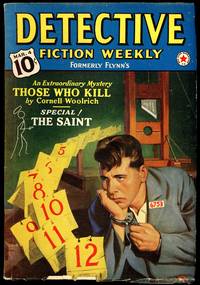
1939Best.-Nr. 28279New York: The Red Star News Company 1939. Mild wear to lower edge reading crease a nearly fine copy. 28279. Octavo single issue pictorial wrappers. Pulp magazine. Includes "Those Who Kill" by Cornell Woolrich this story was later expanded into THE PHANTOM LADY and "The Charitable Countess" by Leslie Charteris with the "Saint". "Detective Fiction Weekly maintained a strong personality in a crowded field through a rigid weekly publication schedule for two decades. It is greatly underrated today" - Cook Mystery Detective and Espionage Magazine pp. 135-137. The Red Star News Company unknown
1938Best.-Nr. 35075New York: The Frank A. Munsey Company 1938. Tanning to text paper mild edge wear with tiny tears mild creases a very good to nearly fine copy. 35075. Octavo single issue pictorial wrappers. Pulp magazine. "Hot Towel" by Cornell Woolrich. Fiction by Richard Sale Paul Ernst Norbert Davis and others. Reference: Cook Mystery Detective and Espionage Magazines pp. 194-196. The Frank A. Munsey Company unknown
1943Best.-Nr. 36913New York: Street and Smith's Publications Inc. 1943. Tanning to text paper mild edge wear a nearly fine copy. 36913. Octavo single issue cover by William Timmins pictorial wrappers. Pulp magazine. Includes fiction by Fredric Brown Dale Clark William G. Bogart Robert Ahern Robert W. Cochran Stephen Gould Steve Fisher and Norman A. Daniels. Also an Avenger story "Calling Justice Inc." by Kenneth Robeson Emile C. Tepperman. The fourth issue of this magazine with this character. Reference: Cook Mystery Detective and Espionage Magazine pp. 96-100. Street and Smith's Publications, Inc. unknown
1931Best.-Nr. 449G1385Toronto: Maclean Publishing 1931. Book. Illus. by Farrelly Joseph cover art; Summers Dudley Gloyne; Clymer John F.; Davis Henry; Dinsmore E.J.; Mathieu Hubert. Good. Single Issue Magazine. First Edition. Folio - over 12" - 15" tall. 64 pages. Features: Great photo ad for International Trucks on page 1; Junior Boxing Champion of Quebec - Laurier DesRochers is featured in full-page Cream of Wheat ad; Judgement short story; Taming the Seven Sisters - gigantic hydro-electric development in Manitoba - article with photos; Dusty Courage short story; Maker of Champions - Captain J.R. Cornelius trains the Hamilton Central Collegiate track team to success - article with photos; A Salute for the Constitution - a plea for veneration of the document that makes us what we are; Dancing Partners short story; How I Do Love Water-Lilies!; The Kincade Mystery - Who Killed Ethel Kincake of Hamilton - article with photos; The Beggar of Ur shorted story; The Queen of the "Turks" - Turkey farmer Mrs. W.A. Freeman of Ardenode Alberta - article with photos; Premier of Nova Scotia - Hon. Gordon Sydney Harrington - article with photo; Mr. Gobbins Falls In short story; The Silver Scale part I; Political article by Sir Austen Chamberlain with his photo; Canada's pioneer steam engine long lost returned to Nova Scotia - the 'Samson'; full-page Dodge car ad; full-page ad for the new Reo Flying Cloud car; Nice full-page photo ad for Hoover vacuums features cute chilid on vintage phone; Nice full-page ad for Auburn cars features the 5-passenger 2-door Brougham $1445; De Soto Six ad; The School Lunch - article with photos; crossword; Transforming the Cellar - article and photos with ideas of how to transform waste cellar space for an extra games and play room; Nice full-page Studebaker ad; Nice colour Calay soap ad inside back cover; Colour Old Dutch Cleanser ad on back cover. Average wear. Unmarked. A sound vintage issue. Maclean Publishing Paperback
2021Best.-Nr. 33597Los Angeles: Parker Gallery 2021 Limited Edition of 350 copies in black & purple-stamped aqua cloth with color photo inset to front panel no markings NOT ex-lib binding tight pages bright hint of shelf wear & very quiet soil to boards else Fine unread unbrowsed copy of now quite scarce book of the pioneering African-American artist's earliest work; ob 4to; 8 125pp illus colophon. First Edition. Hard Cover. As New. Parker Gallery hardcover
1875Best.-Nr. 41471Paris: Firmin-Didot frères fils et Cie. Very Good. First Edition; First Printing. Softcover. Large 8vo; xvi 559; 548 pages; Two volumes in publisher's printed wrappers. A splendid copy of the first edition in large 8vo format 24 cm tall. Fore and bottom edges untrimmed. A fresh clean copy internally the wrappers are clean and intact showing just a bit of light toning at the edges and the spines with a minor closed tear at the top margin of the rear wrapper for volume I. There are tiny printed labels mounted at the time of first purchase to the front wrappers announcing that this work had been awarded the Prix Gobert by the Académie des Inscriptions et Belles-Lettres. A standard historical reference relating to the life times and works of René d'Anjou -- 1409-1480 -- known as René I of Naples and Le bon roi René. He held numerous titles over the years: Duke of Anjou Count of Provence Count of Piedmont Duke of Bar Duke of Lorraine King of Naples 1435–1442; titular 1442–1480 titular King of Jerusalem 1438–1480 and Aragon 1466–1480 including Sicily Majorca Corsica. René had a long involvement with the arts and was traditionally thought of as a painter himself. A letter from the Neapolitan humanist Pietro Summonte to Marcantonio Michiel of 20 March 1524 reporting on the state of art in Naples and works there by Netherlandish painters states that "King René was also a skilled painter and was very keen on the study of the discipline but according to the style of Flanders". Some of the attributions of the nineteenth century are now considered doubtful but there is little question that René was a keen enthusiast of painting and the arts and a significant patron to the extent that his finances permitted. René appears as "Reignier" in William Shakespeare's play Henry VI part 1 and Shakespeare presents him as something of a figure of satire for his relative poverty considering his Dukedoms and Kingdoms. René married Isabelle Duchess of Lorraine 1410 – 1453 in 1420. His first Queen was also devoted to the arts. A romanticised vision of their honeymoon was the subject of famous paintings by Pre-Raphaelite painters Ford Madox Brown Edward Burne-Jones and Dante Gabriel Rossetti. Readers of the popular novels of Dan Brown and related works will note with interest the allegations that René was the ninth "Grand Master of the Priory of Sion." Many institutional holdings of this set but now scarce on the market. This large two volume set should not be confused with two abbreviated extracts published by the author in 1873 & 1874. This full work from 1875 has text devided into three sections: Histoire politique; Administration; & Beaux-arts et littérature. . 1875. Firmin-Didot frères, fils et Cie paperback
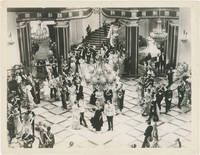
1935Best.-Nr. 160641Beverly Hills CA: Metro-Goldwyn-Mayer MGM 1935. Vintage reference photograph from the 1935 film showing a ballroom interior with crew members visible to the far left. MGM stamp on the verso. From the archive of film historian and author Joel Finler. Based on the classic 1877 novel by Leo Tolstoy about a young woman whose loveless marriage leads her to begin an affair with a dashing Czarist officer. Set in St. Petersburg. 10 x 8 inches. Pinholes at the corners else about Near Fine. Metro-Goldwyn-Mayer [MGM] unknown books
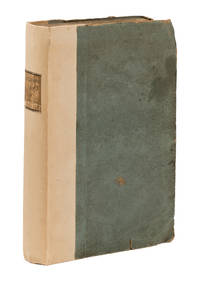
1815Best.-Nr. 752371815. London: A. Strahan for J. Butterworth & Son 1815. London: A. Strahan for J. Butterworth & Son 1815. A Popular Practitioner's Guide to Evidence Phillipps Samuel March. A Treatise on the Law of Evidence. London: Printed by A. Strahan for J. Butterworth and Son 1815. xxxvi 520 pp. Octavo 9" x 5-1/2". Original plain publisher's boards rebacked in paper retaining existing spine label edges untrimmed. Moderate rubbing and light soiling to boards light rubbing to joints negligible light soiling to spine lower left corner of spine label lacking rubbing and light wear to board edges corners bumped and worn hinges cracked light foxing to endpapers pencil drawing to front free endpaper pencil annotations to rear pastedown and free endpaper. Light toning to interior occasional light foxing light soiling and marginal pencil marks in a few places. $350. Second London edition. Phillipps "set out to expound the principles of his subject in a clear and systematic way. Rather than trying to provide a compendium of all authorities he mainly used cases as examples to illustrate problems and points of practice as well as legal rules" Twining. Written with the primary goal of utility to practitioners the work was highly popular. It went through 10 London editions the first in 1814 and the last in 1852 and additional American and Dublin editions were also published. Twining Rethinking Evidence 46. Sweet & Maxwell A Legal Bibliography of the British Commonwealth 2:279. unknown books
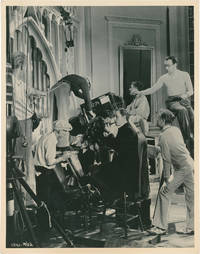
1931Best.-Nr. 160580N.p.: N.p. 1931. Vintage reference photograph of actor Fredric March and director Rouben Mamoulian with a camera crew on the set of the 1931 pre-Code horror film. Annotations in manuscript ink and pencil on the verso and a National Film Archive stamp. From the archive of film historian and author Joel Finler. Based on the classic 1886 novella and considered by many to be the definitive adaptation. Nominated for three Academy Awards winning one for Best Actor for Fredric March. 8 x 10 inches. Very Good plus lightly age toned. N.p. unknown books
1820Best.-Nr. 284563New York: Gould and Banks 1820. Second American Edition. Full Leather. Very Good binding. The Second American Edition of Samuel March Phillips’ Treatise on the Law of Evidence with notes by the editors on relevant American cases and their rulings. The work became a standard text for the Law of Evidence. Discrete partial reback by a conservator. Toning and foxing to the textblock. Contemporary nameplate on the front pastedown. Full leather with red leather label on the spine and lettering stamped in gilt. Minor loss to the top of the spine. Very Good. Very Good binding. Gould and Banks unknown
1820Best.-Nr. 284563New York: Gould and Banks 1820. Second American Edition. Full Leather. Very Good binding. The Second American Edition of Samuel March Phillips’ Treatise on the Law of Evidence with notes by the editors on relevant American cases and their rulings. The work became a standard text for the Law of Evidence. Discrete partial reback by a conservator. Toning and foxing to the textblock. Contemporary nameplate on the front pastedown. Full leather with red leather label on the spine and lettering stamped in gilt. Minor loss to the top of the spine. Very Good. Very Good binding. Gould and Banks unknown books
1994Best.-Nr. 9032601New York: Pantheon Books 1994. Fine. Signed by Spiegelman. Large-scale facsimile of a single illustrated page of "The Wild Party" by March. Printed on heavy paper in three colors with large Spiegelman drawing in black and white across top half black text by March on white background below. Spiegelman's large signature at bottom. Thich gray border. Includes presentation letter from Pantheon Books and original cardboard shipping box from Random House. 18 1/2 x 20 1/2 inches. Pantheon Books unknown
1994Best.-Nr. 9032601New York: Pantheon Books 1994. Fine. Signed by Spiegelman. Large-scale facsimile of a single illustrated page of "The Wild Party" by March. Printed on heavy paper in three colors with large Spiegelman drawing in black and white across top half black text by March on white background below. Spiegelman's large signature at bottom. Thich gray border. Includes presentation letter from Pantheon Books and original cardboard shipping box from Random House. 18 1/2 x 20 1/2 inches. Pantheon Books unknown books