1912ref. 192106Paris: A. Mericant 1912. Paperback. Good- Wraps show age-toning dog-earing foxing and shelfwear; covers are very chipped and barely holding; spine strip is missing; covers and pages are loose; pages are clean age-toned and foxed as expected; inner hinge is broken. Wraps with black lettering and illustration; xxxi pp; 64 leaves of plates; richly illustrated. Text in French. This is a rare copy of this particular catalog. A. Mericant paperback books
1846ref. 317438London: Virtue 1846. First edition. 8 full page steel engravings and 56 woodcuts. 208pp. 4to. Bound in modern three quarters mottled brown calf and marbled boards leather title label a.e.g. Fine. First edition. 8 full page steel engravings and 56 woodcuts. 208pp. 4to. With a tipped in etching signed at back. Virtue unknown books
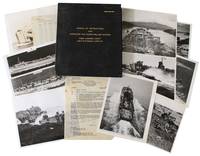
1943ref. 184291943. Garrels Robert. Manual of Instructions for Operating the Ballasting Control System Tank Landing Craft 1943 documents the engineering procedures governing ballast systems in amphibious vessels designed for World War II assault operations. Prepared during the peak of Allied amphibious planning the manual addresses the controlled flooding of well decks lowering of stern gates and discharge of landing craft and armored vehicles onto hostile shores. Issued the year before the Normandy landings the instructions correspond to the naval technologies deployed in Operation Neptune the seaborne phase of D-Day when Dock Landing Ships and specialized landing craft delivered troops tanks and artillery to French beaches. The procedures outlined reflect the technical infrastructure underlying amphibious warfare including vessels modified to transport Duplex-Drive tanks and to provide offshore repair capacity during sustained invasion campaigns. Garrels Robert. Manual of Instructions for Operating the Ballasting Control System Tank Landing Craft. New York: Gibbs & Cox Inc. 1943. Three-volume carbon-copy typescript report 28 pages total with one large folding ballast chart; sewn into black cloth ribbing at fore-edges and attached at gutter. Measures approximately 8.5 x 10.75 inches. The manual contains detailed diagrams of ballast tank configurations and operational schematics explaining how vessels could deliberately flood compartments to lower decks and facilitate rapid deployment of equipment and personnel. Such systems proved central to large-scale amphibious assaults including the June 6 1944 landings at Utah Beach where elements of the U.S. 4th Infantry Division came ashore supported by amphibious armor and engineer units clearing obstacles and sea walls. The controlled ballast and disembarkation technologies described here formed part of the broader naval architecture enabling the largest seaborne invasion in history. Light sunning to covers and margins; text and folding chart clear and intact. Overall very good condition. Technical wartime documentation of amphibious engineering central to Allied invasion strategy. unknown books