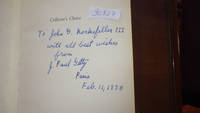
1956réf. 30327HBDJ January 1956 1ST EDITION 2ND PRINTING VG/VG- AS-IS DJ some rub & wear & several Small chips AT EXTREMITIES DJ & Torn half the length of the rear Fold SLENDER CHIP at Spine DJ Despite this it is intact in mylar Wrapper Red cloth Cover with Gold Gilt Cover shows some fading at front from moisture in Past lite wear pgs otherwise Interior Nice Tight Clean VG/VG- AS-IS 360 pgs index W. H. ALLEN London hardcover
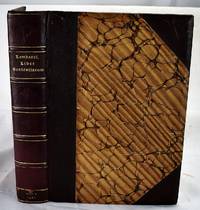
1488réf. 1909070002Basel : Nicolaus Kessler 1488. First Edition. Hardcover. Good. Incunable : Textus Sententiarum magistri Petri Lombardi Basel: Nicolaus Kessler 22 September 1488. Folio 31 x 23 cm. Bound in later 1/2 leather over marbled boards. Solid binding and cover. Gothic letter printed in two columns 55 lines. Woodcut calligraphic first initial on first leaf. Rubricated lettering throughout with opening initials drawn by hand in red. Fine printer's device white on background on rear leaf. 281 leaves. Lacking 2 blank leaves 132 & 281. Collation: a10 b-i8/6 k-p6/8 q-s6 t8 lacking t6 blank A-Q8/6 Qr6 sic R6 S8 lacking one blank in this signature T6 V8 Some worming. Contemporary handwritten notes on rear blank leaf. The principal work of Peter Lombard the 12th century philosopher and scholastic theologian. The work is a collection of core statements of the church fathers first written circa 1150 A.D. Lombard's work was widely read and became one of the primary work of medieval and renaissance theological scholarship. Refs: Procter 7670. Hain 10195. BMC III 766. Goff p. 491. Zehnacker 1825. Kesler. Basel : Nicolaus Kessler hardcover
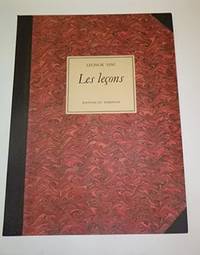
réf. 16-4020Bruxelles: Editions du Tamanoir 1976. Large folio. 27 x 20 inches. 68 x 52cm. Two board portfolios in a slipcase. One portfolio contains the text and 14 silkscreens. The second portfolio contains 12 signed and numbered color silkscreens each one of 26 signed impressions. Very heavy more than 11 kilos.12 large format silkscreen illustrations; bound in leather and marbled paper boards signed by Waldberg and Fini in matching marbled paper portfolio are contained with the book in asumptuous matching leather and paper box. Includes many of Fini's most beautiful images such as "Vesper Express" and "Guardian of the Wells." .Edition of 275 Plus 26 Artist's CopiesLes leçons édition du Tamanoir Bruxelles 1976 Ouvrage comprenant une préface de Patrick Waldberg et douze sérigraphies dimensions variées marges 68 x 52 cm très belles épreuves tirage à 275 exemplaires et 26 exemplaires de collaborateur numérotés a à z exemplaire L comprenant le livre relié avec les douze sérigraphies et une suite supplémentaire des douze sérigraphies signées et numérotées l/z très bon état général quelques usures sur l'emboîtage d'origine.Expertise by Jean-Paul Veyssière 37000 Tours France. Bruxelles: Editions du Tamanoir, 1976. hardcover
1862réf. B6492Paris: Librairie maritime et scientifique Arthus Bertrand editeur. 1862. A near fine copy with one plate with marginal tears otherwise texts and plates are clean and crisp. . Binding: Contemporary cloth rebacked in calf expertly title in gilt on spine spine with 4 raised bands. Notes: François-Edmond Paris 1806–1893 was a French admiral notable for his contribution to naval engineering during the rise of the steam for his books and for his role in organising the Musee national de la Marine. Michel Charles Fichot 1817 - 1903 was a French painter designer illustrator and lithographer. Hubert Clerget 1818 - 1899 was a French lithographer and painter. Jules Gaildreau 1816-1898 was a draughtsman illustrator active in Paris. This is the first and only edition of this beautifully illustrated work. It is an account of the 1861 visit to Jerusalem undertaken by the third French Squadron of the Mediterranean. This book is famous for the quality of its 12 hand-coloured plates including the Mosque of Omar and the El-Aqsa Mosque. François-Edmond Paris joined the French Navy in 1820 and took part in three great expeditions: the first under d’Urville abord the Astrolabe 1826-9 and two under Laplace on the Favorite 1829-32 and the Artemise 1837-40. In 1858 he was named rear-admiral and was given the command of the third French Squadron of the Mediterranean. Before publishing “Souvenirs de Jerusalem” Paris had already published two important folios on naval and marine architecture. The “Notes historiques'' provide a rich and fascinating complement to the plates providing not only historical references but also the author’s impressions as a visitor. Size: Large Folio. Illustration: Illustrated with 14 full page finely coloured plates. References: Blackmer 1255; Röhricht 508. Category: Book Asia Middle East Holy Land; Book Plate Books Colour; Librairie maritime et scientifique Arthus Bertrand, editeur. hardcover
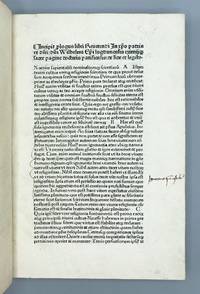
1475réf. 11955Augsburg: Günther Zainer 1475. 19th-century gilt-ruled speckled calf J. Mackenzie; rubbed spine and red morocco label gilt crown neatly repaired red edges. Editio Princeps of the first printed work of William of Auvergne c. 1180-1249 originally composed 1228-30 as part of his encyclopedic Magisterium divinale. In his youth William read widely in books of judicial astronomy magic and sorcery. HE WAS A FORERUNNER OF ROGER BACON AND ALBERTUS MAGNUS and "one of the first wave of thinkers in the Latin West to engage with the writings on natural philosophy and metaphysics by Greek Islamic and Jewish thinkers that had recently become available in Latin translations" Lewis et al. With these newly recovered works on the occult sciences he framed "a new philosophical vision of magic as applied knowledge" rather than demonic activity Hansen. He examines superstitions associated with i.a. the stars the elements images words names seasons new undertakings the finding of objects dreams alchemy gemstones minerals metals and seeing the future in children's fingernails. In good condition bookplate of the Bibliotheca Philosophica Hermetica. ¶Sarton Introduction to the History of Science II: 219; Lewis & Fischer "William of Auvergne" in The Stanford Encyclopedia of Philosophy Spring 2023 edd. Zalta & Nodelman online; Hansen "Bookish Magic" in Dictionary of the Middle Ages 8: 37; Quentin Naturkenntnisse und Naturanschauungen bei Wilhelm von Auvergne 19-21 & 58-60; ISTC ig00711000; Goff G-711. Günther Zainer unknown
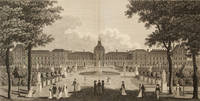
1816réf. 1435761816. PARIS. Graphic Illustrations of the Most Prominent Features of the French Capital; with Characteristic Figures in the Foregrounds comprised in Twelve Stroke Engravings From Accurate Designs Taken in Paris during the Imperial Reign of Buonaparte. With Descriptive Notices and Interesting Anecdotes. 26 pp. illustrated with 12 double-page engravings. Folio 430 x 380 mm. bound in contemporary French three-quarter black morocco over marbled boards gilt title and floral vignettes on spine paper label with ms. number "20" on front cover and spine. London: Harper and Co. 1816. A fine copy of this extremely rare collection of views of Paris consisting of twelve artistically conceived views of Paris engraved by English artists. The large double-page engravings incorporate local Parisians participating in daily routines within the setting of each view. Panoramic views include: the Military School and the Church of the Invalides; View of Paris from the South Boulevard; View of Paris from Montmartre; South View of the Old and New Louvre; The Mint and The Façade of the Louvre; View of La Place de la Concorde; The Garden of the West Front of the Tuileries; Palace of the Tuileries Facing La Place du Carrousel; Garden of the Tuileries; The Luxembourg or Palais du Senat with the Gardens; The Elysian Fields Distant Gardens of the Tuileries; Entrance to Les Champs Élysées and La Place de la Concorde. Each plate is followed by two pages of text giving historical details and anecdotes about the site illustrated. Minor wear to outer edges of binding plates and text clean. Rare: OCLC lists 6 copies worldwide of which only one is held in America Bowdoin College. hardcover
1654réf. B66141654. small lower marginal tears at B1 2 and N2; some contemporary ink under linings; wide margin paper. Overall this rare work is in very good condition. . Binding: Contemporary full crushed brown morocco spine raised with six 6 bands; worn gilt title on two; compartments faded; all edges speckled red and green. Notes: Rare. Second augmented after the first edition published earlier the same year 1654. Text in Latin. Place printer or publisher are unidentified; printer’s device of: Troyes: Nicolas I Oudot’s heirs printer; Three parts in one volume. This is a rare edition of this early French astrological work printed the same year as its first edition. Some of the text especially relating to predictions was regarded exceedingly offensive immediately condemned leading to contents either to be removed or whole copies burned; the present second edition was published without the contentious contents i.e. volvelles making predictions about Islam its future development Christianity and England France and Spain; five 5 volvelles remain in this edition relating to Henry IV of France and constellations of the heavens at the time of creation. Sotheby’s states: "The first two parts are attributed on their title-pages to a Francisci Alleius and comprise an explication of his 'new method of astrology' and comments and observations on 'the fate of the universe. ' The third part is a commentary on the preceding two sections by the Capuchin Yves de Paris who is presumed to be the true author of the entire work. Expurgated editions themselves very rare were printed in Paris in 1654-56 and Rennes in 1658." While the contents give no indication of the publisher printer or place the printer’s device of Nicolas Oudot Troyes founder of the Bibliothèque bleue is engraved on the first title. Caillet III 11557. Thorndike VIII 310ff. Peignot Dictionnaire des livres condamnés au feu II 204f. Size: Folio 343x215mm. Illustration: Two illustrated titles with woodcut engraved printer’s devices the first depicting a flower filled basket the second a fruit filled bowl; woodcut engraved floral initials and head pieces at openings; moreover five astrological figures; of these twelve 12 are moveable parts and five 5 fixed; of the five three have retained their threaded marker. Provenance: Armorial bookplate on upper pasted endpaper. References: Brunet I 185; Caillet III 11557; Dorbon Bib. Estoterica 61; Houzeau and Lancaster 5217. Thorndike VIII 310ff. Peignot Dictionnaire des livres condamnés au feu II 204f. Pages: Ll: bl. vol I: 2 pp.12; vol II: pp.57 p.1; vol III: pp. 26; bl. Collation: e1-2 A1-C2; A1-N2 O1-3; A1-F2 G1; bl. with watermark Category: Book Religious Christianity; Book Europe France; Book Science & Technology; unknown
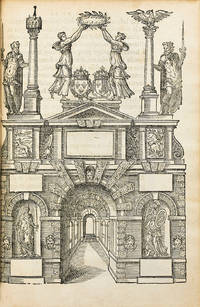
réf. BIBLIO-LIVE-4-12Paris Denis du Pré 1572. 4to 235 x 157 mm of 53 ll. 1 9 full-page engravings in the text and one folding engraving out of pagination ; 10 ll. 26 2 ll. including 1 bl. 9 2 bl.ll. 6 full-page engravings in the text. Handwritten manuscript on the title. Bound in full granite-like calf blind-stamped fillet on the covers spine ribbed and decorated mottled edges. Old restorations on the spine. Early 18th century binding. First edition of one of the most beautiful entries of the French Renaissance containing several plays by Ronsard Antoine de Baïf Amadis Jamyn Jean Dorat Du Faur de Pibrac Pasquier. in first edition. Mortimer French 205-206; Rahir Dutuit 676; Picot Rothschild 3117; Brunet II 1001; Pichon 4897; Fairfax Murray French 152. One of the beautiful French celebration books of the 16th century recounting the coronation of Queen Elisabeth of Austria wife of Charles ix and daughter of the Emperor Maximilian ii which took place in the Abbey of Saint Denis as well as the entry of the sovereigns in the capital. The work was written by the Parisian municipal magistrate Simine Bouquet who was charged by his colleagues at the city hall to organize the celebration and to coordinate the order of the decors; he had entrusted Ronsard and Dorat with the direction they decided the theme: the happy meeting between France and Germany. These two poets called in Germain Pilon for the sculptures in Le Contefor the carpentry's works and for the perspectives and the paintings in Pierre d'Angers andin Nicolo dell'Abbate the famous emulator of Fontainebleau'sPrimaticcio. The edition encloses 16 full-page woodcuts including 1 folding plate made by the precious stones cutter and engraver Olivier Codoré abbreviated name according to Mariette of the valet and semi-precious stones engraver of the future Henry IV nicknamed Coldoré because of the abundance of necklaces he exhibited with pleasure. The illustration depicts the ephemeral architectures triumphal arcs ivy and leaves cradles fountains…put on the royal cortege's way. It is interesting as it is itself "transformable". These ceremonies had been delayed for about ten years Charles IX being able to make his solemn entry in the capital only thanks to the recent Saint Germain peace conclusion on August 11th 1570 which put a temporary end to ten years of religious wars. "The king's entry is illustrated with 10 figures including 9 that measure 200 x 140; the tenth bigger 208 x 212 depicts the perspective of the painting put place du Chatelet. These woodcuts offer similarities with those of the Entry of Henry II. The Entry of the Queen is illustrated with 6 woodcuts made each of two parts: the lower part is the exact reproduction of the corresponding figure of the King's entry; the upper part alone was re-engraved with different characters. The Queen having arrived 23 days after the king we had to keep the same decors and replace the allegories and inscriptions with other ones more suitable. All this decoration would be by Codoré as it is hinted in the privilege. According to Mariette Codoré would be the nickname of Fontenay Henry IV's semi-precious stones engraver." Brun Le Livre français illustré de la Renaissance p. 181. The volume encloses a mention of first state: the word"vouloir" l.34 v° wasn't added to line 7. Brunet II 1001 mentions "On some copies the page 'Simon Bouquet' is followed by a play in verse signed E. Pasquier Parisien entitled 'Au Roy Congratulation de la paix faicte par sa Majesté entre ses sujets l'onzieme jour d'Aoust 1570' 9 leaves". Our copy is one of the very few to include this play in verse by Pasquier. The Queen being ill another celebration was held for her three weeks later. The same temporary architectures were used but they were decorated with new allegorical figures. A precious wide-margined and unwashed copy preserved in its 18th century binding. Copies in ancient binding are rare most of them having been rebound –and washed at the same time– at the end of the 19th century. FR Paris Denis du Pré 1572. In-4 de 53 ff. 1 9 gravures à pleine page dans le texte et une gravure dépliante hors texte ; 10 ff. 26 2 ff. dont 1 bl. 9 2 ff.bl. 6 gravures à pleine page dans le texte. Ex libris manuscrit sur le titre. Relié en plein veau brun granité filet à froid encadrant les plats dos à nerfs orné coupes décorées tranches mouchetées. Restaurations anciennes au dos. Reliure du début du XVIIIe siècle. 235 x 157 mm. Edition originale de l'une des plus belles entrées de la Renaissance française contenant plusieurs dizaines de pièces deRonsard Antoine de Baïf Amadis Jamyn Jean Dorat Du Faur de Pibrac Pasquier. en édition originale. MortimerFrench 205-206 ; Rahir Dutuit 676 ; Picot Rothschild 3117 ; Brunet II 1001; Pichon 4897; Fairfax Murray French 152. Un des beaux livres de fêtes français du XVIe siècle relatant le couronnement de la reine Elisabeth d'Autriche épouse de Charles IX et fille de l'Empereur Maximilien II qui avait eu lieu à l'abbaye de Saint-Denis ainsi que l'entrée des souverains dans la capitale. L'ouvrage est dû à l'échevin parisien Simon Bouquetque ses collègues de l'Hôtel de Ville avaient chargé d'ordonner la fête et de diriger l'agencement des décors ; celui-ci en avait confié la mise en scène à Ronsard et à Dorat qui en fixèrent le thème : l'heureuse rencontre de la France et de la Germanie. Ce sont ces deux poètes qui firent appel à Germain Pilon pour les sculptures à Le Conte pour les travaux de charpenterie et pour les perspectives et les peintures à Pierre d'Angers et à Nicolo dell'Abbate le célèbre émule du Primatice à Fontainebleau. L'édition comporte 16 planches sur bois à pleine page dont une dépliante dues au tailleur et graveur en pierres précieuses Olivier Codoré nom abrégé selon Mariette du valet de chambre et graveur en pierres fines du futur Henri IV surnommé Coldoré à cause de l'abondance de colliers qu'il exhibait volontiers. L'illustration figure les architectures éphémères arcs triomphaux berceaux de lierre et de feuillage fontaines. dressés sur le chemin du cortège royal.Elle présente l'intérêt d'être elle-même " à transformations ". Ces cérémonies avaient été retardées pendant une dizaine d'années Charles IX ne pouvant faire son entrée solennelle dans la capitale que grâce à la récente conclusion de la paix de Saint-Germain le 11 août 1570 qui mettait un terme provisoire à une décennie de guerres de religion. " L'entrée du roi est ornée de 10 figures dont 9 mesurent 200 x 140 ; la dizième plus grande 208 x 212 représente la perspective de la peinture dressée place du Chatelet. Ces bois offrent des similitudes avec ceux de l'Entrée de Henri II. L'Entrée de la reine est ornée de 6 bois formés chacun de deux parties : la partie inférieure est la reproduction exacte de la figure correspondantes de l'entrée du roi ; la partie supérieure seule a été regravée avec des sujets différents. La reine ayant fait son entrée 23 jours après celle du roi on avait dû conserver les mêmes décors et remplacer les allégories et inscriptions par d'autres mieux appropriées. Toute cette décoration serait de Codoré ainsi que le laisse entendre le privilège. Selon Mariette Codoré serait le surnom de Fontenay graveur en pierres fines de Henri IV. " Brun Le Livre français illustré de la Renaissance p. 181. Le volume comporte une remarque de premier tirage : le mot " vouloir " au f.34 v° n'a pas été ajouté à la ligne 7. Brunet II 1001 mentionne " A quelques exemplaires la page 'Simon Bouquet' est suivie d'une pièce en vers signée E. Pasquier Parisien intitulée 'Au Roy Congratulation de la paix faicte par sa Majesté entre ses sujets l'onzieme jour d'Aoust 1570' 9 feuillets " Notre exemplaire est l'un des très rares à posséder cette pièce en vers de Pasquier. La reine étant souffrante une autre fête fut organisée en son honneur trois semaines plus tard. Les mêmes architectures éphémères furent employées mais on les décora de nouvelles figures allégoriques. Précieux exemplaire grand de marges et non lavé conservé dans sa reliure du XVIIIe siècle. Les exemplaires en reliure ancienne sont rares la plupart ayant été reliés à nouveau - et lavés par la même occasion – à la fin du XIXe siècle. hardcover
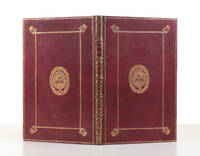
1743réf. 37021743. Woodcut royal arms on title. 1 p.l. 34 pp. Small folio cont. French red morocco panelled in gilt in the style of the “cabinet du Roi” gilt arms & ciphers Olivier 2495 fer 2 on covers with ciphers on spine a.e.g. Paris: de l’Imprimerie Royale 1743. First edition and very uncommon. This catalogue the splendid Han Fürstenberg — Otto Schäfer — Jacques Bemberg copy lists the plates made of the collections of the king including paintings medals royal chateaux fountains grottoes statues busts tapestries and jewels along with records of festivals entrances battles etc. etc. “Colbert understanding that engraving was the best means to disseminate and preserve knowledge of the undertakings of Louis XlV began to assemble a group of outstanding engravers. By 1660 they had achieved the stature of independent artists and by 1670 had become a special group under the protection of the king joined together at the Gobelins around Charles Le Brun and Sebastien Le Clerc. From 1660 André Félibien was charged with providing descriptions of maisons royales and Adam Van der Meulen and Israel Silvestre were sent to the newly conquered territories to make views of the principal chateaus and fortresses. Other commissions for the Cabinet du Roi included engravings by Chauveau of the king’s paintings at the Tuileries; copies of paintings and sculpture by Claude Mellan Rousselet and Audran in the galleries of the king; copies by Ronelet of the king’s collection of medals; and other works of art and architecture by Rousselet Silvestre Chauveau and Le Clerc. At the same time the Académie des Sciences began scholarly works commissioned by Colbert…Illustrators for these works were Abraham Bosse Sebastien Le Clerc who often made engravings for Claude Perrault Nicolas Bailly and L. de Châtillon… “From 1670 Colbert determined to join these engravings in a collection. He proposed that at the end of each year a temporary volume would be composed of all types of works with the text printed in French and Latin. At the end of ten or twelve years the collection would be subdivided by topics so that the king would have volumes separated into all the sciences and achievements of his reign… “A complete record of the king’s possessions was never achieved but the plan was continued by his successors. The engravings from the Cabinet du Roi were first published in a variety of sizes and separately. They were then collected into volumes according to Colbert’s plan but sporadically. In 1727 a new edition was published with additional plates and a catalogue. A third edition of twenty-three volumes with further additions and an index was issued in 1743. Later sets were formed with plates from various editions. The plates survive to the present day at the Chalcographie du Louvre.”–Millard French Books 46. This catalogue was issued as a guide to the contents of the fifty sets of 956 plates of the 1743 edition which were prepared as gifts see Balayé La Bibliothèque Nationale des origines à 1800 pp. 226-27. Fine copy. unknown