13.308 Ergebnisse
Best.-Nr. 24991Edition du Syndicat d'Initiative - 1968 - Edition Originale dont 500 Numérotés en chiffre romain, Celui-ci le N° I - In 8 - Cartonnage édieur avec illustration - 370 pages - Très bel exemplaire, Exemplaire N° I.
Best.-Nr. 181409S.l., Edition du Syndicat d'Initiative, 1968 in-8, 370 pp., planches, cartonnage papier illustré (reliure de l'éditeur).
Best.-Nr. 239406S.l., Edition du Syndicat d'Initiative, 1968 in-8, 370 pp., planches, cartonnage papier illustré (reliure de l'éditeur). Couverture tachée. Envoi.
Best.-Nr. 1041183879.Gpaperback. Good. Access codes and supplements are not guaranteed with used items. May be an ex-library book. paperback
Best.-Nr. A9789462986497Hardback. New. This book explores one artist's transformation of alchemy and its materials into a reputation for virtuosity-and what his work can teach us about the experimental early modern world. hardcover
2019Best.-Nr. __9462986495Amsterdam Univ Pr 2019. Hardcover. New. 0 edition. 304 pages. 9.25x6.25x0.75 inches. Amsterdam Univ Pr hardcover
Best.-Nr. A9781041183877Paperback / softback. New. This book explores one artist's transformation of alchemy and its materials into a reputation for virtuosity-and what his work can teach us about the experimental early modern world. paperback
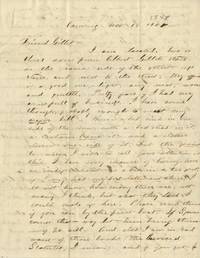
1848Best.-Nr. List3729Corning New York 1848. Two autograph letters signed from C. H. Berry. Each 3 pp measuring 8 x 10 inches. Very good plus. A pair of letters from C. H. Berry of Corning New York who was apparently both a schoolteacher and active in Free Soil circles in the area. The earlier letter written in 1847 provides an unexpected look at corporal punishment in the classroom. Berry writes: "I am in my school yet. I have four weeks or nearly that to keep yet. I storm round like an old sailor have my hands full but enjoy the pleasure of seeing the little 'varmints' learn. I had a speck of variety today. Several boys stayed out this forenoon after recess. This afternoon I called them up & after talking a spell told them I should punish them for staying out. One fellow squared himself & said he should not be punished! He was a huge fellow with a boxer's ring on his fingers weighing one or two ounces. He swore flat in my face when I began to talk with him. I told him in consideration of his being saucy he must take off his coat. I took the young man by the collar with one hand and applied a strap of harness leather to his legs with the other. He flourished his tongue his arms & legs in a furious way till finding my own was too long for him to reach me he dove for the poker. I just laid him out a couple of times & then plied my straps till his coat came off with a rush & numerous apologies followed it. He said he swore because he was mad he always did so & thought it very unfortunate that he had such a habit. I then punished him for staying out and told him to take his seat which he did very quietly." The second letter written during the immediate aftermath of the election of 1848 shifts dramatically toward national politics. Berry offers a frank assessment of the political future of anti-slavery organization: "In 'Free Soil' matters we have done up all we expected to here and are perfectly satisfied. Our party is firmly organized. Our cause has the sympathy of honest men of all parties and as Taylor is elected let me tell you just what I think of it: Cass has showed his hand and that party can not claim to be free soil men in 1852 or at any time hereafter. Taylor is in a position where he will be obliged to declare himself also. Now if Taylor disappoints the South and comes out a freedom man it will be in consequence of this Northern movement and we have attained all we wanted. But if which is more likely he goes for the South his supporters in the free states will be without the least color of excuse in 1852 and they must join our party & there will not be a grease spot of their organization left. The case then is this: Nothing but 'liberty' will satisfy the people of the north. The Hunkers can not stand on this platform for they have repudiated it; the honest ones will be with us. The Whigs must come on to our ground and join us as a party by the acts of their Executive or declare against liberty which will destroy their party here and bring them to us in a disorganized mass. Then with 'repeal' as our motto we will teach them the error of their ways. We can not fail to succeed in my view of the case. Free soil forever." Written before the formation of the Republican Party and more than a decade before secession the letter captures anti-slavery political sentiment at a transitional moment when Free Soil activists believed sectional political realignment increasingly inevitable. An unusually readable pair balancing ordinary rural life with emerging sectional politics in antebellum New York.
1848Best.-Nr. List3729Corning New York 1848. Two autograph letters signed from C. H. Berry. Each 3 pp measuring 8 x 10 inches. Very good plus. A pair of letters from C. H. Berry of Corning New York who was apparently both a schoolteacher and active in Free Soil circles in the area. The earlier letter written in 1847 provides an unexpected look at corporal punishment in the classroom. Berry writes: "I am in my school yet. I have four weeks or nearly that to keep yet. I storm round like an old sailor have my hands full but enjoy the pleasure of seeing the little 'varmints' learn. I had a speck of variety today. Several boys stayed out this forenoon after recess. This afternoon I called them up & after talking a spell told them I should punish them for staying out. One fellow squared himself & said he should not be punished! He was a huge fellow with a boxer's ring on his fingers weighing one or two ounces. He swore flat in my face when I began to talk with him. I told him in consideration of his being saucy he must take off his coat. I took the young man by the collar with one hand and applied a strap of harness leather to his legs with the other. He flourished his tongue his arms & legs in a furious way till finding my own was too long for him to reach me he dove for the poker. I just laid him out a couple of times & then plied my straps till his coat came off with a rush & numerous apologies followed it. He said he swore because he was mad he always did so & thought it very unfortunate that he had such a habit. I then punished him for staying out and told him to take his seat which he did very quietly." The second letter written during the immediate aftermath of the election of 1848 shifts dramatically toward national politics. Berry offers a frank assessment of the political future of anti-slavery organization: "In 'Free Soil' matters we have done up all we expected to here and are perfectly satisfied. Our party is firmly organized. Our cause has the sympathy of honest men of all parties and as Taylor is elected let me tell you just what I think of it: Cass has showed his hand and that party can not claim to be free soil men in 1852 or at any time hereafter. Taylor is in a position where he will be obliged to declare himself also. Now if Taylor disappoints the South and comes out a freedom man it will be in consequence of this Northern movement and we have attained all we wanted. But if which is more likely he goes for the South his supporters in the free states will be without the least color of excuse in 1852 and they must join our party & there will not be a grease spot of their organization left. The case then is this: Nothing but 'liberty' will satisfy the people of the north. The Hunkers can not stand on this platform for they have repudiated it; the honest ones will be with us. The Whigs must come on to our ground and join us as a party by the acts of their Executive or declare against liberty which will destroy their party here and bring them to us in a disorganized mass. Then with 'repeal' as our motto we will teach them the error of their ways. We can not fail to succeed in my view of the case. Free soil forever." Written before the formation of the Republican Party and more than a decade before secession the letter captures anti-slavery political sentiment at a transitional moment when Free Soil activists believed sectional political realignment increasingly inevitable. An unusually readable pair balancing ordinary rural life with emerging sectional politics in antebellum New York. books
Best.-Nr. 45461363like new. unknown
Best.-Nr. 1016293887.Ghardcover. Good. Access codes and supplements are not guaranteed with used items. May be an ex-library book. hardcover
Best.-Nr. B9781016293884Hardback. New. hardcover
1893Best.-Nr. 35503391Moulins, Auclaire, 1893 ; in-8, broché, couverture imprimée. 21 pp.ÉDITION ORIGINALE, rare tiré à part.
1907Best.-Nr. 378872Ithaca New York: Cornell Masque. Good. 1907. First Edition. Softcover. Area of chewing to the lower outer corners in front maximum of 3/4" wide by 1/2" in front diminishes toward the year. Four consecutive leaves have some tearing to the lower margins. Covers have light browning mostly to the margins. Front illustration and lettering are bright. Front cover has a tiny surface nick below the illustration and a written private owner's name. Rear cover has two stains to the area of the upper outer corner one is seen on the last blank leaf. The 10 middle pages are loose from the binding but are present and in good condition. ; Approx. 9 1/4" wide by 12". Very early work by Kenneth L. Roberts Cornell '08. Presented by The Cornell Masque. Music by T. J. Lindorff H. C. Schuyler & H. E. Childs. Original paper covers. Song book with words and music. ; 54 pages . Cornell Masque paperback
Best.-Nr. a49984Ithaca 1907 first edition. The Cornell Masque of Cornell University. Music by T. J. Lindorff H. C. Schuyler and H. E. Childs. Music and lyrics. Complete vocal score. 4to. 54pp. original illustrated wraps. This work by Roberts precedeed the publication of Europe's Morning After which is described as Roberts' first book. Tiny ink number at top left of front. VG plus slight fading of wraps. internally near Fine. An exceptional copy of a rare publication. . paperback
Best.-Nr. 14711Bourges, Pigelet - Orléans, Blanchard, [1873] ; in-8, broché. 32 pp. Manque angulaire de papier sur le premier plat de couverture. Intérieur frais, sans rousseurs.
1988Best.-Nr. 111756Ravan Press Pty Ltd 1988. paperback. Very Good. 9x6x0. Slender staple bound illustrated children's book with light cover wear. Tight binding no marks. B53 Please email for photos. Ravan Press (Pty) Ltd paperback
1983Best.-Nr. ND218891983 135 p., num. figs, paperbound. Published in: Biological Journal of the Linnean Society. Volume 20, no. 1.
1982Issoudun 1982, In-8 broché, 33 pages. Parfait état.
1982Best.-Nr. 99942168Issoudun 1982, In-8 Issoudun 1982, In-8 broché, 33 pages. Parfait état.
1991Best.-Nr. 1787Nouvelle République 1991 In-8 broché 27,5 cm. 95 pages. Très bon état d’occasion.
2001Best.-Nr. TANG0506Frances Young Tang Teaching Museum 2001-12-15. Paperback. New. New! May take up to 14 days to arrive. Sorry we don't offer expedited shipping on this item. -01x- Frances Young Tang Teaching Museum paperback
2025Best.-Nr. AME_9781835359075MedPlus 2025. 1. Hardcover. New/New. _ MedPlus hardcover
1983Best.-Nr. ABE-1703005980313FORMAT 24 CM X 30 CM-148 PAGES-KATMANDOU; QUE SONT DEVENUS LES HIPPIES D'ANTAN ? ENQUETE DE CLAUDE OLIEVENSTEIN, 7P-PATRICE GALITZINE, ENTRETIEN POUR SON LIVRE "TANT QUE MARIANNE FERA LA CLASSE", 4P-ISABELLE HUPPERT, PAR KATHERINE PANCOL, 4P-REGINE DEFORGES, 2P-PHILIPPE DE BELGIQUE, 2P-VIRGINIE BILLETDOUX, 2P-KIM BASINGER, 2P-NORMAN MAILER, ENTRETIEN, 3P-L'AMERIQUE RISQUE DE PERDRE LA GUERRE DU CIEL, 3P-DITES NOUS LIONEL JOSPIN, 1P-ILES MATTHEW ET HUNTER; BATAILLE POUR UN ROCHER, 4P-LA BALLADE AMERICAINE DU RODRIGUEZ GANG, 4P-MORT DE THIBAUT D'ORLEANS, 8P-SOPHIE MARCEAU, 2P-ANNE PARILLAUD, 2P-BERNARD GIRAUDEAU, 2P-LE PAPE OUVRE L'ANNEE SAINTE, 5P-MARIE MARQUET, 4P-CARTE BLANCHE A PHILIPPE SIMONNOT, 1P-DECHIRURE SANS MANQUE EN MARGE SUPERIEURE GAUCHE DE COUVERTURE
1991Best.-Nr. ABE-1605392899164EN COUVERTURE: SERGE GAINSBOURG, GROS PLAN TORSE NU-LA NOSTALGIE KISLING, 3P-RICHARD BERRY "JESSICA, C'EST LA FEMME DE MA VIE", PAR ROGER AUQUE, 4P-MES GENS, PAR PHILIPPE BOUVARD: ALAIN CHAMFORT EST DEVENU LE MORALISTE DU SHOWBIZ, 2P, PHOTO PLEINE PAGE-GAINSBOURG SES DERNIERS JOURS DE BONHEUR, 6 PAGES