Pierre CitronLivre Rare Book

345 résultats
1964réf. 49982Microcosme, serie solfèges n°24, 1963. Format 12X18 cm. Couverture frottée. Bon état.
1908réf. 40603Budapest: Karl Rozsnyai PN R.K. 338 1908. Folio. Unbound as issued. Laid into original publisher's mid-green wrappers with decorative element and titling in silver. 1f. recto title verso blank 3-39 i incipits of the 14 bagatelles. Wrappers worn; spine slightly chipped with minor loss and remnants of old tape. Very slightly worn and browned internally. First Edition. Somfai BB 50 p. 304. Szabolcsi Sz 38 p. 327. "By the time the Fourteen Bagatelles Opus 6 were written Bartok's expressive vocabulary was beginning to assume its definitive shape. Years later he marked the beginning of his personal style by those pieces. . The Bagatelles demonstrate many of the devices which later became an integral party of his technique." Stevens: The Life and Music of Béla Bartók p. 328. Karl Rozsnyai [PN R.K. 338] unknown
réf. lc_35920Courrier du livre (9 avril 2002)
197040 S. Kart.
1993A clean, unmarked book with a tight binding. Faded spine. 236 pages.
1918réf. 3908Budapest: Globus 1918. First edition. In original paper. First edition. In original paper. 32 pp. First separate edition. In the publisher's printed blue paper wrappers. A few underlinings and a contemporary pencil note at the end. Corners bumped. Otherwise in very good condition. First separate edition of the libretto of Bartók's only opera apparently printed for its world premiere at the Royal Hungarian Opera House in Budapest on 24 May 1918. Balázs wrote A kékszakállú herceg vára in 1910 as a Symbolist mystery play based on the Bluebeard legend drawing on the tradition of Perrault and Maeterlinck as well as Hungarian folk-ballad forms. Bartók set the text to music in 1911 but the opera remained unperformed for seven years. Following the success of The Wooden Prince it was finally staged at the Royal Hungarian Opera House on 24 May 1918 conducted by Egisto Tango with Oszkár Kálmán as Bluebeard and Olga Haselbeck as Judith. The present edition printed by Globus in 1918 is the first separate edition of Balázs's text. Apparently produced in connection with the premiere it identifies the work explicitly as an opera and significantly names both Balázs and Bartók on the title-page documenting the text in the form in which Bartók's opera first reached the stage. Globus unknown
1913réf. 3391Budapest 1913. Near fine condition. 1 p. Béla Balázs 1884-1949 writer poet actor film aesthete film director critic film school teacher. His volume Misteriya Mysteries was published in Nyugat in 1912. It contains the one-act plays The Castle of the Bluebearded Prince The Fairy and The Blood of the Holy Virgin. At the time of the publication of The Mysteries Béla Bartók's musical transcription of The Bluebeard's Castle was already complete but no one agreed to perform the opera claiming that it could not be performed. But Béla Balázs did not rest. As a result of his efforts with the help of the Nyugat the original prose version of Bluebeard's Castle and The Blood of the Holy Virgin was staged in the Budapest Orfeum in 1913. Lajos Gulácsy created the sets for the performance. Béla Bartók played the piano between the two one-act plays. unknown
1994réf. Q-0793532221G. Schirmer Inc 1994-04-01. Paperback. New. In shrink wrap. Looks like an interesting title! G. Schirmer, Inc paperback
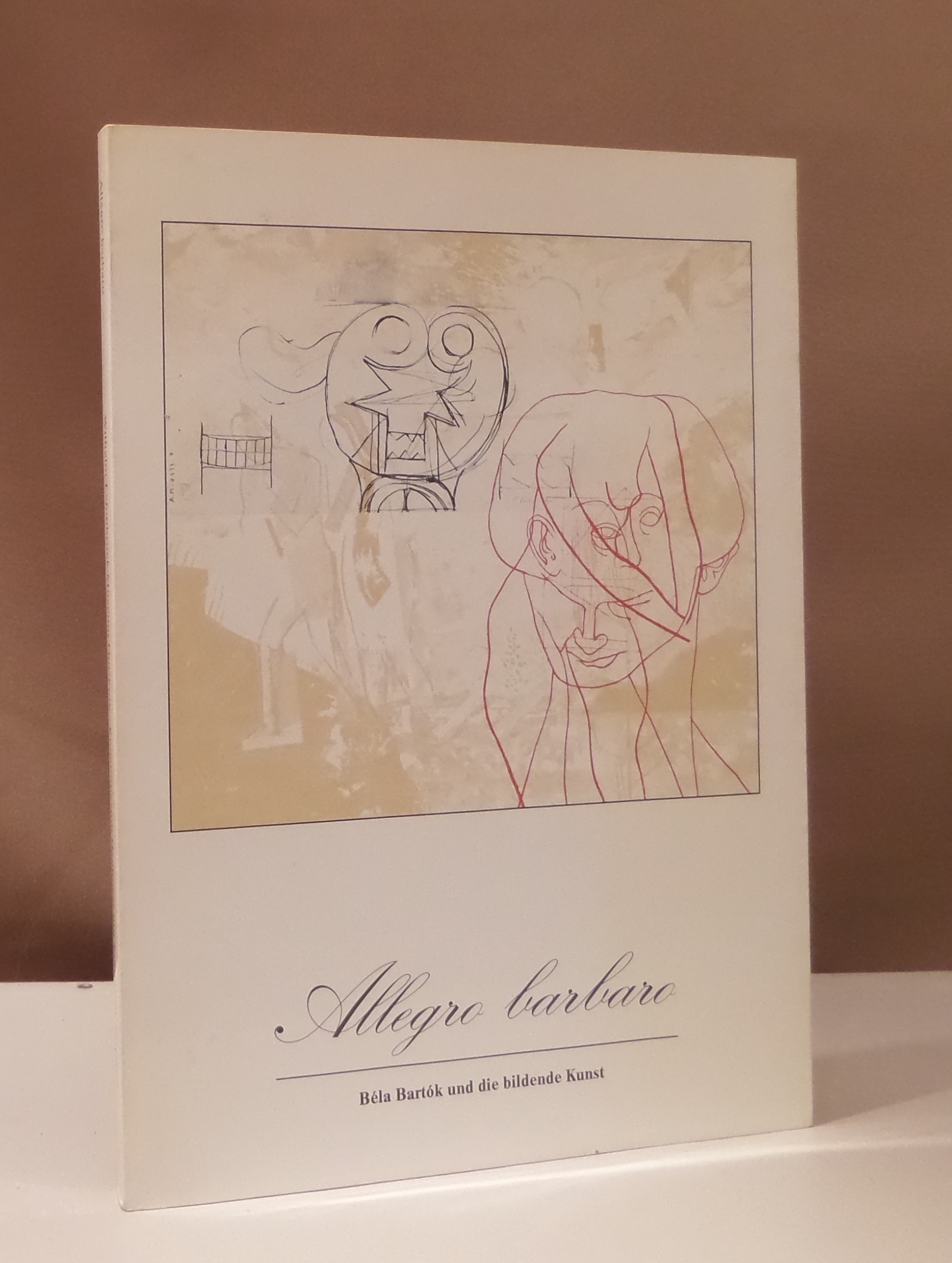
1981réf. 81289Duisburg, Wilhelm-Lehmbruck-Museum 1981. 1981. gr.-8°, 178 S. mit sehr zahlreichen Abbildungen, Illustr. Orig.-Karton.
réf. ANAIS-0673361799Good Year Books. paperback. Good. 8.3x0.3x11. Buy with confidence. Excellent Customer Service & Return policy. Good Year Books paperback
réf. mon0000721750Good Year Books 11/8/1996 12:00:01 A. paperback. Good. 0.2000 in x 10.4000 in x 7.8000 in. Good Year Books paperback
réf. 0673361799-11-1Good Year Books. Very Good. It's a well-cared-for item that has seen limited use. The item may show minor signs of wear. All the text is legible with all pages included. It may have slight markings and/or highlighting. Good Year Books unknown
2018réf. TXT1461PennWell Corp 2018. Hardcover. New. WE SHIP DAILY. Brand new in shrink wrap. PROMPT PROFESSIONAL SERVICE! PennWell Corp hardcover
réf. 1593704070.Ghardcover. Good. Access codes and supplements are not guaranteed with used items. May be an ex-library book. hardcover
2018réf. __1593704070Pennwell Books 2018. Hardcover. New. 338 pages. 9.25x6.25x0.75 inches. Pennwell Books hardcover
réf. 33406704like new. unknown
réf. 33406704-nnew. unknown
réf. ria9781593704070_inpHardback. New. New Book; Fast Shipping from UK; Not signed; Not First Edition; Understanding and managing shale resources requires a unique understanding about the geology geophysics rock physics and rock mechanics of each reservoir in a seamless interdisciplinary approach. hardcover
réf. A9781593704070Hardback. New. Understanding and managing shale resources requires a unique understanding about the geology geophysics rock physics and rock mechanics of each reservoir in a seamless interdisciplinary approach. hardcover
réf. 42633Koch Discover, (o.J.). DICD 920491 CD CD
réf. BN606802Budapest Holnap Kiado 2001. Hardcover. Auf den Wegen Béla Bartóks - Nachwort zu dem Film Wurzeln Gyökerek Fotografiert von Istvan Gal Redaktion und Vorwort: Judit Varbiro Auf den Wegen Béla Bartóks - Nachwort zu dem Film Wurzeln Gyökerek Fotografiert von Istvan Gal Redaktion und Vorwort: Judit Varbiro Bartok Bela / Kovács Sándor u.a. Hrsg. Budapest, Holnap Kiado, 2001 hardcover
2001réf. 30899AB2001. Budapest Holnap Kiado 2001 kl.4° 68 S. mit zahlr. Farb-Abb. von Orten und Personen illustr. original Pappband sehr schönes sauberes Exemplar mk1 Abholung im Ladengeschäft in Frankfurt am Main Nordend ggü. Musterschule möglich. Das spart die Portokosten. Pickup at the store in Frankfurt am Main Nordend close to Musterschule is possible. It saves the shipping costs. unknown
réf. 2202Undated signed thank-you card to unknown addressee. Undated signed thank-you card to unknown addressee. 90 × 56 mm. Béla Bartók’s signed thank-you card. With the handwritten text “Szerencsekívánatát sokszor köszöni” Many thanks for the good luck wishes on one side and Bartók’s signature on the other. . unknown
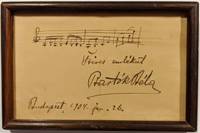
1904réf. 2018Budapest 1904. Handwritten note in ink signed in Budapest: 26 January 1904. Text reads “Szíves emlékül” “As a pleasant memory”. Folded once. In fine condition. Handwritten note in ink signed in Budapest: 26 January 1904. Text reads “Szíves emlékül” “As a pleasant memory”. Ca. 18.5 × 11.5 mm. A signed autograph score detail from Schumann’s Album für die Jugend Op. 68 No.12 Knecht Ruprecht by Béla Bartók. Around 1903–1904 Bartók gave numerous concerts sometimes at 3–4 different venues and countries per week where he often played Schumann’s compositions. Schumann’s work had a big influence on him in other ways as well: according to Suchoff Bartók found Schumann’s Album für die Jugend one of the few good material available for beginners. “From 1908 to 1909 he Bartók worked on a collection of eighty-five piano pieces titled For Children which were based on Hungarian and Slovakian folk music. In his lecture notes Bartók explains his purpose in composing this work: Already at the very beginning of my carrier as a composer I had the idea to write some easy works for piano students. This idea originated in my experience as a piano teacher; I had always the feeling that the available material especially for beginners has no real musical value with the exception of very few works—for instance Bach’s easiest pieces and Schumann’s Jugendalbum.” Suchoff 2004. Literature: Suchoff B. 2004: Bartók’s Mikrokosmos: Genesis Pedagogy and Style p. 13. Rowman & Littlefield. . unknown
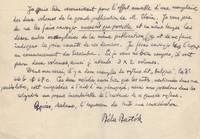
1934réf. 2245Budapest 1934. Bartok thanks to the recipient's earlier letter. He apologizes for the late reply but on the one hand he was very busy and on the other hand he wanted to wait for the publication of a study of folk music a copy of which he would send to Katzarova's boss Vasil Stoin with a German summary. He expresses his gratitude for the kind offering of an early work by Stoin. He mentions at the end of the letter that he also writes about Bulgarian rhythm in his latest essay. unknown