1.013 resultados
ref. 0515Buenos Aires, B. y M. (ohne Jahr). 20 s.
2001ref. 41596Decca, 2001. 467914-2 CD CD
2003ref. 41610Deutsche Grammophon, 2003. 474214-2 CD CD
2012ref. 39468Naive Classique, 2012. V 5297 1 CD CD
1989ref. 46090Deutsche Grammophon, 1989. 427686-2 CD CD
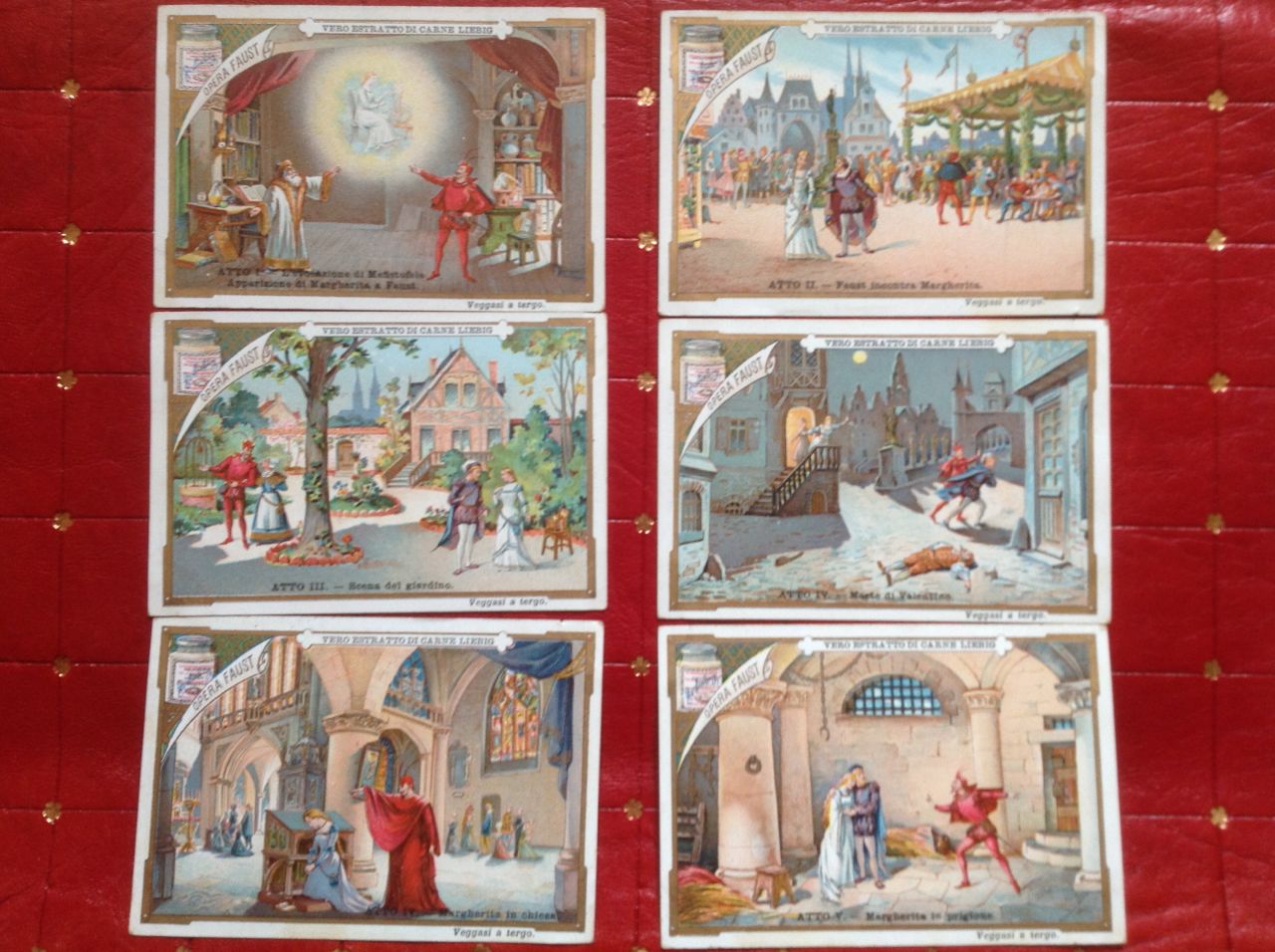
1892ref. KUS1631London, 1892. 6 Bilder (Chromolithographien), H 7 x 11 cm. - Leichte Gebrauchsspuren. broschiert/ Taschenbuch/ paperback
1983Mm 315x450 Fascicolo in folio di pp. 8 con prima e ultima carta illustrate a colori, alcune illustrazioni in nero nel testo. Copertina con molte inserzioni pubblicitarie, vignette di Julio e brevi rubriche. SPEDIZIONE IN 24 ORE DALLA CONFERMA DELL'ORDINE.
Mm 135x200 Libretto d'opera, con appendice contenente "La Notte di Valpurgis" ed altri pezzi aggiunti dall'Autore. Traduzione italiana di Achille de Lauzières - Brossura editoriale di 47 pagine, senza data ma probabilmente anni Trenta del Novecento. Esemplare in ottimo stato di conservazione. SPEDIZIONE IN 24 ORE DALLA CONFERMA DELL'ORDINE.
Mm 115x180 Libretto d'opera. Traduzione italiana di Achille de Lauzières - Brossura editoriale di 48 pagine, senza data ma seconda metà dell'Ottocento. Qualche lieve traccia di umidità alla copertina, peraltro esemplare in buono stato di conservazione. SPEDIZIONE IN 24 ORE DALLA CONFERMA DELL'ORDINE.
Mm 115x180 Raro libretto d'opera. "Composto e diretto dal coreografo Pasquale Borri, musica espressamente scritta da Antonio Baur, da rappresentarsi nel Comunale Teatro Apollo [Roma] la Stagione d'Inverno 1871 in 1872" - Brossura editoriale con copertina muta azzurra, 16 pagine. Lievi sporcature alla prima e ultima carta, peraltro esemplare in buono stato di conservazione. SPEDIZIONE IN 24 ORE DALLA CONFERMA DELL'ORDINE.
1862In 16, pp. 36. Br. muta coeva. Traduzione ital. del Fausy di Barbier e Carre' con musiche di Gounod.
1930Paris, 1930. Une plaquette de format in 12° carréde de 24 pp. sur papier glacé, photographies des principaux roles. Reliure en demi toile noire, titre doré. Couvertures conservées. Genèse de l'œuvre, puis analyse. Parfait état.
Paris, Michel Lévy frères, 1868. Un volume broché de format in 8° de 68 pp., couverture verte imprimée. Bon état. Intérieur très frais. Peu courant. Livret de Barbier et Carré
1858Un volume de format grand in 8° de 2 ff.; 190 pp. entièrements gravées. Titre en brun. Reliure de l'époque en demi chagrin noir. Dos lisse; filets et titre dorés. Quelques pâles rousseurs; bel état. Voir les photos.
1898Buona copertina ma non originale e akcune pagine con rammendi
1955Club du Livre du Mois 1955, 2 volumes In-8 relié toile grége éditeur sous rhodoïd, plats illustrés, non paginé (environ 500 pages) . IIlustrations en hors texte. Trés bon état.
1920Choudens SD (vers 1920), In-8 broché, 116 pages. Bon état.
1942NRF Gallimard 1942, In-12 broché, 271 pages. Bon état.
32 S. 16°. Dek. OLn. Mit farbigen abb.
32 S. 12°. Or. Cloth. Several plates and title-illustration.
1880ref. 3465831880. 5 pages signed by the composer on the cover page. Folio. Blue cloth folder. Bookplate of Dr. Max Thorek and hsi usual stamp on the last page of ms. 5 pages signed by the composer on the cover page. Folio. With a copy of the printed score tipped in. unknown books
ref. 395518 measures in treble clef notated in black ink on a portion of a 14-stave rastrum-ruled album leaf 177 x 233 mm. With text in French in Gounod's hand commencing "Il etait un Roi du Thulé" Marguerite's melancholy aria from Act III. Identified in the composer's hand at foot: "Ballade du Roi de Thulé . à Monsieur Lebert. Ch. Gounod" and dated 26 August 1869. Slightly faded; browned; creased at central vertical fold; portions of leaf slightly lightened; margins of verso reinforced with brown paper tape. Faust an opera in five acts to a libretto by Jules Barbier and Michel Carré after Carré's Faust et Marguerite and Johann Wolfgang von Goethe's Faust Part I in the French translation by Gérard de Nerval was first performed in Paris at the Théâtre Lyrique on 19 March 1859 in a version with spoken dialogue; recitatives were added in 1860 and a ballet and couplets for Méphistophélès were added for a new production in 1869. "The historical importance of Faust is that it sounded a new note in French music. The conventional pomposities of the grand opera which then dominated the stage were superseded by a more intimate and poetic approach. The fashion Gounod set was one of conversational exchange rather than declamation." James Harding: Gounod p. 114. "Faust remains one of the landmarks of French 19th-century opera full of variety and with an underlying sensuality that saved it from the sentimentality and banality to which Gounod's later works especially his oratorios often descended in his quest for inspired simplicity." Robert Orledge in Grove Music Online A considerable success at its premiere the work was one of the most frequently performed works at the Opéra becoming one of the staples of the international repertory. unknown books
1871ref. 36758Paris: Choudens PN A.C. 2260 1871. Large octavo. Quarter dark brown morocco with marbled boards spine in decorative compartments gilt titling gilt marbled endpapers. 1f. recto title printed in dark brown verso blank 3 contents 4-39 i pp. Text in French and Latin. Lithographed. Performance markings in pencil to first number; minor annotatioins in ink to p. 15. Binding quite worn and rubbed corners slightly bumped. Minor to moderate browning. First French edition the Novello Ewer & Co. edition most probably pre-dates the French edition. Bound with: Schubert Franz Collection 40 Mélodies Choisies avec accompt. de Piano . avec les Paroles Allemande s originales et une Traduction Française de Maurice Bourges et Emile Deschamps . Prix 7f. net. Paris: Brandus et Cie. PN B. et Cie. 5199 after 1850. 1f. recto full-page half-length lithographic portrait of Schubert verso blank 1f. recto title verso blank 1f. recto contents verso blank 174 pp. Text in French and German. Lithographed. Minor wear; some foxing and browning; several signatures partially detached; publisher's facsimile signature handstamp to blank foot of title. Choudens [PN A.C. 2260] unknown books
1973ref. 35067New York: Stein and Day 1973. Hardcover. Very Good. Octavo. Dark gray cloth-backed dark orange boards titling gilt to spine. 251 pp. With several illustrations. Stein and Day hardcover books
ref. 39978One bifolium 272 x 347 mm. 4 pp. Notated in black ink on 26-stave rastrum-ruled paper. Unsigned and undated. With significant corrections cancels etc. Slightly worn and browned; small tear to blank outer margin of first leaf repaired; horizontal crease; short split to head and tail of spine. In very good condition overall. Music unlocated but very likely from a sacred vocal work with orchestra. The first page contains 16 measures of music on 8-line staves the uppermost stave marked with the key signature of 5 sharps in a contrapuntal style incorporating stretto technique whereby a melody is restated in overlapping fashion in two or more voices. The second page contains 28 measures including four cancelled measures with music still visible on 4- and 5-line staves with a sharp-key signature as in the first page and passages of high-register 8th notes most likely for violin; the uppermost stave is designated "1e. Basson." The third page contains 21 measures on an 8-line stave being an alternate iteration of the material from the first page; the final 4 measures which are cancelled contain tremolo string material similar to the second page. The upper portion of the fourth and final page contains 8 measures of music similar to the first and third pages in a stretto character but with a new key signature of 3 flats. With 2 measures of music also with 3 flats to lower portion of final page. Gounod's interest in sacred music and counterpoint was awakened in his youth and continued for the span of his career. "Gounod arrived at the French Academy in Rome at the end of January 1840. Little there sustained his musical interest. He excoriated performances of operas by Donizetti Bellini and Mercadante composers he later characterized as mere 'vines twisted around the great Rossinian trunk without its vitality and majesty' and unable to match that composer's spontaneous melodic gifts. Gounod was however genuinely moved by performances of Palestrina at the Cappella Sistina and more generally by the cultural legacy of Rome in the other arts a legacy he felt that musicians could ill afford to ignore. His Roman experience laid the foundation for the stark comparison he drew in his aesthetics between on the one hand a universally appealing combination of beauty truth and Christianity and on the other egoism artifice and insularity. He described stile antico counterpoint as a selfless analogue to Michelangelo's frescoes issuing from pure Faith." Steven Huebner in Grove Music Online A fine example of a Gounod working manuscript in the composer's elegant hand displaying how he skillfully wove together counterpoint orchestration and compositional structure; well worthy of further study. unknown books