1 685 résultats
1958112 pages. Features: Marvelous cover art by John Little illustrates fall leaves being burned just north of Lafontaine Park in Montreal's east end; Nice colour-photo ad for GWG features beige fashions for him and her; Eddie Shack top NHL rookie, say coaches; Funky colour-photo GE ad for Coloramic Light Bulbs; Fantastic two-page colour ad for Moirs Pot of Gold Chocolates; Lin Yutang says "Let's stop being polite to the Russians"; Marconi TV ad; Matinee cigarette ad features one-page colour photo of formal couple; Beverley Baxter's article discusses Lady Rhondda and how taxes wrecked her estate; Nice one-page colour-illustrated ad for Canadian Stemsphip Lines (CLS) features the vessels T.R. McLagan, Georgian Bay, James Dunn, and others; The Cloak-and-Dagger struggle to keep new cars secret - photo-illustrated article; A.Y. Jackson - The Memories of a Great Canadian Painter - article with large wonderful colour photo of Mr. Jackson and an assortment of Group of Seven paintings; Holiday Weekend in Halifax - nice tourism-related photo-illustrated article; Where Did Rafe Madison Go? (RCAF novelette); The Short Violent Reign of Soapy Smith - photo-illustrated article by Pierre Berton on Jefferson Randolph Smith, one-time uncrowned king of Skagway, Alaska during the Klondike gold rush; The Land that Time Forgot - Long Point, Ontario; Why Canadians Can't Leave Pickles Alone - how we became among the world's champion pickle-snatchers - article with photo of pickle judges at the CNE; Herman Geiger-Torel - photo-illustrated article on Opera's happy rebel; Great vintage one-page colour-photo Massey-Ferguson ad features their Work Bull backhoe and multi-purpose tractor loader at work; One-page Hammond Organ ad with Christmas theme; Excellent colour two-page ad for the 1959 Buick features a white Electra 225 4-door hardtop; Cinci beer colour-photo ad features couples singing at piano; Before and after photos of Catherine Ann Johnson who lost 39 pounds with the Knox Gelatine diet plan; Nice colour centrefold ad for RCA Victor Hi-Fi products features orchestra (loose but present); Interesting Royal Bank ad shows middle-aged man hankering for a Hi-Fi so he can listen to classical music - the point is that he is encouraged to *save* for his purchase, rather than take out a loan!; Nice one-page colour ad for Labatt's 50 ale - when it came in a tall green bottle; Hertz ad features multiple colour photos of two-tone gold Chevrolet; Excellent colour-photo O'Keefe beer ad inside back cover shows two gents clinking glasses; Back cover Aquascutum men's fashion ad features three gents in 'Britain's finest woollens'; and more. Average wear. Unmarked. A sound vintage copy. Book
196597 pages. "A Sabbath morning service according to the Union Prayer Book for barytone (cantor) mixed chorus and organ or full orchestra" - subtitle. Some pen markings to contents and front cover. Prior owner has shaded some of his/her lines with red pencil. Binding intact. Average wear. A worthy working copy. Book
193924 pages. Songs include: When the Organ Played O' Promise Me; In the Valley of the Moon; In a Little Gypsy Tea Room; Somewhere in Old Wyoming; On a Little Bamboo Bridge; A Little Street Where Old Friends Meet; Good Night Little Girl of My Dreams. Above average wear. Binding intact. Some markings. A worthy vintage copy. Book
1986144 pages. Features: June Callwood; George Woodcock; Paul Rush; Peter Kaellgren of the ROM; David Lasker on the pipe organ; David Wilkinson sends postcards from the Alps; Heritage Canada and 26,000 Canadians are bringing new life to small towns; The penthouse of John C. Parkin, Canada's foremost modernist architect; Toller Cranston's home is a flamboyant fantasy; Media mogul David Mintz's private screening room; The Collections of Murray Mackay, Canadian representative for Christies; and more. Clean and unmarked with light wear. Binding sound. A quality copy of this wonderful issue. Magazine
1991Pages 161-320. Features: Some Inhabitants of the Baronies of Newcastle and Uppercross, Co. Dublin, C. 1650; The Family of Everard, III; An O'Brien Family in France; Some Irish in Grenoble, France, 1694-1771; Some Irish Nuns in 18th Century France; Extracts from Finn's Leinster Journal, 1770; Ossory Marriage Licences, 1739-1804; Some Officers with Irish Links from Returns of 1829; Waterford City Polling List, 1839; Emigrants from Stamullen Catholic Parish, Co. Meath; Monumental Inscriptions from Termonfeckin Cemetery, Co. Louth; and more. Clean and unmarked with light wear. Binding tight. A sound copy. Book
1952Features: Cover illustration inside Edmonton Airport control tower with C.P. Airlines plane on distant tarmac. Colour-photo ad for International Trucks inside front cover; Household Finance one-page ad features photo of A.D. MacLeod, Manager of their office at 805 First St. W. in Calgary; Seventy Minutes with General Douglas MacArthur - article with photo; Royal Roads and Royal Military College ad; Would You Live Better In the U.S.? - comparing prices and living standards of the Bieber family of Hamilton, ON with the Bigami family of Trenton, NJ; The Other Hero of the SS Flying Enterprise - photo-illustrated article on First Officer Kenneth Dancy; Are the Schools Ruining Your Child? - by veteran teacher William E. Hume; A Garden in Your Mailbox - photo-illustrated article on the Dominion Seed House with Bill Bradley, Phares Vannatter and Fred Fryer; What the West Thinks Russia Will Do; They Sometimes Murder But Never Steal - Photo-illustrated article by Farley Mowat on the vanishing Eskimos of the Hudson Bay hinterland; When Canasta Was the Craze - article with many photos of Wayne and Shuster; "I Grind Her Till She Bust" - photo-illustrated article on veteran organ grinder Joe Ferrari who lives in Toronto's Little Italy; Page 36 features a humourous one-third page two-colour "Torontonian's Map of Canada" which shows it as the hub of North America; Nice two-colour Beatty ad shows housewife carressing her automatic clothes washer; Nice back cover ad for the Irish Linen Guild. Please note: missing pages 25-28, and 49-52 (contained end of the Dancy article). Page 3 is secured with archival tape. Unmarked with average wear. A worthy reference copy. Book
194532 pages. "Ethel Smith is considered the foremost exponent of the Samba, Rhumba and other Latin American rhythms on the Hammond Organ." - page 1. Songs include: Tico-Tico; Aquarela Brasileira; Lero-Lero; Boneca De Pixe; Os Pintinhos No Terreiro; Os Quindins De Yaya; Baia; O 'Tic-Tac' Do Meu Coracao; Bem-Te-Vi Atrevido. Includes black and white reproductions of nice photos. Some markings to illustrated front cover. Somewhat above-average wear. Binding intact. A sound vintage copy. Book
1923Abundant black and white illustrations and reproductions of photos. Features: Twenty-Four Days Adrift - The appalling experiences that befell the crew of the U.S. steamer Dumaru, destroyed by fire and explosion in the Pacific in 1918 - from the logs of Radio-Operator T.W. Bean and Assistant Engineer F.J. Harmon; The Kidnapping of Father Heslin - this unassuming parish priest of Colma, California ultimately died - newspapers helped in catching the kidnapper; The Cross-Eyed Englishman - a rousing story of the Canadian North-West which occured 150 miles north and west of Winnipeg near Lake Winnipegosis; After Big Game With a Camera - Major A. Radclyffe Dugmore hunts big African game with a camera; A Wipe In the Eye - A British officer's amusing account of a lion-hunt which involves a spear; At Grips With a Leopard - Story from Jan Pienaar of the Beira Mashonaland Rhodesia Railway; The Man-Eating Crocodile - The Native Commissioner in charge at Balovale in Northern Rhodesia describes a crocodile surely responsible for many deaths; The Cannibal Islands - Part III - Clifford W. Collinson lived for several years in the Solomon Islands and here describes his visit to the mysterious island of Choiseul and its hidden stronghold - with nice photos; A Rescue By Aeroplane - Captain M.N. Albert's plane crashed on a trip over Northern Quebec and Ontario; Photo of bamboo organ in Catholic church in Los Pinas, Philippines; England's Oddest Treasure-Trove - A vast hoard of gold and silver coins is discovered at Seaton Carew, on the Durham Coast; Exploring in Central Brazil - Part I - A small expedition left England in 1921 to explore the mighty Amazon forests and study the wild Indian tribes - article with photos; Bandit-Hunting - Captain George Ash describes his 18 months serving under Francisco (Pancho) Villa, and a battle with outlaws in Santo Domingo; The Voyage of the "Sargon" - The disastrous voyage of this Grimsby trawler which arrived home weeks late - article with photos; The Bandit of Marseilles - A Bulgarian in France, upset for a sentence passed upon him,begins a vendetta against inoffensive citizens; and more. 88 pages plus 16 pages of nostalgic ads. Clean and unmarked with light wear. A quality copy of this excellent vintage issue. Book
1906Formato cm. 30x23. Pagine 116, 8. Rilegatura originale in mezza pelle un po' sciupata, con titoli in oro al dorso. Testo musicale che contiene l'accompagnamento d'organo per la messa cantata, in particolare per il Canto Fermo.
1989GUIDA 1989 176 PP. FONDO DI MAGAZZINO: PERFETTO, INTONSO, MAI SFOGLIATO, PARI ED EQUIVALENTE AL NUOVO Soggetti: Marx-Weber, Adorno, Bach, Canti Gregoriani, Wiener Klassiker, Liturgia, Graf Podewils, Coro, Organo, Ockeghem, Obrecht, Sarastro, Gerbert, Melodia, Mozart Jahrbuch, Salisburgo, Arioso, Aria, Massimo Mila, Olmutz, Beethoven. «Nos esse quasi nanos gigantium humeris insidentes». Conviene ripassare la massima di Bernardo di Chartres prima di negare qualche stelletta ad un’opera di un gigante della musicologia, cui va almeno riconosciuto il merito di averci insegnato a contraddire le sue tesi. Ma certo bisogna ammettere che, a quasi quarant’anni dalla sua stesura, il saggio di Thrasybulos Georgiades si legge con qualche perplessità. Scegliere il testo dell’Ordinarium Missae per osservare le trasformazioni – Georgiades direbbe forse l’evoluzione – del rapporto tra suono e parola nella musica vocale in Occidente, può offrire qualche comodità all’analisi, ma riporta alla mente l’immagine di un pittore seicentesco con l’occhio puntato nello spioncino della sua camera oscura: il soggetto è inquadrato con ricchezza di particolari ma molta parte del contesto sfugge. Ad esempio è vero che, quando la riforma luterana resuscitò la lingua della messa sostituendo il tedesco al latino, i compositori mitteleuropei ebbero effettivamente la possibilità di rifondare il rapporto tra parola e musica nel rito; e forse è anche vero che il tedesco ha davvero nella sua morfologia e nella sua fonetica caratteristiche che lo rendono costituzionalmente adatto allo sposalizio con la musica – tesi cui un italiano cede con una certa riluttanza. Ma è fuor di dubbio anche che gli stessi compositori tedeschi trassero spunti e tecniche da quanto il madrigale italiano andava sperimentando al di qua delle Alpi. Anche Heinrich Schutz, che Georgiades inserisce tra i momenti apicali della sua ricostruzione storica, venne a sciacquarsi i pentagrammi in Laguna, imparando il mestiere di dar suono alle parole nelle prove d’artista dei suoi madrigali italiani. E, d’altra parte, limitare il contributo monteverdiano alla pur magistrale Missa in Illo Tempore vuol dire alienare alla vicenda gli esiti capitali dei Vespri e della Selva Morale e Spirituale. Parzialità di metodo che fanno da corollario all’aspetto più datato del saggio: la concezione della storia della musica (e più in generale dell’arte) come una lenta ed inesorabile corsa dello Spirito, teleologicamente proiettato verso il compimento della propria espressione in una lotta contro le imperfezioni della materia combattuta in stadi successivi, ciascuno dei quali offre le proprie conquiste ad un futuro che sa con precisione cosa mantenere e cosa dimenticare in vista dell’ineludibile traguardo. E, imprevedibilmente, proprio su questo fronte la lettura si fa interessante, dato che nel tirare le fila Georgiades è costretto ad ammettere che il culmine di questa traiettoria è da fissare nel classicismo mozartiano e beethoveniano; in seguito, le relazioni tra musica e parola finiscono per ripiegare su se stesse, recuperando modalità abbandonate a volte da secoli nelle quali la cultura postromantica e contemporanea sembra trovare le sue modalità espressive più adatte. Insomma, dopo quasi trecento anni, negli anni Settanta del secolo passato la fede nelle magnifiche sorti e progressive cominciava a mostrare le prime crepe, che, forse non a caso, si manifestavano nella visione estetica; iniziava a trasparire l’immagine di un’umanità più triste e confusa, ma anche più incline a riconoscere la compiutezza e la forza di un mottetto di Dufay, la potente e ingenua volontà rappresentatrice di un Gloria di Ockeghem, il perfetto equilibrio fa forma e contenuto di un Sanctus di Josquin. E anche questo, almeno per qualcuno, è un progresso. Indice Prefazione Introduzione Antichità e periodo precarolingio Periodo carolingio Medioevo Alto Medioevo XV e XVI secolo Palestrina Monteverdi La lingua tedesca e la musica Schutz La musica strumentale e Johann Sebastian Bach I Classici viennesi Stadi della realtà musicale I Romantici Il presente Musica come storia Parole e frasi comuni abbiamo aggregazioni sonore atteggiamento autonoma Bach basso continuo battuta Beethoven brano musicale canto gregoriano canto liturgico cantus firmus caratteristica carolingio compositiva compositore composizione della Messa composizione di Palestrina composizione musicale condizionato dal significato contenuto Corale costituisce declamazione divenire della musica esempio esso fenomeno forma frase Georgiades greco Haydn Josquin Desprez Kyrie eleison l'atteggiamento l'elemento l'Et incarnatuslatino lingua tedesca linguistica melodia liturgica Messa musicate miserere nobis Missa Solemnis Monteverdi Mottetto movimento liturgico Mozart musi musica classica viennese musica di Palestrina musica e linguaggio musica occidentale musica strumentalemusica vocale Musik notazione nuovo Palestrina parola periodo carolingio polifonia precedente presente problema proprio prosa rappresentazione realizzazione realtà risonare ritmica ritmo Schiitz Schubert Schùtz senso sibbene singole sillabe soltanto spazio sonorospirito spirituale stadio storia della musica storica Stravinskij struttura tendenza testo trasformazione tratto tropi troviamo versione musicale verso viene voci XIV secolo XVI secolo
1698[Figurato Ornamentazione] (cm. 38x42,5) solida piena pelle dell' epoca (una cuffia rinforzata). Frontis inciso entro ricca decorazione, 31 tavole numerate mirabilmente incise all' acquaforte di eccezionale bellezza. illustrano argenterie, fregi, candelabri, carrozze, mobili, camere da letto, culle, stemmi, altari, specchiere, urne funebri, baldacchini, reliquiari, carri trionfali e addirittura un' organo musicale. Opera assolutamente rarissima sconosciuta alle massime bibliografie compreso: Fowler, Comolli, Cicognara, Michel-Michel, Vinciana, Graesse e Brunet. Choix e Berlin Katalog la citano con 32 tavole. Non sappiamo se la 32 contenga un colophon o meno. Il nostro esemplare è costituito da 31 tavole numerate e all' inizio si legge la seguente antica notazione: "Libro di N° 31 carte ad uso del Rev. Sig. D. Giov. Gerardi Comm. della SS. Inq. della città di Regalbuto quale costò...nell' anno 1756". Per notizie sull' autore (nato forse a Roma 1638-1698?) confronta i vari repertori specializzati come Thieme-Becker, Nagler, Pelliccioni, Gandellini, Iessen, Guilmard ecc. Esemplari di questa opera sono in Getty Center Library e Columbia University Library. Il Census nazionale Iccu, non registra alcun esemplare nelle biblioteche italiane. Esemplare bellissimo a grandi margini con incisioni in eccellente tiratura impresso su carta grave, legatura un pò lenta. * choix 15148: * Berlin-Katalog 3515; * Bm. Stc. Italian XVII Cent. Vol. II pag. 983 Appendix I. [F80] Libro
1869AA.VV. (Minckwitz, J.: Herausgegeben von) Schachzeitung. Gegründet von der Berliner Schachgesellschaft. Organ für das gesammte Schachleben.Vierundzwanzigster Jahrgang. 1869. . Leipzig, Verlag von Veit and Comp. 1869 german, in ottavo pp. XII+372=384 Schachzeitung. Gegründet von der Berliner Schachgesellschaft. Organ für das gesammte Schachleben. Vierundzwanzigster Jahrgang. 1869./ Anno XXIV. 1869. Testi in tedesco. Numeri (12 fascicoli): 1. Januar. - 2. Februar. - 3. März. - 4. April. - 5. Mai. - 6. Juni. - 7. Juli. - 8. August. - 9. September. - 10. Oktober. - 11. November. - 12. Dezember.. VIII/ XII+372=384/ rilegatura in mezza pelle marrone con angoli, titoli e ornati dorati al dorso e piatti rifiiniti in carta goffrata effetto pelle melanzana. Con tabelle e scacchiere in nero e illustrazioni in b/n nel testo e f.t.. Stato mediocre (copertina molto usurata: manca il dorso e i piatti sono staccati- copertina, fogli di guardia e pagine brunite e con piccole fioriture - etichetta da catalogazione in carta bianca con ornati in nero incollata al primo foglio di guardia).
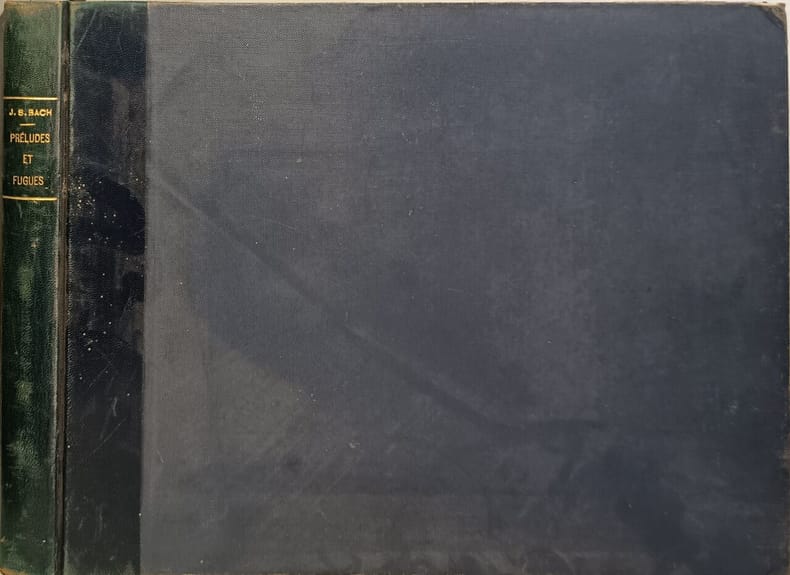
1947réf. 7960Durand & Fils 1947 65 pages in4 oblong. 1947. reliure editeur demi basane. 65 pages.
réf. 26604Antwerpen, De Crans, 1950 origineel papieromslag met zwarte titelopdruk en rood vignet, flapjes, 185 x 245mm., 192 pp..
réf. 202202240, Librairie istra , 1979 ; in-8, 248 pp., br.
réf. 202004175Ingersheim, Société d'histoire et de culture, s.d. ; in-4, 40 pp., broché, couverture illustr. N° special.
réf. 201903752Toulouse, Le peregrinateur editeur, 1995 ; petit in-4, 144 pp., br. Broché bon état.
réf. 201600330Strasbourg, Id editions, 2001 ; in-8, br.
réf. 201600329Strasbourg, Id editions, 2001 ; in-8, br.
réf. 201600328Strasbourg, Id editions, 2001 ; in-8, br.
réf. 201600327Strasbourg, Id editions, 2001 ; in-8, br.
réf. 201600326Strasbourg, Id editions, 2001 ; in-8, br.
réf. 201600325Strasbourg, Id editions, 2001 ; in-8, br.
réf. 201600324Strasbourg, Id editions, 2001 ; in-8, br.
réf. 201600323Strasbourg, Id editions, 2001 ; in-8, br.