Hans LuthBiblio.com

362 résultats
2015réf. Atlantic-9783319307541Springer 2015. Paperback. New. Springer paperback
2015réf. Atlantic-9783319307541Springer 2015. Paperback. New. Springer paperback
2015réf. x-1614995311IOS Press 2015. Hardcover. New. 264 pages. 9.75x6.75x1.00 inches. IOS Press hardcover
réf. 30945429-nnew. unknown
réf. 30945429like new. unknown
1977réf. ZZ4862George Olms Verlag 1977. Reprint slightly reduced of the Oxford edition of Laud's Complete Works from 1847-1860. 7 volume set in 5 books. No foxing to page edges. Some light marks to cloth but otherwise in fine condition. Robust packaging. Tracking is always added to USA orders. It can be added to other overseas orders on request. Used books are exempt from USA tariffs. No ownership marks. Binding sound text unmarked. No ownership marks. Binding sound text unmarked. Near Fine. About 700pp per volume. George Olms Verlag Hardcover
réf. BN356546Lüth E. Bad Segeberg - Ein Kleinod Schleswig-Holsteins Bad Segeberg - Ein Kleinod Schleswig-Holsteins Else Lüth Lüth, E unknown
1888réf. 005101Brookline Mass: Safety Cannon Company 1888. 1st Edition. Print. Very Good/As New. Double Elephant - over 25 - 50" tall. ca. 1888. 1st edition. A Very Good broadside. The broadside measures 21.5" x 28"; matted in a mid-20th century wood frame 37" x 33" with glaze. Quarter size hole in the upper decorative border; minor creases and age-toning. Very Good in frame. With 8 lines of text this Point of Sale poster/broadside declares "For Sale Here" at the bottom. It has two large engravings at the top showing how the cannon is loaded and fired with fire-crackers. Just below the name Home-Guard Safety Cannon it states " This Newly Patented Fire-arm uses Fire-Crackers for Cartridges." The company's founder John J. Laud patented the invention in the US in 1887 and in Canada in 1888 so the date of the broadside must be close to this date. Also when his son-in-law took over the company the cannon's wheels changed from 6 spokes to 10 as well as a drop in quality of casting to increase profits. The 6 spokes of the wheels are clearly seen in the illustrations. Not examined out of frame . Safety Cannon Company unknown
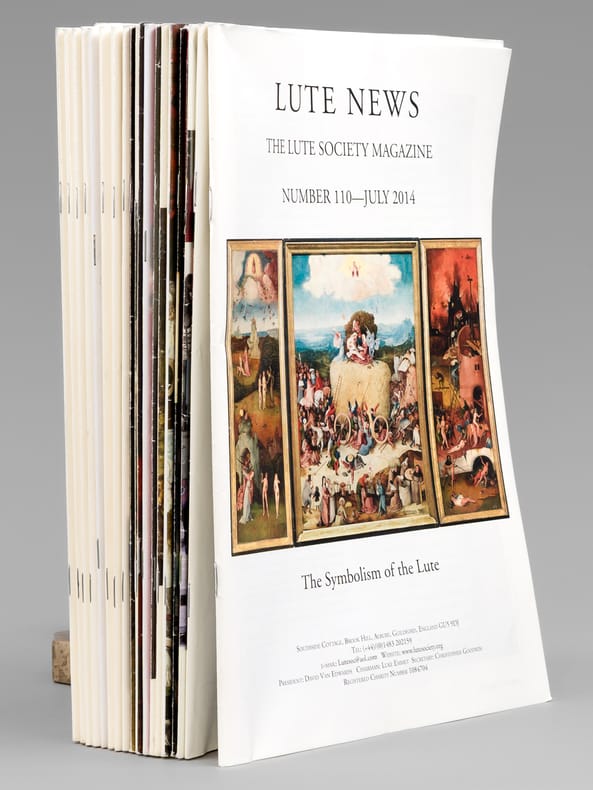
2006réf. 6956829 issues softcover, the Lute Society, Albury, Guildford, 2006, 2007, 2008, 2009, 2010, 2011, 2012, 2013 and 2014 rd. 40 pp. for each issue, i.e. rd 1,200 pp. for the whole.
1926réf. 2102927Leipzig: Ev.-Luth. Mission 1926. 116 Seiten. 8° (22 x 14,5 cm). Schlichter schwarzer Leinenband. [Hardcover / fest gebunden].
1987réf. 6736John Wiley & Sons 1987. Hardcover. Used: Acceptable. Condition clean inside dust jacket curling and scuffed outer boards some marks. The book making process has wrinkled a few pages. Wiley has come along way since this product was manufactured. Isbn 0-85226-501-8 0852265018. John Wiley & Sons hardcover
1651réf. 500042048London: R Lowndes 1651. New Edition. . Hardcover. Fair. tear & hole in title page affecting word " Late" 339pp 32mo close cropped to numbers on the pages. Rare not even certain that the BL has an early edition R Lowndes hardcover
2017réf. x-1138533882Routledge 2017. Hardcover. New. 2nd new edition. 256 pages. 9.02x5.98x0.71 inches. Routledge hardcover
2010réf. BN109394Springer 2010. 2010. Hardcover. Graduate Texts in Physics: Solid Surfaces Interfaces and Thin Films: Fifth Edition Graduate Texts in Physics: Solid Surfaces Interfaces and Thin Films: Fifth Edition Springer hardcover
réf. 502207The History of the Troubles and Tryal of the Most Reverend Father in God and Blessed Martyr 1695�is a book about�William Laud the Archbishop of Canterbury written during the late 17th century. The text itself is a detailed account of Laud's trials tribulations and eventual martyrdom. It�s important for both its historical content and its perspective on religious and political conflict in 17th-century England particularly during the English Civil War. Hardcover. English. Ri. Chiswell. 1695. 217 pp. In slightly worn full leather back board is loose. Marbled end papers with front inside taped. Pages a little discoloured and very light foxing here and there. Book No: 502207 hardcover
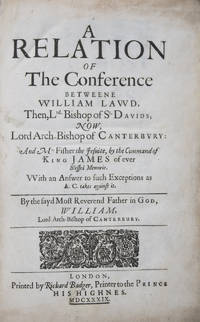
1639réf. 8544London: Richard Bager Printer to the Prince HIS HIGHNES 1639. First Edition. Full calf. Good. Contemporary calf with blind tooling raised bands replaced red leather title label 9 3/4 inches tall. Binding quite worn and scuffed yet with intact joints. Lacking the front pastedown & blanks begins at title page title page with thin loss at bottom margin. 24 388 pp. Leaf 75-66 bound out of order; almost every leaf with some words neatly underlined in brown ink; many margins with worming; a few leaves with edge tears; last leaf 387-88 lacking bottom third removing 10 lines on the recto none on the verso. ESTC S113162. "In part a reply to: A. C. True relations of sundry conferences had betweene certaine Protestant doctours and a Jesuite called M. Fisher.Variant found in large-paper and some small-paper copies: title has 'Lawd'"."On 23 April 1622 James sent for Laud asking him to use his influence with the Countess of Buckingham who was attracted towards the church of Rome by the arguments of Percy a Jesuit who went by the name of Fisher. By the king's orders there had been two conferences held in her presence between Fisher and Dr. Francis White and on 24 May 1622 a third conference was held in which Laud took the place of White. The subject then discussed was the infallibility of the church."Laud's arguments on this occasion together with their subsequent enlargement in his account of the controversy published in 1639 mark his ecclesiastical position in the line between Hooker and Chillingworth. On the one hand he acknowledged the church of Rome to be a true church on the ground that it 'received the Scriptures as a rule of faith though but as a partial and imperfect rule and both the sacraments as instrumental causes and seals of grace' Works ii. 144. He strove against the position 'that all points defined by the church are fundamental' ib. ii. 31 attempting as far as possible to limit the extent of 'soul-saving faith' ib. ii. 402. The foundations of faith were 'the Scriptures and the creeds' ib. ii. 428. When doubts arose 'about the meaning of the articles or superstructures upon them�which are doctrines about the faith not the faith itself unless when they be immediate consequences - then both in and of these a lawful and free general council determining according to Scripture is the best judge on earth' ib. Laud in short wished to narrow the scope of dogmatism and to bring opinions not necessary to salvation to the bar of public discussion by duly authorised exponents instead of to that of an authority claiming infallibility on the bibliography of the controversy see the editor's preface to the 'Relation of the Conference' Works vol. ii."Though Laud's arguments failed permanently to impress the Countess of Buckingham they gave him great influence over her son. On 15 June as he states in his diary he 'became Confessor to my Lord of Buckingham' and was afterwards consulted by him on his religious difficulties." - DNB.The 24 p. introduction is addressed to Charles I. King James I. had died in 1625 between the time of the Conference 1622 and this publication 1639.William Laud 1573-1645 royal chaplain to James I. archbishop and religious advisor to Charles I.; he wielded immense power in the Church of England. Archbishop Laud was of a High-Church and anti-Puritan persuasion and used his power to suppress Puritanism to the best of his ability. He was loyal to the Crown and was accused of arbitrary and tyrannical acts against those whose religious views he condemned. He was fiercely resisted by the Church of Scotland. Many of the Church of England admired him for his resistance to Calvinism and Independency and for his defense of the doctrines of the Church of England. After the overthrow and execution of Charles I. Laud himself was tried and executed by the House of Commons."This venerable prelate a victim to sectarian violence and blood-thirsty ambition evinced in his last moments the animating power of that religion which he had preached and professed. No murmurs or lamentations escaped him: in prayers and supplications he bowed himself before heaven; though he was long prepared for that blow which was neither sudden or unexpected. Thus died as he had lived in the true spirit of genuine piety this zealous servant of the most high God a martyr to the cause of truth being persecuted even unto the death by the blood-thirsty and remorseless Calvinists of that gloomy period." - J. W. Hatherell in the Memoir prefacing the reprint of Laud's Sermons 1829 p. xiii. Richard Bager, Printer to the Prince HIS HIGHNES unknown
1769réf. 11378Paris Hugard de St Guy 1769 en ff. in-4, titre, (24pp.)
1930réf. 129121930 4 pp. in-4. (la dernière blanche) Buenos Aires Ortelli (1930 ?)
1639réf. 43326London: Printed by Richard Badger 1639. First edition. Hardcover. fair to vg. Quarto 11 x 7 1/2". 24 388pp. Contemporary full calf with gold lettering to spine. Raised bands. Title vignette. Decorative headpieces and initials. Scarce first edition of this account of the third conference between Father Perry Fisher a Jesuit and bishop William Laud on May 24 1622 before the lord marquess Buckingham and the countess his mother. The conference was a direct result of the Laud-"Fisher" Father Percy controversies on the Infallibility of the Church. Laud was prompted by his desire to escape from the restrictions of Calvinistic dogmatism to take up a wider and nobler position. In what he himself believed he was as arbitrary as any Calvinist; but the only way out of Calvinistic influence was by adopting a position of greater width. He argued that not all points defined by the Church are fundamental; limited as far as possible the domain and extent of soul-saving faith; and urged that the foundations of the faith are the Scriptures and the Creeds. In case of any doubt about the meaning of the Articles or superstructures upon them - "which are doctrines about the faith not the faith itself unless when they be immediate consequences" - then both in and of these a lawful and free General Council determining according to Scripture is the best judge on earth. Binding darkened and rubbed along edges. Rebacked but retaining most of the original spine. Closed tears along joints. Previous owners' names at upper margin of front free endpaper. Pages somewhat rippled throughout. Slight age-toning along paper margin. Contemporary marginalia at lower margin of page 308 not affecting lettering. Binding in overall fair interior in good to very good condition. About the author: William Laud 1573-1645 was educated at the borough school of Reading and St John's College Oxford where he matriculated 17 October 1589 Fellow 1593 B.A. 1594 M.A. 1598 and D.D. in 1608. He was ordained deacon in 1601 and priest later on that same year. He rose rapidly in the Church becoming Dean of Gloucester in 1616 and Bishop of St David's in 1621. Under Charles I he became very powerful and was translated to the see of London in 1621 and to the Primacy in 1633. In 1641 he was impeached for high treason tried in 1644 and executed the following year. He bequeathed to the Bodleian Library all his Greek manuscripts not otherwise disposed of all his oriental manuscripts and all such Hebrew printed books as were not already in the library. His whole library numbering some 8000 volumes was delivered to the Bodleian Library by his executors in 1659. Printed by Richard Badger hardcover
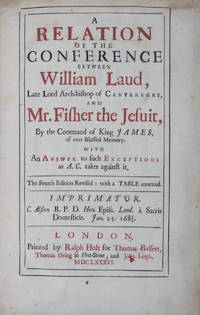
1686réf. 42636London: Printed by Ralph Holt for Thomas Bassett Thomas Dring and John Leigh 1686. Fourth edition Revised: With a Table annexed. Hardcover. g- to vg. Large quarto 11 3/4 x 8". 14pp The Epistle Dedicatory 253 1pp Text 12pp Table of Contents. Blind-stamped contemporary calf rebacked but retaining the original covers with gold lettering and blind-stamped tooling to spine. Raised bands. Modern endpapers. Title page in red and black lettering. Originally published in 1639 under the title "A Relation of the Conference between William Laud and Mr Fisher by command of King James" this work is a first-hand account of the third conference between Father Perry Fisher a Jesuit and bishop William Laud on May 24 1622 before the lord marquess Buckingham and the countess his mother. The conference was a direct result of the Laud-"Fisher" Father Percy controversies on the Infallibility of the Church. Laud was induced by his desire to escape from the trammels of Calvinistic dogmatism to take up a wider and nobler position. In what he himself believed he was as arbitrary as any Calvinist; but the only way out of Calvinistic influence was by adopting a position of greater width. He argued that not all points defined by the Church are fundamental; limited as far as possible the domain and extent of soul-saving faith; and urged that the foundations of the faith are the Scriptures and the Creeds. In case of any doubt about the meaning of the Articles or superstructures upon them - "which are doctrines about the faith not the faith itself unless when they be immediate consequences" - then both in and of these a lawful and free General Council determining according to Scripture is the best judge on earth. Covers partly darkened and rubbed along edges. Closed tear to lower front joint. Previous owner's name in ink on inside of front free endpaper. Minor water-staining along upper margin of the last two leaves of the Epistle Dedicatory not affecting lettering. Minor and sporadic offsetting / foxing throughout. Binding in overall good- interior in good to very good condition. Printed by Ralph Holt for Thomas Bassett, Thomas Dring, and John Leigh hardcover
1686réf. 42636London: Printed by Ralph Holt for Thomas Bassett Thomas Dring and John Leigh 1686. Fourth edition Revised: With a Table annexed. Hardcover. g- to vg. Large quarto 11 3/4 x 8". 14pp The Epistle Dedicatory 253 1pp Text 12pp Table of Contents. Blind-stamped contemporary calf rebacked but retaining the original covers with gold lettering and blind-stamped tooling to spine. Raised bands. Modern endpapers. Title page in red and black lettering. Originally published in 1639 under the title "A Relation of the Conference between William Laud and Mr Fisher by command of King James" this work is a first-hand account of the third conference between Father Perry Fisher a Jesuit and bishop William Laud on May 24 1622 before the lord marquess Buckingham and the countess his mother. The conference was a direct result of the Laud-"Fisher" Father Percy controversies on the Infallibility of the Church. Laud was induced by his desire to escape from the trammels of Calvinistic dogmatism to take up a wider and nobler position. In what he himself believed he was as arbitrary as any Calvinist; but the only way out of Calvinistic influence was by adopting a position of greater width. He argued that not all points defined by the Church are fundamental; limited as far as possible the domain and extent of soul-saving faith; and urged that the foundations of the faith are the Scriptures and the Creeds. In case of any doubt about the meaning of the Articles or superstructures upon them - "which are doctrines about the faith not the faith itself unless when they be immediate consequences" - then both in and of these a lawful and free General Council determining according to Scripture is the best judge on earth. Covers partly darkened and rubbed along edges. Closed tear to lower front joint. Previous owner's name in ink on inside of front free endpaper. Minor water-staining along upper margin of the last two leaves of the Epistle Dedicatory not affecting lettering. Minor and sporadic offsetting / foxing throughout. Binding in overall good- interior in good to very good condition. Printed by Ralph Holt for Thomas Bassett, Thomas Dring, and John Leigh hardcover books
1639réf. 43326London: Printed by Richard Badger 1639. First edition. Hardcover. fair to vg. Quarto 11 x 7 1/2". 24 388pp. Contemporary full calf with gold lettering to spine. Raised bands. Title vignette. Decorative headpieces and initials. Scarce first edition of this account of the third conference between Father Perry Fisher a Jesuit and bishop William Laud on May 24 1622 before the lord marquess Buckingham and the countess his mother. The conference was a direct result of the Laud-"Fisher" Father Percy controversies on the Infallibility of the Church. Laud was prompted by his desire to escape from the restrictions of Calvinistic dogmatism to take up a wider and nobler position. In what he himself believed he was as arbitrary as any Calvinist; but the only way out of Calvinistic influence was by adopting a position of greater width. He argued that not all points defined by the Church are fundamental; limited as far as possible the domain and extent of soul-saving faith; and urged that the foundations of the faith are the Scriptures and the Creeds. In case of any doubt about the meaning of the Articles or superstructures upon them - "which are doctrines about the faith not the faith itself unless when they be immediate consequences" - then both in and of these a lawful and free General Council determining according to Scripture is the best judge on earth. Binding darkened and rubbed along edges. Rebacked but retaining most of the original spine. Closed tears along joints. Previous owners' names at upper margin of front free endpaper. Pages somewhat rippled throughout. Slight age-toning along paper margin. Contemporary marginalia at lower margin of page 308 not affecting lettering. Binding in overall fair interior in good to very good condition. About the author: William Laud 1573-1645 was educated at the borough school of Reading and St John's College Oxford where he matriculated 17 October 1589 Fellow 1593 B.A. 1594 M.A. 1598 and D.D. in 1608. He was ordained deacon in 1601 and priest later on that same year. He rose rapidly in the Church becoming Dean of Gloucester in 1616 and Bishop of St David's in 1621. Under Charles I he became very powerful and was translated to the see of London in 1621 and to the Primacy in 1633. In 1641 he was impeached for high treason tried in 1644 and executed the following year. He bequeathed to the Bodleian Library all his Greek manuscripts not otherwise disposed of all his oriental manuscripts and all such Hebrew printed books as were not already in the library. His whole library numbering some 8000 volumes was delivered to the Bodleian Library by his executors in 1659. Printed by Richard Badger hardcover books
1977réf. 64029Hildesheim: Georg Olms 1977. 7 vols in 5. Anglistica & Americana reprints no.168. Some very minor small marks to boards very light foxing to closed edges otherwise fine. Small handwritten number to corners of front endpapers otherwise an excellent set. Cloth. Near Fine/No Jacket. 8vo. Georg Olms Hardcover
1695réf. 075397London: Ri. Chiswell. folio 22 616 2. contemporary brown calf blind ruled rebacked with contrasting title label to spine raised bands and blind-embossed compartments gilt new corners and end papers ownership signature to front end-paper ca 1909 and recent binder's label to front end-paper two bookplates to front paste-down one contemporary heraldic boards rubbed. title page printed in red and black with frontispiece portrait. With original publisher adverts at end ie 2pp. Overall a good clean copy with generous margins ESTC R354 pictures available on request . Good. Hardcover. 1st Edition. 1695. Ri. Chiswell hardcover
1695réf. 20578London:: Ri. Chiswell 1695. First edition. Folio. 2 A2 a-c2 B-4I4 4K2. Contemporary calf blind ruled Cambridge style with floral ends on covers rebacked with title label to spine in gilt. Edges rubbed. Small contemporary previous owners signature at top corner of half-title and title. Title page in red and black print. Several other separate title pages throughout. B2 M4 Aa2 with very small hole to outside margins no affect. C4 tiny clean tear lower margin no affect. With original publisher adds at end. Overall a very nice clean copy with large margins. An excellent copy priced to go. Engraved frontispiece portrait of Laud. William Laud 1573-1645 archbishop of Canterbury; entered St. John's College Oxford 1589; fellow 1593; M.A. 1598; ordained 1601; B.D. 1604; D.D. 1608; president of St. John's College Oxford 1611; archdeacon of Huntingdon 1615; dean of Glouscester 1616; bishop of St. David's 1621-6; became predominant in the Church of England at Charles I acession 1625; supported the king in his struggle with the Commons; dean of the Chapel Royale 1626; bishop of Bath and Wells 1626-8; privy councillor 1627; bishop of London 1628-33; chancellor of the University of Oxford; 1629; archbishop of Canterbury 1633; adopted policy of compelling compulsory uniformity of action on the part of church men; interfered disasterously with the Scottish church; impeached of high treason by the Long parliament 1640; committed to the Tower 1641; tried 1644; condemned and beheaded 1645. In his ecclesiastical policy he failed to allow for the diversity of the elements which made up the national church. His sermons were first published in 1651 and his collected works appeared between 1695 and 1700. Wing L586. ESTC R354. Ri. Chiswell, unknown