Camille Saint-SaensBiblio.com

581 résultats
réf. 1391373073.Gpaperback. Good. Access codes and supplements are not guaranteed with used items. May be an ex-library book. paperback
réf. 1396642250.Ghardcover. Good. Access codes and supplements are not guaranteed with used items. May be an ex-library book. hardcover
réf. 0267680783.Ghardcover. Good. Access codes and supplements are not guaranteed with used items. May be an ex-library book. hardcover
réf. 0282341668.Gpaperback. Good. Access codes and supplements are not guaranteed with used items. May be an ex-library book. paperback
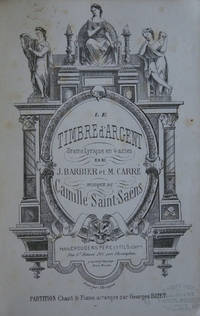
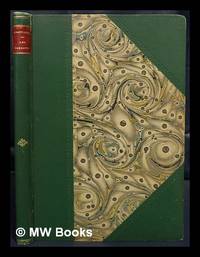
1877réf. 26236Paris: Choudens Père et Fils PN A.C. 3558. 1877. Large octavo. Quarter contemporary green calf with textured green paper boards rules and titling gilt to spine. 1f. title within decorative borders engraved by J. Bourgeois 1f. dedication to Albert Libon by the composer 1 named cast list for the first performance and table of contents 2-304 pp. Text in French. With vendor's handstamp to lower margin of title and printer's note to the lower margin of table of contents "Paris Imp. Fouquet. Baudon Gr.". Binding slightly worn rubbed and bumped. Slightly browned; occasional light stainiing; many leaves with light to moderate foxing or mold especially to margins. First Edition of the first version. Ratner II p. 73. Le Timbre d'argent to a libretto by Jules Barbier and Michel Carré was first performed at the Théâtre Lyrique in Paris on February 23 1877. "Composed in 1864-5 for the Théâtre Lyrique Paris the opera was kept from the stage first by the theatre's bankruptcy then by the Franco-Prussian War and was not played until 1877. In the meantime Saint-Saëns had recomposed the dialogue to form a grand opera version which was not played until 1913. The music is enormously fluent and versatile . There are some bold scenic ideas including a theatre seen from the back of the stage and some fanciful transformations. It seems no coincidence that the opera's 18 performances in 1877 exactly coincided with Offenbach's first concentrated labours on Les contes d'Hoffmann." Hugh Macdonald in Grove Music Online. Choudens Père et Fils [PN A.C. 3558.] unknown
réf. RO50044578CHOUDENS PERE ET FILS. NON DATE. In-Folio. Broché. Etat d'usage, Tâchée, Dos satisfaisant, Rousseurs. 3 pages de partitions. Premier plat illustré en noir et blanc par L.D. Déchirures aux extrémités des pages.. . . . Classification Dewey : 780.26-Partitions
1877réf. 26236Paris: Choudens Père et Fils PN A.C. 3558. 1877. Large octavo. Quarter contemporary green calf with textured green paper boards rules and titling gilt to spine. 1f. title within decorative borders engraved by J. Bourgeois 1f. dedication to Albert Libon by the composer 1 named cast list for the first performance and table of contents 2-304 pp. Text in French. With vendor's handstamp to lower margin of title and printer's note to the lower margin of table of contents "Paris Imp. Fouquet. Baudon Gr.". Binding slightly worn rubbed and bumped. Slightly browned; occasional light stainiing; many leaves with light to moderate foxing or mold especially to margins. First Edition of the first version. Ratner II p. 73. Le Timbre d'argent to a libretto by Jules Barbier and Michel Carré was first performed at the Théâtre Lyrique in Paris on February 23 1877. "Composed in 1864-5 for the Théâtre Lyrique Paris the opera was kept from the stage first by the theatre's bankruptcy then by the Franco-Prussian War and was not played until 1877. In the meantime Saint-Saëns had recomposed the dialogue to form a grand opera version which was not played until 1913. The music is enormously fluent and versatile . There are some bold scenic ideas including a theatre seen from the back of the stage and some fanciful transformations. It seems no coincidence that the opera's 18 performances in 1877 exactly coincided with Offenbach's first concentrated labours on Les contes d'Hoffmann." Hugh Macdonald in Grove Music Online. Choudens Père et Fils [PN A.C. 3558.] unknown books
réf. 101922939X.Ghardcover. Good. Access codes and supplements are not guaranteed with used items. May be an ex-library book. hardcover
réf. 1396227105.Ghardcover. Good. Access codes and supplements are not guaranteed with used items. May be an ex-library book. hardcover
1901réf. 477970Paris : A. Durand et fils 1901. First Edition. Hardcover. Very good copy in contemporary cloth over marble boards. Marbled end-paper. Slight suggestion only of dust-dulling to the spine bands and panel edges. Previous owner's signature. Remains particularly well-preserved overall; tight bright clean and strong. Physical description: 1 vocal score iv 291 p. : ill. ; 29 cm. Subject: Operas ; Vocal scores with piano. Paris : A. Durand et fils hardcover
1901réf. 26245Paris: A. Durand PN D. & F. 5927 1901. Large octavo. Quarter contemporary red calf with flexible textured red cloth boards rules and titling gilt to spine marbled endpapers. 1f. frontispiece illustration of the final scene of the opera by Berthaud after G. Rochegrosse i title i printer's statement 1f. named cast list for the first performance 1f. table of contents 1f. illustration of the Théatre Antique d'Orange by Bertraud iv summary of the opera 291 i blank pp. Text in French. Printer's notes to lower margins of cast list and final page. Binding slightly worn rubbed and bumped; tail of spine lacking; upper board partially detached; joints split. Slightly browned; some corners slightly creased; occasional light soiling and staining to blank margins not affecting music. First Edition. Ratner II p. 254. The première of Les Barbares at the Opéra in Paris on 23 October 1901 was a great success. "Live oxen were brought on stage in an ensemble and gave the management many problems of housing and feeding during performances." Debussy famously criticized the opera as being a vehicle unworthy of the composer's talents. Brian Rees in Camille Saint-Saëns: A Life p. 348. A. Durand [PN D. & F. 5927] unknown
1901réf. RO50058784CALMANN LEVY. 1901. In-12. Broché. Etat d'usage, Tâchée, Dos abîmé, Quelques rousseurs. 39 pages.. . . . Classification Dewey : 780-Musique
1901réf. 26245Paris: A. Durand PN D. & F. 5927 1901. Large octavo. Quarter contemporary red calf with flexible textured red cloth boards rules and titling gilt to spine marbled endpapers. 1f. frontispiece illustration of the final scene of the opera by Berthaud after G. Rochegrosse i title i printer's statement 1f. named cast list for the first performance 1f. table of contents 1f. illustration of the Théatre Antique d'Orange by Bertraud iv summary of the opera 291 i blank pp. Text in French. Printer's notes to lower margins of cast list and final page. Binding slightly worn rubbed and bumped; tail of spine lacking; upper board partially detached; joints split. Slightly browned; some corners slightly creased; occasional light soiling and staining to blank margins not affecting music. First Edition. Ratner II p. 254. The première of Les Barbares at the Opéra in Paris on 23 October 1901 was a great success. "Live oxen were brought on stage in an ensemble and gave the management many problems of housing and feeding during performances." Debussy famously criticized the opera as being a vehicle unworthy of the composer's talents. Brian Rees in Camille Saint-Saëns: A Life p. 348. A. Durand [PN D. & F. 5927] unknown books
1901réf. RO50023317"Imprimerie des Annales. 27 octobre 1901. In-4. En feuillets. Bon état, Couv. légèrement passée, Dos satisfaisant, Intérieur frais. Non paginé. 4 pages environ. Photos et gravures noires et blanches ayant pour thèmes ""A l'opéra : les Barbares"", ""Une solennité scientifiques : les fêtes du professeur virchow, à Berlin"", ""En Alsace : scènes de la vieille Alsace"".. . . . Classification Dewey : 780.26-Partitions"
1980réf. 1242551980 Coédition l'Avant-Scène /Les Introuvables - 1980 - In-4, broché sur vergé ivoire - Fac-similé de l'édition originale de la première livraison de "Les Beautés de l'Opéra", collection dirigée par Monsion giraldon et édité par Soulié, Paris, le 15 mai 1844 - Nombreuses gravures en N&B in texte - Un des 2500 exemplaires tirés sur vergé ivoire 130 g des Papeteries Maunoury. N° 01197/2500
1900réf. RO50026577A. Durand & Fils. 1900. In-4. En feuillets. Bon état, Tâchée, Dos satisfaisant, Quelques rousseurs. 9 pages.. . . . Classification Dewey : 780.26-Partitions
réf. RO50004715A. Durand & Fils. début XXème. In-4. En feuillets. Bon état, Tâchée, Dos satisfaisant, Mouillures. 7 pages. Illustré d'une gravure noire et blanche de P. Borie en couverture.. . . . Classification Dewey : 780.26-Partitions
1923réf. AUB-3852Paris, librairie Ollendorf 1923. Bel exemplaire broché, couverture ornée d'éd., in-8 non coupé, 480 pages.
réf. 33070Paris: Pierre Lafitte. No year ca. 1900. Orig. green cloth gilt. All edges gilt. With dustjacket. 350 pp.: illustrations; 38x28 cm. Text in French. d.j. sl. worn In very good condition. See picture. ¶ 'Ont collabore a cet ouvrage: Marcel Adam A. Boschot Raoul Brévannes Alfred Bruneau Gustave Bret Robert Brussel M.D. Calvocoressi Édouard Colonne Henri de Curzon Paul-Louis Garnier A.M. Gédalge Félicien Grétry Ad. Jullien Pierre Lalo Wanda Landowska Maurice Lefèvre De Nuovina Georges Pioch André Pirro J.G. Prod'homme Camille Saint-Saens Louis Schneider Albert Schweizer Julien Tiersot Félix Weingartner. Pierre Lafitte hardcover
1900réf. M82718Paris, Pierre Lafitte s.d. [+/-1900] 349pp.richement illustré, 37cm., reliure toile verte d'éditeur avec titre et décorations dorées aux plats et au dos (charnière inférieure peu abimé en bas), tranches dorées, bon état, [traite e.a. sur Palestrina, Lulli, J.-S.Bach, Haendel, Rameau, Haydn, Gluck, Mozart, Beethoven, Grétry, Méhul, Boiledieu, Schubert, Spontini, Weber, Herold, etc.], M82718
1911réf. ABE-1659885812712 PAGES 24,5 CM X 31 CM-EN COUVERTURE DESSIN DE RAIETER "-LAISSEZ VENIR A NOUS LES PETITS ENFANTS."-L'AFFAIRE DES PROXENETES, 3P PAR VICTOR MERIC-PAUL LAFARGUE, 1P, PHOTO-MUSIQUE PAR JULIEN TORCHET "DEJANIRE" DE CAMILLE SAINT-SAENS-TRACES DE RELIURE EN MARGE GAUCHE
réf. 1016850883.Ghardcover. Good. Access codes and supplements are not guaranteed with used items. May be an ex-library book. hardcover
1953réf. RES34L342Genève Les amis du livre progressiste 1953 In8 - demi basane à coins - frottements a un mors et aux coiffes - Envoi autographe signé de Gamarra en page de garde
1953réf. RES34L342Genève Les amis du livre progressiste 1953 In8 - demi basane à coins - frottements a un mors et aux coiffes - Envoi autographe signé de Gamarra en page de garde
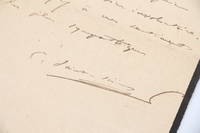
1901réf. 86408s. l. 1901. Fine. I never stopped saying those who denigrate Mozart do not understand music s. l. 6 Février 1901 11.50 x 17.50 cm quatre pages sur un feuillet et une enveloppe Autograph letter signed by Camille Saint-Saëns to the essayist musicologist and music critic Adolphe Boschot. 43 lines written in black ink on a double leaf edged in black. Transverse fold inherent to the mailing with slight tears to the ends envelope enclosed in Saint-Saëns's hand to Boschot's address at 71 rue de Grenelle. Note in pencil from a previous bibliographer on the back of the envelope. Saint-Saëns wrote this wonderful demonstration of reverence for the Salzburg composer in 1901. That same year his friend Boschot the recipient of this letter was playing Mozart's chamber music at his home at 71 rue de Grenelle. The composer apologized for his absence: ""It's not my fault that in spite of my objurgations the earth refuses to stop in its course around the sun; for the 65th time I am witnessing this gyratory movement and the public performance of pieces of music on the piano is no longer my prerogative. Besides your sessions finish before the end of March and I won't be back until April 1st so I won't even be able to attend"". In his youth it was precisely as an interpreter of the divine artist that the prodigy Saint-Saëns had earned the nickname ""little Mozart"". In the letter he congratulates Boschot the author of a study entitled ""La Lumière de Mozart"" for his defense of the composer whom he himself had supported against the advice of the majority: ""Believe me I regret it and I'll be very happy to see that someone is taking care of getting the public to follow Mozart's path again. Thirty years ago the advanced party wanted to declare war on him so I defended him and never stopped saying those who denigrate Mozart don not understand music. Allow me to recommend his little-known motets with orchestra including the famous Ave Verum."" He ends the letter with a fine analysis of the composer's style: May we learn from listening to Mozart that there is more to music than sensations and nervous vibrations and that delicate artistry and purity of form are things not to be scorned. An exceptional expression of admiration and respect from one musical genius to another. unknown