546 résultats
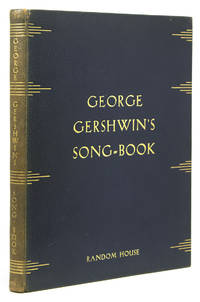
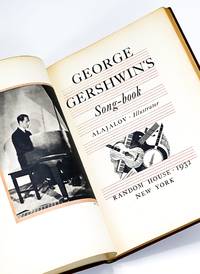
1932réf. 55367New York: Random House 1932. Near fine. Signed limited first edition - in a lovely modern Art Deco binding - from this "quintessentially American composer" whose music helped establish "the groundwork for the Great American Songbook" Cambridge Companion to Gershwin. SONG-BOOK presents piano music transcriptions of many of Gershwin's most beloved songs with colorful Art-Deco illustrations by Alajalov. Tunes include: "'S Wonderful" "Strike Up The Band" "Swanee" "The Man I Love" "Nobody But You" "Fascinating Rhythm" and "Oh Lady Be Good" among others. Published just one year after Gershwin was awarded the Pulitzer Prize in Music for his musical OF THEE I SING a striking edition capturing one of the US's finest songwriters at the height of his powers and popularity. 12.5'' x 9''. Modern auburn full crushed morocco rebound to match style of original deluxe binding. Top edge gilt. Grey cloth endpapers. Photographic frontispiece of Gershwin at the piano by Maurice Goldberg. 4 xii 168 6 pages. "Mischa Yasha Toscha Sascha" booklet present in pocket at rear. With an introduction by Gershwin and a foreword on Alajalov by Samuel M. Kootz. One of 300 numbered copies signed by Gershwin and Alajalov on the colophon this #233. Minor rubbing at extremities spine mildly sun darkened. Presents beautifully. Random House unknown books
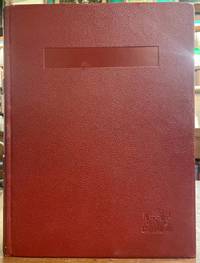
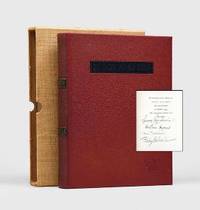
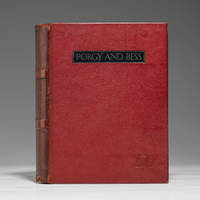
1935réf. 98943New York: Random House 1935. Deluxe limited edition of Porgy and Bess number 55 of only 250 copies signed by George Gershwin Ira Gershwin DuBose Heyward and director Rouben Mamoulian. Folio original full red morocco raised bands top edge gilt illustrated. In near fine condition. An exceptional example. Gershwin read Porgy in 1926 and proposed that he should collaborate with Heyward on Porgy and Bess. In 1934 Gershwin and Heyward began work on the project by visiting the author's native Charleston. Gershwin explained why he called Porgy and Bess a folk opera in a 1935 New York Times article: "Porgy and Bess is a folk tale. Its people naturally would sing folk music. When I first began work in the music I decided against the use of original folk material because I wanted the music to be all of one piece. Therefore I wrote my own spirituals and folksongs. But they are still folk music – and therefore being in operatic form Porgy and Bess becomes a folk opera." Today Porgy and Bess is widely considered to be Gershwin’s masterpiece. This deluxe edition of the piano-vocal score according to Fuld no orchestral score has ever been published was published in 1935 the year of Porgy and Bess premiere almost simultaneously with the first edition and is boldly signed on the limitation page at the rear by George and Ira Gershwin and the other principal creators of Porgy and Bess: librettist DuBose Heyward and director Rouben Mamoulian Fuld 539. Random House hardcover
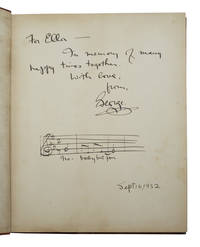
1932réf. 69154New York: Simon and Schuster 1932. GERSHWIN George; ALAJALOV. composer. ALAJALOV illustrator. George Gershwin's Song-Book. Alajalov Illustrator. New York: Simon and Schuster 1932. Full Description: GERSHWIN George composer. ALAJALOV illustrator. George Gershwin's Song-Book. Alajalov Illustrator. New York: Simon and Schuster 1932. First trade edition first printing. With a full page signed inscription and musical quotation by Gershwin on the front free endpaper. Quarto 12 5/8 x 9 5/8 inches; 320 x 245 mm. xi 1 blank 167 5 blank pp. With eighteen songs of printed music each which include a full or double- page color illustrations by Alajalov. Title-page with a illustrated vignette and printed in red and black. Inscription reads "For Ella-/In memory of many/ happy times together./With love/from/George." Followed by a hand-drawn musical notation of four bars and six notes along with lyrics reading "No-body but you" and then dated "September 16 1932." The printed music of this line can be found at the top of page 14. Inscription is in black ink and takes up the full page. Full page Gershwin inscriptions are very rare. This might possibly be inscribed to Ella Fitzgerald as they were friends and Fitzgerald sung songs from Gershwins song book. Quarter rust flocked cloth over tan woven cloth boards. Front board ruled and lettered in blue. Spine lettered in blue. Some rubbing and scuffing to boards and spine. Title-page a little frayed. A bit of toning mainly to endpapers. Still a very good copy with a wonderful provenance. The "Ella" in the inscription refers to Ella W. Aarons Crouch who was a concert pianist and wife of Alexander Alfred Aarons who was a producer on most of Gershwin's Broadway productions. HBS 69154. $7500. Simon and Schuster unknown
1935réf. 321533New York: Random House 1935. Limited. hardcover. near fine. Libretto by Dubose Heyward; Lyrics by Dubose Heyward and Ira Gershwin. Frontispiece and title page decoration by George Biddle. Small folio full red leather. New York: Random House 1935. Limited First Edition. The black leather labels are missing as is often the case otherwise near fine in a good slipcase. One of 250 copies autographed by both Gershwins Heyward and Rouben Mamoulian the director. A near fine copy in the original raffia slipcase which is roughed up on the spine. Random House unknown
1932réf. 69154New York: Simon and Schuster 1932. GERSHWIN George; ALAJALOV. composer. ALAJALOV illustrator. George Gershwin's Song-Book. Alajalov Illustrator. New York: Simon and Schuster 1932. Full Description: GERSHWIN George composer. ALAJALOV illustrator. George Gershwin's Song-Book. Alajalov Illustrator. New York: Simon and Schuster 1932. First trade edition first printing. With a full page signed inscription and musical quotation by Gershwin on the front free endpaper. Quarto 12 5/8 x 9 5/8 inches; 320 x 245 mm. xi 1 blank 167 5 blank pp. With eighteen songs of printed music each which include a full or double- page color illustrations by Alajalov. Title-page with a illustrated vignette and printed in red and black. Inscription reads "For Ella-/In memory of many/ happy times together./With love/from/George." Followed by a hand-drawn musical notation of four bars and six notes along with lyrics reading "No-body but you" and then dated "September 16 1932." The printed music of this line can be found at the top of page 14. Inscription is in black ink and takes up the full page. Full page Gershwin inscriptions are very rare. This might possibly be inscribed to Ella Fitzgerald as they were friends and Fitzgerald sung songs from Gershwins song book. Quarter rust flocked cloth over tan woven cloth boards. Front board ruled and lettered in blue. Spine lettered in blue. Some rubbing and scuffing to boards and spine. Title-page a little frayed. A bit of toning mainly to endpapers. Still a very good copy with a wonderful provenance. The "Ella" in the inscription refers to Ella W. Aarons Crouch who was a concert pianist and wife of Alexander Alfred Aarons who was a producer on most of Gershwin's Broadway productions. HBS 69154. $7500. Simon and Schuster unknown books
1935réf. 321533New York: Random House 1935. Limited. hardcover. near fine. Libretto by Dubose Heyward; Lyrics by Dubose Heyward and Ira Gershwin. Frontispiece and title page decoration by George Biddle. Small folio full red leather. New York: Random House 1935. Limited First Edition. The black leather labels are missing as is often the case otherwise near fine in a good slipcase. One of 250 copies autographed by both Gershwins Heyward and Rouben Mamoulian the director. A near fine copy in the original raffia slipcase which is roughed up on the spine. Random House unknown books
1932réf. 310443New York: Random House 1932. First Edition. One of 300 copies signed by Gershwin and Alajalov. Frontispiece portrait of Gershwin at piano and numerous full-page illustrations by Alajalov. 167 3pp. 1 vols. 4to. Original full dark blue publisher's morocco decorated with "Art-Deco" style gilt stamped rules. Fine in a custom red half morocco slipcase and chemise. First Edition. One of 300 copies signed by Gershwin and Alajalov. Frontispiece portrait of Gershwin at piano and numerous full-page illustrations by Alajalov. 167 3pp. 1 vols. 4to. Containing the words and music to some of the best known American music ever written: "Lady be Good" "I Got Rhythm" "Swanee." The list goes on and on. The whole book is further enhanced by the charming Art-Deco illustrations by Alajalov. This Deluxe Edition is signed by the composer and the artist. Random House unknown
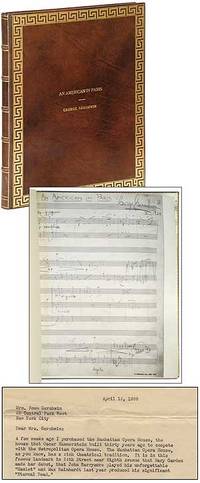
1938réf. 99122New York: Privately printed 1938. Hardcover. Fine. Facsimile of the handwritten score. Folio. Full leather ruled with a Greek key design and lettered in gilt. Blue silk endpapers all edges gilt. Fine. Laid in is a Typed Letter Signed dated 12 April 1938 from Abraham Ellis to Gershwin's mother Rose who was the unmarried composer's heir. Ellis announces in the letter that he has just purchased the Manhattan Opera House which became the Manhattan Center and that with Rose's permission he would like to rename the rebuilt auditorium the Gershwin Room. This volume was apparently a private photographic reproduction of the score that was produced for family and friends before the manuscript was eventually donated to the Library of Congress. Gershwin's mother's copy with the letter dated less than a year after the composer's untimely death. A classic of 20th Century composition and inspiration for the Vincente Minnelli film scripted by Alan Jay Lerner around Gershwin's music and starring Gene Kelly Leslie Caron and Oscar Levant. Privately printed hardcover
1938réf. 99122New York: Privately printed 1938. Hardcover. Fine. Facsimile of the handwritten score. Folio. Full leather ruled with a Greek key design and lettered in gilt. Blue silk endpapers all edges gilt. Fine. Laid in is a Typed Letter Signed dated 12 April 1938 from Abraham Ellis to Gershwin's mother Rose who was the unmarried composer's heir. Ellis announces in the letter that he has just purchased the Manhattan Opera House which became the Manhattan Center and that with Rose's permission he would like to rename the rebuilt auditorium the Gershwin Room. This volume was apparently a private photographic reproduction of the score that was produced for family and friends before the manuscript was eventually donated to the Library of Congress. Gershwin's mother's copy with the letter dated less than a year after the composer's untimely death. A classic of 20th Century composition and inspiration for the Vincente Minnelli film scripted by Alan Jay Lerner around Gershwin's music and starring Gene Kelly Leslie Caron and Oscar Levant. Privately printed hardcover books
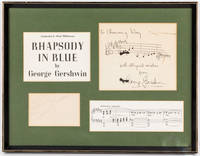
réf. 021548Framed Manuscript. Ink blot slightly affecting first notes of the manuscript as well as "G" in "George." Not examined out of the frame but appears to be Near Fine. On a 6" x 6-1/2" piece of paper Gershwin has written three measures of the lyrical theme in E major from the "Andantino moderato" section of his composition RHAPSODY IN BLUE and INSCRIBED it "To Channing Way" and SIGNED "with all good wishes/from/George Gershwin." Matted and framed to an overall size of 17" x 13" with a fragment of the printed music a printed title of the piece with "Dedicated to Paul Whiteman" at the top and a SIGNATURE with sentiment of Paul Whiteman. Commissioned by bandleader Paul Whiteman RHAPSODY IN BLUE was composed by George Gershwin for solo piano and jazz band in early 1924 and premiered in New York City on 12 February 1924 as part of a concert entitled An Experiment in Modern Music. It was originally performed by Gershwin on the piano and by members of Paul Whiteman's band. The combination of elements of classical music with jazz effects was revolutionary for its time. unknown books
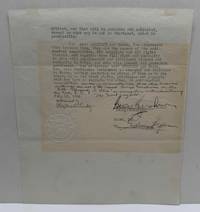
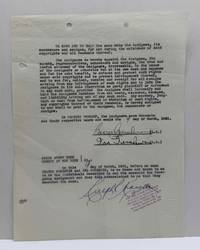
1936réf. 020629New York NY: Harms Inc. 1936. Autograph. Very good condition. Unbound. Signed by Authors. First Edition. Quarto 4to. The final page of a typed contract between the composer and Harms Inc. the music publisher dated July 16 1936. The document signed by George Gershwin is in regards to the use of "Rhapsody in Blue" in "The Great Ziegfeld" soundtrack. The agreement states "under no circumstances does this license authorize the use of the name George Gershwin or the title 'Rhapsody in Blue' in connection with advertising 'The Great Ziegfeld'". The classical-jazz masterpiece "Rhapsody in Blue" is briefly interpolated during the movie's famously extravagant "A Pretty Girl Is Like a Melody" production number. While the main theme of that sequence was composed by Irving Berlin the medley also weaves in short excerpts of other famous musical works including Leoncavallo's Pagliacci. CONDITION: The page has light creases in two places where it was folded and has minor browning that affects most of the text but not the entire page. Harms, Inc. Paperback
réf. 021548Framed Manuscript. Ink blot slightly affecting first notes of the manuscript as well as "G" in "George." Not examined out of the frame but appears to be Near Fine. On a 6" x 6-1/2" piece of paper Gershwin has written three measures of the lyrical theme in E major from the "Andantino moderato" section of his composition RHAPSODY IN BLUE and INSCRIBED it "To Channing Way" and SIGNED "with all good wishes/from/George Gershwin." Matted and framed to an overall size of 17" x 13" with a fragment of the printed music a printed title of the piece with "Dedicated to Paul Whiteman" at the top and a SIGNATURE with sentiment of Paul Whiteman. Commissioned by bandleader Paul Whiteman RHAPSODY IN BLUE was composed by George Gershwin for solo piano and jazz band in early 1924 and premiered in New York City on 12 February 1924 as part of a concert entitled An Experiment in Modern Music. It was originally performed by Gershwin on the piano and by members of Paul Whiteman's band. The combination of elements of classical music with jazz effects was revolutionary for its time. unknown
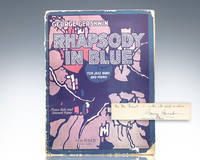
1925réf. 145285New York: Harms Incorporated 1925. Rare 1925 printing of the piano score for the orchestral composition that defined the jazz age first published in 1924. Small folio original illustrated wrappers piano solo and second piano in score. Presentation copy inscribed by George Gershwin on the title page "For Mr. Fuerst - with all best wishes George Gershwin." The recipient Eugene Fuerst was conductor and director of the Portland Civic Opera Association and the Theater Arts Opera Association. In very good condition with some loss and creasing to the cover and slight toning to the title page. A beautiful signature from Gershwin. "Rhapsody in Blue" first premiered at Aeolian Hall in New York City on February 12 1924 to blazing reception. The rhapsody is one of Gershwin's most recognizable creations ushering in a new age in Jazz history. By 1927 bandleader Paul Whiteman's band performed 'Rhapsody in Blue' approximately 84 times and sold a million copies of its recordings. Harms Incorporated unknown
1935réf. 190205New York: Random House 1935. Gershwin's masterpiece - signed by George and Ira First edition signed limited issue number 229 of 250 copies bound in publisher's full red morocco and signed by George and Ira Gershwin DuBose Heyward and Rouben Mamoulian this copy in exceptional condition the vulnerable spine labels present in entirely unrestored condition. In summer 1926 and in one sitting George Gershwin read DuBose Heyward's 1925 novel Porgy about the Gullah community in South Carolina. "The potential of this book to become the basis of a powerful opera his opera jumped out at him. In the morning he wrote to Heyward saying they ought to get together to discuss the idea" Rimler p. 21. Heyward's wife thwarted the immediate plan to adapt it into an opera by adapting the novel as a stage play Porgy and Bess which opened in 1927. On 3 November 1933 however it was agreed that Gershwin would write the score Heyward the libretto and that Heyward and Ira would collaborate on the lyrics. On its opening night 30 September 1935 Boston's Colonial Theatre gave the performance a 15-minute standing ovation and the work is now considered Gershwin's masterpiece. "Combining the dramatic structure of opera and the musical style of jazz and Tin Pan Alley the work was especially important in the development of American musical theater. Although it did not recoup its investment Porgy and Bess was an outstanding achievement that brought black singers to the Broadway stage in significant roles" ANB. Quarto 311 x 230 mm. Original red morocco spine lettered in blind with raised bands black morocco label to front board lettered in gilt with publisher's device in blind top edge gilt silken straw weave endpapers. Housed in the original raffia-covered slipcase. Colour frontispiece and pictorial title page by George Biddle. Bookseller's ticket to rear pastedown of Frank Rosengren San Antonio Texas. Spine toned small chip to second spine label slight contact discolouration to front and rear blanks from endpapers light wear to fragile raffia slipcase. A superior copy. Walter Rimler George Gershwin: An Intimate Portrait 2009. hardcover
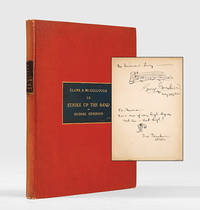
1930réf. 70729New York: New World Music Corporation 1930. First edition association copy inscribed by both George and Ira for Newman Levy with quotations from the show: "He's a man of very high degree not low - but high!". Accompanying the inscription is a sketch by Ira of a man bowing. Newman Levy was a lawyer who graduated from New York University in 1911 and served as Assistant District Attorney New York County 1916-19. A student of the Algonquin habitué Deems Taylor he wrote light verse which was published in the New Yorker and Saturday Evening Post and collected in book form. He also reviewed operas and musicals and composed skits for Broadway revues. A friend of the Gershwins he is best remembered for his swift riposte to George's musing as to whether his music would still be performed in a hundred years' time: "Yes if you're around to play it!" Heavily influenced by Gilbert and Sullivan Strike up the Band was the Gershwins' first fully integrated score for a book musical. It failed on tryout in Philadelphia in 1927 so for its Broadway run three years later Ryskind rejigged various elements of the story. The Gershwins added 12 new songs and rewrote many others both melodically and lyrically. Overall the effect was to make the show more in tune with the developing swing craze. Red Nichols led the pit orchestra at the Times Square Theater which included Benny Goodman Glenn Miller Gene Krupa Jimmy Dorsey and Jack Teagarden. Quarto. Contemporary red cloth purple label to spine and green patch label on front board top edge gilt original wrappers bound in. Housed in custom black cloth solander box. Slightly rubbed at the extremities a little soiled light toning the first few leaves with minor restoration to the margins: a very good copy. hardcover
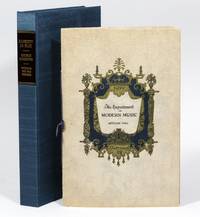
1924réf. 2957New York: Aeolian Hall 1924. First edition. Very Good. ORIGINAL PROGRAM FOR THE FIRST PERFORMANCE OF GERSHWIN'S RHAPSODY IN BLUE. About six weeks before the premiere of Rhapsody in Blue George Gershwin was shooting pool at the Ambassador Billiard Parlor on Broadway and 52nd Street when his brother Ira entered the hall carrying an early edition of the New York Tribune. Ira proceeded to read an article from the paper announcing a new experimental music concert organized by bandleader Paul Whiteman. In this concert Ira continued a piece by George Gershwin would be performed. Adrian Symphony Orchestra This was news to Gershwin who had been asked some months earlier by Whiteman to contribute a piece but had turned down the request believing the several months not enough time. And now Gershwin had only six weeks. Whiteman as it turned out had decided to include Gershwin’s name after learning his musical nemesis—Vincent Lopez—would be releasing a similar concert series. Whiteman knew Gershwin’s name would bring his concert more coverage and went ahead with the inclusion hoping to propel his concert above Lopez’s Adrian Symphony Orchestra. Understanding Whiteman’s difficult position Gershwin agreed to write the piece planning to begin work during an upcoming train ride from New York to Boston where he was headed for an out-of-town preview for a new musical of his. Gershwin later claimed that the sounds of this train hitching and roaring down the track inspired the thematic division of his score into five themes: Ritornello Train aptly named Stride Shuffle and Love. Gershwin hoped to harness the energy of modern machinery in this piece to convey the hustle and bustle of city life. Adrian Symphony Orchestra; Dotsey As Gershwin later commented on his writing process: “I set to work composing with unwonted rapidity. No set plan was in my mind – no structure to which my music would conform. The rhapsody as you see began as a purpose not a plan. I tried to conceive the composition as a whole. I heard it as a sort of musical kaleidoscope of America – of our vast melting-pot of our unduplicated national pep of our blues our metropolitan madness.” Dotsey Gershwin himself had been raised in close contact with the diverse musical traditions of the Lower East Side exposed to the competing influences of Russian Eastern European African American and popular American music. Resultantly he decided that a mixture of jazz classical in conjunction with the rhythmic and thematic implements of almost all these styles was the perfect medium for portraying the city’s kaleidoscopic bustle. Adrian Symphony Orchestra Rhapsody in Blue received mixed reviews upon its release. The New York Times noted the piece displayed “extraordinary talent” and public opinion was largely positive. Still many critics felt that Rhapsody in Blue lacked focus calling it a string of disconnected themes. Hebblethwaite Adrian Symphony Orchestra Much of this confusion stemmed from the genuinely innovative fusion at the heart of Rhapsody in Blue. As mentioned Gershwin took classical form and infused it with the varied musical influences of his youth—blues ragtime Jewish folk music and Harlem jazz. To some extent Gerswhin’s intention was to write these genres in a way which concentrated their essence within small segments of a classical concerto as a more culturally dominant format of music. Though some viewed these borrowings as derivative of their original cultural contexts Gershwin’s usages of Klezmer-like arrangements for example nonetheless represented a groundbreaking expansion of popular music enabling the usage of non-classical genres in dominant American culture. Adrian Symphony Orchestra; Dotsey Later reflecting on his work Gershwin wrote about his usage of Jazz: “There had been so much chatter about the limitations of jazz not to speak of the manifest misunderstandings of its function. Jazz they said had to be in strict time. It had to cling to dance rhythms. I resolved if possible to kill that misconception with one sturdy blow.” Dotsey Although Gershwin hoped to expand the possibilities of jazz he failed to credit the African American traditions that clearly inspired him claiming in this program that jazz “sprang into existence ten years ago from nowhere in particular.” In this way Gershwin’s Great American kaleidoscope remained incomplete. Despite being one of the most famous works of the 20th century audiences will never know exactly what the original performance sounded like. Pressed for time Gershwin improvised many of the solo parts himself. This program is one of the very few surviving records of that original performance. Although enough programs were printed for a 1100 seat hall only a few examples survive. No copies exist at auction and there are only three institutional holdings— at the New York Public Library the George and Ira Gershwin Collection at the Library of Congress and the Center for Popular Music at Middle Tennessee State University. Rhapsody in Blue is loud dramatic and undeniably iconic—but few if any living people remember the sensation and sound of its improvised premiere. Very few material records have been preserved. This program offers a rare opportunity to relive the texture of that historic moment. The show’s program provides biographies of Whiteman’s collaborators. The biography of Gershwin reads as follows: “Mr. Gershwin has written a “Rhapsody in Blue” which he has consented to play accompanied by the orchestra. He is capable of everything from “Swanee” to “A Stairway to Paradise”: from “Ingenue Baby” and “Virginia” to “Do It Again.” Delicacy even dreaminess is a quality he alone brings into Jazz music. Gershwin’s sense of variation in rhythm of shifting accents of emphasis and color is faultless. He has moreover an insatiable curiosity about everything connected with his work and for that matter with music in general. He is learning and he is not forgetting and being one of the youngest of the composers he is actually one of the brightest hopes of our popular music.” Further descriptions of Gershwin’s Rhapsody in Blue: “This is the first rhapsody written for solo instrument and modern orchestra. Prophesy being not the function of an annotator it may be said that the importance of the rhapsody quite apart from its own value must depend to an extent upon its being kept alive in a repertoire—and there is no organization to do this unless the present concert is as its conductor hopes only the beginning of a series. Gershwin is a close student of music and a listener; yet there is not a derivative phrase in his work. He has composed a rhapsody and has chosen to build it out of materials known to him: the rhythms of popular American music the harmonies produced by American jazz bands. None of the thematic material has been used before; the rhapsody is not a pastiche. The structure is simple and it resembles concertos written by pianists in what seems at first the predominance of the single instrument. Mr. Gershwin’s manuscript is complete for the piano. The orchestral treatment was developed by Mr. Grofé. The rhapsody is a free development of almost all of Gershwin’s qualities alluded to in the earlier pages of this program. It has a little more crispness a shade more of jazz and a shade less of gentleness than some of his compositions; there is more of “A Stairway to Paradise” than of “Do It Again”; and this is natural in a composition intended specifically for jazz orchestra. Those who care for jazz will naturally be grateful to Mr. Whiteman for urging Mr. Gershwin to compose this Rhapsody. He had had it in mind for some time but had no intention of going to work upon it until the announcement was made that the Rhapsody would be played at this concert. For those who remain skeptical another test-case may be provided. It is not inconceivable that an intelligent conductor of a symphony orchestra may want to play the rhapsody; it would probably need re-scoring but the saxophone which has been used ever since Meyerbeer in serious music need not be exiled.” The program also includes photos of Mr. Whiteman and his band alongside collaborators such as Gershwin and Victor Herbert. Provenance: With signature and Yale address of "Frederick Ullman" in pencil on back. Anecdotally later gifted by Ira Gershwin's wife Lenore to her vocational nurse and caretaker; appearing on the market now for the first time. New York: Aeolian Hall 1924. Concert program measuring 9.5 x 6.25 inches. 12 pages in original decorated textured grey wrappers; side-stitched with original blue cord. Housed in custom silk box. Abrasion to text at bottom of page 1 with loss of a few words. Wrappers in a remarkable state of preservation; very clean and fresh with some light rubbing to cover decoration corresponding to the textured ridges on cover. EXCEEDINGLY RARE: We find no records at auction and three institutional holdings only: at the New York Public Library the George and Ira Gershwin Collection at the Library of Congress and the Center for Popular Music at Middle Tennessee State University. Aeolian Hall unknown
1924réf. 2957New York: Aeolian Hall 1924. First edition. Very Good. ORIGINAL PROGRAM FOR THE FIRST PERFORMANCE OF GERSHWIN'S RHAPSODY IN BLUE. About six weeks before the premiere of Rhapsody in Blue George Gershwin was shooting pool at the Ambassador Billiard Parlor on Broadway and 52nd Street when his brother Ira entered the hall carrying an early edition of the New York Tribune. Ira proceeded to read an article from the paper announcing a new experimental music concert organized by bandleader Paul Whiteman. In this concert Ira continued a piece by George Gershwin would be performed. Adrian Symphony Orchestra This was news to Gershwin who had been asked some months earlier by Whiteman to contribute a piece but had turned down the request believing the several months not enough time. And now Gershwin had only six weeks. Whiteman as it turned out had decided to include Gershwin’s name after learning his musical nemesis—Vincent Lopez—would be releasing a similar concert series. Whiteman knew Gershwin’s name would bring his concert more coverage and went ahead with the inclusion hoping to propel his concert above Lopez’s Adrian Symphony Orchestra. Understanding Whiteman’s difficult position Gershwin agreed to write the piece planning to begin work during an upcoming train ride from New York to Boston where he was headed for an out-of-town preview for a new musical of his. Gershwin later claimed that the sounds of this train hitching and roaring down the track inspired the thematic division of his score into five themes: Ritornello Train aptly named Stride Shuffle and Love. Gershwin hoped to harness the energy of modern machinery in this piece to convey the hustle and bustle of city life. Adrian Symphony Orchestra; Dotsey As Gershwin later commented on his writing process: “I set to work composing with unwonted rapidity. No set plan was in my mind – no structure to which my music would conform. The rhapsody as you see began as a purpose not a plan. I tried to conceive the composition as a whole. I heard it as a sort of musical kaleidoscope of America – of our vast melting-pot of our unduplicated national pep of our blues our metropolitan madness.” Dotsey Gershwin himself had been raised in close contact with the diverse musical traditions of the Lower East Side exposed to the competing influences of Russian Eastern European African American and popular American music. Resultantly he decided that a mixture of jazz classical in conjunction with the rhythmic and thematic implements of almost all these styles was the perfect medium for portraying the city’s kaleidoscopic bustle. Adrian Symphony Orchestra Rhapsody in Blue received mixed reviews upon its release. The New York Times noted the piece displayed “extraordinary talent” and public opinion was largely positive. Still many critics felt that Rhapsody in Blue lacked focus calling it a string of disconnected themes. Hebblethwaite Adrian Symphony Orchestra Much of this confusion stemmed from the genuinely innovative fusion at the heart of Rhapsody in Blue. As mentioned Gershwin took classical form and infused it with the varied musical influences of his youth—blues ragtime Jewish folk music and Harlem jazz. To some extent Gerswhin’s intention was to write these genres in a way which concentrated their essence within small segments of a classical concerto as a more culturally dominant format of music. Though some viewed these borrowings as derivative of their original cultural contexts Gershwin’s usages of Klezmer-like arrangements for example nonetheless represented a groundbreaking expansion of popular music enabling the usage of non-classical genres in dominant American culture. Adrian Symphony Orchestra; Dotsey Later reflecting on his work Gershwin wrote about his usage of Jazz: “There had been so much chatter about the limitations of jazz not to speak of the manifest misunderstandings of its function. Jazz they said had to be in strict time. It had to cling to dance rhythms. I resolved if possible to kill that misconception with one sturdy blow.” Dotsey Although Gershwin hoped to expand the possibilities of jazz he failed to credit the African American traditions that clearly inspired him claiming in this program that jazz “sprang into existence ten years ago from nowhere in particular.” In this way Gershwin’s Great American kaleidoscope remained incomplete. Despite being one of the most famous works of the 20th century audiences will never know exactly what the original performance sounded like. Pressed for time Gershwin improvised many of the solo parts himself. This program is one of the very few surviving records of that original performance. Although enough programs were printed for a 1100 seat hall only a few examples survive. No copies exist at auction and there are only three institutional holdings— at the New York Public Library the George and Ira Gershwin Collection at the Library of Congress and the Center for Popular Music at Middle Tennessee State University. Rhapsody in Blue is loud dramatic and undeniably iconic—but few if any living people remember the sensation and sound of its improvised premiere. Very few material records have been preserved. This program offers a rare opportunity to relive the texture of that historic moment. The show’s program provides biographies of Whiteman’s collaborators. The biography of Gershwin reads as follows: “Mr. Gershwin has written a “Rhapsody in Blue” which he has consented to play accompanied by the orchestra. He is capable of everything from “Swanee” to “A Stairway to Paradise”: from “Ingenue Baby” and “Virginia” to “Do It Again.” Delicacy even dreaminess is a quality he alone brings into Jazz music. Gershwin’s sense of variation in rhythm of shifting accents of emphasis and color is faultless. He has moreover an insatiable curiosity about everything connected with his work and for that matter with music in general. He is learning and he is not forgetting and being one of the youngest of the composers he is actually one of the brightest hopes of our popular music.” Further descriptions of Gershwin’s Rhapsody in Blue: “This is the first rhapsody written for solo instrument and modern orchestra. Prophesy being not the function of an annotator it may be said that the importance of the rhapsody quite apart from its own value must depend to an extent upon its being kept alive in a repertoire—and there is no organization to do this unless the present concert is as its conductor hopes only the beginning of a series. Gershwin is a close student of music and a listener; yet there is not a derivative phrase in his work. He has composed a rhapsody and has chosen to build it out of materials known to him: the rhythms of popular American music the harmonies produced by American jazz bands. None of the thematic material has been used before; the rhapsody is not a pastiche. The structure is simple and it resembles concertos written by pianists in what seems at first the predominance of the single instrument. Mr. Gershwin’s manuscript is complete for the piano. The orchestral treatment was developed by Mr. Grofé. The rhapsody is a free development of almost all of Gershwin’s qualities alluded to in the earlier pages of this program. It has a little more crispness a shade more of jazz and a shade less of gentleness than some of his compositions; there is more of “A Stairway to Paradise” than of “Do It Again”; and this is natural in a composition intended specifically for jazz orchestra. Those who care for jazz will naturally be grateful to Mr. Whiteman for urging Mr. Gershwin to compose this Rhapsody. He had had it in mind for some time but had no intention of going to work upon it until the announcement was made that the Rhapsody would be played at this concert. For those who remain skeptical another test-case may be provided. It is not inconceivable that an intelligent conductor of a symphony orchestra may want to play the rhapsody; it would probably need re-scoring but the saxophone which has been used ever since Meyerbeer in serious music need not be exiled.” The program also includes photos of Mr. Whiteman and his band alongside collaborators such as Gershwin and Victor Herbert. Provenance: With signature and Yale address of "Frederick Ullman" in pencil on back. Anecdotally later gifted by Ira Gershwin's wife Lenore to her vocational nurse and caretaker; appearing on the market now for the first time. New York: Aeolian Hall 1924. Concert program measuring 9.5 x 6.25 inches. 12 pages in original decorated textured grey wrappers; side-stitched with original blue cord. Housed in custom silk box. Abrasion to text at bottom of page 1 with loss of a few words. Wrappers in a remarkable state of preservation; very clean and fresh with some light rubbing to cover decoration corresponding to the textured ridges on cover. EXCEEDINGLY RARE: We find no records at auction and three institutional holdings only: at the New York Public Library the George and Ira Gershwin Collection at the Library of Congress and the Center for Popular Music at Middle Tennessee State University. Aeolian Hall unknown books
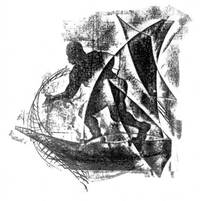
2013réf. CNAP098bSan Francisco: The Arion Press 2013. Hardcover. New. Kara Walker. Quarto 12-5/8 by 9-3/4 inches 136 pages. Prints editioned by Derrière L’Etoile Studio NYC under the supervision of Maurice Sanchez. Bound with red leather spine and printed cotton sides in slipcase. Edition of 400 numbered and signed copies for sale. Additional suite of four lithographs different from the images in the book signed and numbered by the artist. This artist book of Porgy & Bess the libretto by DuBose Heyward and Ira Gershwin is the occasion for Kara Walker’s first series of lithographs. The book contains 16 lithographs with another four images not in the book in a separate portfolio. Porgy & Bess has been controversial since its premiere in 1935; Kara Walker is known for her controversial art on themes of race violence and American history. In her Artist’s Statement she says of the characters: "they’ve become archetypes of another no less grand drama that of: ‘American Negroes drawn up by white authors and retooled by individual actors amid charges of racism and counter charges of high-art on stage and screen in the face of social and political upheaval over generations." This fraught status along with memories of her mother’s reaction to a cast recording led her to render them in a straightforward way "…more an homage to the feeling of the music. And to that feeling I had as a child of a heavy atmosphere hanging around a timeless act of love." ___POSTAGE: International customers please note that additional postage may apply as the standard does not always cover costs; please inquire for details. ___Swan's Fine Books is pleased to be a member of the ABAA ILAB and IOBA and we stand behind every book we sell. Please contact us with any questions you may have we are here to help. The Arion Press hardcover
2013réf. CNAP098bSan Francisco: The Arion Press 2013. Hardcover. New. Kara Walker. Quarto 12-5/8 by 9-3/4 inches 136 pages. Prints editioned by Derrière L’Etoile Studio NYC under the supervision of Maurice Sanchez. Bound with red leather spine and printed cotton sides in slipcase. Edition of 400 numbered and signed copies for sale. Additional suite of four lithographs different from the images in the book signed and numbered by the artist. This artist book of Porgy & Bess the libretto by DuBose Heyward and Ira Gershwin is the occasion for Kara Walker’s first series of lithographs. The book contains 16 lithographs with another four images not in the book in a separate portfolio. Porgy & Bess has been controversial since its premiere in 1935; Kara Walker is known for her controversial art on themes of race violence and American history. In her Artist’s Statement she says of the characters: "they’ve become archetypes of another no less grand drama that of: ‘American Negroes drawn up by white authors and retooled by individual actors amid charges of racism and counter charges of high-art on stage and screen in the face of social and political upheaval over generations." This fraught status along with memories of her mother’s reaction to a cast recording led her to render them in a straightforward way "…more an homage to the feeling of the music. And to that feeling I had as a child of a heavy atmosphere hanging around a timeless act of love." ___POSTAGE: International customers please note that additional postage may apply as the standard does not always cover costs; please inquire for details. ___Swan's Fine Books is pleased to be a member of the ABAA ILAB and IOBA and we stand behind every book we sell. Please contact us with any questions you may have we are here to help. The Arion Press hardcover books
1931réf. 020634New York NY: RKO Pictures Inc. 1931. Autograph. Very good condition. Unbound. Signed by Authors. First Edition. Quarto 4to. Two-page typed contract complete between the composers and RKO Pictures Inc. dated March 9 1931. The document signed by George Gershwin and Ira Gershwin formalizes former agreements to secure the copyright to seven previously unpublished songs that were all incorporated in the musical "Girl Crazy" which opened on Broadway on October 14 1930. The songs include: 1 Boy What Love Has Done To Me. 2 But Not For Me. 3 Could You Use Me. 4 Embraceable You. 5 I Got Rhythm. 6 Sam and Delilah. 7 Bidin' My Time. CONDITION: minor creasing and staple holes. Countersigned and with the stamp and embossed seal of Notary Public Ralph Kravette. These songs and this musical performance launched Ginger Rogers' career. RKO Pictures, Inc. Paperback
1935réf. 1246541935. First Edition. Signed. GERSHWIN George. Porgy and Bess. An Opera in Three Acts. By George Gershwin. Libretto by DuBose Heyward. Lyrics by DuBose Heyward and Ira Gershwin. Production Directed by Rouben Mamoulian. New York: Random House 1935. Folio original full red morocco raised bands black leather label on front cover top edge gilt. Housed in a custom clamshell box. $48500.Deluxe limited edition of the piano-vocal score of Porgy and Bess number 103 of only 250 copies signed by George Gershwin Ira Gershwin DuBose Heyward and director Rouben Mamoulian additionally inscribed by Gershwin to his lover Kay Swift who was intimately involved in the composition of the piece: ÒFor Kay Ñ/ Best Ñ/ George / Nov. 1 1935.Ó According to Ohl ÒbestÓ their code word for ÒloveÓ allowed them to be discreet.This deluxe edition of the piano-vocal score according to Fuld no orchestral score has ever been published was published in 1935 the year of Porgy and Bess premiere almost simultaneously with the first edition and is boldly signed on the limitation page at the rear by George and Ira Gershwin and the other principal creators of Porgy and Bess: librettist DuBose Heyward and director Rouben Mamoulian. Fuld 539. The recipient Kay Swift met Gershwin in 1925. A highly educated beauty of prominent social position she was not yet known as a songwriter her first big hit would be in 1929 with ""Can't We Be Friends"". ""If one measures by the dedication of his Song-Book to her his generous gifts of paintings manuscripts and other keepsakes that betokened affection plus the many hours he spent with her Gershwin obviously had a special place in his heart for Kay SwiftÉ With Kay Gershwin probably came as close to settling down with one woman as he ever did"" Schwarz 190. Swift was extensively involved with the composition of Porgy and Bess almost from the beginning: Swift was Gershwin's guest at the premiere of the play version by Heyward's wife. When composing the operaÑmuch of which occurred at a cottage on Swift's country estateÑSwift was often in her words Gershwin's ""soundboard"" for new ideas. ""'He'd call me and tell me to rush over to play the orchestra part of a song. He couldn't sing. Neither could Ira. But we'd all sing Ira's or DuBose Heyward's lyrics sounding like a chorus of crowsÉ Each day as the work grew a few of usÑBill Daly his close friend and favorite conductor and myself Ira of course and DuBose Heyward who wrote the libretto as well as some of the lyrics were probably present much of the time. It was thrilling to hear the themes develop the recitatives build into such an inevitable part of the score that they flowed as naturally as spoken words would. The whole sparkled with a fantastic quality of imaginationÉ She also had an even more direct part in the opera's development. In addition to listening singing and playing the work in progress Swift sometimes notated portions of pieces for Gershwin evidently to expedite his later work on the compositions. He believed she wrote faster and more neatly than she could."" Extensive portions of the original manuscript now in the Gershwin collection at the Library of Congress are in Swift's hand demonstrating ""her role as an assistant to the composer and signify the trust he must have placed in her and her notational and musical abilities"" Ohl 95-96. During actual production Swift attended most rehearsals and was present at many of the casting decisions. After the preview run in Boston it was clear that the four-hour opera was too long so ""Gershwin Mamoulian composer Alexander Steinert and Kay Swift walked the Boston Common in the early hours of the morning deciding which portions to cut""; one month later at the premiere in New York ""Swift was seated between George and Ira"". Later Swift would deliver lectures throughout the country as part of the promotion of Porgy and Bess. ""Ira recalled that she had memorized the entire 559-page score and would be illustrating songs from it at the piano"" Ohl 97-98. ""After her yeoman's effort during Porgy and Bess he presented her with a leather-bound autographed score the present copy that reads simply 'Tosic Kay. Best. George.' 'Best' their code word for 'love' allowed them to be discreet"" Ohl 115. Interior fine spine somewhat toned light rubbing to spine ends. A near-fine copy with an extraordinary association. hardcover books