George GershwinABAA
649 résultats
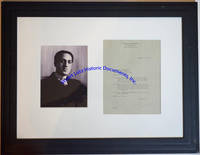
1931réf. 6083-1George Gershwin Endorses Simon Bucharoff's In 1931 Letter GEORGE GERSHWIN 1898-1937. Gershwin was an American composer and pianist whose compositions spanned popular jazz and classical genres. TLS. 1 pg. 8" x 10". March 31 1931. New York. A typed letter signed "George Gershwin" to "Mr. Simon Bucharoff": "I've been looking through your book called A sic MODERN PIANIST'S TEXT BOOK and fine that it is practically complete from a pianist's standpoint. If I were to go on tour playing the piano I feel that your book would be the only one necessary to take along so far as developing and keeping up the technique is concerned. I will be happy to recommend your book wherever possible. Good luck to you". Simon Bucharoff 1881-1955 was a Russian-American pianist composer and educator who lectured and taught on the piano and musical composition. His textbook on the piano was published in 1931 and Gershwin's endorsement surely would have been used for marketing and commercial purposes. The same year this letter was sent Gershwin's Of Thee I Sing became the first musical comedy to win the Pulitzer Prize for Drama. The letter is paired with a black-and-white image of Gershwin. Both are mounted on white in a black wooden frame. All are in fine condition though the letter has some folds and the signature is somewhat light. books
réf. 019591Framed Photograph. A beautiful presentation in perfect condition not examined out of the frame. Wonderful 8" x 10" black-and-white photograph showing Gershwin partly in shadow and seated playing the piano elaborately matted and framed to an overall size of 20" x 17-1/2" SIGNED by the composer with the sentiment "Sincerely." unknown books
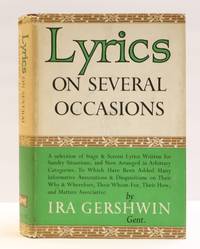
1959réf. 1416427New York: Alfred A. Knopf 1959. First Edition First Printing. Hardcover. Octavo xvi 632 ix pages. In Very Good condition with a Very Good minus dust jacket. Spine tan and green with green and black lettering. Dust jacket protected with a mylar covering price cut. Sunning to spine. General shelf wear. Mild chipping and tearing along edges of dust jacket especially at head and tail of spine. Top edge of textblock dyed red. Previous owner's bookplate to front pastedown. Shelved in Case 12. 1416427. Shelved Dupont Bookstore. Alfred A. Knopf hardcover books
réf. 6038GEORGE GERSHWIN 1898-1937. Gershwin was an American composer and pianist whose compositions spanned popular jazz and classical genres.TLS. 1 pg. 8 x 10. March 31 1931. New York. A typed letter signed George Gershwin to Mr. Simon Bucharoff: Ive been looking through your book called A sic MODERN PIANISTS TEXT BOOK and fine that it is practically complete from a pianists standpoint. If I were to go on tour playing the piano I feel that your book would be the only one necessary to take along so far as developing and keeping up the technique is concerned. I will be happy to recommend your book wherever possible. Good luck to you. Simon Bucharoff 1881-1955 was a Russian-American pianist composer and educator who lectured and taught on the piano and musical composition. His textbook on the piano was published in 1931 and Gershwins endorsement surely would have been used for marketing and commercial purposes. The same year this letter was sent Gershwins Of Thee I Sing became the first musical comedy to win the Pulitzer Prize for Drama. The letter is paired with a black-and-white image of Gershwin. Both are mounted on white in a black wooden frame. All are in fine condition though the letter has some folds and the signature is somewhat light. unknown books
1959réf. 332992New York: Knopf 1959. First. hardcover. fine. 8vo cloth N.Y.: Knopf 1959. First Edition. Fine copy lacking dust wrapper. Knopf unknown books
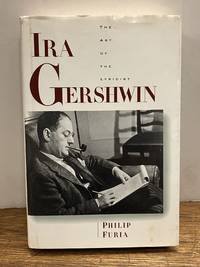
1996réf. 337963Oxford: Oxford University Press 1996. hardcover. near fine/near fine. Ira Gershwin. Some b/w illustrations. 278 pages. 8vo red cloth-backed boards inscription on flyleaf pictorial d.w. lightly scuffed. Oxford: Oxford University Press 1996. A near fine copy in a near fine dust wrapper. Inscribed by the author on the front endpaper. Oxford University Press unknown books
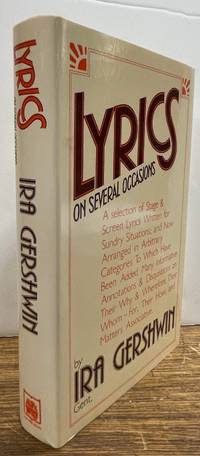
1977réf. 338003London: Elm Tree / Hamish Hamilton 1977. First. hardcover. fine/fine. xv 362 ix pages. 8vo red cloth d.w. London: Hamish Hamilton 1977. First UK edition. A fine copy in a fine dust wrapper. Elm Tree / Hamish Hamilton unknown books
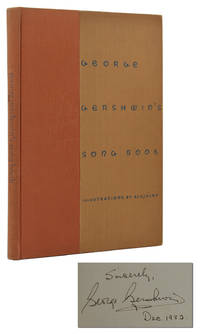
1932réf. 140940789New York: Simon and Schuster 1932. First Edition. Near Fine. First trade edition first printing. Signed by George Gershwin and dated in the year of publication. Bound in publisher's original orange cloth with umber cloth overlay on front cover lettered in blue. Near Fine with light fading and small stain to spine cloth light shelf wear and soiling to cloth. Pages toned hinge at dedication page is lightly exposed. A lovely copy signed by the composer with illustrations by Constantin Alajalov. Simon and Schuster unknown books
1944réf. 19013GEORGE GERSHWIN'S & DU BOSE HEYWARD'S PORGY AND BESS SOUVENIR PROGRAM N.P. 1944 near very good with some wear and tear and a womderful front cover by Hirschfeld. The interior boast many black & white photos of the publication. Also laid in is program from 1944 from a theater in Michigan. N.p. unknown books
1973réf. 03986FIRST DAY COVER OF A BLOCK OF 12 GEORGE GERSHWIN STAMPS Signed and dated by Ira Gershwin 2/28/1973. Fine. N.p. unknown books
réf. CNAP098aSan Francisco: The Arion Press 2013. Hardcover. New. Walker Kara. Quarto 12-5/8 by 9-3/4 inches 136 pages. Prints editioned by Derrière L'Etoile Studio NYC under the supervision of Maurice Sanchez. Bound with red leather spine and printed cotton sides in slipcase. Edition of 400 numbered and signed copies for sale. This artist book of Porgy & Bess the libretto by DuBose Heyward and Ira Gershwin is the occasion for Kara Walker's first series of lithographs. The book contains 16 lithographs Porgy & Bess has been controversial since its premiere in 1935; Kara Walker is known for her controversial art on themes of race violence and American history. In her Artist's Statement she says of the characters: "they've become archetypes of another no less grand drama that of: 'American Negroes drawn up by white authors and retooled by individual actors amid charges of racism and counter charges of high-art on stage and screen in the face of social and political upheaval over generations." This fraught status along with memories of her mother's reaction to a cast recording led her to render them in a straightforward way ".more an homage to the feeling of the music. And to that feeling I had as a child of a heavy atmosphere hanging around a timeless act of love." ___POSTAGE: International customers please note that additional postage may apply as the standard does not always cover costs; please inquire for details. ___Swan's Fine Books is pleased to be a member of the ABAA ILAB and IOBA and we stand behind every book we sell. Please contact us with any questions you may have we are here to help. The Arion Press hardcover books
1953réf. 46843Playbill Inc 1953. GERSHWIN George. PORGY AND BESS PLAYBILL PROGRAM. NY: Playbill Inc. Sept. 14 1953. 8vo. printed wraps. Original Playbill magazine for the Ziegfeld Theatre production. Very Good some browning covers. $10.00. Playbill Inc unknown books
1967réf. 1411199New York: Friends of the Theatre & Music Collection of the Museum of the City of New York 1967. Limited edition 53/250; Facsimile edition. Softcover. Quarto 8 unnumbered facsimile pages 9 pages of printed music. In Very Good condition in a Very Good portfolio in a Good plus slipcase. Slipcase is white paper with Hirschfeld drawing of the brothers; light shelf wear. Spine is white with red print. Portfolio is grey paper with illustration red and black print red ribbon tie. Includes 8 page facsimile of manuscript on grey paper. Also includes printed edition of the song published by Gershwin Publishing Corporation and New Dawn Music Corporation New York 1967. Signed by Ira Gershwin inside rear panel of portfolio. Oversized books. Additional postage necessary for expedited/international orders. Economy International shipping unavailable due to size/weight restrictions. For international/expedited customers please inquire for rates. NOTE: Shelved in Net Desk work area. 1411199. FP New Rockville Stock. Friends of the Theatre & Music Collection of the Museum of the City of New York unknown books
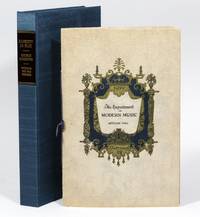
1924réf. 2957New York: Aeolian Hall 1924. First edition. Very Good. ORIGINAL PROGRAM FOR THE FIRST PERFORMANCE OF GERSHWIN'S RHAPSODY IN BLUE. About six weeks before the premiere of Rhapsody in Blue George Gershwin was shooting pool at the Ambassador Billiard Parlor on Broadway and 52nd Street when his brother Ira entered the hall carrying an early edition of the New York Tribune. Ira proceeded to read an article from the paper announcing a new experimental music concert organized by bandleader Paul Whiteman. In this concert Ira continued a piece by George Gershwin would be performed. Adrian Symphony Orchestra This was news to Gershwin who had been asked some months earlier by Whiteman to contribute a piece but had turned down the request believing the several months not enough time. And now Gershwin had only six weeks. Whiteman as it turned out had decided to include Gershwin’s name after learning his musical nemesis—Vincent Lopez—would be releasing a similar concert series. Whiteman knew Gershwin’s name would bring his concert more coverage and went ahead with the inclusion hoping to propel his concert above Lopez’s Adrian Symphony Orchestra. Understanding Whiteman’s difficult position Gershwin agreed to write the piece planning to begin work during an upcoming train ride from New York to Boston where he was headed for an out-of-town preview for a new musical of his. Gershwin later claimed that the sounds of this train hitching and roaring down the track inspired the thematic division of his score into five themes: Ritornello Train aptly named Stride Shuffle and Love. Gershwin hoped to harness the energy of modern machinery in this piece to convey the hustle and bustle of city life. Adrian Symphony Orchestra; Dotsey As Gershwin later commented on his writing process: “I set to work composing with unwonted rapidity. No set plan was in my mind – no structure to which my music would conform. The rhapsody as you see began as a purpose not a plan. I tried to conceive the composition as a whole. I heard it as a sort of musical kaleidoscope of America – of our vast melting-pot of our unduplicated national pep of our blues our metropolitan madness.” Dotsey Gershwin himself had been raised in close contact with the diverse musical traditions of the Lower East Side exposed to the competing influences of Russian Eastern European African American and popular American music. Resultantly he decided that a mixture of jazz classical in conjunction with the rhythmic and thematic implements of almost all these styles was the perfect medium for portraying the city’s kaleidoscopic bustle. Adrian Symphony Orchestra Rhapsody in Blue received mixed reviews upon its release. The New York Times noted the piece displayed “extraordinary talent” and public opinion was largely positive. Still many critics felt that Rhapsody in Blue lacked focus calling it a string of disconnected themes. Hebblethwaite Adrian Symphony Orchestra Much of this confusion stemmed from the genuinely innovative fusion at the heart of Rhapsody in Blue. As mentioned Gershwin took classical form and infused it with the varied musical influences of his youth—blues ragtime Jewish folk music and Harlem jazz. To some extent Gerswhin’s intention was to write these genres in a way which concentrated their essence within small segments of a classical concerto as a more culturally dominant format of music. Though some viewed these borrowings as derivative of their original cultural contexts Gershwin’s usages of Klezmer-like arrangements for example nonetheless represented a groundbreaking expansion of popular music enabling the usage of non-classical genres in dominant American culture. Adrian Symphony Orchestra; Dotsey Later reflecting on his work Gershwin wrote about his usage of Jazz: “There had been so much chatter about the limitations of jazz not to speak of the manifest misunderstandings of its function. Jazz they said had to be in strict time. It had to cling to dance rhythms. I resolved if possible to kill that misconception with one sturdy blow.” Dotsey Although Gershwin hoped to expand the possibilities of jazz he failed to credit the African American traditions that clearly inspired him claiming in this program that jazz “sprang into existence ten years ago from nowhere in particular.” In this way Gershwin’s Great American kaleidoscope remained incomplete. Despite being one of the most famous works of the 20th century audiences will never know exactly what the original performance sounded like. Pressed for time Gershwin improvised many of the solo parts himself. This program is one of the very few surviving records of that original performance. Although enough programs were printed for a 1100 seat hall only a few examples survive. No copies exist at auction and there are only three institutional holdings— at the New York Public Library the George and Ira Gershwin Collection at the Library of Congress and the Center for Popular Music at Middle Tennessee State University. Rhapsody in Blue is loud dramatic and undeniably iconic—but few if any living people remember the sensation and sound of its improvised premiere. Very few material records have been preserved. This program offers a rare opportunity to relive the texture of that historic moment. The show’s program provides biographies of Whiteman’s collaborators. The biography of Gershwin reads as follows: “Mr. Gershwin has written a “Rhapsody in Blue” which he has consented to play accompanied by the orchestra. He is capable of everything from “Swanee” to “A Stairway to Paradise”: from “Ingenue Baby” and “Virginia” to “Do It Again.” Delicacy even dreaminess is a quality he alone brings into Jazz music. Gershwin’s sense of variation in rhythm of shifting accents of emphasis and color is faultless. He has moreover an insatiable curiosity about everything connected with his work and for that matter with music in general. He is learning and he is not forgetting and being one of the youngest of the composers he is actually one of the brightest hopes of our popular music.” Further descriptions of Gershwin’s Rhapsody in Blue: “This is the first rhapsody written for solo instrument and modern orchestra. Prophesy being not the function of an annotator it may be said that the importance of the rhapsody quite apart from its own value must depend to an extent upon its being kept alive in a repertoire—and there is no organization to do this unless the present concert is as its conductor hopes only the beginning of a series. Gershwin is a close student of music and a listener; yet there is not a derivative phrase in his work. He has composed a rhapsody and has chosen to build it out of materials known to him: the rhythms of popular American music the harmonies produced by American jazz bands. None of the thematic material has been used before; the rhapsody is not a pastiche. The structure is simple and it resembles concertos written by pianists in what seems at first the predominance of the single instrument. Mr. Gershwin’s manuscript is complete for the piano. The orchestral treatment was developed by Mr. Grofé. The rhapsody is a free development of almost all of Gershwin’s qualities alluded to in the earlier pages of this program. It has a little more crispness a shade more of jazz and a shade less of gentleness than some of his compositions; there is more of “A Stairway to Paradise” than of “Do It Again”; and this is natural in a composition intended specifically for jazz orchestra. Those who care for jazz will naturally be grateful to Mr. Whiteman for urging Mr. Gershwin to compose this Rhapsody. He had had it in mind for some time but had no intention of going to work upon it until the announcement was made that the Rhapsody would be played at this concert. For those who remain skeptical another test-case may be provided. It is not inconceivable that an intelligent conductor of a symphony orchestra may want to play the rhapsody; it would probably need re-scoring but the saxophone which has been used ever since Meyerbeer in serious music need not be exiled.” The program also includes photos of Mr. Whiteman and his band alongside collaborators such as Gershwin and Victor Herbert. Provenance: With signature and Yale address of "Frederick Ullman" in pencil on back. Anecdotally later gifted by Ira Gershwin's wife Lenore to her vocational nurse and caretaker; appearing on the market now for the first time. New York: Aeolian Hall 1924. Concert program measuring 9.5 x 6.25 inches. 12 pages in original decorated textured grey wrappers; side-stitched with original blue cord. Housed in custom silk box. Abrasion to text at bottom of page 1 with loss of a few words. Wrappers in a remarkable state of preservation; very clean and fresh with some light rubbing to cover decoration corresponding to the textured ridges on cover. EXCEEDINGLY RARE: We find no records at auction and three institutional holdings only: at the New York Public Library the George and Ira Gershwin Collection at the Library of Congress and the Center for Popular Music at Middle Tennessee State University. Aeolian Hall unknown books
1960réf. 194751New York: Simon And Schuster 1960. Hardcover. Good- Boards are solid but smudged scuffed foxed; interior is solid but textblock edges are foxed and pages are lightly foxed; binding is solid. Black boards with orange spine with spiral-bound textblock; 178 pp.; richly illustrated. "List of songs by George Gershwin with lyrics by Ira Gershwin and others together with facts about the shows and motion pictures in which these songs were used compiled by Alfred Simon p.171-177." -- WorldCat. Also includes the sheet music for songs. Simon And Schuster hardcover books
réf. 010556Book. Fine. Soft cover. 8x10. 8X10 ALS Ira Gershwin 1896-1983 American lyricist brother of George Gershwin. Autograph letter signed"Ira". On letterhead stationery one page Dated Beverly Hills California. January 31 1966. To "Victor an art dealer regarding his use of signatures by George Gershwin. "Here are four checks of George's from which you can cut two signatures you prefer.". Paperback books
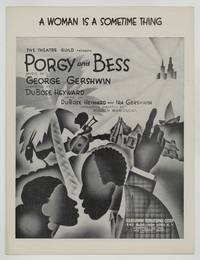
1935réf. 618846New York: Gershwin Publishing Corp 1935. Softcover. Very Good. Sheet music. Quarto. Two nested bifolia making eight pages. Exterior rubbed with some light soiling a complete and very good copy. For voice and piano with chord diagrams for guitar. Plate imprint "G-11-5 A Woman etc. Gershwin Publishing Corp unknown books
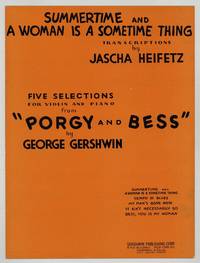
1946réf. 618844New York: Gershwin Publishing Corp 1946. Softcover. Very Good. Sheet music. Transcriptions by Jascha Heifetz. Quarto. Three nested bifolia making 12 pages. Exterior rubbed and lightly soiled fading to the front cover and corners lightly bumped very good. For piano and violin no vocals. Plate imprint "G-65-10 Summertime etc. Gershwin Publishing Corp unknown books
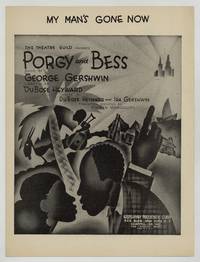
1935réf. 618847New York: Gershwin Publishing Corp 1935. Softcover. Very Good. Sheet music. Quarto. Two nested bifolia making eight pages. Exterior rubbed with some light soiling and light toning along the edges still a complete and very good copy. For voice and piano. Plate imprint "G-13-6 My Man's Gone Now. Gershwin Publishing Corp unknown books
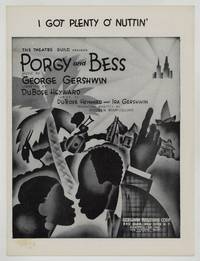
1935réf. 618849New York: Gershwin Publishing Corp 1935. Softcover. Very Good. Sheet music. Quarto. Two nested bifolia making eight pages. Front cover has some foxing exterior rubbed and corners bumped still a complete and very good copy. For voice and piano. Plate number "G-8-6 I Got Plenty etc. Gershwin Publishing Corp unknown books
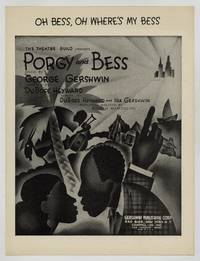
1935réf. 618848New York: Gershwin Publishing Corp 1935. Softcover. Very Good. Sheet music. Quarto. Two nested bifolia making eight pages. Pages age toned exterior rubbed with some light soiling and light toning along the edges still a complete and very good copy. For voice and piano. Plate number 74-5. Gershwin Publishing Corp unknown books
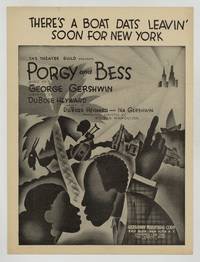
1935réf. 618851New York: Gershwin Publishing Corp 1935. Softcover. Very Good. Sheet music. Quarto. Single bifolium with a single-sheet-insert making six pages. Exterior toned with some rubbing corners bumped still a complete and very good copy. For voice and piano. Plate number "G-7-1 There's A Boat etc. Gershwin Publishing Corp unknown books
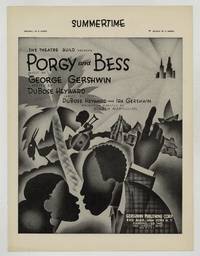
1935réf. 618845New York: Gershwin Publishing Corp 1935. Softcover. Very Good. Sheet music. Quarto. Single bifolium with a single-sheet-insert making six pages. Pages age toned exterior rubbed with some soiling still a complete and very good copy. For voice and piano with chord diagrams for guitar. Plate imprint "G-9-4 Summer Time. Gershwin Publishing Corp unknown books
1993réf. 286491New York: Knopf 1993. hardcover. very good/very good. Illustrated. 414 pages. Thick oblong 4to black cloth backed stamped brown boards price-clipped d.w. New York: Alfred A. Knopf 1993. As usual the pages are toned at edges still a very good copy in a very good dust wrapper. Knopf unknown books
1935réf. 321533New York: Random House 1935. Limited. hardcover. near fine. Libretto by Dubose Heyward; Lyrics by Dubose Heyward and Ira Gershwin. Frontispiece and title page decoration by George Biddle. Small folio full red leather. New York: Random House 1935. Limited First Edition. The black leather labels are missing as is often the case otherwise near fine in a good slipcase. One of 250 copies autographed by both Gershwins Heyward and Rouben Mamoulian the director. A near fine copy in the original raffia slipcase which is roughed up on the spine. Random House unknown books