140 résultats
150 S. Frontisp., Abb. auf Tafeln. Werkverz. Disk.
petit in-4 oblong, 191 pages illustrees en N&B et en couleurs, + 80 pages env. liste des sociétaires et exposants, couverture illustree (FOUJITA). Bon exemplaire. [P-30]
in-8°, 402 pp., bibliographie et index, musique notee, broche, couverture decoree. Bel exemplaire (pli de lecture). [109B-11]
EDIZIONI SCIENTIFICHE ITALIANE ESI 1988 118 PP. LIEVI SEGNI DEL TEMPO, PER IL RESTO VOLUME IN ECCELLENTI CONDIZIONI, PROBABILMENTE MAI SFOGLIATO. Si immagini una rosa. Se paragonata al silenzio dell'artista, alla mutazione zen che nulla produce se non armonia interiore, essa non sarà altro che un bocciuolo, non ancora dischiuso e comprensivo della futura manifestazione visiva di fiore. Se paragonata all'opera d'arte, alla storia simbolica che essa determina proprio come parallelamente la tradizione esoterica racconta, essa sarà perfettamente dischiusa, visibile eppure occulta, perchè fuggevole nel suo esser palese. Questo studio segue lo svolgersi della vicenda letteraria del Doctor Faustus di Mann parafrasandola al destino dell'opera e dell'artista contemporaneo. Come farebbe Hetaera Esmeralda, la farfalla dalle ali trasparenti, si vola dal bocciuolo alla rosa, scoprendo nello zen e nell'esoterismo due possibili risposte alla presunta morte dell'arte. L'AUTORE Girolamo De Simone, musicista, si è formato nella scuola di A. WebbJames, diplomandosi in pianoforte con E. Fels. Si dedica alla composizione ed all'attività concertistica rivolgendo particolare attenzione alle trascrizioni da Bach. alla produzione di Erik Satie ed al repertorio contemporaneo. Ha riportato in concerto la pratica dell'improvvisazione pianistica mutuandola dal jazz.
A clean, unmarked book with a tight binding. Slight edge wear to cover. 8 1/4"w x 11 3/4"h. 256 pages. Based on an exhibition held at the Centre National d'Art et de Culture Georges Pompidou, Paris, from December 1981 to April 1982. Essays by Philippe Sers, Herbert Molderings, and Janus, three texts by Man Ray, including an interview of him.
brossura I "Tre pezzi in forma mela" non sono soltanto una sfacciata parodia dei "Tre pezzi in forma di pera" di Erik Satie ma un doveroso tributo ad un musicista senza il quale il '900 non sarebbe stato lo stesso. Per capirne a pieno il senso è necessario almeno accennare alla personalità del compositore francese, sicuramente eccentrico, ironico, anticonformista, sarcastico ma assolutamente colto. Tutto il Novecento musicale è in qualche modo debitore a Erik Satie, per quanto la "grande musica" non l'abbia mai neanche accostato ai grandi della sua epoca. I "Tre pezzi in forma di pera" non sono soltanto il frutto della sua stravaganza artistica e musicale, ma sono soprattutto un modo sottile ed intelligente per polemizzare con gli altri compositori, e colleghi, a lui coetanei: Debussy, Ravel, Stravinskij, Mahler. Con i "Tre pezzi in forma di mela" l'autore crea nuove sonorità, spesso dissonanti, affiancate a momenti di grande lirismo romantico riuscendo così a creare un nuovo tessuto armonico-melodico compatto, dialogante, sicuramente ricco di contrapposti che non sfociano mai in contrasti. Un discorso musicale appunto stravagante, ironico, mai scontato che stuzzica l'interesse dell'ascoltatore sin dalle prime battute e lo conduce alla scoperta di nuove sensazioni e nuove emozioni.
ill., br. Apparentemente relegata a un ruolo secondario sulla scena musicale dominata da Debussy, Ravel e Stravinskij, la figura di Satie non smette di incuriosire gli appassionati e interessare gli studiosi per la sua originalità. Questo libro si propone di presentare il musicista in tutta la sua complessità, grazie a un'ampia raccolta di articoli e saggi monografici che trattano il suo rapporto con gli altri compositori del tempo, il suo ruolo di precursore dell'avanguardia europea nel primo Novecento e le sue amicizie con Bràncusi, Debussy, Picabia e Jean Cocteau che affermò: "Se qualcuno mi interrogasse sulla nostra epoca, io risponderei senza esitazione che i più grandi sono Debussy e Stravinskij e subito dopo aggiungerei: ma Satie è unico".
1989réf. 185670London/ New York: M. Boyars 1989. Hardcover. VG-/VG- Ex-library with stamps and labels on spine inside front and rear covers ffep and block.Light shelfwear to boards block dj. Light age toning to pages. Black cloth boards with silver lettering; bw illustrated dj mylar cover; 239 pp; bw illustrations. "Much of the laconic wit discipline and charm of Satie's music is to be found in the man himself as demonstrated by his letters. Many of them published here for the first time in any language these letters create a uniquely revealing portrait of Satie himself his music and his time. This volume includes correspondence with such major figures as Cocteau Picasso Picabia Debussy Ravel and Stravinsky. It is illustrated with 75 line drawings by Cocteau Magritte Picasso and other contemporaries as well as drawings and musical scores by the composer himself."- dust jacket Includes bibliographical references pages 232-234 and index. M. Boyars hardcover books
1919réf. 33600Paris: Rouart Lerolle & Cie PNs R. L. & Cie. 9800 9801 9802 1919. 3 volumes. Folio. Original publisher's dark orange vols. 1 and 2 and brown vol. 3 printed wrappers. v. 1: 1f. recto title verso blank 3 pp. v. 2: 1f. recto title verso blank 3 pp. v. 3: 1f. recto title verso blank 4 pp. with publisher's advertisment to recto of lower wrapper Wrappers somewhat worn soiled and chipped; some detached; occasional handstamps; other minor defects. First Edition of nos. 1 and 2 1911; later reissue of no. 3 ca. 1919. Orledge 270. The Sarabande no. 2 premiered in Paris at a concert of the Société Musical Independant Salle Gaveau with Maurice Ravel at the piano. "The turning-point in Satie's career came in January 1911 when Ravel performed Sarabande no. 2 at a concert of the Société Musicale Indépendante. Satie was suddenly seen in his second Sarabande as a harmonic forerunner of Impressionism: he became a focus for young composers and Debussy conducted his orchestrations of the Gymnopédies two months later at the Salle Gaveau upsetting their composer by being jealous of their success. What pleased Satie most about all this was that Demets agreed to publish his recent Véritables préludes flasques in 1912 and was soon requesting more such humorous piano pieces . Articles began to appear about his music and the celebrated pianist Viñes promoted his cause with some notable first performances." Robert Orledge in Grove Music Online. Rouart, Lerolle & Cie [PNs R. L. & Cie. 9800, 9801, 9802] unknown books
1988réf. 73355Boston: Twayne 1988. First edition. xxvi 387 pp w/index. Small corner-creases to two pages else near fine in near fine dust jacket. Boston: Twayne unknown books
1994réf. 73397Oxford: Oxford University Press 1994. Later trade paperback printing. x 227 pp w/index. Near fine in glossy illustrated wrappers. Oxford: Oxford University Press paperback books
1965réf. 15853Edinburgh: Wild Hawthorn Press 1965. First edition. Paperback. Very Good. 8vo. A slender volume of poems made from Eric Satie's notes in French to the piano pieces Sports and Divertissments. With drawings by John Furnival. A very good copy in ring bound illustrated wrappers. Laid into this copy in a folded sheet of paper entitled "the Wild Hawthorn Press - Spring List '65" Wild Hawthorn Press paperback books
1963réf. 118366Paris: Nouvelles editions de films 1963. Vintage Program for the international release of the 1963 film here under the alternate title "The Will-O-The-Whisp" a perhaps more literal translation of the original French title "Le feu follet." The film would be released as "The Fire Within" in the US and "A Time to Live and a Time to Die" in the UK. Based on the 1963 novel "Le feu follet suivi de adieu a Gonzague" by Pierre Drieu La Rochelle. An ambitious Malle project using only solo piano music by Erik Satie for its score about an increasingly isolated man quietly fighting the urge to take his own life. 8 x 10.5 inches Self-wrappers perfect-bound 17 pages on medium white stock with an untitled solid green spine; in original printed envelope slightly larger single flap with the French title "Le feu follet" printed in green in large letters at the lower margin of the front panel. Program Near Fine envelope Very Good plus with light soil at the edges. Nouvelles editions de films unknown books
1965réf. 22531No place: Wild Hawthorn Press 1965. First edition of these "poems made from Satie's notes in French to the piano pieces" of the book's title. Foxmarks on covers otherwise a fine copy. 8vo drawings by John Furnival original spiral-bound illustrated wrappers. Foxmarks on covers otherwise a fine copy. Wild Hawthorn Press unknown books
1971réf. 28543Paris: Alan Satié 1971. First edition. Book object: A four-drawer box 7x7x5 inchescovered in paper with typed title label and stainless steel spheres as pulls. Each drawer contains a hypergraphic bas relief: One has Satie's poetry collection "Cela va sans dire" presented as a leporello: half-title title page copyright notice frontispiece a plaster bas relief painted gold mounted to numbered and signed card table of contents12 pp text colophon. Spacagna's piece is an etching plate colored in blue adhered to a wooden block which is titled "L'Hypergraphie vivant" signed and dated on the block. Lemaître contributed a plaster bas-relief sculpture colored and signed in green and dated 1972. Sabatier's piece is a plaster bas-relief sculpture decorated in blue; signed and numbered on the card mount. One of 35 examples made. From 1970 to 1972 Alain Satié published La Revue littéraire lettriste a flowering of the most important novels and essays of the movement. In 1973 he received the anti-Goncourt prize for his work Écrit en prose ou L'Œuvre hypergraphique Written in Prose or the Hypergraphic Work the third true hypergraphic novel to be published PSI Editions 1971 following Les Journaux des Dieux Journals of the Gods by Isidore Isou and Saint Ghetto des Prêts Saint Ghetto of the Loans by Gabriel Pomerand. Alan Satié unknown books
réf. 1311780London: M.S.M. Music Publishers. Softcover. Quarto; VG; Paperback; Spine staple binding; Cover is cream with black print clean and bright; Text block clean and tight but for vendor stamp on title page; 8 pages of printed music. Instruments: Organ. 1311780. FP New Rockville Stock. M.S.M. Music Publishers unknown books
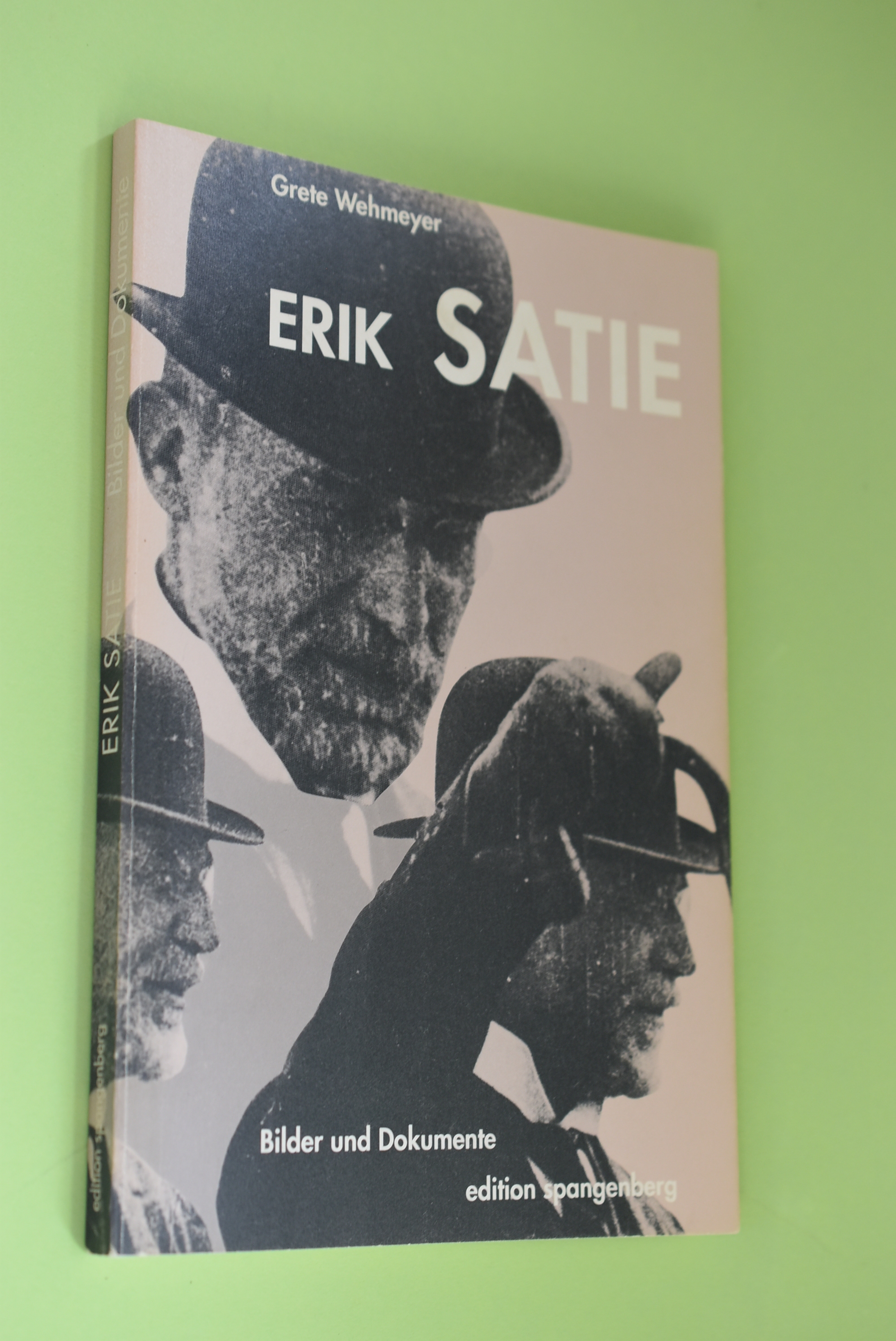
1992réf. 79964München : Ed. Spangenberg 1992. 109 S. : zahlr. Ill., Noten ; 24 cm Broschur 0
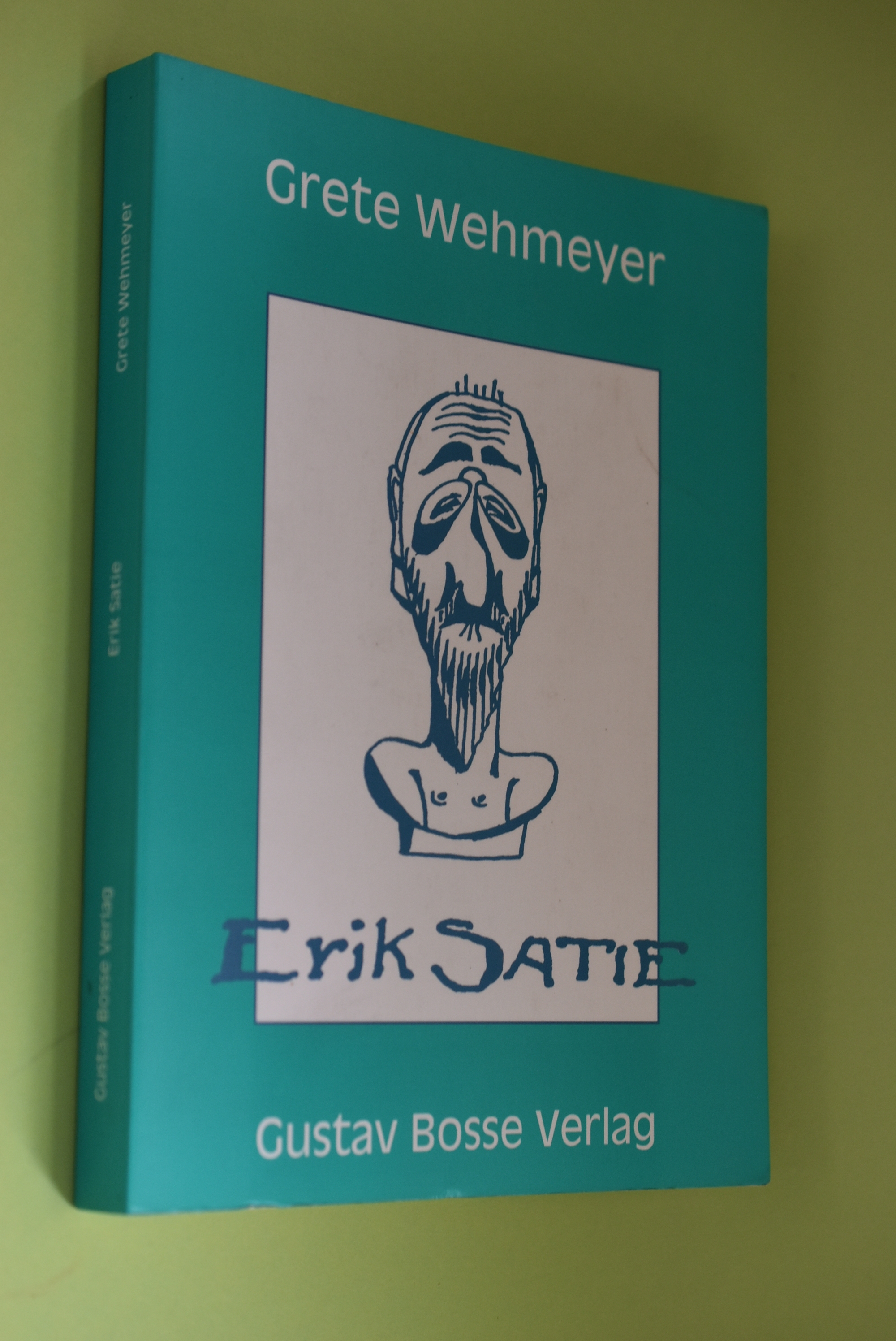
1997réf. 79965Kassel : Bosse 1997. Überarb. Neuaufl. 310 S. : Ill., graph. Darst., Noten ; 24 cm Karton 0
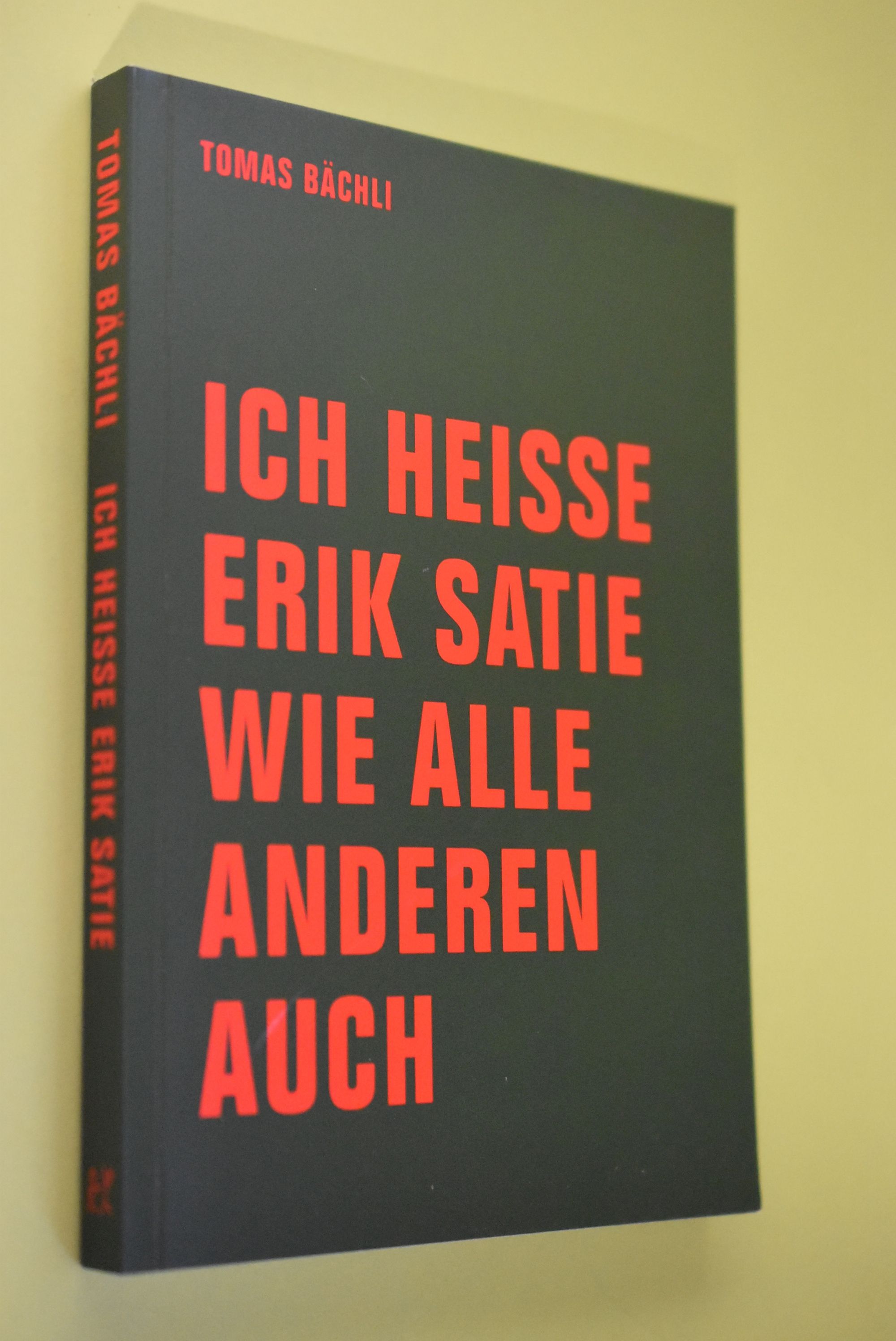
réf. 80041Berlin : Verbrecher Verlag 2016. Erste Auflage 158 Seiten ; 20 cm Karton 0
1988réf. 237906München : Ed. Text u. Kritik, 1988. 115 S. : Ill., graph. Darst., Noten, 23 cm. kart., Broschiert.
1996réf. 50097Deutsche Grammophon, 1996. 449 186-2 CD CD
2005réf. 26014Philips (Universal Music), 2005. 2 CDs CD
1994réf. 46104Deutsche Grammophon, 1994. 439767-2 CD CD
2002réf. 21690Melisma, 2002. Audio-CD CD
1925réf. 2688aKöln, F. J. Marcan, 1925. 5 ganzseit. Tafeln, 3 gefalt. Faksimile-Tafeln, zahlreiche Notenbeispiele im Text, 4 Bl., 320 S., Erstausgabe. Original-Halbleinenband, Original-Schutzumschlag (OU/SU). Zustand 2, lichtrandig, Schnitt stockfleckig, Exlibris auf Innendeckel., handschriftlicher Namenszug u. Datum a. Titel. (Schutzumschlag: Z -3).