China Peking Opera TroupeBiblio.com

1 110 résultats
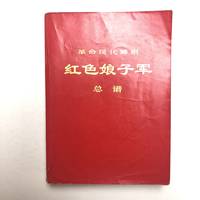
1971réf. AG-10054Beijing: Published by People's Publishing House printed by Beijing Xinhua Printing Factory distributed by Xinhua Bookstore January 1971 FIRST EDITION. The July 1970 Script Revised and Performed Collectively by Shanghai Peking Opera Troupe. 8vo vi 397 pp. colophon consists of scripts stage photos selected theme score stage action instruction and the stage design started with quotations from Chairman Mao on the second and third page printed color stage photos and instructions inside printed pictorial wrappers slightly curled at the head and foot of the wrappers else very good condition. 北京:人民出版社出版,1971年第一版,由上海京剧团《智å–å¨è™Žå±±ã€‹å‰§ç»„集体改编åŠæ¼”出。本书包括了剧本ã€ä¸»æ—‹å¾‹ã€å‰§ç…§ã€åŠ¨ä½œæŒ‡å¯¼ã€èˆžå°ç¾Žæœ¯ç‰å†…容。包括éžå¸¸å¤šçš„照片。书皮上下ç¨å¾®å·èµ·ï¼Œæ— ç ´æŸï¼Œå“相éžå¸¸å¥½ã€‚ In China revolutionary operas or model operas Chinese: yangban xi æ ·æ¿æˆ were a series of shows planned and engineered during the Cultural Revolution 1966–1976 by Jiang Qing the wife of Chairman Mao Zedong.1 They were considered revolutionary and modern in terms of thematic and musical features when compared with traditional Chinese operas. Many of them were adapted to film. Originally eight revolutionary operas Chinese: Ba Ge Yangban Xi å…«ä¸ªæ ·æ¿æˆ were produced eighteen by the end of the period. Instead of the "emperors kings generals chancellors maidens and beauties" of the traditional Peking opera which was banned as "feudalistic and bourgeois" they told stories from China's recent revolutionary struggles against foreign and class enemies. They glorified the People's Liberation Army and the bravery of the common people and showed Mao Zedong and his thought as playing the central role in the victory of socialism in China. Although they originated as operas they soon appeared on LPs in comic books lianhuanhua on posters postcards and stamps; on plates teapots wash basins cigarette packages vases and calendars. They were performed or played from loudspeakers in schools factories and fields by special performing troupes. The Eight Model Operas dominated the stage in all parts of the country during these years leading to the joke "Eight hundred million people watched eight shows." 本剧是文é©æ—¶æœŸçš„å…«å¤§æ ·æ¿æˆä¹‹ä¸€ã€Šæ™ºå–å¨è™Žå±±ã€‹ï¼Œç”±æ¯›ä¸»å¸å¤«äººæ±Ÿé’负责制作和演出。很多被æ‹æˆäº†ç”µå½±ã€‚ 最åˆæœ‰å…«ä¸ªæ ·æ¿æˆï¼ŒåŽæ¥åœ¨æ–‡é©æ—¶æœŸçš„åŽæœŸå‘展到了18个。ä¸åƒå› å°å»ºå’Œèµ„产阶级的被ç¦äº†çš„ä¼ ç»Ÿäº¬å‰§ï¼Œé‡Œé¢å‡ºçŽ°çš„ä¸çš„国王大臣少女和美人,é©å‘½çŽ°ä»£äº¬å‰§ä¸»è¦è®²è¿°ä¸å›½è¿‘å¹´æ¥çš„抗战故事,宣扬人民解放军的光辉è£è€€å’Œæ¯›ä¸»å¸çš„英勇。虽然是京剧,很快就å˜æˆäº†å„ç§å½¢å¼å‡ºçŽ°åœ¨è¿žçŽ¯ç”»ã€æµ·æŠ¥ã€æ˜Žä¿¡ç‰‡ã€é‚®ç¥¨ã€é¦™çƒŸã€èŠ±ç“¶ã€æ—¥åŽ†ç‰å„ç§åœ°æ–¹ï¼Œç”¨æ‰©éŸ³å–‡å在å¦æ ¡ã€å·¥åŽ‚ç‰åœ°æ–¹ï¼Œç”±æ¼”出团进行表演。8ä¸ªæ ·æ¿æˆä¸»å¯¼äº†å…¨å›½æ‰€æœ‰çš„舞å°ï¼Œå› æ¤æœ‰äº†8亿人看8个剧的笑è¯ã€‚ People’s Publishing House paperback
1972réf. AG-10053Beijing: Published by C printed by Beijing Xinhua Printing Factory distributed by Xinhua Bookstore Beijing Distributing Agency February 1972 FIRST EDITION 8vo. The May 1970 Script Revised Collectively by the China Peking Opera Troupe. iv 374 pp. colophon consists of scripts stage photos selected theme score stage action instruction and the stage design started with quotations from Chairman Mao on the second and third page printed pictorial wrappers slightly curled at the head and foot of the wrappers minor tears to the edge of the wrappers else fine condition. 北京:人民出版社出版。本书å‰ä¸¤é¡µå¸¦æœ‰æ¯›ä¸»å¸è¯å½•ï¼Œå†…容包括了剧本ã€å‰§ç…§ã€ä¸»æ—‹å¾‹ã€åŠ¨ä½œè¯´æ˜Žç‰è¯¦ç»†å†…容,由照片和文å—çš„å½¢å¼ç»„æˆï¼Œç…§ç‰‡å›¾ç‰‡å¾ˆå¤šï¼Œä¹Ÿæ˜¯æœ¬ä¹¦çš„一大特色。书皮上下两段ç¨å¾®å·èµ·ï¼Œå…¶ä»–部分å“相éžå¸¸å¥½ã€‚ In China revolutionary operas or model operas Chinese: yangban xi æ ·æ¿æˆ were a series of shows planned and engineered during the Cultural Revolution 1966–1976 by Jiang Qing the wife of Chairman Mao Zedong.1 They were considered revolutionary and modern in terms of thematic and musical features when compared with traditional Chinese operas. Many of them were adapted to film. Originally eight revolutionary operas Chinese: Ba Ge Yangban Xi å…«ä¸ªæ ·æ¿æˆ were produced eighteen by the end of the period. Instead of the "emperors kings generals chancellors maidens and beauties" of the traditional Peking opera which was banned as "feudalistic and bourgeois" they told stories from China's recent revolutionary struggles against foreign and class enemies. They glorified the People's Liberation Army and the bravery of the common people and showed Mao Zedong and his thought as playing the central role in the victory of socialism in China. Although they originated as operas they soon appeared on LPs in comic books lianhuanhua on posters postcards and stamps; on plates teapots wash basins cigarette packages vases and calendars. They were performed or played from loudspeakers in schools factories and fields by special performing troupes. The Eight Model Operas dominated the stage in all parts of the country during these years leading to the joke "Eight hundred million people watched eight shows." 本剧是文é©æ—¶æœŸçš„å…«å¤§æ ·æ¿æˆä¹‹ä¸€ï¼Œç”±æ¯›ä¸»å¸å¤«äººæ±Ÿé’负责制作和演出。很多被æ‹æˆäº†ç”µå½±ã€‚ 最åˆæœ‰å…«ä¸ªæ ·æ¿æˆï¼ŒåŽæ¥åœ¨æ–‡é©æ—¶æœŸçš„åŽæœŸå‘展到了18个。ä¸åƒå› å°å»ºå’Œèµ„产阶级的被ç¦äº†çš„ä¼ ç»Ÿäº¬å‰§ï¼Œé‡Œé¢å‡ºçŽ°çš„ä¸çš„国王大臣少女和美人,é©å‘½çŽ°ä»£äº¬å‰§ä¸»è¦è®²è¿°ä¸å›½è¿‘å¹´æ¥çš„抗战故事,宣扬人民解放军的光辉è£è€€å’Œæ¯›ä¸»å¸çš„英勇。虽然是京剧,很快就å˜æˆäº†å„ç§å½¢å¼å‡ºçŽ°åœ¨è¿žçŽ¯ç”»ã€æµ·æŠ¥ã€æ˜Žä¿¡ç‰‡ã€é‚®ç¥¨ã€é¦™çƒŸã€èŠ±ç“¶ã€æ—¥åŽ†ç‰å„ç§åœ°æ–¹ï¼Œç”¨æ‰©éŸ³å–‡å在å¦æ ¡ã€å·¥åŽ‚ç‰åœ°æ–¹ï¼Œç”±æ¼”出团进行表演。8ä¸ªæ ·æ¿æˆä¸»å¯¼äº†å…¨å›½æ‰€æœ‰çš„舞å°ï¼Œå› æ¤æœ‰äº†8亿人看8个剧的笑è¯ã€‚ People’s Publishing House paperback
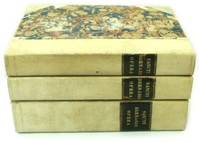
1781réf. 523404Venice: Balleoni 1781. Hardcover 6 volumes in 3; FULL TITLE: Sancti Bernardi abbatis primi Clarae-Vallensis Opera genuina videlicet in primo et secundo volumine; spuria dubiaque in tertio comprehensa; Horstii et Mabillonii notis aliusque permultis aucta juxta editionem Parisien. anni MDCCXIX; adjecta appendice Edmundi Martene ex veterum scriptorum & momentorum collectione; atque his omnibus in hac tertia editione Veneta accuratius revisis & illustratis. Half-bound in cream coloured leather with marbled paper sides and marbled endpapers. Gilt bands to spine have partially worn away and title labels to spine are lightly worn. Board edges are rubbed and worn leather is lightly spotted and paper sides are shelfworn. Light foxing to prelims in all 3 and on a few pages in mains throughout. V.1 and V.3 have slight hinge breaks at title pages. Water marks to gutter of pages 1182 to REP in V.3. and mark to spine of V.1. Very good condition for age. Text is clean and unmarked throughout. AD. leather. Very Good. Used. Balleoni Hardcover
réf. DADAX0091399807New unknown
réf. DADAX0198161662New unknown
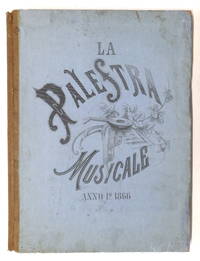
réf. 116404Musica Spartiti - La Palestra Musicale - Anno I - 1866 - Dal fascicolo 1 al fascicolo 38/39 - Pag. 316 - Copertina rigida - Lingua italiana. - Buone condizioni generali. Piccoli segni del tempo. - RARITA' - unknown
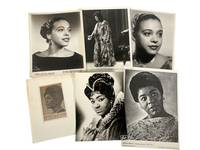
1957réf. 208291957. Press photograph archive of African American women opera singers 1957-1977 documents the emergence and international recognition of Black performers within mid twentieth century classical music and operatic institutions. The images center on four prominent singers whose careers developed during and after the era of segregation when access to major stages and audiences expanded unevenly for Black artists. Figures such as Marian Anderson who broke barriers at the Metropolitan Opera in 1955 established a precedent for subsequent generations; the performers represented here advanced that presence through sustained international careers providing visual evidence of African American participation in elite cultural institutions during a period of social and cultural change. Six black and white silver gelatin press photographs each approximately 8 x 10 inches with captions and markings on recto and verso. Subjects include Adele Addison in two studio portraits from the 1950s later known as the singing voice for Bess in Porgy and Bess 1959; Shirley Verrett in two images including an early news photograph prior to a performance at Ambassador College Auditorium and a later 1976 stage portrait in formal concert dress; Martina Arroyo in a 1977 portrait during the height of her international career; and Grace Bumbry depicted in costume as Princess Eboli in Verdi's Don Carlos at the Metropolitan Opera in 1965. The photographs capture both staged publicity portraits and performance contexts documenting professional presentation and artistic identity. Produced during decades of expanding civil rights advocacy and gradual institutional integration the archive situates African American women within a field historically shaped by exclusion and limited access. Their visibility in major opera houses and concert venues reflects broader shifts in cultural recognition and professional opportunity while also underscoring the continued significance of performance as a site of racial and gendered representation. Minor edge wear; captions remain legible; overall very good condition. unknown
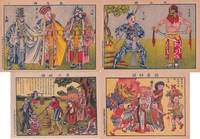
réf. 219368Tianjin.: 毓順成 芳記. Yushuncheng fangji. Early 20th Century. Four handbills showing popular images two 13.2 x 18.4 are images of characters from Peking Opera and two 12.2 x 16.5cm depict themes important in Chinese society at the time. Text in traditional Chinese characters. Light even browning tiny closed tears at margin of one sheet repaired with washi. Very good. Chinese opera characters in the style of traditional woodblock prints were popular in the late Qing dynasty and early Republican period. Handbills of characters from Beijing opera were sold as collectible items that also helped to familiarise people with the characters of different operas; their costumes make up weapons and names. In this case there are two characters from the opera 白水灘 on one handbill and three characters from the opera 落馬湖 on the other. Images with social themes also made popular handbills especially in places such as Tianjin where the influence of foreigners was pronounced. In 福壽財源 we see an immortal carrying a peach of longevity surrounded by images of fertility - a young woman and boys carry fruit and flowers as well as other items symbolic of wealth - a coin a vase gold ingots and so on probably issued for New Year. The final handbill of the four 娶大媳婦 tells the tale of a girl of eighteen married to a boy of seven. The Chinese custom of marrying a young boy to an older girl adopted into the family is thus open for discussion - everyone in the image clearly has a different opinion of the situation; from the young husband the older farmer in the background and the two men in long scholars robes to the modern young man in a western suit with leather shoes as well as the girl herself. The practice of adopting a girl to bring up as a future wife for a male child was made illegal in 1949. The text mentions some of the ways in which the girl would be expected to help in her adoptive family's home. . 毓順成 芳記. [Yushuncheng fangji] hardcover
réf. SONG0061011576Used: Good unknown
1817réf. AQ35026London: s.n. 1817. Single leaf broadside. Browning and staining to edges with very small loss to lower right corner small hole and tear to title slightly obscuring final letters. A scarce playbill recording an early effort by London's Lyceum Theatre renamed The English Opera House in the summer of 1817 to present an illumination of the 'audience part of the theatre' during a performance of 'Free and Easy' a comic opera. Although the use of gaslight in street-lamps had first been demonstrated a decade prior in 1807 the goal to introduce gaslighting to the commercial stage took years to evolve into the competitive landscape of 1817 where three of London's premier West End venues the Theatre Royal Covent Garden Theatre Royal Drury Lane and the Lyceum Theatre entered into a rapid race to produce the first fully-gaslit public performances in a West End venue. The Royalty an East End theatre later renamed The East London Theatre had previously installed gas piping and lighting fixtures across both the auditorium and the stage in 1816 demonstrating the viability of such a project. The English Opera House led by director Samuel Arnold proudly boasted on August 6 1817 that 'Gas Lighting will this evening be introduced over the whole stage' seemingly claiming themselves the winners of the century's most contested technical theatre contest. Despite this the lack of an illuminated auditorium meant that the theatre's audience remained in candlelight until a month later when the venue opened fully illuminated for the first time. The Theatre Royal Drury Lane despite only revealing its gaslit stage on the 6th September 1817 was able to argue that due to their introduction of gaslighting into the auditorium several weeks prior they were in fact the first of the three theatres to achieve the much vied- for feat. On the same night The Theatre Royal Covent Garden also offered a demonstration of gaslight on their stage finally concluding the rivalry and introducing a vital element of technical staging into London's leading venues for the remainder of the century. Rare; COPAC records no copies in the UK OCLC adds a single copy overseas Yale. . Dimensions 170 x 340 mm. [s.n.] unknown
réf. 2224712 March 1912 31 December 1912 and the other two without year; all on letterheads of 55 York Terrace Regent's Park N.W. Total of 7pp 12mo. All in good condition lightly aged and worn. Each folded once. All signed 'Percy Anderson'. ONE: 12 March 1912. Begins: 'Your properties are quite splendid.' He thanks Clarkson and his assistant for the trouble they have taken 'over the “M”'. Ends: 'I thought everything as good as it cd be – I refer to yr work of course'. TWO: 31 December 1912. He thanks him for his 'delightful' card and for 'yr. good wishes & for the tickets you so kindly send me for The Miracle. It was most thoughtful of you.' He ends in the hope that 1913 will be a crowning success you for sic & that you will have a very happy time'. THREE: 19 January no year. He is seeing 'Mr. Simmons' at 11 am the following day and will 'look in' on Clarkson afterwards. He thanks him 'for all the good work' on 'The Country Girl' adding: 'I want you to put all yr “guts” please into the “Ulysses” wigs'. FOUR: 10 September no year. 'It is too kind of you to send me those lovely figs. There's nothing I like better & I am most grateful.' FOUR: 31 December 1912. The recipient William Clarkson was the owner of Clarkson's Wigs Wellington Street London. James Morton in his 'Gangland Soho' 2012 alleges that Clarkson who has a blue plaque to his name at 41-43 Wardour Street was not only a repeated insurance fraudster but a notorious homosexual blackmailer after whom the public lavatory in Dansey Place was named 'Clarkson's Cottage'. RE Anderson & G & S: "The artist and costume designer Percy Anderson 1851-1928 was based in London where he exhibited watercolours at the New Water Colour Society in 1886. He designed costumes for the original productions of the last four Gilbert and Sullivan operas at the Savoy Theatre - The Yeomen of the Guard 1888 The Gondoliers 1889 Utopia Limited 1893 and The Grand Duke 1896 and for several D’Oyly Carte revivals including that for Utopia Limited considered by Rupert D’Oyly Carte in 1926 and but never realised. Given Gilbert’s exacting attitude to his productions it is an accolade to Anderson that he worked with Gilbert on so many including Gilbert and Edward German’s Fallen Fairies 1909 when Gilbert said Anderson: ‘surpassed himself’". 12 March 1912, 31 December [1912], and the other two without year; all on letterheads of 55 York Terrace, Regent's Park, N.W. unknown
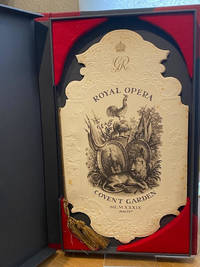
1939réf. 63657London: Royal Opera House 1939. Folio. 8 pp. Large pictorial stiff card wrappers with tassels at spine. In custom made half red morocco solander box with leather title label and felt corner-pieces. Front and rear cover designs by Rex Whistler. Printed programme. Spotting to covers. Internally fresh. A performance by the Vic-Wells Ballet under the direction of Ninette de Valois and The London Philharmonic Orchestra conducted by Constant Lambert and Sir Thomas Beecham. Scarce. Very good example. . Near Fine. Wraps. 1939. Royal Opera House 1939 paperback
1791réf. 3005370Paris: l'Auteur 1791. Some small tears and damage. A very good copy. Octavo; original condition stitched in plain blue-grey wrappers. First edition of one of the most popular operas of the Revolution depicting the down-trodden villagers of the Moon after the arrival of the glamorous aviator Nicodème bringing news of events in France via Montgolfier balloon. Although this was an era of tremendous advances in stagecraft as the theatres of Paris and London vied with each other for the most stupendous effects Beffroy's lunar setting and the use of space travel by hot-air balloon was highly unusual. Beffroy de Reigny 1757-1811 was a successful journalist and dramatist usually writing under the nom-de-plume of "Cousin Jacques." His most important works were written in the period immediately following the French Revolution and he was fond of using lunar society to satirise the French as can be seen in his burlesque journal Les Lunes and its successor the Courrier des planètes. This is one of several Paris editions of the same year another appeared in Avignon and a "third" edition of 1797 is also recorded the last with subtle but pessimistic changes to the text. As the title confirms the opera was first performed in November 1790 running for over four hundred performances. . l'Auteur unknown
1934réf. DEMO016439INew York: Random House 1934. First edition. Hardcover. Very Good/good. Octavo 57pp. black cloth; dj chipped archivally repaired chips; inked name of Nancy Doss on front pastedown some toning to endpapers from dust jacket. Wilson A21a. Full-page inscription by Gertrude Stein to O. J. Kedlec a collector from Forest Park Illinois. Stein's inscription repeats the title of this work and she wrote it from Bilignin par Belley Ain France." Random House hardcover
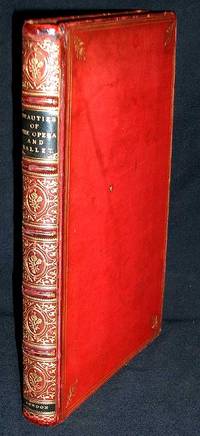
1844réf. 8333London. David Bogue. 1844. Lavishly bound in sumptuous tri-gilt ruled full crimson calfskin. Gilt tooled fleurette motifs to corners of front and rear covers. Elaborate gilt ruled spine compartments with intensely ornate gilt tooled fleural vignettes. Gilt tooled raised bands. Decorative gilt tooled and titled morocco label. Elaborate and ornate paneled turn-ins. Marbled endsheets. a.e.g. 4to. 7.25" x 10.75". The First Edition. Illustrated with ten full page illuminated steel plate engravings and further throughout by various wood engravings en texte. Elaborate multi-chromatic decorative borders to each page. A Fabulous production detailing the mid-Victorian Opera and Ballet featuring plate engravings of notable singers dancers and productions. With its high gloss engravings whimsical en texte woodcuts and highly stylized colour page borders this volume represents one of the finest examples of Victorian book design. Niles and Leslie V1-225; Moroda-1272. Some darkening and/or mild scuffing to covers. Hinges present previous repairs but are tight and firm. Corners gently bumped. Head and tail pieces lightly chipped. A very Good copy of this breathtaking work. David Bogue. hardcover
1939réf. 2091202133104999Takarazuka Girls Opera Company 1939. Soft Cover. Fine. Volume: 1 Takarazuka Girls Opera Company paperback
2011réf. 2081502111901247Chinese Encyclopedia Publishing House 2011. Soft Cover. Fine. Number of books: 2 hardcovers Chinese Encyclopedia Publishing House paperback
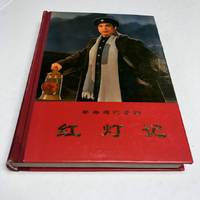
1972réf. AG-10057The Red Lantern Script红ç¯è®° Hong Deng Ji Beijing: Published by People's Publishing House printed by Beijing Xinhua Printing Factory distributed by Xinhua Bookstore Beijing Distributing Agency February 1972 FIRST EDITION 8vo. The May 1970 Script Revised Collectively by the China Peking Opera Troupe. iv374 pp. colophon consists of scripts stage photos selected theme score stage action instructions and designs beginning with quotations from Chairman Mao on the second and third pages printed pictorial stiff cover wrappers fine condition. 京剧《红ç¯è®°ã€‹å‰§æœ¬ 北京:人民出版社出版,中国京剧团集体制作,基于1970年五月演出本,1970年12月第一版,书的å‰ä¸¤é¡µæœ‰æ¯›ä¸»å¸è¯å½•ï¼Œå…±374页主体内容。精装,å“相éžå¸¸å¥½ã€‚ People’s Publishing House hardcover
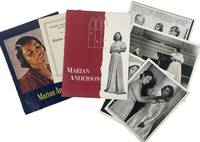
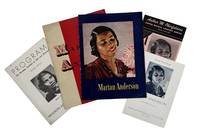
1947réf. 209021947. Anderson Marian group of eight items dating from 1946 to 1959 documents the concert career and international recognition of Marian Anderson a central figure in twentieth century African American music and a pivotal presence in the desegregation of American performance spaces. By the mid twentieth century Anderson's career intersected with both domestic civil rights developments and U.S. cultural diplomacy abroad following earlier milestones including her 1939 Lincoln Memorial concert and her 1955 debut at the Metropolitan Opera. The materials trace her concert programming repertoire and public reception including performances featuring European composers such as Franz Schubert alongside African American spirituals as well as her role in international cultural exchange. Photographs document formal recognitions including a ceremony in Tokyo where Princess Takamatsu of the Japanese Red Cross awarded Anderson a medal of merit following her performances benefiting Japanese orphans and a 1958 presentation at the American National Theatre and Academy marking her participation in presidential cultural initiatives. Anderson Marian. Archive of concert programs and press photographs. Various locations: University of Minnesota and S. Hurok management 1946 to 1959. Eight items total comprising four concert programs and four black and white silver gelatin press photographs. Programs range from approximately 5 x 8 inches to 9 x 12 inches and include: a University Artists Course program for the 1946 to 1947 season at the University of Minnesota featuring Anderson's recital with repertoire including Schubert and spirituals; multiple S. Hurok managed programs presenting Anderson as a leading concert artist with biographical essays photographs and repertory notes; and a 1955 program continuing similar documentation of her touring career. Photographs measure approximately 8 x 10 inches with three retaining original press captions on verso or margins including images of Anderson receiving honors in Japan posing with a sculpted bust by Napoleon Veloso Abueva and accepting the Gimbel National Award in 1959. These materials situate Anderson within mid twentieth century performance networks that linked concert stages international diplomacy and public recognition of African American achievement. The programs document how her repertoire bridged European classical traditions and African American musical forms while the press photographs emphasize her role as a cultural ambassador during the Cold War period when artists were enlisted in international outreach initiatives. Honors such as the Japanese Red Cross recognition and the Gimbel National Award underscore the transnational and humanitarian dimensions of her career while the sustained documentation of her concerts reflects her continued prominence in American cultural life following breakthroughs in segregated institutions. Minor edge wear to programs and light creasing to one photograph; materials remain clean and well preserved. Overall very good condition. unknown
1938réf. 209421938. Anderson Marian archive of six concert programs dating from 1938 to 1953 documents the touring career of Marian Anderson during a period when her performances intersected with national debates over race access to public space and cultural representation. By the early 1940s Anderson had achieved international recognition following appearances at the White House and before British royalty as well as her widely attended 1939 concert at the Lincoln Memorial where she performed before an audience of 75000 after being barred from Constitution Hall. The programs trace her sustained concert activity across North America including major tours and individual performances in Canada and the United States and document the presentation of her repertoire which combined European art song traditions with African American spirituals. Anderson Marian. Archive of six concert programs. Various venues including University Artists tour circuits and concert halls in Toronto Brooklyn and Denver 1938 to 1953. Six programs in staple bound wrappers ranging from approximately 5 x 8 inches to 9 x 12 inches. Includes a program from her 1941 to 1942 coast to coast tour with extended biographical content and photographic illustrations depicting Anderson in performance receiving honors and in personal settings with family and manager Sol Hurok. A later illustrated program from the 1951 to 1952 tour presents similar material reflecting her continued prominence. Additional smaller programs document specific engagements at Eaton Auditorium in Toronto 1946 Brooklyn Institute of Arts and Sciences 1950 and Denver Auditorium 1953. These programs provide a record of Anderson's sustained public presence during a period when African American performers navigated segregated venues and expanding national audiences contributing to shifts in cultural access and representation. The inclusion of biographical narratives photographic imagery and repertory selections illustrates how her career was framed for concert audiences and how her public identity was constructed through touring circuits. Her performances in major cities across North America demonstrate the geographic reach of her influence and the institutional contexts in which her work was received offering material for the study of music history race and performance culture in the mid twentieth century. Minor edge wear with some foxing to several programs and manuscript notation to the Eaton Auditorium program; overall clean and stable. Overall very good condition. unknown
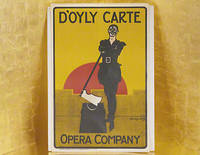
1919réf. 432211919. First Edition. GILBERT AND SULLIVAN D'OYLY CARTE OPERA COMPANY. Poster ""Gilbert and Sullivan's ""The Yeoman of the Guard"" by Dudley Hardy"". WITH: Billboard ""Opera Company's 1919/1920 Season by Dudley Hardy and John Hassall"". London: David Allen & Sons 1919. Single sheet measuring 20 by 30 inches; nine unassembled dovetailing sheets measuring 7-1/2 by 10 feet assembled. $900.Original poster depicting the headsman with axe from Gilbert and Sullivan's ÒThe Yeoman of the GuardÓ accompanied by a large billboard in parts announcing the seasonÕs productions with three poster designs: ÒThe YeomanÓ ÒThe GondoliersÓ and ÒThe Mikado.ÓThe poster advertises Gilbert and Sullivan's ""Yeoman of the Guard"" widely recognized as Sullivan's most accomplished musical score. A classic Savoy Opera the piece isÑrather unusuallyÑset during the 16th century at the Tower of London bringing in quasi-Shakespearean dialogue and a darker atmosphere. The accompanying billboardÑmeasuring over 70 square feetÑpromotes the 1919 season's productions including ""Yeoman"" the musical theater favorite ""The Mikado"" and Gilbert and Sullivan's last major success ""The Gondoliers."" Hardy and Hassall were among the premier graphic artists of their time having built reputations both as book illustrators and specialists in poster design. Hardy was influenced by French chalk drawings and poster art while Hassall attributes his style to Japanese prints. ""Yeoman"" poster fine. Chipping and creasing to separate panels of original billboard. A wonderful pair. unknown
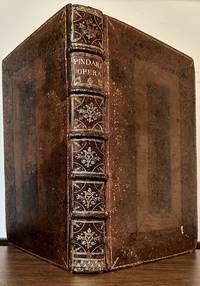
1697réf. 23479Oxford: Etheatro Sheldoniano 1697. leather_bound. Contemporary cambridge style binding in full brown calf. Very good. Folio6 A4-Ppp4 Qqq-Pppp Qqqq2-Zzzz2 Aaaaa-Mmmmm. The first English edition of the Greek text edited by Richard West & Robert Welsted. Engraved portrait of Pindar by M. Burghers facing the title page. DIBDIN II 289. "a beautiful and celebrated edition. on the whole we must allow that the editors of this magnificent work have taken infinite pains to bring together every thing which could illustrate and improve the reading of the poet". The editors compared the Mss held by the Bodleian with that of the Biblioteca Palatina. Engraved portrait of Pindar and large title page vignette by M. Burghers. Pindar c. 522 – c. 443 BC was an Ancient Greek lyric poet of the classical period from Thebes and the first Greek poet to reflect on the nature of poetry and on the poet's role. Errata. BRUNET IV p.659. Armorial bookplate. Raised bands spines richly gilt small front cover nick scrape lower front cover corner binding tight with leaves at end of text of Pindari Opera Omnia leaves Oooo-Mmmm toned. Etheatro Sheldoniano unknown
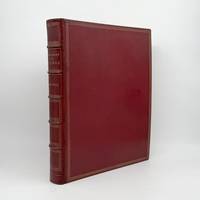
1923réf. 370639New York 1923. Mounted photograph of the Opera House. Calligraphic presentation leaf extracts from programs inlaid in large folio leaves 120 2 index ff. 1 vols. Folio. Full deep red morocco gilt spine with five raised bands boards with triple fillet borders navy blue doublures silk flyleaves t.e.g. Faintest traces of rubbing. Fine. Mounted photograph of the Opera House. Calligraphic presentation leaf extracts from programs inlaid in large folio leaves 120 2 index ff. 1 vols. Folio. Elaborate and attractive album of extracts from the printed programs of the Metropolitan Opera House in New York a record of opera productions from 1915 to 1922 listing the principal performances and also retaining the lists of box holders which functions as a who's-who of New York society. There are several newspaper clippings including an account of the farewell performance of Mrs. Geraldine Farrar in Tosca. Presented to Henry Fletcher by his wife Ethel née Thompson on the tenth anniversary of their wedding. Henry Fletcher 1877-1953 of Greenwich Connecticut was a member of the Grolier Club until his death and a major benefactor of the Yale libraries. unknown
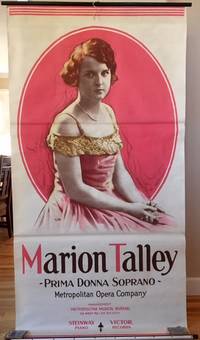
1924réf. 51696New York NY; Hollywood CA; Taos NM: Underwood & Underwood Anderson Lumiere Guard Vitaphone Studios Metropolitan Music Bureau 1924-1927. Twenty seven items. With 24 photographs 3 sized 3.5 x 5.5 in.; 6 sized 5 x 7.75 in.; 1 w/ colour-tinted blue sized 7.25 x 9.5 in.; 16 sized 8 x 10 in.; many w/ annotations dating the photos in pencil some of the press photos and studio photos stamped on versos with attached newsreel information blurbs many w/ text in negative at lower corner of image; 1 very large colour lithograph poster printed on linen showing the young opera star seated and colours of pink gold and black sized 40 x 80 in. w/ wood bars at upper & lower for hanging some minor creasing from rolling but in Fine condition; and TLS from Lawrence H. Smith at Underwood & Underwood Inc. News Picture Division to Miss Marion Talley. These photographs and giant lobby poster provide splendid artifacts for the lavish attention paid to a young star at the beginning of her career during the Jazz Age. The very large poster is a beautiful example of colour lithography showing her demurely seated against a pink lozenge background with advertisements at the foot of the poster for Steinway Piano and Victor Records. Marion Talley 1906-1983 was the daughter of a telegraph operator for the Missouri Pacific Railroad and by 15 she was appearing in the Kansas City Grand Opera Company of Mignon by Abroise Thomas and quickly became a local celebrity often performing benefit concerts. She studied with music teacher Frank LaForge famed soprano composer who maintained a close relationship with the Metropolitan Opera and was placed under contract in 1925 by Giulio Gatti-Casazza at age 19 becoming the youngest principal female performer in the Met’s history to that point. Her debut performance was Feb. 17 1926 as Gilda the daughter of the title character in Verdi’s Rigoletto. The press photos show her surrounded by the many flowers she received in the 18 encores her performance on stage meeting the opera diva Ernestine Schumann-Heinck d. 1936 as well as her appearance on radio with Marguerite D’Alvarez and Giovanni Martinelli singing Home! Sweet Home!. In addition she also starred in the first Vitaphone short sound films released in 1926 with Don Juan starring John Barrymore and another Vitaphone short performing “Bella figlia dell’amore” from Rigoletto but the critics were savage criticizing her performances and her lack of appeal on camera. During this period she traveled extensively to Europe and through the southwest as evidenced by the series of photos showing her in Taos with the burros young Native American children and adults in regalia as well as her automobile. The photo of the young star by Samuel Lumiere 1878-1971 is a very nice example of his portrait work during the height of the 1920s when he was under contract to shoot celebrities for the Chicago Tribune. See: Barrios A Song in the Dark: The Birth of the Musical Film pp. 20-29; Vitaphone Marks 80th Anniversary Vitaphone News The Vitaphone Project Vol. 8 No. 1 2006; Crafton The Talkies: American Cinema’s Transition to Sound 1926-1931 1999. Underwood & Underwood, Anderson, Lumiere, Guard, Vitaphone Studios, Metropolitan Music Bureau, unknown
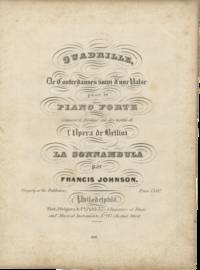
1837réf. List3613Philadelphia: Firth Meignen & Co. Publishers & Importers of Music and Musical Instruments No. 41 Chestnut Street 1837. Seven pages complete including dance figures. Folio sheet music. Very good with scattered foxing and light edge wear. A rare early American operatic dance arrangement by Francis Johnson 1792-1844 widely regarded as the first published Black composer in the United States. Issued circa 1837 this work adapts themes from Vincenzo Bellini's opera La Sonnambula 1831 into a set of quadrilles with concluding waltz arranged for piano forte and structured for social dancing. The internal headings "Pantalon" "Ladies Chain" etc. retain the formal quadrille sequence reflecting the popularity of European ballroom forms in Philadelphia during the period. Johnson a Philadelphia bandleader composer and virtuoso keyed bugle player published approximately seventy compositions over nearly three decades. Active in Philadelphia from at least the 1810s he became one of the city's most sought-after musicians leading ensembles for cotillions public balls military functions and civic celebrations. In 1818 became the first African-American composer known to have sheet music published in the United States. His band performed for elite social events and public commemorations including celebrations for the Marquis de Lafayette's visit to Philadelphia. In 1838 he toured Europe with his ensemble performing in England and reportedly receiving a silver trumpet from Queen Victoria. This piece was composed a year earlier per the Johnson page at Musicalgeography.com six years after Bellini's work. Operatic paraphrases and dance adaptations of fashionable European works were central to Johnson's output. Overall a quite scarce early title from an important composer. We find two copies in OCLC 692295106 at AAS and the William Clements Library. See "Francis Johnson's Compositions - With Sheet Music" https://musicalgeography.org/francis-johnsons-compositions/. Firth, Meignen & Co., Publishers & Importers of Music and Musical Instruments, No. 41 Chestnut Street