1.932 Ergebnisse
1934Best.-Nr. 31822Amsterdam: N. V. Kunsthandel P. De Boer. As New. Paperback. FREE UPGRADE to Courier/Priority Shipping Upon Request - IN STOCK AND IMMEDIATELY AVAILABLE FOR SHIPMENT - 75 pages of text; 48 pages of black and white plates; text in Dutch. 227 works in the exhibition. -- with a bonus offer--; T-Deboe; N. V. Kunsthandel P. De Boer; Burchard L.; De Boer P.; Gluck G. De Helsche en de Fluweelen Brueghel en Hun Invloed op de Kunst in de Nederlanden naar aanleiding van de Tentoonstelling in de N. V. Kunsthandel P. De Boer Amsterdam - 10 February - 26 March 1934 . 1934. N. V. Kunsthandel P. De Boer paperback
Best.-Nr. 49672Tehran Iran: Soroush Press / Published under the Auspices of the Shahbanu Farah Foundation and the National Iranian Radio and Television 1977. Very Good. Tehran Iran: Soroush Press / Published under the Auspices of the Shahbanu Farah Foundation and the National Iranian Radio and Television 1977. Third Edition Second Impression. Sixteen Quarto volumes; blue-gray cloth stamped in silver. Plates and illustrations some color. No dust jackets. Mild rubbing; spotting to spines; spotting to edges of text block of two volumes; interiors unmarked; overall a Very Good example of an impressive production. In the preface to the final volume volume two of the bibliography editor Jay Gluck laments the recent death of Phyllis Ackerman who was pre-deceased by her husband co-editor Arthur Upham Pope in 1969 though notes they will both be buried at a twin-domed mausoleum in Isfahan. "Which will be their lasting monument: the brick and stone and tile by the River Zayadeh; the tens of thousands of volumes of paper and buckram of the Survey; their impact on their patrons and the artisans of Iran who were reawakened to their traditional arts and crafts; or the places they took in their hearts of their colleagues and students Soroush Press / Published under the Auspices of the Shahbanu Farah Foundation and the National Iranian Radio and Television unknown

Best.-Nr. 49672Tehran Iran: Soroush Press / Published under the Auspices of the Shahbanu Farah Foundation and the National Iranian Radio and Television 1977. Very Good. Tehran Iran: Soroush Press / Published under the Auspices of the Shahbanu Farah Foundation and the National Iranian Radio and Television 1977. Third Edition Second Impression. Sixteen Quarto volumes; blue-gray cloth stamped in silver. Plates and illustrations some color. No dust jackets. Mild rubbing; spotting to spines; spotting to edges of text block of two volumes; interiors unmarked; overall a Very Good example of an impressive production. In the preface to the final volume volume two of the bibliography editor Jay Gluck laments the recent death of Phyllis Ackerman who was pre-deceased by her husband co-editor Arthur Upham Pope in 1969 though notes they will both be buried at a twin-domed mausoleum in Isfahan. "Which will be their lasting monument: the brick and stone and tile by the River Zayadeh; the tens of thousands of volumes of paper and buckram of the Survey; their impact on their patrons and the artisans of Iran who were reawakened to their traditional arts and crafts; or the places they took in their hearts of their colleagues and students Soroush Press / Published under the Auspices of the Shahbanu Farah Foundation and the National Iranian Radio and Television unknown books
1969Best.-Nr. 8307Middlesex: Anvil Press Poetry 1969. First U.K. Edition. First Impression cloth issue. Octavo 22.5cm; burgundy cloth with titles stamped in gilt on spine; dustjacket; viii23-533pp. Signed by the author on the title page. Spine slightly askew light wear to heel and lower board edges else a clean Near Fine copy. Dustjacket is unclipped priced 21/- with light wear to extremities a few tiny nicks and tears with some mild creasing at base of spine and upper rear panel; Very Good. The Nobel Prize-winning author's first book. "Her poems deal in wastelands the lost lives of cripples the hopeless and loveless; yet her landscapes have a stern beauty a mythic size that looms behind the everyday. Arid merciless stinging yet full of life these are strikingly original poems" from front flap. 8307. Anvil Press Poetry unknown
1975Best.-Nr. 501001New York: The Ecco Press 1975. Hardcover. Fine/Fine. First edition hardcover issue. Fine in fine dust jacket with a tiny closed tear on the front cover. Signed in the title page and additionally Inscribed on the facing page to poet and editor Douglas Blazek: "For Doug Blazek with good wishes Louise Glück." The Poetry Foundation calls Blazek "one of the instigators of the Mimeo Revolution" and a "force in the American poetry 'underground' of the 1960s." In addition to publishing heavily early in his career Blazek also founded and edited the magazine Ole and the small press Open Skull where he published Bukowski Robert Crumb d.a. levy and other "underground" writers. A lovely copy of the Nobel laureate's second book with an excellent association. Housed in a fine custom royal blue clamshell case with the spine titled in gilt and the author's gilt facsimile signature on the cover. The Ecco Press hardcover
1975Best.-Nr. 501001New York: The Ecco Press 1975. Hardcover. Fine/Fine. First edition hardcover issue. Fine in fine dust jacket with a tiny closed tear on the front cover. Signed in the title page and additionally Inscribed on the facing page to poet and editor Douglas Blazek: "For Doug Blazek with good wishes Louise Glück." The Poetry Foundation calls Blazek "one of the instigators of the Mimeo Revolution" and a "force in the American poetry 'underground' of the 1960s." In addition to publishing heavily early in his career Blazek also founded and edited the magazine Ole and the small press Open Skull where he published Bukowski Robert Crumb d.a. levy and other "underground" writers. A lovely copy of the Nobel laureate's second book with an excellent association. Housed in a fine custom royal blue clamshell case with the spine titled in gilt and the author's gilt facsimile signature on the cover. The Ecco Press hardcover books
Best.-Nr. 173715Hopewell New Jersey: The Ecco Press 1992. Crying yes risk joy / in the raw wind of the new world First edition inscribed by the author to a fellow gardener-poet on the half-title "For Meryl. After the airport. Louise Glück". Meryl Natchez first encountered Glück's works when she bought this copy at an airport bookstore. Natchez evidently told this story to Glück who had Natchez in attendance while giving a poetry reading at Moe's Books Berkeley on 9 February 2012 and at her Stanford lectures. Natchez has published two poetry collections Jade Suit 2001 and Catwalk 2020. Glück's Pulitzer Prize-winning collection contains some of her best-known poems including "Snowdrops" "End of Winter" and "The Silver Lily". Octavo. Original dark blue quarter cloth spine lettered in gilt yellow paper-covered sides with publisher's blind device on front. With dust jacket. Publisher's mailing slip loosely inserted. A fine copy in fine unclipped jacket. hardcover
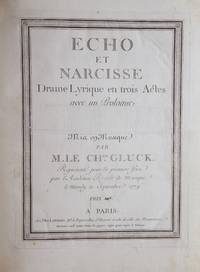
1779Best.-Nr. 40424Paris: Chez des Lauriers Md. de Papiers Rue St. Honoré à côté de celle des Prouvaires Ou trouve aussi toutes sortes de papiers réglés pour copier la Musique 1779. Folio. Contemporary quarter dark brown calf with marbled boards spine in decorative compartments gilt with titling gilt to spine. 1f. recto title verso blank 256 pp. With blank overpaste to title obscuring the words "Par M. Le Baron de T." Signature "L. Wessén" in ink to front pastedown and "A. Benzinger" to free front endpaper. Binding worn rubbed and bumped; lower portion of upper joint partially split. Occasional small stains foxing browning tears and light dampstaining; minor loss to blank outer margin of pp. 139 and 149; several small holes to p. 237. Quite a good copy overall on quality paper. First Edition variant issue. Hopkinson p. 63 with attributes of 47Ac except here there is no plate number and the price "40" appears in manuscript and 47Ae as "Royale" has been erased here in pencil. Wotquenne 47. BUC p. 386. RISM G2739 First performed in Paris at the Opéra on 24 September 1779. "Echo et Narcisse was a failure at its early performances largely because the audiences and critics expected high drama along the lines of Alceste Armide and Iphigénie en Tauride. But Echo et Narcisse is a different type of work; it belongs to the pastoral tradition still popular at this date and a genre to which Gluck frequently returned. Comparisons were and are still made with Gluck's more popular dramas because Echo et Narcisse contains numbers and scenes similar to those that had made greater impressions before. It is not a weak opera and there is much fine music in it ." Jeremy Hayes in Grove Music Online Gluck was a "Bohemian-Austrian composer of Italian and French opera a leading figure in opera of the second half of the 18th century and the person chiefly credited with the 'reform' of opera after the age of Metastasian opera seria. . Force of circumstance may have led Gluck to Paris to complete his operatic career but in artistic terms Paris can be seen as his inevitable final destination. His years of grounding in opéra comique and the ballet and via Traetta his response to the French tragédie lyrique tradition had already provided the impetus for his overhaul of the opera seria; now it was time to confront that tradition on its own territory. On more than one occasion indeed Gluck explicitly owned the French influence and its particular effect on his preparation for Paris. Between them the eight operas that he produced for the Académie Royale de Musique in Paris - the two Iphigénie operas; the radical revisions for Paris of the Vienna 'reform' operas Orfeo and Alceste; the similar revisions of the Vienna opéras comiques Cythère assiégée and L'arbre enchanté; Armide a new opera on a libretto that Quinault had written for Lully more than 90 years earlier; and the last opera Echo et Narcisse - are all different attempts at the confrontation and revival of that lyric tradition." Jeremy Hayes Bruce Alan Brown Max Loppert and Winton Dean in Grove Music Online. Chez des Lauriers Md. de Papiers, Rue St. Honoré à côté de celle des Prouvaires Ou trouve aussi toutes sortes de papiers ré unknown
1779Best.-Nr. 40424Paris: Chez des Lauriers Md. de Papiers Rue St. Honoré à côté de celle des Prouvaires Ou trouve aussi toutes sortes de papiers réglés pour copier la Musique 1779. Folio. Contemporary quarter dark brown calf with marbled boards spine in decorative compartments gilt with titling gilt to spine. 1f. recto title verso blank 256 pp. With blank overpaste to title obscuring the words "Par M. Le Baron de T." Signature "L. Wessén" in ink to front pastedown and "A. Benzinger" to free front endpaper. Binding worn rubbed and bumped; lower portion of upper joint partially split. Occasional small stains foxing browning tears and light dampstaining; minor loss to blank outer margin of pp. 139 and 149; several small holes to p. 237. Quite a good copy overall on quality paper. First Edition variant issue. Hopkinson p. 63 with attributes of 47Ac except here there is no plate number and the price "40" appears in manuscript and 47Ae as "Royale" has been erased here in pencil. Wotquenne 47. BUC p. 386. RISM G2739 First performed in Paris at the Opéra on 24 September 1779. "Echo et Narcisse was a failure at its early performances largely because the audiences and critics expected high drama along the lines of Alceste Armide and Iphigénie en Tauride. But Echo et Narcisse is a different type of work; it belongs to the pastoral tradition still popular at this date and a genre to which Gluck frequently returned. Comparisons were and are still made with Gluck's more popular dramas because Echo et Narcisse contains numbers and scenes similar to those that had made greater impressions before. It is not a weak opera and there is much fine music in it ." Jeremy Hayes in Grove Music Online Gluck was a "Bohemian-Austrian composer of Italian and French opera a leading figure in opera of the second half of the 18th century and the person chiefly credited with the 'reform' of opera after the age of Metastasian opera seria. . Force of circumstance may have led Gluck to Paris to complete his operatic career but in artistic terms Paris can be seen as his inevitable final destination. His years of grounding in opéra comique and the ballet and via Traetta his response to the French tragédie lyrique tradition had already provided the impetus for his overhaul of the opera seria; now it was time to confront that tradition on its own territory. On more than one occasion indeed Gluck explicitly owned the French influence and its particular effect on his preparation for Paris. Between them the eight operas that he produced for the Académie Royale de Musique in Paris - the two Iphigénie operas; the radical revisions for Paris of the Vienna 'reform' operas Orfeo and Alceste; the similar revisions of the Vienna opéras comiques Cythère assiégée and L'arbre enchanté; Armide a new opera on a libretto that Quinault had written for Lully more than 90 years earlier; and the last opera Echo et Narcisse - are all different attempts at the confrontation and revival of that lyric tradition." Jeremy Hayes Bruce Alan Brown Max Loppert and Winton Dean in Grove Music Online. Chez des Lauriers Md. de Papiers, Rue St. Honoré à côté de celle des Prouvaires Ou trouve aussi toutes sortes de papiers ré unknown books
2023Best.-Nr. 54004Paris Editions d'Art FMA 2023 Deux leporelli in-4 maroufls et contrecolls en regard, (8 feuillets pour le texte, 4 feuillets pour la suite), assembls dans une chemise en velours bleu nuit. Etui (reliure de l'diteur).Inspir de lOdysse d'Homre, rcit fondateur de la culture occidentale, le rcit-pome indit de Michal Glck enlumin des ?uvres originales de Bernard Alligand nous transporte dans une toile arachnenne immersive, lumineuse et envotante. Les ?uvres parcourent lensemble du livre. Elles nous invitent suivre la main narrative de Pnlope par lillusion du tissage faisant cho au rcit-pome de lauteur. Le choix des matires (diffrentes textures de papier et gravures), rsine, poudres dor et dargent, le tumulte des effets marins (bleu/mer), la succession de bandes (tissage), la figuration suggestive (geste de Pnlope) ou symbolique des personnages (or/Dieux), crent une intensit particulire l?uvre-livre (extrait de la prsentation de l'diteur). Edition originale, illustre par Bernard Alligand de somptueuses compositions en couleurs qui ornent presque toutes les pages du livre et qui ont ncessit prs de 9.000 interventions manuelles (hors essais), selon de multiples techniques appliques soit sur un papier imprim offset bleu et recouvert dune acrylique blanche, soit sur un papier mtallis: photographies de compositions originales, impressions numriques, colorations avec de la rsine, enduits et incrustations de poudres argent et or. La mise en pages des lments dcoratifs a t ralise par des dcoupes, des assemblages et des collages. Certaines pages ont t rehausses d'empreintes froid obtenues par l'utilisation de plaques graves en carborundum avec des apports de matire et des passages sous presse sec bande/bande. Tirage limit 31 exemplaires numrots sur papier Moulin du Gu, signs par l'auteur et l'artiste. Un des 18 premiers exemplaires, seuls comporter une suite de 7 ?uvres originales en couleurs runies sous la forme d'un leporello sign par Bernard Alligand et mont en regard du livre. Cet ouvrage est une relle russite, tant par la qualit du texte et des illustrations, que par la typographie utilise et la mise en pages. Chacune des illustrations entirement ralises la main, est unique.
Best.-Nr. 187177New York: The Ecco Press 1980. It is a deep relief to love so consistently First edition inscribed by Glück to her fellow poet and close friend Hugh Seidman: "Hugh - the experience of profound regard is not easy since it contains so much yearning. So much envy. Your poems seem sometimes that which I derive from that which I aspire to -- finally. It is a deep relief to love so consistently. Louise". Glück's admiration for Seidman's poetry was intense and long lasting. She published an essay celebrating his work On Hugh Seidman in her 1994 Proof & Theories: Essays on Poetry. In it she said of his 1970 volume Collecting Evidence that "I know few collections so lacking in complacency so adamant in their refusal to charm or console so fiercely intelligent" p. 48. Octavo. With the publisher's advertising slip printed in purple. Original purple cloth spine lettered in silver. With dust jacket designed by Loretta Li. Upper edge a little faded; jacket unclipped spine a little creased edges a little rubbed with 3 tiny closed tears: a near-fine copy in very good jacket. hardcover
Best.-Nr. 500249New York: Antaeus Editions/ Printed by The Oliphant Press 1976. Softcover. Fine. First edition signed issue. Tall narrow octavo. 12pp. Sewn green printed wrappers. Fine. Limited to 50 numbered copies Signed by Glück of 500 total. Nicely designed and printed by Ronald Gordon at The Oliphant Press. Very scarce. Housed in a fine custom royal blue clamshell case with the spine titled in gilt and the author's gilt facsimile signature on the cover. Glück received the 2020 Nobel Prize in Literature. Antaeus Editions/ (Printed by The Oliphant Press) unknown
Best.-Nr. 500249New York: Antaeus Editions/ Printed by The Oliphant Press 1976. Softcover. Fine. First edition signed issue. Tall narrow octavo. 12pp. Sewn green printed wrappers. Fine. Limited to 50 numbered copies Signed by Glück of 500 total. Nicely designed and printed by Ronald Gordon at The Oliphant Press. Very scarce. Housed in a fine custom royal blue clamshell case with the spine titled in gilt and the author's gilt facsimile signature on the cover. Glück received the 2020 Nobel Prize in Literature. Antaeus Editions/ (Printed by The Oliphant Press) unknown books
Best.-Nr. 32415New York: George Braziller. As New. Hardcover Monograph. FREE UPGRADE to Courier/Priority Shipping Upon Request - IN STOCK AND IMMEDIATELY AVAILABLE FOR SHIPMENT - AS NEW THE TEXT BLOCK IS PRISTINE CLEAN UNMARKED AND IN EXCELLENT CONDITION - - Not dated; copyright 1936. Text in English; many lovely color plates. -- with a bonus offer--; T-Gluck; Gluck Gustav Peter Brueghel the Elder . George Braziller hardcover
1969Best.-Nr. 3979First UK Edition; A Presentation copy double SIGNED by the author and inscribed to publisher Herb Yellin. A Near Fine book in a Near Fine dust jacket with only light rubbing to the board and panel edges and a couple of tiny chips out of the spine head and top edge. An outstanding copy of this collection of poems the Pulitzer winning author's first collection; scarce in the first edition and signed unique with the association to Herb Yellin. An important addition to any Gluck or modern poetry collection. Not remaindered not price-clipped the limited edition is price clipped not ex-library; in a protective Mylar cover and will ship securely wrapped in a sturdy box. Anvil Press hardcover
1969Best.-Nr. 3979First UK Edition; A Presentation copy double SIGNED by the author and inscribed to publisher Herb Yellin. A Near Fine book in a Near Fine dust jacket with only light rubbing to the board and panel edges and a couple of tiny chips out of the spine head and top edge. An outstanding copy of this collection of poems the Pulitzer winning author's first collection; scarce in the first edition and signed unique with the association to Herb Yellin. An important addition to any Gluck or modern poetry collection. Not remaindered not price-clipped the limited edition is price clipped not ex-library; in a protective Mylar cover and will ship securely wrapped in a sturdy box. Anvil Press hardcover books
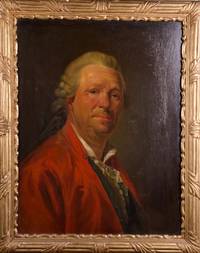
Best.-Nr. 40422Paris 19th century. 61 x 47.3 cms with frame 69.5 x 56 cms. The composer is depicted bust-length turned 3/4 left facing forward wearing a red jacket blue waistcoat white collared blouse with lace and wig. For a fine full-page color illustration of the original held at the Louvre see MGG Vol. 5 plate 15. "Gluck was recognized as an extraordinary phenomenon in his lifetime as is evident from Burney's deferential treatment of the composer during his visit to Vienna in 1772. Shortly afterwards the controversy stirred in French journals resonated well beyond the capital to other countries. The daily cultural discourse of Paris concerned Gluck's 'musical revolution' a catch-phrase taken up by Gluck's opponents such as Jean-François Marmontel as well as by his defenders; in 1781 the 'revolution worked in music by M. le Chevalier Gluck' later dubbed the 'German Orpheus' was used as the title of a collection of pamphlets for and against Gluck with a heavy editorial bias in favour Lesure c1984. Although operas by Piccinni Salieri and especially Sacchini as well as French contemporaries such as Grétry continued alongside Gluck in the French repertoire beyond the Revolution and Empire revivals of Gluck constituted the principal touchstone of dramatic music into the 1820s when the last routine revivals were acclaimed by Berlioz. Opera composers including Salieri Lemoyne and Vogel in Paris were presented or presented themselves as his legitimate successors; elsewhere Mozart especially in Idomeneo and J.M. Kraus were strongly affected by Gluck's example in constructing scenes applying a dramatically motivated admixture of lyricism and more direct and declamatory vocal expression and sometimes in modelling as when the statue in Don Giovanni adopts the tone of the oracle in Alceste. After his death his direct effect can still be heard in Die Zauberflöte and in several French operas including those of Méhul Cherubini and Spontini. Among the Romantics he continued to inspire respect and from Berlioz and Wagner emulation. Berlioz supervised productions of Orphée and Alceste in Paris 1859 and 1866. In Orphée Berlioz created the basis for the version most used over the next century at least by restoring the Italian key-scheme in several scenes to accomodate the tessitura of the title role to a female singer; Pauline Viardot was the first in a line to include Giulia Ravoli Kathleen Ferrier Janet Baker and others although the French version with tenor retained some currency. Musicians close to Berlioz began to realize his ideal of a complete critical edition although only a handful of 'reform' operas were published. Wagner wrote about Gluck in Oper und Drama having learned much from deep study of Iphigénie en Aulide of which he made a modernized performing version Dresden 1847. In 1890 for Weimar Richard Strauss similarly adapted Iphigénie en Tauride. Such orchestrational revision and the melding of recitative and aria to blur Gluck's structure of closed forms represented a style of musical archaeology from which Handel and Mozart also suffered or in terms of public exposure benefited. The later 20th century witnessed not only numerous revivals of the reform operas some in musically authentic form and including the Vienna Orfeo but also a less one-sided critical view of Gluck became possible with the publication of a new critical edition and a revival of interest in works in other genres especially opéra comique and with Don Juan ballet. Winton Dean has observed that Gluck's compromise between the demands of words and music 'was one of the most satisfying and successful of all and has placed his greatest works beyond the reach of time' Grove6. None of Gluck's operas except Orfeo/Orphée is likely to become a staple work in the repertory; however to the extent that every production has the aspect of a revival continued interest in his achievement and consequently revival of an increasing proportion of his output is guaranteed so long as opera continues to occupy a central place in Western musical culture." Julian Rushton in Grove Music Online. unknown
Best.-Nr. 40422Paris 19th century. 61 x 47.3 cms with frame 69.5 x 56 cms. The composer is depicted bust-length turned 3/4 left facing forward wearing a red jacket blue waistcoat white collared blouse with lace and wig. For a fine full-page color illustration of the original held at the Louvre see MGG Vol. 5 plate 15. "Gluck was recognized as an extraordinary phenomenon in his lifetime as is evident from Burney's deferential treatment of the composer during his visit to Vienna in 1772. Shortly afterwards the controversy stirred in French journals resonated well beyond the capital to other countries. The daily cultural discourse of Paris concerned Gluck's 'musical revolution' a catch-phrase taken up by Gluck's opponents such as Jean-François Marmontel as well as by his defenders; in 1781 the 'revolution worked in music by M. le Chevalier Gluck' later dubbed the 'German Orpheus' was used as the title of a collection of pamphlets for and against Gluck with a heavy editorial bias in favour Lesure c1984. Although operas by Piccinni Salieri and especially Sacchini as well as French contemporaries such as Grétry continued alongside Gluck in the French repertoire beyond the Revolution and Empire revivals of Gluck constituted the principal touchstone of dramatic music into the 1820s when the last routine revivals were acclaimed by Berlioz. Opera composers including Salieri Lemoyne and Vogel in Paris were presented or presented themselves as his legitimate successors; elsewhere Mozart especially in Idomeneo and J.M. Kraus were strongly affected by Gluck's example in constructing scenes applying a dramatically motivated admixture of lyricism and more direct and declamatory vocal expression and sometimes in modelling as when the statue in Don Giovanni adopts the tone of the oracle in Alceste. After his death his direct effect can still be heard in Die Zauberflöte and in several French operas including those of Méhul Cherubini and Spontini. Among the Romantics he continued to inspire respect and from Berlioz and Wagner emulation. Berlioz supervised productions of Orphée and Alceste in Paris 1859 and 1866. In Orphée Berlioz created the basis for the version most used over the next century at least by restoring the Italian key-scheme in several scenes to accomodate the tessitura of the title role to a female singer; Pauline Viardot was the first in a line to include Giulia Ravoli Kathleen Ferrier Janet Baker and others although the French version with tenor retained some currency. Musicians close to Berlioz began to realize his ideal of a complete critical edition although only a handful of 'reform' operas were published. Wagner wrote about Gluck in Oper und Drama having learned much from deep study of Iphigénie en Aulide of which he made a modernized performing version Dresden 1847. In 1890 for Weimar Richard Strauss similarly adapted Iphigénie en Tauride. Such orchestrational revision and the melding of recitative and aria to blur Gluck's structure of closed forms represented a style of musical archaeology from which Handel and Mozart also suffered or in terms of public exposure benefited. The later 20th century witnessed not only numerous revivals of the reform operas some in musically authentic form and including the Vienna Orfeo but also a less one-sided critical view of Gluck became possible with the publication of a new critical edition and a revival of interest in works in other genres especially opéra comique and with Don Juan ballet. Winton Dean has observed that Gluck's compromise between the demands of words and music 'was one of the most satisfying and successful of all and has placed his greatest works beyond the reach of time' Grove6. None of Gluck's operas except Orfeo/Orphée is likely to become a staple work in the repertory; however to the extent that every production has the aspect of a revival continued interest in his achievement and consequently revival of an increasing proportion of his output is guaranteed so long as opera continues to occupy a central place in Western musical culture." Julian Rushton in Grove Music Online. unknown books
1969Best.-Nr. 502410London: Anvil Press Poetry 1969. Hardcover. First English edition limited signed issue. Printed on pink paper. Crown very gently bumped else fine in a lightly worn near fine dust jacket the limited signed edition was issued price-clipped. Number 31 of 50 copies Signed by Glück on the half-title. The English edition of her first book the signed issue released in a remarkably small limitation. Glück has received the National Book Award the Pulitzer Prize and the Nobel Prize in Literature. Anvil Press Poetry hardcover
1969Best.-Nr. 502410London: Anvil Press Poetry 1969. Hardcover. First English edition limited signed issue. Printed on pink paper. Crown very gently bumped else fine in a lightly worn near fine dust jacket the limited signed edition was issued price-clipped. Number 31 of 50 copies Signed by Glück on the half-title. The English edition of her first book the signed issue released in a remarkably small limitation. Glück has received the National Book Award the Pulitzer Prize and the Nobel Prize in Literature. Anvil Press Poetry hardcover books
1932Best.-Nr. 93639Anton Schroll & Co. New. 1932. Hardcover. FREE UPGRADE to Courier/Priority Shipping Upon Request - IN STOCK AND IMMEDIATELY AVAILABLE FOR SHIPMENT - Flawless copy brand new pristine never opened -- Text in German. 102 pages; 41 illustrations. Gemälde Gemalde Catalogue Raisonne Catalog Raisonné Complete Works Leben Und Werk Oeuvre-Katalog Kritischem Oeuvrekatalog Raisonnee Anton Schroll & Co. hardcover
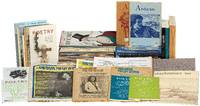
Best.-Nr. 5290492008. Softcover. Near Fine. A remarkable collection of 53 appearances in 18 magazines and literary journals by Nobel laureate Louise Glück a little over half of which were published before 1980. Only 13 were published in the 2000s. Periodicals. Octavos and quartos. A couple of issues with mailing labels else near fine overall. Highlights include pre-1970 appearances in The Atlantic twice The New Yorker three times Mademoiselle and Poetry twice as well as early appearances in lesser-known journals like Shackpainter Salmagundi Water Table No. 1 and The Goddard Journal. The 18 periodicals represented are: Agni 2 The American Poetry Review 4 Antæus 5 The Atlantic 2 Book Digest Magazine 1 Éire-Ireland 1 The Goddard Journal 1 Mademoiselle 1 New Letters 1 The New Yorker 20 The Paris Review 1 Pleiades 1 Poetry 6 Salmagundi 1 Shackpainter 2 The Threepenny Review 1 TriQuarterly 2 and Water Table 1. A large collection of periodicals featuring appearances by one of the great 20th Century American poets that would be difficult and time-consuming to put together today. A detailed list is available upon request. unknown
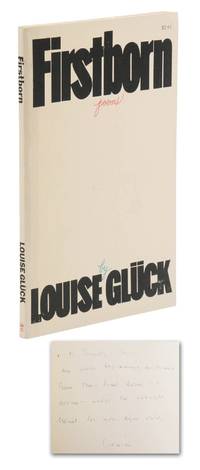
1968Best.-Nr. 140949674New York: The New American Library 1968. First Paperback Edition. Near Fine. First paperback edition first printing of Louise Gluck's first book. Association copy signed by her on the dedication page inscribed to the poets Sandra McPherson and Henry Carlile the latter's address stamp to first page: " to Sandy Henry My crude beginnings reclaimed From their final home - source - under the suburb. Meant for your eyes only. Louise" iv 53 pp. Bound in publisher's printed white wraps. Near Fine with light wear and soiling to covers slight bump to upper right corner. Very tight binding. A lovely signed copy of the Nobel Prize-winner's first poetry collection which was issued simultaneously in cloth and wrappers. From the estate of Henry Carlile in Portland. The New American Library unknown
Best.-Nr. 5290492008. Softcover. Near Fine. A remarkable collection of 53 appearances in 18 magazines and literary journals by Nobel laureate Louise Glück a little over half of which were published before 1980. Only 13 were published in the 2000s. Periodicals. Octavos and quartos. A couple of issues with mailing labels else near fine overall. Highlights include pre-1970 appearances in The Atlantic twice The New Yorker three times Mademoiselle and Poetry twice as well as early appearances in lesser-known journals like Shackpainter Salmagundi Water Table No. 1 and The Goddard Journal. The 18 periodicals represented are: Agni 2 The American Poetry Review 4 Antæus 5 The Atlantic 2 Book Digest Magazine 1 Éire-Ireland 1 The Goddard Journal 1 Mademoiselle 1 New Letters 1 The New Yorker 20 The Paris Review 1 Pleiades 1 Poetry 6 Salmagundi 1 Shackpainter 2 The Threepenny Review 1 TriQuarterly 2 and Water Table 1. A large collection of periodicals featuring appearances by one of the great 20th Century American poets that would be difficult and time-consuming to put together today. A detailed list is available upon request. unknown books
1968Best.-Nr. 140949674New York: The New American Library 1968. First Paperback Edition. Near Fine. First paperback edition first printing of Louise Gluck's first book. Association copy signed by her on the dedication page inscribed to the poets Sandra McPherson and Henry Carlile the latter's address stamp to first page: " to Sandy Henry My crude beginnings reclaimed From their final home - source - under the suburb. Meant for your eyes only. Louise" iv 53 pp. Bound in publisher's printed white wraps. Near Fine with light wear and soiling to covers slight bump to upper right corner. Very tight binding. A lovely signed copy of the Nobel Prize-winner's first poetry collection which was issued simultaneously in cloth and wrappers. From the estate of Henry Carlile in Portland. The New American Library unknown books