2.250 Ergebnisse
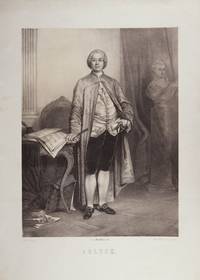
1860Best.-Nr. 41452Berlin: W. Zawitz 1860. The composer is depicted full-length standing facing forward dressed in a long coat an elegant waistcoat britches and stockings. He holds a writing quill in his right hand which partially rests on an open opera manuscript resting on a table next to the composer; volumes of his works and music paper rest against a leg of the table. Image size 400 x 275 mm; sheet size 522 x 372 mm. Printed by J. Hesse on wove paper on an off-white ground. Some minor wear soiling and repairs; creases from folding faintly visible on recto. Gluck a Bohemian-Austrian composer was "a leading figure in opera of the second half of the 18th century and the person chiefly credited with the 'reform' of opera after the age of Metastasian opera seria." Jeremy Hayes Bruce Alan Brown Max Loppert and Winton Dean in Grove Music Online Hamman a Belgian painter and engraver specialized in portraying famous artists scholars and the nobility. W. Zawitz unknown books
1825Best.-Nr. 64538Edition Nicolo, 1 vol. in-4 reliure demi-vélin vert, Chez Madame Veuve Nicolo, à Paris, édition gravée et imprimée par Marquerie, s.d. [ circa 1825 ], 1 f. et 226 pp.
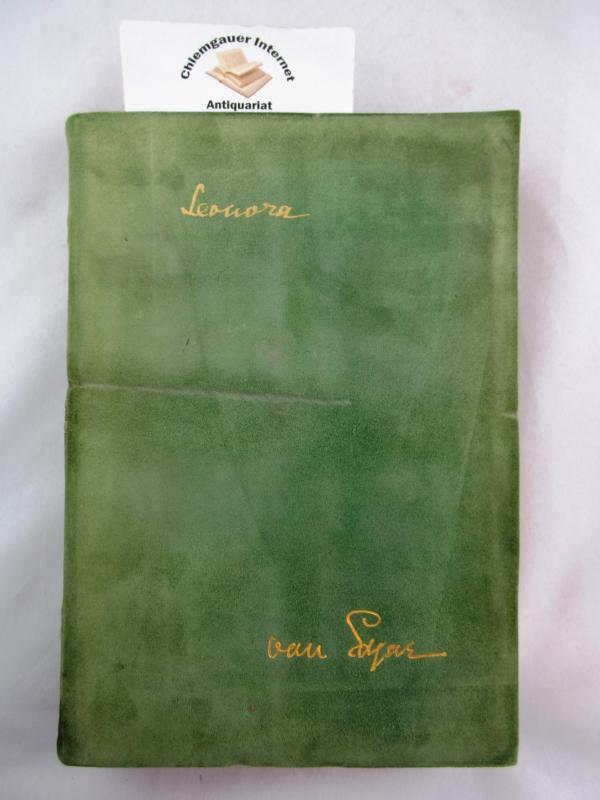
1926Best.-Nr. 277142Leipzig, Offizin Poeschel & Trepte, 1926. 396 Seiten. Mit zahlreichen Schwarz-Weiß- Abbildungen ( teils wunderbare Porträt-Aufnahmen) Grüner Wildlederband mit vergoldetem Deckeltitel und Kopfgoldschnitt. 24 cm
2012Best.-Nr. BN691844Mitteldeutscher Verlag 2012. 2012. Wiener Unterwelten Künstler Schnüffler Gruft-Entfeuchter Wiener Unterwelten Künstler Schnüffler Gruft-Entfeuchter Alexander Glück Mitteldeutscher Verlag unknown
1987Best.-Nr. BN731504Graz Verlag Droschl 1987. 1987. Die Eingeborenen sind ausgestorben Die Eingeborenen sind ausgestorben Anselm Glück Graz, Verlag Droschl unknown
1994Best.-Nr. BN698641Köln ; Weimar ; Wien : Böhlau 1994. 1994. Grammatik der russischen Sprache : 1704. =Bausteine zur slavischen Philologie und Kulturgeschichte / Reihe B Editionen ; Neue Folge Band 5 20. Grammatik der russischen Sprache : 1704. =Bausteine zur slavischen Philologie und Kulturgeschichte / Reihe B Editionen ; Neue Folge Band 5 20. Ernst Glück Köln ; Weimar ; Wien : Böhlau unknown
1990Best.-Nr. BN741335Dt. Studien-Verl. Weinheim 1990. 1990. Heisse Eisen in der Sexualerziehung. wo sie stecken und wie man sie anfasst. Heisse Eisen in der Sexualerziehung. wo sie stecken und wie man sie anfasst. Glück Gerhard Andrea Scholten und Gisela. Strötges Dt. Studien-Verl., Weinheim unknown
1985Best.-Nr. BN702271Ismaning : Hueber 1985. 1985. Deutsch 2000. =Eine Einführung in die deutsche Sprache. Bd. 3. Deutsch 2000. =Eine Einführung in die deutsche Sprache. Bd. 3. Schäpers Roland Renate Luscher und Manfred Glück Ismaning : Hueber unknown
2006Best.-Nr. BN712650Westermann Berufliche Bildung 2006. 2006. Softcover. Mathematik mit natürlicher Darstellung mit den Rechnern FX-82ES FX-85ES FX350ES und FX-991ES Mathematik mit natürlicher Darstellung mit den Rechnern FX-82ES FX-85ES FX350ES und FX-991ES Übersetzung: Stefanie Dehmel und Corinna Glück. CASIO Europe GmbH Westermann Berufliche Bildung paperback
Best.-Nr. DADAX0197546005New unknown
Best.-Nr. BN601497Graz / Wien Literaturvlg. Droschl. 1998. ich kann mich nur an jetzt erinnern. denkschrift zum bevorstehenden jahrtausendwechsel sehen sie selbst. ich kann mich nur an jetzt erinnern. denkschrift zum bevorstehenden jahrtausendwechsel sehen sie selbst. Anselm Glück Graz / Wien, Literaturvlg. Droschl., 1998. unknown
Best.-Nr. BN534750Columbia University Press. Sources of Japanese Tradition Abridged / Volume 2: 1600 to 2000; Part 1: 1600 to 1868 Sources of Japanese Tradition Abridged / Volume 2: 1600 to 2000; Part 1: 1600 to 1868 Bary Wm. Theodore De Gluck Carol Tiedemann Arthur Columbia University Press unknown
2021Best.-Nr. BN665335Sindlinger-Burchartz 2021. 2021. Softcover. Soziale Geschichten - Soziale Arbeit im Wandel der Zeit Soziale Geschichten - Soziale Arbeit im Wandel der Zeit Burchartz Nora; Glück Regine; Oktay Döndü Sindlinger-Burchartz paperback
Best.-Nr. BN408182Peter Lang Verlag. Kindliche Wortfindungsstörungen: Ein Bericht des aktuellen Erkenntnisstandes zu Grundlagen Diagnostik und Therapie Münchener Beiträge zur Sonderpädagogik Band 19 Kindliche Wortfindungsstörungen: Ein Bericht des aktuellen Erkenntnisstandes zu Grundlagen Diagnostik und Therapie Münchener Beiträge zur Sonderpädagogik Band 19 Glück Christian Wolfgang Peter Lang Verlag unknown
Best.-Nr. BN612264Collibri. Die Semantik des Kulturbegriffs Die Semantik des Kulturbegriffs Glück Helmut; Hoffmann Hilmar; Genscher Hans D; Anz Thomas and Glück Helmut Collibri unknown
Best.-Nr. BN260440DK Verlag Dorling Kindersley. Hardcover. Das Burger Buch Burger gut alles gut Das Burger Buch Burger gut alles gut HANS IM GLÜCK DK Verlag Dorling Kindersley hardcover
2010Best.-Nr. BN151485Stuttgart ; Weimar : Metzler 2010. 2010. Metzler-Lexikon Sprache. hrsg. von Helmut Glück Metzler-Lexikon Sprache. hrsg. von Helmut Glück Helmut Glück Stuttgart ; Weimar : Metzler unknown
2003Best.-Nr. __3110175045Walter De Gruyter Inc 2003. Hardcover. New. 322 pages. German language. 9.00x6.25x0.75 inches. Walter De Gruyter Inc hardcover
1985Best.-Nr. mon0003690158Princeton University Press 10/21/1985 12:00:01. hardcover. Good. 1.3000 9.3000 6.0000. Minimal foxing on outter ends of pages.rn Princeton University Press hardcover
1882Best.-Nr. 345951882. Arch. klin. Chir. 26. - Berlin Verlag von August Hirschberg 1882 8° VI 1011 pp. Holzschnitte 16 lith. Taf. Portrait von B.v.Langenbeck Pappband der Zeit. Frist Edition! "In 1881 Foulis reported on 27 recorded cases of total laryngectomy. Half of these patients died of pneumonia and other infections within the first week after surgery. Another 25% died of tumor recurrence within ten months. In the same year Gluck recommended that in laryngectomized patients the bottom of the pharynx be completely sewn up in order to obviate the greatest hazard of laryngectomy aspiration pneumonia. By the beginning of the 20th century Gluck reported the mortality of laryngectomy being just 8.5%. This is extremely low considering the major problems that occurred in those days with anesthesia wound infection and shock. For example in 1906 the mortality rate for radical neck dissections was still 13%." "Gluck's modification of the surgical technique of laryngectomy in 1881 - closure of the pharyngostoma in order to decrease the risk of aspiration pneumonia - ruled out internal reed mechanisms. After all the trachea was completely severed from the pharynx in these patients. Accordingly a pneumatic mechanical voice source was devised by Stork in l877 following Czermak's lead. It was based on a similar yet external metal reed connected by an external tube with the patient's tracheal cannula and the sound conveyed into the mouth by another external tube. Between 1892 and 1918 this external pneumatic mechanical voice source was further refined by Hochenegg Gluck Gottstein Tapia Onodi and Stockman. Respectively their modifications consisted of a pair of bellows for a patient that was unable to exhale with sufficient strength a reed concealed in the patient's nose or upper denture an inflatable cuff for the tracheal cannula a reed connected to the tracheal cannula by way of a side butt to make non-phonatory breathing easier and a battery-powered compressor as air supply for the reed. In the 1920s MacKenty together with two scientists of the Western Electric Company Fletcher and Lane developed an external pneumatic mechanical voice source that was soon superseded by the Western Electric No° 2 type larynx. It comprised a soft-rubber tracheal pad to strap over the tracheostoma a flexible tube a slightly curved bronze reed in a silver cylinder and a mouthpiece attachable to this reed box . It was successfully marketed from 1930 to 1959 by the Western Electric Company and the Bell Telephone Laboratories: 5500 No° 2 type larynges were sold." "The first electrolarynx was devised by Gluck in 1910 and comprised an Edison type portable phonograph connected with a telephone receiver in the patient's nose or mouth. On the cylinder of the phonograph a vowel produced by a singer had been recorded. The electric current from the phonograph was converted by the telephone receiver to sound which was propagated in the buccal cavity air. There the representation of the singer's voice was given the timbre belonging to the patient's vocal tract. For demonstration purposes Gluck not only used a recorded vowel but also a phonograph containing a Waltz." Marein van der Torn : A sound-producing voice prosthesis. ACADEMISCH PROEFSCHRIFT Utrecht 2005 See - Gluck T.: Flüstersprache und Phonationsapparate. Berliner klinische Wochenschrift 36 1899 pp.215-216. Gluck T.: Patienten mit Totalextirpation des Pharynx Larynx und Oesophagus denen eine künstliche Stimme durch einen automatisch arbeitenden Apparat geliefert wird. Berliner klinische Wochenschrift 47/1 1910 pp.33-35. Gottstein G.: Pseudo-Stimme nach Totalexstirpation des Larynx. Archiv für die klinische Chirurgie 62 1900 pp.126-46. Tapia A.: Presentacion de un laringuectomizado hablando con un sencillisimo aparato artificial. Revista Espanola de Laringologia 5 1914 pp.48-55. Onodi A.: Ergebnisse der Abteilung für Hör- Sprach- und Stimmstörungen und Tracheotomierte vom Kriegsschauplatz. Monatsschrift für Ohrenheilkunde 52 1918 p. 85. Riesz R.: Description and demonstration of an artificial larynx. Journal of the Acoustical Society of America 1 pp.273-9. unknown
1882Best.-Nr. 345871882. Arch. klin. Chir. 27. - Berlin Verlag von August Hirschwald 1882 8° IV 940 pp. zahlr. Holzschnitten 9 lith. Taf. Halbleinenband der Zeit. unknown
1882Best.-Nr. 345961882. Arch. klin. Chir. 26. - Berlin Verlag von August Hirschwald 1882 8° VI 1011 pp. Holzschnitte 16 lith. Taf. Portrait von B.v.Langenbeck Halbledereinband der Zeit. First Edition! "In 1881 Foulis reported on 27 recorded cases of total laryngectomy. Half of these patients died of pneumonia and other infections within the first week after surgery. Another 25% died of tumor recurrence within ten months. In the same year Gluck recommended that in laryngectomized patients the bottom of the pharynx be completely sewn up in order to obviate the greatest hazard of laryngectomy aspiration pneumonia. By the beginning of the 20th century Gluck reported the mortality of laryngectomy being just 8.5%. This is extremely low considering the major problems that occurred in those days with anesthesia wound infection and shock. For example in 1906 the mortality rate for radical neck dissections was still 13%." "Gluck's modification of the surgical technique of laryngectomy in 1881 - closure of the pharyngostoma in order to decrease the risk of aspiration pneumonia - ruled out internal reed mechanisms. After all the trachea was completely severed from the pharynx in these patients. Accordingly a pneumatic mechanical voice source was devised by Stork in l877 following Czermak's lead. It was based on a similar yet external metal reed connected by an external tube with the patient's tracheal cannula and the sound conveyed into the mouth by another external tube. Between 1892 and 1918 this external pneumatic mechanical voice source was further refined by Hochenegg Gluck Gottstein Tapia Onodi and Stockman. Respectively their modifications consisted of a pair of bellows for a patient that was unable to exhale with sufficient strength a reed concealed in the patient's nose or upper denture an inflatable cuff for the tracheal cannula a reed connected to the tracheal cannula by way of a side butt to make non-phonatory breathing easier and a battery-powered compressor as air supply for the reed. In the 1920s MacKenty together with two scientists of the Western Electric Company Fletcher and Lane developed an external pneumatic mechanical voice source that was soon superseded by the Western Electric No° 2 type larynx. It comprised a soft-rubber tracheal pad to strap over the tracheostoma a flexible tube a slightly curved bronze reed in a silver cylinder and a mouthpiece attachable to this reed box . It was successfully marketed from 1930 to 1959 by the Western Electric Company and the Bell Telephone Laboratories: 5500 No° 2 type larynges were sold." "The first electrolarynx was devised by Gluck in 1910 and comprised an Edison type portable phonograph connected with a telephone receiver in the patient's nose or mouth. On the cylinder of the phonograph a vowel produced by a singer had been recorded. The electric current from the phonograph was converted by the telephone receiver to sound which was propagated in the buccal cavity air. There the representation of the singer's voice was given the timbre belonging to the patient's vocal tract. For demonstration purposes Gluck not only used a recorded vowel but also a phonograph containing a Waltz." Marein van der Torn : A sound-producing voice prosthesis. ACADEMISCH PROEFSCHRIFT Utrecht 2005 See - Gluck T.: Flüstersprache und Phonationsapparate. Berliner klinische Wochenschrift 36 1899 pp.215-216. Gluck T.: Patienten mit Totalextirpation des Pharynx Larynx und Oesophagus denen eine künstliche Stimme durch einen automatisch arbeitenden Apparat geliefert wird. Berliner klinische Wochenschrift 47/1 1910 pp.33-35. Gottstein G.: Pseudo-Stimme nach Totalexstirpation des Larynx. Archiv für die klinische Chirurgie 62 1900 pp.126-46. Tapia A.: Presentacion de un laringuectomizado hablando con un sencillisimo aparato artificial. Revista Espanola de Laringologia 5 1914 pp.48-55. Onodi A.: Ergebnisse der Abteilung für Hör- Sprach- und Stimmstörungen und Tracheotomierte vom Kriegsschauplatz. Monatsschrift für Ohrenheilkunde 52 1918 p. 85. Riesz R.: Description and demonstration of an artificial larynx. Journal of the Acoustical Society of America 1 pp.273-9. unknown
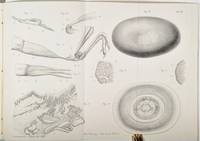
1882Best.-Nr. 345841882. Arch. klin. Chir. 26. - Berlin Verlag von August Hirschwald 1882 8° VI 1011 pp. Holzschnitte 16 lith. Taf. Portrait von B.v.Langenbeck Halbledereinband der Zeit. Erstdruck! Folgende Arbeiten von Th. Gluck sind in diesem Band enthalten: Ueber Muskel- und Sehnenplastik pp.61-76 Taf. IV. Fig. 1-4. Ueber offene antiseptische Wundbehandlung in Glasapparaten und über Glasschienen pp.785-788 4 Abb. auf lith. Taf. Ueber Transplantation Regeneration und entzündliche Neubildung pp.896-915 8 Abb. auf lith. Taf. Die prophylactische Resection der Trachea pp.427-436. Ueber Exstirpation der Harnblase und Prostata pp.916-924 3 Abb. unknown
1882Best.-Nr. 345851882. Arch. klin. Chir. 26. - Berlin Verlag von August Hirschwald 1882 8° VI 1011 pp. Holzschnitte 16 lith. Taf. Portrait von B.v.Langenbeck Halbledereinband der Zeit. unknown
1882Best.-Nr. 345861882. Arch. klin. Chir. 26. - Berlin Verlag von August Hirschwald 1882 8° VI 1011 pp. Holzschnitte 16 lith. Taf. Portrait von B.v.Langenbeck Halbledereinband der Zeit. Erstdruck! unknown