Gluck, LouiseBiblio.com

2.259 Ergebnisse
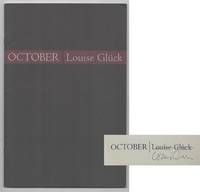
1994Best.-Nr. 8310New York: The Ecco Press 1994. First Edition. First Printing. Octavo 23.5cm; cream paper-covered boards and black cloth backstrip with titles stamped in gilt on spine and publisher's logo embossed onto front cover; dustjacket; xii34-1346pp. Signed by the author on the title page. A few very faint surface scuffs to lower rear cover else very Near Fine in a Fine unclipped dustjacket priced $22.00 with the publisher's query card laid in. Sharp copy of the Pulitzer Prize-winning poet's first collection of non-fiction gathering 16 essays on poetry touching on T.S. Eliot George Oppen Sylvia Plath and her skepticism of post-modern critical thought. 8310. The Ecco Press unknown
1969Best.-Nr. 8307Middlesex: Anvil Press Poetry 1969. First U.K. Edition. First Impression cloth issue. Octavo 22.5cm; burgundy cloth with titles stamped in gilt on spine; dustjacket; viii23-533pp. Signed by the author on the title page. Spine slightly askew light wear to heel and lower board edges else a clean Near Fine copy. Dustjacket is unclipped priced 21/- with light wear to extremities a few tiny nicks and tears with some mild creasing at base of spine and upper rear panel; Very Good. The Nobel Prize-winning author's first book. "Her poems deal in wastelands the lost lives of cripples the hopeless and loveless; yet her landscapes have a stern beauty a mythic size that looms behind the everyday. Arid merciless stinging yet full of life these are strikingly original poems" from front flap. 8307. Anvil Press Poetry unknown
2007Best.-Nr. 1-0716786540Worth Pub 2007. Hardcover. New. 1st edition. 533 pages. 10.50x8.25x1.00 inches. Worth Pub hardcover
2006Best.-Nr. 8608New York: Farrar Straus and Giroux 2006. First Edition. First Printing. Octavo 23.5cm; dark grey paper-covered boards with titles stamped in gilt on spine; dustjacket; xiv793pp. Fine in a Fine unclipped dustjacket priced $22.00. The Pulitzer Prize-winning author's tenth book inspired by the small crater lake in southern Italy which the ancient Romans regarded as the entrance to the underworld. 8608. Farrar, Straus and Giroux unknown
1995Best.-Nr. 8609Hopewell NJ: The Ecco Press 1995. First Edition. First Printing. Octavo 23.5cm; beige paper-covered boards and brown cloth backstrip with titles stamped in gilt on spine; dustjacket; xvi45-2166pp. Lower corners bumped though still sharp with a thin strip of discoloration at heel; contents clean; Near Fine. Dustjacket is unclipped priced $22.00 with mild external wear some corresponding crinkling to lower corners and a thin shallow stain at base of spine panel on verso; Near Fine. A volume gathering the Pulitzer Prize-winning poet's first four books published between 1968-1985. 8609. The Ecco Press unknown
2004Best.-Nr. 208192Louisville KY: Sarabande Books 2004. First edition. Softcover. 20 pages. Quarternote Chapbook Series #3. A single poem by the winner of the 2020 Nobel Prize in Literature. A clean very near fine copy in stapled wrappers with some very minor wear. Signed by Gluck on the title page and with a laid in letter from Tree Swenson the executive director of The Academy of American Poets presenting this book. A somewhat uncommon book and especially signed. Sarabande Books unknown
1893Best.-Nr. 694241893. Verh. Berl. med. Ges. 24 1893. - Berlin Gedruckt bei L. Schumacher 1894 8° XLII 250; 389 pp.; mit Abbildungen Halbleinenband d.Zt.; St. verso Tit. Erste Auflage! Verhandlungen der Berliner medicinischen Gesellschaft aus dem Gesellschaftsjahr 1983. Separat-Abdruck aus der Berliner klinischen Wochenschrift. Hrsg. von dem Vorstande der Gesellschaft. Themistocles Gluck 1853-1942 Chirurg. unknown
1893Best.-Nr. 346831893. Verh. Berl. med. Ges. 23 1892. - Berlin Gedruckt bei L. Schumacher 1893 8° XXXI 288; 302 pp.; mit Abbildungen Halbeinenband d.Zt.; St. verso Tit. Erste Auflage! Verhandlungen der Berliner medicinischen Gesellschaft aus dem Gesellschaftsjahr 1892. Separat-Abdruck aus der Berliner klinischen Wochenschrift. Hrsg. von dem Vorstande der Gesellschaft. Weitere Beiträge von Th. Gluck in diesem Band: Resection des 2. Trigeminusastes und Demonstration einer Knochenschere I: pp.55-56. Ersatz von Sehnendefecten I: pp.83. Hemiatrophia facialis I. p.163. Themistocles Gluck 1853-1942 war ein deutscher Chirurg. unknown
2001Best.-Nr. 203076New York: The Ecco Press 2001. First edition and first printing. Hardcover. 68 pages. The ninth collection of poems from the winner of the 2020 Nobel Prize in Literature. A very near fine copy in paper covered boards with a cloth spine and in a very near fine dust jacket. Signed by Gluck on the title page. A lovely copy. The Ecco Press unknown
Best.-Nr. 47457501-nnew. unknown
Best.-Nr. 23894206like new. unknown
2013Best.-Nr. 1-3659465593Lap Lambert Academic Publishing 2013. Paperback. New. 100 pages. 8.66x5.91x0.23 inches. Lap Lambert Academic Publishing paperback
2009Best.-Nr. 1-3639110307Vdm Verlag Dr. Müller 2009. Paperback. New. 68 pages. German language. 8.66x5.91x0.16 inches. Vdm Verlag Dr. Müller paperback
2002Best.-Nr. 195814Winnetka IL: The Vixen Press 2002. First edition. Hardcover. One of only 135 copies designed and printed on Somerset paper and with illustrations by Caryl Seidenberg on Somerset paper. Features a foreword by Louise Gluck who was the winner of the 2020 Nobel Prize for Literature. Includes a poem by Robert Pinsky about the tragic fire at the Triangle Shirtwaist factory in 1911. A fine copy in blue cloth boards with satin label to the front cover and printed paper label to the spine. No dust jacket as issued. Signed by Pinksy Gluck and Seidenberg. A beautiful production that is fairly uncommon. The Vixen Press unknown
2008Best.-Nr. 1-3865961576Frank & Timme 2008. Perfect Paperback. New. 206 pages. German language. 8.27x5.83x0.47 inches. Frank & Timme paperback
Best.-Nr. AT 9780974680057USA Edition . New. Brand New! Fast Delivery US Edition and ship within 24-48 hours. Deliver by FedEx and Dhl & Aramex UPS & USPS and we do accept APO and PO BOX Addresses. Order can be delivered worldwide within 6-10 days and we do have flat rate for up to 2LB. Extra shipping charges will be requested if the Book weight is more than 5 LB. This Item May be shipped from India United states & United Kingdom. Depending on your location and availability. unknown
1922Best.-Nr. 673991922. Hdb. Spez. Chir. Ohres ob. Luftw. 4. - 3. verm. u. verb. Aufl. - Hrsg. L. Katz & F. Blumenfeld. - Würzburg Verlag von Curt Kabitsch 1922 8° 6 831 pp. mit 250 Abbildungen im Text und auf 63 Tafeln orig. Halbledereinband. Inhalts-Verzeichnis: Gluck Th. & Soerensen J.: Die Exstirpation und Resektion des Kehlkopfes pp.1-70 Tafel I-XI. Gluck Th. & Soerensen J.: Die Operationen am Pharynx und am Anfangsteil des Oesophagus pp.71-120 Tafel XII-XXII. Gluck Th. & Soerensen J.: Die Chirurgie des Osephagus pp.121-153 Tafel XXIII-XXV. Gluck Th. & Soerensen J.: Die Chirurgie der Trachea pp.154-179 Tafel XXVI-XXVIII. Gluck Th. & Soerensen J.: Die Chirurgie an der Mandibula pp.180-202 Tafel XXIX. Gluck Th. & Soerensen J.: Die Operationen an der Zunge pp.203-220 Tafel XXX-XXXV. Gluck Th. & Soerensen J.: Die Ligatur der arteria carotis pp.221-230 Tafel XXXVI-XXXVII. Gluck Th. & Soerensen J.: Die Chirurgie der Schilddrüse und des Thymus pp.231-280 Tafel XXXVIII-XLII. Seifert Ernst: Die Laryngofissur pp.281-394 Tafel XLIII-XLIV. Blumenfeld F.: Endolaryngeale Operationen pp.395-590 Tafel XLV-LIX. Bockenheimer Ph.: Die Tracheotomie pp.591-630 Tafel LX-LXIII. Mann M.: Tracheo-Bronchoskopie pp.631-734. Starck H.: Ösophagoskopie pp.735-818. unknown
1910Best.-Nr. 673961910. BKW 47/ 1. - Berlin August Hirschwald 3. Januar 1910 4° 44 pp. feine Broschur. THE FIRST ELECTROLARYNX WAS DEVELOPED BY GLUCK! First Edition! Electromagnetically Driven Devices - "As the disadvantages of pneumatically driven reed-based voice sources could not be adequately remedied these devices were abandoned especially after the appearance of electrolarynx devices which produced electromagnetically driven vibrations. The first electrolarynx was developed by Gluck and was composed of an Edison phonograph connected to a telephone receiver located in the patient's mouth. The Edison cylinder contained a recording of a singer's vowel 98. A subsequent version 99 consisted of a loudspeaker built into an upper denture Figure 12. The most famous electrolarynx is the Servox speech aid Servona Troisdorf Germany; Figure 13. It consists of a cylinder with a vibrating element. The top side contains a membrane that is driven electromagnetically and thus can vibrate. By holding the membrane against the throat the patient transmits vibrations that set the air within the vocal cavities into vibration. He or she can convert these sound waves into understandable speech in a manner comparable to the conversion of the acoustic source generated by vocal fold vibrations. A major disadvantage is that the resulting voice sounds mechanical and has no means for intonation leading to an unnatural monotonous voice. An attempt to modify the device by adding manual pitch control by rotating a knob was unsuccessful because control was again far from intuitive and thus very difficult to learn. Until the introduction of the PE voice the electrolarynx was the first choice for creating an artificial voice. External electrolarynges are still used today but only by a small number of patients." G.J. Verkerke and S.L. Thomson: Sound-Producing Voice Prostheses: 150 Years of Research. Annual Review of Biomedical Engineering 16/1 2014 pp.215-245 Themistocles Gluck 1853-1942 physician and surgeon. He first invented endoprostheses from ivory in 1890 at Berlin when he performed the first documented total wrist Arthroplasty. He received the 1st State Prize of the Berlin University for his work on nerve suturing and nerve regeneration. The French surgeons Louis Léopold Ollier and Jules Péan had already recognized Gluck's importance in the 1890s. With his laryngeal surgery he achieved world renown. Nevertheless it took a long time for him to receive the academic recognition he deserved as a non-university surgeon. It was not until he was 70 years old 1922 that he was made an associate professor and even nominated for the Nobel Prize unsuccessfully because his work was considered too old at the time. unknown
1975Best.-Nr. 141607New York: The Ecco Press 1975. First edition of the Nobel Prize-winning author's second book. Octavo original cloth. Presentation copy inscribed by the author on the half-title page "For Larry Louise Gluck." Near fine in a near fine dust jacket. Jacket design by Loretta Li. Louise Glück's The House on Marshland is a collection of poetry that stems from the seeds of every day life. Many of the topics she visits are holidays fairy tales and the simple gestures of human interaction. The Ecco Press hardcover
2021Best.-Nr. 1-037460438XFarrar Straus & Giroux 2021. Hardcover. New. 656 pages. 9.25x6.25x2.00 inches. Farrar Straus & Giroux hardcover
2014Best.-Nr. 1-0314273565West Academic 2014. Hardcover. New. new edition. 1161 pages. 10.40x7.90x1.90 inches. West Academic hardcover
1894Best.-Nr. 346841894. BKW 31/ 7. - Berlin August Hirschwald Montag den 12. Februar 1894 4° pp.153-184 feine Broschur. Erstdruck! unknown
1915Best.-Nr. 347011915. Z. ärztl. Fortb. 12/1314. - Jena Verlag von Gustav Fischer 1. und 15. Juli 1915 8° pp.385-448 feine Broschur. Erstdruck! unknown
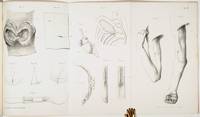
1882Best.-Nr. 345961882. Arch. klin. Chir. 26. - Berlin Verlag von August Hirschwald 1882 8° VI 1011 pp. Holzschnitte 16 lith. Taf. Portrait von B.v.Langenbeck Halbledereinband der Zeit. First Edition! "In 1881 Foulis reported on 27 recorded cases of total laryngectomy. Half of these patients died of pneumonia and other infections within the first week after surgery. Another 25% died of tumor recurrence within ten months. In the same year Gluck recommended that in laryngectomized patients the bottom of the pharynx be completely sewn up in order to obviate the greatest hazard of laryngectomy aspiration pneumonia. By the beginning of the 20th century Gluck reported the mortality of laryngectomy being just 8.5%. This is extremely low considering the major problems that occurred in those days with anesthesia wound infection and shock. For example in 1906 the mortality rate for radical neck dissections was still 13%." "Gluck's modification of the surgical technique of laryngectomy in 1881 - closure of the pharyngostoma in order to decrease the risk of aspiration pneumonia - ruled out internal reed mechanisms. After all the trachea was completely severed from the pharynx in these patients. Accordingly a pneumatic mechanical voice source was devised by Stork in l877 following Czermak's lead. It was based on a similar yet external metal reed connected by an external tube with the patient's tracheal cannula and the sound conveyed into the mouth by another external tube. Between 1892 and 1918 this external pneumatic mechanical voice source was further refined by Hochenegg Gluck Gottstein Tapia Onodi and Stockman. Respectively their modifications consisted of a pair of bellows for a patient that was unable to exhale with sufficient strength a reed concealed in the patient's nose or upper denture an inflatable cuff for the tracheal cannula a reed connected to the tracheal cannula by way of a side butt to make non-phonatory breathing easier and a battery-powered compressor as air supply for the reed. In the 1920s MacKenty together with two scientists of the Western Electric Company Fletcher and Lane developed an external pneumatic mechanical voice source that was soon superseded by the Western Electric No° 2 type larynx. It comprised a soft-rubber tracheal pad to strap over the tracheostoma a flexible tube a slightly curved bronze reed in a silver cylinder and a mouthpiece attachable to this reed box . It was successfully marketed from 1930 to 1959 by the Western Electric Company and the Bell Telephone Laboratories: 5500 No° 2 type larynges were sold." "The first electrolarynx was devised by Gluck in 1910 and comprised an Edison type portable phonograph connected with a telephone receiver in the patient's nose or mouth. On the cylinder of the phonograph a vowel produced by a singer had been recorded. The electric current from the phonograph was converted by the telephone receiver to sound which was propagated in the buccal cavity air. There the representation of the singer's voice was given the timbre belonging to the patient's vocal tract. For demonstration purposes Gluck not only used a recorded vowel but also a phonograph containing a Waltz." Marein van der Torn : A sound-producing voice prosthesis. ACADEMISCH PROEFSCHRIFT Utrecht 2005 See - Gluck T.: Flüstersprache und Phonationsapparate. Berliner klinische Wochenschrift 36 1899 pp.215-216. Gluck T.: Patienten mit Totalextirpation des Pharynx Larynx und Oesophagus denen eine künstliche Stimme durch einen automatisch arbeitenden Apparat geliefert wird. Berliner klinische Wochenschrift 47/1 1910 pp.33-35. Gottstein G.: Pseudo-Stimme nach Totalexstirpation des Larynx. Archiv für die klinische Chirurgie 62 1900 pp.126-46. Tapia A.: Presentacion de un laringuectomizado hablando con un sencillisimo aparato artificial. Revista Espanola de Laringologia 5 1914 pp.48-55. Onodi A.: Ergebnisse der Abteilung für Hör- Sprach- und Stimmstörungen und Tracheotomierte vom Kriegsschauplatz. Monatsschrift für Ohrenheilkunde 52 1918 p. 85. Riesz R.: Description and demonstration of an artificial larynx. Journal of the Acoustical Society of America 1 pp.273-9. unknown
1883Best.-Nr. 345881883. Arch. klin. Chir. 28. - Berlin Verlag von August Hirschwald 1883 8° VI 931 pp. Holzschnitte 10 lith. Taf. Halbledereinband der Zeit. Erstdruck! unknown