2.274 Ergebnisse
1976Best.-Nr. RCHAANT00crTangier 1976. Good. Chandler Raymond. Antaeus. Autumn 1976. 23. Gorey illustrator Edward; Halpern editor Daniel; Gluck Louise; Simic Charles. New York: Tangier 1976. 199pp. Illustrated. 8vo. Paperback. Book condition: Good with sunned spine and edges. Former owner's writing in ink on front cover and spine. Tangier paperback books
1991Best.-Nr. UGLUWOM00LWRoutledge 1991. Very Good. Gluck Sherna Berger editor. Women's Words: The Feminist Practice of Oral History. Patai editor Daphne. New York: Routledge 1991. 234pp. Indexed. 8vo. Paperback. Book condition: Very good with shallow crease near spine in front cover. Routledge paperback books

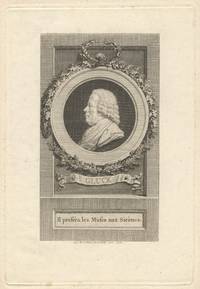
Best.-Nr. 41429Image size 183 x 125 mm; sheet size 233 x 152 mm. Very slightly browned foxed and soiled at margins; very minor paper loss to left margin. In very good condition overall. "More successfully than any of his contemporaries Gluck translated the widespread agitation for reform of opera and theatrical dance on the part of European intellectuals into actual works for the stage first in pantomime ballets and Italian serious operas for Vienna and then in operas of various sorts for Paris. His long experience in setting Metastasian drammi per musica and his work in Vienna as music director of the Burgtheater court theatre were not without utility in these more innovative efforts." Bruce Alan Brown and Julian Rushton in Grove Music Online. unknown books
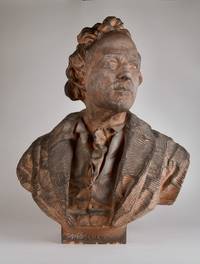
1864Best.-Nr. 404171864. Height 26.75" 68 cms. With the artist's name "Francin" to truncation of left arm; integral base inscribed "Gluck." Some wear and soiling; age-toned. In quite good condition overall. Provenance Catalogue of the Collection Musicale André Meyer 1961 Vol. I p. 97 and plate 122. Auction catalogue of Pescheteau-Badin Godeau et Leroy Collection Musicale André Meyer et a divers Paris July 2 1998 Lot 101 including color photograph. Auction catalogue of Bonhams London The Roy Davids Collection London 3 October 2005 Lot 246 illustrated. Houdon: An Exhibition of Sculpture from the Collection of Michael Hall esq. Catalogue by Christine Defazio Karl Fugelso and Philip Mezzatesta. New York: Salander-O'Reilly Galleries 1998 pp. 12-15. Poulet et al.: Jean-Antoine Houdon - Sculptor of the Enlightenment. Exhibition Catalogue. The National Gallery of Art Washington D.C. 2003 pp. 102-108. Exposition du Centenaire de Houdon Paris: Galleries Buvelot 1928 pp. 40-41. Vitry: Une Liste d'oeuvres de J.-A. Houdon p. 9. The present sculpture exists in two versions: the present scarcer version with full shoulders and partial torso and a second version with partial shoulders and reduced torso "Following Houdon's plaster bust of Gluck shown in the Salon of 1775 . the marble was exhibited in 1777 . and destroyed in the fire at the Paris Opera 28-29 Oct. 1873. A faithful reproduction ordered in 1798 by Alexandre Lenoir for the Musée des monuments français and executed in marble by Guillaume Francin is in the Musée national du chateau de Versailles. The Louvre's plaster cast workshop distributed copies of this reproduction beginning in 1864." Poulet et al.: Jean-Antoine Houdon - Sculptor of the Enlightenment. Exhibition Catalogue. The National Gallery of Art Washington D.C. 2003 p. 107. "The present bust is probably one of the Louvre's copies. . It was in his depiction of Gluck that Houdon first showed the ravages of smallpox on a subject - it was a common affliction in eighteenth-century France but artists were expected to flatter their subjects in this respect at least." Bonhams catalogue "Gluck was an artist a great musician and therefore must be given the attributes of a genius. His face was deeply pockmarked and the sculptor used this fact to establish his theme. He clothed him in a heavy coat whose texture is an overall pattern of slashed grooves free and direct in their expressive impact. Here there was no attempt to stimulate the appearance of the actual material but rather in a manner almost Rodinesque to bring out the quality of the clay. The open shirt the unbuttoned vest the short disheveled hair and the alert titled pose of the head all emphasize the impact of genius." Arnason: The Sculptures of Houdon p. 34. unknown books
Best.-Nr. 40422Paris 19th century. 61 x 47.3 cms with frame 69.5 x 56 cms. The composer is depicted bust-length turned 3/4 left facing forward wearing a red jacket blue waistcoat white collared blouse with lace and wig. For a fine full-page color illustration of the original held at the Louvre see MGG Vol. 5 plate 15. "Gluck was recognized as an extraordinary phenomenon in his lifetime as is evident from Burney's deferential treatment of the composer during his visit to Vienna in 1772. Shortly afterwards the controversy stirred in French journals resonated well beyond the capital to other countries. The daily cultural discourse of Paris concerned Gluck's 'musical revolution' a catch-phrase taken up by Gluck's opponents such as Jean-François Marmontel as well as by his defenders; in 1781 the 'revolution worked in music by M. le Chevalier Gluck' later dubbed the 'German Orpheus' was used as the title of a collection of pamphlets for and against Gluck with a heavy editorial bias in favour Lesure c1984. Although operas by Piccinni Salieri and especially Sacchini as well as French contemporaries such as Grétry continued alongside Gluck in the French repertoire beyond the Revolution and Empire revivals of Gluck constituted the principal touchstone of dramatic music into the 1820s when the last routine revivals were acclaimed by Berlioz. Opera composers including Salieri Lemoyne and Vogel in Paris were presented or presented themselves as his legitimate successors; elsewhere Mozart especially in Idomeneo and J.M. Kraus were strongly affected by Gluck's example in constructing scenes applying a dramatically motivated admixture of lyricism and more direct and declamatory vocal expression and sometimes in modelling as when the statue in Don Giovanni adopts the tone of the oracle in Alceste. After his death his direct effect can still be heard in Die Zauberflöte and in several French operas including those of Méhul Cherubini and Spontini. Among the Romantics he continued to inspire respect and from Berlioz and Wagner emulation. Berlioz supervised productions of Orphée and Alceste in Paris 1859 and 1866. In Orphée Berlioz created the basis for the version most used over the next century at least by restoring the Italian key-scheme in several scenes to accomodate the tessitura of the title role to a female singer; Pauline Viardot was the first in a line to include Giulia Ravoli Kathleen Ferrier Janet Baker and others although the French version with tenor retained some currency. Musicians close to Berlioz began to realize his ideal of a complete critical edition although only a handful of 'reform' operas were published. Wagner wrote about Gluck in Oper und Drama having learned much from deep study of Iphigénie en Aulide of which he made a modernized performing version Dresden 1847. In 1890 for Weimar Richard Strauss similarly adapted Iphigénie en Tauride. Such orchestrational revision and the melding of recitative and aria to blur Gluck's structure of closed forms represented a style of musical archaeology from which Handel and Mozart also suffered or in terms of public exposure benefited. The later 20th century witnessed not only numerous revivals of the reform operas some in musically authentic form and including the Vienna Orfeo but also a less one-sided critical view of Gluck became possible with the publication of a new critical edition and a revival of interest in works in other genres especially opéra comique and with Don Juan ballet. Winton Dean has observed that Gluck's compromise between the demands of words and music 'was one of the most satisfying and successful of all and has placed his greatest works beyond the reach of time' Grove6. None of Gluck's operas except Orfeo/Orphée is likely to become a staple work in the repertory; however to the extent that every production has the aspect of a revival continued interest in his achievement and consequently revival of an increasing proportion of his output is guaranteed so long as opera continues to occupy a central place in Western musical culture." Julian Rushton in Grove Music Online. unknown books
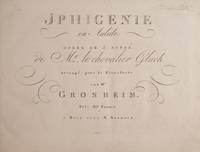
1809Best.-Nr. 40434Bonn: Chez N. Simrock PN 609 1809. Oblong folio. Quarter black leather with gilt rules mid-brown cloth boards spine in compartments gilt with titling gilt marbled edges. 1f. recto title verso cast list 3-149 pp. Text in French and German. Engraved throughout. With contemporary signature of former owner "Mappes" to upper outer corner of free front endpaper with handstamp of August Kuby in Munich below; "Amalie Mappes" to upper outer corner of title. Binding worn rubbed bumped and slightly stained. Occasional soiling; small ink stains browning and foxing to blank margins; small loss to lower outer corner of p. 27. First Edition. Hopkinson p. 41 40F. Wotquenne 40. RISM G2753 and GG2753 no copies in the U.S. Iphigenie en Aulide was first performed in Paris at the Opéra on 19 April 1774. "Judging from contemporary accounts such as the memoirs of Mannlich the several months of rehearsals for Iphigénie en Aulide must have been quite a spectacle with the irascible 60-year-old composer struggling to reform the bad habits of the singers and players of the Académie Royale to teach them his new opera. However the première of Iphigénie en Aulide in April 1774 was a triumph but the run of performances was interrupted by the death of Louis XV a month later. All the theatres closed and during the period of mourning Gluck quickly revised Orfeo ed Euridice and made a French version of the opera with a translation of the text by Pierre Louis Moline." Jeremy Hayes in Grove Music Online. Chez N. Simrock [PN 609] unknown books
1854Best.-Nr. 37441Leipzig: Friedrich Fleischer 1854. Hardcover. Very Good. Octavo. Quarter cloth with paper boards. xii 508 pp. 1 folding plate of music in facsimile. Binding slightly worn; joints split. Minor browning throughout. First Edition. Friedrich Fleischer hardcover books
1940Best.-Nr. 34589Stuttgart: J. G. Cotta'sche Buchhandlung Nachfolger 1940. Paperback. Good. Octavo. Wrappers. 369 pp. Slightly worn; outer edges browned. J. G. Cotta'sche Buchhandlung Nachfolger paperback books
2001Best.-Nr. 50492New York: Ecco Press 2001. First printing. Fine in near fine jacket. Signed first edition of the Pulitzer- and Nobel-winning poet's ninth poetry collection a striking sequence of nature- and mythology-inflected verses. 9'' x 6''. Original quarter black cloth with grey boards. In original unclipped $23.00 dust jacket. 68 pages. Signed by Glück on title page crossing out her printed name. Some light marginal toning to jacket. Book clean and tight. Ecco Press unknown books
1993Best.-Nr. 50414Hopewell NJ: The Ecco Press 1993. First printing. Fine in near fine jacket. First edition of the Nobel winner's perhaps most acclaimed collection winner of both the Pulitzer Prize for Poetry and the Poetry Society of America's William Carlos Williams Award. 9'' x 6''. Original quarter black cloth with yellow boards. In original unclipped $19.95 dust jacket. 63 3 pages. Original publisher press materials laid in. Tiny bit of edgewear dustiness to jacket. The Ecco Press unknown books
1980Best.-Nr. 50497New York: The Ecco Press 1980. First printing. Very good plus. First edition advance uncorrected proof copy of the Nobel-winning author's third book of poetry a "confrontation with the fragility and risk involved in allowing oneself to love what is passing" Morris 6. 8.25'' x 5.5''. Original yellow typographic wrappers. American Poetry Series volume 20. 10 49 1 pages. Light marginal toning and faint soil to wrappers. The Ecco Press unknown books
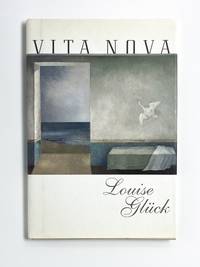
2012Best.-Nr. 100189NY:: Farrar Straus and Giroux. Near Fine. 2012. Paperback. 0374534098 . Eighth paperback printing. Near fine in illustrated wraps. . Farrar, Straus and Giroux, paperback books
2001Best.-Nr. 47502New York: Ecco Press 2001. First printing. Fine in fine jacket. Contemporary poet Stanley Plumly's copy of this Pulitzer- and Nobel-winning poet's ninth poetry collection - sent to him with birthday greetings from the publisher. 9'' x 6''. Original quarter black cloth with grey boards. In original unclipped $23.00 dust jacket. 68 pages. Handwritten note on Ecco letterhead laid in. In part: "Stanley - Nice speaking with you today. Patty asked me to send this to you so.voilà." Trace edgewear. Else bright and sharp overall. Ecco Press unknown books
1990Best.-Nr. 47503New York: The Ecco Press 1990. First printing. Fine in fine jacket. First edition of Glück's acclaimed fifth poetry collection. A handsome example of one of the Pulitzer- and Nobel-winning poet's most accomplished books. 9'' x 6''. Original quarter black cloth with grey boards. In original unclipped $17.95 dust jacket. 68 pages. Minor edgewear and bumping. Faint page toning to jacket flaps. The Ecco Press unknown books
1999Best.-Nr. 47512Hopewell NJ: The Ecco Press 1999. Fine in near fine jacket. First edition of the Nobel Prize-winning poet's last collection of the 20th century. 9'' x 6''. Original speckled beige boards with gilt-lettered spine. In original unclipped $22.00 dust jacket. 51 1 pages. Light edgewear pages toned. Minor soil to jacket. The Ecco Press unknown books
1966Best.-Nr. 41722Chapel Hill NC: Lillabulero 1966. Very Good. Chapel Hill NC: Lillabulero 1966-1974. Fourteen issues in thirteen volumes complete. The first two volumes in tall folio format 36.5cm the third through fifth issues slightly shorter 33cm and the final eight issues in octavo format 24cm; all issues bound in pictorial card wrappers yapp edges; illus. throughout. Moderate wear to margins especially to the larger format issues else a Very Good and sound set. Complete collection of this poetry and literature magazine the brain child of young Russell Banks while a student at UNC Chapel Hill. Contributors included the leading and up-and-coming poets of the day including Robert Creeley Charles Simic W.S. Merwin Wendell Berry Jim Harrison and in the final issue Louise Gluck. While some of the individual issues are quite common complete sets are rare. Lillabulero unknown books
2014Best.-Nr. 613543New York: Farrar Straus and Giroux 2014. Hardcover. Fine/Fine. First edition. Fine in fine dust jacket. Winner of the National Book Award. Farrar, Straus and Giroux hardcover books
1999Best.-Nr. 581894New York: The Ecco Press 1999. Hardcover. Near Fine/Fine. First edition. Slight age-toning at the edges of the pages else near fine in fine dust jacket. Advance Review Copy with publisher's promotional letter laid in. Winner of the Bollingen prize and the New Yorker Reader's Award. The Ecco Press hardcover books
2007Best.-Nr. 581898New York: Farrar Straus and Giroux 2007. Hardcover. Fine/Fine. First edition hardcover issue. Octavo. 79pp. Fine in fine dust jacket. This collection was nominated as a finalist for the National Book Award. Farrar, Straus and Giroux hardcover books
2017Best.-Nr. 581899New York: Farrar Straus and Giroux 2017. Hardcover. Fine/Fine. First edition hardcover issue. Fine in fine dust jacket. Farrar, Straus and Giroux hardcover books
1994Best.-Nr. 581893Hopewell New Jersey: The Ecco Press 1994. Hardcover. Fine/Fine. First edition. 134pp. Faint age-toning at the edges of the endpapers else fine in a fine dust jacket. The Ecco Press hardcover books
1980Best.-Nr. 586179New York: The Ecco Press 1980. Hardcover. Fine/Fine. First edition hardcover issue. Fine in fine dust jacket with a very short tear. A beautiful copy. The Ecco Press hardcover books
1985Best.-Nr. 572810New York: The Ecco Press 1985. Hardcover. Fine/Near Fine. First edition. Binding trifle cocked at the spine else fine in near fine dust jacket with a a light vertical impression on the cover and a bit of creasing at the spine base. Winner of the 1985 National Book Critics Circle Award. The Ecco Press hardcover books
1980Best.-Nr. 576773New York: The Ecco Press 1980. Hardcover. Near Fine/Fine. First edition hardcover issue. Most of the text with a small area of very light rippling thus near fine in fine dust jacket. The Ecco Press hardcover books
1995Best.-Nr. 534792Hopewell New Jersey: The Ecco Press 1995. Hardcover. Fine/Fine. First edition. Fine in a fine dust jacket. Includes Firstborn The House on Marshland Descending Figure and The Triumph of Achilles. The Ecco Press hardcover books