1322 risultati
1948rif. 170655N.p.: Standard Oil Company 1948. First Edition. Softcover. First Edition. Catalog for an art exhibition held by Standard Oil Company from May 7-30 1948. Near Fine in saddle-stapled wrappers. Standard Oil Company unknown books
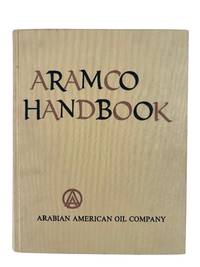
1968rif. 225501968. Lebkicher Roy George Rentz and Max Steineke. Aramco Handbook published in 1960 documents the information system through which the Arabian American Oil Company interpreted Saudi Arabia Middle Eastern petroleum and its own operations for company personnel and associated readers. Prepared by Aramco employees while the corporation was owned by four American oil companies the volume combines technical instruction company history regional geography religious and political narrative and guidance on social conduct. It reveals how Aramco presented industrial development as a coordinated process linking geological exploration refining transportation workforce management and cross-cultural training providing primary-source evidence for the study of United States-Saudi relations corporate communications petroleum infrastructure expatriate employment and the institutional production of knowledge about Saudi society. Aramco had transferred its headquarters from New York to Dhahran in 1952 but remained under American corporate ownership in 1960; Saudi equity participation did not begin until 1973. Lebkicher Roy George Rentz and Max Steineke with contributions by other Aramco employees. Aramco Handbook. Dhahran Saudi Arabia: Arabian American Oil Company 1960. First edition. Printed in the Netherlands. 324 pages. Profusely illustrated with black-and-white photographs diagrams and maps some printed in color. Original tan cloth lettered in black and brown with the Aramco emblem; no dust jacket noted. 4to. The five principal sections address the historical background of Saudi Arabia and the Middle East petroleum's place in modern industry the Aramco enterprise Saudi government and society and Arab culture and customs. A full-page photograph of the Kaaba accompanies a color map tracing seventh- and eighth-century Arab conquests while oil-production chapters explain hydrocarbons refining storage and distribution through diagrams and industrial photographs. An aerial view of the Ras Tanura refinery identifies such facilities as the "Catalytic Desulfurizer" "Bulk Plant" and "Crude Stabilizers" with an inset showing piers described as capable of accommodating ten tankers. Additional spreads interpret the pilgrimage to Mecca through photographs of the Station of Abraham the Well of Zamzam and pilgrims at ritual sites. The final section supplies transliterated greetings including as-salÄmu ʿalaykum and kayf ḥÄlak together with etiquette advice intended to regulate interactions between foreign employees and Saudi residents. Bibliographic records confirm the authors date publisher and internally produced character of this edition. The handbook's extensive visual and technical documentation is inseparable from the corporate framework that shaped it. Maps refinery plans photographs and process explanations preserve detailed evidence of Aramco's operations and of Saudi landscapes pilgrimage sites and public customs while the accompanying text repeatedly positions the company as the intermediary joining the Kingdom's resources to international industry. Its cultural chapters translate complex religious and social practices into generalized guidance for expatriate personnel demonstrating how corporate education supported the practical operation of the concession as surely as engineering manuals and infrastructure diagrams did. Light toning and faint soiling affect the cloth with a gentle bump to one corner; interior clean and binding sound. Very good. A substantial record of the technical cultural and administrative knowledge through which Aramco trained personnel and represented its authority in Saudi Arabia at the beginning of the 1960s. unknown books
1968rif. 225491968. Arabian American Oil Company. Aramco Handbook: Oil and the Middle East revised in 1968 documents the information system through which Aramco explained Saudi Arabia Middle Eastern petroleum and its own industrial operations to an English-language readership. Published while the company remained owned by four American oil corporations the handbook combines petroleum geology corporate history political geography and cultural instruction into a unified account of Saudi modernization under oil development. Its organization reveals how Aramco presented itself as both an industrial enterprise and an interpreter of Saudi society using maps photographs diagrams historical narratives and rules of social conduct to prepare foreign personnel for work in the Kingdom. The volume provides primary-source evidence for research into United States-Saudi relations corporate communication petroleum infrastructure expatriate labor and the production of cultural knowledge within a multinational oil concession. Saudi acquisition of Aramco began during the following decade and reached full government ownership in 1980 placing this edition before the company's transition to Saudi control. Arabian American Oil Company. Aramco Handbook: Oil and the Middle East. Dhahran Saudi Arabia: Arabian American Oil Company July 1 1968. Revised edition. Printed in Haarlem Netherlands by Joh. Enschedé en Zonen. 276 pages. Profusely illustrated with color maps black-and-white photographs and diagrams. Original red cloth stamped in gilt and black; no dust jacket noted. 4to. The handbook is divided into five principal sections addressing the historical background of Saudi Arabia and the Middle East the development of the regional petroleum industry the Aramco venture Saudi government and society and Arab culture and customs. A tribal map identifies numerous communities across the Arabian Peninsula including al-Mutair and al-Murrah while a diagrammatic map of the "Conquest of Najd" traces Ibn Saud's military expansion through arrows and battle annotations. Petroleum sections explain drilling refining transportation and export infrastructure including the Trans-Arabian Pipeline illustrated by parallel lengths of pipe extending across open terrain and accompanied by discussion of the decision to construct substantial portions above ground. Photographic essays show communal dining urban and industrial environments and other aspects of public life. The "Social Etiquette" section introduces such greetings as as-salÄmu ʿalaykum and kayf ḥÄlak presenting cultural instruction as part of the company's management of encounters between expatriate employees and Saudi residents. Bibliographic records confirm the 1968 Dhahran edition as an extensively illustrated corporate reference work on petroleum and the Middle East. The handbook's research value lies partly in the tension between the breadth of its documentation and the institutional perspective governing its interpretation. Its maps and photographs preserve substantial information about infrastructure geography labor social practice and the physical expansion of the Saudi petroleum industry while its text consistently casts Aramco as the principal agent joining Saudi Arabia to global markets. Cultural sections reduce complex regional and social differences to practical guidance for foreign employees and historical narratives place political consolidation and oil development within a corporate account of orderly progress. The volume should therefore be read both as a reference source and as evidence of how an American-owned concession represented its authority during a consequential phase of Saudi economic transformation. Light rubbing affects the boards with slight fraying at the spine ends and minor handling wear to the text-block edges; interior clean and binding sound. Very good. A detailed corporate record of the maps infrastructure historical narratives and cultural instruction through which Aramco explained-and justified-its place in Saudi Arabia's petroleum economy. unknown books
1980rif. 225521980. Arabian American Oil Company. Aramco and Its World: Arabia and the Middle East published in 1980 documents the corporate information system through which Aramco explained Saudi history Islamic culture regional geography petroleum engineering and industrial development to employees and a wider English-language audience. Replacing the longstanding Aramco Handbook title the volume grew from instructional booklets created during the company's postwar expansion to orient incoming American personnel unfamiliar with Arabic and Saudi social practices. Its coordinated use of historical narrative landscape photography technical diagrams and cultural guidance reveals how Aramco presented itself as both a petroleum enterprise and an intermediary between Saudi Arabia and the industrialized West providing primary-source evidence for research into corporate communications expatriate training petroleum infrastructure and United States-Saudi relations. Publication coincided with the Saudi government's acquisition of a 100 percent participation interest in Aramco's concession rights production and facilities although the Saudi Arabian Oil Company was not formally created to assume Aramco's responsibilities until 1988. Arabian American Oil Company. Aramco and Its World: Arabia and the Middle East. Washington D.C.: Arabian American Oil Company 1980. First edition in this revised and retitled form. xi 275 pages. Profusely illustrated with color photographs maps and diagrams including double-page and folding material. Publisher's blue cloth lettered in turquoise; no dust jacket. Large 4to. A large folding color map titled "The Arabian Peninsula" drawn by Don Thompson and measuring approximately 24 × 36 inches is inserted at the rear. The book traces the growth of the modern Saudi state the geography of the peninsula and the development of Aramco's petroleum system. Illustrated cultural sections show desert dwellings coffee preparation camel travel goat herding Islamic calligraphy and landscapes including Jabal al-Fil while technical chapters record seismic surveying in the Rubʿ al Khali drilling equipment instrument-filled control rooms offshore platforms tanker-loading facilities and the geometrically arranged storage and refining installations at Ras Tanura. Maps locate Middle Eastern oil fields and Aramco concession areas and charts using 1978 data compare global petroleum production reserves and consumption. The folding map extends the volume's educational purpose beyond the bound text presenting topography cities transportation routes and political boundaries on a scale suited to reference or display. A manuscript inscription on the front free endpaper reads "Dear Dick and Susie.I'm on page 117" preserving evidence of the book's circulation as a personal or professional presentation copy. The volume's detailed visual record is governed by Aramco's institutional viewpoint. Its photographs and diagrams demonstrate the process by which geological surveying extraction refining transportation and export operated as an integrated industrial network while its treatment of Bedouin life and Saudi culture translates complex communities into introductory material for predominantly foreign readers. The timing gives this edition particular interpretive value: its language continues the company's established narrative of technological leadership and cultural mediation even as ownership of the petroleum enterprise passed fully to the Saudi government. Official Aramco histories confirm that Saudi participation reached 100 percent in 1980 making the book evidence of both the mature American corporate communication apparatus and the transition toward Saudi control. Light sunning and small marks affect the blue cloth; the folding map is clean and well preserved and the contents remain sound. Very good. A substantial illustrated record of the technical and cultural knowledge Aramco used to explain its operations during a pivotal year in the transfer of Saudi petroleum ownership. unknown books
1980rif. 225511980. Arabian American Oil Company. Aramco and Its World: Arabia and the Middle East published in 1980 documents the corporate information system through which Aramco interpreted Saudi history Islamic culture petroleum technology and national development for employees and a broader English-language audience. Revised and expanded from the company's earlier handbook series the volume explains how Aramco oriented foreign personnel through a coordinated program of historical narrative cultural instruction industrial diagrams maps and photography. It therefore provides primary-source evidence for the study of petroleum administration expatriate training United States-Saudi relations corporate cultural diplomacy and institutional representations of modernization. Its publication coincided with a decisive transfer of authority: the Saudi government increased its participation interest in Aramco's concession rights production and facilities to 100 percent in 1980 although the Saudi Arabian Oil Company was not formally established to assume Aramco's responsibilities until 1988. Arabian American Oil Company. Aramco and Its World: Arabia and the Middle East. Washington D.C.: Arabian American Oil Company 1980. First edition. Edited by Ismail I. Nawwab Peter C. Speers and Paul F. Hoye with principal research and writing by Paul Lunde and John A. Sabini. Printed in the Netherlands. Profusely illustrated with color photographs maps diagrams and reproductions of Arabic calligraphy. Bound in dark green leatherette with gilt lettering and ruling accompanied by a matching gilt-lettered slipcase. 4to. The preface traces the work to Aramco's postwar need to prepare large numbers of American employees for residence in Saudi Arabia where unfamiliar language and social practices created practical challenges for company operations. A section on Arabic writing reproduces Kufic forms Ottoman tughras zoomorphic designs and ornamental monograms interpreting calligraphy for readers largely unfamiliar with Islamic visual culture. Landscape photographs record the Hijaz escarpments desert dunes Red Sea shallows and Jabal Tuwaiq while a color-coded map titled "The Growth of the Modern Saudi State" charts Ibn Saud's territorial expansion from 1902 to 1932. Industrial sections show offshore rigs desert drilling sites workers handling drilling equipment refineries shipping installations and petrochemical facilities. A gas-operations diagram traces ethane propane butane and natural-gasoline flows between processing plants and the industrial centers of Yanbu Ju'aymah Ras Tanura and Jubail demonstrating how extraction separation transportation export and industrial development operated as an integrated petroleum system. The volume's substantial documentary content is shaped throughout by Aramco's institutional perspective. Its industrial photography and diagrams preserve detailed evidence of drilling gas processing refining shipping and infrastructure expansion while its historical and cultural sections position the company as a mediator between Saudi Arabia and the industrialized West. The book acknowledges the need to explain Saudi society to foreign employees but gives less emphasis to the contemporary transfer of petroleum ownership to the Saudi state preserving the language and visual conventions of an earlier American corporate order even as that order was being restructured. Official Aramco histories confirm that Saudi participation reached 100 percent in 1980 making the volume especially valuable as a corporate publication issued at the boundary between American consortium control and full Saudi ownership. Minimal handling wear affects the volume and slipcase with no significant defects reported; binding and contents remain clean and sound. Fine. A richly illustrated record of the technical cultural and administrative knowledge Aramco used to explain its operations and institutional authority during a pivotal year in Saudi petroleum history. unknown books
1945rif. 1347No place listed: Cities Service Oil Co. Arkansas Fuel Oil Company 1945. wraps. Very good. 8vo; 50pp; color pictorial wrapper punched hole with string for hanging; two staple binding; illustrated; light wear to wrapper; very good. Almanac style farm book with helpful information on farm maintenance and repairs recipes and first aid. Cities Service Oil Co., Arkansas Fuel Oil Company unknown books
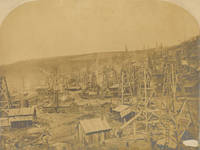
1865rif. 250221Benninghoff Run Pennsylvania 1865. Vintage albumen print rounded at top corners mounted on card captioned in pen beneath image. Image: 10 x 13 3/8 in. Image lightly faded some surface abrasion mount soiled. Vintage albumen print rounded at top corners mounted on card captioned in pen beneath image. Image: 10 x 13 3/8 in. Vintage albumen print showing the oil derricks and pump house of Benninghoff Run an important early oil field in Pennsylvania's Oil Creek Valley. The site's Ocean Well dug in 1865 was the first to prove that oil could be extracted from hilly terrain. Benninghoff Run was the scene of violence when teamsters angered over loss of work attempted to destroy the pipeline that comission dealer Henry Harvey built from Benninghoff Run to tanks at the Shaffer railroad two miles away. The right-of-way of the Benninghoff-Shaffer pipeline can be seen in this image as a white streak extending vertically from the fields to the hill in the distance cf. www.petroleumhistory.org. unknown books
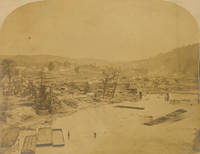
1860rif. 250325Petroleum Centre 1860. Vintage albumen print rounded at top corners mounted on card captioned in pen beneath image. 1 vols. Image: 10 x 13 3/8 in. Image lightly faded some surface abrasion mount soiled and worn. Vintage albumen print rounded at top corners mounted on card captioned in pen beneath image. 1 vols. Image: 10 x 13 3/8 in. Vintage albumen print of Petroleum Centre Pennsylvania with Oil Creek in the foreground with a few scattered derricks and the town proper on the far bank. Petroleum Centre sprang up in 1861 with the birth of the oil industry in western Pennsylvannia. By 1873 the town was nearly deserted; it is now part of Oil Creek State Park. unknown books
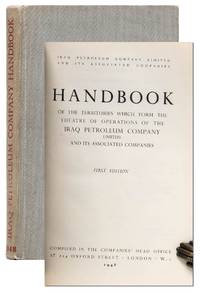
1948rif. 8116London: Iraq Petroleum Company 1948. First edition. Very Good. Octavo. Original publisher's grey cloth lettered in red. Portrait frontispiece of King Faisal 26 black and white plates after photographs 6 maps 1 folding 1 genealogy of the Hashimite House. Small neat blue ink ownership inscription to head of front free endpaper stitching a little weak at head of gutter of plate XVI cloth a little marked with spine slightly sunned. A Very Good copy. A first edition of this highly detailed handbook for IPC employees detailing the company's operations and highlighting the increasing importance of the petroleum industry to the Gulf Arabia and the Levant. A significant portion of the book is devoted to regional breakdowns with a few examples as follows: Bahrain is described as "in all some 100 villages. The developed and most fertile area is the northern fringe of Bahrain island"; Qatar as having a "population that is scanty and wretchedly poor. The Company's present operations supply almost the sole source of wealth in the territory"; and the Sheikhdom of Dubai as "The resources of the Sheikhdom are small and handled by the Shaikh's personal staff. The relations of the territory with its neighbours on both sides are not uniformly cordial." pages 67-70. The plates are also excellent with subjects including but not limited to the Kirkuk Fields Kadhimain San'a Makalla Manamah and Bahrain and Qatar from the air. Very Good. Iraq Petroleum Company unknown books
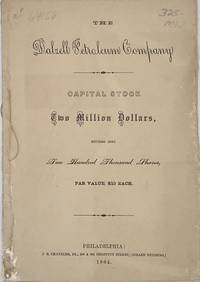
1864rif. 64156Philadelphia: J. B. Chandler Pr. 306 & 308 Chesnut Street Girard Building 1864. 8vo. 19 cm. 25 pp. 3. Disbound. Stitched sheets. Venango County Pennsylvania was the center of oil production in the 1860s. The first successful commercial oil well in the United States was completed by E.L. Drake near Titusville Pennsylvania 28 August 1859. OCLC: One copy at PA Hist. and Mus. Comn. Lib. J. B. Chandler, Pr., 306 & 308 Chesnut Street, [Girard Building] unknown books
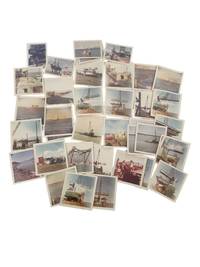
1970rif. 233331970. Texas and Kansas petroleum infrastructure photo archive 1970s and 1984 documenting the industrial system that linked Gulf Coast fabrication yards port facilities heavy marine transport offshore petroleum extraction and inland drilling in the mature oil fields of Kansas. The photographs show offshore structures moving from shore side assembly into open water service and a separate 1984 Kansas sequence inscribed "Lee's oil well" where a land based drilling rig trucks workers and rig floor equipment record oil production away from the coast. The archive places petroleum extraction within both the Gulf Coast industrial corridor that built and deployed offshore structures and the inland lease field where drilling remained dependent on mobile rigs pipe handling and small crews. Its value lies in that shift of scale from Galveston waterfront engineering and offshore installation to the working machinery of a Kansas well in the early 1980s. Photo archive of 42 chromogenic color photographs 3.5 x 5 inches Galveston Texas circa 1970s and Kansas 1984. The photographs center first on large offshore structures at several stages of completion and deployment including jack up rigs elevated decks cranes and a prominent circular helipad or radar platform mounted above the main deck. Several views show rigs still at dockside beside harbor pavement parked vehicles and industrial lifting equipment; others place the same or similar structures offshore standing above open water on extended legs or surrounded by service craft. One photograph includes a banner reading "Galveston Project Post USA" anchoring part of the sequence to a named project site while another frames the Galveston waterfront with dense ranks of harbor cranes and marine industrial equipment. Additional images show smaller fixed platforms a long yellow boom or gangway extending over water crane barges maneuvering beside offshore structures and a wider sea view with multiple platforms operating at once establishing repeated movement between fabrication yard port transfer and offshore installation. Six later Kansas photographs show "Lee's oil well" in 1984 including a land drilling rig in open field country truck mounted support equipment a lowered mast or rig component being moved into position workers on the rig floor handling chain and pipe a standing derrick and close views of the drill string hoisting line block and metal rig fittings. By the mid 1960s offshore oil had become central to both the U.S. energy economy and Texas coastal industry. Gulf Coast yards built and serviced the jackets pipe vessels and equipment that allowed companies to move farther offshore and later federal studies described fabrication yards as a core part of the offshore system that linked land based labor to offshore production. Texas held a special place in that expansion because its ports yards engineering firms and petroleum capital helped turn the Gulf into a permanent industrial frontier. Kansas had a different petroleum history beginning with commercial production in the 1890s and continuing through thousands of smaller lease fields where independent operators and mobile drilling crews extended the life of older oil districts. The 1984 "Lee's oil well" photographs add that inland production economy to the Galveston material showing how petroleum infrastructure depended not only on large coastal fabrication and marine transport but also on field rigs pipe work trucks and crew labor at individual wells. Light surface wear mild fading and minor edge wear; overall very good condition. A concentrated visual record of how American petroleum production moved between Gulf Coast offshore construction marine installation and inland drilling work in late twentieth century Texas and Kansas. unknown books
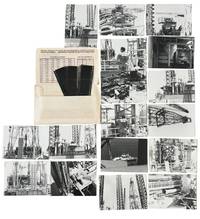
1970rif. 233511970. Rigging International photographs of refinery vessels crawler transporters port cranes and module lifts place oil-industry labor at the center of the late 1970s and early 1980s energy buildout. Captions in the group name offloading modules at Prudhoe Bay on Alaska's North Slope moving a 420 ton nuclear vessel from Oceanside to San Onofre erecting refinery vessels at Come-By-Chance Newfoundland offloading a 550 ton refinery vacuum tower in Aruba and handling 130 ton bulk-loader cranes at Cherry Point Ferndale Washington. The archive is best dated to roughly the late 1970s and early 1980s from its overlap with San Onofre Units 2 and 3 after the Atomic Energy Commission issued construction permits in 1973 and with Prudhoe Bay work after the Trans-Alaska Pipeline began operating in 1977; Rigging International later identified Alameda California as its world headquarters. Rigging International. Archive of 34 large format photographs. Circa late 1970s to early 1980s Alameda California with projects in California Alaska Hawaii Washington Newfoundland Aruba and Sweden. Each 8" x 10" predominantly color with a few black-and-white prints. Captions identify specialized heavy-lift and transport work in refinery construction marine offloading nuclear-component hauling port-crane erection maintenance and machinery installation with recurring references to crawler transporters barge operations lifting frames and oversized refinery vessels. Specific projects documented in the visible prints include Come-By-Chance refinery work in Newfoundland; San Onofre Nuclear Generating Station transport; Hanford reactor hauling; Prudhoe Bay module offloading; the Port of Oakland and Port of San Francisco; the Hawaiian Independent Refinery; Spreckels sugar refinery in Salinas; Cherry Point bulk-loader crane installation near Ferndale; and the Total concrete jacket construction site at Stord Norway. Labor shown in this archive document the transport lifting erection and maintenance work required to make energy production function across refineries ports and offshore supply systems. The North Slope photographs belong to the years after the Trans-Alaska Pipeline opened Prudhoe Bay to sustained high-volume production while the refinery and marine-lift photographs align with a broader period in which energy companies expanded output through new modules replacement vessels piping additions and upgraded handling systems rather than through constant construction of entirely new refineries. Alameda Oakland San Francisco Ferndale Aruba Newfoundland and Hawaii appear here as linked points in that industrial geography joined by the labor of crews moving vacuum towers reactors cranes and process equipment too large for ordinary transport. Light handling wear scattered edge wear minor curling and a few corner bends visible across the prints; overall good condition. A record of the heavy-lift labor that built and maintained oil and industrial infrastructure during the post-1973 energy expansion. unknown books
1965rif. 233141965. Offshore oil construction photographs documenting platform fabrication barge work marine transport and field logistics tied to the Gulf Coast petroleum industry in 1965-66 with direct evidence of how offshore drilling depended on a broad labor system before a rig ever reached a producing field. Taken at Farmers Marine Copper Works in Galveston Texas the archive records the building and handling of steel jackets deck sections cranes work barges service vessels and crew activity that made offshore extraction possible. The Gulf of Mexico was the proving ground of the modern offshore petroleum industry as the region became the incubator for an industry later exported worldwide. Photo archive of 53 color photographs 3.5" x 3.5" Galveston Texas 1965-66. The photographs show offshore structures in multiple stages of assembly and movement rather than a single completed drilling scene. Repeated views include steel platform legs and jacket sections standing in the water beside cranes and barges; large deck modules being hoisted or aligned over pilings; work decks with hoses railings and moored service boats; crewmen gathered onshore and aboard vessels; and small aircraft and automobiles used in project access and inspection. Several images show major marine lifts in progress with cranes extending over partially assembled structures and barges positioned tight against the work. Others widen out to open water towing scenes or partially completed platforms against distant mountainous terrain indicating that some photographs may record project deployment or field work beyond Galveston even if no specific destination is identified on the objects themselves. Handwriting on one verso of a group of men identifies "McClure / Chas. Young / Smithy." By the mid 1960s offshore oil had become central to both the U.S. energy economy and Texas coastal industry. Gulf Coast yards built and serviced the jackets pipe vessels and equipment that allowed companies to move farther offshore and later federal studies described fabrication yards as a core part of the offshore system that linked land based labor to offshore production. Texas held a special place in that expansion because its ports yards engineering firms and petroleum capital helped turn the Gulf into a permanent industrial frontier. Light handling wear and most exhibit curling; images generally clean and well preserved. Overall good condition. A strong documentary record of offshore construction labor at the moment when Texas Gulf Coast yards were helping scale the offshore oil industry from regional enterprise to national system. unknown books
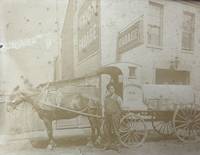
1900rif. 233021900. Massachusetts oil delivery photographs documenting the horse drawn transport system that moved petroleum products through small town New England before motor trucks displaced wagon distribution. Images depict oil wagons teamsters and tank rigs tied to local commercial delivery via horse and carriage. The turn of the century marked an industrial boom when kerosene lubricants and other oil products circulated through growing towns. This archive shows how it's its daily movement still relied on animal power and local hand delivery. Photo archive of 5 albumen and silver gelatin photographs and one RPCC photos measuring about 3.5" x 5" with various sized mounts Ashfield Massachusetts circa 1900-15. Three photographs bear photographer credit on the reverse to A.W. & G.E. Howes Ashfield Mass. One view shows a line of horse drawn tank wagons posed along an unpaved street before frame houses and utility poles with drivers seated in their rigs and teams held in place for a group portrait; the company is identified as Consumers Oil Company as visible on one of the carriages. A second image shows a single horse and tank wagon before a brick commercial building painted "UNION GARAGE" linking oil delivery by wagon to the emerging repair and automobile service trade. Two photographs are duplicate prints of the same scene each showing a man beside a white horse and covered oil wagon while a child sits on the driver's seat beneath the canopy; the man holds a metal can and partial wagon lettering ending in "OIL CO." is visible on the side. Another photograph shows a two horse team hitched to a larger wagon with partial company lettering also ending in "OIL CO." Massachusetts was deeply tied to the early oil economy not as a major drilling region but as a refining shipping storage and consumption market linked to the industrial Northeast. By the late nineteenth and early twentieth centuries petroleum products moved into the state through rail and coastal trade then outward through local dealers who supplied homes shops farms garages and machinery with kerosene fuel and lubricants. These photographs place that distribution system at ground level in Ashfield where horses still pulled the wagons that served an industry increasingly associated with mechanization and the rise of motor transport. Light fading and surface wear throughout; several mounts chipped at corners and edges; one of the duplicate pair having a 1.5" chip to the right side of the mount. Photos mostly show no signs of loss though the sepia photograph on the largest mount has a small chip to edge and a 0.5" tear to left side where horse's face is. Overall good condition. A compact Massachusetts record of the petroleum trade at the moment when horse drawn delivery and automotive modernity still occupied the same street. unknown books
1970rif. 233351970. Offshore oil rig construction photographs of marine industrial labor and heavy equipment operations at the Port of Galveston Texas undated showing how Gulf Coast petroleum infrastructure was assembled through coordinated crane work deck staging and vessel support. Made by an unidentified worker contractor or site observer with direct access to the platform and adjoining work areas the group records the operational system behind offshore petroleum expansion rather than only the finished structure: derrick components rising between lattice boom cranes machinery positioned on crowded deck surfaces workers monitoring equipment from railings and platforms and service craft moving below the job site. Within the history of Gulf Coast oil and gas development these images preserve the waterfront and offshore construction process through which drilling and extraction infrastructure entered service in one of the chief locations which allowed Texas entry into national and international trade. Photo archive of 17 silver gelatin snapshot photographs each about 3.5" x 5" also includes 18 negative images 35 mm Port of Galveston Texas circa 1960s-1970s. The prints concentrate on a single marine construction environment with repeated views of tall lattice cranes a derrick or drilling tower under assembly steel framework catwalks railings deck mounted machinery and industrial piping. Several photographs move between wide and close vantage points: one looks down onto a work deck strewn with cables drums tools and structural members; another isolates a crane boom overhead; others frame the rig against open water with a small service boat alongside. Two views show a worker in coveralls standing at the railing and looking across the site; in one image the patch on his back reads "Farmers Marine Copper Works Inc. Petro Chemical Marine Galveston Texas" directly tying the group to a named Galveston industrial contractor. Another figure in light clothing appears deeper in the structure. Interior or semi enclosed machinery views include a hopper shaped component rollers and processing equipment. The accompanying negative strips are marked and the original photo processing envelope survives with printed instructions preserving the group's original commercial processing context. Galveston's port facilities formed part of the larger Gulf Coast industrial network that supported offshore petroleum construction marine transport and heavy fabrication across the twentieth century and this group fixes that system at deck level through workers machinery staging practices and support traffic in the water below. Light wear curling and handling to prints and negatives; processing envelope creased and worn. A concise visual record of offshore oil infrastructure under construction with strong research value for petroleum history labor history and Gulf Coast industrial development showing Galveston as a site where harbor industry and offshore oil support work converged making the port a key setting for mid twentieth century energy expansion. l. unknown books
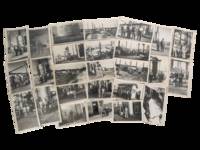
1945rif. 232411945. Oil refinery photo archive documenting refinery labor plant operations and worker identity at Kern Oil in Southern California and Mid West Refineries in Grand Rapids Michigan in the immediate postwar years showing how petroleum production expanded through the daily work of identified laborers during the industrial reorganization that followed World War II. The group centers on the men who stood on the ground among cracking towers tank farms piping runs shop buildings and control areas. Postwar oil demand rose with civilian automobile use trucking suburban growth and military-industrial continuity and refineries became key sites where that expansion was made practical through skilled and semi-skilled labor shift work maintenance inspection and dangerous physical proximity to heat pressure fuel storage and heavy equipment. The archive records that system at worker level where industrial growth appears as crews posing beside process units inside service spaces and at small plant structures rather than as abstract production statistics. Photo archive of 26 silver gelatin photographs each 2.5" x 4.5" Kern Oil Southern California and Mid West Refineries Grand Rapids Michigan circa 1945-1949. Roughly half the images show refinery infrastructure with dense fields of distillation columns and stacks cylindrical tanks elevated piping steel frameworks service roads and storage areas; one dramatic view shows a damaged or collapsed horizontal tank or vessel within a twisted metal structure. A large painted sign reading "MID-WEST REFINERIES INC." advertises "GASOLINES / FUEL OILS / BURNER OILS / KEROSENE." Other views show broader plant grounds with horizontal storage tanks outbuildings and open yards. The remaining photographs focus on workers posed alone and in groups in overalls work shirts caps and brimmed hats standing beside towers near pipe runs outside small office or shack structures and in work areas with process equipment visible behind them. Several versos identify individuals by name including groupings such as "Perry / Bob Patter / Lou Lane / John Higdon" "Charles Johnson / Bart Klein / 1946" "B. Klein / C. West / D. Golden" one inscription reads "4-15-49 / Place / MAX WERTZ SHACK / M-50 / Lou Peterson." American oil refining in the mid-1940s stood at the junction of wartime production and postwar consumer expansion. Plants that had helped sustain military logistics now fed the fuel economy that depended on workers whose labor was physically demanding and hazardous. These photographs preserve the named men occupying the industrial landscape that structured their livelihoods. Light wear and minor curling; numerous versos with identifying inscriptions; overall very good condition. A grounded postwar labor archive that places refinery workers inside the machinery of American oil production at the moment petroleum became central to everyday life. unknown books
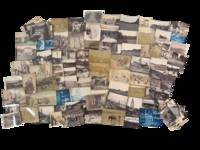
1900rif. 233951900. Turn-of-the-century Japan photo archive documenting foreign commercial travel oil and mining activity rural labor and domestic life during the late Meiji era when Japan was rapidly building railways mines refineries modern ports and industrial companies after the 1868 Meiji Restoration. The material appears connected to a Western man and his family moving through Japan in connection with oil extraction or related industrial work with repeated views of derricks refinery sites pipe trenches miners labor crews interpreters servants hotels villages and named regional destinations. Images show various scenes throughout northern Japan such as Hokkaido settlements Sapporo gatherings Naoetsu refinery work Nara and coastal travel household service and encounters between foreign visitors and Japanese workers at a time when foreign technical knowledge and Japanese state-backed industrial growth were reshaping the country. Photo archive of more than 150 photographs including approximately 6 cyanotypes and numerous silver gelatin and albumen photographs sizes range between 2" x 3.5" to 4" x 6" Japan circa late 1890s to early 1900s. Nearly every image bears a handwritten caption en verso identifying places people professions work scenes and social relationships. Captions include "Launching conveying pipe to and from steamship Corea Yokohama" "Refinery location Naoetsu Japan" "Celebrating the fall of Mukden Sapporo Mar. 21st 1905" "Crowd at Naoetsu Hotel" "Working on foundation for refinery Naoetsu" "Digging a great ditch for drain pipe from refinery to ocean" "Drillers and visitors" "Japanese servants at home in the bamboo grove" "Old American Naval Hospital" and "Mines & Smelters Sumitake Hotel Omori Japan." Workers dig trenches handle pipe gather beside derricks and refinery structures pose at mine entrances stand near kilns and industrial yards and move through villages and hotel courtyards. Other scenes record women in kimono children household staff rickshaw pullers street processions with rising-sun banners thatched structures coastal views mission or hospital buildings and Western family members partaking in local culture seated in gardens or standing among Japanese attendants and guides. The archive records Japan's industrial modernization from the perspective of foreign business presence rather than official state publicity. Oil had been produced in Japan since the nineteenth century especially in regions such as Niigata while Hokkaido mining railway building and settlement became central to Meiji development; this group places those broader changes inside fieldwork travel and household arrangements. The handwritten captions add another layer of specification by naming locations and functions that would otherwise be difficult to identify especially the refinery and drilling views. Condition varies across the group with curling fading toning creasing edge wear occasional surface loss and some with missing corners; images generally clean and clear captions remain present and visible on many versos. Overall in very good condition. By the turn of the century oil fields in Niigata and Akita were part of Japan's push to build an industrial economy but domestic crude was limited and often difficult to refine. The archive also reflects the unequal social and technical relationships that accompanied Meiji industrial expansion with foreign commercial specialists Japanese labor crews domestic servants and frontier extraction zones appearing together within the same industrial landscape. unknown books
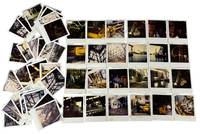
1970rif. 234111970. Offshore oil rig construction photo archive recording fabrication machining and dockside heavy-lift work at Farmers Marine Copper Works in Galveston Texas during the mature expansion of Gulf Coast petroleum engineering. After offshore drilling moved beyond shallow coastal waters Texas port cities became essential service centers for the fabrication of platforms pipe assemblies pressure systems and marine equipment needed by the oil and gas industry. These scenes place Galveston inside that industrial network through the labor machinery and waterfront facilities that made offshore production physically possible. Photo archive of 50 Polaroid snapshot photographs measuring 3.5" x 4" standard instant print format Galveston Texas circa 1970s to 1980s. Workers in hard hats and shop clothing stand among yellow-painted pipe systems hydraulic lines large flanged fittings deck-mounted machinery and scaffolded cylindrical components. Several interiors show machine-shop work including a worker operating or adjusting equipment at a large industrial station marked "44" while other scenes move outside to the waterfront where cranes barges dock edges and fabrication sheds frame components being staged near the water. Additional views include a small white operator cab heavy hoses across the deck red scaffolding around a large round metal housing and a massive concrete or metal assembly positioned beside an indoor slip or basin. The archive records the practical environment behind offshore oil production: the shore-based construction repair and preparation that allowed rigs and marine petroleum equipment to operate. Galveston's port economy depended on this kind of specialized industrial work linking local metal shops and waterfront yards to Gulf energy development petrochemical expansion and marine engineering. Surface soiling abrasions emulsion wear and handling marks to many Polaroid borders; images generally legible with expected fading and industrial handling wear. Overall in good condition. A photographic record of fabrication-floor and dockside labor at a named Galveston marine petroleum shop. unknown books
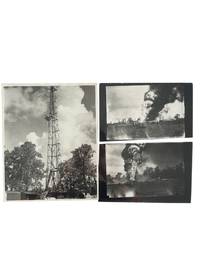
1952rif. 217461952. Oil Extraction and Oil Well Fires in South Texas. Three silver gelatin black-and-white photographic prints including one gelatin silver press photo 8 x 10 in. and two photo prints from negatives 5 x 7 in. Dated 1952 and 1954. Content includes an image of a wildcat rig in Lavaca County Texas and dramatic scenes of oil well fires. All photos with extensive manuscript notations on verso including references to press filing. This small but gripping photo archive documents the volatility and danger of oil drilling operations in mid-century South Texas including one catastrophic blowout and fire. The 8 x 10 inch silver gelatin press photograph dated June 1954 and stamped "RETURN TO CHRONICLE FILES" shows a towering oil derrick rising above dense trees. The reverse identifies the location as Lavaca County and describes a wildcat operation in Hallettsville Texas where drilling reached 8000 feet. A hand-written note reads "Field Drilling Co. Ext. Exterior - cementing protective casing 10240 down to 8000 ft - Lavaca County 2 1/2 mi. N. Hallettsville." The two smaller prints-captioned in manuscript as "Oil Well Fires"-capture the momentous force of an uncontrolled eruption. One image shows a roiling column of black smoke and flame rising from a well site surrounded by distant silhouettes of onlookers. Another more closely framed emphasizes the explosive power as the plume expands over nearby treetops. A note on the verso dates one of these prints to October 1952 stating it is a "Print from Studio of late Cecil Thomson." Cecil Thomson 1881-1953 was a prolific Houston-based commercial photographer and photojournalist who operated Thomson Studio a major supplier of images to regional newspapers including the Houston Post and Houston Chronicle. His studio active from 1909 until his death in 1963 continued producing prints posthumously from its extensive negative archive making it likely these fire images were developed and distributed under the studio's imprint even if not taken by Thomson personally. All three photos are from the Houston Chronicle archives with two stamped or inscribed "Return to Chronicle Morgue." One image includes the notation "Sunday Oil - Lavaca County Wildcat." These images preserve both the ambition and peril of mid-century oil operations in Texas a period when wildcat drilling fueled economic speculation and technological innovation often with great human and environmental risk. Surface creases and light wear to edges; verso of each image shows editorial markings and annotations in grease pencil and ink. Overall very good condition. A vivid visual record of the oil industry's volatility in 1950s Texas with provenance from the Houston Chronicle press files. unknown books
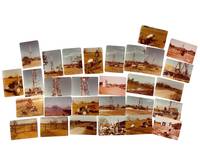
1970rif. 218701970. Texas Labor History Environmental History Photography Unidentified photographer Texas oil field photographs circa 1970s document petroleum extraction industrial labor and land transformation in the American Southwest during a period of sustained energy production and infrastructure expansion. The images provide direct visual evidence of drilling operations mechanical systems and work crews engaged in oil field development situating human labor within the broader environmental changes associated with resource extraction. The archive supports research into energy history industrial technology and the reshaping of rural landscapes through oil production in the late twentieth century. Texas circa 1970s. Archive of 82 original color snapshot photographs each measuring approximately 3.5 x 4.75 inches depicting oil drilling sites machinery and surrounding terrain. The photographs include wide views of steel derricks and drilling rigs with visible components such as rotary tables crown blocks and mud systems as well as close range images of workers engaged in construction welding and equipment alignment. Additional scenes show cement mixing and foundational work amid limestone aggregates trailer mounted compressors and generators oil storage tanks and transport vehicles positioned throughout the worksite. The surrounding environment is documented through images of cleared access roads graded earth holding ponds fencing and mesquite brush alongside occasional views of adjacent ranch life including livestock enclosures and domestic scenes. The archive situates oil extraction within the broader transformation of rural Texas landscapes during the late twentieth century when energy production reshaped land use infrastructure and local economies. The juxtaposition of heavy industrial equipment with agricultural and residential elements illustrates the integration of petroleum development into existing rural environments. Seasonal variation including a snow covered pasture further emphasizes the continuity of operations across changing conditions. Light edge wear and minor curling to some prints; colors remain strong and images clear. Overall very good condition. A substantial photographic record of oil industry labor and environmental change in Texas during the 1970s. unknown books
1930rif. 218981930. Archive of press photographs documenting systems of petroleum extraction offshore drilling and industrial emergency response in Texas between 1938 and 1979. The material documents how oil companies drilling crews firefighters and industrial workers operated within the high-risk infrastructure of the American petroleum industry through visual records of refinery explosions well blowouts offshore platform accidents and active drilling operations. The photographs reveal the mechanisms of oil production and disaster response across inland fields and Gulf Coast offshore sites during a period when Texas oil played a central role in the expansion of American industrial power military logistics and global energy markets. Produced largely for the Houston Post Houston Chronicle Associated Press and United Press International the archive provides primary-source evidence for the study of industrial labor workplace hazards extractive infrastructure and the environmental and human costs of mid-twentieth-century oil production. Collection consists of seven original black-and-white silver gelatin press photographs measuring approximately 10 x 8 inches. Several images document catastrophic oilfield fires and explosions associated with the East Texas oil boom and Gulf Coast petroleum industry. One aerial photograph dated July 28 1956 depicts the aftermath of the Shamrock Oil & Gas Corporation explosion near Dumas Texas showing scorched circular storage fields collapsed piping infrastructure and thick smoke rising from burned refinery grounds. The attached caption notes that sixteen workers died and at least thirty were injured in the blast with the resulting fireball reportedly visible from Amarillo forty miles away. Two Associated Press photographs dated January 1938 portray uncontrolled oil well fires in the Kilgore oil field during the height of the East Texas oil boom. One image shows flames reportedly reaching 150 feet above a wild well blowout while firefighters attempt unsuccessfully to suppress the fire with high-pressure water streams. Another photograph depicts silhouetted firefighters approaching the burning wellhead after temporarily suppressing the flames with chemicals in order to close a valve. Additional photographs document offshore drilling operations in the Gulf of Mexico including a United Press International image dated May 11 1979 showing exhausted survivors of a collapsed offshore platform south of Galveston wrapped in towels while awaiting medical treatment; the accompanying caption notes that nine workers remained missing from the thirty-four-man crew. Another image dated September 15 1956 depicts oilmen silhouetted atop an offshore drill rig approximately fifteen miles off the Texas coast while a helicopter approaches carrying replacement personnel. A June 1954 photograph from Brazoria County documents drilling operations at a depth of 9544 feet as workers remove drill stems to change bits at the McGeary D.G. Company No. 1 Jamison Estate well. Additional images show derricks under construction drilling fields crowded with infrastructure and industrial crews working amid active extraction sites. Together the photographs document the immense economic importance and physical danger of the Texas petroleum industry during the mid-twentieth century when inland oil booms and offshore exploration transformed both regional landscapes and global energy systems. Particularly notable is the archive's sustained focus on labor and catastrophe preserving visual evidence of the hazardous conditions faced by oilfield workers firefighters and offshore drilling crews operating under extreme pressure and technological risk. The images also illustrate the growing complexity of extraction systems as drilling operations expanded from rural inland fields to large-scale offshore platforms in the Gulf of Mexico. Minor editorial markings and light handling wear to versos with scattered creasing consistent with newsroom use; photographs remain sharp and well-preserved overall. Very good condition. A substantial documentary archive of industrial labor extraction technology and petroleum disasters in twentieth-century Texas oil history. unknown books
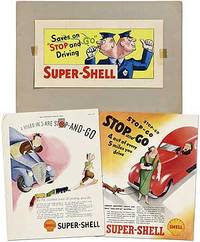
1937rif. 3969791937. Unbound. Near Fine. Original painted color illustration on paper. Image size 14" x 7¼" on 18" x 12" artist board. Near fine with some light toning darkening to the tape and bump to corner of the board. A fun pictures of a two headed traffic cop representing the stop and go traffic that Shell Oil's Super-Shell gasoline to designed to combat. The art was produced by an unknown artist who worked the 1940s for the advertising agency Foote Belding & Cone which represented some of the biggest clients in the world. The art is accompanied by two proofs of magazine advertisements produced by the same artist. A wonderfully whimsical ad. unknown books
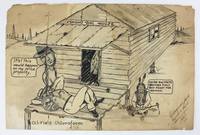
1937rif. 6117Edmond Ok 1937. Good. Ink wash drawing on heavy stock 12 x 18 inches. A few tears and chips at edges lightly dampstained some light soiling. A satirical and slightly racist drawing featuring the Oklahoma oil fields a Native American and a cat. The centerpiece is a long shabby building labeled "Edmond Tool House" in haphazard letters. This rickety-looking building has cracked windows a peeling tin roof and a slightly sketchy porch upon which reclines a man who appears to be sniffing the hind end of a cat. The label below reads "Oil-field chloroform" and a waft of smoke rises from the back end of the cat which hides the lower half of the reclining man's face. From around the side of the building a fedora-clad man exclaims "!!x! This would happen on my prize property." The face is a very accurate portrait pasted on to the artwork. On the other side of the building a Native American sits cross-legged on the ground holding a peace pipe opining "Maybe big white brother finly sic buy feast for Indians." Oil derricks can be seen in the background. The image is inscribed and signed in the lower right corner "Recalling a very pleasant trip and a damned embarrassing experience. J.G. Dyer 7/21/37." The oil fields of Oklahoma were some of the busiest and most productive from 1900 to 1935 though the West Edmond Oil Field wasn't discovered until the 1940s. An unusual piece of art which would seem to contain some sort of inside joke. unknown books
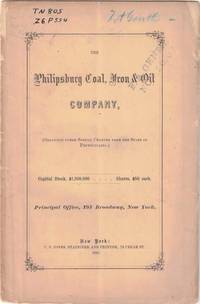
1865rif. 72589New York: C. O. Jones Stationer and Printer 1865. Paperback. Good. Paperback. First edition. 17pp. Missing the frontispiece chart. Ex-institutional copy with numbers written name and stamp on the front cover. Stamp "Library of the Franklin Institute" located on the verso of the title page. Front cover edge chipped and detached. Back cover chipped bottom corner. A good complete example. C. O. Jones, Stationer and Printer paperback books
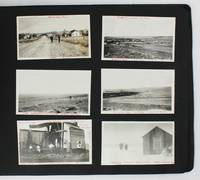
1921rif. 6148Various locations 1921. Very good. Twelve leaves with 106 photographs. Images a mix of 4.25 x 2.5 and 5.5 x 3.5 inches. Oblong quarto. Original black cloth string tied. Black paper leaves photos glued down. Images captioned in ink throughout on the photo. Minor wear. An interesting photographic record of drilling for oil in Wyoming and Montana. The images which are all captioned in a useful fashion depict oil rigs and wells the drillers at work and occasionally the family's on whose land they are drilling. The album opens with images from Upton Wyoming. Upton is located in the northeast corner of the state near Deadwood South Dakota; its newspaper offices burned down in 1926 leaving few early records of the town. Images depict the boiler "to go on School Sec 16"; the Gose home and oil field as well as the Goses; as well as rigs identified as ready to move from one site to another. Several images later in the album depict an accident on the Gose field which decapitated Vernie Moody -- two images show an X on the spot where he died under the depicted wreckage. Other images show work at Osage Gillette and Salt Creek Wyoming including one of a gushing well at Salt Creek in 1921. Images of work at the Broadview Dome near Billings Montana indicate "no oil near here" and "their well my test." There are also some nice views of Main Street in Harding Montana and Gillette Wyoming. A brief but fascinating and insightful glimpse of the oil life in the northern plains. unknown books