Interstate Oil Compact Commission ReBiblio.com

1 721 résultats
réf. B9781014091963Hardback. New. hardcover
1993310 pages. Index. Abundantly illustrated. Take the mystery out of wood finishing. "Proves that finishing isn't black magic or a nebulous art... but rather is a process that is as precise and analytical as any other aspect of woodworking. Withoug question, this is the best-researched, most authoritative book on wood finising available." - Workbench Magazine. Chapters include: preparing the wood surface; tools for applying finishes; oil finishes; staining wood; filling the pores; film finishes; shellac; lacquer; varnish; water-based finishes; conversion finishes; choosing a finish; finishing the finish; caring for the finish; repairing finishes; finishing different woods; strippers; and more. Attractive glossy illustrated boards. Clean, bright and unmarked with minimal wear. Excellent copy. Book
1928réf. 117782No Place: Union Oil Company 1928. Softcover. very good. 43pp. Quarto. Original stiff card wrappers with fixed binding. Edges slightly rubber small tear to upper front. Illustrated with B/W photographs and diagrams. Tables tipped in at rear. very good Guide for painting promotional signs service stations and gas pumps held by the Union Oil Company. Includes instructions and example diagrams. Structural support tables tipped in at rear. An interesting piece of Americana. 1928 Union Oil Company paperback
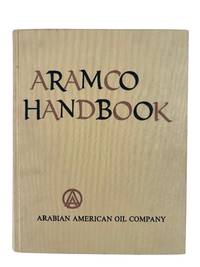
1968réf. 225501968. Lebkicher Roy George Rentz and Max Steineke. Aramco Handbook published in 1960 documents the information system through which the Arabian American Oil Company interpreted Saudi Arabia Middle Eastern petroleum and its own operations for company personnel and associated readers. Prepared by Aramco employees while the corporation was owned by four American oil companies the volume combines technical instruction company history regional geography religious and political narrative and guidance on social conduct. It reveals how Aramco presented industrial development as a coordinated process linking geological exploration refining transportation workforce management and cross-cultural training providing primary-source evidence for the study of United States-Saudi relations corporate communications petroleum infrastructure expatriate employment and the institutional production of knowledge about Saudi society. Aramco had transferred its headquarters from New York to Dhahran in 1952 but remained under American corporate ownership in 1960; Saudi equity participation did not begin until 1973. Lebkicher Roy George Rentz and Max Steineke with contributions by other Aramco employees. Aramco Handbook. Dhahran Saudi Arabia: Arabian American Oil Company 1960. First edition. Printed in the Netherlands. 324 pages. Profusely illustrated with black-and-white photographs diagrams and maps some printed in color. Original tan cloth lettered in black and brown with the Aramco emblem; no dust jacket noted. 4to. The five principal sections address the historical background of Saudi Arabia and the Middle East petroleum's place in modern industry the Aramco enterprise Saudi government and society and Arab culture and customs. A full-page photograph of the Kaaba accompanies a color map tracing seventh- and eighth-century Arab conquests while oil-production chapters explain hydrocarbons refining storage and distribution through diagrams and industrial photographs. An aerial view of the Ras Tanura refinery identifies such facilities as the "Catalytic Desulfurizer" "Bulk Plant" and "Crude Stabilizers" with an inset showing piers described as capable of accommodating ten tankers. Additional spreads interpret the pilgrimage to Mecca through photographs of the Station of Abraham the Well of Zamzam and pilgrims at ritual sites. The final section supplies transliterated greetings including as-salÄmu ʿalaykum and kayf ḥÄlak together with etiquette advice intended to regulate interactions between foreign employees and Saudi residents. Bibliographic records confirm the authors date publisher and internally produced character of this edition. The handbook's extensive visual and technical documentation is inseparable from the corporate framework that shaped it. Maps refinery plans photographs and process explanations preserve detailed evidence of Aramco's operations and of Saudi landscapes pilgrimage sites and public customs while the accompanying text repeatedly positions the company as the intermediary joining the Kingdom's resources to international industry. Its cultural chapters translate complex religious and social practices into generalized guidance for expatriate personnel demonstrating how corporate education supported the practical operation of the concession as surely as engineering manuals and infrastructure diagrams did. Light toning and faint soiling affect the cloth with a gentle bump to one corner; interior clean and binding sound. Very good. A substantial record of the technical cultural and administrative knowledge through which Aramco trained personnel and represented its authority in Saudi Arabia at the beginning of the 1960s. unknown
1968réf. 225491968. Arabian American Oil Company. Aramco Handbook: Oil and the Middle East revised in 1968 documents the information system through which Aramco explained Saudi Arabia Middle Eastern petroleum and its own industrial operations to an English-language readership. Published while the company remained owned by four American oil corporations the handbook combines petroleum geology corporate history political geography and cultural instruction into a unified account of Saudi modernization under oil development. Its organization reveals how Aramco presented itself as both an industrial enterprise and an interpreter of Saudi society using maps photographs diagrams historical narratives and rules of social conduct to prepare foreign personnel for work in the Kingdom. The volume provides primary-source evidence for research into United States-Saudi relations corporate communication petroleum infrastructure expatriate labor and the production of cultural knowledge within a multinational oil concession. Saudi acquisition of Aramco began during the following decade and reached full government ownership in 1980 placing this edition before the company's transition to Saudi control. Arabian American Oil Company. Aramco Handbook: Oil and the Middle East. Dhahran Saudi Arabia: Arabian American Oil Company July 1 1968. Revised edition. Printed in Haarlem Netherlands by Joh. Enschedé en Zonen. 276 pages. Profusely illustrated with color maps black-and-white photographs and diagrams. Original red cloth stamped in gilt and black; no dust jacket noted. 4to. The handbook is divided into five principal sections addressing the historical background of Saudi Arabia and the Middle East the development of the regional petroleum industry the Aramco venture Saudi government and society and Arab culture and customs. A tribal map identifies numerous communities across the Arabian Peninsula including al-Mutair and al-Murrah while a diagrammatic map of the "Conquest of Najd" traces Ibn Saud's military expansion through arrows and battle annotations. Petroleum sections explain drilling refining transportation and export infrastructure including the Trans-Arabian Pipeline illustrated by parallel lengths of pipe extending across open terrain and accompanied by discussion of the decision to construct substantial portions above ground. Photographic essays show communal dining urban and industrial environments and other aspects of public life. The "Social Etiquette" section introduces such greetings as as-salÄmu ʿalaykum and kayf ḥÄlak presenting cultural instruction as part of the company's management of encounters between expatriate employees and Saudi residents. Bibliographic records confirm the 1968 Dhahran edition as an extensively illustrated corporate reference work on petroleum and the Middle East. The handbook's research value lies partly in the tension between the breadth of its documentation and the institutional perspective governing its interpretation. Its maps and photographs preserve substantial information about infrastructure geography labor social practice and the physical expansion of the Saudi petroleum industry while its text consistently casts Aramco as the principal agent joining Saudi Arabia to global markets. Cultural sections reduce complex regional and social differences to practical guidance for foreign employees and historical narratives place political consolidation and oil development within a corporate account of orderly progress. The volume should therefore be read both as a reference source and as evidence of how an American-owned concession represented its authority during a consequential phase of Saudi economic transformation. Light rubbing affects the boards with slight fraying at the spine ends and minor handling wear to the text-block edges; interior clean and binding sound. Very good. A detailed corporate record of the maps infrastructure historical narratives and cultural instruction through which Aramco explained-and justified-its place in Saudi Arabia's petroleum economy. unknown
1933réf. 521Chicago: H. M. Gousha 1933. 23 1/4 x 17 1/2 inches. Very good condition. This is a highly decorative Depression Era map of the United States. The design on the front cover is a modest view of getting gas at the pump. A uniformed attendant puts the gas in the back of the sedan. The verso of the map is filled with panels of attractive people and the friendly servers of Gulf gasoline clearly marked on the pumps. There is a lubrication chart that lists the different automobile makes in 1933. What an expanded selection with names like Auburn Cadillac Cord Durant Hupmobile Isotta-Fraschini Locomobile Pierce-Arrow Stutz and Willys among many others. There ia also a transcontinental mileage chart. This is a fun piece highlights by a superb graphic presentation of the map of the United States. H. M. Gousha unknown
réf. 1390471349.Gpaperback. Good. Access codes and supplements are not guaranteed with used items. May be an ex-library book. paperback
2022réf. BIBSD0052161102022. Full Leather Bound. NEW. Size: 14.60 x 22.86 cms A Unique Premium Leather-Bound book for elite readers/collectors of old rare books. An Original Leather is being used for binding this book with Golden Leaf Printing and designing on Spine front and Back of the book with edge gilding. WE HAVE MULTIPLE OPTIONS IN COLOR OF LEATHER RED GREEN BLUE MAGENTA TAN PURPLE DEEP BROWN BLACK AND WITH DIFFERENT COLOR LABELS. YOU MAY CHOOSE ANY COLOR OF YOUR CHOICE AND MAIL US. This service is chargeable. Original edition was published in 1909 and this unique edition is Reprinted in 2022 with the help of original edition. Black & white printing on high quality natural shade paper with sewing binding for longer life professionally processed without changing its contents. As these are old books we processed each page manually on computer and make them readable. We give our best to give you the best book but in some cases we have to adjust few pages which are blur or missing or black spots. If it is multi volume set then it is only single volume. We hope that you understand these issues in these old treasure. This is an important book for the readers who want to know more about our old treasure. Our dedicated team is trying to bring these rare books back to the shelves. We are also giving service of printing the hard-to-find books which are not listed in our store. Hope you will like it and give your comments and suggestions. Lang: - English Pages 205. Product Disclaimer: Please be aware that because leather is a natural material slight discoloration or change in texture may be visible. FOLIO EDITION Size 12x19 Inches IS ALSO AVAILABLE ON REQUEST. hardcover
1968réf. 225491968. Arabian American Oil Company. Aramco Handbook: Oil and the Middle East revised in 1968 documents the information system through which Aramco explained Saudi Arabia Middle Eastern petroleum and its own industrial operations to an English-language readership. Published while the company remained owned by four American oil corporations the handbook combines petroleum geology corporate history political geography and cultural instruction into a unified account of Saudi modernization under oil development. Its organization reveals how Aramco presented itself as both an industrial enterprise and an interpreter of Saudi society using maps photographs diagrams historical narratives and rules of social conduct to prepare foreign personnel for work in the Kingdom. The volume provides primary-source evidence for research into United States-Saudi relations corporate communication petroleum infrastructure expatriate labor and the production of cultural knowledge within a multinational oil concession. Saudi acquisition of Aramco began during the following decade and reached full government ownership in 1980 placing this edition before the company's transition to Saudi control. Arabian American Oil Company. Aramco Handbook: Oil and the Middle East. Dhahran Saudi Arabia: Arabian American Oil Company July 1 1968. Revised edition. Printed in Haarlem Netherlands by Joh. Enschedé en Zonen. 276 pages. Profusely illustrated with color maps black-and-white photographs and diagrams. Original red cloth stamped in gilt and black; no dust jacket noted. 4to. The handbook is divided into five principal sections addressing the historical background of Saudi Arabia and the Middle East the development of the regional petroleum industry the Aramco venture Saudi government and society and Arab culture and customs. A tribal map identifies numerous communities across the Arabian Peninsula including al-Mutair and al-Murrah while a diagrammatic map of the "Conquest of Najd" traces Ibn Saud's military expansion through arrows and battle annotations. Petroleum sections explain drilling refining transportation and export infrastructure including the Trans-Arabian Pipeline illustrated by parallel lengths of pipe extending across open terrain and accompanied by discussion of the decision to construct substantial portions above ground. Photographic essays show communal dining urban and industrial environments and other aspects of public life. The "Social Etiquette" section introduces such greetings as as-salÄmu ʿalaykum and kayf ḥÄlak presenting cultural instruction as part of the company's management of encounters between expatriate employees and Saudi residents. Bibliographic records confirm the 1968 Dhahran edition as an extensively illustrated corporate reference work on petroleum and the Middle East. The handbook's research value lies partly in the tension between the breadth of its documentation and the institutional perspective governing its interpretation. Its maps and photographs preserve substantial information about infrastructure geography labor social practice and the physical expansion of the Saudi petroleum industry while its text consistently casts Aramco as the principal agent joining Saudi Arabia to global markets. Cultural sections reduce complex regional and social differences to practical guidance for foreign employees and historical narratives place political consolidation and oil development within a corporate account of orderly progress. The volume should therefore be read both as a reference source and as evidence of how an American-owned concession represented its authority during a consequential phase of Saudi economic transformation. Light rubbing affects the boards with slight fraying at the spine ends and minor handling wear to the text-block edges; interior clean and binding sound. Very good. A detailed corporate record of the maps infrastructure historical narratives and cultural instruction through which Aramco explained-and justified-its place in Saudi Arabia's petroleum economy. unknown books
1968réf. 225501968. Lebkicher Roy George Rentz and Max Steineke. Aramco Handbook published in 1960 documents the information system through which the Arabian American Oil Company interpreted Saudi Arabia Middle Eastern petroleum and its own operations for company personnel and associated readers. Prepared by Aramco employees while the corporation was owned by four American oil companies the volume combines technical instruction company history regional geography religious and political narrative and guidance on social conduct. It reveals how Aramco presented industrial development as a coordinated process linking geological exploration refining transportation workforce management and cross-cultural training providing primary-source evidence for the study of United States-Saudi relations corporate communications petroleum infrastructure expatriate employment and the institutional production of knowledge about Saudi society. Aramco had transferred its headquarters from New York to Dhahran in 1952 but remained under American corporate ownership in 1960; Saudi equity participation did not begin until 1973. Lebkicher Roy George Rentz and Max Steineke with contributions by other Aramco employees. Aramco Handbook. Dhahran Saudi Arabia: Arabian American Oil Company 1960. First edition. Printed in the Netherlands. 324 pages. Profusely illustrated with black-and-white photographs diagrams and maps some printed in color. Original tan cloth lettered in black and brown with the Aramco emblem; no dust jacket noted. 4to. The five principal sections address the historical background of Saudi Arabia and the Middle East petroleum's place in modern industry the Aramco enterprise Saudi government and society and Arab culture and customs. A full-page photograph of the Kaaba accompanies a color map tracing seventh- and eighth-century Arab conquests while oil-production chapters explain hydrocarbons refining storage and distribution through diagrams and industrial photographs. An aerial view of the Ras Tanura refinery identifies such facilities as the "Catalytic Desulfurizer" "Bulk Plant" and "Crude Stabilizers" with an inset showing piers described as capable of accommodating ten tankers. Additional spreads interpret the pilgrimage to Mecca through photographs of the Station of Abraham the Well of Zamzam and pilgrims at ritual sites. The final section supplies transliterated greetings including as-salÄmu ʿalaykum and kayf ḥÄlak together with etiquette advice intended to regulate interactions between foreign employees and Saudi residents. Bibliographic records confirm the authors date publisher and internally produced character of this edition. The handbook's extensive visual and technical documentation is inseparable from the corporate framework that shaped it. Maps refinery plans photographs and process explanations preserve detailed evidence of Aramco's operations and of Saudi landscapes pilgrimage sites and public customs while the accompanying text repeatedly positions the company as the intermediary joining the Kingdom's resources to international industry. Its cultural chapters translate complex religious and social practices into generalized guidance for expatriate personnel demonstrating how corporate education supported the practical operation of the concession as surely as engineering manuals and infrastructure diagrams did. Light toning and faint soiling affect the cloth with a gentle bump to one corner; interior clean and binding sound. Very good. A substantial record of the technical cultural and administrative knowledge through which Aramco trained personnel and represented its authority in Saudi Arabia at the beginning of the 1960s. unknown books
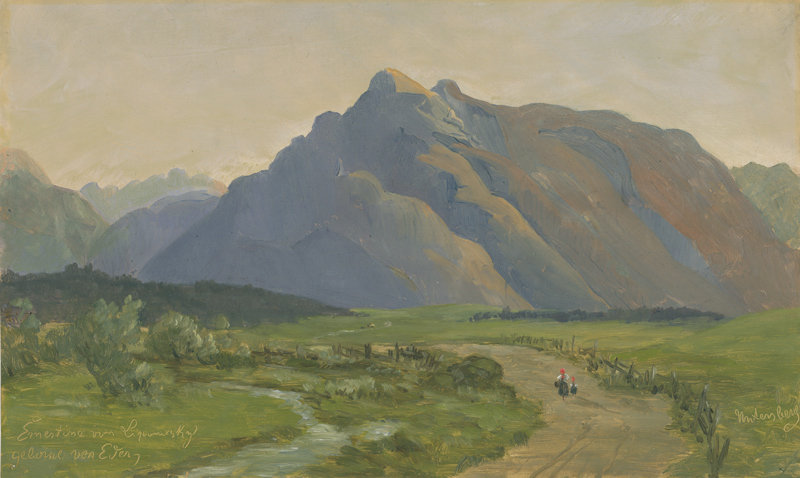
réf. 149-Wo.J. Öl, auf Papier, links unten ritzsigniert ?Ernestine von Lipowsky, geborene von Eder?, rechts unten bezeichnet ?Untersberg?. 13,7:19,6 cm. Nagellöchlein in den unteren Ecken. Minimaler Einriß links unten. Frische und dynamische, sicher vor Ort entstandene Landschaftsstudie, die eine intensive Beschäftigung mit der Münchner Freilichtmalerei erkennen läßt.
1946réf. K307894Melbourne: Vacuum Oil Company 1946. 1st edition. Nice copy. octavo. stiff wrappers 64pp. b/w pls. & ills. duotone ills. tables Small close tear to the top of wrappers o/w nice copy Vacuum Oil Company unknown
1934réf. 18510Melbourne: Vacuum Oil Company 1934. soft cover. G. Sleeve in very good condition map split in two parts with a little edge wear overall good condition./No Jacket. Folding colour map in printed sleeve. Visit Melbourne Centenary 1934-5 printed on cover. Vacuum Oil Company paperback
réf. 1302Huile sur papier, signée et datée 1984 en haut à droite (44,5/64 cm).
1924réf. 149012New York: Tidewater Oil Company 1924. 7th edition. Nice copy. quarto. card covers 75pp. colour & b/w plates text ills. diags. Fine catalogue illustrated with many nice engine diagrams & exploded views. Uncommon Tidewater Oil Company unknown
1989réf. 797155PN. New. 1989. Soft Cover. Date is original print. This is a reprint edition. . PN paperback
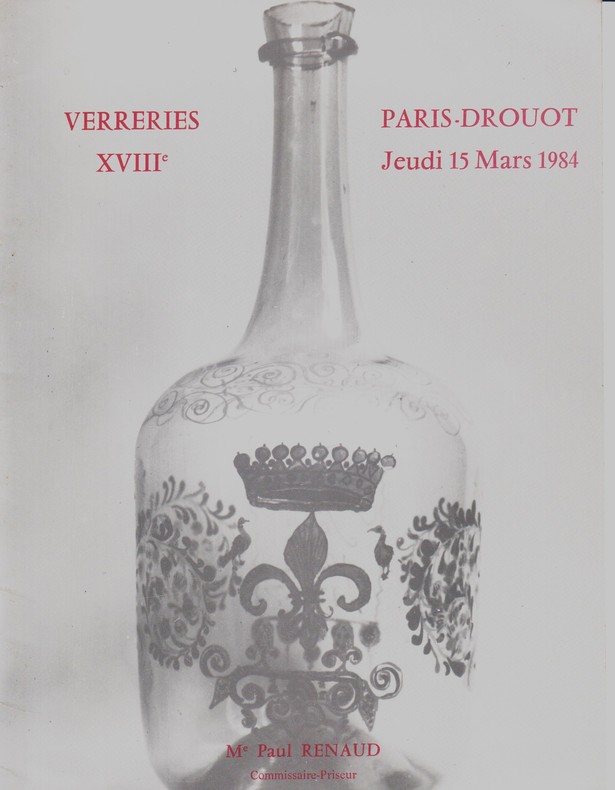
1984réf. SPN-534Fascicule agrafé 24x18, couverture illustrée en noir, [12] pages illustrées de photos en noir, bibliographie.
réf. 9798Florence : Giunti, 1569. 4° bois sur la page de titre et deux grandes initiales gravées sur bois . 4 feuillets non chiffrés, 89 pp. Suivie d'une feuille vierge M6. vélin moderne dos orné, pièces de titre en maroquin rouge. Des passages ont été anciennement soulignés à la plume.
1980réf. A75696London: Victoria & Albert Museum 1980. First Edition. Very Good. First Edition. No date circa 1980. 12 broadsheet/ posters folded into 16 parts but total measurement is 33"" x 23"". Attractively produced for the different galleries of the V&A ie Art of India Early Medieval Art; Music gallery European Baroque etc. Funded by Mobil Oil. Fine copies in somewhat worn and broken original slip-case. Victoria & Albert Museum, unknown
1952réf. TAB0000095. 1952. In-12. Broché. Bon état, Couv. convenable, Dos satisfaisant, Intérieur frais. Huile sur panneau encadrée. Mention du titre au dos. Dimensions avec cadre : 56x42cm. Dimensions oeuvre : 46x32cm. Cadre en bois. Oeuvre signée et datée en bas à droite : Y. Babonnaud 1952. Un éclat de peinture (dans la partie du ciel - voir photo).. . . . Classification : 920.4-Huile
1780Un foglio, cm. 27 x 19, testo in cornice. Si illustrano le virtù e le proprietà farmacologiche di un olio d’oliva, Mandosi di Terni. Per la data di pubblicazione cfr G. Lise: La farmacia storia e arte, Milano 1986
2004réf. LFA-126715735Un ouvrage de 144 pages, format 140 x 190 mm, illustré, broché couverture couleurs rempliée, publié en 2004, bon état
1999Contains article by Erle Zwingle "Olive Oil : Elixir of the Gods' (pp. 66-81) Book
réf. 18-1468Philadelphia: Huff Oil Company 1929. Single page. 11 x 8 inches. Printed both sides. Very Good. Typewritten note attached with paperclip. Issued to Henry C. Gibson. Dated 11 May 1929. Signed by secretary. Philadelphia: Huff Oil Company, 1929. unknown
réf. 18131Dimensions : 447 x 323 mm. Huile signe signature illisible en marge infrieure gauche. Travail non dat ralis circa 1950. Elle figure une vue des basiliques et chteau de Lourdes avec au premier plan le Gave de Pau. Prsente sous cadre. LgÂres altrations affectant le cadre. Du reste trÂs belle condition. b42961 unknown