INSTITUTE OF PAINTERS IN OIL COLOURSBiblio.com
1 344 résultats
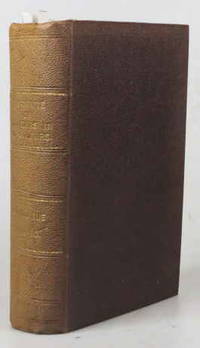
1883réf. 47642Piccadilly: The "Graphic" Office 1883-4 to 1888-9. Six volumes bound in one. 8vo. Contemporary purple buckram gilt and blind ruled bands to the spine gilt lettered direct to two panels an early armorial bookplate Molyneux to the front pastedown with a corresponding ownership inscription dated 1890 to the opposing free endpaper. Sunning to the spine very good overall. The final three volumes with double page price lists bound in. Piccadilly: The "Graphic" Office unknown
1944Very Good Turkish Paperback. Demy 8vo. (21 x 15 cm). In Turkish. 191, [1] p., 1 folded huge map (39x75 cm). Tatbikî jeoloji I: Jeolojik harta [sic. harita] alma usulleri. Enver Necdet Egeran was born in Cyprus in 1907. He, High school education in Cyprus, High Mining Engineering in Turkey, the Mineral and Petroleum Geology High Engineering and PhD in the same subject, completed in France. He was sent to France by Mustafa Kemal Atatürk. He served in the bureaucracy for 25 years, led the Mining and Petroleum exploration and made the first oil available in Raman. After retiring from the state, after being the General Manager of an American oil company for 12 years, he managed his own consulting company for 23 years. Rare. Only one copy in OCLC 850735753 (Istanbul Technical University).
1898Very Good French Original wrappers. Folio. (32 x 21 cm). bilingual in English and French. [8], 26, [2] p. First printed edition of these minutes by the Foreign Ministry of France in 1897-1898 on Bahr Al-Ghazal, Lake Chad, and the Upper Nile regions. The tensions between French and British relations were high in the 1875-1898 era. especially over Egyptian and African issues. At several points, these issues brought the two nations to the brink of war; but the situation was always defused diplomatically. For two decades, there was peace-but it was "an armed peace, characterized by alarms, distrust, rancor, and irritation." During the Scramble for Africa in the 1880s, the British and French generally recognized each other's spheres of influence. In an agreement in 1890, Great Britain was recognized in Bahr-el-Ghazal and Darfur, while Wadai, Bagirmi, Kanem, and the territory to the north and east of Lake Chad were assigned to France. The Suez Canal, initially built by the French, became a joint British-French project in 1875, as both saw it as vital to maintaining their influence and empires in Asia. In 1882, ongoing civil disturbances in Egypt (see Urabi Revolt) prompted Britain to intervene, extending a hand to France. France's expansionist Prime Minister Jules Ferry was out of office, and the government was unwilling to send more than an intimidating fleet to the region. Britain established a protectorate, as France had a year earlier in Tunisia, and popular opinion in France later put this action down to duplicity. It was at this time that the two nations established co-ownership of Vanuatu. The Anglo-French Convention of 1882 was also signed to resolve territory disagreements in western Africa. One brief but dangerous dispute occurred during the Fashoda Incident in 1898 when French troops tried to claim an area in the Southern Sudan, and a British force purporting to be acting in the interests of the Khedive of Egypt arrived. Under heavy pressure, the French withdrew and Britain took control over the area, As France recognized British control of Sudan. France received control of the small kingdom of Wadai, Which consolidated its holdings in northwest Africa. France had failed in its main goals. Fashoda was a diplomatic victory for the British because the French realized that in the long run, they needed friendship with Britain in case of a war between France and Germany. (Wikipedia).
1969Very Good English Original bdg. 4to. (30 x 25 cm). In English. [4], 96 p., 7 folding plans of plants, drawn by T. Wood, one folded huge map in the end-pocket (size: 141x50 cm) showing proposed gas pipeline, Dodan to Raman (Batman), alternative routes of the area. Scarce and very detailed typewritten report on the piping and utilization of natural gas and oil in the Batman area of Turkey, prepared under the British Technical Assistance arrangements for the Turkish Petroleum Corporation (T.P.A.O.), in September 1969. "In response to a request from the Government of Turkey, this report has been prepared under the British Technical Assistance arrangements to advise the Turkish Petroleum Corporation (T.P.A.O.) in matters relating to the use of and piping of natural gas in the Batman area of Turkey." The Dodan gas field lies approx. 70 kilometers from Batman refinery and the Bati Raman Oil Field. This study investigates the economics of piping the gas from Dodan to Batman and the separation and utilization of the gas fractions.
1940Very Good Turkish Original b/w folded geological map of Ramandag oil field / area in Mardin and Batman. Oblong folio. (38 x 59 cm). Legends in Turkish; bilingual title in English and Turkish. It shows Raman oil field in Mardin and Batman cities of Southeast Anatolia, and Dicle River (Tigris). on south. Rare.
1928Very Good Turkish, Ottoman (1500-1928) Original wrappers. Demy 8vo. (21 x 14 cm). In Ottoman script (Old Turkish with Arabic letters). 83 p. Chipped on extremities of pages and cover, minor stains on edges. Otherwise a good copy. First and only edition of this first work in book form on Baku and Azerbaijani oil. After the occupation of the Republic of Azerbaijan by the Red Army, many Azerbaijani intellectuals such as Mehmed Emin Resûlzâde (1884-1955) sought refuge in Turkey, established a publishing house called "Milli Azerbaycan Nesriyâti" [i.e. National Azerbaijan Publication] in 1928, Istanbul, and to make the voice of Azerbaijanis heard in exile to influence world public opinion. This book was published as the 9th publication of this publishing house. It was printed in Orhaniye Printing house in 1928 and was actually composed of the articles written by the author in the "Azeri-Turk" magazine. The first article appeared in the issue dated 15 August 1928, with other articles following it. The book, in which Mehmed Emin Rasülzade also penned a presentation, consists of the chapters: The Role of Oil in the World War, Azerbaijan at the Genoa Conference, Azerbaijan at the Hague Conference, the American Rivalry in Britain, A Common Front against the Bolsheviks, the Pursuits of the Oil Competition. Compiled from Mehdiyev's articles, is not only a propaganda work against the Russian occupation but also the first in-depth work written on Baku and Azerbaijan oil. Many sources in the text are referenced in footnotes. Mehdiyev says that world politics is shaped by the economy and oil is the most important factor in this context. In addition to expressing how important it is for the First World War, he also makes predictions about how oil will shape world politics in the future. According to Mehdiyev, whoever dominates the world's oil reserves will be the strongest state in the world. Based on M. Fanning, Mehdiyev states that Azerbaijani and Baku oil has an estimated 8 million barrels of resource rather than Mexican, American, Turkish, and Iranian oil. Only one paper copy in Bogaziçi University's Library in Turkey according to the OCLC: 82001141.; Özege 1960.
réf. DADAX1606495003New unknown
réf. DADAX1845113195New unknown
réf. DADAX3640991419New unknown
réf. DADAX0521175399New unknown
réf. DADAX1437011454New unknown
réf. DADAX1842776282New unknown
réf. DADAX1629485012New unknown
réf. DADAX1437369359New unknown
réf. DADAX1456771426New unknown
réf. DADAX0548656010New unknown
réf. DADAX1434388387New unknown
réf. DADAX1437332269New unknown
réf. DADAX1437327249New unknown
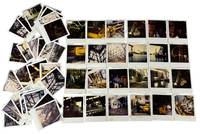
1970réf. 234111970. Offshore oil rig construction photo archive recording fabrication machining and dockside heavy-lift work at Farmers Marine Copper Works in Galveston Texas during the mature expansion of Gulf Coast petroleum engineering. After offshore drilling moved beyond shallow coastal waters Texas port cities became essential service centers for the fabrication of platforms pipe assemblies pressure systems and marine equipment needed by the oil and gas industry. These scenes place Galveston inside that industrial network through the labor machinery and waterfront facilities that made offshore production physically possible. Photo archive of 50 Polaroid snapshot photographs measuring 3.5" x 4" standard instant print format Galveston Texas circa 1970s to 1980s. Workers in hard hats and shop clothing stand among yellow-painted pipe systems hydraulic lines large flanged fittings deck-mounted machinery and scaffolded cylindrical components. Several interiors show machine-shop work including a worker operating or adjusting equipment at a large industrial station marked "44" while other scenes move outside to the waterfront where cranes barges dock edges and fabrication sheds frame components being staged near the water. Additional views include a small white operator cab heavy hoses across the deck red scaffolding around a large round metal housing and a massive concrete or metal assembly positioned beside an indoor slip or basin. The archive records the practical environment behind offshore oil production: the shore-based construction repair and preparation that allowed rigs and marine petroleum equipment to operate. Galveston's port economy depended on this kind of specialized industrial work linking local metal shops and waterfront yards to Gulf energy development petrochemical expansion and marine engineering. Surface soiling abrasions emulsion wear and handling marks to many Polaroid borders; images generally legible with expected fading and industrial handling wear. Overall in good condition. A photographic record of fabrication-floor and dockside labor at a named Galveston marine petroleum shop. unknown books
1970réf. 234111970. Offshore oil rig construction photo archive recording fabrication machining and dockside heavy-lift work at Farmers Marine Copper Works in Galveston Texas during the mature expansion of Gulf Coast petroleum engineering. After offshore drilling moved beyond shallow coastal waters Texas port cities became essential service centers for the fabrication of platforms pipe assemblies pressure systems and marine equipment needed by the oil and gas industry. These scenes place Galveston inside that industrial network through the labor machinery and waterfront facilities that made offshore production physically possible. Photo archive of 50 Polaroid snapshot photographs measuring 3.5" x 4" standard instant print format Galveston Texas circa 1970s to 1980s. Workers in hard hats and shop clothing stand among yellow-painted pipe systems hydraulic lines large flanged fittings deck-mounted machinery and scaffolded cylindrical components. Several interiors show machine-shop work including a worker operating or adjusting equipment at a large industrial station marked "44" while other scenes move outside to the waterfront where cranes barges dock edges and fabrication sheds frame components being staged near the water. Additional views include a small white operator cab heavy hoses across the deck red scaffolding around a large round metal housing and a massive concrete or metal assembly positioned beside an indoor slip or basin. The archive records the practical environment behind offshore oil production: the shore-based construction repair and preparation that allowed rigs and marine petroleum equipment to operate. Galveston's port economy depended on this kind of specialized industrial work linking local metal shops and waterfront yards to Gulf energy development petrochemical expansion and marine engineering. Surface soiling abrasions emulsion wear and handling marks to many Polaroid borders; images generally legible with expected fading and industrial handling wear. Overall in good condition. A photographic record of fabrication-floor and dockside labor at a named Galveston marine petroleum shop. unknown
1981réf. 490814Los Talleres: Ediciones Amon. 1981. 370 Seiten. 22,5cm. Zustand: Gut bis Sehr Gut min. gebräunt (Innen); Einband (Außen) hat geringe Gebrauchsspuren; Broschiert
1982réf. 2083002117400406Nippon Oil Refining 1982. Soft Cover. Fine. Volume: 1 Nippon Oil Refining paperback
1928réf. 1139DG1928. Farbige Kreidezeichnung. Monogrammiert und datiert. Zusätzlich unten auf Passe-Partout signiert und datiert. 26 x 18 cm.
1928réf. 1137DG1928. Farbige Kreidezeichnung. Monogrammiert und datiert. Zusätzlich unten auf Passe-Partout signiert und datiert. 25 x 18 cm.