1762 risultati
rif. DADAX0060169397New unknown
1768rif. LI129Paris, Saillant 1768. In-8o, VIII+118 p., 130 p., 150pp. Textes grec et francais en face, en-tetes et vignettes xylographiees. Ocellus, disciple de Pythagore, vit probablement au Ve siecle A.C. mais il se peut que son oeuvre est datee du Ie s. (E.O. en 1539). Il pense que l'univers n'est pas cree et qu'il est eternel (comme elle doit etre la race humaine en suivant une vie ascetique pour une reproduction parfaite). Pour TIMEE on croit que son oeuvre a influence les idees de Platon. Rel. veau glacé d'époque, dos droit doré, tranches jaspées, triple roulette sur les plats, petits manques a leur partie basse. Exemplaire propre a grandes marges.
rif. DADAX0306465205New unknown
rif. 51626Vers 1780-1790.Haut: 50 cm.Larg: 72.Carte sans couleurs,en bon état.Sphères.Systhèmes.Globe.
1737rif. CZC-13927Les entretiens physiques d'Ariste et d'Eudoxe ou physique nouvelle en dialogues est un célèbre livre de vulgarisation scientifique écrit par le père jésuite Noël Regnault. Publié pour la première fois en 1729, cet ouvrage utilise la forme du dialogue entre deux personnages, Ariste et Eudoxe, pour rendre accessibles les grandes découvertes de la physique et des sciences naturelles de l'époqueInitialement publié en 3 volumes en 1729, l'ouvrage a rencontré un immense succès, menant à de multiples rééditions et à des traductions en anglais et en italien. Au fil des années, Regnault l'a complété. Tome 1 & Tome 2 : La physique générale et la mécanique. Ces volumes posent les bases de la « physique nouvelle ». Ils traitent de la nature de la matière, du mouvement, du vide, de la pesanteur, des aimants, de la nature des fluides et des lois de l'optique (la lumière, la réflexion et la réfraction). Tome 3 : L'astronomie et les phénomènes terrestresCe volume explore le système solaire, le mouvement des planètes, les théories cosmologiques, mais aussi la météorologie (la formation des pluies, des éclairs, du tonnerre) et les secrets de la Terre (les séismes, les marées, la composition des minéraux).Tome 4 : Le vivant et la médecineAjouté dès la seconde édition, ce tome se concentre sur les sciences naturelles et l'anatomie. Regnault y vulgarise le fonctionnement du corps humain, la circulation du sang, la génération, les sens (la vue, l'ouïe) ainsi que la structure des plantes et des animaux. Édition complète en quatre tomes, vols in12, reliés pleines basane époque, bon état, 17x10cm, petits accrocs, bel état intérieur, 385, 376, 421 et 417pp. Richement illustré de 100 gravures en taille douce. Paris, Jacques Clousier, 1737
rif. 201016114Paris, Publié par firmin didot freres, 1835 ; grand in-12, cartonnage de l'éditeur. Les 5 volumes. Brésil , Etat Unis 2 volumes , Chili Paraguay , Mexique guatémala .plat bon etat dos frotté.
1736rif. 000248Londres et Amsterdam Pierre Dunoyer, et Jean Frédéric Bernard 1736
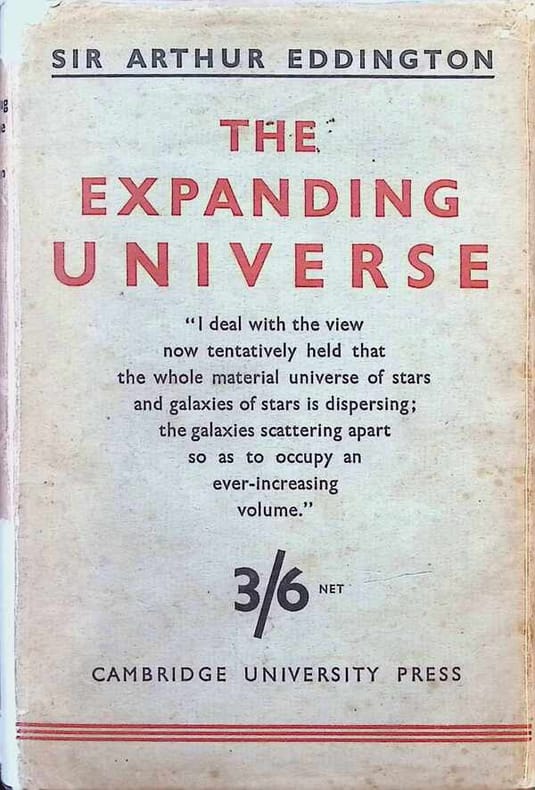
1933rif. 030610Cambridge 1933 Cambridge University Press Hardcover Poor 1st Edition
1965rif. ZB370830Mexico: Editorial Prometeo Libre 1965. Price HAS BEEN REDUCED by 10% until Monday Oct. 26 weekend SALE item 52 2 pp. softcover good. - If you are reading this this item is actually physically in our stock and ready for shipment once ordered. We are not bookjackers. Buyer is responsible for any additional duties taxes or fees required by recipient's country. Photos available upon request. Mexico: Editorial Prometeo Libre paperback
rif. 9781685073619NOVA SCIENCE PUBLISHERS INC
rif. DADAX0030759552New unknown
rif. DADAX0006222471New unknown
1821rif. 43750(Paris, Crochard, 1821). No wrappers. In: ""Annales de Chimie et de Physique, Par MM. Gay-Lussac et Arago."", tome 18 (Septembre Cahier). Pp. 337-443. (Entire issue offered). Faraday's paper: pp. 337-370 a. 2 folded engraved plates (showing the experimental apparatus). Ampère & Savary's Notes: pp. 370-379. Clean and fine.
1821rif. 43750Paris Crochard 1821. No wrappers. In: "Annales de Chimie et de Physique Par MM. Gay-Lussac et Arago." tome 18 Septembre Cahier. Pp. 337-443. Entire issue offered. Faraday's paper: pp. 337-370 a. 2 folded engraved plates showing the experimental apparatus. Ampère & Savary's Notes: pp. 370-379. Clean and fine. First French edition of Faraday's famous paper "On some new Electro-Magnetical Motion and on the Theory of Magnetism. By Michael Faraday Chemical Assistant in the Royal Institution. 1821" recording one of the most influential discoveries in physics in the 19th Century as Faraday here as the very first showed how to CONVERT THE ELECTRICAL AND MAGNETIC FORCES INTO CONTINUAL MECHANICAL MOVEMENT thus creating the first electric motor using the principle of electromagnetic rotation. In the first paper he introduced for the first time the concept of "LINE OF FORCE" and hereby deliniating "a picture of the universe as consisting of fields of various types one that was more subtle flexible and useful than the purely mechanical picture of Galileo and Newton. The FIELD UNIVERSE was to be recognized with Maxwell half a century later and with Einstein after an interval of another halfcentury."Asimov."Ever since Hans Christian oersted's announcement of the discovery of electromagnetism in the summer of 1820 editors of scientific journals had been inundated with articles on the phenomenon. Theories to explain it had multiplied and the net effect was confusion. Were all the effects reported real Did the theories fit the facts It was to answer these questions that Phillips turned to Faraday and asked him to review the experiments and theories of the past months and separate truth from fiction.Faraday agreed to to undertake a short historical survey.His entusiasm was aroused in September 1821 when he turned to the investigation of the peculiar nature of the magnetic force created by an electrical current. Oersted had spoken of the "electrical conflict" surrounding the wiree and had noted that "this conflict performs circles".Yet as he experimented he saw precisely what was happening. Using a small magnetic needle to map the pattern of magnetic force he noted that oneof the poles of the needle turned in a circle as it was carried around the wire. He immediately realized that a single magnetic pole would rotate unceasingly around a current-carrying wire so long as the current flowed. He then set about devising an instrument to illustrate this effect. His paper "On some new Electro-Magnetical Motion and on the Theory of Magnetism" appeared in the 21 October 1821 issue of the "Quarterly Journal of Science" The paper offered in the first French edition. It records the first conversion of electrical into mechanical energy. It also contained the first notion of the line of force."DSB IV pp. 533. unknown
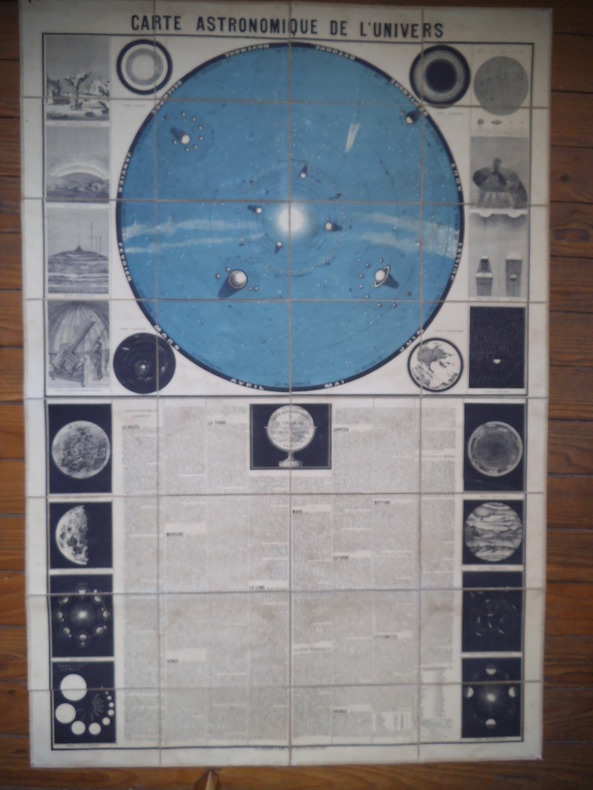
rif. 8680L.Révon éditeur vers 1877.rue d’Hauteville Paris.Le nom de l’auteur apparaît dans un globe sous la carte. Format 1300x900mm. Entourée de 25 figures astronomiques et complétée d’un texte imprimé en colonnes et intitulé Principes élémentaires d’astronomie.Carte entoilée;très bon état
rif. DADAX0521304296New unknown
rif. 0789340100-8-1Universe Publishing. Very Good. It's a well-cared-for item that has seen limited use. The item may show minor signs of wear. All the text is legible with all pages included. It may have slight markings and/or highlighting. Universe Publishing unknown
rif. 201016115Paris, Publié par firmin didot freres, 1839 ; grand in-12, cartonnage de l'éditeur. Les 6 volumes. Egypte ancienne , afrique ancienne de davezac , senegambie guinée de m.amédée tardieu, ile de l afrique par m.d'avezac, afrique orientale afriqyue centrale empire de maroc , egypte jusqu a la dominatio francaise par m.j.j. marcel . dos frotté.
1822rif. 43751Leipzig, Johann Ambrosius Barth, 1822. Without wrappers as extracted from ""Annalen der Physik und der Physikalischen Chemie. Hrsg. Ludwig Wilhelm Gilbert"", Bd. 71. Titlepage to vol. 71, pp. 124-171 a. pp. 172-176 and 1 folded engraved plate showing experimental apparatus. Clean and fine.
1822rif. 43751Leipzig Johann Ambrosius Barth 1822. Without wrappers as extracted from "Annalen der Physik und der Physikalischen Chemie. Hrsg. Ludwig Wilhelm Gilbert" Bd. 71. Titlepage to vol. 71 pp. 124-171 a. pp. 172-176 and 1 folded engraved plate showing experimental apparatus. Clean and fine. First German edition of Faraday's famous paper "On some new Electro-Magnetical Motion and on the Theory of Magnetism. By Michael Faraday Chemical Assistant in the Royal Institution. 1821" recording one of the most influential discoveries in physics in the 19th Century as Faraday here as the very first showed how to CONVERT THE ELECTRICAL AND MAGNETIC FORCES INTO CONTINUAL MECHANICAL MOVEMENT thus creating the first electric motor using the principle of electromagnetic rotation. In the first paper he introduced for the first time the concept of "LINE OF FORCE" and hereby deliniating "a picture of the universe as consisting of fields of various types one that was more subtle flexible and useful than the purely mechanical picture of Galileo and Newton. The FIELD UNIVERSE was to be recognized with Maxwell half a century later and with Einstein after an interval of another halfcentury."Asimov."Ever since Hans Christian oersted's announcement of the discovery of electromagnetism in the summer of 1820 editors of scientific journals had been inundated with articles on the phenomenon. Theories to explain it had multiplied and the net effect was confusion. Were all the effects reported real Did the theories fit the facts It was to answer these questions that Phillips turned to Faraday and asked him to review the experiments and theories of the past months and separate truth from fiction.Faraday agreed to to undertake a short historical survey.His entusiasm was aroused in September 1821 when he turned to the investigation of the peculiar nature of the magnetic force created by an electrical current. Oersted had spoken of the "electrical conflict" surrounding the wiree and had noted that "this conflict performs circles".Yet as he experimented he saw precisely what was happening. Using a small magnetic needle to map the pattern of magnetic force he noted that oneof the poles of the needle turned in a circle as it was carried around the wire. He immediately realized that a single magnetic pole would rotate unceasingly around a current-carrying wire so long as the current flowed. He then set about devising an instrument to illustrate this effect. His paper "On some new Electro-Magnetical Motion and on the Theory of Magnetism" appeared in the 21 October 1821 issue of the "Quarterly Journal of Science" The paper offered in the first German edition. It records the first conversion of electrical into mechanical energy. It also contained the first notion of the line of force."DSB IV pp. 533. unknown
rif. DADAX3775706925New unknown
rif. 51021Paris.Chez Jean.(1780 ?).Longueur 73 cm.Hauteur 53 cm.Eclypse de soleil, de lune.Système de Ptolémée,Copernic,Ticho-Brahé,Descartes.Sphère droite.Globe céleste.Terrestre.Sphère parallèle.Noire et blanche.Bon état.
rif. DADAX0197276105New unknown