Bureau, University of Wisconsin; UniversBiblio.com

1 762 résultats
réf. 1330711726.Gpaperback. Good. Access codes and supplements are not guaranteed with used items. May be an ex-library book. paperback
réf. 0789312638.Gcalendar. Good. Access codes and supplements are not guaranteed with used items. May be an ex-library book. unknown
réf. 0789311836.Gcalendar. Good. Access codes and supplements are not guaranteed with used items. May be an ex-library book. unknown
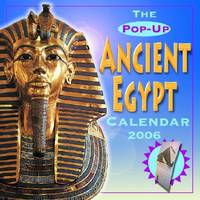
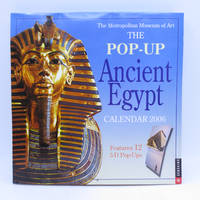
2005réf. 069160Universe Publishing 2005. calendar. Like New. 190x12x190. 2006 Calendar. Mummies sphinxes tombs and temples jump out of the pages of these dynamic pop-up scenes featured in this calendar which showcases some of the most amazing ancient Egyptian artifacts ever unearthed. From the pyramids to the Nile the secrets of this golden civilization are brought back to life in this colorful informative and fun wall calendar. " Interactive engaging and informative text complements the creative pop-ups. " Features artifacts and art from the Metropolitan Museum of Art and British Museum Egyptian Antiquities collections including new artifacts from the Hathshepsut site. CONDITION: Covers have light rubbing. All pop-ups are intact and working. Calendar has no markings. Full refund if not satisfied. Universe Publishing unknown
2005réf. 0789312638isbnUniverse Publishing 2005-07-01. Calendar. Very Good. Light wear to covers interior pages and pop-ups are unmarked and undamaged. Universe Publishing unknown
2005réf. C6G0003300Universe Publishing 2005-07-01. Calendar. Acceptable. Water damage to book. All of the pop-ups are intact and working however they are warped and a couple have part of the print torn off. Still a useable copy of a rare item. Your Satisfaction Guaranteed. We ship daily. Universe Publishing unknown
réf. 201016120Paris, Firmin Didot Frères, 1846 ; grand in-12, cartonnage de l'éditeur dos frotté .
réf. 14018Paris, Didot, 1846, in-8vo, 440 p. + 32 gravures sur acier, rousseurs, timbre sur titre, ill. reliure en cartonnage ed. originale. Evora, Lissabon, Porto, Batalha, Porträts. - Graesse VII/227; Engelmann 64.
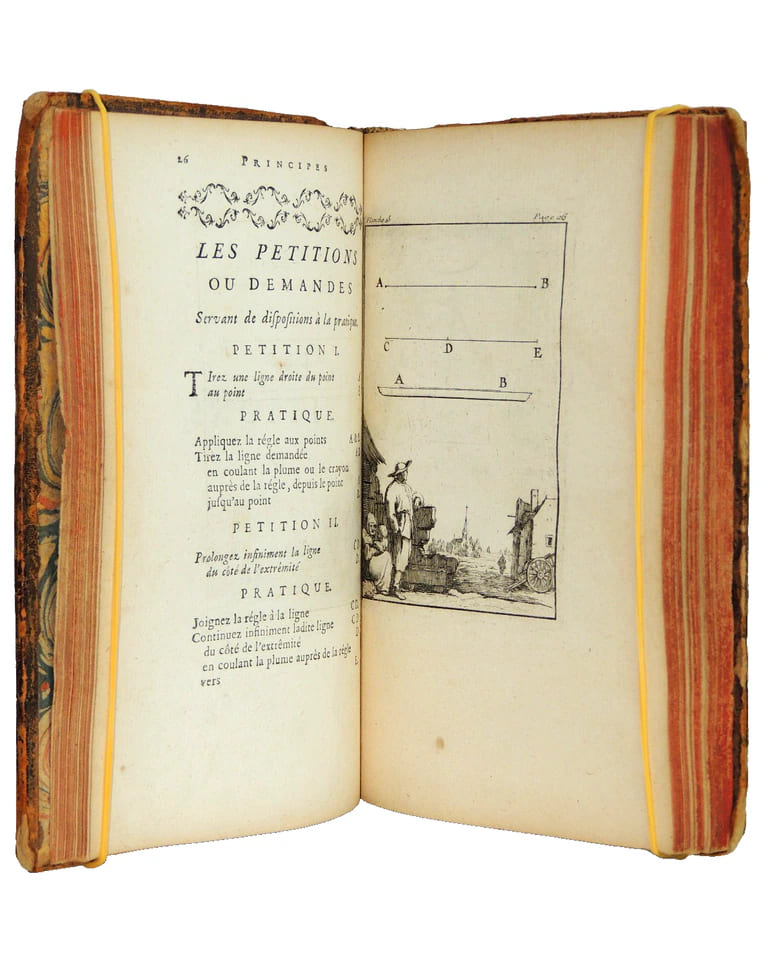
1744réf. CZC-13943Sébastien Le Clerc est mort en 1714 : l'édition de 1744 est donc une édition posthume, et non un ouvrage rédigé cette année-là. Le traité avait paru initialement au XVIIe siècle. Gravure de Le Clerc en front. Epitre dedicatoire avec bandeau gravé à demi-page. 82 planches gravées à pleine page. vol in8, relié basane époque, 16,5x8, accroc, dos fendillé, corps de l'ouvrage solide, frais, 108pp, peu courant. Paris, chez A. Jombert, 1744
1744réf. CZC-13943Sébastien Le Clerc est mort en 1714 : l'édition de 1744 est donc une édition posthume, et non un ouvrage rédigé cette année-là. Le traité avait paru initialement au XVIIe siècle. Gravure de Le Clerc en front. Epitre dedicatoire avec bandeau gravé à demi-page. 82 planches gravées à pleine page. vol in8, relié basane époque, 16,5x8, accroc, dos fendillé, corps de l'ouvrage solide, frais, 108pp, peu courant. Paris, chez A. Jombert, 1744
2026réf. __0198933673Oxford University Press 2026. Paperback. New. 2nd edition. 336 pages. Oxford University Press paperback
2026réf. x-0198933673Oxford University Press 2026. Paperback. New. 2nd edition. 336 pages. 6.12x0.71x9.21 inches. Oxford University Press paperback
réf. 51806610-nnew. unknown
réf. 51806610like new. unknown
1994Mm 200x255 Volume rilegato di pp. 1176, cartonato rigido, sovraccoperta editoriale illustrata, immagini in bianco e nero. Dal Darwin College della Cambridge University contributi di S. Hawking, I. Stewart, S. Schaffer e altri. Timbro commerciale al frontespizio. In buono stato. SPEDIZIONE IN 24 ORE DALLA CONFERMA DELL'ORDINE.
1997réf. 34381L'Ancre de Marine 1997 in-8° un cahier photographique central
réf. ART5473M2006 chez Gallimard. In-4, relié, 352 pages.
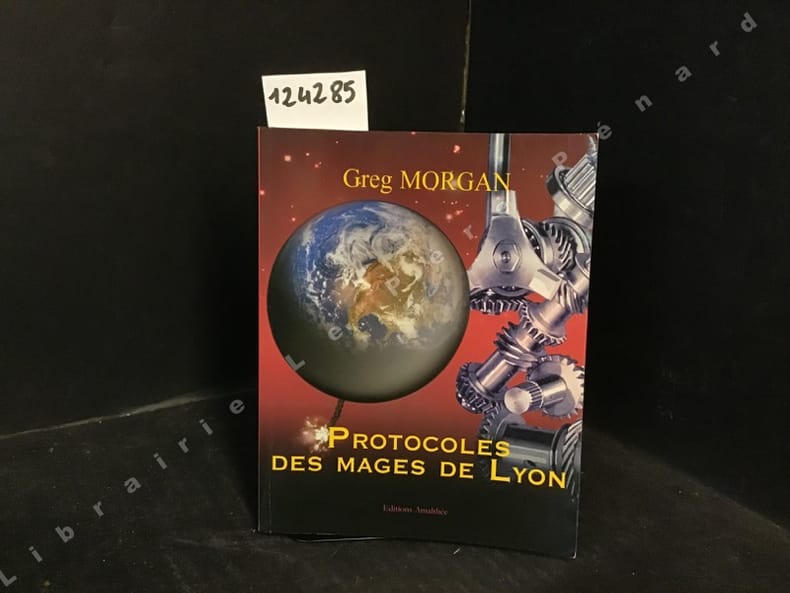
2009réf. 1242852009 Editions Amalthée - 2009 - In-8broché, couverture illustrée - 238 pages - Envoi de l'auteur en page de grand titre (dédicacé)
1998Libri buone condizioni; Copertina morbida; Copertina segnata e/o leggermente rovinata; sottolineature a matita
1900In 8? (cm ), senza rilegatura, pagg.1 cromolitografia di cm 21,2x13,4 (cm 26,5x18,2) compresi i margini bianchi), velina di protezione, ottimo e fresco es.
1960réf. 1001470481960 in8. 1960. Broché.
in-12, 254 pp., abdt ill. in-t. n./coul., index, broché, couverture illustrée. Très bel exemplaire. [FL-13]
réf. 201223742Paris, Hachette, 1969 ; in-8, 252 pp., br.
2004réf. 73750Washington DC: DOE/NSF High Energy Physics Advisory Panel 2004. Presumed First Edition First printing. Wraps. Very good. v 1 50 pages. Illustrations most with color. Facilities Glossary. Cover has slight wear and soiling. What does "Quantum Universe" mean To discover what the universe is made of and how it works is the challenge of particle physics. Quantum Universe presents the quest to explain the universe in terms of quantum physics which governs the behavior of the microscopic subatomic world. It describes a revolution in particle physics and a quantum leap in our understanding of the mystery and beauty of the universe. Particle physics also high energy physics is the branch of physics that studies the nature of the particles that constitute matter and radiation. Although the word "particle" can refer to various types of very small objects e.g. protons gas particles or even household dust "particle physics" usually investigates the irreducibly smallest detectable particles and the fundamental interactions necessary to explain their behavior. These elementary particles are excitations of the quantum fields that also govern their interactions. The currently dominant theory explaining these fundamental particles and fields along with their dynamics is called the Standard Model. Modern particle physics generally investigates the Standard Model and its possible extensions e.g. to the newest "known" particle the Higgs boson or even to the oldest known force field gravity. In the last 30 years physicists have achieved a profound understanding of the fundamental particles and the physical laws that govern matter energy space and time. Researchers have subjected this 'Standard Model' to countless experimental tests; and again and again its predictions have held true. The series of experimental and theoretical breakthroughs that combined to produce the Standard Model can truly be celebrated as one of the great scientific triumphs of the 20th century. Now in a development that some have compared to Copernicus's recognition that the earth is not the center of the solar system startling new data have revealed that only five percent of the universe is made of normal visible matter described by the Standard Model. Ninety-five percent of the universe consists of dark matter and dark energy whose fundamental nature is a mystery. The Standard Model's orderly and elegant view of the universe must be incorporated into a deeper theory that can explain the new phenomena. The result will be a revolution in particle physics as dramatic as any that have come before. Nine interrelated questions define the path ahead. 1. Are there undiscovered principles of nature: new symmetries new physical laws 2. How can we solve the mystery of dark energy 3. Are there extra dimensions of space 4. Do all forces become one 5. Why are there so many kinds of particles 6. What is dark matter How can we make it in the laboratory 7. What are neutrinos telling us 8. How did the universe come to be 9. What happened to the antimatter DOE/NSF High Energy Physics Advisory Panel paperback