Austen, Jane; [Rebora, Sol]Biblio.com

9686 resultados
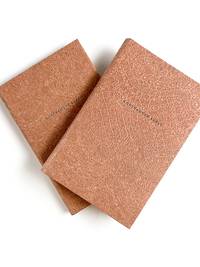
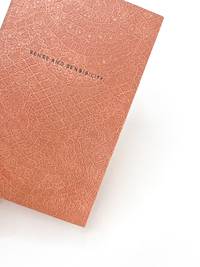
1832ref. 53547Philadelphia: Carey & Lea 1832. Near fine. First US edition of Austen's third published novel - in a stunning fine art binding by the acclaimed Argentinian design bookbinder Sol Rébora. Morally upright Fanny gets pulled into a neighbor's scheming via an adaptation of Elizabeth Inchbald's well-known play LOVERS' VOWS. Among Austen's works MANSFIELD PARK especially demonstrates how careful contrasts of characters and plot twists can bring out subtle ironies. First published in 1814 in three volumes this is the first edition to appear in the United States published in two volumes by Carey & Lea in an edition of only 1250 copies. Sol Rébora is an internationally recognized design bookbinder based in Buenos Aires. Her works embody a minimalistic elegance that is nevertheless subtly complex as in the carefully structured multiple layers used here. They are not only visually stunning but supremely tactile. From Rèbora's artist statement: "The cloth texture is achieved using silk with a patterned design that evokes the aesthetic of the time period in which the original edition was produced creating a visual connection with antique paper. This design also appeals to the collective memory of how custom bindings from the early 19th century might have appeared complete with deep-relief hot-stamping impressions." A magnificent unique copy of an Austen first. Two 12mo volumes 6.75'' x 4.25'' each. Modern full pink design binding by Sol Rébora in Can Can structure with one layer of cotton cloth and two layers of Japanese paper each element hand-painted with acrylics and textured with a patterned design impressed with deep-relief hot-stamping from silk; spines and boards lettered in dark grey. Cotton and abaca handmade paper peach endpapers. Publisher's catalogue bound at front of volume I. 4 200; 204 pages. Vol. II with pencil inscription of the Portsmouth Athenaeum to fly leaf. Some browning a few spots of staining to text block some early pencil notes. Tight. Carey & Lea unknown
1833ref. 53548Philadelphia: Carey & Lea 1833. Near fine. First US edition of the most bookish of Austen's novels - in a stunning fine art binding by the acclaimed Argentinian design bookbinder Sol Rébora. Often misread as critical of the gothic novels that were popular at the period of its first composition NORTHANGER ABBEY is a more complex exploration of the genre that is especially notable for its passages in defense of the novel form - written uncharacteristically in first person directly from the narrator. First published in late 1817 in three volumes this is the first edition to appear in the United States published in two volumes by Carey & Lea in an edition of only 1250 copies; it includes the famous "Biographical Notice of the Author" that first revealed Austen's name to the public as the author as her books were all published anonymously in her lifetime. Sol Rébora is an internationally recognized design bookbinder based in Buenos Aires. Her works embody a minimalistic elegance that is nevertheless subtly complex as in the carefully structured multiple layers used here. They are not only visually stunning but supremely tactile. From Rèbora's artist statement: "The cloth texture is achieved using silk with a patterned design that evokes the aesthetic of the time period in which the original edition was produced creating a visual connection with antique paper. This design also appeals to the collective memory of how custom bindings from the early 19th century might have appeared complete with deep-relief hot-stamping impressions." A magnificent unique copy of an Austen first. Two 12mo volumes 6.75'' x 4.25'' each. Modern full grey-lavender design binding by Sol Rébora in Can Can structure with one layer of cotton cloth and two layers of Japanese paper each element hand-painted with acrylics and textured with a patterned design impressed with deep-relief hot-stamping from silk; spines and boards lettered in dark grey. Cotton and abaca handmade paper grey-pink endpapers. 195 1; 196 pages. Light pencil notation to title of Vol. 2. Some offsetting marks to endpapers from earlier binding; light browning to leaves a few small stains. Bright. Carey & Lea unknown
2014ref. 2081502111904580national library 2014. Soft Cover. Fine. The book is in fine condition. national library paperback
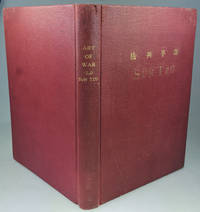
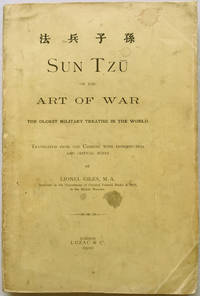
1910ref. ABE-1742174782509London: Luzac & Co. 1910 1910 Original first edition. Octavo 24.816.6cm liv 204pp plus corrigenda. Contemporay binding. Library stamps on 3 pages: title page p.90 and p.91. Publisher's sticker Luzac & Co. affixed to top of front pastedown. Faint signs of label removal to rear pastedown light signs of dampstaining along top edge to a couple of pages. Toning to internal page edges due to age. Binding solid and strong interior text clean throughout. 1st Edition. Hardcover. Good/No Jacket. More photos available upon request. London: Luzac & Co., 1910 hardcover
1910ref. 149882London: Luzac & Co 1910. First complete English translation of arguably the best twentieth-century translation of Sun Tzu's seminal work on military strategy preceded only by the first translation into French of 1772 by French Jesuit Jean Joseph Marie Amiot and partial translation into English by British officer Everard Ferguson Calthrop of 1905. Royal octavo original printed yellow wrappers bound into full contemporary cloth-covered boards gilt-lettered morocco spine label. Provenance: William George's Sons bookseller's label affixed to front wrapper. Lionel Giles the leading Sinologue of his day was not fond of either of his predecessor's translations of the work declaring Amiot's translation an "imposture" of the original and Calthrop's knowledge of Chinese "far too scanty." It was not until the publication in 1963 of Samuel Griffith's translation that Giles met any sort of challenge at all. In very good condition. A very rare and desirable example of this definitive cornerstone of military strategy. The Art of War attributed to Sun Tzu is a foundational text of Chinese strategic thought composed in the late Spring and Autumn period c. 5th century BCE. Structured into thirteen succinct chapters each addressing a discrete principle of warfare the treatise synthesizes tactical philosophical and psychological insights into a coherent and enduring strategic doctrine. Firmly established as the preeminent work among the Seven Military Classics of imperial China—officially codified in 1080 CE during the reign of Emperor Shenzong of Song—The Art of War has exerted a sustained influence on the development of military theory throughout East Asia for over two millennia. Its emphasis on indirect strategy deception and the integration of political economic and moral dimensions of conflict has rendered it indispensable not only to military commanders but also to scholars and statesmen. The treatise's strategic paradigms have long transcended their original martial context. In modern times The Art of War has been appropriated across disciplines informing Western and Eastern approaches to diplomacy corporate strategy legal theory competitive sports and organizational leadership. Its adaptability and intellectual rigor continue to make it a critical reference point in discussions of power conflict and human behavior. Luzac & Co hardcover
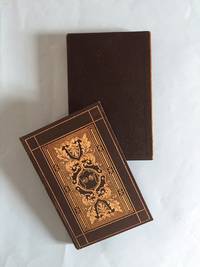
1931ref. 9281Paris: Black Sun 1931. First edition. Hardcover. Fine. 8vo. Translated from the French by Kay Boyle. Illustrated by Max Ernst. One of 200 copies on Bristol paper this being copy number 52. Although not called for this copy is signed by Max Ernst on the frontispiece illustration. Furthermore it is in the deluxe 50-copy black binding with black endpapers. Finally the book is housed in the publisher's slipcase which was intended only for the deluxe edition. Such discrepancies were not uncommon for this aristocratic press whose attention to bibliographical accuracy can generously be described as casual. The 19 photograms that illustrate the book constituted a pioneering artist's technique by Ernst who was assisted in the endeavor by fellow Surrealist Man Ray. Carefully pencil-rubbed what the French call "frottage" translucent papers were employed as negatives to create the photograms. In essence then a photogram is a photograph made without the use of a camera. The three principals of this _Livre de Artiste were unlikely collaborators. Crevel whose 1927 novel "Babylone" was the source for "Mr Knife Miss Fork" which is the novel's first chapter committed suicide at the age of 35 after an unhappy existence as a radical political activist and closeted homosexual; Boyle an American author at the epicenter of the expatriate colony in Paris was gamely trying to deal with her financial short-fallings; while Ernst an acknowledged pioneer of the burgeoning Dada and Surrealist movements in art was likewise motivated by the opportunity to earn a few francs. All in all an anomalously desirable volume. Black Sun hardcover
ref. 2081502111904842Guangdong People's Publishing House N.A. Soft Cover. Fine. The book is in fine condition. Guangdong People's Publishing House paperback
1833ref. 53550Philadelphia: Carey & Lea 1833. Very good plus. First US edition of Austen's first novel - in a stunning fine art binding by the acclaimed Argentinian design bookbinder Sol Rébora. Sol Rébora is an internationally recognized design bookbinder based in Buenos Aires. Her works embody a minimalistic elegance that is nevertheless subtly complex as in the carefully structured multiple layers used here. They are not only visually stunning but supremely tactile. From Rèbora's artist statement: "The cloth texture is achieved using silk with a patterned design that evokes the aesthetic of the time period in which the original edition was produced creating a visual connection with antique paper. This design also appeals to the collective memory of how custom bindings from the early 19th century might have appeared complete with deep-relief hot-stamping impressions." A magnificent unique copy of an Austen first. Two 12mo volumes 6.75'' x 4.25'' each. Modern full grey-pink design binding by Sol Rébora in Can Can structure with one layer of cotton cloth and two layers of Japanese paper each element hand-painted with acrylics and textured with a patterned design impressed with deep-relief hot-stamping from silk; spines and boards lettered in dark grey. Cotton and abaca handmade paper grey-pink endpapers. 199 1; 189 1 pages. Light pencil notation to fly leaf of Vol. I. Some offsetting marks to endpapers from earlier binding archival paper repair to fly leaf; light browning to leaves some staining. Solid. Carey & Lea unknown
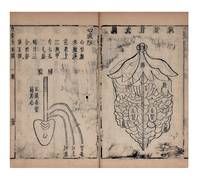
1660ref. 103901660. title at the beginning of the text or Yi xue ru men dan tai yu an 醫學入門 An Introduction to Medicine: The Red Platform and the Jade Desk title on cover page. 73 woodcut illus. Six juan in six vols. 8vo bamboo paper a few leaves missing from Preface in the first vol. new wrappers new stitching. China: Wu feng lou 五鳳樓 1660. Second edition of this influential medical work. “The book assembles material from Huangdi neijing 黃å¸å…§ç¶“ The Yellow Emperor’s Inner Canon Nanjing 難經 The Classic of Difficult Issues and Zhang Zhongjing 張仲景 Liu Hejian 劉河間 Zhu Danxi 朱丹溪 and Li Dongyuan æŽæ±åž£ excerpting their essentials and deleting the obtuse and contradictory parts” Wang p. 103. Our work contains theoretical discussions as well as recipes. The section on women’s medicine for example opens with an abstract discussion of the origin of the male in the qian trigram of the Yijing 易經 Change Classic and of the female in the kun trigram. The discussion then becomes more concrete with a description of the stages of pregnancy. This is followed with a note on taking the pulse followed in turn by a list of prescriptions. One prescription is for a “liquid remedy for adjusting the menses and stabilizing the blood. It is to be administered when the color of the menstrual discharge is light and it is thick and sticky accompanied by a pain in the abdomen.” This recipe contains ten ingredients including red tangerine peel peeled herbaceous peony root and the root of the three-nerved spicebush. There are also lists of medications and foodstuffs that women should not ingest when pregnant. For example eating crab might lead to transverse presentation of the fetus. Birth with transverse presentation is separately covered in a note. Post-natal issues are covered as well including an outbreak of malaria as can happen in the seventh and eighth lunar months we read post-natal cold damage disease and incessant bleeding. Pediatric medicine is discussed after gynecology in the last volume of the work. As with the section on gynecology this section starts with a general discussion: “The illnesses of men and women can be ascertained by asking questions” but “a small child while still being carried in the arms might suffer but not be able to express it.” Alternative methods were necessary such as observing the child’s face. An illustration of a child’s face with the different parts marked accompanies the discussion. As with gynecology numerous prescriptions are also listed in the area of pediatrics. Sun Wenyin was from Xiuning in Anhui in central China. Sickly as a child he read the Change Classic and recited classical Chinese poetry paying considerable attention to how to nurture a healthy life. Sun advocated that nutrition should be the first priority with prescription medications coming second Ding & Wu p. 54. Regarding the writing and printing history of our book Sun writes in the Preface that he had worked on collecting material for the book for 20 years. Then “the book was finished in the bingzi year of the Ming 1636; I printed it in 1638 judging by the dates of the Prefaces to the first edition and showed my friends of a similar inclination. After the destruction of war that accompanied the change of the cauldrons i.e. the Manchu conquest of the Ming only one or two blocks remained.” The blocks thus had to be re-carved creating a second edition of the work. Our copy appears to be missing a few leaves of the Preface which ends mid-sentence and without a date. The Princeton University copy is from the same edition and it is dated to 1660 Shunzhi 17. Our book does not observe the taboo for the character xuan 玄 so we know that it must have been printed before 1661 when the Kangxi emperor Xuanye çŽ„ç‡ r. 1661-1722 ascended to the throne. Very good set occasional stains and split fore-edge folds preserved in a new cloth-backed dropbox. ⧠Ding Qing’ai ä¸é’艾 & Wu Housheng ä¼åŽèƒœ eds. Yangsheng baijian da cidian 养生ä¿å¥å¤§è¾žå…¸ Dalian: Dalian chubanshe 1997; Wang Peng Anhui Zhongyi guji zongmu tiyao 安徽ä¸é†«å¤ç±ç¸½ç›®æè¦ Hefei: Anhui kexue jishi chubanshe 2021. unknown
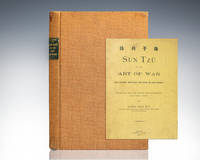
1910ref. ABE-1790652300611Octavo liv 204 pp. plus corrigenda. Exceptionally rare in original wrappers an unrestored museum-grade rarity for the discerning collector. Unlike the vast majority of surviving copies that were later rebound in hard cloth or leather over the past century this 1910 first edition retains its original printed yellow paper wrappers as issued by Luzac & Co. Preserving its original full sheet size 24.816.6 cm the book presents completely untrimmed edges with noticeably broader margins than typically encountered in trimmed or rebound copies usually trimmed to approx. 24.115.8 cm if not more severely cropped. The wrappers exhibit light soiling with a few minor smudges to the front cover; the original spine remains substantially intact with light rubbing and minor scrapes; a 3 cm loss at the spine head has been repaired with a small sympathetic paper fill. The interior is clean and crisp throughout with light creasing to some leaves as issued and completely unmarked save for a subtle three-word English ink note "Five Elements Theory" on page 36. Stamped on the title page is a neat Chinese collector's red seal reading "Qiu Shui Zhen Cang" 秋水çè— "Treasured Collection of Qiu Shui" a literary art-name derived from Chuang Tzu's "Autumn Floods" likely belonging to an early 20th-century scholar-collector active within the European Sinological circles surrounding Lionel Giles. More photos available upon request. London: Luzac & Co., 1910 paperback
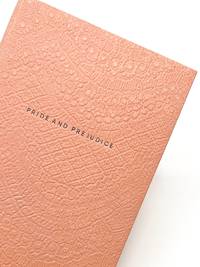
1832ref. 50106Philadelphia: Carey & Lea 1832. First printing. Near fine. First US edition in a stunning fine art binding by the acclaimed Argentinian design bookbinder Sol Rébora. Austen's most beloved novel is simultaneously a unique production of profound artistic confidence and an entertaining popular love story: it builds on a long-established tradition of English courtship novels in conversation with many women authors before her like Frances Burney from whose book CECILIA Austen may have borrowed the very phrase "pride and prejudice". Austen admitted in a letter that she thought her book's heroine Elizabeth Bennett "as delightful a creature as ever appeared in print" 29 January 1813 - and generations of readers have agreed with her. First published in 1813 in three volumes this is the first edition to appear in the United States published in two volumes by Carey & Lea in an edition of only 750 copies. Sol Rébora is an internationally recognized design bookbinder based in Buenos Aires. Her works embody a minimalistic elegance that is nevertheless subtly complex as in the carefully structured multiple layers used here. They are not only visually stunning but supremely tactile. From Rèbora's artist statement: "The cloth texture is achieved using silk with a patterned design that evokes the aesthetic of the time period in which the original edition was produced creating a visual connection with antique paper. This design also appeals to the collective memory of how custom bindings from the early 19th century might have appeared complete with deep-relief hot-stamping impressions." A magnificent unique copy of an Austen first. Two 12mo volumes 6.75'' x 4.25'' each. Modern full peach design binding by Sol Rébora in Can Can structure with one layer of cotton cloth and two layers of Japanese paper each element hand-painted with acrylics and textured with a patterned design impressed with deep-relief hot-stamping from silk; spines and boards lettered in dark grey. Cotton and abaca handmade paper peach endpapers. Publisher's catalogue bound at front of Vol. I. 199 1; 209 1 pages. Vol. I with early pencil inscription of the Portsmouth Athenaeum to fly leaf; early newspaper clipping on "Jane Austen's Genius" archivally tipped onto rear fly leaf. Some browning light staining to text block a few early marginal pencil notes. Bright. Carey & Lea unknown