CASTI, John LABAA

45 results
1997ref. 23784NY: John Wiley & Sons. Near Fine in Fine dust jacket. 1997. Hardcover. 0471123080 . First printing. About fine in a fine dust jacket. . John Wiley & Sons hardcover books
1920ref. 31094Rotterdam / Amsterdam: Van Leer 1920. Fifth edition. Paper wrappers with mounted drawing and stamped titlestassled cord ties. A very good or better copy with a small crease on front wrapper corner small tears to the spine ends. Unpaged. 48 leaves. Illus. with 57 sepia photos. Obl. 4to. 47 leaves nearly all full page photos a few photo-imitation drawings printed on rectos only of ships factories cranes and dredges. Captions in English German French and Spanish. Wilton was a family owned business started in 1854 by Bartel Wilton expanding in the Netherlnds through the first quarter of the 20th century and finally merging under another name in 1929. OCLC shows one copy at the Maine Marine Academy. Van Leer unknown books
1893ref. 42477NY: The Engineering Record 1893. Hardcover. Very Good. Hardcover. 1pp. 17 plates 1pp. 17 plates 4ads. Some spotting and darkening to the red cloth with a bit of glue residue on the front small chip to edge of front free endpaper with some light wear to the extremities else a very good example in publisher's beveled boards lettered in gilt. Rear endpaper loose but present. The Engineering Record hardcover books
ref. 0000414Sammelband bound pamphlets. Collection of separately published pamphlets folding plates & extracts from periodicals bound in a 4to half black morocco album. A manuscript note in ink on the ffep translated from the French describes the contents as "individual works collected as a souvenir of Buenos Aires for our friend Pierre Michel-Levy 10/11/1904." Signed by Duclout. Binding worn: rubbed upper cover hanging by a cord contents generally very good one plate with long closed tear. Contents include: Conferencia final del curso de Teoria de la elasticidad dictado en le Fac de Ciencias Fisico-Matemaáticas de le Universidad de la Capital Buenos Aires: G Kraft 1888 8vo original wraps; 33 pp. Republica Argentina: Deuda publica exterior y capitales Europeos empleados por sociedades anonimas Buenos Aires: Felix Lajouane 8vo original wraps; 24 pp. Estudio sobre las hipotesis mecanicas que sirven de base a la teoria electro-magnetica de la luz de Maxwell Buenos Aires: Pablo E Coni 1892 8vo reprinted from los Anales de la Sociedad Cientifica Argentina 26 pp. Los fundamentos de la geometria y el conocimiento del espacio Buenos Aires: Pablo E Coni 1893 Tall 8vo original wraps; 118 pp plus 13 folding plates. Théorie du flambage des pièces élastiques comprimées: Extrait du cours d'élasticité de la faculté des sciences exactes physiques et mathématiques de Buenos-Ayres Paris: np Imprimerie Chaix 1896 8vo original wraps an extract from the 1896 Memoires de la Societe des Ingenieurs Civils de France; 45 pp. Various tipped-in extracts from Argentine periodicals including "La Biblioteca" and "La Ingeniera" from 1897 and 1898 on subjects as diverse as wireless telegraphy the filling and dredging of canals the testing of various South American woods with numerous microscopic cross-section photographs and numerous folding plates The collection concludes with a tipped in biographical article in Spanish which is translated and provided in part below: "Referred to as the "Champion of Relativity" Jorge born Georges Duclout 1854 – 1927 was the first to lecture on relativity in Argentina In 1922 the University of Buenos Aires Council approved his motion to send an invitation to fellow Eidgenössische Technische Hochschule alumnus Albert Einstein to visit Argentina and give a course of lectures on his theory of relativity The visit took place three years later in March – April 1925 Although by then Duclout was aging and in ill health a memorable visit took place between the two men The visit also produced the "Unpublished Opening Lecture for Einstein's Course on Relativity Theory in Argentina 1925" hardcover books
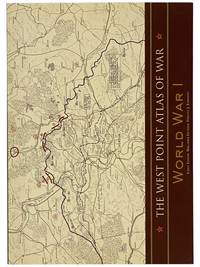
1995ref. 2352670New York: Tess Press / Black Dog & Leventhal 1995. First Thus. Large Softcover. Near Fine. 14x9x0. First thus. Minimal wear to corners. Binding tight and square pages clean bright and unmarked. 1995 Large Softcover. 142 pp. Strategic and historical color battle maps with explanations and tactical contexts. Originally published as part of the second volume of the 1959 two-volume set The West Point Atlas of American Wars. Tess Press / Black Dog & Leventhal paperback books
1948ref. 189956United States Military Academy 1948. Paperback. Good. Parts 1 and 2. Both have mild wear. Both are clean both have a name written at the top front corner. Both have good bindings. Filled with maps. United States Military Academy paperback books
1991ref. 106247Long Beach:: Troll Associates. Fine. 1991. Hardcover. 0816722005 . All pop-ups are intact and in fine working order. First edition. Fine in glossy illustrated boards. No dust jacket as issued. . Troll Associates, hardcover books
1978ref. 637New York: Random House 1978. First Printing. Boards. Fine. Dale Payson. First printing. 8vo; 16pp 2 sheets of punch-out characters and fold-out flap with pop-up castle; glazed paper color pictorial tri-fold board; $4.95 price sticker to front board; color illustrations; fine with unused sheets of punch-outs. In 7 WorldCat libraries. ISBN code: 394-83548-4. Includes the stories of The Golden Goose Jack and the Beanstalk Rumpelstiltskin and Sleeping Beauty with punch-out characters for each story. Random House unknown books
1976ref. 263722Washington DC: Council on Environmental Quality USGPO 1976. 71p. 8.5x11 inches preface introduction appendix bibliography illustrated with b&w photos figures map sections graphs very good government report booklet in stapled pictorial wraps. Council on Environmental Quality, USGPO unknown books
1982ref. 21461New York: Random House 1982. Hardcover. Fine. 4to. 30 by 19.5 cm. Six pop-ups which also have turn tabs pull tabs and pull up flaps. Arguably Like New. Random House hardcover books
2007ref. 1492New York: Harper Collins Publishers 2007. Boards. As new. Matthew ARMSTRONG. POP-UP BOOK MOVEABLE BOOK. Matthew ARMSTRONG full-color art. 4to; 7 pop-up pages; glazed color pictorial boards color pictorial pop-ups; never fully opened; fine as new. Seven complex pop-up scenes each spanning two pages designed by award winning artist and paper engineer Robert Sabuda b. 1965: The Magician's Nephew; The Lion The Witch and the Wardrobe; The Horse and His Boy; Prince Caspian; The Voyage of the Dawn Treader; The Silver Chair; and The Last Battle. Harper Collins Publishers unknown books
1989ref. 100314NY:: Orchard Books. Near Fine. 1989. Hardcover. 0531058441 . All pop-ups are intact and in good working order. Text by Alan Whitehouse. First edition. Near fine in oblong glossy illustrated boards. No dust jacket as issued. . Orchard Books, hardcover books
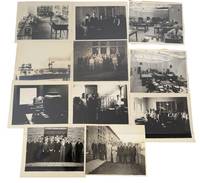
1930ref. 232561930. Stanford University Military Engineering Archive Documenting the First Army Ordnance Reserve Gauging Program ca. 1930. Stanford University photo archive documenting the emergence of interwar military-industrial technical education ordnance gauging instruction and precision engineering research on campus during the early development of Stanford's engineering and applied science programs. Rather than depicting science classrooms in a general sense these photographs specifically document the technical culture surrounding Army ordnance training instrumentation systems machine calibration and laboratory-based engineering instruction that linked universities to the expanding infrastructure of American military preparedness between World War I and World War II. Taken together the archive captures Stanford at the moment when higher education increasingly merged scientific research industrial precision manufacturing and military technical training into a unified research model that later shaped the wartime and Cold War defense university system. Photo archive of 11 large silver gelatin photographs each approximately 8" x 10" Stanford University California dating from 1930 into the 1950s; two later views mounted to decorative yellow board. Several photographs depict laboratory interiors filled with precision instrumentation gauging apparatus optical and mechanical measuring devices machine-tool equipment calibration benches microscopes drafting stations and technical worktables arranged for instruction and inspection work. One especially important close-up photograph shows a large precision gauging or rotational calibration apparatus associated with ordnance measurement and machine tolerance testing. Surrounding the device are machined cylindrical components threaded fittings gauge rings and polished metal parts likely used in dimensional inspection bore alignment concentricity testing or interchangeable manufacturing instruction. Another darkened workshop view depicts what appears to be a heavy precision lathe or gauging bench fitted with a mounted cylindrical test component equipment consistent with ordnance inspection and military engineering instruction during the interwar period. Additional photographs show groups of students and instructors posed around technical apparatus inside instrumentation laboratories while later mounted photographs document more formalized postwar engineering office and drafting environments associated with large-scale technical administration and research organization. Most important is a detailed handwritten verso inscription reading: "Equipment used Feb 1930 Ordnance School at Stanford University. This was first time a course in gauging was given in any Army Ordnance Reserve Unit permanent facilities excepted. Instructor; Lieut Merrill S. Hingo. Photo; Lieut Howard Story Taylor." The inscription firmly identifies the archive as documentation of early Army ordnance reserve technical instruction conducted at Stanford and specifically ties the machinery to military gauging education. In the 1920s-30s "gauging" referred not merely to ordinary measurement but to the specialized science of precision dimensional inspection used in artillery manufacture weapons-part standardization shell tolerances bore measurement interchangeable machining systems and industrial calibration. Such instruction formed a critical component of modern military-industrial production where even minor deviations in machining tolerances could affect artillery accuracy chamber pressure shell seating or mechanical reliability. Several outdoor group portraits further reinforce the military context. One large group stands beneath a doorway marked "Military Science and Tactics" while another includes Colonel Donald C. Cubbison a career U.S. Army officer and West Point graduate who served as professor of military science and tactics at Stanford from 1930 to 1935 before later attaining the rank of major general during World War II. His appearance situates the archive directly within Stanford's interwar military training system and links the photographs to broader national efforts to train technically educated reserve officers in engineering ordnance artillery science and industrial preparedness. The archive also reflects Stanford's broader transformation into a modern research university centered on applied science and engineering. During the interwar years Stanford's scientific departments expanded laboratory instruction instrumentation programs and research-based technical education under faculty including Robert E. Swain John P. Mitchell William H. Sloan and George S. Parks. Parks in particular became associated with analytical chemistry and geochemical laboratory science disciplines heavily dependent upon precision instrumentation and calibrated measurement systems. The engineering and laboratory culture documented here overlaps with contemporary developments in industrial metrology applied physics materials testing optical measurement and machine-tool inspection that increasingly tied university research to industrial production and military logistics. What makes the archive especially significant is the way it documents the transitional infrastructure between traditional university instruction and the emerging defense-oriented research university model. These photographs preserve not simply classrooms but the physical systems of technical education itself: calibration benches inspection machinery gauging apparatus optical instruments drafting rooms and laboratory spaces where students and reserve officers were trained in the precision engineering practices underlying twentieth-century industrial warfare and mass manufacturing. In doing so the archive visually traces the early foundations of the university-based defense engineering culture that would later expand dramatically during World War II and the Cold War throughout California research institutions and the broader military-industrial complex. Photographs are sharp and highly detailed with clear views of equipment and interiors; handwritten identifications remain legible. The two mounted 1950s photographs have several large tears without image loss with lighter handling wear elsewhere. Overall good condition. unknown books
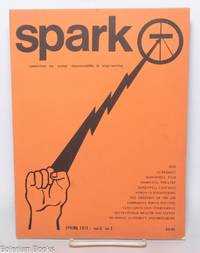
1973ref. 342421New York: Committee for Social Responsibility in Engineering 1973. Magazine. 32p. stapled wraps 8.25x11 inches pencil notation on front wrap pages lightly and evenly toned else very good condition. Movement magazine aimed at engineers. Committee for Social Responsibility in Engineering unknown books
1975ref. 331296New York: Committee for Social Responsibility in Engineering 1975. Magazine. 32p. wraps paper toned else very good condition 8x10.5 inches Movement magazine aimed at engineers. Committee for Social Responsibility in Engineering unknown books
1975ref. 331299New York: Committee for Social Responsibility in Engineering 1975. Magazine. 32p. wraps chipped on edges and creased paper toned else good condition 8x10.5 inches Movement magazine aimed at engineers. Committee for Social Responsibility in Engineering unknown books
1974ref. 331292New York: Committee for Social Responsibility in Engineering 1974. Magazine. 32p. wraps paper toned else very good condition 8x10.5 inches Movement magazine aimed at engineers. Committee for Social Responsibility in Engineering unknown books
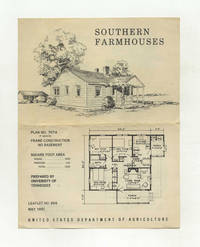
1951ref. 29964Washington: U. S. Department of Agriculture. Near Fine. 1951. Broadsheet. An about Fine folded leaf. Leaflet No. 303 issued May1951; Introduction of four plans No. 7074 7073 7072 and 7060 with Southern farmhouses from ranging from 1188 to 1575 sqft and instructions where to order working drawings for the houses shown; 1 sheet pages . U. S. Department of Agriculture unknown books
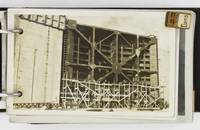
1919ref. 2655Various locations including Wyoming Nebraska and Iowa 1919. Very good plus. Forty-two original black-and-white photographs and real photo postcards most with manuscript annotations bound into a two-ring leather binder. Two additional postcards laid in. Minor occasional dust soiling but overall in excellent shape. An intriguing pocket-sized binder containing a collection of photographs and real photo postcards documenting large-scale construction projects in the American West mostly involving concrete projects such as dams drainage reservoir infrastructure railroads and more between about 1913 to 1920. All of the projects occur on or west of the Mississippi River in locations such as Keokuk Iowa; Ardmore South Dakota; Grand Island Nebraska; and Arminto Wyoming. The projects cover a wide range of subject matter from a simple base for a railroad mail sack crane to entire dam wall construction and seem to feature several involving sprayable concrete commonly known as gunite. This material was rather new in the 1910s but is still widely in use to the present day. The majority of the images are captioned in manuscript identifying the project or location or often both. These include a power-generating dam in Keokuk; reinforcement of a reservoir dam near Lysite Wyoming; widening of a cut for the Chicago Burlington and Quincy Railroad through Arminto; memorializing a concrete crib wall for the same railroad at the Bancroft St. Vincent Omaha; the installation of an eighteen-inch wall casting and sinking the Kelly well in Grand Island; documenting frost action on a brick chimney and water tank and also picturing a "concrete gun" in Worland Wyoming; and others. The images are organized into two sections with small tabs one reading "Dams" and the other "Miscellan." The compiler of the pictures is not identified but he or she was most likely involved in the operational aspects of the construction projects. One of the captions is initialed at the bottom "JRH" which may help scholars identify the compiler with further research. The binder itself was produced in Kansas City which may be an additional clue to the compiler's identity. A small but focused collection featuring major western construction projects from the early-20th century. unknown books
1931ref. S2418New York etc.:: Simmons-Boardman; London: Simpkin Marshall 1931. 1931. 196 x 125 mm. Small 8vo. xi 69 pp. Frontis. 2 illus. 23 figs. Gilt-stamped red cloth; inner hinge cracked. Very good. Scoop circulation is a method of circulating condensing water in such a manner that the moderate speed of a ship will cause a projection to "scoop" sea water into the condenser without the use of the circulating pump. This was an important method of designing fast naval vessels from 1892 to the 1930s. Simmons-Boardman; London: Simpkin Marshall, (1931). hardcover books
1981ref. 95272NY:: Random House. Near Fine. 1981. Hardcover. 0394845846 . All pop-ups and moving parts are intact and in good working order. First edition. Previous owner's name stamped on front paste-down else fine in glossy illustrated boards. No dust jacket as issued. . Random House, hardcover books
1985ref. 800059mGrand Blanc Mich.: Russ Hackett Engineering 1985. Folio plastic ring-binder 32 maps 33 pp. of index 15 maps 14 pp. of index. Very Good; cover show minor soiling. Russ Hackett Engineering, 1985. unknown books
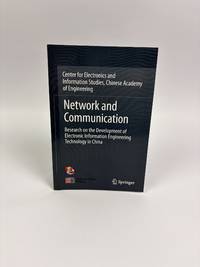
2020ref. 1419101Singapore: Springer 2020. Softcover. Octavo xx 54 pages. In Very Good condition. Dark blue/grey cover with white lettering. Some very light shelfwear. Shelved in ND-B. 1419101. FP New Rockville Stock. Springer unknown books
1902ref. 231435Indianapolis; New York: Municipal Engineering Company 1902. Hard Cover. Very Good binding. Illustrated; No pencil or ink markings in text. One-half black leather and black cloth binding. Front and rear hinge repair. Light to moderate edgewear to boards with heavier wear at head of spine. Small loss at head of spine. Scrape gouge at top corner of front board with some missing leather. Very Good binding. Municipal Engineering Company unknown books
ref. 16795Lahore: Mufid-I-'Am Press. hardcover. very good-. Illustrated with many charts and plates most folding. 332 pages. Thick 8vo black cloth worn. Lahore: Mufid-I-'Am Press 1934. First Edition. A very good- sturdy copy of this scarce book. Most of the papers deal with irrigation and bridge construction. Mufid-I-'Am Press unknown books