1 559 résultats
1897réf. 21971Paris Librairie Polytechnique, BAUDRY et Cie 1897 -in-8 pleine percale 2 fort volumes, reliure pleine percale bordeaux éditeur in-octavo (hard-back percale in-8 editor)(20,8 x 13,6 cm), cartonnage éditeur (hard-back editor) à plaques spéciales monochromes et à froid pour le dos et les plats (with specials covers editor for the spine and the cover), dos long (spine without raised bands) titre frappé or (gilt title) + décoration en "or" (filet et roulettes "or"), premier plat avec titre or (front cover - gilt decoration) dans un encadrement estampé à froid (plaques spéciales Editeur), tête lisse (top edge smooth), gouttière et tranche de queue non-rognées, abondamment illustré (plentifully illustrated) de très nombreuses gravures et plans in-texte en noir, et 33 grandes planches dépliantes en noir des nouveaux types de machines motrices et auxiliaires, etc..., 906 + 506 pages, 1901 Paris Librairie Polytechnique, CH. BERANGER Successeur DE BAUDRY et Cie Editeurs,
1840réf. 0018661840 Paris, Langlois et Leclercq, sans date [circa 1840]. In-8 (150 X 218 mm) demi-chagrin bleu nuit, dos lisse, large filet à froid serti de filets dorés en place des nerfs, filet perlé et triple filet doré en tête du dos, filet perlé et guirlande dorée en pied (Reliure légèrement postérieure) ; XII pages (dont faux-titre et titre), 644 pages, 5 planches dépliantes. Pointes de rousseurs, des feuillets uniformément roussis.
réf. 52152aafParis, (Félix Locquin pour) Bechet jeune, s.d. (ca. 1845), in-folio, 91 p. (explication des planches, qqs pet. taches ou trous dans la marge latér.) + 148 planches de figures gravées (planche 1 à 147 + 38bis, gravées par Durau, V. Le Blanc et A. Leblanc), çà et là lég. taches de doigts marg., prem. planche lég. brunie, lég. taches d'eau marg. dans le dern. planches, étiquettes de librairie à l'intér. du plat supér. reliure en d.-cuir du 19e s., couverture avec titre de la brochure orig. vert cons., pièce de titre rouge au dos, dos orné en or (dorure partiel. lég. passée), coins touchés.
réf. 3320S.l., lORILLEUX, 1889 ; in-4°, broché, partiellement coupé. Nombreuses planches et figures. Hommage de Ch.Lorilleux en page de faux-titre
1825réf. 6954Paris, Bachelier, 1825 ; in-8, broché ; XIV, 524 pp., (4) pp. de catalogue d'éditeur ; 9 planches dépliantes gravées hors-texte ; couverture muette de papier orangé, étiquette de titre imprimée au dos.
1892réf. DEZ-6015Paris, Librairie Polytechnique, Baudry, 1892. In-8 demi chagrin au dos lisse orné de filets dorés. Viii, 594 pp, 1 f. d'errata. Bon état.
réf. 0259967572.Gpaperback. Good. Access codes and supplements are not guaranteed with used items. May be an ex-library book. paperback
1886réf. DEZ-5956Paris, Librairie Polytechnique Baudry, 1886. In-folio en demi chagrin au dos lisse orné de filets dorés. 1 f. de titre et 46 planches de lithographies. Bon état, sans rousseurs.
1811réf. gg2234J. Klostermann fils Broché 1811 In-4 (21 x 27 cm), broché, 304 pages, bien complet des 28 planches hors texte in fine ; manques au dos, frottements aux plats, quelques rousseurs et mouillures occasionnelles, en l'état, à relier. Livraison a domicile (La Poste) ou en Mondial Relay sur simple demande.
réf. 21147Paris, Au Bureau de l'Administration centrale, 1841. 85 X 145 mm. 3 parties reliées en un volume demi-basane, dos lisse avec titre et faux-nerfs dorés (rel. de l'ép.). 267, 215 et 216 pp. ornées de figures, avec 9 planches dépliantes. Reliure lég. frottée.
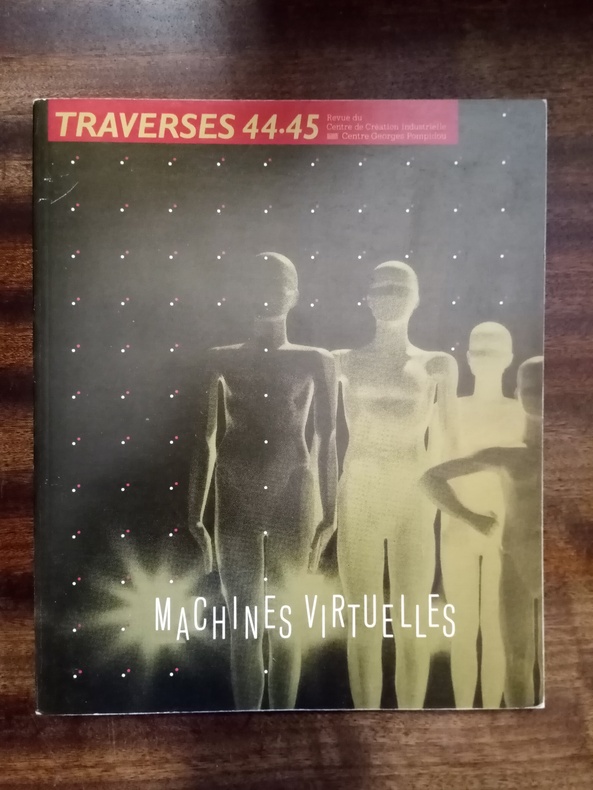
1988réf. SCIENCES222510521Paris, Centre Georges Pompidou, 1988, 20 x 24, 283 pages sous couverture souple illustrée. Iconographie noir & blanc. Textes de René Thom, Paul Virilio, Henri Atlan, Lucien Sfez, Emmanuel Souchier, Pierre Boulez, etc.
1953réf. 2090502113708190Not Available 1953. Soft Cover. Fine. The book is in fine condition. Not Available paperback
1989Documentation Turbomeca, 1989. In-4 broché, 113 pp. abondamment illustré
1971réf. SPN-40245 tours 2 titres. EMI Pathé 2 C 006-11539 M. 1971
1900réf. 205091900. EngineeringInvention and Business Felt Dorr Eugene. British Patents for Improvements in Calculating Machines 1900-1904 document the development of one of the earliest commercially successful key-driven mechanical calculators reflecting the rapid mechanization of clerical labor at the turn of the twentieth century. These patents relate to the Comptometer first introduced in 1890 by the Chicago firm Felt and Tarrant and represent the extension of American technology into British commercial and financial systems. Banking insurance railways and trade demanded increasingly rapid numerical computation at the turn of the century meaning mechanical calculation was becoming integral to infrastructure. Calculating Machines. British Patents: together 2 patents. Patent No. 19675 1900 includes 3 pages and 3 folding diagrams; Patent No. 13094 1904 includes 11 pages and 5 folding diagrams. 1900-1904. The 1900 patent specification describes modifications "intended to adapt such machines to be used in making calculations in British money" addressing the complexities of pounds shillings and pence within a decimal-based mechanical framework. The 1904 patent details improvements to the Comptometer's registering wheels refining accuracy and mechanical efficiency. These documents trace the technical evolution of Felt's invention whose origins lay in his 1885 "macaroni box" prototype and whose commercial success positioned the Comptometer as a principal rival to Burroughs calculators in the early twentieth century. Together the specifications and folding diagrams provide primary evidence of iterative design in early computing machinery and the formal legal mechanisms through which intellectual property structured industrial competition. Disbound some leaves loose. Overall very good. As working technical documents issued during a formative period in mechanical computation these patents illuminate the foundations of modern calculating technology in the pre-electronic era. unknown
1900réf. 205091900. EngineeringInvention and Business Felt Dorr Eugene. British Patents for Improvements in Calculating Machines 1900-1904 document the development of one of the earliest commercially successful key-driven mechanical calculators reflecting the rapid mechanization of clerical labor at the turn of the twentieth century. These patents relate to the Comptometer first introduced in 1890 by the Chicago firm Felt and Tarrant and represent the extension of American technology into British commercial and financial systems. Banking insurance railways and trade demanded increasingly rapid numerical computation at the turn of the century meaning mechanical calculation was becoming integral to infrastructure. Calculating Machines. British Patents: together 2 patents. Patent No. 19675 1900 includes 3 pages and 3 folding diagrams; Patent No. 13094 1904 includes 11 pages and 5 folding diagrams. 1900-1904. The 1900 patent specification describes modifications "intended to adapt such machines to be used in making calculations in British money" addressing the complexities of pounds shillings and pence within a decimal-based mechanical framework. The 1904 patent details improvements to the Comptometer's registering wheels refining accuracy and mechanical efficiency. These documents trace the technical evolution of Felt's invention whose origins lay in his 1885 "macaroni box" prototype and whose commercial success positioned the Comptometer as a principal rival to Burroughs calculators in the early twentieth century. Together the specifications and folding diagrams provide primary evidence of iterative design in early computing machinery and the formal legal mechanisms through which intellectual property structured industrial competition. Disbound some leaves loose. Overall very good. As working technical documents issued during a formative period in mechanical computation these patents illuminate the foundations of modern calculating technology in the pre-electronic era. unknown books
2003réf. 2111902153102156Kodansha 2003. Soft Cover. Fine. Volume: 1 Kodansha paperback
1950réf. 273104Washington: IUE-CIO 1950. Two items; a four-panel 8.5x11 inch brochure titled "UE sellout steals $138 a year from workers' paychecks" UE in the form of a hammer and sickle very good; the other a single 8.5x11 inch sheet mildly crinkled titled "UE is finished. in General Motors!" Both items urge the reader to vote for IUE rather than UE described as "the plaything of the Communist Party" and criticizing its recent contracts. IUE-CIO unknown
1950réf. 273104Washington: IUE-CIO 1950. Two items; a four-panel 8.5x11 inch brochure titled "UE sellout steals $138 a year from workers' paychecks" UE in the form of a hammer and sickle very good; the other a single 8.5x11 inch sheet mildly crinkled titled "UE is finished. in General Motors!" Both items urge the reader to vote for IUE rather than UE described as "the plaything of the Communist Party" and criticizing its recent contracts. IUE-CIO unknown books
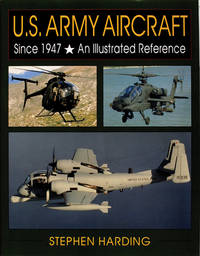
2004réf. Q-076430190XSchiffer Publishing Ltd 2004-01-01. Hardcover. New. In shrink wrap. Looks like an interesting title! Schiffer Publishing, Ltd hardcover
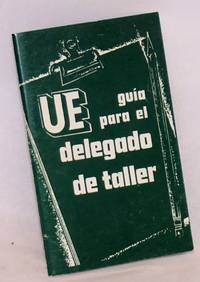
1978réf. 220757New York: UE 1978. Pamphlet. 48p. wraps 3.25x5.25 inches very good condition. Text in Spanish. UE unknown books
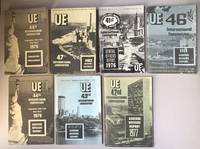
1982réf. H19111New York: United Electrical Radio & Machine Workers of America UE 1982. Paperback. Very Good. 7 volumes altogether all very good but for 1981 that is good or better but has some abrasions to front cover. The General Officers Reports are 75-90 pp. each the two Convention Proceedings are 262 & 309 pp respectively. United Electrical, Radio & Machine Workers of America (UE) paperback
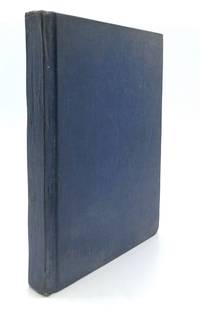
1953réf. H15750New York: United Electrical Radio and Machine Workers of America 1953. Hardcover. Very Good. Bound volume of this digest sized union periodical 7.5 x 5.25 inches with 18 issues bound together each about 20-25 pp. illustrated with articles on union activities worker rights civil rights much on African-Americans and women in the work force and how to provide them equal protection and equal wages politics poetry union politics and philosophy. An interesting time in the history of this rank-and-file worker-run union. UE withdrew from affiliation with CIO in 1949 over differences related to the developing Cold War during the early stages of which UE was referred to as one of the basic sources of anti-American propaganda both inside and outside the U.S. At the same time the growing rivalry with the International Union of Electrical Workers IUE led to a cold war of sorts domestically these differences began to resolve in the 1960s when they bargained together to achieve better concessions from General Electric. And the anti-American propaganda is indeed found within. Simply opening to a random page: "What Big Business is Plotting. Concentration camps in America are no accident. There is a Big Business plot masterminded by the Chamber of Commerce in five 'Reports on Communism' issued by the Chamber for its own employers-members. Since 1946 these reports have blueprinted the government's actions to destroy basic American freedoms." In any case a rare bound volume and only a handful of libraries have these among their holdings. United Electrical, Radio and Machine Workers of America hardcover
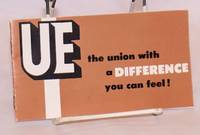
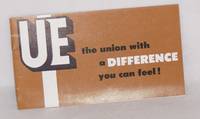
1971réf. 220756New York: UE 1971. 18p. wraps slightly faded else very good condition 6.25x3.5 inches illus. 14th printing. Illustrated with cartoons depicting UE's effectiveness and fairness. UE unknown books
1980réf. 216169New York: UE 1980. Pamphlet. 18p. staplebound pamphlet 6.25x3.5 inches landscape format very good. Illustrated with cartoons depicting UE's effectiveness and fairness. 22nd printing. UE unknown books