1 372 résultats
1980réf. 2092902137500184Nippon Machinery Publishing Center 1980. Soft Cover. Fine. Size: B5 Number of books: 1 book Nippon Machinery Publishing Center paperback
1980réf. 2092902138301132Nippon Machinery Publishing Center 1980. Soft Cover. Fine. Number of pages: 235p Size: 26cm Nippon Machinery Publishing Center paperback
réf. 2090502113700385Not Available N.A. Soft Cover. Fine. The book is in fine condition. Not Available paperback
1980réf. 2090602128801127Japan Machine Magazine Publishing Center 1980. Soft Cover. Fine. Number of books: 1 book Japan Machine Magazine Publishing Center paperback
1882Very Good Turkish, Ottoman (1500-1928) First and Only Edition of this extremely rare first user guide for the Ottoman market for a sewing machine manufactured by the Singer Company. This richly illustrated user guide in Ottoman Turkish, printed for "28 K" model (manufactured in 1882) of Singer sewing machines includes numerous diagrams showing the parts of the machine and threading the needle, sewing techniques, using the belt wheel and foot pedal, measuring techniques, the thickness of needles and threads, and how to detect and avoid counterfeits of the brand. In Ottoman Empire, Singer sewing machines were initially started to be offered for sale in Constantinople and Smyrna (today's Istanbul and Izmir) in the 1880s, soon after Isaac Merritt Singer & Company was incorporated with Edward B. Clark, Attorney-at-law from New York in 1851. The company opened its first dealer/dealership in the last period of the Imperial Ottoman at Cadde-i Kebîr [i.e. Istiklâl Street] in Pera, and became the first foreign company to open a dealer/dealership and issue an invoice in Turkey. As the first company to use the "direct marketing" method, Singer went to mountain villages in Turkey, together with its salespersons, instructors, and technicians, who were in charge of showing and informing people on how to use Singer sewing machines, for many years. Singer was the first company to prepare user's guides, to provide extensive service, to initiate the practice of "Guarantee Coupon", to deliver training on sewing - embroidery, and to introduce gas stoves and ovens to Turkish people. In addition, Schneidertempel (Tailors Synagogue), which was founded in 1894 by Mayer Schönman, who was the tailor of Sultan Abdulhamid II in the Ottoman palace, and the head of the tailor's guild at that time, broke the monopoly of male tailors in the Ottoman Empire and led the way for every woman to do sewing at home. At the beginning of the 20th century, free sewing courses for women started to be organized by Singer in Turkey. Furthermore, Singer played a role in the history of all leading garment-industry brands of Turkey. (Source: Official Singer Website - History). ABOUT ZELLICH PRINTING HOUSE: Antonio Zelic (Zellich) of Brela was one of many Dalmatians who left his homeland in pursuit of a better life during the 19th century. However, instead of going west, he set out toward the East, to the Ottoman imperial capital - Istanbul. Upon arrival in the city on the Bosphorus, Zelic found employment at the first lithographic print house founded by Henri Cayol in the Ottoman Empire. In 1869, Zelic opened his own lithographic print house called "Zellich and Sons" (A. Zellich et fils). His descendants continued his work with great success, and the Zellich Print House, now known as "Zellich Brothers" (Zellich frères), became one of the most renowned in the Empire. The Zellich Brothers won recognition due to the high quality of their products, and, above all, the amazing beauty of their postcards and posters. Their crowning achievement was an order for the printing of the Ottoman Turkish Lira banknotes in 1914. The Zellichs received many Ottoman and international awards, including medals conferred by the Pope, the Persian shah, and the Serbian king.". (Source: Documentary film "Zelic- Printers to the Empire", Levantineheritage). Original illustrated wrappers. Roy. 8vo. (24 x 16 cm). In Ottoman script (Old Turkish with Arabic letters, pre-1928). 24 p., [24] unnumbered b/w engraved ills. Heavily stains on top of the pages, a trace of folding. Overall a good copy. Özege 15450.; Only one institutional copy in the Library of Congress according to the WorldCat: OCLC 125421484.
réf. 011085[Victoria Arduino, machines à café, Foire de Paris, 1955], Photographie prise lors de la foire de Paris en 1955, stand de Victoria Arduino. 184*240mm. [189-2] 15
réf. 011079[Victoria Arduino], Roberto Benzi, photographie du chef d'orchestre à 12 ou 13 ans lors du 1er salon du Tourisme et de l'Industrie hôtelière, au stand Juvara - Victoria Arduino (machines à café). Photographie 242*183mm. [189-2] 15
1990réf. 2083002115706287Nigensha 1990. Soft Cover. Fine. Size: 31cm Number of books: 1 Nigensha paperback
1913réf. 44659New York 1913. Tabulating Machine Company - C-T-R - IBM The Tabulating Machine Company. A business compass: Facts made immediately available for determining business policy. New York ©1913. Original gray printed wrappers. Very good. 48pp. Illustrated. 228 x 152 mm. Herman Hollerith a clerk at the U S Census Bureau invented the punch-card tabulator applying for his first patent in 1884; his punched-card system reigned as the primary large-scale data-processing system until the advent of the electronic digital computer. In 1896 Hollerith formed the Tabulating Machine Company; the British branch known as the British Tabulating Machine Company was formed in 1907 and remained connected to its American counterpart until 1949. Hollerith remained head of the Tabulating Machine Company until 1911 when he sold it to industrialist Charles R. Flint who renamed the company C-T-R. In 1915 Thomas J. Watson became president of the new company and in 1924 Watson renamed the company International Business Machines IBM. Origins of Cyberspace 373. . unknown
1913réf. 44659New York 1913. Tabulating Machine Company - C-T-R - IBM The Tabulating Machine Company. A business compass: Facts made immediately available for determining business policy. New York ©1913. Original gray printed wrappers. Very good. 48pp. Illustrated. 228 x 152 mm. Herman Hollerith a clerk at the U S Census Bureau invented the punch-card tabulator applying for his first patent in 1884; his punched-card system reigned as the primary large-scale data-processing system until the advent of the electronic digital computer. In 1896 Hollerith formed the Tabulating Machine Company; the British branch known as the British Tabulating Machine Company was formed in 1907 and remained connected to its American counterpart until 1949. Hollerith remained head of the Tabulating Machine Company until 1911 when he sold it to industrialist Charles R. Flint who renamed the company C-T-R. In 1915 Thomas J. Watson became president of the new company and in 1924 Watson renamed the company International Business Machines IBM. Origins of Cyberspace 373. . unknown books
1914réf. 446631914. Muldivo Calculating Machine Company. A masterpiece of French mechanism. N.p. n.d. ca. 1914. Unbound circular. Single sheet. 272 x 215 mm. Tears in lower margin not affecting text readability. Good. Lists three models of the Muldivo calculator.Origins of Cyberspace 341. . unknown
1914réf. 446631914. Muldivo Calculating Machine Company. A masterpiece of French mechanism. N.p. n.d. ca. 1914. Unbound circular. Single sheet. 272 x 215 mm. Tears in lower margin not affecting text readability. Good. Lists three models of the Muldivo calculator.Origins of Cyberspace 341. . unknown books
réf. 1332288901.Gpaperback. Good. Access codes and supplements are not guaranteed with used items. May be an ex-library book. paperback
1990Cover and page block have minor general wear. Contents clean and sound throughout. Ex - library with bookplate on inner cover and stamps on prelims and page block. Ex - Library
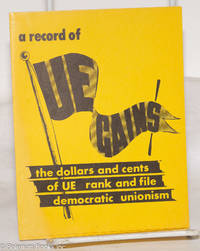
1979réf. 274197New York: United Electrical Radio & Machine Workers of America 1979. Pamphlet. 4-page brochure which folds out into handbill listing UE's achievements for its members very good condition. United Electrical, Radio & Machine Workers of America unknown books
1976réf. 133055New York: United Electrical Radio & Machine Workers of America 1976. 4-page brochure which folds out into handbill listing UE's achievements for its members very good condition. United Electrical, Radio & Machine Workers of America unknown books
1972réf. 133049New York: United Electrical Radio & Machine Workers of America 1972. 4-page brochure which folds out into handbill listing UE's achievements for its members very good condition. United Electrical, Radio & Machine Workers of America unknown books
1958réf. 705869PN. New. 1958. Soft Cover. Date is original print. This is a reprint edition. . PN paperback
1906réf. 155271906: Harrisburg Foundry and Machine Works. Very Good. 1906. First Printing. Hardcover. Three quarter leather with marbled boards. A very nice detailed catalog with lots of engravings of Harrisburg steam engines of various sizes. More pages than it seems as the plates are not included in the numbering system. The last pages are sticking together at the very top where it appears a spot of damp got to the book. Not too bad as the top is gilt teg which minimized damage and there is no stain on the pages. The spine is slightly rubbed at the ends. ; Small 8vo 7½" - 8" tall; 57 pages . Harrisburg Foundry and Machine Works hardcover
2018réf. Gyan-9789368373889Facsimile Publisher 2018. Hardcover. New. 22.59 x 14.34 x 4.47 cm. English Facsimile Publisher hardcover
2025réf. Gyan-9789370731325Facsimile Publisher 2025. Hardcover. New. 25.13 x 18.78 x 4.15 cm. English Facsimile Publisher hardcover
2018réf. Gyan-9789368373889Facsimile Publisher 2018. Hardcover. New. 22.59 x 14.34 x 4.47 cm. English Facsimile Publisher hardcover
2025réf. Gyan-9789370731325Facsimile Publisher 2025. Hardcover. New. 25.13 x 18.78 x 4.15 cm. English Facsimile Publisher hardcover
2010réf. DADAX1163986135Kessinger Publishing 2010-09-10. paperback. New. 6.00x0.85x9.00. Buy with confidence. Excellent Customer Service & Return policy. Kessinger Publishing paperback
réf. B9781015418684Hardback. New. hardcover