1.687 Ergebnisse
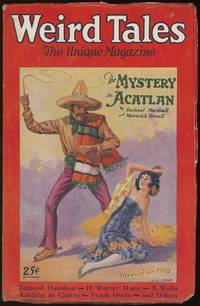
1928Best.-Nr. 31659Indianapolis IN: Popular Fiction Publishing Company 1928. Text paper tanned but supple lower right corner chipped a nearly fine to fine copy. 31659. Octavo single issue cover art by C. C. Senf pictorial wrappers. Pulp Magazine. Includes stories by H. Warner Munn Edmond Hamilton August Derleth and others. Reference: Tymm and Ashley Science Fiction Fantasy and Weird Fiction Magazines pp. 727-736. Popular Fiction Publishing Company unknown
1967Best.-Nr. 9384Paris, Robert Léger, 1967 ; grand in-4 en feuilles sous chemise crème rempliée, titre argile cuite, coffret recouvert de satin vieil or, titre doré au dos, signature de Letellier en noir sur le plat (reliure d'éditeur) ; 164, [165], (7) pp. et 16 lithographies en couleurs de Pierre Letellier dont 7 à doubles pages et 7 à pleines pages. Ouvrage avec signature autographe de l'auteur, de l'illustrateur et de l'éditeur.
1801Best.-Nr. 29676ABParis, L'imprimerie de N. Renaudiere, l'an neuf de la République (1801). 8°. (4) S., S. I-VIII, S. 9-271. Pappband der Zeit mit Marmorpapierbezug (berieben).
200413 vols., 8vo., First Edition, with full-page maps, pedigrees and glossary of place names in the text, and printed endpapers; black cloth, gilt backs, a near fine set in dustwrapper. An elegant set. The sequence comprises: The Last Kingdom (2004); The Pale Horseman (2005); The Lords of the North (2006); Sword Song (2007); The Burning Land (2009); Death of Kings (2011); The Pagan Lord (2013); The Empty Throne (2014); Warriors of the Storm (2015); The Flame Bearer (2016); War of the Wolf (2018); Sword of Kings (2019); War Lord (2020). COMPLETE SETS ARE VERY SCARCE IN THIS CONDITION.
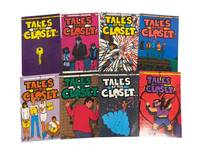
1987Best.-Nr. 238301987. Ivan Velez Jr.'s Tales of the Closet issues 1 through 8 1987 to 1992 follows eight gay and lesbian teenagers in Queens through isolation family violence homophobia racism health pregnancy religion drug use and the fear of being outed. Published by the Hetrick Martin Institute as an educational comic for gay and lesbian young adults the series placed Puerto Rican Black white and Asian American teenagers within the same continuing narrative at a point when AIDS suicide and family rejection shaped the Institute's work with queer youth. Tony Vega Ramona Sinclair Mary Ryan Kyle Hooks Shorty Mancini Scott Lind Jenny Chin and Benjamin Kanas recur across the series allowing Velez to address sexuality alongside race class religion gender and family life through characters whose relationships develop from issue to issue. The present group contains the first eight consecutive issues of the nine issues eventually published between 1987 and 1993 lacking only the final issue and preserves nearly the entire original Hetrick Martin Institute run before Velez later returned to the work in collected form. Velez Jr. Ivan writer and artist. Tales of the Closet. New York: Hetrick Martin Institute 1987 to 1992. Near complete run of eight consecutive comic issues nos. 1 through 8 of nine published. 8vo. Original pictorial wrappers with black and white illustrated interiors. Velez's cover scenes range from the eight central teenagers carrying placards to figures confronting brick walls shattered surfaces urban streets and other graphic expressions of confinement and conflict. Interior thematic title pages organize individual installments around social problems encountered by the recurring cast and Hetrick Martin Institute publication statements identify the series as a "Graphic Book" project associated with lesbian and gay youth suicide prevention. The first issue dated "Summerfall 1987" bears the interior heading "isolation"; subsequent issues carry the narrative through themes including health pregnancy and religion. Issue no. 5 opens its "pregnancy" section with named character portraits and recounts friendships formed amid secrecy fear and threatened violence while no. 6 describes the protagonists as "a tight knit group of friends" confronting religion drug abuse and suicide. The Hetrick Martin Institute had been working with lesbian and gay youth in New York before Velez began Tales of the Closet and the comic translated that institutional mission into serialized narrative directed toward teenagers themselves. Contemporary coverage from the period describes Tales as written and drawn by Velez and following a multiracial multiethnic group of eight gay and lesbian teenagers while the series' original publication context placed copies directly within the Institute's youth outreach work. Velez's decision to sustain the same ensemble across multiple years gave subjects ordinarily isolated in educational literature a shared social setting: Tony's Puerto Rican family conflict Ramona's experience as a Black lesbian and the lives of Mary Kyle Shorty Scott Jenny and Benjamin allow questions of sexuality to unfold amid racial identity reproductive crisis religion violence addiction friendship and unstable family relationships. The AIDS crisis forms part of the immediate setting in which those subjects were being presented to young readers while suicide prevention appears within the publication program itself rather than as retrospective interpretation. The series remained unfinished after nine issues ending before Velez could publish the planned conclusion; he subsequently began collecting the original comics in 2005 with the intention of completing the narrative. Light toning to pulp paper stock as expected with minor edge wear rubbing and softening to corners; pictorial wrappers remain bright. Overall very good condition. A near complete consecutive run of the Hetrick Martin Institute's graphic outreach to lesbian and gay teenagers preserving eight years of Velez's recurring Queens cast as they confront queer adolescence during the AIDS crisis through a medium produced expressly for young readers. unknown
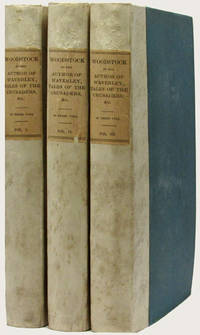
1826Best.-Nr. 34041Edinburgh and London: Archibald Constable and Co. and Longman Rees et al. 1826. 3 volumes. First Edition. With fine Scottish provenance being Ex-libris of the Bellfield Library Kilmarnock and James Buchanan merchant of Glencoe. With half-titles in each volume. 8vo handsomely bound in vellum over blue paper-covered boards with the publisher's original printed paper labels on the spines top edge gilt others untrimmed xvi 315; 332; 370 pp. A set in beautiful condition the text fresh and as pristine but for a bit of the typical mellowing or occasional age evidence. The bindings are sturdy and strong and show little wear or use a little bit of spotting from age to the bindings publisher's printed labels are fresh and very legible. Ownership signature of James Buchanan unobtrusively at top of the titlepage and stamp of the Bellfield Library on each title-page and occasionally at chapter openings no other markings within hard-to-see evidence of small circular shelf labels once being on the spine tops. FIRST EDITION OF A SCARCE AND EXCELLENT WORK THIS SET IN UNCOMMONLY FINE AND WELL-PRESERVED CONDITION and with all half-titles as is often not the case. Sir Walter Scott was considered to be the inventor of the historical novel and the success of his Waverley series was immediate and long lasting throughout the English speaking world. Set shortly after the English Civil War WOODSTOCK was inspired by the legend of the Good Devil of Woodstock which in 1649 supposedly tormented parliamentary commissioners who had taken possession of a royal residence at Woodstock Oxfordshire. The story deals with the escape of Charles II in 1652 during the Commonwealth and his final triumphant entry into London on 29 May 1660. David Hume's HISTORY OF ENGLAND gave Scott most of the historical background. As with all the Waverley novels prior to 1827 WOODSTOCK was published anonymously. Archibald Constable and Co. and Longman, Rees, et al. hardcover
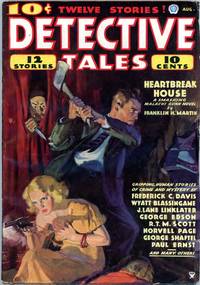
1935Best.-Nr. 35089Chicago: Popular Publications Inc. 1935. Mild tanning to text paper mild edge wear a fine copy. 35089. Octavo single issue cover by Walter Baumhofer pictorial wrappers. Pulp magazine. Fiction by Franklin Martin Frederick C. Davis Paul Ernst Norvell W. Page R. T. M. Scott and others. Detective Tales ran for eighteen years and was second only to Popular's Dime Detective in their detective magazine line-up. "It was a colorful urgent vigorous periodical foaming with cheerful excesses; it was one of the classic pulp magazines." - Cook Mystery Detective and Espionage Magazines pp. 153-157. Popular Publications, Inc. unknown
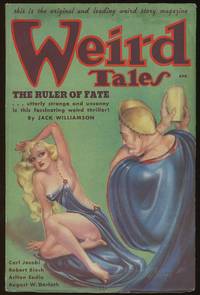
1936Best.-Nr. 32072Indianapolis IN: Popular Fiction Publishing Company 1936. Slight tanning to text paper clear tape to verso of edges of front cover with some darkening along the top edge. A bright just about fine copy with nice color. 32072. Octavo single issue cover art by Margaret Brundage pictorial wrappers. Pulp Magazine. Includes stories by Robert E. Howard "The Hour Dragon conclusion - Conan Jack Williamson Carl Jacobi Robert Bloch and others. Reference: Tymm and Ashley Science Fiction Fantasy and Weird Fiction Magazines pp. 727-736. Popular Fiction Publishing Company unknown
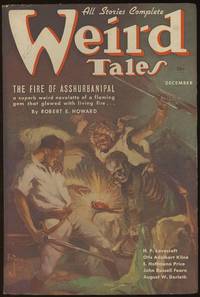
1936Best.-Nr. 32075Indianapolis IN: Popular Fiction Publishing Company 1936. Text paper tanned but supple slight edge wear a fine copy. 32075. Octavo single issue cover art by J. Allen St. John pictorial wrappers. Pulp Magazine. Includes stories by Robert E. Howard "The Fire of Asshurbanipal" H. P. Lovecraft "The Haunter of the Dark' Robert Bloch Amelia Reynolds Long Manly Wade Wellman Henry Kuttner and others. Reference: Tymm and Ashley Science Fiction Fantasy and Weird Fiction Magazines pp. 727-736. Popular Fiction Publishing Company unknown
20122 vols., 8vo., First Edition thus, with very numerous illustrations, initials, and head- and tail-pieces by Gill in the text; full niger morocco, sides and backstrip blocked and lettered in gilt, gilt edges, silk marker, Commentary Volume bound in boards with buckram back, the two fine volumes housed in publisher's cloth solander case lettered in gilt. EDITION LIMITED TO 1980 COPIES. A magnificent facsimile of the Golden Cockerel masterpeice, widely regarded as the finest private press production of the period.
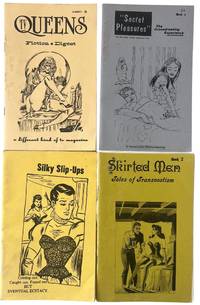
1982Best.-Nr. 235301982. Five Transvestite Fiction Booklets containing reflections on gender trans identity self expression from 1982-1994 including story titles such as "Sissy in Satin" "Living Doll" "Jim into Jamie" "Trapped in Panties" "My Husband Married Me To be a Woman" "Letters to Cathy" "The Adventures of a Boy Turned Girl" and "Caught.In My Sister's Clothes." A first-person passage states that a transvestite needs "feedback from others" to understand "gait" "voice" and "other mannerisms" while "perfecting a gender role" placing social performance and self-assessment inside the language of everyday presentation. The group emerged during a period when queer and trans communities faced AIDS-era stigma homophobic public discourse and the lingering legal and social memory of anti-crossdressing enforcement in American cities. By 1980 defendants had challenged cross-dressing arrests in at least sixteen cities while the domestic HIV/AIDS epidemic began in 1981 and intensified public hostility toward already stigmatized queer communities. These booklets preserve small-press fiction created for readers seeking transvestite crossdressing and transfeminine narratives outside mainstream publishing with fantasy plots gender transformation motifs and direct language about feminine identity appearing within the same print culture. Crossdressing and Transvestite Fiction Booklets. Seattle and s.l.: Empathy Press and unidentified publishers 1982 to 1994 and undated. Five staple-bound booklets each approximately 50 pages including three Empathy Press titles and two related transvestite or crossdressing fiction titles. 1 Slavik Charles. Skirted Men: Tales of Transvestism. Book 2. Seattle: Empathy Press 1982. The contents page lists "Sissy in Satin" beginning on page 4 with copyright credited to Charles Slavik and the publisher given as Empathy Press P.O. Box 12466 Seattle Washington 98111. Princeton cataloging identifies Charles Slavik as creator of another Empathy Press Skirted Men issue confirming the publisher's place within late twentieth-century LGBTQIA periodical and ephemera collecting. 2 TV Queens Fiction Digest. Number 23. Seattle: Empathy Press 1990. The contents page lists "Living Doll" "Jim into Jamie" and "Trapped in Panties" and the imprint invites readers to send material if they "enjoy writing and would like to see your fantasies in print." That solicitation places the digest within a participatory reader-writer circuit where fantasy manuscripts could move from private desire into small-run printed circulation. 3 Secret Pleasures: The Crossdressing Experience. Book 16. Seattle: Empathy Press 1994. The contents page gives the story title "My Husband Married Me To be a Woman" and the front cover identifies the work as "A Transvestite Fiction Fantasy." Gerber/Hart's transgender periodicals exhibit describes Cathy Charles Slavik's Empathy Press enterprise as evolving by the early 1970s into several concurrent trans-oriented magazines giving this later booklet a connection to a publisher with a longer transvestite and trans readership history. 4 Silky Slip-Ups. S.l.: s.n. undated. The cover caption reads "Coming out. Caught out. Found out. BUT EVENTUAL ECSTACY" using discovery exposure and eventual pleasure as the narrative promise. The cover art and title align the booklet with forced-feminization and crossdressing fiction conventions described in trans small-press fiction where many plots turn on coerced dressing transformation or power exchange. 5 Astounding Transvestite Tales. Number 12. Seattle: Empathy Press undated. The contents page lists "Letters to Cathy" "The Adventures of a Boy Turned Girl" and "Caught.In My Sister's Clothes" with the publisher given as Empathy Press Box 12466 Seattle Washington 98111. The yellow illustrated cover and serialized number place it squarely within Empathy Press's small-format transvestite fiction output adding another example of the publisher's recurring use of readerly address transformation narrative and discovery plot conventions. The booklets use the historical vocabulary of "transvestism" "crossdressing" "feminine identity" and "gender role" before "transgender" became the dominant umbrella term in many public and archival contexts. Their contents connect erotic fantasy to questions of passing social recognition voice gait coming out exposure and reader participation making the group especially useful for tracing how trans and crossdressing readers articulated identity through small-format fiction during the 1980s and 1990s. All five booklets are in very good condition with intact spines minor price-sticker residue light discoloration and handling wear to the covers. The group preserves an early small-press record of transvestite and crossdressing fiction made around the desires anxieties vocabulary and self-fashioning practices of its own readership. unknown
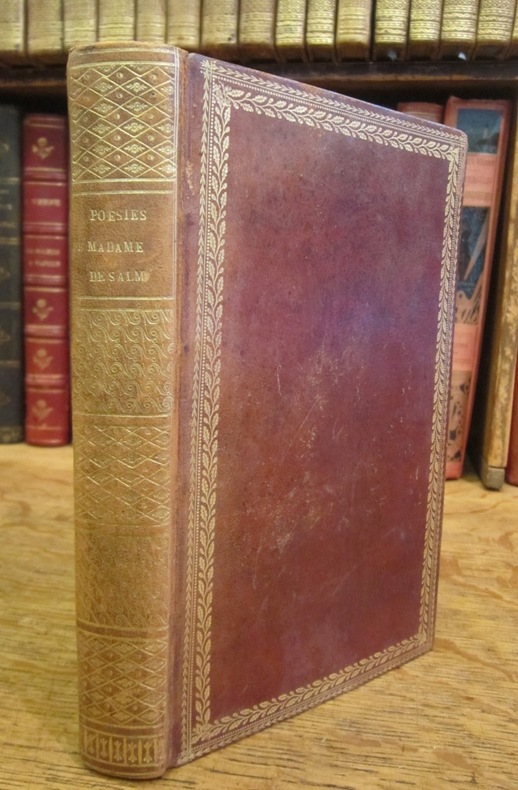
1811Best.-Nr. 001511Paris Imprimerie de F. Didot 1811
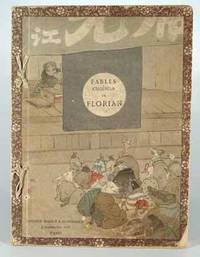
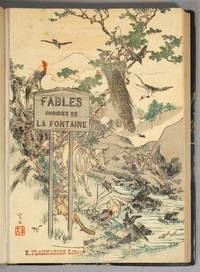
1895Best.-Nr. 830091895. EHON - FAIRY TALES BARBATOU P. FABLES CHOISES DE FLORIAN. The first volume only. Paris: Librairie Marpon & Flammarion; Tokyo: Shueisha Meiji 28 1895. Fukuro toji cord-bound in printed paper covers. This first volume is 26.6 X 19.8 cm with 14 full page color woodcuts by Kano Tomonobu and Kajita Hanko. #167 of 200 from a deluxe edition on Japanese hosho paper. Covers soiled and a bit edgeworn one cvorner chipped. The contents are very good and the impressions and colors are quite lovely. This work despite its French text may be seen as squarely in the tradition of the Japanese ehon and it shares many characteristics of the revival of picture book printing in mid to late Meiji demonstrated by other works: an emerging Nihonga style skilled printed increasingly restrained coloration etc. In that context the large scale of its illustrations renders it particularly interesting. The first volume only of two. unknown books
1895Best.-Nr. 830091895. EHON - FAIRY TALES BARBATOU P. FABLES CHOISES DE FLORIAN. The first volume only. Paris: Librairie Marpon & Flammarion; Tokyo: Shueisha Meiji 28 1895. Fukuro toji cord-bound in printed paper covers. This first volume is 26.6 X 19.8 cm with 14 full page color woodcuts by Kano Tomonobu and Kajita Hanko. #167 of 200 from a deluxe edition on Japanese hosho paper. Covers soiled and a bit edgeworn one cvorner chipped. The contents are very good and the impressions and colors are quite lovely. This work despite its French text may be seen as squarely in the tradition of the Japanese ehon and it shares many characteristics of the revival of picture book printing in mid to late Meiji demonstrated by other works: an emerging Nihonga style skilled printed increasingly restrained coloration etc. In that context the large scale of its illustrations renders it particularly interesting. The first volume only of two. unknown
1952Best.-Nr. 002334Paris Gérard Le Gris 1952
1762One volume (of two). pp. xiv, [2], 268, [2], 8 [Directions to the Binder often lacking] + Plus a remarkable group of (40) elegant engravings, including two duplicates and a portrait frontis. Lacks the plate at p. 87. Many fine vignettes. Most of the plates are after Charles-Dominique-Joseph Eisen (1720-1778). 12mo (in 8s). 185 mm. Some age stain, but generally clean. All edges gilt. Attractive contemporary French dark green morocco bindings, with only slight defects. Hardbound. Very Good. First Edition. The world famous tales and fables of Jean de La Fontaine (1621-1695), neatly printed in verse, are joined by the best work of the great illustrators & engravers Charles Eisen (1720-1778) and Pierre-Philippe Choffard (1730-1809). Justly considered one of the greatest examples of French rococo illustration. The Fermiers Generaux, an entrepreneurial financial association responsible for gathering and banking certain kinds of taxes, commissioned this edition of La Fontaine's zesty tales. Determined that the book should be the best of its kind, they allowed their agent, the Chevalier d'Agincourt, unlimited resources. It is still provocative to consider that patronage of the arts by this new plutocracy produced the greatest monument and triumph of this renowned age of illustration. See: Cohen-de Ricci 558-571; Ray. 'Art of the French Illustrated Book' p. 54-56; Holloway. 'French Rococo Book Illustration' pp. 21-24; & Etc. By offering this one volume we give you an addordable opportunity to acquire part of THE IMMORTAL FERMIERS GENERAL EDITION OF THE . TALES OF LA FONTAINE. Please check our other entries for the full set of this great work in fine condition. CHEST 2/1
1881Best.-Nr. 24481881 Paris, G. Charpentier, 1881. 28,5 x 21 cm (R), in-4, 90 pp. - 2 ff. n. ch. (annonce et imprimeur) - 11 planches hors texte en noir sous serpentes légendées dont l'une en frontispice, cartonnage de l'éditeur, premier plat orné d'une large composition à froid et dorée, dernier plat reprenant la même composition, cette fois-ci entièrement en noir, dos orné portant le titre en long, tranches dorées.
1899Best.-Nr. 2221708ORIGINAL 14 PARTS First edition in the original 14 parts. 11" x 8 1/2" circa 400 b/w illustrations by Lemercier and Helen Stratton who gets sole credit on the title page. Original stitched green pictorial wrappers. Part 14 with half title title page contents and list of illustrations 320 pages. No dust jacket. Very good minor rubbing; signs of handling and some light foxing. Scarce. Printed by Butler & Tanner The Selwood Printing Works. Some illustrations in first two parts are signed "Lemercier" in the plate. George Newnes paperback books
1895Best.-Nr. 389441895. EHON - FAIRY TALES BARBATOU P. CHOIX DE FABLES DE LA FONTAINE. 2 volumes in 1. Tokio: MDCCCXCIV. Imprimerie de Tsoukidji-Tokio. Printer: Kimura Tokutarô; First Series printed September 20th published September 30th; Second Series printed October 10th published October 20th Meiji 27 1894. Large format plain paper book bound with the original covers into a contemporary Western style half leather binding. The first volume is 20 X 30 cm with 14 double page color woodcuts by Kano Tomonobu Kajita Hanko Kawanabe Kyôsui and Okakura Shôsô called for. The "deuxieme serie" is similarly bound 20 x 30 cm with 14 prints by the four previously listed artists along with Eda Sadashiko. This work with its French text and literary origins may be placed in the mainstream of an emerging international style in Japan. Yet it may be still be seen as squarely in the tradition of the Japanese illustrated book. It shares many of the characteristics of the revival of Japanese picture book printing in general at the end of the 19th century: an emerging Nihonga style which was an amalgam of theme and technique from East and West skilled printing increasingly restrained coloration etc. An interesting document of East-West cultural and artistic accommodation which gave rise to such hybrid vigor in world art. The bound-in covers and contents are perfect. However the leather binding is worn and was rebacked at some point. The two volumes complete and bound as one. unknown books
1899Best.-Nr. 2221708ORIGINAL 14 PARTS First edition in the original 14 parts. 11" x 8 1/2" circa 400 b/w illustrations by Lemercier and Helen Stratton who gets sole credit on the title page. Original stitched green pictorial wrappers. Part 14 with half title title page contents and list of illustrations 320 pages. No dust jacket. Very good minor rubbing; signs of handling and some light foxing. Scarce. Printed by Butler & Tanner The Selwood Printing Works. Some illustrations in first two parts are signed "Lemercier" in the plate. George Newnes paperback
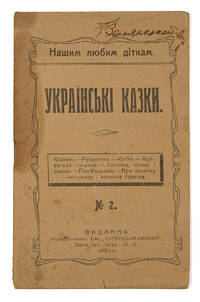
Best.-Nr. 120902Odesa 'Ukrains'ka knyzhka' 1919. . First edition 16mo 17.7 x 11 cm; contemporary ink ownership inscription to p.3; original printed wrappers ink inscriptions to upper and lower wrappers stain to spine and guttersmore so to preliminary leaves a good copy. A scarce collection of seven Ukrainian folk tales published in independent Ukraine. The publisher 'Ukrains'ka Knyzhka' was based in Lviv and was active during 1917-1922. Founded by Antin Krushel'nyts'kyi 1878 - 1937 editor publisher teacher short-term minister of education and as many Ukrainian officials executed by Bolsheviks. They produced books in a number of cities printing literature and textbooks in Ukrainian for primary schools and children. There was a huge demand for learning material in Ukrainian after decades of prohibition and the number of books published in the native language far outweighed those in Russian in 1918. Not found in WorldCat. Odesa, 'Ukrains'ka knyzhka', 1919. unknown
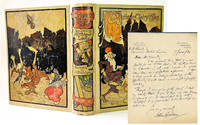
1904Best.-Nr. 010920Boston: Old Corner Book Store 1904 464 pgs. Beige cloth pictorially stamped in color on all panels mild surface rubbing light shelf wear overall a lovely clean copy. Originally published in this format in 1900 but this edition replaces the pictorial endpapers with plain all else is identical. Illustrated with a color frontis & title page the balance in b&w as full- and partial-page plus chapter heads and decorations. All iterations of Rackham's Grimm fairy tales are elusive. This one is made even more special by an autograph letter signed by Rackham addressed to Canadian author Howard Angus Kennedy declining an invite to a party held by the Candian Author's Association. Reprint. Pictorial Cloth. Very Good Plus/No Jacket. Illus. by Arthur Rackham. Thick 8vo. Old Corner Book Store hardcover
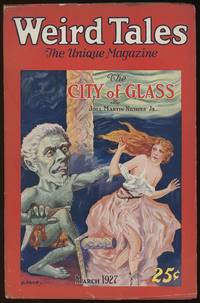
1927Best.-Nr. 32053Indianapolis IN: Popular Fiction Publishing Company 1927. Mild tanning to text paper crease to lower edge slight edge wear and some edge trims a fine copy. 32053. Octavo single issue cover art by C. C. Senf. pictorial wrappers. Pulp Magazine. Includes stories by Seabury Quinn H. P. Lovecraft "The White Ship" Edmond Hamilton Eli Colter and others. Reference: Tymm and Ashley Science Fiction Fantasy and Weird Fiction Magazines pp. 727-736. Popular Fiction Publishing Company unknown
1924Best.-Nr. 19001TYPED LETTER SIGNED dated March 28th 1924 on RURAL PUBLISHING CORP. stationery to author and famous member of the Lovecraftian Circle Frank Belknap Long about 375 words stating that Long's story THE DESERT LICH has unfortuantely been delayed as it was decided that one man namely Edust-wrapper in Baird could not possibly have the time to be editor for WEIRD TALES DETECTIVE TALES and their new venture GHOST STORIES and thus he "will assume the editorial helm of WEIRD TALES & GHOST STORIES" that he has "read several thousand manuscripts when he was a reader for Baird and that he knows the thrill that comes of discovering a distinctively written story" that he "wishes to use DESERT LICH Long's accepted tale in the combination summer issue for June July & August which we are making triple size and putting out to clear the deck for the issuance of GHOST STORIES" "that their rates are not yet as high he would like them to be and that by summer he hopes we can pay on a pay on acceptance basis" and that "Our rates at present are one cent a word". He finishes with these plaudits for Lovecraft: "Please thank Mr. Lovecraft for me for turning THE DESET LlICH our way. And I want to thank you also for telling me of other Lovecraft stories that I have not yet seen. I would as soon think of changing a line or a word or a title of Mr. Lovecrat's work as I would rewriting an Edgar Allen Poe story. He is to my way of thinking the supreme master of weird tales whose mastery is not accidental but the result of careful and directed thought. So far I have seen Mr. Lovecraft's works only in print for I have not had the thrill of reading them in manuscript. I have not even read HYPNOS but I am looking forward to reading the page proofs of the May Weird Tales which contains the story. But those that I have read in the magazine-----THE HOUND THE RATS IN THE WALL DAGON----are marvels of writercraft." Letters from Wright the acknowledged foremost editor of Weird Tales are notoriously scarce and I know of none earlier. They rarely surface on the market place. Indeed letters with a full strong signature of Wright are rarer still as he was virtually unable to sign anything due to Parkinsons disease by 1930. So here's your chance to snatch a piece of history from one major player in the Golden Age of Science Fiction and Weird Tales specifically to another. The earliest letter I have seen by Farnsworth Wright. N.p. unknown
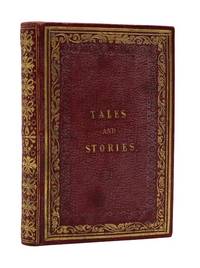
Best.-Nr. AQ32533s.i.: s.n. s.d. 8pp. With numerous woodcut illustrations in the text. Bound with: Drop-head title: The waggon load of gold. Part II. s.i. s.n. s.d. 8pp. With numerous woodcut illustrations in the text. And: Drop-head title: The house that jack built. s.i. s.n. s.d. 8pp. With numerous woodcut illustrations in the text. And: Drop-head tile: Jack jingle. s.i. s.n. s.d. 8pp. With numerous woodcut illustrations in the text. And: Drop-head tile: The child's new year's gift. s.i. s.n. s.d. 8pp. With numerous woodcut illustrations in the text. And: Drop-head tile: Little red riding hood. s.i. s.n. s.d. 8pp. With numerous woodcut illustrations in the text. And: Drop-head tile: Nursery rhymes. s.i. s.n. s.d. 8pp. With numerous woodcut illustrations in the text. And: Drop-head tile: The history of the children in the wood. s.i. s.n. s.d. 8pp. With numerous woodcut illustrations in the text. And: Drop-head tile: History of jumping joan. s.i. s.n. s.d. 8pp. With numerous woodcut illustrations in the text. And: Drop-head tile: Death & burial of cock robin. s.i. s.n. s.d. 7pp 1. With numerous woodcut illustrations in the text. And: Drop-head tile: Tom tucker. s.i. s.n. s.d. 8pp. With numerous woodcut illustrations in the text. And: Drop-head tile: Cinderella s.i. s.n. s.d. 8pp. With numerous woodcut illustrations in the text. And: Drop-head tile: The history of simple simon. s.i. s.n. s.d. 8pp. With numerous woodcut illustrations in the text. And: Drop-head tile: The history of Mother Goose. s.i. s.n. s.d. 8pp. With numerous woodcut illustrations in the text. And: Drop-head tile: London cries. s.i. s.n. s.d. 8pp. With numerous woodcut illustrations in the text. And: Drop-head tile: The history of old Mother Hubbard. s.i. s.n. s.d. 8pp. With numerous woodcut illustrations in the text. 16mo. Contemporary red morocco richly tooled in gilt and blind lettered in gilt 'Tales and stories' to upper board A.E.G. A trifle rubbed and marked. Internally clean and crisp. An attractively bound sammelband of sixteen diminutive chapbooks intended for a juvenile readership. The titles within all illustrated with crude yet charming wood-engravings include staples of the Victorian street literature market; compendious retellings of perennially popular nursery rhymes such as Cinderella Little Red Riding Hood and the Children in the Wood. An exception is a remarkably rare version of a recherché didactic verse curiosity The Waggon Load of Gold. Issued in two seemingly separately published parts; the work is comprised of a total of sixteen unassociated stanzas calculated to amuse the young reader and each - unusually for chapbook fare of the era - accompanied by illustrations which actually relate to the text; for example the opening couplets of the second part a celebration of the library is partnered with a depiction of a bookcase: 'The chief prize of the whole Here you now may behold 'Tis a library of choice books From the Waggon Load of Gold.' OCLC records a single copy of The Waggon Load of Gold. Part II. at Richmond Public Library Virginia Part I. is apparently unrecorded. The copy retains the original publisher's wrappers bearing the imprint 'London: Printed and published at 60 St. Martin's Lane' with the date recorded as '1820'. This would suggest that the other titles contained within this sammelband - all printed on similar paper stock and some reusing woodcut ornaments - where issued contemporaneously from the same location. . [s.n.], [s.d.] unknown