1 687 résultats
Small 4to (218 x 155 mm), [xxiv], 518, [1, blank]pp., from the Beckford library, initials 'F.H.G.' stamped in ink to front endpaper, with a pencil note signed by the same relating to the engravings within, engraved printer's device on title page of a cat with a rat in its mouth, copiously illustrated with half-page woodcut vignettes at chapter headings, woodcut initials, woodcut head and tail-pieces, bound in full nineteenth-century Russia leather, covers tooled in gilt and blind as is the spine, green binder's ticket of C. Kaltthoeber to front endpaper, joints a little rubbed, all edges gilt, a very nice copy. First edition of a collection of tales of virtues and vices exemplified by miscellaneous historical figures. Provenance: Hamilton Palace Libraries, Sotheby, Wilkinson & Hodge, 29th November 1883, lot 717, sold to Rev. F. Gall for ?1 10s; the library of Lord Gretton, Stapleford Park, Leicestershire.
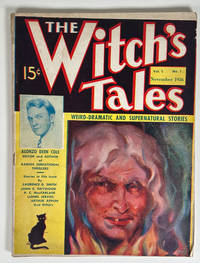
1936réf. 32955New York: The Carwood Publishing Co. 1936. Some darkening to text paper slight edge wear a nearly fine set. 32955. Large octavo two issues illustrated by Elmer Stoner pictorial wrappers side stapled. Pulp magazine. All published. Inspired by a radio program started in May 1931 with the same title. Several original stories were adapted from the radio program. Many of the stories were reprints from much earlier magazine publications. Reference: Parnell and Ashley Monthly Terrors pp. 296. Tymn and Ashley eds Science Fiction Fantasy and Weird Fiction Magazines pp. 742-3. The Carwood Publishing Co. unknown
1581In-8°, (2), 172 i.e.173cc, buone condizioni tranne le prime carte restaurate all’angolo superiore con parziale mancanza di testo, legatura in pergamena. Passano I, 164 “collezione curiosa di novelle, moltissime delle quali assai licenziose. Il Libri, che così lo qualifica (Catal. del 1859, n.464), aggiunge che è libro estremamente raro”. Brunet I, 193. Conforme a Edit 16 id.CNCE 7834 Il volume contiene anche L’isola di Narsida (1572) vero e proprio romanzo utopistico, antesignano dei primi romanzi di fantascienza. In-8 °, (2), 172 i.e.173cc, good condition although the first leaves have been restored at the upper corner (the text is partially missing), vellum binding. Passano I,164 “curious collection of short stories, many of which are very licentious. Libri, which qualifies it this way (Catal. of 1859, n.464), adds that it is an extremely rare book ". Brunet I, 193. In accordance with Edit 16 id. CNCE 7834 The volume also contains The Island of Narsida (1572) a true utopian novel, a forerunner of the first science fiction novels.
réf. 71149Paris: Adrien Maeght Editeur printed on the presses of Ateliers Arte Paris 1982. Multi-lingual editions the key to La Fable du Hasard is only in French. Very Good. Six accordion-folding artist's books composed of cloth boards with color paper cover label and folding color lithographic interior each in the publisher's lucite slipcase with blemishes to the spines of five of the volumes at the center. Top and bottom panels sit slightly off-center. All housed in the illustrated paper covered slipcase 16.5 cm x 18 cm with moderate wear and a bit of abrasion to the bottom edge. The books have been well preserved in their slipcases lending them a fresh and bright appearance. Each book has a legend in multiple languages which occasionally vary. The languages include but are not strictly limited to the following: French English German and Spanish. La Fable du Hasard is in illustrated paper over boards. Le Petit Poucet Tom Thumb 1979; Blanche Neige Snow White 1974; Le Petit Chaperon Rouge Little Red Riding Hood 1965; La Fable du Hasard The Fable of Hazard 1968; La Belle au Bois dormant Sleeping Beauty 1982; Cendrillon Cinderella 1976. Swiss-born Warja Lavater moved to New York City in 1958 where she began designing scientific illustrations for Dell Publishing Visual series. It was at this time that Honegger-Lavater came under the influence of American street advertising and began using pictograms as graphic representations of linguistic elements in her works. Her books often contain a legend listing the meanings of the various symbols. They then proceed chronologically with the book unfolding and the story being told entirely by using the symbols and no words. Bright and colorful visual symbolic reinterpretations of these classic fairy tales by the noted Swiss artist. Adrien Maeght Editeur [printed on the presses of Ateliers Arte Paris] unknown
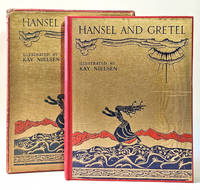
1925réf. 010664New York: George H Doran 1925 310 pgs. Red cloth with pictorial pastedown in metallic gold black & red a few spots to edge of text block else a fine copy housed in the original pictorial box which is worn and soiled with a couple of breaks but complete. A gorgeous copy of Kay Nielsen's magnificent illustrated edition of Grimm's fairy tales featuring 12 tipped-in color plates and 10 full page b&w plates and decorative initials. This was the last of Nielsen's lavish gift books and no British trade edition was issued. . First Trade Edition. Pictorial Cover. Near Fine/No Jacket. Illus. by Kay Nielsen. Large Thick 4to. George H Doran hardcover
1762Two Volumes. pp. xiv, [2], 268, [2], 8; [2], viii, [2], 306, [4], [9]-16 + Plus a remarkable group of elegant engravings, including: Two frontispieces by Fiquet, after Rigault and Vispre; over fifty vignettes and culs-de-lamp by Choffard; and 80 full-page plates after Eisen by - Aliamet, Baquoy, Choffard, Delafosse, de Longueil, Flipart, Le Mire, Lempereur. Leveau, Ourvrier, et. al. One plate is apparently from a different copy. Some slight age foxing. ALSO: Two plates that are often censored - Cas de Conscience & Diable de Papefiguiere - do not seem to appear at all in my examples. 12mo (in 8s). 185 mm. Attractive contemporary French red morocco gilt bindings, with only very slight defects. First Edition. Provenance: The set belonged to Edwin Wolf II (1911 1991) - famous as the Librarian of the Library Company of Philadelphia, and as a collector, and an employee of the renowned Rosenbach Co. from 1930 to 1952. The Family Album purchased a large part of his collection of early books in 1992. About this work : The world famous tales and fables of Jean de La Fontaine (1621-1695), neatly printed in verse, are joined by a 'Dissertation sur la Joconde' by Nicolas Boileau Despreaux (1636-1711); and the best work of the great illustrators & engravers Charles Eisen (1720-1778) and Pierre-Philippe Choffard (1730-1809). Justly considered one of the greatest examples of French rococo illustration. The Fermiers Generaux, an entrepreneurial financial association responsible for gathering and banking certain kinds of taxes, commissioned this edition of La Fontaine's zesty tales. Determined that the book should be the best of its kind, they allowed their agent, the Chevalier d'Agincourt, unlimited resources. It is still provocative to consider that patronage of the arts by this new plutocracy produced the greatest monument and triumph of this renowned age of illustration. See: Cohen-de Ricci 558-571; Ray. 'Art of the French Illustrated Book' p. 54-56; Holloway. 'French Rococo Book Illustration' pp. 21-24; & Etc. THE IMMORTAL FERMIERS GENERAL EDITION OF THE TALES OF LA FONTAINE. **PRICE JUST REDUCED! SAFE ADD 1
BASILE Giovan Battista. Il Pentamerone overo Lo Cunto de li Cunte trattenimento de li Peccerille. In Napoli, ad istanza di Antonio Bulifon libraro all'Insegna della Sirena, 1674. In 16mo; pp.12n.nn., 633, 3n.nn. Pergamena coeva, titolo calligrafato al dorso. Ex libris. Rara e celebre raccolta di fiabe in dialetto napoletano, la più antica opera di racconti fiabeschi e tradizioni popolari della storia europea. In questa edizione compare per la prima volta il titolo "Pentamerone". Lo Cunto de li Cunte ebbe grande influenza in tutta Europa su scrittori come C. Brentano, i fratelli Grimm, Perrault, Carlo Gozzi, Wieland. Dall'introduzione di Benedetto Croce all'edizione del 1891: "Il Cunto de li Cunti è un libro di fiabe. E le fiabe, non occorre quasi il dirlo, sono racconti popolari tradizionali di avventure, alle quali pigliano parte esseri umani, ed esseri sovraumani od estraumani della mitologia popolare, come fate, orchi, animali parlanti, ecc. Questo complesso di racconti tradizionali, la cui origine è incerta e discussa e risale senza dubbio a una remota antichità, viene ora considerato dalla moderna filologia come un gruppo di documenti importanti per la storia del genere umano e per la psicologia popolare. Ma, per molti secoli, essi non furono se non un oggetto di diletto e di trattenimento pel popolo ingenuo e pei fanciulli, che avidamente li ascoltavano: lo scienziato disdegnava d'appressarvisi, e solo, di rado, vi si appressò l'artista. E uno dei primi artisti, anzi il primo, che vi si appressasse, fu appunto il nostro Giambattista Basile... Nel 1674 l'editore Antonio Bulifon, un francese stabilito a Napoli, «vedendo, com’egli stesso dice, che veniva sommamente desiderato questo, altrettanto arguto quanto giocoso, Pentamerone del vivace e bizzarro ingegno del Cavalier Giovan Battista Basile», fece sì che, «ridotto alla vera lettione, per mezzo delle stampe ei rinascesse». Chi lo ridusse alla «vera lettione» fu un abate pugliese, Pompeo Sarnelli, poi vescovo di Bisceglie, appassionato cultore del dialetto napoletano, che allora serviva, a quanto sembra, da correttore nella stamperia del Bulifon. Il Cunto de li Cunti fu, in quest'edizione, intitolato, per la prima volta, sul frontespizio: Il Pentamerone: titolo più breve, che ricorda illustri precedenti, e che perciò prevalse. Ed, anche sul frontespizio, è detto «co tutte le zeremonie corrietto»; e, certo, il Sarnelli vi spese intorno molte cure". Le cinquanta fiabe delle cinque giornate sono tutte collegate tra loro, e racchiuse in una cornice generale, che ravvicina questo libro di fiabe ai più classici libri italiani di novelle, ai Decameron, alle Cene, ai Diporti, alle Piacevoli Notti, ecc. Pironti, Editori francesi in Napoli, pag.87.
1554réf. 3630Nuremberg: Gedrückt zu Nürnberg durch Friderich Gutknecht 1554. FIRST COLLECTED EDITION. The first work was first printed in 1535 as "Eyn new gedichte von den Schmeichlern" VD16 S 478. The third fable appeared as a broadside ca. 1540 Weller 82 not in VD16. I have been unable to trace an earlier ed. of the second fable. Hardcover. Fine. Bound in modern vellum over boards soiled slightly bowed. The text is in very good condition with a little light dust-soiling a few small spots on the final two leaves and soiling to the verso of the final leaf. With two woodcut illustrations and a fine woodcut ornament on the final leaf. No copies traced in North America. Hans Sachs' reworkings of three traditional fables two by Aesop "The shepherd flatters the wolf" and "The hares and the frogs" and one "the envious man and the miser" by the Latin fabulist Avianus. The first woodcut shows the devious wolf hiding in his cave. The second shows the miser and envious man having their eyes gouged out. The poet and playwright Hans Sachs a shoemaker and guild master by trade was an accomplished Meistersinger of the Nuremberg School Sachs is the title character of Wagner's "Meistersinger". Sachs' songs plays and dialogues address the social concerns of his day and the effects of the Reformation on the established social order. The Fables: 1. Ein yder sehe für sich und verberg sich hinder keinen Schmeichler. Ein jeder sehe für sich und verbarg sich hinter keinen Schmeichler. The shepherd tries to deceive the wolf: A wolf stalked by a hunter comes upon a shepherd and begs him to hide him from the hunter promising a rich reward. The shepherd agrees to help and the wolf hides in a cave. The hunter coming upon the spot but not seeing the wolf asks the shepherd if he has seen his quarry. The shepherd knowing that the wolf is watching them indicates with his hands that the wolf has gone off in a certain direction. Yet while he does so he tries by means of his eyes to let the hunter know that the wolf is in fact hiding in the cave. The hunter fails to see this and heads off. The shepherd then addresses the wolf telling him that he should be grateful that he has saved his life. The wolf thanks him but -being fully aware of the shepherd's deceit damns the shepherd's eyes. 2. Ein schöne Histori von dem Neidigen und dem Geitzigen Schöne Historie von dem Neidigen und dem Geizigen The Envious man and the Miser: "In this fable Jupiter sent Phoebus to earth where he stumbled upon an envious and a miserly person. He offered the miser a wish adding that whatever he wished for should be given double to his companion. The miser determined to wish for nothing knowing he would get only half what the other received and left it to his companion to make the wish. Thereupon the envious man took revenge by wishing that one of his own eyes be gouged out so that his companion would be made blind. Sachs concludes that envy makes envious persons suffer. They delight in the misery of others even if they are about to suffer the same fate themselves and their hearts are full of poison."Roper The Witch in the Western Imagination 3. "Ein yder trag sein joch dise Zeit" Ein jeder trage sein Joch diese Zeit und überwind sein Übel mit Geduld The hares and the frogs: Enduring and overcoming evil with patience: Once upon a time some hares driven desperate by the many enemies foxes wolves falcons hunters that threatened them from every direction came to the sad resolution that there was nothing left for them to do but kill themselves. They scurried to a nearby lake determined to drown themselves the most miserable of creatures. A group of frogs seated upon the bank frightened at the approach of the hares leaped in great alarm and confusion into the water. 'Nay then my friends' said the leader of the hares 'our case is not so desperate yet for here are other poor creatures more faint-hearted than ourselves.'. Gedrückt zu Nürnberg durch Friderich Gutknecht hardcover
1927réf. 31906Camden NJ: Personal Arts Company Publishers 1927-1928. Issues slightly trimmed for binding otherwise quite fine with little tanning to text paper mostly cream colored. At the base of the spine is stamped "Dunninger Collection." A lovely presentation. 31906. Octavo five issues pictorial wrappers bound in blue boards with gold stamping to spine. A bound volume of all five issues that were noted magician Joseph Dunningers copy with his signed name and also inscribed and signed by editor/author Walter Gibson to Joe Dunninger. Gibson wrote several books about magic for Dunninger they were lifelong friends. This is likely a presentation volume to Dunninger. Tales of Magic and Mystery was a short lived magazine which published stories and articles about magic and the occult as well as some short fiction. The March 1928 issue published the H. P. Lovecraft short story "Cool Air." Other authors of fiction include Frank Owen Miriam Allen de Ford Archie Binns Robert Leslie Bellem and others. Gibson wrote most non-fiction material under his own name and also using the pseudonyms Alfred Maurice and Bernard Perry. Personal Arts Company, Publishers unknown
1897réf. 24This book is over 122 years old. "The Raven" in particular—Poe investigates the loss of ideal beauty and the difficulty in regaining it. These pieces are usually narrated by a young man who laments the untimely death of his beloved. "To Helen" is a three stanza lyric that has been called one of the most beautiful love poems in the English language. The subject of the work is a woman who becomes in the eyes of the narrator a personification of the classical beauty of ancient Greece and Rome. "Lenore" presents ways in which the dead are best remembered either by mourning or celebrating life beyond earthly boundaries. In "The Raven" Poe successfully unites his philosophical and aesthetic ideals. In this psychological piece a young scholar is emotionally tormented by a raven's ominous repetition of "Nevermore" in answer to his question about the probability of an afterlife with his deceased lover. Charles Baudelaire noted in his introduction to the French edition of "The Raven": "It is indeed the poem of the sleeplessness of despair; it lacks nothing: neither the fever of ideas nor the violence of colors nor sickly reasoning nor drivelling terror nor even the bizarre gaiety of suffering which makes it more terrible." Poe also wrote poems that were intended to be read aloud. Experimenting with combinations of sound and rhythm he employed such technical devices as repetition parallelism internal rhyme alliteration and assonance to produce works that are unique in American poetry for their haunting musical quality. In "The Bells" for example the repetition of the word "bells" in various structures accentuates the unique tonality of the different types of bells described in the poem.Poe's stature as a major figure in world literature is primarily based on his ingenious and profound short stories poems and critical theories which established a highly influential rationale for the short form in both poetry and fiction. Regarded in literary histories and handbooks as the architect of the modern short story Poe was also the principal forerunner of the "art for art's sake" movement in nineteenth-century European literature. Whereas earlier critics predominantly concerned themselves with moral or ideological generalities Poe focused his criticism on the specifics of style and construction that contributed to a work's effectiveness or failure. In his own work he demonstrated a brilliant command of language and technique as well as an inspired and original imagination. Poe's poetry and short stories greatly influenced the French Symbolists of the late nineteenth century who in turn altered the direction of modern literature. It is this philosophical and artistic transaction that accounts for much of Poe's importance in literary history. This book contains the first collection of Poems Poems and Tales. See Pictures Houghton Mifflin Company hardcover
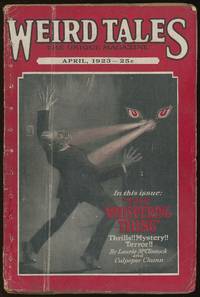
1923réf. 32049Indianapolis IN: Rural Publishing Corporation 1923. Text paper mildy tanned vertical crease to front cover series of small holes along left edge-likely from being bound at some point a little paper loss to spine ends some rubs to spine edge a good to very good copy. 32049. Octavo single issue pictorial wrappers. Pulp Magazine. The second issue of this important 20th century magazine. Includes stories by Howard Ward Anthony M. Rud Otis Adelbert Kline Francis Grierson Ted Olson and many others. Reference: Tymm and Ashley Science Fiction Fantasy and Weird Fiction Magazines pp. 727-736. Rural Publishing Corporation unknown
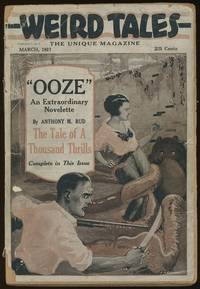
1923réf. 32048Chicago: Rural Publishing Corporation 1923. Text paper tanned but supple light edge wear creasing closed tear to right front edge paper loss at spine ends not affecting title lettering or date cover appears to have been separated and re-glued small loss at upper and lower left corners a good copy. 32048. Octavo single issue pictorial wrappers. Pulp Magazine. The first issue of this important 20th century magazine. Includes stories by Anthony M. Rud Otis Adelbert Kline R.T.M. Scott Joel Townsley Rogers Howard Ward and many others. Reference: Tymm and Ashley Science Fiction Fantasy and Weird Fiction Magazines pp. 727-736. Rural Publishing Corporation unknown