2 955 résultats
1554réf. 3630Nuremberg: Gedrückt zu Nürnberg durch Friderich Gutknecht 1554. FIRST COLLECTED EDITION. The first work was first printed in 1535 as "Eyn new gedichte von den Schmeichlern" VD16 S 478. The third fable appeared as a broadside ca. 1540 Weller 82 not in VD16. I have been unable to trace an earlier ed. of the second fable. Hardcover. Fine. Bound in modern vellum over boards soiled slightly bowed. The text is in very good condition with a little light dust-soiling a few small spots on the final two leaves and soiling to the verso of the final leaf. With two woodcut illustrations and a fine woodcut ornament on the final leaf. No copies traced in North America. Hans Sachs' reworkings of three traditional fables two by Aesop "The shepherd flatters the wolf" and "The hares and the frogs" and one "the envious man and the miser" by the Latin fabulist Avianus. The first woodcut shows the devious wolf hiding in his cave. The second shows the miser and envious man having their eyes gouged out. The poet and playwright Hans Sachs a shoemaker and guild master by trade was an accomplished Meistersinger of the Nuremberg School Sachs is the title character of Wagner's "Meistersinger". Sachs' songs plays and dialogues address the social concerns of his day and the effects of the Reformation on the established social order. The Fables: 1. Ein yder sehe für sich und verberg sich hinder keinen Schmeichler. Ein jeder sehe für sich und verbarg sich hinter keinen Schmeichler. The shepherd tries to deceive the wolf: A wolf stalked by a hunter comes upon a shepherd and begs him to hide him from the hunter promising a rich reward. The shepherd agrees to help and the wolf hides in a cave. The hunter coming upon the spot but not seeing the wolf asks the shepherd if he has seen his quarry. The shepherd knowing that the wolf is watching them indicates with his hands that the wolf has gone off in a certain direction. Yet while he does so he tries by means of his eyes to let the hunter know that the wolf is in fact hiding in the cave. The hunter fails to see this and heads off. The shepherd then addresses the wolf telling him that he should be grateful that he has saved his life. The wolf thanks him but -being fully aware of the shepherd's deceit damns the shepherd's eyes. 2. Ein schöne Histori von dem Neidigen und dem Geitzigen Schöne Historie von dem Neidigen und dem Geizigen The Envious man and the Miser: "In this fable Jupiter sent Phoebus to earth where he stumbled upon an envious and a miserly person. He offered the miser a wish adding that whatever he wished for should be given double to his companion. The miser determined to wish for nothing knowing he would get only half what the other received and left it to his companion to make the wish. Thereupon the envious man took revenge by wishing that one of his own eyes be gouged out so that his companion would be made blind. Sachs concludes that envy makes envious persons suffer. They delight in the misery of others even if they are about to suffer the same fate themselves and their hearts are full of poison."Roper The Witch in the Western Imagination 3. "Ein yder trag sein joch dise Zeit" Ein jeder trage sein Joch diese Zeit und überwind sein Übel mit Geduld The hares and the frogs: Enduring and overcoming evil with patience: Once upon a time some hares driven desperate by the many enemies foxes wolves falcons hunters that threatened them from every direction came to the sad resolution that there was nothing left for them to do but kill themselves. They scurried to a nearby lake determined to drown themselves the most miserable of creatures. A group of frogs seated upon the bank frightened at the approach of the hares leaped in great alarm and confusion into the water. 'Nay then my friends' said the leader of the hares 'our case is not so desperate yet for here are other poor creatures more faint-hearted than ourselves.'. Gedrückt zu Nürnberg durch Friderich Gutknecht hardcover books
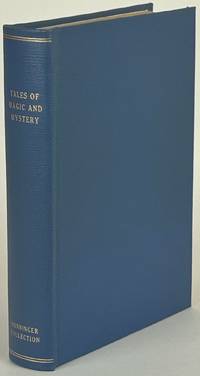
1927réf. 31906Camden NJ: Personal Arts Company Publishers 1927-1928. Issues slightly trimmed for binding otherwise quite fine with little tanning to text paper mostly cream colored. At the base of the spine is stamped "Dunninger Collection." A lovely presentation. 31906. Octavo five issues pictorial wrappers bound in blue boards with gold stamping to spine. A bound volume of all five issues that were noted magician Joseph Dunningers copy with his signed name and also inscribed and signed by editor/author Walter Gibson to Joe Dunninger. Gibson wrote several books about magic for Dunninger they were lifelong friends. This is likely a presentation volume to Dunninger. Tales of Magic and Mystery was a short lived magazine which published stories and articles about magic and the occult as well as some short fiction. The March 1928 issue published the H. P. Lovecraft short story "Cool Air." Other authors of fiction include Frank Owen Miriam Allen de Ford Archie Binns Robert Leslie Bellem and others. Gibson wrote most non-fiction material under his own name and also using the pseudonyms Alfred Maurice and Bernard Perry. Personal Arts Company, Publishers unknown
1897réf. 24This book is over 122 years old. "The Raven" in particular—Poe investigates the loss of ideal beauty and the difficulty in regaining it. These pieces are usually narrated by a young man who laments the untimely death of his beloved. "To Helen" is a three stanza lyric that has been called one of the most beautiful love poems in the English language. The subject of the work is a woman who becomes in the eyes of the narrator a personification of the classical beauty of ancient Greece and Rome. "Lenore" presents ways in which the dead are best remembered either by mourning or celebrating life beyond earthly boundaries. In "The Raven" Poe successfully unites his philosophical and aesthetic ideals. In this psychological piece a young scholar is emotionally tormented by a raven's ominous repetition of "Nevermore" in answer to his question about the probability of an afterlife with his deceased lover. Charles Baudelaire noted in his introduction to the French edition of "The Raven": "It is indeed the poem of the sleeplessness of despair; it lacks nothing: neither the fever of ideas nor the violence of colors nor sickly reasoning nor drivelling terror nor even the bizarre gaiety of suffering which makes it more terrible." Poe also wrote poems that were intended to be read aloud. Experimenting with combinations of sound and rhythm he employed such technical devices as repetition parallelism internal rhyme alliteration and assonance to produce works that are unique in American poetry for their haunting musical quality. In "The Bells" for example the repetition of the word "bells" in various structures accentuates the unique tonality of the different types of bells described in the poem.Poe's stature as a major figure in world literature is primarily based on his ingenious and profound short stories poems and critical theories which established a highly influential rationale for the short form in both poetry and fiction. Regarded in literary histories and handbooks as the architect of the modern short story Poe was also the principal forerunner of the "art for art's sake" movement in nineteenth-century European literature. Whereas earlier critics predominantly concerned themselves with moral or ideological generalities Poe focused his criticism on the specifics of style and construction that contributed to a work's effectiveness or failure. In his own work he demonstrated a brilliant command of language and technique as well as an inspired and original imagination. Poe's poetry and short stories greatly influenced the French Symbolists of the late nineteenth century who in turn altered the direction of modern literature. It is this philosophical and artistic transaction that accounts for much of Poe's importance in literary history. This book contains the first collection of Poems Poems and Tales. See Pictures Houghton Mifflin Company hardcover
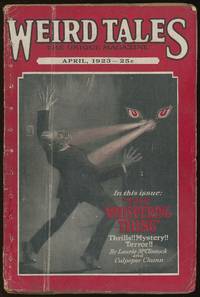
1923réf. 32049Indianapolis IN: Rural Publishing Corporation 1923. Text paper mildy tanned vertical crease to front cover series of small holes along left edge-likely from being bound at some point a little paper loss to spine ends some rubs to spine edge a good to very good copy. 32049. Octavo single issue pictorial wrappers. Pulp Magazine. The second issue of this important 20th century magazine. Includes stories by Howard Ward Anthony M. Rud Otis Adelbert Kline Francis Grierson Ted Olson and many others. Reference: Tymm and Ashley Science Fiction Fantasy and Weird Fiction Magazines pp. 727-736. Rural Publishing Corporation unknown
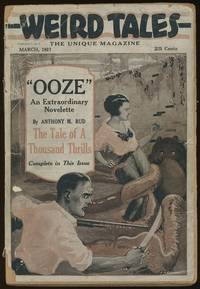
1923réf. 32048Chicago: Rural Publishing Corporation 1923. Text paper tanned but supple light edge wear creasing closed tear to right front edge paper loss at spine ends not affecting title lettering or date cover appears to have been separated and re-glued small loss at upper and lower left corners a good copy. 32048. Octavo single issue pictorial wrappers. Pulp Magazine. The first issue of this important 20th century magazine. Includes stories by Anthony M. Rud Otis Adelbert Kline R.T.M. Scott Joel Townsley Rogers Howard Ward and many others. Reference: Tymm and Ashley Science Fiction Fantasy and Weird Fiction Magazines pp. 727-736. Rural Publishing Corporation unknown