1942réf. 20563Kingswood Surrey: The World's Work 1913 Ltd. 1942. Several light creases upper and lower right corners of front cover touch of wear to spine ends small "Science Fiction Agency" label affixed to front cover a nearly fine copy. 20563. Octavo single issue cover by J. Nicolson pictorial wrappers. Pulp magazine. The final issue with an announcement as such on the front cover. Britain's first adult oriented science fiction magazine at first publishing solely original material from British authors and reprints from U.S. magazines and later adding new material from American authors. "Tales of Wonder was a lively entertaining and enjoyable magazine." Tymm and Ashley Science Fiction Fantasy and Weird Fiction Magazine pp. 652-654. The magazine had to cease publication due to wartime paper restrictions after sixteen issues. Fiction by Benson Herbert Clark Ashton Smith Miles J. Breuer and Marion F. Eadie. The World's Work (1913) Ltd. unknown
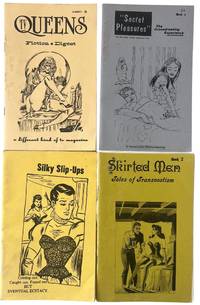
1982réf. 235301982. Five Transvestite Fiction Booklets containing reflections on gender trans identity self expression from 1982-1994 including story titles such as "Sissy in Satin" "Living Doll" "Jim into Jamie" "Trapped in Panties" "My Husband Married Me To be a Woman" "Letters to Cathy" "The Adventures of a Boy Turned Girl" and "Caught.In My Sister's Clothes." A first-person passage states that a transvestite needs "feedback from others" to understand "gait" "voice" and "other mannerisms" while "perfecting a gender role" placing social performance and self-assessment inside the language of everyday presentation. The group emerged during a period when queer and trans communities faced AIDS-era stigma homophobic public discourse and the lingering legal and social memory of anti-crossdressing enforcement in American cities. By 1980 defendants had challenged cross-dressing arrests in at least sixteen cities while the domestic HIV/AIDS epidemic began in 1981 and intensified public hostility toward already stigmatized queer communities. These booklets preserve small-press fiction created for readers seeking transvestite crossdressing and transfeminine narratives outside mainstream publishing with fantasy plots gender transformation motifs and direct language about feminine identity appearing within the same print culture. Crossdressing and Transvestite Fiction Booklets. Seattle and s.l.: Empathy Press and unidentified publishers 1982 to 1994 and undated. Five staple-bound booklets each approximately 50 pages including three Empathy Press titles and two related transvestite or crossdressing fiction titles. 1 Slavik Charles. Skirted Men: Tales of Transvestism. Book 2. Seattle: Empathy Press 1982. The contents page lists "Sissy in Satin" beginning on page 4 with copyright credited to Charles Slavik and the publisher given as Empathy Press P.O. Box 12466 Seattle Washington 98111. Princeton cataloging identifies Charles Slavik as creator of another Empathy Press Skirted Men issue confirming the publisher's place within late twentieth-century LGBTQIA periodical and ephemera collecting. 2 TV Queens Fiction Digest. Number 23. Seattle: Empathy Press 1990. The contents page lists "Living Doll" "Jim into Jamie" and "Trapped in Panties" and the imprint invites readers to send material if they "enjoy writing and would like to see your fantasies in print." That solicitation places the digest within a participatory reader-writer circuit where fantasy manuscripts could move from private desire into small-run printed circulation. 3 Secret Pleasures: The Crossdressing Experience. Book 16. Seattle: Empathy Press 1994. The contents page gives the story title "My Husband Married Me To be a Woman" and the front cover identifies the work as "A Transvestite Fiction Fantasy." Gerber/Hart's transgender periodicals exhibit describes Cathy Charles Slavik's Empathy Press enterprise as evolving by the early 1970s into several concurrent trans-oriented magazines giving this later booklet a connection to a publisher with a longer transvestite and trans readership history. 4 Silky Slip-Ups. S.l.: s.n. undated. The cover caption reads "Coming out. Caught out. Found out. BUT EVENTUAL ECSTACY" using discovery exposure and eventual pleasure as the narrative promise. The cover art and title align the booklet with forced-feminization and crossdressing fiction conventions described in trans small-press fiction where many plots turn on coerced dressing transformation or power exchange. 5 Astounding Transvestite Tales. Number 12. Seattle: Empathy Press undated. The contents page lists "Letters to Cathy" "The Adventures of a Boy Turned Girl" and "Caught.In My Sister's Clothes" with the publisher given as Empathy Press Box 12466 Seattle Washington 98111. The yellow illustrated cover and serialized number place it squarely within Empathy Press's small-format transvestite fiction output adding another example of the publisher's recurring use of readerly address transformation narrative and discovery plot conventions. The booklets use the historical vocabulary of "transvestism" "crossdressing" "feminine identity" and "gender role" before "transgender" became the dominant umbrella term in many public and archival contexts. Their contents connect erotic fantasy to questions of passing social recognition voice gait coming out exposure and reader participation making the group especially useful for tracing how trans and crossdressing readers articulated identity through small-format fiction during the 1980s and 1990s. All five booklets are in very good condition with intact spines minor price-sticker residue light discoloration and handling wear to the covers. The group preserves an early small-press record of transvestite and crossdressing fiction made around the desires anxieties vocabulary and self-fashioning practices of its own readership. unknown books
1992réf. 236998New York: Rizzoli 1992. hardcover. fine/very good. Many Illus. some in color. 4to red cloth d.w. New York: Rizzoli 1992. Very good Rizzoli unknown books
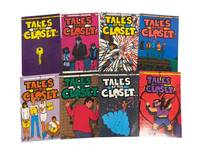
1987réf. 238301987. Ivan Velez Jr.'s Tales of the Closet issues 1 through 8 1987 to 1992 follows eight gay and lesbian teenagers in Queens through isolation family violence homophobia racism health pregnancy religion drug use and the fear of being outed. Published by the Hetrick Martin Institute as an educational comic for gay and lesbian young adults the series placed Puerto Rican Black white and Asian American teenagers within the same continuing narrative at a point when AIDS suicide and family rejection shaped the Institute's work with queer youth. Tony Vega Ramona Sinclair Mary Ryan Kyle Hooks Shorty Mancini Scott Lind Jenny Chin and Benjamin Kanas recur across the series allowing Velez to address sexuality alongside race class religion gender and family life through characters whose relationships develop from issue to issue. The present group contains the first eight consecutive issues of the nine issues eventually published between 1987 and 1993 lacking only the final issue and preserves nearly the entire original Hetrick Martin Institute run before Velez later returned to the work in collected form. Velez Jr. Ivan writer and artist. Tales of the Closet. New York: Hetrick Martin Institute 1987 to 1992. Near complete run of eight consecutive comic issues nos. 1 through 8 of nine published. 8vo. Original pictorial wrappers with black and white illustrated interiors. Velez's cover scenes range from the eight central teenagers carrying placards to figures confronting brick walls shattered surfaces urban streets and other graphic expressions of confinement and conflict. Interior thematic title pages organize individual installments around social problems encountered by the recurring cast and Hetrick Martin Institute publication statements identify the series as a "Graphic Book" project associated with lesbian and gay youth suicide prevention. The first issue dated "Summerfall 1987" bears the interior heading "isolation"; subsequent issues carry the narrative through themes including health pregnancy and religion. Issue no. 5 opens its "pregnancy" section with named character portraits and recounts friendships formed amid secrecy fear and threatened violence while no. 6 describes the protagonists as "a tight knit group of friends" confronting religion drug abuse and suicide. The Hetrick Martin Institute had been working with lesbian and gay youth in New York before Velez began Tales of the Closet and the comic translated that institutional mission into serialized narrative directed toward teenagers themselves. Contemporary coverage from the period describes Tales as written and drawn by Velez and following a multiracial multiethnic group of eight gay and lesbian teenagers while the series' original publication context placed copies directly within the Institute's youth outreach work. Velez's decision to sustain the same ensemble across multiple years gave subjects ordinarily isolated in educational literature a shared social setting: Tony's Puerto Rican family conflict Ramona's experience as a Black lesbian and the lives of Mary Kyle Shorty Scott Jenny and Benjamin allow questions of sexuality to unfold amid racial identity reproductive crisis religion violence addiction friendship and unstable family relationships. The AIDS crisis forms part of the immediate setting in which those subjects were being presented to young readers while suicide prevention appears within the publication program itself rather than as retrospective interpretation. The series remained unfinished after nine issues ending before Velez could publish the planned conclusion; he subsequently began collecting the original comics in 2005 with the intention of completing the narrative. Light toning to pulp paper stock as expected with minor edge wear rubbing and softening to corners; pictorial wrappers remain bright. Overall very good condition. A near complete consecutive run of the Hetrick Martin Institute's graphic outreach to lesbian and gay teenagers preserving eight years of Velez's recurring Queens cast as they confront queer adolescence during the AIDS crisis through a medium produced expressly for young readers. unknown books
réf. DADAX0871525496New unknown
réf. DADAX1436677807New unknown
réf. DADAX0548132984New unknown
réf. DADAX0548792100New unknown
réf. DADAX0548958017New unknown
réf. B9781329104594Hardback. New. hardcover
1987réf. 238301987. Ivan Velez Jr.'s Tales of the Closet issues 1 through 8 1987 to 1992 follows eight gay and lesbian teenagers in Queens through isolation family violence homophobia racism health pregnancy religion drug use and the fear of being outed. Published by the Hetrick Martin Institute as an educational comic for gay and lesbian young adults the series placed Puerto Rican Black white and Asian American teenagers within the same continuing narrative at a point when AIDS suicide and family rejection shaped the Institute's work with queer youth. Tony Vega Ramona Sinclair Mary Ryan Kyle Hooks Shorty Mancini Scott Lind Jenny Chin and Benjamin Kanas recur across the series allowing Velez to address sexuality alongside race class religion gender and family life through characters whose relationships develop from issue to issue. The present group contains the first eight consecutive issues of the nine issues eventually published between 1987 and 1993 lacking only the final issue and preserves nearly the entire original Hetrick Martin Institute run before Velez later returned to the work in collected form. Velez Jr. Ivan writer and artist. Tales of the Closet. New York: Hetrick Martin Institute 1987 to 1992. Near complete run of eight consecutive comic issues nos. 1 through 8 of nine published. 8vo. Original pictorial wrappers with black and white illustrated interiors. Velez's cover scenes range from the eight central teenagers carrying placards to figures confronting brick walls shattered surfaces urban streets and other graphic expressions of confinement and conflict. Interior thematic title pages organize individual installments around social problems encountered by the recurring cast and Hetrick Martin Institute publication statements identify the series as a "Graphic Book" project associated with lesbian and gay youth suicide prevention. The first issue dated "Summerfall 1987" bears the interior heading "isolation"; subsequent issues carry the narrative through themes including health pregnancy and religion. Issue no. 5 opens its "pregnancy" section with named character portraits and recounts friendships formed amid secrecy fear and threatened violence while no. 6 describes the protagonists as "a tight knit group of friends" confronting religion drug abuse and suicide. The Hetrick Martin Institute had been working with lesbian and gay youth in New York before Velez began Tales of the Closet and the comic translated that institutional mission into serialized narrative directed toward teenagers themselves. Contemporary coverage from the period describes Tales as written and drawn by Velez and following a multiracial multiethnic group of eight gay and lesbian teenagers while the series' original publication context placed copies directly within the Institute's youth outreach work. Velez's decision to sustain the same ensemble across multiple years gave subjects ordinarily isolated in educational literature a shared social setting: Tony's Puerto Rican family conflict Ramona's experience as a Black lesbian and the lives of Mary Kyle Shorty Scott Jenny and Benjamin allow questions of sexuality to unfold amid racial identity reproductive crisis religion violence addiction friendship and unstable family relationships. The AIDS crisis forms part of the immediate setting in which those subjects were being presented to young readers while suicide prevention appears within the publication program itself rather than as retrospective interpretation. The series remained unfinished after nine issues ending before Velez could publish the planned conclusion; he subsequently began collecting the original comics in 2005 with the intention of completing the narrative. Light toning to pulp paper stock as expected with minor edge wear rubbing and softening to corners; pictorial wrappers remain bright. Overall very good condition. A near complete consecutive run of the Hetrick Martin Institute's graphic outreach to lesbian and gay teenagers preserving eight years of Velez's recurring Queens cast as they confront queer adolescence during the AIDS crisis through a medium produced expressly for young readers. unknown
réf. 152768136X.Gpaperback. Good. Access codes and supplements are not guaranteed with used items. May be an ex-library book. paperback
réf. 133327341X.Gpaperback. Good. Access codes and supplements are not guaranteed with used items. May be an ex-library book. paperback
réf. 1330233727.Gpaperback. Good. Access codes and supplements are not guaranteed with used items. May be an ex-library book. paperback
réf. B9781020070075Hardback. New. hardcover
1982réf. 235301982. Five Transvestite Fiction Booklets containing reflections on gender trans identity self expression from 1982-1994 including story titles such as "Sissy in Satin" "Living Doll" "Jim into Jamie" "Trapped in Panties" "My Husband Married Me To be a Woman" "Letters to Cathy" "The Adventures of a Boy Turned Girl" and "Caught.In My Sister's Clothes." A first-person passage states that a transvestite needs "feedback from others" to understand "gait" "voice" and "other mannerisms" while "perfecting a gender role" placing social performance and self-assessment inside the language of everyday presentation. The group emerged during a period when queer and trans communities faced AIDS-era stigma homophobic public discourse and the lingering legal and social memory of anti-crossdressing enforcement in American cities. By 1980 defendants had challenged cross-dressing arrests in at least sixteen cities while the domestic HIV/AIDS epidemic began in 1981 and intensified public hostility toward already stigmatized queer communities. These booklets preserve small-press fiction created for readers seeking transvestite crossdressing and transfeminine narratives outside mainstream publishing with fantasy plots gender transformation motifs and direct language about feminine identity appearing within the same print culture. Crossdressing and Transvestite Fiction Booklets. Seattle and s.l.: Empathy Press and unidentified publishers 1982 to 1994 and undated. Five staple-bound booklets each approximately 50 pages including three Empathy Press titles and two related transvestite or crossdressing fiction titles. 1 Slavik Charles. Skirted Men: Tales of Transvestism. Book 2. Seattle: Empathy Press 1982. The contents page lists "Sissy in Satin" beginning on page 4 with copyright credited to Charles Slavik and the publisher given as Empathy Press P.O. Box 12466 Seattle Washington 98111. Princeton cataloging identifies Charles Slavik as creator of another Empathy Press Skirted Men issue confirming the publisher's place within late twentieth-century LGBTQIA periodical and ephemera collecting. 2 TV Queens Fiction Digest. Number 23. Seattle: Empathy Press 1990. The contents page lists "Living Doll" "Jim into Jamie" and "Trapped in Panties" and the imprint invites readers to send material if they "enjoy writing and would like to see your fantasies in print." That solicitation places the digest within a participatory reader-writer circuit where fantasy manuscripts could move from private desire into small-run printed circulation. 3 Secret Pleasures: The Crossdressing Experience. Book 16. Seattle: Empathy Press 1994. The contents page gives the story title "My Husband Married Me To be a Woman" and the front cover identifies the work as "A Transvestite Fiction Fantasy." Gerber/Hart's transgender periodicals exhibit describes Cathy Charles Slavik's Empathy Press enterprise as evolving by the early 1970s into several concurrent trans-oriented magazines giving this later booklet a connection to a publisher with a longer transvestite and trans readership history. 4 Silky Slip-Ups. S.l.: s.n. undated. The cover caption reads "Coming out. Caught out. Found out. BUT EVENTUAL ECSTACY" using discovery exposure and eventual pleasure as the narrative promise. The cover art and title align the booklet with forced-feminization and crossdressing fiction conventions described in trans small-press fiction where many plots turn on coerced dressing transformation or power exchange. 5 Astounding Transvestite Tales. Number 12. Seattle: Empathy Press undated. The contents page lists "Letters to Cathy" "The Adventures of a Boy Turned Girl" and "Caught.In My Sister's Clothes" with the publisher given as Empathy Press Box 12466 Seattle Washington 98111. The yellow illustrated cover and serialized number place it squarely within Empathy Press's small-format transvestite fiction output adding another example of the publisher's recurring use of readerly address transformation narrative and discovery plot conventions. The booklets use the historical vocabulary of "transvestism" "crossdressing" "feminine identity" and "gender role" before "transgender" became the dominant umbrella term in many public and archival contexts. Their contents connect erotic fantasy to questions of passing social recognition voice gait coming out exposure and reader participation making the group especially useful for tracing how trans and crossdressing readers articulated identity through small-format fiction during the 1980s and 1990s. All five booklets are in very good condition with intact spines minor price-sticker residue light discoloration and handling wear to the covers. The group preserves an early small-press record of transvestite and crossdressing fiction made around the desires anxieties vocabulary and self-fashioning practices of its own readership. unknown
réf. DADAX1845114779New unknown
1951réf. SKU2020021498Greenberg 1951. Second Printing. Hardcover. Very Good/Good. Greenberg hardcover
réf. 0904T942100Hardcover. Good. 1896 HC in no DJ. Prev. o's gift inscription on paste-down. First 120 or so of the 364 tight pages are browning. hardcover
réf. DADAX1445505991New unknown
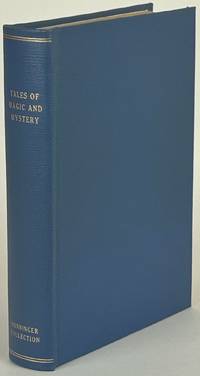
1927réf. 31906Camden NJ: Personal Arts Company Publishers 1927-1928. Issues slightly trimmed for binding otherwise quite fine with little tanning to text paper mostly cream colored. At the base of the spine is stamped "Dunninger Collection." A lovely presentation. 31906. Octavo five issues pictorial wrappers bound in blue boards with gold stamping to spine. A bound volume of all five issues that were noted magician Joseph Dunningers copy with his signed name and also inscribed and signed by editor/author Walter Gibson to Joe Dunninger. Gibson wrote several books about magic for Dunninger they were lifelong friends. This is likely a presentation volume to Dunninger. Tales of Magic and Mystery was a short lived magazine which published stories and articles about magic and the occult as well as some short fiction. The March 1928 issue published the H. P. Lovecraft short story "Cool Air." Other authors of fiction include Frank Owen Miriam Allen de Ford Archie Binns Robert Leslie Bellem and others. Gibson wrote most non-fiction material under his own name and also using the pseudonyms Alfred Maurice and Bernard Perry. Personal Arts Company, Publishers unknown
réf. 133189686X.Gpaperback. Good. Access codes and supplements are not guaranteed with used items. May be an ex-library book. paperback
réf. DADAX0548783187New unknown
réf. DADAX1432585339New unknown
réf. DADAX1436607256New unknown