1 407 résultats
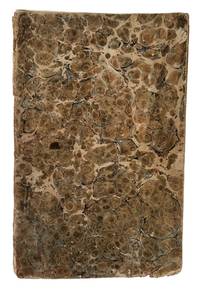
1841réf. 197091841. Pennsylvania Mathematic Education 19th-Century Handwritten Arithmetic Notebook from Bucks County Pennsylvania. Manuscript arithmetic notebook comprising 48 handwritten pages approximately 12 × 7½ inches executed by Isaac Fluck of Bucks County Pennsylvania between December 1841 and 1842. Fluck was born in 1826 making him approximately sixteen years old when he compiled these pages during his high-school education. The volume is systematically organized with clear subject headings at the top of each leaf - such as "English Money" "Cloth Measure" "Addition of Federal Money" and "Compound Division" - followed by worked examples written computations and applied problem sets. A recurring emphasis on conversions measurements and multi-step arithmetic underscores the practical education valued in mid-nineteenth-century America. The notebook is distinguished by its preservation of authentic word problems that illustrate how mathematical instruction was tied to everyday concerns. One problem asks the learner to "Subtract 36 acres 2 rods from 900 acres 3 rods 16 perches" while another records multi-digit subtraction including "Subtract fifteen thousand five hundred and nine from twenty thousand six hundred and fifty four." Other entries show Fluck reducing long measures - from leagues to miles and furlongs to poles - and calculating "simple subtraction" with large numbers evidencing both the student's increasing confidence and the curriculum's emphasis on real-world numeracy. The alternating use of black and blue ink throughout the notebook as well as the range of topics addressed indicates ongoing study over months rather than a single session. The breadth of lessons - from federal money and cloth measure to compound multiplication and time calculations - reflects the type of math education offered in preparatory schools of the period. As a student-produced manuscript this notebook offers rare primary evidence of arithmetic pedagogy prior to the widespread adoption of printed textbooks and demonstrates how young Americans were trained in the mathematical skills necessary for commerce trade and measurement in a rapidly developing nation. For institutional collections it provides direct insight into the intellectual life of a teenage student in pre-Civil War Pennsylvania and the material culture of learning in the antebellum United States. Condition: The notebook's covers are detached and some dampstaining and foxing throughout otherwise very good condition. unknown
1841réf. 197091841. Pennsylvania Mathematic Education 19th-Century Handwritten Arithmetic Notebook from Bucks County Pennsylvania. Manuscript arithmetic notebook comprising 48 handwritten pages approximately 12 × 7½ inches executed by Isaac Fluck of Bucks County Pennsylvania between December 1841 and 1842. Fluck was born in 1826 making him approximately sixteen years old when he compiled these pages during his high-school education. The volume is systematically organized with clear subject headings at the top of each leaf - such as "English Money" "Cloth Measure" "Addition of Federal Money" and "Compound Division" - followed by worked examples written computations and applied problem sets. A recurring emphasis on conversions measurements and multi-step arithmetic underscores the practical education valued in mid-nineteenth-century America. The notebook is distinguished by its preservation of authentic word problems that illustrate how mathematical instruction was tied to everyday concerns. One problem asks the learner to "Subtract 36 acres 2 rods from 900 acres 3 rods 16 perches" while another records multi-digit subtraction including "Subtract fifteen thousand five hundred and nine from twenty thousand six hundred and fifty four." Other entries show Fluck reducing long measures - from leagues to miles and furlongs to poles - and calculating "simple subtraction" with large numbers evidencing both the student's increasing confidence and the curriculum's emphasis on real-world numeracy. The alternating use of black and blue ink throughout the notebook as well as the range of topics addressed indicates ongoing study over months rather than a single session. The breadth of lessons - from federal money and cloth measure to compound multiplication and time calculations - reflects the type of math education offered in preparatory schools of the period. As a student-produced manuscript this notebook offers rare primary evidence of arithmetic pedagogy prior to the widespread adoption of printed textbooks and demonstrates how young Americans were trained in the mathematical skills necessary for commerce trade and measurement in a rapidly developing nation. For institutional collections it provides direct insight into the intellectual life of a teenage student in pre-Civil War Pennsylvania and the material culture of learning in the antebellum United States. Condition: The notebook's covers are detached and some dampstaining and foxing throughout otherwise very good condition. unknown books
réf. 7218P., Bernard, 1802, 2 volumes in 4 reliés en demi-parchemin (reliure de l'époque), (mouillures marginales à quelques feuillets, quelques rousseurs, mors au tome 1 fendus mais solides), T.1 : 24pp., 252pp., 11 planches, T.2 : (2), 258pp., (1), 3 planches
LEGATURA COEVA IN TUTTA PERGAMENA CON TITOLI AL DORSO, INTERNO CON VARI SCHEMI E FORMULE numero pagine: 824 formato: 23X17.1 stato conservazione: MEDIOCRE, USURE ALLA PERGAMENA DI COPERTINA, INTERNO CON FOGLIO RISVOLTO CON PICCOLE MANCANZE, BOLLI DI PROPRIETA' PRIVATA, PICCOLE GORE E BRUNITURE. SCRITTE MACCHIE DI INCHIOSTRO AD UN PAIO DI PAGINE edizione: SECONDA
In Roma, nella stamperia di Domenico Basa, [1586], in-8, privo di copertine, pp. 286, [16]. Colophon con insegna dei Gesuiti in fine. Modesto esemplare, scompleto: mancano la carta A1 (frontespizio) e l'ultima carta (probabilmente bianca); le carte A2 e A3 danneggiate con perdite di lettere di testo, una traccia di tarlo al margine interno di diverse carte, le carte del fascicolo E legate in sequenza errata. Qualche gora e brunitura. Prima edizione della traduzione italiana dell'Aritmetica del Clavius, pubblicata in latino dallo stesso stampatore nel 1583.
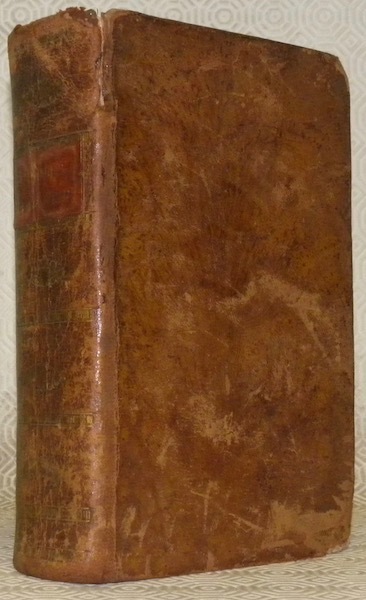
réf. 16088Paris, chez l’auteur 1817, 210x125mm, 843pages, relié veau marbré de l’époque, ornementations dorés au dos, étiquette de titre rouge, dorure passée, coiffe supérieure endomagée.
réf. DADAX080583155XNew unknown
réf. DADAX0415667097New unknown
1972aa. vv. Algorismus. trattato di aritmetica pratica e mercantile del secolo XV 2 volumi. , Banca Commerciale Italiana 1972, Copertine cartonate con banda in pelle con titolo dorato agli stessi. Tagli e pagine integri. Cofanetto cartonato. Ottimo (Fine) .
1727Cm. 22,5, cart. rigido coevo, pag. (12) 132 più 1 tavola ripiegata in fine. Grande stemma vescovile ed iniziali in legno. Scritte e segni in inchiostro dell'epoca all'occhiello e al frontespizio, aloni di umidità non particolarmente fastidiosi. Riccardi, 262.
réf. DADAX0080441289New unknown
1781réf. 7839Limoges, Martial Barbou 1781 In-12 plein veau, dos lisse orné, pièce de titre, 8- 527 pp. Nombreuses figures dans le texte. Travail de ver en marge de 35 ff. Annotations en pages de garde et faux-titre. Accroc à un coin.
1779réf. 108144Lausanne et Berne, Sociétés typographiques 1779 In-4 26,5 x 20 cm. Bradel moderne papier marbré bleu, dos muet, contient : Géométrie, 5 planches sur 2 doubles pages, contenant 105 figures & 1 page repliée contenant 11 figures ; Trigonométrie, 2 planches sur double page contenant 32 figures ; Arpentage, 4 planches sur 2 doubles pages contenant 37 figures ; Algèbre et Arithmétique, et machine arithmétique de Pascal, 2 planches sur double page contenant 18 figures ; Constructeur universel d’équations, 1 planche repliée ; Section conique, 3 planches sur double page contenant 36 figures ; Analyse, 2 planches sur double page contenant 43 figures. Bel exemplaire.
1802In 8°; 4 tomi in due volumi: VI, 205, (3) pp., 214, (2) pp., 328, (4) pp., (4), 332, (4) pp. Belle ed elegante legature coeve in mezza-pelle con titolo, autore, numero dei volumi e ricchissimi fregi in oro al dorso. Tagli spruzzati in azzurro. Qualche lieve strofinatura ai piatti. Esemplare in buone-ottime condizioni di conservazione. Prima edizione italiana di questa celeberrima storia della matematica, opera del celeberrimo gesuita, geometra e matematico gesuita, Charles Bossut (Tartaras, 11 agosto 1730 – Parigi, 14 gennaio 1814). Bossut fu, insieme a Diderot e D'Alambert, uno dei compilatori dell'"L’Encyclopédie ou Dictionnaire raisonné des sciences, des arts et des métiers", trattandone, in particolare, le voci matematiche. Nel 1768 fu eletto all'Accademia delle Scienze, oltre ad essere corrispondente delle Accademie di Berlino e Bologna e membro onorario dell'Accademia di San Pietroburgo a partire dal 1778. Dopo aver studiato al collegio gesuita della Trinità di Lione, si dedicò alla ricerca scientifica ed iniziò a collaborare con Diderot e d'Alembert all'Encyclopedie. Ottenne presto, attraverso le sue opere, la protezione di Alexis Claude Clairaut, Jean le Rond d'Alembert e Charles Etienne Louis Camus. Grazie a quest'ultimo ed alla di lui influenza, fu nominato professore alla Scuola Reale di Ingegneria di Mézières nel 1752. Durante il “Terrore” cadde in disgrazia ma sotto l'Impero, nel 1796, su iniziativa di Gaspard Monge, suo ex allievo a Mézières, divenne esaminatore per l'uscita degli studenti dell'École polytechnique, carica che tenne fino al fino al 1808. Fu anche ispettore generale delle macchine e dei lavori idraulici degli edifici del re e professore reale di idrodinamica. Il suo nome è particolarmente legato agli esperimenti da lui condotti, nei bacini dell'École Militaire, con Nicolas de Condorcet e Jean le Rond d'Alembert, per determinare la resistenza che l'acqua oppone al movimento delle navi (1775-1777). L'opera è una delle più apprezzate storia della matematica fino ad allora scritta e si avvale della traduzione e delle note del matematico, religioso e accademico milanese, Gregorio Fontana, nato Giovanni Battista Lorenzo Fontana (Nogaredo, 7 dicembre 1735 – Milano, 24 agosto 1803), fratello del fisico Felice Fontana (1730–1805) e fu il successore di Ruggero Giuseppe Boscovich nella cattedra di matematica dell'Università degli Studi di Pavia, dove fu anche direttore della Biblioteca Universitaria. Il 16 aprile 1795 divenne membro della Royal Society. Prima edizione italiana, in buone-ottime condizioni di conservazione. Rif. Bibl.: Riccardi 476; ICCU IT\ICCU\UFIE\003749.
1755réf. 29336Paris Briasson 1755 Petit In-4 XII-418 pp pagination continue pour les deux ouvrages complet des 27 planches qui sont toutes dépliantes, pas de pages de gardes le titre est le ff III, dos à peu près correct mais manque de cuir aux mors et aux coins
Siena, per Francesco Rossi e Figlio 1811, in-8, leg. coeva in mezza pelle "radicata" con punte, piatti in carta marmorizzata, pp. 118, [4], l'ultima carta reca al verso un'errata. Con 11 tavv. ripiegate in fine. Esemplare corredato dalla firma autografa dell'autore sotto il privilegio di stampa e da un suo invio manoscritto a Filippo Cuccoli sul recto della prima carta di guardia. Lievi tracce d'uso. Due soli esemplari censiti in ICCU.
1975O.NEUGEBAUER A HISTORY OF ANCIENT MATHEMATICAL ASTRONOMY. , SPRINGER-VERLAG 1975, Copertina: cartonata. Legatura: a filo refe. Taglio: ingiallito Buono (Good) . 354006995X
1782Pagine: XXXVIII+632 . Illustrazioni: Centinaia di tabelle di cambi . Formato: 16° . Rilegatura: Cartonato pergamena coeva . Stato: Buono . Caratteristiche: Trattato aritmetico-economico sui cambi, pesi, misure, calcoli interessi, monete, tariffe. Stato di SARDEGNA (Piemonte, Sardegna, Savoja, Monferrato, Alessandria, Lumellina, Nizza). .
1947réf. 21050(Paris), Librairie Gallimard, (1947). Un vol. au format in-4 (333 x 257 mm) non paginé, en feuilles, sous couverture illustrée à rabats rempliés.
réf. DADAX0199547890New unknown
réf. SONG3540204415Used: Good unknown
1972In-8, 2 volumi, mz. marocch. edit., astuccio, tagli super. dorati, pp. (238); (6),383. Il primo vol. contiene la riproduzione in fac-simile del codice miniato (composto in volgare da Pier Paolo Muscarello da Nola nel 1478); il secondo, con 8 tavv. f.t., contiene la trascrizione interpretativa di Giorgio Chiarini, accompagnata da una nota al testo e da un glossario. Vi figurano anche studi di M. Nasti (L’Algorismus nell’aritmetica del Tre e Quattrocento), M.L. Gengaro (Le miniature del codice) e G. Martini (Nola nel secondo Quattrocento). Tiratura di 750 esempl. su carta Magnani. In ottimo stato.
réf. 62345Neuchâtel, Louis Fauche-Borel, imprimeur du Roi 1794, 250x195mm, 296pages, cartonnage d’époque. Dos et plats et un peu frottés. Etiquette de titre devenue peu lisible au dos. Rousseurs marginales. Dans l’ensemble en bon état.
réf. SONG3540635416Used: Good unknown
réf. DADAX0387207090New unknown