Lukasiewicz, JanBiblio.com

71 resultados
ref. 2711624579.Gpaperback. Good. Access codes and supplements are not guaranteed with used items. May be an ex-library book. paperback
2012ref. x-364228471XSpringer Verlag 2012. Paperback. New. 2012 edition. 417 pages. 8.43x5.87x0.75 inches. Springer Verlag paperback
2012ref. DADAX364228471XSpringer 2012-02-24. 2012. paperback. New. 6.10x0.95x9.25. Buy with confidence. Excellent Customer Service & Return policy. Springer paperback
ref. B9783642284717Paperback / softback. New. These include the application of ideas theories or methods from specific disciplines to information and knowledge systems such as discrete mathematics logic and algebra model theory informaiton theory complexity theory algorithmics and computation statistics and optimization. paperback
ref. 47456645-nnew. unknown
ref. 47456645like new. unknown
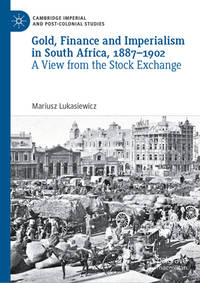
2024ref. x-3031519469Palgrave Macmillan 2024. Hardcover. New. 242 pages. 8.50x6.00x1.00 inches. Palgrave Macmillan hardcover
ref. ria9783031519468_inpHardcover. New. New Book; Fast Shipping from UK; Not signed; Not First Edition; This book provides a unique account of the financial and political history of the South African War by analysing the organisation and operations of the Johannesburg Stock Exchange JSE the oldest existing stock exchange in t hardcover
1987ref. 104963New York: Garland 1987. cloth/no dust jacket Octavo. Hardcover. Very good. teal boards black lettering 222 pp Standard shipping no tracking / Priority with tracking / Custom quote for large or heavy orders. Garland hardcover
1961ref. 713326PN. New. 1961. Soft Cover. Date is original print. This is a reprint edition. . PN paperback
1972ref. R100067534Armand Colin. 1972. In-8. Broché. Bon état, Couv. convenable, Dos satisfaisant, Intérieur frais. 228 pages.. . . . Classification Dewey : 160-Logique
ref. 2711619486.Gpaperback. Good. Access codes and supplements are not guaranteed with used items. May be an ex-library book. paperback
ref. 20193569-nnew. unknown
ref. 20193569like new. unknown
ref. 9400995431.Gpaperback. Good. Access codes and supplements are not guaranteed with used items. May be an ex-library book. paperback
ref. ria9789400995437_inpPaperback. New. New Book; Fast Shipping from UK; Not signed; Not First Edition; Thin walled structures so extensively used nowadays in industry and civil engineering are usually loaded by very complex systems of forces acting on their edges or over their surfaces. In calculating the strength of a structure we repla paperback
ref. 6142326921Springer . Papeback. New. pp. 588 Index Springer unknown
1979ref. 362532Netherlands: Sijthoff und Noordhoff 1979. First edition. hardcover. very good/no dustjacket. 8vo. pp.567.Previous owners details on verso of front cover and FEP Sijthoff und Noordhoff hardcover
2026ref. x-3032287804Springer Nature Switzerland Ag 2026. Hardcover. New. 274 pages. 6.30x0.79x9.49 inches. Springer Nature Switzerland Ag hardcover
2021ref. x-9811504687Palgrave Macmillan 2021. Paperback. New. 408 pages. 8.26x5.82x0.91 inches. Palgrave Macmillan paperback
ref. DADAX1486306373CSIRO Publishing 2017-12-20. paperback. New. 6.75x0.75x9.75. Buy with confidence. Excellent Customer Service & Return policy. CSIRO Publishing paperback
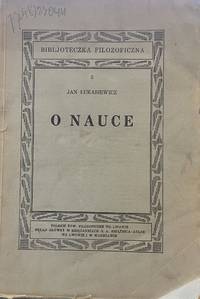
1934ref. 3766Warsaw: Polskie Tow. Filoyoficzne 1934. First edition. In original paper. Very good condition. Cover worn. First edition. In original paper. 40 p. Jan Lukasiewicz 1878–1956 was a Polish logician and philosopher who introduced mathematical logic into Poland and who was a founding member of the Lwów–Warsaw school of logic which was later made internationally famous by Alfred Tarski and one of the principal architects and teachers of that school. Polskie Tow. Filoyoficzne unknown
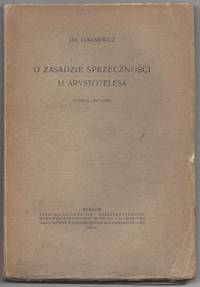
1910ref. 1130Kraków: Akademia Umiejętności 1910. First edition. In publisher’s printed wrappers. Wrappers tanned due to aging somewhat chipped. Inside firm and clean. Overall in very good condition. First edition. In publisher’s printed wrappers. 4 1–210 2 p. One of the earliest works of Jan Lukasiewicz 1878–1956 the Polish logician and philosopher who introduced mathematical logic into Poland and who was a founding member of the Lwów–Warsaw school of logic which was later made internationally famous by Alfred Tarski and one of the principal architects and teachers of that school. Lukasiewicz is known to give the first rigorous formulation of many-valued logic and for introducing various improvements in propositional logic and for becoming the first historian of logic to treat the subject’s history from the standpoint of modern formal logic. In this early work which marks a crucial turning point in the development of the Lwów-Warsaw school Lukasiewicz questions the assumptions of traditional Aristotelian logic. He described later the treatise as an unsuccessful attempt to devise a “non-Aristotelian logic” however the monograph clearly anticipates his later concerns and the 1951 book “Aristotle's Syllogistic from the Standpoint of Modern Formal Logic”. Stanford Encyclopedia of Philosophy . Akademia Umiejętności unknown
1910ref. 44095Krakow: Akademia Umiejetnosci 1910. ukasiewicz Jan 1878-1956. O zasadzie sprzeczno ci u Arystotelesa. Studyum krytyczne. 4 210 2pp. Krakow: Akademia Umiejetno ci 1910. 199 x 140 mm. Half cloth paste paper boards ca. 1913 number stamped on spine label and deaccessioning stamp of the University of Lodz's Biblioteka Instytutu Filosofii. Library stamps / markings on title verso title and one other leaf but very good. First Edition and very scarce on the market with no copies in auction records. ukasiewicz's first book on the principle of contradiction in Aristotle's writings marks his earliest attempt to "open up on logic vistas comparable to those opened in geometry by the introduction of non-Euclidian systems" McCall Polish Logic 1920-1938 p. 2. ukasiewicz a Polish logician and philosopher introduced mathematical logic into Poland and was one of the principal founders architects and teachers of the Warsaw school of logic. "His most famous achievement was to give the first rigorous formulation of many-valued logic. He introduced many improvements in propositional logic and became the first historian of logic to treat the subject's history from the standpoint of modern formal logic . . . "Of all the works ukasiewicz published before World War I one most clearly anticipated his later concerns. This was the 1910 monograph On the Principle of Contradiction in Aristotle. It marked a crucial turning point in the development of the Lwów-Warsaw school. For ukasiewicz it represented the first sustained questioning of the assumptions of traditional Aristotelian logic. " ukasiewicz introduces the project of his monograph a critical investigation of the legitimacy of the Principle of Contradiction PC as variously formulated by Aristotle in the context of its critique by Hegel and the opportunity to re-examine the PC in the light of the development of mathematical logic from Boole to Russell . . . " ukasiewicz distinguishes three different non-equivalent versions of PC in Aristotle: an ontological version a logical version and a psychological version as follows: Ontological OPC: No object may at the same time possess and not possess the same property. Logical LPC: Contradictory statements are not simultaneously true. Psychological PPC: No one can simultaneously believe contradictory things. " ukasiewicz criticises Aristotle for on the one hand claiming PC cannot be proved and on the other hand attempting an indirect or pragmatic 'proof' . . . ukasiewicz described himself later as attempting in the monograph to devise a 'non-Aristotelian logic' but admits that he did not succeed principally because at this stage he was not prepared to reject the principle of bivalence Stanford Encyclopedia of Philosophy. Rare in commerce. . Akademia Umiejetnosci unknown
1910ref. 44095Krakow: Akademia Umiejetnosci 1910. ukasiewicz Jan 1878-1956. O zasadzie sprzeczno ci u Arystotelesa. Studyum krytyczne. 4 210 2pp. Krakow: Akademia Umiejetno ci 1910. 199 x 140 mm. Half cloth paste paper boards ca. 1913 number stamped on spine label and deaccessioning stamp of the University of Lodz's Biblioteka Instytutu Filosofii. Library stamps / markings on title verso title and one other leaf but very good. First Edition and very scarce on the market with no copies in auction records. ukasiewicz's first book on the principle of contradiction in Aristotle's writings marks his earliest attempt to "open up on logic vistas comparable to those opened in geometry by the introduction of non-Euclidian systems" McCall Polish Logic 1920-1938 p. 2. ukasiewicz a Polish logician and philosopher introduced mathematical logic into Poland and was one of the principal founders architects and teachers of the Warsaw school of logic. "His most famous achievement was to give the first rigorous formulation of many-valued logic. He introduced many improvements in propositional logic and became the first historian of logic to treat the subject's history from the standpoint of modern formal logic . . . "Of all the works ukasiewicz published before World War I one most clearly anticipated his later concerns. This was the 1910 monograph On the Principle of Contradiction in Aristotle. It marked a crucial turning point in the development of the Lwów-Warsaw school. For ukasiewicz it represented the first sustained questioning of the assumptions of traditional Aristotelian logic. " ukasiewicz introduces the project of his monograph a critical investigation of the legitimacy of the Principle of Contradiction PC as variously formulated by Aristotle in the context of its critique by Hegel and the opportunity to re-examine the PC in the light of the development of mathematical logic from Boole to Russell . . . " ukasiewicz distinguishes three different non-equivalent versions of PC in Aristotle: an ontological version a logical version and a psychological version as follows: Ontological OPC: No object may at the same time possess and not possess the same property. Logical LPC: Contradictory statements are not simultaneously true. Psychological PPC: No one can simultaneously believe contradictory things. " ukasiewicz criticises Aristotle for on the one hand claiming PC cannot be proved and on the other hand attempting an indirect or pragmatic ‘proof' . . . ukasiewicz described himself later as attempting in the monograph to devise a ‘non-Aristotelian logic' but admits that he did not succeed principally because at this stage he was not prepared to reject the principle of bivalence Stanford Encyclopedia of Philosophy. Rare in commerce. . Akademia Umiejetnosci unknown books