2 163 résultats
1977réf. 016079Sioux Falls SD: American Pop Corn Company 1977. Soft cover. Near Fine. The First Family of American Pop Corn. Stapled booklet of 48 pp. with stiff card covers. Printed on thick ivory paper and full of vintage pop corn product photos & stories and personalities of the Jolly Time Pop Corn company. Includes 4 recipes of Smith family favorites. A clean crisp copy. Covers have some very light soiling mainly on rear. American Pop Corn Company paperback
1999réf. 91332Washington DC: United States General Accounting Office 1999. Presumed First Edition First Printing. Wraps. Very good. 28 pages. Footnotes. This is a "Report to the Chairman Subcommittee on Defense Committee on Appropriations House of Representatives". Satellite control systems are used to ensure that satellites reach their planned orbits and perform their intended missions while in orbit. There are two types of satellite control operations-platform control and payload control. Platform controls involves monitoring the health and status and managing the operations of a satellite's physical structure sometimes called the bus. Payload controls involves monitoring the health and status and managing the operations of a satellite's mission equipment. Specific satellite control functions consist of 1 locating satellites and receiving and processing data from them 2 following satellites' motion over time and 3 transmitting signals to satellites. These three functions are called telemetry tracking and commanding and are performed by a network of ground command and control centers ground antennas and communication capabilities between the centers antennas and satellites. There are two types of satellite control networks-common and dedicated. DOD operates two common networks that provide primary or backup control for communications environmental monitoring navigation and intelligence satellites. Examples include the Defense Satellite Communications System Defense Meteorological Satellite Program and Global Positioning System. DOD also operates several dedicated networks that control missile warning communications and intelligence missions. DOD has made minimal progress in integrating and improving its satellite control capabilities in accordance with 1996 national space policy. In 1992 DOD identified a need for an integrated satellite control system to achieve standardization and interoperability across military services and individual satellite programs. In 1995 the Air Force which controls most of DOD's satellites characterized its satellite control capabilities as aging inefficient and costly to operate. The Air Force initiated an effort to standardize these capabilities and achieve full implementation in 2003-a first step toward an integrated and interoperable DOD capability. Air Force officials chose to proceed with a conceptual design over operational alternatives. However in 1997 the Air Force terminated this effort because of schedule delays resulting from software development problems and the additional amount of software that needed to be written. Air Force Space Command representatives are now recommending that the use of the Air Force's existing satellite control capabilities be extended to 2005 to provide time to acquire an improved capability. Until then the Air Force will be unable to reduce approximately $400 million it spends annually to operate maintain sustain and modernize satellite control capabilities. The Navy's satellite control capabilities are not as old inefficient or costly to operate as the Air Force's capabilities. Although the Navy upgraded its capabilities in the early 1990s another upgrade is planned because the company that provided the existing capabilities no longer provides software support services. DOD has taken limited action to foster integrated and interoperable satellite control for all government space activities since it was directed to do so by the 1996 national space policy. Prior studies recommended that a high-level interagency management group be established to oversee implementation of integrated systems across agency lines. Although DOD established a senior steering group in 1998 to address national security space management and integration issues government space agencies continue to plan for satellite control capabilities on an independent basis rather than coordinate and integrate their efforts on an interagency basis. Considering the long-standing need to replace the Air Force's aging and costly satellite control capabilities and the Navy's more recent plan to upgrade its capabilities DOD has an opportunity to revitalize its effort to achieve integrated satellite control by acquiring a standardized capability. A resumed search for such a capability is appropriate because it would also provide an opportunity to review Air Force satellite control decisions for future space-based infrared and communication satellite programs that are currently in development. Commercial off-the-shelf products that could perform core functions for controlling satellites are available and several studies have advocated the use of such products. In making a selection among alternatives DOD could reduce acquisition risk by employing best commercial practices-a key element of DOD's acquisition reform initiatives. Commercial firms place a premium on demonstrated performance before making critical decisions rather than on predicted performance as was the case with the Air Force's 1995 selection. We are recommending that the Secretary of Defense take actions to revitalize efforts to 1 integrate and improve DOD's satellite control capabilities using commercial products and practices and 2 foster integration and interoperability of satellite control among government space activities. United States General Accounting Office paperback
1994réf. 91327Washington DC: United States General Accounting Office 1994. Presumed First Edition First Printing. Wraps. Very good. 31 1 pages. Footnotes. Figure. Table. This is a "Report to Congressional Requesters". The space shuttle is the only U.S. launch system capable of carrying people to and from space. It has operated for over 10 years and is likely to be used well into the next century. As the shuttle ages the National Aeronautics and Space Administration NASA will be faced with increased need to update and replace various components due to obsolescence or to enhance safety. At Congress; request GAO reviewed the shuttle program lo determine 1 the assumptions NASA has made regarding the length of time the current shuttle fleet will be in operation and 2 NASA'S processes and criteria for selecting needed safety and obsolescence upgrades. NASA has not made explicit assumptions about how long the current shuttle fleet will remain in operation. However based on its budget projections and approach to defining a new launch system the current fleet cannot be replaced for at least another 12 to 15 years. NASA'S projections of its likely budgets through fiscal year 1999 will not support simultaneous development of the space station and a new launch vehicle. NASA has a process for identifying and assessing needed upgrades. However NASA does not use life-cycle cost as a criterion for evaluating potential safety upgrades and it does not always consider alternatives when selecting an approach to implementing an improvement. Without life-cycle cost estimates NASA cannot determine whether an upgrade project is affordable within the context of the program and the agency's overall budget and out-year plans. Therefore it is possible that inappropriate program decisions on upgrades may be made. NASA managers do not have a precise basis for estimating life-cycle costs for decision purposes because of uncertainty about how Iong the current fleet will remain in operation. Since the shuttle fleet must operate for at least another 12 to 15 years it would seem logical that NASA officials could use that time period as a minimum basis for estimating life-cycle costs. NASA'S approach to funding the Safety and Obsolescence Upgrade program may increase programmatic risks. The program manager believes that funding is adequate to develop upgrade projects that have already been approved. However recent budgets have not included funds for early design studies of other potential upgrades or to cover unforeseen contingencies. Not conducting early design studies to establish the feasibility of a potential upgrade could mean that projects are not started when they are needed or projects are initiated before they are adequately defined. Also the lack of contingency funds means that if approved projects encounter unexpected problems the projects may have to be stretched out and costs may increase. This situation raises questions as to whether the decision to start two new projects in fiscal year 1995 adequately reflect budget constraints and inherent technical and cost risks. In commenting on a draft of this report NASA said that it agreed in principle with our recommendations. The agency stated however that some safety upgrades are made without a full life-cycle cost analysis because of the emphasis on safety. Safety is NASAS highest priority and relative cost is a lesser consideration. We agree that NASA must heavily weigh safety considerations in such decisions. We believe however that prudent management requires an estimate of total costs to ensure that NASA managers understand the full implications of their decisions and that the projects are affordable within the context of NASA'S total budget and future plans. United States General Accounting Office paperback
1994réf. 91338Washington DC: United States General Accounting Office 1994. Presumed First Edition First Printing. Wraps. Very good. 27 1 pages. Footnotes. Figures. Tables. This is a "Report to the Ranking Minority Member Subcommittee on Oversight of Government Management Committee on Governmental Affairs U.S. Senate". The National Aeronautics and Space Administration's NASA goal is to launch assemble and operate an earth-orbiting microgravity and life sciences research laboratory-International Space Station Alpha-starting in 1997. Congress requested that we review NASA's efforts to develop a robust life and microgravity sciences research community for the space station. Specifically we reviewed 1 what NASA is doing to assess the required size of the research community needed for the space station and to ensure that such a community will be available 2 how NASA will ensure that the research selected for the space station will be the best possible and 3 whether a recently canceled Shuttle research flight adversely affected NASA's efforts to develop a research community for the space station. In June 1994 we reported to you on the impact of the expanded Russian role on space station funding and research. We stated that Russian participation in the space station would substantially increase overall station research resources. However the degree to which the U.S. research community will benefit from these increased resources has yet to be determined. NASA has taken an initial step to assess the size of the space station's research community but it is not intending to develop this community by directly soliciting proposals to do research on the space station. Instead NASA is focusing on developing a comprehensive research program that emphasizes more ground-based research and uses space flight only for research efforts that require a microgravity environment in space. To accomplish this program NASA wants to greatly increase the number of ground-based investigators. This science-oriented approach is reasonable but funding levels could jeopardize it unless NASA adjusts its funding priorities. To achieve its goal NASA would need increased funding for its life and microgravity sciences research and analysis over fiscal years 1995 to 1999-the formative years for the initial development of space station-related research. However NASA expects such funding to remain constant. The result could be a smaller than desired number of investigators in the ground-based research program from which station-based research will be selected. The existing process of using peer review panels to judge the scientific merit and microgravity-related relevance of experiments for the space station will continue. The peer review scores for 285 life and microgravity sciences research proposals show that NASA's funding decisions were generally consistent with the findings of the peer review panels: most top-rated proposals and none of the lowest rated ones were funded. But peer review panels and NASA sometimes disagreed on the scientific merit and relevance of these proposals. For example 4 of the 15 U.S. experiments selected by NASA for a July 1994 Space Shuttle research flight-the International Microgravity Laboratory-were not among those rated highest in the peer review process. NASA's efforts to increase the size of its life and microgravity sciences research community are not likely to be adversely affected by the February 1994 cancellation of the third Spacelab Life Sciences flight SLS-3. The U.S. principal investigators on that flight stated that although they were concerned about NASA's lack of communication about the flight cancellation most of them have been accommodated on other space flights and they generally will be able to meet their experiment objectives. All of the investigators with whom we spoke also plan to continue submitting proposals for future NASA research opportunities. United States General Accounting Office paperback
réf. 38548391like new. unknown
réf. 38548391-nnew. unknown
1991réf. 100158367United states general accounting office 1991. Bon état intérieurs propres bonne tenue. in4. 1991. Agrafé. 2 volumes. United states general accounting office unknown

réf. biblio3355book Condition: Brand New. International Edition. Softcover. This is a Brand New High-Quality Textbook. Different ISBN and cover image with US edition.Fast shipping and ship within 48hours by UPS/DHL global express service to any US destination within 3-5 business days. We do not ship to Po Box APO and FPO address. Some book may show some sales disclaimer word such as "Not for Sale or Restricted in US" on the cover page. Some international textbooks may come with different exercises or cases or chapters compare to US edition paperback
1994réf. N102Durham N.C.: Insurance Accounting and Systems Association 1994. Softcover. Very Good. red cover gilt lettering minor scuffing pages clean binding very good; 4to - over 9¾ - 12" tall DE4. Insurance Accounting and Systems Association unknown
1991réf. 69291Washington DC: U.S. General Accounting Office 1991. Presumed first edition/first printing. Wraps. Good. Cover has slight wear and soiling. Mailing label residue on back cover. vi 168 p. 28 cm. Illustrations. Note on Sources. Index. "GAO/OP-3-HP"--Cover. This is one of the United States General Accounting Office History Program. From Wikipedia: "The Government Accountability Office GAO is an independent agency which provides to the United States Congress audit evaluation and investigative services. As such it is part of the legislative branch of the United States government. The GAO was established as the General Accounting Office by the Budget and Accounting Act of 1921. The act required the head of the GAO to "investigate at the seat of government or elsewhere all matters relating to the receipt disbursement and application of public funds and shall make to the President.and to Congress.reports and recommendations looking to greater economy or efficiency in public expenditures". According to the GAO's current mission statement the agency exists to support the Congress in meeting its constitutional responsibilities and to help improve the performance and ensure the accountability of the federal government for the benefit of the American people. The name was changed in 2004 by the GAO Human Capital Reform Act to better reflect the mission of the office. While most other countries have government entities similar to the GAO their focus is primarily on conducting financial audits. The GAO's auditors conduct not only financial audits but also engage in a wide assortment of performance audits." U.S. General Accounting Office paperback
réf. 53811431like new. unknown
2019réf. 2-109075602XIndependently published 2019. Paperback. New. 541 pages. 11.00x8.50x1.22 inches. Independently published paperback
2019réf. 2-1090680333Independently published 2019. Paperback. New. 554 pages. 11.00x8.50x1.25 inches. Independently published paperback
réf. 1265051569-10-1McGraw Hill. 13. New. The item is brand new never used or read. It's in perfect condition and may include supplements and/or access codes or come shrink-wrapped. McGraw Hill unknown
2021réf. 56382Mometrix Media LLC 2021. Paperback. Very Good/None. Mometrix Test Preparation's Certified Management Accountant Exam Secrets Study Guide is the ideal prep solution for anyone who wants to pass their Certified Management Accountant Exam. The exam is extremely challenging and thorough test preparation is essential for success. Our study guide includes: Practice test questions with detailed answer explanations Tips and strategies to help you get your best test performance A complete review of all CMA test sections Part 1 - Financial Reporting Planning Performance and Control Part 2 - Financial Decision Making Mometrix Test Preparation is not affiliated with or endorsed by any official testing organization. All organizational and test names are trademarks of their respective owners. The Mometrix guide is filled with the critical information you will need in order to do well on your CMA exam: the concepts procedures principles and vocabulary that the Institute of Management Accountants IMA expects you to have mastered before sitting for your exam. The Part 1 - Financial Reporting Planning Performance and Control section covers: Planning budgeting and forecasting Performance management Cost management Internal controls Professional ethics The Part 2 - Financial Decision Making section covers: Financial statement analysis Corporate finance Decision analysis and risk management Investment decisions Professional ethics .and much more! Our guide is full of specific and detailed information that will be key to passing your exam. Concepts and principles aren't simply named or described in passing but are explained in detail. The Mometrix CMA study guide is laid out in a logical and organized fashion so that one section naturally flows from the one preceding it. Because it's written with an eye for both technical accuracy and accessibility you will not have to worry about getting lost in dense academic language. Any test prep guide is only as good as its practice questions and answer explanations and that's another area where our guide stands out. The Mometrix test prep team has provided plenty of CMA practice test questions to prepare you for what to expect on the actual exam. Each answer is explained in depth in order to make the principles and reasoning behind it crystal clear. We've helped hundreds of thousands of people pass standardized tests and achieve their education and career goals. We've done this by setting high standards for Mometrix Test Preparation guides and our Certified Management Accountant Exam Secrets Study Guide is no exception. It's an excellent investment in your future. Get the CMA review you need to be successful on your exam. This preowned item is in very good condition with very minimal wear and tear visible. Free tracking provided. International shipping available. . Mometrix Media LLC paperback
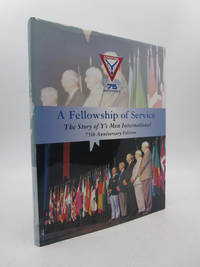
1997réf. 017790Geneva Switzerland: Y's Men International 1997. First Edition. Hardcover. Fine/Fine. Brown decorated cloth nice clean copy No writing in the book - not even an owners name binding tight Full refund if not satisfied. Y's Men International hardcover
2010réf. 038994Chantilly VA: The Teaching Company 2010. DVD. Like New. How can a nation create the conditions for economic growth and prosperity And what once these conditions are achieved can it do to sustain this progress Discover the answers which may surprise you in these 24 lectures that guide you through a stimulating and above all accessible examination of what economists know and don't know about the elusive search for economic prosperity. Here you'll learn how countries as widely different as the United States and Vietnam have grown their economies; how countries like China and India were able to recover from economic reverses; and most important why the critical test of any economic policy is its ability to productively alter human behavior for everyone's ultimate benefit. By looking at economic growth as the result of incentivizing such productive behavior - "making productivity more profitable than all the alternatives" - Professor Rodriguez clears up an often-shrouded economic landscape. The result is a lecture series that brings the economic strategies chosen by nations down to street level by adding a newfound clarity to key issues: Why economies succeed or fail; how economic bubbles are created why they burst and how nations recover from them; the challenges posed by globalization; and more. By the end of the last lecture you'll understand as never before both the benefits granted and the costs extracted by the "instant economy" that technology and globalization have brought us. You'll grasp what China's expected economic dominance may soon mean. And you'll have a new appreciation of the juggling act policymakers perform as they try to heed history's latest lesson in achieving national growth and maximum human happiness.DVD and Course Guidebook. Like new. Full refund if not satisfied. The Teaching Company unknown
1873réf. 071534Washington: Government Printing Office 1873. Hardcover. Very Good. Hardcover. Black cloth with copper lettering on spine. 566 pp. Contains diagrams in black and white some fold out. Light foxing on a few pages. Covers have general wear spine has a tear and some chipping. Some dampstains on covers. Overall a very nice copy. Full refund if not satisfied. Government Printing Office hardcover
réf. Man28Paul Chapman Publications 2000 . hbk 179pp ISBN: 0761966064 excellent as new Paul Chapman Publications, 2000, unknown
2000réf. 91331Washington DC: United States General Accounting Office 2000. Presumed First Edition First Printing. Wraps. Very good. 30 2 pages. Footnotes. Figures. Tabular Data. Appendices. This is a "Report to Congressional Requesters". The Navy Theater Wide system is being developed to defend military and civilian assets including U.S. and allied military forces in the field against attacks by medium- and long-range ballistic missiles while they are still outside the atmosphere. The Navy is developing the system in two segments. The first segment or Block I is intended to provide an initial capability by 2010 involving the deployment of 80 interceptor missiles aboard 4 ships. For fiscal years 1997 through 1999 the Congress increased funding for the program by 150 percent--about $663 million--over the $444 million requested in the President's budgets for those years. The purpose of the increase was to enable the Navy to reduce technical risks and develop system technologies earlier than planned. The Congress expressed concern that despite the funding increases the program was viewed in 1998 by a high ranking Department of Defense official and an independent panel of experts as "high risk" because of technical challenges such as improving the system's capability to track and destroy enemy ballistic missiles. As a result Congress asked GAO to determine 1 how the additional funding provided by the Congress for the program in fiscal years 1997 through 1999 was used and 2 whether significant risks to the program remain. Within the next month we also plan to issue reports on the status of two other missile defense systems under development--the Patriot Advanced Capability-3 and National Missile Defense. GAO noted that: 1 the Navy used the $663 million in increased funding as intended to reduce technical risks and develop system technologies earlier than originally planned; 2 about 41 percent was used for system design and analysis efforts such as reducing the technical risks associated with improving the system's ability to differentiate intended targets from other objects; 3 about 20 percent of the funding was used for procuring hardware items such as rocket motors and test interceptor missiles; 4 according to program officials the additional funding also allowed the program to shift from a demonstration effort to an acquisition program in which a weapon system will be fully developed and produced; 5 although the Navy used this additional funding to reduce technical risk and develop the system sooner significant technical and schedule risks still exist; 6 technological advancement is required to differentiate the target from other objects; 7 such discrimination requires that the system's computer network can process an enormous amount of data in real time; 8 this network has not been built and its software must be integrated with the computer code that is already installed on each ship's computer system; 9 current activities include writing software examining several computer architectures for the network and building the capability to test the network; 10 technological advancement is also required in developing the capability of the interceptor missile to seek and destroy the target; 11 GAO is concerned that the program office has proposed a schedule calling for initial operational testing of the missile in 2010 even though 50 percent of the required 80 missiles would be produced and delivered by 2008 and 100 percent by 2010; 12 operational testing is designed to provide an independent evaluation of whether a system meets required performance levels prior to beginning production; 13 GAO has found that cost overruns and the deployment of substandard systems occur when the Department of Defense proceeds into production before systems are tested under operational conditions; 14 the Navy has scheduled up to 7 flight tests between July 2000 and September 2001; 15 according to testing officials test programs typically separate flight tests by about 6 months; 16 a longer interval between tests gives officials better opportunities to evaluate test results understand problems and incorporate solutions into the next test; and 17 the approved level of funding does not match the Navy program office's estimate of how much it needs to implement the program on schedule. United States General Accounting Office paperback
1996réf. 91266Washington DC: United States General Accounting Office 1996. Presumed First Edition First Printing. Wraps. Very good. 33 3 pages. The National Aeronautics and Space Administration NASA is facing the difficult task of fulfilling its mission with significantly fewer dollars. NASA's present strategy for absorbing its most recent funding reductions through fiscal year 2000 focuses on cutting infrastructure. If NASA fails to find and implement sufficient infrastructure cost-reduction opportunities meeting its budget targets through fiscal year 2000 will require program adjustments-stretching out reducing the scope or terminating efforts and/or postponing new initiatives. GAO reviewed the status of NASA's efforts to achieve reductions and efficiencies in its infrastructure principally facilities and the challenges it faces. In the early 1990s NASA was planning an infrastructure to support a projected annual budget of more than $20 billion and a civil service workforce of about 25000 by the turn of the century. However NASA has been directed by the Administration to reduce its future years' budget levels. In FY 1994 budget request NASA's total funding for fiscal years 1994 through 2000 was reduced by 18 percent or $22 billion. In the FY 1995 budget request total funding was reduced again by an additional 13 percent. To absorb these reductions NASA focused on adjusting programs. The Space Station program was restructured and given an annual budget ceiling of $2.1 billion. The scope of the Earth Observing System program was reduced. Funding was terminated for the Space Exploration Initiative the National Launch System and the National Aerospace Plane. The Comet Rendezvous and Asteroid Flyby project was canceled. NASA's current facility closure and consolidation plans will not fully achieve the agency's goal of decreasing the current replacement value of its facilities by about 25 percent about $4 billion in 1994 dollars by the end of fiscal year 2000. More importantly these plans will not result in substantial cost reductions by that date. Also although NASA is about half way to its goal of lowering the number of its full-time equivalent employees to 17500 by fiscal year 2000 it faces major uncertainties in achieving additional workforce reductions. NASA has also had problems in evaluating some cost-reduction opportunities; environmental cleanup costs could affect future facility disposition efforts; and its efforts to share facilities with DOD have progressed slowly. NASA faces barriers to accomplishing additional consolidations and closures that to date it has not been able to overcome on its own. Closing facilities relocating activities and consolidating operations in fewer locations with fewer employees have been slowed by parochial concerns about the effects of such actions on missions personnel and local communities. These concerns have been exacerbated by perceptions of the lack of fairness and impartiality in the decision-making process. In the face of these concerns NASA must still reduce its infrastructure further. Ultimately if further progress in identifying and implementing infrastructure reductions is limited a process that uses an external independent group similar to the Defense Base Closure and Realignment Commission may be needed. To help determine the need for an independent group to facilitate closures and consolidations of NASA facilities Congress may wish to consider requiring NASA to submit a plan outlining how it intends to met its reduction goals. United States General Accounting Office paperback
2000réf. 91333Washington DC: United States General Accounting Office 2000. Presumed First Edition First Printing. Wraps. Very good. 20 4 pages. Footnote. Figure. Table. This is a "Report to the Chairman Committee on Commerce Science and Transportation U.S. Senate". The National Aeronautics and Space Administration's NASA space shuttle program is at a critical juncture as three key factors converge: its workforce has declined significantly since 1995 its flight rate will have to double over that of recent years to support assembly of the International Space Station and costly safety upgrades are being planned to enhance the space shuttle's safe operation until at least 2012. Several internal NASA studies have shown that the shuttle program's workforce has been affected negatively by the downsizing much of which occurred after 1995. Since 1995 the shuttle workforce has decreased by more than one-third to about 1800 full-time equivalent employees. The shuttle program has identified many key areas that are not sufficiently staffed by qualified workers and the remaining workforce shows signs of overwork and fatigue. For example indicators on forfeited leave absences from training courses and stress-related employee assistance visits are all on the rise. Moreover the program's demographic shape has changed. For example throughout the Office of Space Flight which includes the shuttle program there are more than twice as many workers over 60 years old than under 30 years old. This jeopardizes the program's ability to hand off leadership roles to the next generation and achieve a higher flight rate to support assembly of the International Space Station. In addition according to NASA it poses significant shuttle program flight safety risks. NASA has recognized the need to revitalize its workforce. For example in December 1999 it terminated shuttle program downsizing plans and initiated efforts to begin hiring new staff. In addition NASA and the Office of Management and Budget have begun an overall workforce review to examine personnel needs barriers to achieving proper staffing levels and skill mixes and potential reforms to help address the agency's long-term requirements. NASA human resource officials told us that they are now using a draft checklist we recently published as a guide in ongoing workforce planning and in discussions with the Office of Management and Budget. The checklist includes a five-part framework: strategic planning organizational alignment leadership talent and performance culture. The guide should help NASA to more clearly establish a linkage between human capital programs and the agency's mission goals and strategies. In addition the Government Performance and Results Act requires a performance plan that describes how an agency's goals and objectives are to be achieved. These plans are to include a description of the 1 operational processes skills and technology and 2 human capital information and other resources required to meet goals and objectives. In reviewing NASA's fiscal year 2000 annual performance plan we found that the plan does not adequately describe how the agency's strategies and human capital resources will help it achieve performance goals. NASA's fiscal year 2001 plan however addresses at least some human capital issues in that it includes an objective to improve workforce health monitoring. In addition in June 2000 the President directed the heads of all executive branch federal agencies to integrate human resource management into planning budgeting and mission evaluation processes. The directive requires each agency to include specific human resource management goals and objectives in its strategic and annual performance plans beginning October 1 2000. The President's June 2000 directive provides further emphasis on the need to integrate human capital requirements with the strategic planning process continued management emphasis will be critical to the success of NASA's human capital planning. In addition NASA will need to take steps to ensure it has the right people to manage the shuttle program Because the President has now directed NASA and all other executive branch agencies to include human capital goals and objectives in their strategic and annual performance plans GAO is not making recommendations in this report. We will monitor NASA's progress in establishing and achieving its human capital goals as part of our annual performance plan assessments. United States General Accounting Office paperback
1995réf. 47859Washington DC: GAO 1995. very good. 29 cm 153 wraps. This report responds to the Defense Base Closure and Realignment Act of 1990 P.L. 101-510 as amended which requires the GAO to provide to the Congress and the Commission by no later than April 15 1995 a report on the recommendations and selection process. This is a critically important analysis of a major defense consolidation and cost-cutting activity in the post-Cold War era near the end of the 20th century. GAO paperback
1845réf. 080154Philadelphia: Leary and Getz 1845. First Edition. Hardcover. Very Good. 6" x 4. Illustrated with prints. The title continues ".in the Choice and Management of Horses Neat Cattle Sheep and Swine. Indexed. Brown cloth boards which have been blind stamped with a pattern and the Leary & Getz logo. This copy has been professionally rebacked. Full refund if not satisfied. Leary and Getz hardcover
2001réf. 256990CIPD 2001-10-22. paperback. Very Good. 25 to 30 cm tall Quarto 4to. Published by CIPD. Posted within 1 working day. 1st class tracked post to the UK Airmail tracked worldwide. Robust recyclable packaging. CIPD paperback