3 478 résultats
2000In-4 (cm. 28.90), tela editoriale, sovracoperta editoriale illustrata, pp. 334, (2), con numerose illustrazioni soprattutto a colori nel testo. Saggi di Emanuele Bardazzi, Franco Bevilacqua, Mirella Branca, etc. Minime tracce di polvere alla sovracoperta; peraltro, volume in ottimo stato (nice copy).
1970réf. 2080202105600302Not Available 1970. Soft Cover. Fine. The book is in fine condition. Not Available paperback
1947réf. 24238Hollywood CA: Anson Bond Publications Incorporated 1947. Nicks and tiny chips along right front edge a very good copy. Uncommon. 24238. Small octavo single issue pictorial wrappers. The final issue of this short lived magazine. This issue is notable for a novelization of "The Chase" a film noir based on the Cornell Woolrich novel THE BLACK PATH OF FEAR. This novelization is uncredited. Also included in this issue is a short article featuring stills from classic horror/monster films. Reference: Cook Mystery Detective and Espionage Magazines pp. 334-335. Anson Bond Publications Incorporated unknown
1953réf. 11806ÉDITIONS DECROIX & JOHANET 1953 293 pages in8. 1953. broché. 293 pages. Il s'agit d'une biographie de Moïse présenté comme une figure centrale de l'histoire du judaïsme et du christianisme. L'ouvrage illustré par Pierre Bollaert est une édition originale limitée à 250 exemplaires numérotés sur papier Marais publiée en 1952 par les Éditions Decroix & Johanet
réf. ABE-7322973630George Lapworth London Charming story first broadcast in the BBC Childrens Hour slot. After Beaman died some of the best Toytown stories were published in this simple 20 page paper format with a colour cover and a black and white story illustrated inside. VERY SCARCE INDEED because of this fragile ephemeral stapled issue. This copy has just about survived and although it has signs of wear it is without any scribbling or serious damage. Language: eng Language: eng 0.0 Language: eng 0.0 Language: eng 0.0 Language: eng. Soft cover. Very Good. George Lapworth London paperback
réf. 3031703251.Gpaperback. Good. Access codes and supplements are not guaranteed with used items. May be an ex-library book. paperback
2024réf. ABS-1260-1296Springer 2024-11-06. 1. Used - Very Good. A copy that may have been read very minimal wear and tear. May have a remainder mark. Springer unknown
2024réf. x-3031703251Springer Nature 2024. Paperback. New. 287 pages. 9.25x6.10x9.21 inches. Springer Nature paperback
GUILLAIN SIMON - (GIGANTIBUS - PARIGI 1581 - 1658) - ANNIBALE CARRACCI, (BOLOGNA 1560 - ROMA 1609) MURATORE. Di Bologna l'arti per via d'Anibal Caraci disegnate, intagliate.Tavola incisa in rame, ottimo esemplare, buona inchiostratura, montata in cornice della fine '800 / primo '900. , , La famosa raccolta di Annibale Carracci, costituita da una serie di disegni realizzati dall'Artista per passatempo e con l'intento di formare una sorta di guida accademica per i suoi allievi, perchè li avessero a disposizione come modelli, rimase utile agli scolari anche dopo la sua morte, ancora per anni e anni; solo nel 1646 vennero raccolti da suoi familiari e consegnati al francese Simon Guillain affinché li incidesse. Proprio da quei modelli anche Mitelli sviluppo', in seguito, la sua opera. Di quei disegni, "Simon Guillain, incise diversi soggetti (80) per la pubblicazione "Diverse figure al numero di ottanta, disegnata di penna, nell'hore di ricreatione, da Annibale Carraci, intagliate in rame e cavate dagli originali da Simone Gvilino" stampata a Roma da L. Grigniani nel 1646. La pubblicazione, nota anche col titolo "Le arti di Bologna", ritrae figure popolaresche con spirito scanzonato. Nella prima edizione questi illustravano un trattato sull'imitazione del naturale nell'arte ma lo stesso Guillain ne fece una seconda edizione priva del testo dandole l'attuale titolo di "Arti di Bologna". Questi disegni ebbero in questo modo un'enorme diffusione e moltissimi artisti presero spunto dal modo di ritrarre del Carracci. I soggetti invece vennero ripresi solo più tardi, in quanto nel corso del Seicento erano criticati come minori e di nessuna importanza." Buono (Good) .
réf. 4888Paris, Musées nationaux, 1929 - in 8° : 512 pp. br
1940Approximately 40 pages. Consists of eight colour plates by Margaret Tempest, each of which are accompanied by line drawings of the same illustrations which may be painted by young readers. This copy has not been painted. To and from blanks have been completed inside front board, otherwise unmarked. Moderate external wear. Binding tight. A quality copy of this charming vintage Little Grey Rabbit collectible. Book
1996292pp. 24 cm. Hardcover Very good condition good
1968Library of Congress number AC 67-10683. 75 pages plus map. Library binding. Decorative cover with colour photo. Black and white photos throughout, including one of a very young Pele (the soccer star). Only evidence of previous owner is card pocket and school stamp on front free end paper. Cover shows bumps but light soiling. Contents tight, square and surprisingly clean. "Authors are a highly gifted husband-and-wife team who have traveled to many parts of the world and set down a living record of them in skillfully combined texts and photographs." - N.Y. Times. Book
1962Library of Congress number 62-14269. 83 pages plus map. Library binding. Decorative cover with full-size black and white photo on front. Black and white photos throughout. Cover shows moderate bumps and wear. Normal Library markings. From the "My Village" books series. "Authors are a highly gifted husband-and-wife team who have traveled to many parts of the world and set down a living record of them in skillfully combined texts and photographs." - N.Y. Times. "My Village in Italy is number ten ... in this excellent series... The Giorgio Bertoccis of Serravalle in Tuscany are a warmly memorable family and this intimate glimpse into their lives is revealing of all modern Italy." - Chicago Tribune Book
1961Library of Congress number 61-7460. 81 pages plus map. Library binding. Decorative cover with full-size black and white photo. Black and white photos throughout. Only evidence of previous owner is card pocket and school stamp on front free end paper. Cover shows moderate bumps and wear Front hinge is open. Some sunning to back cover. Contents tight, square and surprisingly clean. From the "My Village" books series. "Authors are a highly gifted husband-and-wife team who have traveled to many parts of the world and set down a living record of them in skillfully combined texts and photographs." - N.Y. Times. Book
2004réf. 836512004 Editions Assouline - 2004 - Nouvelle édition - In-8, broché - 383 pages - Illustrations et reproductions photographiques en N&B in et hors texte
1934réf. 28772Chicago IL: Tower Magazines Inc. 1934. Cover creases edge wear with closed tears a good to very good copy. 28772. Large octavo single issue cover by Harold Woolridge pictorial wrappers. Fiction by Walter F. Ripperberger Stuart Palmer Ellery Queen Roger East and others. A large format densely illustrated bedsheet-sized pulp. "The fiction emphasized the woman's point of view was often narrated by a woman and featured as many feminine as masculine detectives. In the rear of the magazine flowered all the usual departments of a more conventional woman's publication . That this magazine would publish much fiction of interest seems improbable. But without effort it contrived to be superb. ILLUSTRATED DETECTIVE selected outstanding writers who had made their mark in the 1920s and mingled these with rising writers of the 1930s. Over the years the magazine would publish work by top names in the mystery field including Ellery Queen Stuart Palmer Sax Rohmer Arnold Kummer Hulbert Footner Vincent Starrett and H. Bedford-Jones. The fiction was polished often strongly compressed and good enough for a large amount of it to appear later between book covers. The magazine appeared monthly for almost six years sixty-nine issues at ten cents a copy. After three years the title was changed to THE MYSTERY MAGAZINE . Covers were tasteful bright and uneventful relying heavily on the faces of self-confident women. Inside was an astonishing amount of material: eight to ten pieces of fiction four or more crime-fact articles and up to ten continuing departments about half of these slanted directly toward women. When the magazine was at its peak in the early 1930s it offered material carefully calculated to appeal to most tastes and both sexes . MYSTERY was as meticulously planned as an orchestral score. Its careful variations played upon every shade of reader interest. It was consciously polished self-consciously feminine. A curious pared sound rang in its fiction as if the stories had been edited with a chain saw but the prose flashed with a bright nickel glitter. Slick the magazine may have been and often over illustrated but it was also considerably interesting and for years excellent." - Cook Mystery Detective and Espionage Magazines pp. 287-90. Tower Magazines, Inc. unknown
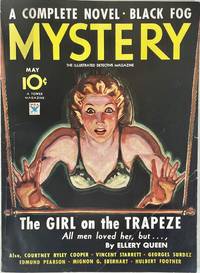
1934réf. 28769Chicago IL: Tower Magazines Inc. 1934. Crease to lower right cover several tiny edge tears small tear at upper left front corner at spine a very good to nearly fine copy. 28769. Large octavo single issue pictorial wrappers. Fiction by Ellery Queen Vincent Starrett Mignon G. Eberhart Hulbert Footner and others. A large format densely illustrated bedsheet-sized pulp. "The fiction emphasized the woman's point of view was often narrated by a woman and featured as many feminine as masculine detectives. In the rear of the magazine flowered all the usual departments of a more conventional woman's publication . That this magazine would publish much fiction of interest seems improbable. But without effort it contrived to be superb. ILLUSTRATED DETECTIVE selected outstanding writers who had made their mark in the 1920s and mingled these with rising writers of the 1930s. Over the years the magazine would publish work by top names in the mystery field including Ellery Queen Stuart Palmer Sax Rohmer Arnold Kummer Hulbert Footner Vincent Starrett and H. Bedford-Jones. The fiction was polished often strongly compressed and good enough for a large amount of it to appear later between book covers. The magazine appeared monthly for almost six years sixty-nine issues at ten cents a copy. After three years the title was changed to THE MYSTERY MAGAZINE . Covers were tasteful bright and uneventful relying heavily on the faces of self-confident women. Inside was an astonishing amount of material: eight to ten pieces of fiction four or more crime-fact articles and up to ten continuing departments about half of these slanted directly toward women. When the magazine was at its peak in the early 1930s it offered material carefully calculated to appeal to most tastes and both sexes . MYSTERY was as meticulously planned as an orchestral score. Its careful variations played upon every shade of reader interest. It was consciously polished self-consciously feminine. A curious pared sound rang in its fiction as if the stories had been edited with a chain saw but the prose flashed with a bright nickel glitter. Slick the magazine may have been and often over illustrated but it was also considerably interesting and for years excellent." - Cook Mystery Detective and Espionage Magazines pp. 287-90. Tower Magazines, Inc. unknown
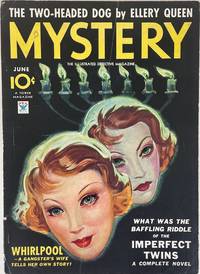
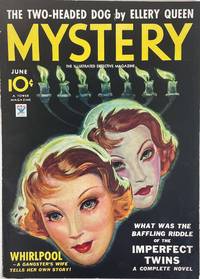
1934réf. 15696Dunellen N.J.: Tower Magazines Inc. June 1934 volume 9 number 6. Small chip from upper spine end several minor spine tears mended a very good or better copy with bright front cover. Uncommon. 15696. Large octavo single issue cover by Charles de Feo pictorial wrappers. Contributors include Ellery Queen "The Two-Headed Dog" a weird mystery story later collected with others in THE ADVENTURES OF ELLERY QUEEN Francis Beeding Stuart Palmer Henry Lacossitt Carl Mattison Chapin his full-length novel THE IMPERFECT TWINS and others. A large format densely illustrated bedsheet-sized pulp. "The fiction emphasized the woman's point of view was often narrated by a woman and featured as many feminine as masculine detectives. In the rear of the magazine flowered all the usual departments of a more conventional woman's publication . That this magazine would publish much fiction of interest seems improbable. But without effort it contrived to be superb. ILLUSTRATED DETECTIVE selected outstanding writers who had made their mark in the 1920s and mingled these with rising writers of the 1930s. Over the years the magazine would publish work by top names in the mystery field including Ellery Queen Stuart Palmer Sax Rohmer Arnold Kummer Hulbert Footner Vincent Starrett and H. Bedford-Jones. The fiction was polished often strongly compressed and good enough for a large amount of it to appear later between book covers. The magazine appeared monthly for almost six years sixty-nine issues at ten cents a copy. After three years the title was changed to THE MYSTERY MAGAZINE . Covers were tasteful bright and uneventful relying heavily on the faces of self-confident women. Inside was an astonishing amount of material: eight to ten pieces of fiction four or more crime-fact articles and up to ten continuing departments about half of these slanted directly toward women. When the magazine was at its peak in the early 1930s it offered material carefully calculated to appeal to most tastes and both sexes . MYSTERY was as meticulously planned as an orchestral score. Its careful variations played upon every shade of reader interest. It was consciously polished self-consciously feminine. A curious pared sound rang in its fiction as if the stories had been edited with a chain saw but the prose flashed with a bright nickel glitter. Slick the magazine may have been and often over illustrated but it was also considerably interesting and for years excellent." - Cook Mystery Detective and Espionage Magazines pp. 287-90. Tower Magazines, Inc. unknown
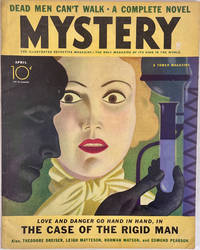
1935réf. 15699Chicago Illinois: Tower Magazines Inc. April 1935 volume 11 number 4. Mild dust soiling to covers a bright nearly fine copy. Uncommon. 15699. Large octavo single issue cover by John Atherton pictorial wrappers. Fiction by Belden Duff Whitman Chambers Hulbert Footner Helgo Walter Norman Matson Mary Plum and Edward Acheson his full-length novel DEAD MEN CAN'T WALK; articles by Henry LaCossitt Leigh Matteson Edmund Pearson and Theodore Dreiser "I Find the Real American Tragedy". A large format densely illustrated bedsheet-sized pulp. "The fiction emphasized the woman's point of view was often narrated by a woman and featured as many feminine as masculine detectives. In the rear of the magazine flowered all the usual departments of a more conventional woman's publication . That this magazine would publish much fiction of interest seems improbable. But without effort it contrived to be superb. ILLUSTRATED DETECTIVE selected outstanding writers who had made their mark in the 1920s and mingled these with rising writers of the 1930s. Over the years the magazine would publish work by top names in the mystery field including Ellery Queen Stuart Palmer Sax Rohmer Arnold Kummer Hulbert Footner Vincent Starrett and H. Bedford-Jones. The fiction was polished often strongly compressed and good enough for a large amount of it to appear later between book covers. The magazine appeared monthly for almost six years sixty-nine issues at ten cents a copy. After three years the title was changed to THE MYSTERY MAGAZINE . Covers were tasteful bright and uneventful relying heavily on the faces of self-confident women. Inside was an astonishing amount of material: eight to ten pieces of fiction four or more crime-fact articles and up to ten continuing departments about half of these slanted directly toward women. When the magazine was at its peak in the early 1930s it offered material carefully calculated to appeal to most tastes and both sexes . MYSTERY was as meticulously planned as an orchestral score. Its careful variations played upon every shade of reader interest. It was consciously polished self-consciously feminine. A curious pared sound rang in its fiction as if the stories had been edited with a chain saw but the prose flashed with a bright nickel glitter. Slick the magazine may have been and often over illustrated but it was also considerably interesting and for years excellent." - Cook Mystery Detective and Espionage Magazines pp. 287-90. Tower Magazines, Inc. unknown
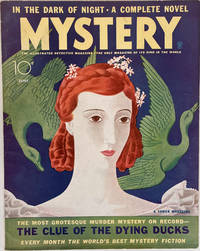
1935réf. 15698Chicago Illinois: Tower Magazines Inc. June 1935 volume 11 number 6. A bright nearly fine copy. Uncommon. 15698. Large octavo single issue cover by John Atherton pictorial wrappers. Fiction by Francis Beeding Whitman Chambers Chapin Howard George Harmon Coxe a hard-boiled mystery story by a prolific writer for the pulps including BACK MASK Hulbert Footner and Raymond Leslie Goldman his full-length novel IN THE DARK OF NIGHT; articles by Edward Hale Bierstadt Theodore Dreiser "I find the Real American Tragedy" and others. A large format densely illustrated bedsheet-sized pulp. "The fiction emphasized the woman's point of view was often narrated by a woman and featured as many feminine as masculine detectives. In the rear of the magazine flowered all the usual departments of a more conventional woman's publication . That this magazine would publish much fiction of interest seems improbable. But without effort it contrived to be superb. ILLUSTRATED DETECTIVE selected outstanding writers who had made their mark in the 1920s and mingled these with rising writers of the 1930s. Over the years the magazine would publish work by top names in the mystery field including Ellery Queen Stuart Palmer Sax Rohmer Arnold Kummer Hulbert Footner Vincent Starrett and H. Bedford-Jones. The fiction was polished often strongly compressed and good enough for a large amount of it to appear later between book covers. The magazine appeared monthly for almost six years sixty-nine issues at ten cents a copy. After three years the title was changed to THE MYSTERY MAGAZINE . Covers were tasteful bright and uneventful relying heavily on the faces of self-confident women. Inside was an astonishing amount of material: eight to ten pieces of fiction four or more crime-fact articles and up to ten continuing departments about half of these slanted directly toward women. When the magazine was at its peak in the early 1930s it offered material carefully calculated to appeal to most tastes and both sexes . MYSTERY was as meticulously planned as an orchestral score. Its careful variations played upon every shade of reader interest. It was consciously polished self-consciously feminine. A curious pared sound rang in its fiction as if the stories had been edited with a chain saw but the prose flashed with a bright nickel glitter. Slick the magazine may have been and often over illustrated but it was also considerably interesting and for years excellent." - Cook Mystery Detective and Espionage Magazines pp. 287-90. Tower Magazines, Inc. unknown
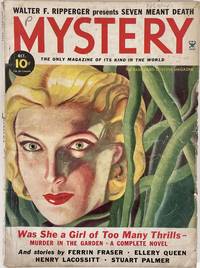
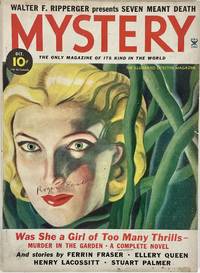
1934réf. 15697Dunellen N.J.: Tower Magazines Inc. 1934. Owner's signature on front cover. A few spots along lower edge of front cover a very good or better copy with bright front cover. Uncommon. 15697. Large octavo single issue cover by Harold Woolridge pictorial wrappers. Contributors include Ellery Queen "The Black Cats Vanished" a weird mystery story later collected with others in THE ADVENTURES OF ELLERY QUEEN Stuart Palmer Henry Lacossitt Roger East his full-length novel MURDER IN THE GARDEN and others. A large format densely illustrated bedsheet-sized pulp. "The fiction emphasized the woman's point of view was often narrated by a woman and featured as many feminine as masculine detectives. In the rear of the magazine flowered all the usual departments of a more conventional woman's publication . That this magazine would publish much fiction of interest seems improbable. But without effort it contrived to be superb. ILLUSTRATED DETECTIVE selected outstanding writers who had made their mark in the 1920s and mingled these with rising writers of the 1930s. Over the years the magazine would publish work by top names in the mystery field including Ellery Queen Stuart Palmer Sax Rohmer Arnold Kummer Hulbert Footner Vincent Starrett and H. Bedford-Jones. The fiction was polished often strongly compressed and good enough for a large amount of it to appear later between book covers. The magazine appeared monthly for almost six years sixty-nine issues at ten cents a copy. After three years the title was changed to THE MYSTERY MAGAZINE . Covers were tasteful bright and uneventful relying heavily on the faces of self-confident women. Inside was an astonishing amount of material: eight to ten pieces of fiction four or more crime-fact articles and up to ten continuing departments about half of these slanted directly toward women. When the magazine was at its peak in the early 1930s it offered material carefully calculated to appeal to most tastes and both sexes . MYSTERY was as meticulously planned as an orchestral score. Its careful variations played upon every shade of reader interest. It was consciously polished self-consciously feminine. A curious pared sound rang in its fiction as if the stories had been edited with a chain saw but the prose flashed with a bright nickel glitter. Slick the magazine may have been and often over illustrated but it was also considerably interesting and for years excellent." - Cook Mystery Detective and Espionage Magazines pp. 287-90. Tower Magazines, Inc. unknown
1934réf. 28770Chicago IL: Tower Magazines Inc. 1934. Edge rubs to spine mild wear at the head of the spine panel a nearly fine copy. 28770. Large octavo single issue pictorial wrappers. Fiction by Ellery Queen Francis Beeding Stuart Palmer and others. A large format densely illustrated bedsheet-sized pulp. "The fiction emphasized the woman's point of view was often narrated by a woman and featured as many feminine as masculine detectives. In the rear of the magazine flowered all the usual departments of a more conventional woman's publication . That this magazine would publish much fiction of interest seems improbable. But without effort it contrived to be superb. ILLUSTRATED DETECTIVE selected outstanding writers who had made their mark in the 1920s and mingled these with rising writers of the 1930s. Over the years the magazine would publish work by top names in the mystery field including Ellery Queen Stuart Palmer Sax Rohmer Arnold Kummer Hulbert Footner Vincent Starrett and H. Bedford-Jones. The fiction was polished often strongly compressed and good enough for a large amount of it to appear later between book covers. The magazine appeared monthly for almost six years sixty-nine issues at ten cents a copy. After three years the title was changed to THE MYSTERY MAGAZINE . Covers were tasteful bright and uneventful relying heavily on the faces of self-confident women. Inside was an astonishing amount of material: eight to ten pieces of fiction four or more crime-fact articles and up to ten continuing departments about half of these slanted directly toward women. When the magazine was at its peak in the early 1930s it offered material carefully calculated to appeal to most tastes and both sexes . MYSTERY was as meticulously planned as an orchestral score. Its careful variations played upon every shade of reader interest. It was consciously polished self-consciously feminine. A curious pared sound rang in its fiction as if the stories had been edited with a chain saw but the prose flashed with a bright nickel glitter. Slick the magazine may have been and often over illustrated but it was also considerably interesting and for years excellent." - Cook Mystery Detective and Espionage Magazines pp. 287-90. Tower Magazines, Inc. unknown
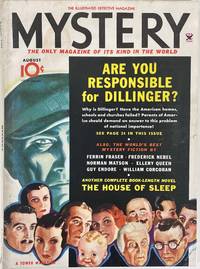
1934réf. 28771Chicago IL: Tower Magazines Inc. 1934. Spine slightly rolled with some spotting small tear to base of spine small closed tear to right edge a very good copy. 28771. Large octavo single issue pictorial wrappers. Fiction by Frederick Nebel Ellery Queen Norman Matson Guy Endore and others. A large format densely illustrated bedsheet-sized pulp. "The fiction emphasized the woman's point of view was often narrated by a woman and featured as many feminine as masculine detectives. In the rear of the magazine flowered all the usual departments of a more conventional woman's publication . That this magazine would publish much fiction of interest seems improbable. But without effort it contrived to be superb. ILLUSTRATED DETECTIVE selected outstanding writers who had made their mark in the 1920s and mingled these with rising writers of the 1930s. Over the years the magazine would publish work by top names in the mystery field including Ellery Queen Stuart Palmer Sax Rohmer Arnold Kummer Hulbert Footner Vincent Starrett and H. Bedford-Jones. The fiction was polished often strongly compressed and good enough for a large amount of it to appear later between book covers. The magazine appeared monthly for almost six years sixty-nine issues at ten cents a copy. After three years the title was changed to THE MYSTERY MAGAZINE . Covers were tasteful bright and uneventful relying heavily on the faces of self-confident women. Inside was an astonishing amount of material: eight to ten pieces of fiction four or more crime-fact articles and up to ten continuing departments about half of these slanted directly toward women. When the magazine was at its peak in the early 1930s it offered material carefully calculated to appeal to most tastes and both sexes . MYSTERY was as meticulously planned as an orchestral score. Its careful variations played upon every shade of reader interest. It was consciously polished self-consciously feminine. A curious pared sound rang in its fiction as if the stories had been edited with a chain saw but the prose flashed with a bright nickel glitter. Slick the magazine may have been and often over illustrated but it was also considerably interesting and for years excellent." - Cook Mystery Detective and Espionage Magazines pp. 287-90. Tower Magazines, Inc. unknown
1934réf. 16185Chicago IL: Tower Magazines Inc. 1934. Mild edge rubbing some small cover rubs slight loss at head of spine mild damp stain to contents. A very good copy. Uncommon. 16185. Large octavo single issue pictorial wrappers. "Four Men Who Loved a Woman" by Ellery Queen. Also Stuart Palmer Hildegarde Withers Maurice Level Hulbert Footner and others. A large format densely illustrated bedsheet-sized pulp. "The fiction emphasized the woman's point of view was often narrated by a woman and featured as many feminine as masculine detectives. In the rear of the magazine flowered all the usual departments of a more conventional woman's publication . That this magazine would publish much fiction of interest seems improbable. But without effort it contrived to be superb. ILLUSTRATED DETECTIVE selected outstanding writers who had made their mark in the 1920s and mingled these with rising writers of the 1930s. Over the years the magazine would publish work by top names in the mystery field including Ellery Queen Stuart Palmer Sax Rohmer Arnold Kummer Hulbert Footner Vincent Starrett and H. Bedford-Jones. The fiction was polished often strongly compressed and good enough for a large amount of it to appear later between book covers. The magazine appeared monthly for almost six years sixty-nine issues at ten cents a copy. After three years the title was changed to THE MYSTERY MAGAZINE . Covers were tasteful bright and uneventful relying heavily on the faces of self-confident women. Inside was an astonishing amount of material: eight to ten pieces of fiction four or more crime-fact articles and up to ten continuing departments about half of these slanted directly toward women. When the magazine was at its peak in the early 1930s it offered material carefully calculated to appeal to most tastes and both sexes . MYSTERY was as meticulously planned as an orchestral score. Its careful variations played upon every shade of reader interest. It was consciously polished self-consciously feminine. A curious pared sound rang in its fiction as if the stories had been edited with a chain saw but the prose flashed with a bright nickel glitter. Slick the magazine may have been and often over illustrated but it was also considerably interesting and for years excellent." - Cook Mystery Detective and Espionage Magazines pp. 287-90. Tower Magazines, Inc. unknown