3693 resultados
ref. 13095PARIS, A. Lenègre - Percaline bleue de l'éditeur avec motifs repoussés - Titre doré au 1 plat - vers 1920 - Oblong 24,5 x 10,5 cms - Comprenant 80 feuillets de 15 cases (dont 58 vierges), comprenant 289 monogrammes, certains identifiésJOINT : 129 monogrammes ou Armoiries à classer + 27 en-tête de lettres avec châteaux
RIOS H. (?) Lastrina, probabilmente in celluloide, con disegno in colore, forse tempera ma certamente anche tecnica mista di cm 14,5 x 14,5 circa. , (194../5..), Montata in larga cornice coeva, protetta da vetro. Bella, ben tenuta e con ottimi e vivaci colori. Piccola firma in basso a destra. Un già convinto Pinocchio si appresta a salire sulla carrozza che correrà al Paese dei Balocchi Buono (Good) .
1980x +105 pages. Opens with a ten-page memorial of Saul Hayes, O.C., Q.C., LL.D., F.R.S.A. (including a 1.5 page partial bibliography of his publications) who passed away in the year this work was published. "We center our attention upon the pioneer of Trois-Rivieres, a formidable man, of almost mythic proportions." - from page 1. Unmarked with Moderate wear. Biege moisture marks visible to fore-edge of first few leaves, generally quite faint for remainder of textblock. Book
Acquaforte misure: mm 80 x 240 Incisore e disegnatore, si dedicò sporadicamente alla pittura. Il padre Francesco, scultore allievo di Giambologna, morì prematuramente ma riuscì ad avviare tutti i suoi figli a mestieri d’arte. Stefano fu il solo ad eccellere, ebbe i primi insegnamenti presso botteghe di dimenticati orefici i quali ebbero tuttavia il pregio di fargli prender dimestichezza con il bulino. Fu sostanzialmente un autodidatta. Le fonti bibliografiche affermano che egli si esercitava a disegnare figure curiosamente partendo dai piedi e a copiare le incisioni di Jacques Callot avendo come unico confronto l'incisore Remigio Cantagallina. Fu notato poi dal pittore Giovan Battista Vanni che lo prese nella sua bottega e gli diede i primi insegnamenti di pittura e del disegno. La vocazione di Della Bella fu sicuramente l'incisione e già le sue prime opere rivelano i temi a lui più cari: scene di vita contemporanea, feste, battaglie e le decorazioni. Lo studio delle incisioni e dei disegno di maestri antichi, la conoscenza e il confronto con i maestri fiorentini e fiamminghi a lui contemporanei allora presenti alla corte medicea furono furono di grande stimolo. Egli è considerato un grafico puro, grazie ai suoi numerosi viaggi tra Roma e Parigi e grazie alla protezione dei Medici maturò un proprio linguaggio grafico, in vita e per tutto il XVIII secolo fu ricercato e collezionato in Francia e in Italia. Questa è la tavola numero 15 della serie Ornamenti di fregi e fogliami, composta da sedici stampe. La tavola si divide in un fregio nelle parte superiore e due schizzi nel margine inferiore. Nel pannello superiore in un girale vegetale fanno capolino i corpi di due bambini; quello a sinistra sta decorando con ghirlande il corpo di un'aquila, mentre quello di destra la criniera di un leone. Nel zona inferiore, sempre con tratto fine ed elegante, vediamo a sinistra un tritone che brandendo un bastone cavalca un cervo marino e a destra il profilo della testa di un satiro. In basso, inciso nel margine inferiore, "Stef. della Bella inuent. et fecit", "N. Langlois excu", "Cum Priuil Regis" e numero. Impressione eccellente. Ottimo stato di conservazione. Ampi margini oltre la battuta del rame. Stato: III/VI con l'indirizzo N. Langlois (Parigi 1640 - 1703). Bibliografia: De Vesme-Massar 1001, pag. 218.
ref. DADAX0824789024New unknown
ref. DADAX0521197694New unknown
ref. SONG0521593492Used: Good unknown
ref. DADAX0521620473New unknown
ref. SONG3540203648Used: Good unknown
ref. DADAX0521590639New unknown
ref. DADAX0521302455New unknown
ref. SONG0521810159Used: Good unknown
ref. DADAX1461380626New unknown
ref. DADAX0073383147New unknown
ref. DADAX364243519XNew unknown
ref. DADAX0521561418New unknown
ref. SONG0934380384Used: Good unknown
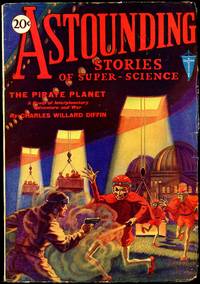
1930ref. 26360New York: Publishers' Fiscal Corporation 1930. Mild edge wear a nearly fine to fine copy. 26360. Octavo cover painting by Wessolowski pictorial wrappers. Pulp magazine. Stories by Victor Rousseau Ray Cummings L.A. Eshbach and others. Reference: Tymm and Ashley Science Fiction Fantasy and Weird Fiction Magazines pp. 60-103. Publishers' Fiscal Corporation unknown
1678ref. 001927Amsterdam; Paris: D. Elsevier; Thomas Jolly 1678. Full Morocco. Very Good Plus. 24mo. 10 by 6 cm. 168 pp. With seven woodcuts including the half-title. First published in 1607 this play is in the tradition of Tasso's "Aminta" or Guarini's "Il Pastor Fido". Aminta is in fact the name of a character within the play. Brunet I 1088. Leaves are age toned with a light dampstain affecting a few leaves in the corner. Otherwise tight and clean. Modern red full morocco with marbled endpapers. D. Elsevier; Thomas Jolly unknown
1678ref. 001927Amsterdam; Paris: D. Elsevier; Thomas Jolly 1678. Full Morocco. Very Good Plus. 24mo. 10 by 6 cm. 168 pp. With seven woodcuts including the half-title. First published in 1607 this play is in the tradition of Tasso's "Aminta" or Guarini's "Il Pastor Fido". Aminta is in fact the name of a character within the play. Brunet I 1088. Leaves are age toned with a light dampstain affecting a few leaves in the corner. Otherwise tight and clean. Modern red full morocco with marbled endpapers. D. Elsevier; Thomas Jolly unknown books
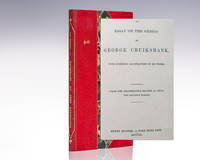
1840ref. 148887London: Henry Hooper 1840. First edition of this essay highlighting George Cruikshank’s artistic skill and cultural significance in early Victorian Britain. Octavo bound in three-quarters morocco by J. McDonald of New York with gilt titles and tooling to the spine gilt ruling to the front and rear panels gilt stamped facsimile signature of Cruikshank on the front panel all edges gilt marbled endpapers tissue-guarded frontispiece illustrated with 17 tissue-guarded black and white etched plates by George Cruikshank. In near fine condition. An Essay on the Genius of Cruikshank published in The Westminster Review in 1840 is an early critical appraisal of George Cruikshank’s artistic achievements and cultural influence. Written at a time when caricature was often dismissed as ephemeral or merely humorous the essay situates Cruikshank’s work within a broader artistic and moral framework praising his sharp political insight his ability to capture the nuances of everyday life and his growing reputation as a serious illustrator of literature. By highlighting his transition from biting political satire to celebrated book illustration particularly his collaborations with authors such as Charles Dickens the review both legitimizes caricature as a form of social commentary and cements Cruikshank’s position as one of the most significant visual commentators of early Victorian Britain. Henry Hooper unknown
ref. DADAX1138839647New unknown
ref. DADAX0076603423New unknown
ref. DADAX0415793416New unknown
ref. DADAX0415206901New unknown