3.861 Ergebnisse
Best.-Nr. SONG3540675140Used: Good unknown
Best.-Nr. SONG3030802043Used: Good unknown
Best.-Nr. DADAX1402091133New unknown
Best.-Nr. SONG0444504095Used: Good unknown
Best.-Nr. DADAX0306465663New unknown
Best.-Nr. DADAX0792320662New unknown
Best.-Nr. SONG0792380983Used: Good unknown
Best.-Nr. SONG0521611946Used: Good unknown
1997Best.-Nr. 045794London: Penguin Books 1997. First Softcover Edition 1st Printing. Soft cover. Near Fine. X 274 Pp. Illustrated Wrappers. First Uk Softcover Edition And Apparently First Uk Edition. Very Good Slight Wear Spine Crease Pencil Marginalia Up To Page 15. Generically Inscribed By Barrow. Per Wikipedia John David Barrow Frs 1952 - 2020 Was An English Cosmologist Theoretical Physicist And Mathematician. He Served As Gresham Professor Of Geometry At Gresham College From 2008 To 2011. Barrow Was Also A Writer Of Popular Science And An Amateur Playwright. Barrow's Approach To Philosophical Issues Posed By Physical Cosmology Made His Books Accessible To General Readers. For Example Barrow Introduced A Memorable Paradox Which He Called "The Groucho Marx Effect" See Russell-Like Paradoxes. Here He Quotes Groucho Marx: "I Wouldn't Want To Belong To Any Club That Would Accept Me As A Member". Applying This To Problems In Cosmology Barrow Stated: "A Universe Simple Enough To Be Understood Is Too Simple To Produce A Mind Capable Of Understanding It". Penguin Books paperback
1930Best.-Nr. 034369Cambridge: The Physical Society / Cambridge University Press 1930. First Separate Edition 1st Printing. Soft cover. Good. Photographs Graphs. Pp355-365 Extracted From The Proceedings In Tan Wrappers Printed In Black A Publisher's Offprint. Covers Worn And Browned Tears At Spine Edges And 1/2" Chips At Top And Bottom Of Spine Panel. Pencil Ownership Name Of Hendrik Antoon Kramers Dutch Physicist Who Worked Primarily In Studies Of Magnetism At Top Of Front Cover As Was Kramers' Custom With His Library. Sir James Alfred Ewing Kcb 27 March 1855 7 January 1935 Was A Scottish Physicist And Engineer Best Known For His Work On The Magnetic Properties Of Metals And In Particular For His Discovery Of And Coinage Of The Word Hysteresis. It Was Said Of Ewing That He Was 'Careful At All Times Of His Appearance His Suits Were Mostly Grey Added To Which He Generally Wore - Whatever The Fashion - A White Piqué Stripe To His Waistcoat A Mauve Shirt A White Butterfly Collar And A Dark Blue Bow Tie With White Spots.' He Was Regarded As Brilliant And Successful But Was Conscious Of His Dignity And Position. On Appointment To Head The Newly Created Admiralty Codebreaking Department The Director Of Naval Intelligence Henry Oliver Described Him As 'Too Distinguished A Man To Be Placed Officially Under The Orders Of The Director Of Intelligence Or Chief Of Staff'. His First Wife Annie Was An American A Great Great Niece Of George Washington. In 1890 Ewing Took Up The Post Of Professor Of Mechanism And Applied Mechanics At The University Of Cambridge Initially At Trinity College Though He Later Moved To King's College. At Cambridge Ewing's Research Into The Magnetisation Of Metals Led Him To Criticise The Conventional Account Of Wilhelm Weber. In 1890 He Observed That Magnetisation Lagged Behind An Applied Alternating Current. He Described The Characteristic Hysteresis Curve And Speculated That Individual Molecules Act As Magnets Resisting Changes In Magnetising Potential. Note: According To The Book Sir Alfred Ewing: A Pioneer In Physics And Engineering 1946 By Professor Bates The Discovery Of Magnetic Hysteresis Probably Occurred Before Ewing. However Ewing Re-Discovered It Studied It In Detail And Coined The Word Hysteresis. Ewing Also Researched Into The Crystalline Structure Of Metals And In 1903 Was The First To Propose That Fatigue Failures Originated In Microscopic Defects Or Slip Bands In Materials. In 1895 He Was Awarded The Gold Medal Of The Royal Society For His Work On Magnetic Induction In Iron And Other Metals. Ewing Was A Close Friend Of Sir Charles Algernon Parsons And Collaborated With Him On The Development Of The Steam Turbine And He Later Married Parsons' Surviving Daughter. During This Time Ewing Published The Steam Engine And Other Heat Engines Around This Time. In 1897 He Took Part In The Sea-Trials Of The Experimental Vessel Turbinia Which Set A New Speed Record Of 35 Knots. During World War I From 1914 To May 1917 Ewing Managed Room 40 The Admiralty Intelligence Department Of Cryptanalysis Responsible Predominantly For The Decryption Of Intercepted German Naval Messages. In This Capacity He Achieved Considerable Fame In The Popular Press When Room 40 Deciphered The Zimmermann Telegram In 1917 Which Suggested A German Plot To Assist Mexico In Recovering The Southwestern United States. The Publication Of The Zimmermann Telegram Is Generally Credited As The Trigger Event Which Brought American Into The Great War. In May 1916 Ewing Accepted An Invitation To Become Principal Of The University Of Edinburgh In The Course Of Which He Instituted An Extensive Series Of Effective Reforms And Which He Held Until His Retirement In 1929. In 1927 He Gave A Lecture To The Edinburgh Philosophical Institution Which Contained The First Semi-Official Disclosure Of The Work Done By Room 40. Worldcat Shows Only One Institutional Holding In Scotland. The Physical Society / Cambridge University Press paperback
1980Best.-Nr. 035787Cambridge: Cambridge University Press 1980. 1st Edition 1st Printing. Soft cover. Fine. 26 Pp. Yellow Wrappers Printed In Black. First Printing. Fine No Wear Or Marks Or Fading. Cambridge University Press paperback
1980Best.-Nr. 019273Cambridge: Cambridge University Press 1980. First Edition First Printing . Blue Cloth. Fine/Near Fine DJ. First Ediition; Now Available In A Second Revised Edition. This First Cloth Printing Is Scarce. Fine In Near Fine Dj With 1 3/4" Closed Tear On Front Panel Which Is Reinforced On The Inside With Clear Tape. Cambridge University Press hardcover
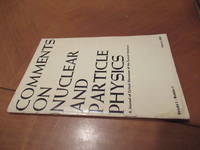
1967Best.-Nr. 023721New York: Gordon & Breach 1967. First Edition First Printing . Soft cover. Very Good. 45 Pp. Glossy Wrappers. First Printing Lightly Used Faint Damp Stain Along Lower Edge Of Covers With No Trace In Contents. Gordon & Breach paperback
1912Best.-Nr. 060096Henry Holt / Home University Library 1912. Early Reprint . Hardcover. Near Fine. 255 Pp 14 Pp Home University Catalog At Rear. Copyright 1912 No Later Date. Early Printing Catalog Shows This Book As #43 In Series Catalog Includes Entries To #138 Later In 1910'S. An Introductory For The General Public No Mathematics At All. Near Fine. Henry Holt / Home University Library hardcover
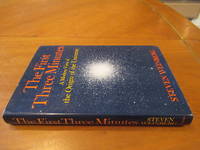
1977Best.-Nr. 057838New York: Basic Books 1977. 1st Edition 1st Printing. Hardcover. Near Fine/Near Fine. Plates. X 188 Pp. Black Cloth Gilt. First Printing. Book And Dj Are Near Fine. Dj Not Price Clipped $8.95 With Slight Signs Of Usage. Basic Books hardcover
1983Best.-Nr. 054772Scientific American Books - W. H. Freeman & Co. 1983. 1st Edition 1st Printing. Hardcover. Fine/Fine. Xiii 206 Pp. Blue Cloth Spine Lettered In Silver. First Printing Indicated. Fine In Fine Dust Jacket. Scientific American Books - W. H. Freeman & Co. hardcover
1980Best.-Nr. 041884Berlin: Springer 1980. First English Language Edition 1st Printing. Soft cover. Fine. Xii 212 Pp. Orange Cloth Wrappers Stamped In Black. First English Language Edition Of Pauli's Earlier Work Including Publications Of 1933 And 1958; Introduction Foreword And Preface Dated 1977 But Apparently First Published In English In 1980. Fine; No Wear No Marks Pages Aged. Springer paperback
Best.-Nr. DADAX0792337379New unknown
1990Best.-Nr. x-9810200749World Scientific Pub Co Inc 1990. Hardcover. New. 208 pages. 6.00x0.69x9.00 inches. World Scientific Pub Co Inc hardcover
Best.-Nr. DADAX1613248113New unknown
1995Best.-Nr. x-9810218214World Scientific Pub Co Inc 1995. Hardcover. New. 372 pages. 9.00x6.25x1.00 inches. World Scientific Pub Co Inc hardcover
Best.-Nr. SONG9400751427Used: Good unknown
Best.-Nr. DADAX0691021414New unknown
Best.-Nr. DADAX0444504737New unknown
Best.-Nr. DADAX0306461579New unknown