Multiple ContributorsMareMagnum

442 risultati
1969Features: Hybrid Wheat; Relaxation Methods in Chemistry; A Paleolithic Camp at Nice; Typesetting; The Energetics of Bird Flight; Shock Waves in Solids; The Bacterial Cell Wall; Retinal Processing of Visual Images. Average wear. Unmarked. Sound copy. Magazine
rif. SONG0521865549Used: Good unknown
rif. DADAX0521865549New unknown
1916In 4°; XI, (1), 415, (1) pp. Legatura editoriale in piena tela verde con titolo impresso in oro al piatto anteriore, un minimo ed ininfluente difetto alla cerniera posteriore, senza perdita di materiale, nel complesso in ottime condizioni di conservazione. Ottimo esemplare. Varie immagini e schemi tecnici nel testo. Prima rarissima edizione francese di uno dei più celebri manuali di telegrafia senza fili, scritto dal grande professore scozzese di telegrafia senza fili e telefonia James Murray Erskine, tradotto da Henri Magniez ingegnere elettrico della Compagnia Generale di Radiotelegrafia. James Erskine-Murray (1868-1927), scozzese di nascita, fu uno dei più grandi esperti del suo tempo di tecnologia wireless. Si formò per sei anni studiando sotto Lord Kelvin presso l’Università di Glasgow prima di arrivare al Trinity College di Cambridge come studente di ricerca. Finiti gli studi divenne un consulente telegrafia e pubblicò quest’opera per la prima volta nel 1907. Il lavoro ebbe enorme successo prima nei paesi anglosassoni dove nel giro di meno dieci anni ebbe 6 ristampe e poi grazie a questa traduzione francese anche nel resto d’Europa. Il suo scopo era quello di informare i tecnici, studenti e operatori radio su molti aspetti di una tecnologia in rapida evoluzione. Il libro copre i recenti sviluppi del tempo. L’opera si pone come un classico precoce nel campo della progettazione e delle onde radio e offrì agli studenti contemporanei e appassionati di radio una guida utile e specifica sulle prime tecnologie wireless. Esemplare assai raro e ancor più raro in queste ottime condizioni di conservazione. A good copy.
1966Inscribed by author on publisher's page. Full blue cloth boards. Endpapers split at front and rear hinges, but not loose. 9 1/8"w x 11"h. 30 pages. Illustrations in color by Napoli.
1944rif. 167161944. Bloom Ensign. Naval Procurement Office. Typed Letter Signed 14 December 1944-. page In part: "Behind each exciting headline you are measuring contribution your daughter is making. President Roosevelt said 'The WAVES have proved they are capable of accepting the highest service to their country. The Navy WAVES were an all-female component of the military and the first division to give female officers the same rank and pay as their male counterparts in other divisions. signed by Ensign Barbara Bloom. unknown
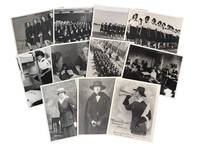
1968rif. 235551968. U.S. Navy women's service press photograph archive released by the U.S. Naval Historical Center in 1968 documenting how the Navy represented women's military labor across World War I World War II and later twentieth century service. The group links the Yeomen F of 1918 the first women formally enlisted in the U.S. Navy to the WAVES established during World War II and still present in postwar naval administration inspection training and ceremony. The photographs show women's military participation as clerical work uniformed discipline barracks life recruitment public parade and institutional remembrance. Photo archive of 11 Large silver gelatin press photographs most measuring 8" x 10" released by the U.S. Naval Historical Center Al images produced in 1968 with images subjects from 1918 to the 1960s. The photos show a Navy Department office in Washington D.C. in 1918 with uniformed and civilian personnel at desks; a woman identified in the caption as "Counselor Eastwood in the office"; a group of WAVES passing in review on an airfield; women marching in formation in New York City during a wartime bond drive; women seated in an auditorium; uniformed officers posed outside a building marked "Uniforms"; a woman in Navy dress working beside a bunk; and a line of women in white shirts and dark skirts marching in formation. Earlier Navy memory appears through portraits of Julia Washington Allen Yeoman F First Class shown with her cap turned to reveal "U.S.N." and "Yeoman F" lettering and Elsie M. Long Yeoman Second Class identified as serving on active duty from October 7 1918 to June 4 1919. A recruiting poster reads "Women awake! Your country needs you. Learn to be of national service. Join the Navy League. Help the Navy local headquarters." Women entered the Navy in large numbers during World War I because clerical expansion created a labor need that could be filled under existing enlistment language; Yeomen F worked as stenographers clerks translators messengers radio operators and office personnel while remaining segregated by gendered expectations of acceptable service. During World War II the WAVES brought women into the Naval Reserve under a formal wartime structure expanding their work into administration communications aviation support supply intelligence training and stateside naval operations. These 1968 release photographs show how the Navy later organized that history for public use: women appear as disciplined personnel administrative workers patriotic recruits and predecessors in a service tradition that the institution could claim as part of its own record. Light surface and corner wear verso captions stamps and release labels. Overall very good condition. An official record of how the U.S. Navy preserved and circulated the history of women's military service from the Yeomen F to the WAVES and their postwar successors. unknown
1968rif. 235551968. U.S. Navy women's service press photograph archive released by the U.S. Naval Historical Center in 1968 documenting how the Navy represented women's military labor across World War I World War II and later twentieth century service. The group links the Yeomen F of 1918 the first women formally enlisted in the U.S. Navy to the WAVES established during World War II and still present in postwar naval administration inspection training and ceremony. The photographs show women's military participation as clerical work uniformed discipline barracks life recruitment public parade and institutional remembrance. Photo archive of 11 Large silver gelatin press photographs most measuring 8" x 10" released by the U.S. Naval Historical Center Al images produced in 1968 with images subjects from 1918 to the 1960s. The photos show a Navy Department office in Washington D.C. in 1918 with uniformed and civilian personnel at desks; a woman identified in the caption as "Counselor Eastwood in the office"; a group of WAVES passing in review on an airfield; women marching in formation in New York City during a wartime bond drive; women seated in an auditorium; uniformed officers posed outside a building marked "Uniforms"; a woman in Navy dress working beside a bunk; and a line of women in white shirts and dark skirts marching in formation. Earlier Navy memory appears through portraits of Julia Washington Allen Yeoman F First Class shown with her cap turned to reveal "U.S.N." and "Yeoman F" lettering and Elsie M. Long Yeoman Second Class identified as serving on active duty from October 7 1918 to June 4 1919. A recruiting poster reads "Women awake! Your country needs you. Learn to be of national service. Join the Navy League. Help the Navy local headquarters." Women entered the Navy in large numbers during World War I because clerical expansion created a labor need that could be filled under existing enlistment language; Yeomen F worked as stenographers clerks translators messengers radio operators and office personnel while remaining segregated by gendered expectations of acceptable service. During World War II the WAVES brought women into the Naval Reserve under a formal wartime structure expanding their work into administration communications aviation support supply intelligence training and stateside naval operations. These 1968 release photographs show how the Navy later organized that history for public use: women appear as disciplined personnel administrative workers patriotic recruits and predecessors in a service tradition that the institution could claim as part of its own record. Light surface and corner wear verso captions stamps and release labels. Overall very good condition. An official record of how the U.S. Navy preserved and circulated the history of women's military service from the Yeomen F to the WAVES and their postwar successors. unknown books
1944rif. 167161944. Bloom Ensign. Naval Procurement Office. Typed Letter Signed 14 December 1944-. page In part: "Behind each exciting headline you are measuring contribution your daughter is making. President Roosevelt said 'The WAVES have proved they are capable of accepting the highest service to their country. The Navy WAVES were an all-female component of the military and the first division to give female officers the same rank and pay as their male counterparts in other divisions. signed by Ensign Barbara Bloom. unknown books
rif. DADAX0230251730New unknown
rif. DADAX0230251749New unknown
rif. SONG0230251749Used: Good unknown
rif. DADAX0230221238New unknown
rif. DADAX0230230601New unknown
rif. DADAX0230580602New unknown
rif. DADAX0230223850New unknown
rif. DADAX0230224377New unknown
rif. SONG0230276601Used: Good unknown
rif. SONG0230230601Used: Good unknown
rif. SONG0230224369Used: Good unknown
rif. SONG0230222641Used: Good unknown
rif. DADAX0230251617New unknown
rif. DADAX0230219438New unknown
rif. DADAX023022122XNew unknown
rif. DADAX023058070XNew unknown