2976 risultati
1922In-4°; ripr. di un ritratto in fotografia di Einstein. pp. 240; coperta telata con titolo inpresso in oro al dorso e al piatto; più un opuscolo del Prof. Bruno Mehnert.
2007UTET 2007 XI-297 PP. FONDO DI MAGAZZINO: LIEVI SEGNI DEL TEMPO, VOLUME PERFETTO E INTONSO. La meccanica celeste ha sempre accompagnato lo sviluppo della civiltà sul nostro pianeta. Dalle prime osservazioni astronomiche degli antichi Caldei, attraverso i lavori di Henri Poincaré la meccanica celeste è tornata in prima linea. Infatti, i recenti progressi tecnologici nel campo dell'astronomia osservativa hanno notevolmente aumentato il numero di oggetti celesti scoperti dall'uomo: migliaia di asteroidi, centinaia di comete, decine di satelliti naturali e anelli planetari, una nuova popolazione di corpi celesti oltre l'orbita di Nettuno, nonché innumerevoli sistemi planetari extra-solari attorno ad altre stelle. A ciò si aggiunga che l'uomo ha ormai un programma consolidato di esplorazione interplanetaria e nelle vicinanze della Terra: una nube di satelliti artificiali e di detriti spaziali circonda il nostro pianeta. Sulla base di tali recenti sviluppi scientifici, la moderna meccanica celeste ha assunto un ruolo fortemente interdisciplinare, coinvolgendo argomenti quali la stabilità, le risonanze e il caos. L'obiettivo del libro, pubblicato in edizione inglese nel 2007 dalla casa editrice Praxis-Springer, è di presentare la moderna meccanica celeste come una disciplina di facile comprensione per il lettore non specialista e allo stesso tempo di stimolare un pubblico più specializzato, mostrando le possibili connessioni tra i diversi affascinanti campi di studio. Il volume è introdotto dalla prefazione di Margherita Hack.
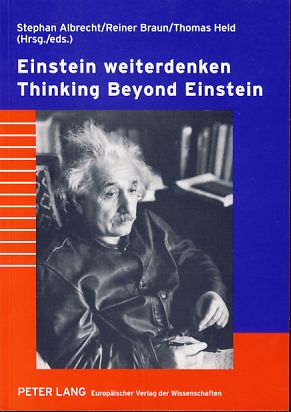
2006rif. 27290Frankfurt am Main, Berlin, Bern, Bruxelles, New York, Oxford, Wien: Peter Lang, 2006. 520 S., 7 Abb. Originalbroschur.
2011Praticamente coetanei - uno medico e teologo, l'altro scienziato e filosofo, il primo luterano, il secondo ebreo - Albert Schweitzer, premio Nobel per la Pace nel 1952, e Albert Einstein, premio Nobel per la Fisica nel 1921, si incontrarono solo due volte e si scambiarono una serie di lettere, tutte tra il 1948 e il 1955. Nondimeno entrambi misero in guardia i contemporanei contro i pericoli di un progresso tecnico-scientifico acefalo, facendo pressioni contro i test e le sperimentazioni della bomba atomica - la cui costruzione, in un primo tempo, Einstein aveva appoggiato nel timore che il regime nazista se ne dotasse per primo - e battendosi per il disarmo nucleare e la pace. Autori: Alberto Guglielmi Manzoni.
1987rif. 10620Near new condition. Companion English translation to hardcover text also available. Inventory number 10618 Princeton University Press paperback
1931rif. 148499Burbank CA: Warner Brothers 1931. Vintage photograph of Albert Einstein and his wife Elsa on a Warner Brothers film set February 3 1931. In early 1931 Einstein and his wife visited several studios and sets to see European directors at work. Here Einstein his wife sitting at his left and cinematographer J. Peverell Marley sit in at a screening for the 1931 French language version of "The Big House" in France titled "Revolte dans la prison." As this is a prison film a number of actors in the photo are wearing prison jackets. Jacques Feyder was the original director of the French version and Pal Fejos and George W. Hill are credited for it as well. 8 x 10 inches. Very Good plus with light creasing at the corners. Complete collation details available on request. Warner Brothers unknown books
1955Albert Einstein , Leopold Infeld L'evoluzione della fisica. , Einaudi 1955, Pagine intonse brunite ai margini con tagli irregolari e barbe. Copertina flessibile cartonata con segni d'uso ai margini. Traduzione di Abele Graziadei. Buono (Good) . 312
1926rif. 25045ALBERT EINSTEIN.Autograph Correspondence Card Signed to Michele Besso May 1 1926 Berlin. In German. 1 p. 4¼ x 5⅞ in. Complete Translation 1 May 1926 Dear Michele I read that paperright away at the time but I don't think that anything more profound lies behind it. There is naturally a rough connection between a decrease in volume and energy and from here one can try to come nearer to the empirical phenomena by introducing further parameters. But this happens in such a way that neither rhyme nor reason can be made of it. It is very reminiscent of Traube. Using such apothecary's methods one cannot reveal any of God's secrets I think. Schrödinger did a couple of wonderful studies on quantum rules Ann d Physik. That has the scent of a deeper truth. Let it be explained to you. I'm coming to Switzerland in July. End of July is LN meeting in Geneva. Then I'm going somewhere in the mountains with Tete. So I'll visit you or else we can meet. Warm regards also to Anna and Vero your Albert Historical Background Early in 1926 Michele Besso sent Einstein an early draft of a paper by Swiss chemist Gottfried Beck on quantum mechanics. Beck had initially submitted the paper to the Swiss scientific journal Helvetica Chemica Acta which rejected it as too speculative. On April 25 1926 Besso wrote to Einstein about Beck's paper. After discussing the details he writes "This surely is an amusing thing; I was surprised that you didn't write me anything about it. Here too reality is once again simpler than the theoretical conceptions would lead one to expect." Three months later Einstein wrote to Besso regarding Beck's paper: "it is obviously particularly painful to use the quantum condition together with the equations of motion here because the validity of the latter appears to be irreconcilable with the validity of the former." Einstein was skeptical that Beck's equation "has any reality left within it in the face of quanta. I vigorously doubt it." However Einstein found the construction of the left side of the equation "surely contains a deeper truth." Einstein declared to Besso "I cannot make myself glue two things together like the left- and right-hand sides of this equation that have nothing to do with each other logico-mathematically." Michele Besso 1873-1955 was born in Zurich Switzerland into an Italian Jewish family. He was a close friend of Albert Einstein when they worked together at the Federal Polytechnic Institute in Zurich and at the patent office in Bern where Einstein helped Besso get a job. Besso met his future wife Anna Winteler through Einstein in June 1897. In 1898 their son Vero was born in Winterthur Switzerland. Einstein referred to Besso as "the best sounding board in Europe" for scientific ideas. Besso died in Geneva just over one month before Einstein died in Princeton New Jersey. Johann Gottfried Beck 1900-1992 received his Ph.D. in chemistry from the University of Bern in December 1925. He worked as an assistant to Heinrich Zangger at the Institute for Forensic Medicine at the University of Zurich. Isidor Traube 1860-1943 was born in Hanover the son of a wealthy German-Jewish merchant. He received his doctorate in organic chemistry in 1882. He founded capillary chemistry and conducted advanced research on liquids helping to define the concepts of surface tension and critical temperature. In 1882 he joined the faculty of Technische Hochshule in Berlin and became a professor of chemistry there in 1900. Unacceptable to National Socialists Traube was barred from his laboratory and he left Germany in 1934. Through the aid of British colleagues he was provided with a laboratory at the University of Edinburgh. During his long career he was a persistent and stubborn controversialist in opposition to various theories. Erwin Schrödinger 1887-1961 was born in Vienna Austria. He was a commissioned officer in the Austrian fortress artillery during World War I. After the war he advanced through the academic ranks to become a full professor in 1921 in Breslau now Wroclaw Poland. That year he moved to the University of Zurich and in 1927 to the Friedrich Wilhelm University in Berlin. He received the Nobel Prize in Physics in 1933 and left Germany as he opposed the Nazis. After brief positions in a number of places he settled in Dublin Ireland in 1940 where he remained until retiring in 1955. During his career Schrödinger developed a number of fundamentals of quantum theory including the wave equation. He also published many works in various fields of physics. Although Schrödinger was an atheist he believed his scientific work was an approach to the godhead in a metaphorical sense. Eduard Einstein 1910-1965 was born in Zürich Switzerland to Albert and Mileva Marić Einstein. In 1914 his parents separated and his mother returned to Zürich with Eduard and older brother Hans Albert who were both deeply affected. Eduard was interested in music art and poetry. Unlike his father Eduard was a good student. He had started to study medicine and psychiatry but in 1930 was diagnosed with schizophrenia. He was first institutionalized in 1932; it is not clear if his treatment particularly electroconvulsive therapy did more good than harm. Albert fondly referred to Eduard as "Tete" for petit and they corresponded regularly but never saw each other after a heart-breaking final visit in 1933. Marić and Eduard's Swiss citizenship undoubtedly saved Eduard from Aktion T4 the Nazi euthanasia program and perhaps both of them from the Holocaust. His mother cared for Eduard until her death in 1948 and Eduard thereafter lived mostly at a psychiatric clinic in Zurich where he died from a stroke in 1965. books
1967Albert Einstein Come io vedo il mondo. , Giachini 1967, libro usato in discrete condizioni. Copertina flessibile leggermente usurata. Tagli bruniti Mediocre (Poor) . 187
1931rif. 2240New York: Covici Friede 1931. 1st. Cloth. Collectible; Very Good. 1931 1st edition. Clean and VG in its original blue cloth. 12mo 109 pgs. Light offsetting at the gutters tasteful former owner bookplate to front pastedown. Covici, Friede hardcover books
1924rif. 26006"I'm working a lot but not managing to come up with the real thing. Science is a difficult profession. Sometimes I'm glad that you chose a practical vocation where one doesn't have to search for four-leaf clovers." ALBERT EINSTEIN.Autograph Letter Signed "Papa" to his son Hans Albert Einstein March 7 1924 Berlin Germany. In German. 1 p. Complete Translation 7.III.24 Dear Albert My research projects of the past few years are completely inappropriate for a popular lecture and then I generally dread public appearances of such a kind. That's why I unfortunately have to decline the talk this time too. The Fr 45000 I designated for the down payment of the house purchase; and I invested another Fr 45000 which is supposed to belong to you that is Mama. I hope you'll find a suitable little home. I'm probably going to be staying in Zurich for a bit on the trip back from Naples; on the trip there only briefly. There's no question of it being official; the main thing for me is to be with you for a while. I don't have much time because I'm supposed to go to Kiel in May. In any case I'm very happy about seeing you all again soon. I'm working a lot but not managing to come up with the real thing. Science is a difficult profession. Sometimes I'm glad that you chose a practical vocation where one doesn't have to search for four-leaf clovers. Looking forward to a happy reunion! Best regards to the three of you from your Papa. Historical Background Einstein's Theory of Relativity published in 1915 describes gravity as a curved geometric property of spacetime. Though E=mc2 captures the theory for which he is most remembered he never won the Nobel Prize in Physics. Rather in 1922 he won for his 1905 explanation of the photoelectric effect. In 1914 Albert and Mileva Marić-Einstein separated and she and their sons returned to Zurich. When they divorced in 1919 they agreed that any Nobel Prize money he might win would go to Mileva for the children. He won the Nobel Prize for Physics in 1922. In May 1924 two months after this letter Marić purchased a building in Zurich and moved into the third floor apartment. In 1930 she purchased two more buildings but when the worldwide economic crisis reached Switzerland many tenants could not afford their rent; she lost the two additional buildings to foreclosure in 1936. Einstein had invested the remaining prize money in America in Marić's name. He lost much of that due to the Great Depression but he ultimately paid Marić more than he received from the prize. Einstein also mentions to his nineteen-year-old son his plans to travel to Naples in May. He would attend the fifth International Congress of Philosophy with his theory of relativity scheduled to be "an object of particular discussion." First organized in 1900 the Congress was a global meeting held every few years under the auspices of the International Federation of Philosophical Societies. It was interrupted by both World Wars but reconvened in 1948 and has been held every five years since in locations throughout the world. Einstein also planned to go to Kiel Germany to stay and work with Hermann Anschütz-Kaempfe 1872-1931 a German art historian and inventor. Kaempfe pioneered gyro compasses for ships and submarines. From the 1920s until his death in 1955 the most elusive clover for which Einstein searched was a unified field theory. Einstein tried to meld together general relativity and electromagnetism. This would describe a single field in which all forces are mediated and the properties of all particles could be deduced. Albert Einstein 1879-1955 was born in the Kingdom of Wurttemberg in the German Empire to non-observant Ashkenazi Jewish parents. In 1894 the family moved to Italy. Einstein graduated from the Swiss Federal Polytechnic in Zürich in 1900. In 1903 he married Mileva Marić 1875-1948 with whom he had two sons. In 1905 he received a Ph.D. from the University of Zürich. From 1908 to 1932 he taught at a series of universities in Switzerland the Austrian Empire and the German Empire. As a theoretical physicist he published ground-breaking papers as early as 1905 and developed the theory of relativity including the mass–energy equivalence formula E=mc2. Albert and Mileva divorced in 1919. That same year he married Elsa Löwenthal. In 1922 he received the Nobel Prize in Physics for the discovery of the photoelectric effect. In January 1933 when Adolph Hitler came to power Einstein was visiting the U.S. and remained here In 1939 he signed a letter to President Franklin D. Roosevelt warning that Germany could develop a nuclear bomb thus inspiring the "Manhattan project." He became a U.S. citizen in 1940. After the war he became known for efforts to further world peace. At the Institute for Advanced Study in Princeton N.J. from 1933 until his death in 1955 he worked to develop a unified field theory and to refute the accepted interpretation of quantum physics. Considered the father of modern physics and one of the most prolific intellects of history Einstein published more than 300 scientific papers and over 150 non-scientific works. Hans Albert Einstein 1904-1973 was born in Bern Switzerland to Albert Einstein and Mileva Marić. Hans followed both parents in studying at ETH the Swiss Federal Institute of Technology in Zurich graduating with a degree in civil engineering in 1926. In 1927 he married Frieda Knecht and they had four children two of whom died very young. In 1936 Hans earned a doctor of technical science degree. At his father's advice he left Switzerland in 1938 to escape the Nazi threat. He settled in Greenville South Carolina and worked for the U.S. Department of Agriculture studying sediment transport. In 1943 he transferred to the California Institute of Technology and in 1947 he accepted a position teaching hydraulic engineering at the University of California Berkeley. He became a full professor and eventually professor emeritus winning several research awards and fellowships. books
1976Albert Einstein I fondamenti della relatività. , Newton Compton Editori 1976, Condizioni discrete: copertina flessibile, sporca e ingiallita, dorso sporco, tagli con segni di usura, pagine brunite ma di buona fruibilità Buono (Good) . 111
2014Albert Einstein Lo spazio è una questione di tempo. , RBA edizioni 2014, Copertina: rigida, cartonata plastificata, leggermente sporca con lievi segni d'uso e leggermente scolortita con macchie anche in quarta di copertina, margini stanchi. Dorso: sporco, leggermente ingiallito con margini stanchi. Taglio: ingiallito. Sguardi: ingialliti. Frontespizio: ingiallito. Pagine testo: ingiallite. Margini delle pagine: ingialliti. Legatura: a colla. Molto buono (Very Good) . 175
1880rif. 24284A unique and important artifact of his childhood. ALBERT EINSTEIN.Ephemera. Set of Anker-Steinbaukasten children's building blocks by F. Ad. Richter & Cie. Rudolstadt Germany c.1880s. Approximately 160 composite quartz sand chalk and linseed oil blocks in red limestone and slate gray in various sizes and shapes together with three or more sets of building plans all contained in two wooden boxes with printed Anker-Steinbaukasten labels. Einstein spent his childhood building "complicated structures" with these Anker-Steinbaukasten blocks. Accepting his later theory that "Imagination is more important than knowledge" the toys that encouraged his imagination became building blocks for the most important scientific theories of the last millennium. His sister Maja Winteler-Einstein describing his childhood recalled that "The games he played … were very characteristic of Albert's capacities. These were mostly puzzles fretsaw work the erection of complicated structures with the well-known Anker building blocks and above all the construction of multi-storied card castles with which he filled his leisure." "Beitrag für sein Lebensbild" in The collected papers of Albert Einstein. ed. John Stachel. Volume 1: The early years. 1879-1902. Princeton University Press 1987 p.lix. Translated from German. Based on the work of German educator Friedrich Froebel who created the concept of kindergarten these composite stone blocks were a popular toy of the 1880s and 1890s. The blocks were designed to help develop childrens' tactile senses and manual dexterity and also to stimulate imagination creativity and three-dimensional perception. Fellow scientist J. Robert Oppenheimer as well as architects Frank Lloyd Wright and Walter Gropius are among the geniuses who are known to have played with Anker blocks. Provenance The set had passed by direct descent from Albert Einstein to the consignor from whom we acquired the blocks at Christie's London on July 13 2016. Condition A few blocks chipped and worn with original instructions and boxes worn soiled and defective. Albert Einstein 1879-1955 was a German-Swiss born theoretical physicist internationally recognized as one of the greatest physicists of all time. He enunciated the general theory of Relativity with law explaining the relationship between the speed of light and its consequence the equivalence of mass and energy E=MC2. For his work in theoretical physics—largely for his 1905 paper on photons and photo-electricity—Einstein was awarded the Nobel Prize for Physics announced in November 1922 retroactive for 1921. Working on a unified field theory he then attempted to explain gravitation and electromagnetism within one set of laws. With the expulsion of Jewish scholars from Germany after Hitler's rise to power Einstein joined the Institute for Advanced Study in Princeton New Jersey 1933 which became the most celebrated research center in the world. In 1939 he signed a letter written to President Franklin Roosevelt warning him of the possibility of Germany developing a nuclear bomb. He urged the U.S. to begin uranium research thus beginning the top secret "Manhattan Project." Later at Princeton he tried to develop a unified field theory and to refute the accepted interpretation of quantum physics both unsuccessfully. Einstein received U.S. citizenship in 1940. books
rif. MA06C-03367Pantheon Irodalmi Intezet. Used - Acceptable. Budapest: Pantheon Irodalmi Intezet 1922. 12mo hardcover. Rebound gray cloth with original front paper wrap bound in. 94pp. Hungarian. Fair book. Ex-Library copy from the New York Public Library with usual markings and pocket on front pastedown in Hungarian. Dampstaining and red paint flecks on front board. Upper corner dampstained throughout. Albert Einstein Theory of Relativity Books in Hungarian Inquire if you need further information. Pantheon Irodalmi Intezet hardcover
rif. 61266827Nova Science Publishers Incorporated . Hardback. Used. pp. xiii 239 Index Nova Science Publishers, Incorporated hardcover
1930rif. 021309London: The Soncino Press 1930. 1st Edition . Hardcover. Fair/Fair. Hardcover book in fair condition. Dust jacket included in poor to fair condition showing toning light staining and tears. Book dampstained closer to spine crack to binding starting at middle. A few instances of marked lines in the margins not affecting text. An excellent resource copy of this scarce first edition. Questions welcome. We ship internationally from the United States and Canada every week. If buying internationally please be aware that additional charges may apply for heavier books. We guarantee a safe quick and secure transaction. 10 years in online bookselling experience. The Soncino Press hardcover
rif. 44564555like new. unknown
rif. 44564555-nnew. unknown
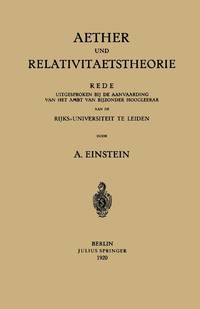
rif. ria9783642649127_inpPaperback. New. New Book; Fast Shipping from UK; Not signed; Not First Edition; Meine Herren Kuratoren Professoren Doktoren und Studenten dieser Universität! Sie alle ferner meine Damen und Herren welche diese Feier durch Ihre Anwesenheit ehren!. paperback
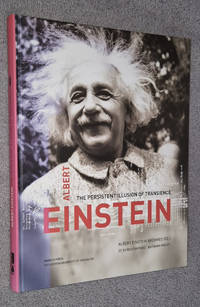
2007rif. 018809Particularly well-illustrated survey of Einstein's life and ideas through photographs and reproductions of his fascinating personal papers. 263 p. : ill. some col. ; 32 cm. Rev. and enlarged ed. Previous ed. published under the title: Albert through the looking-glass. 1998. Illustrated boards slight shelf wear to edges some fading around the spine no inscriptions tight and square binding. Photographs available on request. All books dispatched same or next working day in robust packaging. Albert Einstein Archives : Magnes Press, the Hebrew University of Jerusalem hardcover
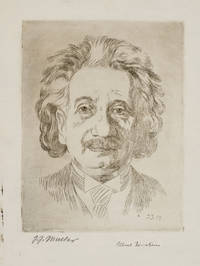
1933rif. H-217A stunning portrait etching of one of the greatest human minds signed by both the artist J J Muller and Albert Einstein. The sketch is signed in ink by Einstein and by the artist J. J. Muller in pencil n.p. 1933. Plate 195 x 150mm; sheet 253 x 200mm. A true collector's copy of a beautiful signed portrait.
rif. Juanpebooks038106WE ship worldwide. Brand new 100%guarentee unknown
1949rif. 343971949. On scientists and military work: “The majority of really good scientists in this country have withdrawn from military work…The young ones who cannot lean upon a standing of their own have generally given in to the almost irresistible pressure. One cannot expect it to be any different."" Einstein and other scientists faced the harsh reality of the product of their work after the war and the bombing of Japan; Here Einstein in a way grapples with his own role On the timeless nature of fighting for what you believe: “The truth appears foolish to the insane.Lost people are content to find themselves in agreement with the masses."" <img class=""alignnone wp-image-34606 size-post-window"" src=""https://cdn.raabcollection.com/wp-content/uploads/20251001204256/Einstein_Letter_11-1-1600x897.jpg"" alt="""" width=""1600"" height=""897"" /> Although Albert Einstein’s participation in the production of the atomic bomb was limited the public perceived his role as crucial and he was in fact the face of the project to many. The reasons were that although he did not work on the Manhattan Project the US effort to build the bomb his famous equation E=mc2 provided the theoretical basis for understanding the immense energy released in nuclear fission which is the process that powers the bomb. And his 1939 letter to President Roosevelt co-signed by Leo Szilárd alerted the US government to the potential of nuclear weapons and prompted the start of research that eventually led to the Manhattan Project. Feeding the public perceptions of his responsibility were publications like The Smyth Report a history of the development of the bomb published the day after the bombing of Nagasaki which ascribed great historical weight to Einstein’s 1939 letter to President Franklin D. Roosevelt in catalyzing the development of the bomb. In 1946 Time magazine published the famous cover featuring Einstein’s portrait backgrounded by an enormous mushroom cloud emblazoned with “E=mc2” and the accompanying article by Whittaker Chambers referred to him as “the father of the bomb” a title which resonated in the popular imagination. A March 1947 Newsweek cover featured Einstein above the headline “Godfather of the Atomic Bomb”. Einstein was hounded by the association throughout the rest of his life culminating in his November 1954 admission to Linus Pauling “I made one great mistake in my life when I signed the letter to President Roosevelt recommending that atom bombs be made….” Albert Einstein was known for his dedication to morality which he said was “of the highest importance” as well as beliefs that stemmed from morality like pacifism anti-militarism and loyalty to the facts taught by science. He viewed morality as fundamentally human and believed that ethical behavior should form a basis for both individual well-being and the collective good of humanity. Thus for Einstein the pursuit of morality was the most vital human endeavor essential for bringing beauty and dignity to life and ensuring the survival and thriving of the human race. He shared these beliefs with Dr. Herbert Jehle. Dr. Jehle was a pioneering theoretical physicist whose work spanned quantum field theory biophysics and astrophysics. He was a student and friend of Einstein in the 1920s in Germany; and a disciple and friend of Dietrich Bonhoeffer. At Princeton in 1947 he provided Richard Feynman with the spark which would lead to his path integral formulation. Einstein had left for the United States in 1933 the same year that Jehle received his doctorate from the Technische Hochschule Berlin. In the same year Dietrich Bonhoeffer Jehle's friend and mentor stepped down from his professorship at Berlin in protest of the Nazi ascent to power. In 1940 Jehle refused to assist in the German armament and atomic project and was interned in concentration camps. Escaping in 1941 with the help of Quaker and Christian relief organizations Jehle made his way to the United States where he took a position at Harvard University until leaving for Princeton in 1947. At Princeton Jehle's pacifist beliefs coincided with Einstein's own and they reconnected bonding over shared views of social responsibility and ethics in science and playing music together regularly Einstein on violin Jehle on the piano. Jehle was also the editor of the Society for Social Responsibility in Science newsletter of which Einstein was a member. Jehle additionally submitted articles to other science publications. During the 1950s Jehle collaborated with Linus Pauling on DNA research as well as advocating with Pauling for peace. In the early 1960s Jehle worked as a consultant to Marshall Nirenberg at the NIH on DNA-coding for which Nirenberg also won a Nobel Prize for in 1968. Jehle's 1949 article ""For a Universal Morality"" asserted that ""participation in war preparations posed a challenge to man's conscience under any circumstances. and urged that scientists refuse to participate in war work under any government democratic or totalitarian"" see Nathan & Norden Einstein on Peace p 514. The editor of the Bulletin Eugene Rabinowitch rejected the article in a letter to Einstein to which Einstein replied advocating Jehle's position praising Jehle for not being “deterred by taboos” and then sent this letter to Jehle. It is interesting to think how time and war had affected Einstein's thinking. Where his letter did much to advance the nuclear militarization and as a scientist he felt a need to intervene here is advocating the opposite. Autograph letter signed on paper watermarked ""Whiting Mutual Bond Rag Content""Princeton 1949 to Herbert Jehle endorsing the article by Jehle that had been submitted to the Bulletin of Atomic Scientists on the topics of science and morality and cautioning Jehle on the complications of his position in the post-war world. “I have read your article several times and find that it agrees exactly with my thinking. In accordance with your wishes I am sending your paper with my recommendation to the Bulletin of Atomic Scientists in the hope that they will publish it. “I doubt however that the effect will correspond with the good intentions of the article. The truth appears foolish to the insane. He suspects disloyal intent and revolts against the thought that the 'foreigner' considers himself a better judge of what Americans should do. There are after all few who think and feel in a supra-national manner. Lost people are content to find themselves in agreement with the masses. “The majority of really good scientists in this country have withdrawn from military work more so than it was ever the case in Germany. The young ones who cannot lean upon a standing of their own have generally given in to the almost irresistible pressure. One cannot expect it to be any different since few are born to be martyrs - if no mass movement drives them in that direction. I see the real justification of your approach in the attempt to help generate such a mass movement. “The predicament in which we are is in a certain sense timeless. The public institutions necessarily represent a rather low moral level as do the men who stand behind these institutions. The individual is at the mercy of these institutions the standards of which he must recognize to be low if he is conscientious and not completely without ideas. He is thus forced into some compromise since he sees that that kind of necessarily imperfect institution cannot be dispensed with. “If those who see the light do not stand honestly and courageously for the good the world will get deeper and deeper into the morass. In expressing my joy that you have acted in this way and continue to do so I remain with friendly greetings. Yours A. Einstein.” With: Autograph statement as a PS from Einstein in German with Jehle's autograph English translation beneath and annotations above transcribing his recommendation for Jehle which Einstein sent to the editor of the Bulletin. “I am sending you this book article. It comes from a younger physicist who is courageous enough to simply say what is evident without being deterred by taboos. I hope that his note can be published in the Bulletin.” An important letter reflecting Einstein's post-war advocacy for morality and peace and assessments of the place of scientists in the moral sphere as well as realistic observations on and understanding of world politics. We obtained this letter directly from the Jehle family. <img class=""alignnone wp-image-25018 size-post-window"" src=""https://cdn.raabcollection.com/wp-content/uploads/20231204144051/Folder-site-11-1600x1327.jpg"" alt="""" width=""1600"" height=""1327"" /> unknown
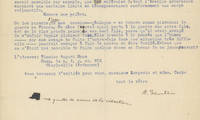
rif. 342445/11/19. A remarkable letter before his great fame referencing and shown to Marie Curie Einstein who helped free so many from the jaws of Nazism makes an impassioned plea for a World War I German POW in France who would escape but later die in the Holocaust In 1905 while a young patent clerk and physicist in Bern Switzerland Albert Einstein obtained his doctorate and published a paper that explained his newly developed Special Theory of Relativity. This unlocked many mysteries of the universe and introduced the world to the idea equating mass and the speed of light with energy which we know today as e=mc2. Einstein's insight and one element that distanced his work from that of Newton was to recognize that mc2 was the proper energy of mass the energy associated with that mass and was independent of its motion. Mass must be measured in this way as resting mass. This was a foundation of e=mc2. The breakdown of molecules therefore released energy. This energy is often used by cells to perform work such as powering movement. In the early years of the 20th century thanks to the development of mass spectrographs science had acquired the capacity to ""weigh"" atoms with extreme precision. Indeed Einstein provided the theoretical explanation for Brownian motion while French Chemist Perrin experimentally verified Einstein's theory solidifying the evidence for the existence of atoms. Scientists among them Perrin noted that when comparing the mass of a helium nuclei to that of the four elementary nuclei it was made of there was a slight discrepancy—one helium atom was slightly lighter than four hydrogen atoms; in other words the whole was smaller than the sum of the parts. Where did the missing mass go Einstein knew the answer: in accordance with his famous E=mc_ equation a tiny fraction of the mass had been transformed into a formidable quantity of energy. <img class=""alignnone wp-image-34256 size-post-window"" src=""https://cdn.raabcollection.com/wp-content/uploads/20250724151316/Einstein-Nov-1919-1-1600x709.jpg"" alt="""" width=""1600"" height=""709"" /> The French mathematician Paul Langevin understood the formidable source of energy that resulted from these ""transmutations."" But it was Jean Perrin a professor of physical chemistry in Paris who first proposed in 1919 that the fusion of hydrogen into helium was the energy source of the Sun and stars accounting for the billions of years of sunshine past and the billions of years to come. During this time radiation studies too were in their infancy. Marie Curie famously decided to do her thesis on radiation recently discovered in uranium by Henri Becquerel. She found that an ore containing uranium was far more radioactive than could be explained by its uranium content. This led her and her husband Pierre to the discovery of a new element that was 400 times more radioactive than uranium. In 1898 it was added to the Periodic Table as polonium named after Curie’s birth country. Then Curie discovered an even more radioactive element radium and through observation of radium made a fundamental discovery: Radiation wasn’t dependent on the organisation of atoms at the molecular level; something was happening inside the atom itself. The atom was not as scientists believed at the time inert indivisible or even solid. This discovery led to an overlapping one: At the time people did not know what powered the Sun. Many however thought it was Radium. Perrin was one of those who believed this. His hypothesis borrowing from E=MC2 was that radiation in the form of Radium was emanating from bodies like earth causing the breakdown of molecules on the Sun and that the breakdown was powering the Sun and other stars. In 1919 Perrin sent to Einstein his new publication proposing this theory. Einstein's response notes the breakdown of molecules and the released energy can likely be accomplished by other means than radiation. He uses the mathematical equation for the breakdown of one molecule into atoms. He references a first order reaction a chemical reaction where the rate of the reaction is directly proportional to the concentration of only one reactant. In simpler terms if you double the concentration of that reactant you double the reaction rate. A common example is radioactive decay. And he gives his best to the Madame Curie. Einstein had last met in Paris with Perrin Pierre Langevin Professor of Experimental Physics at the Collège de France and Curie then Professor of Physics at the Sorbonne on the occasion of Einstein’s lecture to the French Physical Society in late March 1913. They first met at the Solvay Congress in Brussels in autumn 1911. At the same time Einstein who helped so many Jews escape Germany during World War II had a distant cousin the geologist August Moos who had volunteered in the German infantry at the start of the First World War in 1914. After being taken prisoner in 1915 he made several attempts to escape which resulted in a sentence that prevented his release after the armistice of 1918. His mother asked for help from Einstein who turned to his friend Perrin as well as mathematician and statesman Paul Painlevé asking them to intercede. Moos was finally released in February 1920. He would work as an oil geologist in the interwar period before being tragically arrested due to his Jewish heritage under the Nazi regime. Moos would die in the Buchenwald concentration camp during World War II. Typed letter signed in French signed “A. Einstein"" November 5 1919 to Professor Jean Baptiste Perrin who would go on to win the Nobel Prize for Physics in 1926 for his work on the atomic structure of matter. ""Dear Perrin! I received your publications and thank you cordially. Your opinion of the primary importance of radiation for all chemical reactions still seems to me dubious even if it was certain which it is not that reactions of the type J_ - JJ added by hand are of the first order. It would be possible for example that J_ molecules whose internal energy exceeds a certain limit would decompose in accordance with radioactive bodies. ""One more prayer. One of the parents of one of my cousins—a geologist—is a prisoner of war in France. His widowed mother having lost her other son in the war is in the greatest pain for her only son since he had tried to flee several times. She shudders at the thought that the man—through his old efforts to flee in a very difficult situation—might try to flee again and be shot. Wouldn't it be possible to do something for this young scholar"" He goes on to give the address of August Moos held in Charleville Ardennes and concludes by offering his ""many friendships for you Mr. Langevin and Madame Curie."" Below he notes an ink spill draws an arrow and writes ""drop of editorial sweat from editing."" Perrin responded the very same day confirming that he believed rays from Earth were breaking down molecules in the sun and that he assumed the first order nature of the reaction. In other words he did not agree with Einstein that radiation was not breaking down molecules releasing energy and powering the sun. ""I do indeed believe that I2 Einstein used J but Perrin used I decomposes like radioactive bodies and I devoted a chapter of my work to this but precisely on the conviction that radioactive bodies like I2 are decomposed by light for radium ultra-short X rays emanating from the Earth at _ = 10–11 light which suddenly increases the internal energy. I read your letters to Mrs. Curie and to Langevin. They too send you their very best regards."" Perrin and In addition to this important family and political content Einstein comments on a theory that Perrin had developed in which all chemical transformations including radioactive decay are triggered by radiation calling it ""dubious."" Also significant is the date: one day before the official report of Eddington's expedition debuted before the Royal Society of London confirming Einstein's theory of general relativity. Widespread newspaper coverage of the results vaulted Einstein into immediate international fame. An altogether remarkable letter from one Nobel Prize winner to another shown to yet a third and using the chemical equation for the breakdown of molecules into atoms in his own hand. <img class=""alignnone wp-image-25018 size-post-window"" src=""https://cdn.raabcollection.com/wp-content/uploads/20231204144051/Folder-site-11-1600x1327.jpg"" alt="""" width=""1600"" height=""1327"" /> unknown