Einstein, AlbertBiblio.com
1.463 Ergebnisse
1983Best.-Nr. 1-048624511XDover Pubns 1983. Paperback. New. 56 pages. 8.00x5.50x0.25 inches. Dover Pubns paperback
Best.-Nr. SKU0572692Cambridge University Press 2019-12-05. paperback. Good. 6x0x9. Textbook May Have Highlights Notes and/or Underlining BOOK ONLY-NO ACCESS CODE NO CD Ships with Tracking Cambridge University Press paperback
Best.-Nr. SKU0620199Cambridge University Press 2019-12-05. paperback. New. 6x0x9. New Textbook Ships with Tracking Cambridge University Press paperback
2024Best.-Nr. x-1032490195Routledge 2024. Hardcover. New. 240 pages. 9.00x6.00x9.00 inches. Routledge hardcover
2024Best.-Nr. x-1032490152Routledge 2024. Paperback. New. 240 pages. 9.00x6.00x9.00 inches. Routledge paperback
2001Best.-Nr. 1-3898211681ibidem-Verlag 2001. Paperback. New. 134 pages. German language. 8.11x5.67x0.39 inches. ibidem-Verlag paperback
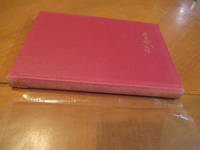
1957Best.-Nr. 056866Amsterdam / New York 1957: North-Holland Publishing Company/ Interscience Publishers 1957. First Edition . Red Cloth. Near Fine/Very Good. Photographs. 172 Pp. Includes Einstein's 1953 Paper And Many Others. Always A Scarce Book Altho Not Rare. Near Fine Some Fading To Spine Cloth Ownership Name Of Joseph L. Snider Professor Of Physics At Oberlin. Original Clear Unprinted Dust Jacket Shrunken Rear Cover A Lirttle Ripply And With A Short Tear Near Center. North-Holland Publishing Company/ Interscience Publishers hardcover
1994Best.-Nr. 240218012Modern Library 1994. hardcover. New. 5x1x8. 9780517093801 NEW Inside and Out! Clean & Crisp Pages. E-mail for more info./pics Modern Library hardcover
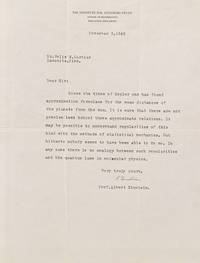
1942Best.-Nr. 1265881942. Signed. EINSTEIN Albert. Typed letter signed. Princeton November 3 1942. One sheet measuring 8-1/2 by 11 inches typing on recto only; matted and framed with a portrait of Einstein entire piece measures 21 by 17 inches. $38000.An exceptional typed letter signed by Einstein on precursors like Johannes Kepler's work to his Special and General Theories of Relativity beautifully framed.The letter on letterhead from the Institute for Advanced Study in Princeton reads in full: ""November 3 1942. Mr. Felix W. Cartier. Laconite Minn. Dear Sir: Since the times of Kepler one has found approximation formulaes for the mean distances of the planets from the sun. It is sure that there are not precise laws behind those approximate relations. It may be possible to understand the irregularities of this kind with the methods of statistical mechanics. But hitherto nobody seems to have been able to do so. In any case there is no analogy between such regularities and the quantum laws in molecular physics. Very truly yours signed A. Einstein. Prof. Albert Einstein.""Early in the 17th century Johannes Kepler 1571-1630 discovered that planets orbit the sun in ellipses rather than perfect circles. This great discovery paved the way for Isaac Newton's laws of gravity and for Albert Einstein's general and special theories of relativity. Previous to Einstein's time people believed in real distances and absolute time and showed that instruments could not objectively measure the distances between planets. Einstein's theories which hypothesized that light and space curve near a massive object revolutionized scientific thought and gave man an exciting new perspective of his universe.Einstein's letter reflects on some of the most important scientific revelations in the history of physics and astronomy. Kepler defined three laws of planetary motion; however the one specifically referred to in this letter is that all planets move about the Sun in elliptical orbits having the Sun as one of the foci. If the Universe then consisted only of two point massesÑthe Sun and a planetÑthe orbit of that planet would make a perfect closed ellipse that returned the world to its starting location with each trip around the Sun. But in a Universe governed by Newtonian gravity with a plethora of massive bodies in our Solar System that ellipse will precess or rotate slightly in its orbit.In the mid-1800s orbital deviations of Uranus from its predicted motions led to the discovery of Neptune as the outermost world's gravitational influence accounted for the excess motion. But in the inner Solar System the nearest planet to the Sun Mercury was experiencing a similar problem. With detailed accurate observations going back to the late 1500s thanks to astronomer Tycho Brahe we could measure how Mercury's perihelion its closest orbital point to the Sun was advancing. The number we came up with was 5600"" per century just over 1.5 degrees over a 100 year period. But of that 5025"" came from the precession of Earth's equinoxes a well-known phenomenon while 532"" was due to Newtonian gravity.But 5025"" plus 532"" comes up short by a small but significant amount. Attempts at explanationÑincluding the existence of an unknown inner planet interior to MercuryÑall failed. But after Einstein's special theory of relativity came out in 1905 mathematician Henri Poincare showed that the phenomena of length contraction and time dilation contributed a fraction between 15-25% of the needed amount towards the solution dependent on the error. That plus Minkowski's formalization of space and time as not separate entities but as a single structure bound together by their union spacetime led Einstein to develop the general theory of relativity. On November 25 1915 he presented his results computing the spectacular figure that the contribution of the extra curvature of space predicted an additional precession of 43"" per century exactly the right figure needed to explain this observation sending shockwaves through the astronomy and physics communities. Less than two months after this Karl Schwarzschild found an exact solution predicting the existence of black holes. The deflection of starlight and gravitational redshifts/blueshifts were realized as possible tests and finally the solar eclipse of 1919 validated general relativity as superseding Newtonian gravity. Expected fold lines. An incredible letter scarce in its important content. unknown
2024Best.-Nr. x-1032378417Routledge 2024. Paperback. New. 384 pages. 9.19x6.13x0.91 inches. Routledge paperback
2012Best.-Nr. x-1107670950Cambridge Univ Pr 2012. Paperback. New. reissue edition. 146 pages. 7.75x5.00x0.25 inches. Cambridge Univ Pr paperback
2009Best.-Nr. __4896422848Tōkyō : Michitani 2009. 2009. Tankobon Hardcover. New. Japanese language. 7.72x5.28x1.50 inches. Tōkyō : Michitani, 2009. hardcover
2014Best.-Nr. x-1349729116Palgrave Macmillan 2014. Paperback. New. 238 pages. 8.50x5.75x0.75 inches. Palgrave Macmillan paperback
Best.-Nr. x-3663193721Vieweg Teubner Verlag 1923. Paperback. New. 5th reprint edition. 164 pages. German language. 9.25x6.10x0.36 inches. Vieweg + Teubner Verlag paperback
Best.-Nr. x-3322983196Vieweg Teubner Verlag 1963. Paperback. New. 19 edition. 113 pages. German language. 8.26x5.82x0.32 inches. Vieweg + Teubner Verlag paperback
Best.-Nr. x-3322982726Vieweg Teubner Verlag 1921. Paperback. New. 11 edition. 98 pages. German language. 8.82x5.98x0.32 inches. Vieweg + Teubner Verlag paperback
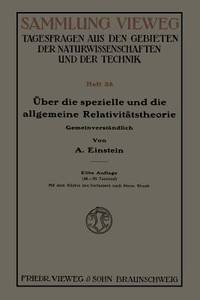
Best.-Nr. x-3663037754Vieweg Teubner Verlag 1920. Paperback. New. 10 spi rep edition. 95 pages. German language. 8.51x5.52x0.25 inches. Vieweg + Teubner Verlag paperback
2013Best.-Nr. x-1489908900Springer 2013. Paperback. New. reprint edition. 396 pages. 9.25x6.10x0.91 inches. Springer paperback
2008Best.-Nr. x-3540878467Springer Berlin 2008. Paperback. New. 7th edition. 174 pages. German language. 9.21x6.14x0.47 inches. Springer, Berlin paperback
2007Best.-Nr. x-1412924693Sage Pubns 2007. Paperback. New. 1st edition. 264 pages. 8.75x6.00x0.50 inches. Sage Pubns paperback
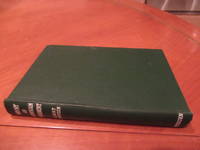
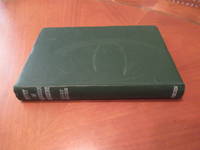
1926Best.-Nr. 043114London: Methuen & Co. 1926. 1st Edition 1st Printing. Hardcover. Fine/No Jacket. Viii 124 Pp. Green Cloth White Spine Lettering. First Printing In Secondary Binding With White Lettering The First Binding Was Lettered In Gilt. Book Used But Still Fine No Rubbing Lettering Complete And Entirely Strong. Spanish Owner's Name With His 1948 Receipt From H. K. Lewin For The Book Laid In Loosely. Lacking The Scarce Dust Jacket. Methuen & Co. hardcover
1926Best.-Nr. 043474London: Methuen & Co. 1926. 1st Edition 1st Printing. Hardcover. Near Fine/No Jacket. Viii 124 Pp. Green Cloth White Spine Lettering. First Printing In Secondary Binding With White Lettering The First Binding Was Lettered In Gilt. Book Used But Still Near Fine Very Slight Rubbing Lettering Complete With Some Wear Small Areas Of Lightening Of Color On Front Cover Darkening To Lower Corner Of Page "V" First Page Of Preface. No Marks. Lacking The Very Scarce Dust Jacket. Methuen & Co. hardcover
1920Best.-Nr. 43308Berlin: Springer 1920. 15pp. 221 x 146 mm. Original printed wrappers foxed. Minor internal foxing but very good. First edition cover title does not include the date Einstein delivered his lecture; see Weil. "By royal decree of June 24 1920 a special chair in Leiden University was created for Einstein enabling him to come to that university for short periods of his choosing. On October 27 1920 Einstein began his new position with an inaugural address on aether and relativity theory" Pais Subtle is the Lord p. 313. Weil Albert Einstein Bibliography 111. Springer unknown
1923Best.-Nr. 433151923. Offprint from Sitzungsberichte der preussischen Akademie der Wissenschaften 1923. 359-364pp. 254 x 184 mm. Original printed wrappers. Very good. First Edition offprint issue. Weil Albert Einstein Bibliography 137. unknown
1927Best.-Nr. 433031927. Offprint from Sitzungsberichte der preussischen Akademie der Wissenschaften 1927. 235-245pp. 255 x 183 mm. Original printed wrappers. Fine. On the problem of motion in general relativity theory; a follow-up to his and Grommer's paper of the same title published earlier in 1927. Weil Albert Einstein Bibliography 160. unknown